

Dog Breeds Most Prone to Weight Gain: NZ Owner's Guide
Some dog breeds are genuinely built to gain weight. It's not about bad owners or lazy dogs — it's genetics, metabolism, breed history, and in some cases, actual biological differences in how hunger signals work. If your dog is one of the breeds on this list, you're not imagining things. They really do need more careful management than the average dog.
This guide covers the 21 breeds most prone to weight gain in New Zealand, why each one struggles, and the general principles that apply across all of them. Each breed has its own dedicated article linked below with tailored feeding, exercise, and food advice.
Key Takeaways
- Some breeds have genetics, metabolism, or temperament that makes weight gain significantly more likely
- Recognising your breed's specific risk factors is the first step to managing them
- Weight management in prone breeds is primarily about food quality, portion control, and consistent routine
- Even moderate excess weight shortens a dog's life and increases health complications
- The right food makes an enormous difference — high-fibre, low-fat options help prone breeds feel full without the extra calories
Why Some Breeds Gain Weight More Easily
Not all dogs are equal when it comes to weight. The differences come down to a few distinct factors.
Genetics and Metabolism
Some breeds were developed over centuries to work hard in cold climates or to be efficient with energy — which means their bodies are very good at storing calories rather than burning them. When those same dogs live a modern indoor life with regular meals and limited exercise, those thrifty genes work against them.
The Labrador Retriever is the most studied example. A significant proportion of Labs carry a mutation in the POMC gene (pro-opiomelanocortin), which affects the brain's ability to signal fullness after eating. For these dogs, hunger is a near-constant state — not greed, actual biology. You can read more in our Labrador weight management guide.
Breed History and Purpose
Many weight-prone breeds were working dogs: scent hounds bred to trail prey all day, retrievers bred to work alongside hunters, or herders bred for long active days. When that activity level drops to "suburb life with a few daily walks," the calorie intake that sustained their ancestors becomes surplus energy stored as fat.
Beagles, Basset Hounds, and Bloodhounds were all bred for endurance scent work. Their appetites reflect a life of long active days — not a couch and a twice-daily bowl.
Temperament
Some breeds are simply more food-motivated than others. Labradors, Golden Retrievers, and Beagles are famously treat-driven — which makes them easy to train but also easy to accidentally overfeed. A dog that will do anything for food is also a dog that will eat anything they're given, plus anything they find, plus anything that falls on the floor.
Other breeds, like Rottweilers and Chow Chows, aren't especially food-obsessed but have slower metabolisms relative to their body size. They gain weight without necessarily overeating.
Medical Factors
Hypothyroidism, Cushing's disease, and the aftermath of desexing can all alter a dog's metabolism. Desexing in particular reduces energy requirements by 20-30% — and most owners don't adjust food portions accordingly. If your dog gained weight around the time of desexing and hasn't lost it since, that's a very common story.
How to Tell If Your Dog Is Overweight
The clearest way to check isn't the scales — it's the body condition score (BCS). Run your hands along your dog's ribcage. You should be able to feel each rib without pressing hard, but not see them. Looking from above, there should be a visible waist behind the ribs. From the side, the belly should tuck up, not hang down.
If your dog's ribs are padded and hard to feel, their waist has disappeared, or their belly sags, they're likely carrying extra weight.
For more detail on checking and managing weight across all breeds, see our overweight dogs NZ guide.
General Principles for Weight-Prone Breeds
These apply regardless of which breed you own.
Measure Everything
Eyeballing portions is one of the most common causes of gradual weight gain. A small scoop overestimate each meal adds up to hundreds of extra calories per week. Use a kitchen scale and follow the feeding guidelines on your food — then adjust based on your dog's actual condition, not just their enthusiasm.
Choose the Right Food
For weight-prone breeds, food composition matters. Look for:
- High protein: Protein supports muscle mass and satiety
- High fibre: Fibre helps dogs feel full on fewer calories
- Lower fat: Fat is calorie-dense — a high-fat food makes portion control harder
- No fillers: Corn, wheat, and soy add calories without much nutritional benefit
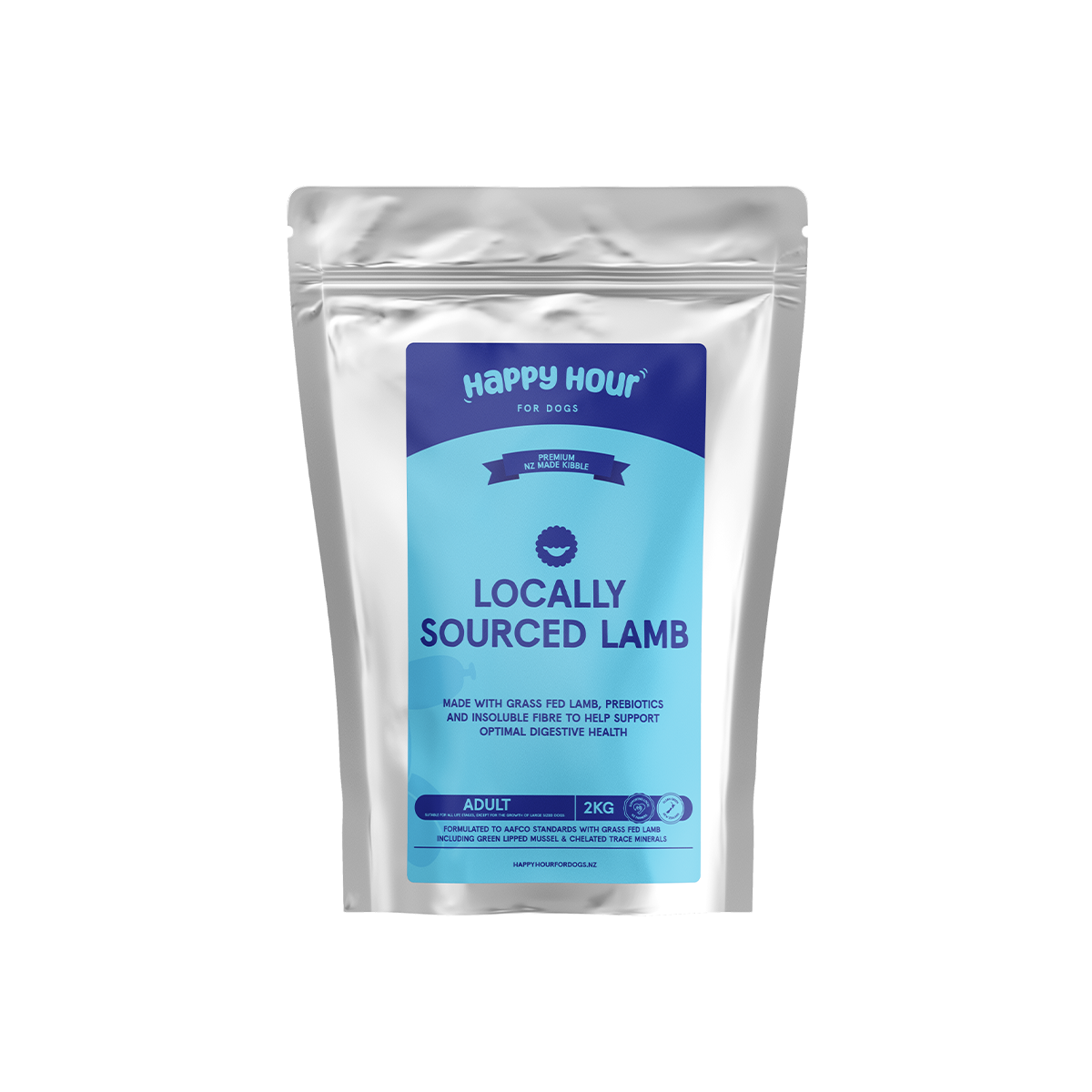
Happy Hour is a NZ-made, grain-free lamb kibble that's naturally low in fat and high in fibre from real ingredients. It's been tested across 48,000+ meal times at K9 Heaven doggy daycare in Auckland — and it's a solid choice for weight-conscious owners who want quality without complexity.
Treat Calories Count
Treats are easy to forget, but they add up fast. If your dog gets multiple treats per day, those calories need to come out of their main meal. A general rule: treats shouldn't exceed 10% of daily calorie intake. Use small pieces, low-calorie options, or pieces of their kibble as treats during training.
Regular Weigh-Ins
Weigh your dog monthly, or more often if they're actively losing weight. Small changes catch early, before they become big problems. Many vets will let you use their scales for free between appointments.
Exercise Is Part of the Picture
Exercise alone rarely produces significant weight loss in dogs — diet is the bigger lever. But regular movement keeps muscles toned, metabolism ticking, and joints healthy. The right amount and type of exercise varies by breed (more on that in each breed's article below).
The 21 Breeds Covered in This Cluster
These are the breeds most commonly seen carrying excess weight in NZ. Each one has a dedicated article with breed-specific feeding, exercise, and food advice.
The Most Weight-Prone Breeds
- Labrador Retriever — The poster dog for canine weight gain. The POMC gene mutation means many Labs are genuinely always hungry.
- Golden Retriever — Food-motivated, prone to pancreatitis, and often overfed by loving owners.
- Beagle — Small but mighty appetite. Built for endurance, not suburban life.
- Dachshund — Extra weight puts their spine at serious risk. Weight management isn't optional for Dachshunds.
- Cavalier King Charles Spaniel — Prone to both weight gain and pancreatitis, which makes food choices critical.
- Cocker Spaniel — Enthusiastic eaters with a tendency to round out quickly.
- Pug — Brachycephalic (flat-faced) breeds can't exercise their way to a healthy weight. Diet is everything.
- French Bulldog — Same flat-face problem as Pugs. Weight management is primarily diet-driven.
- Basset Hound — Low energy by nature, with a long back at risk from extra weight.
- Rottweiler — Powerful dogs who slow down as they age, and whose metabolism doesn't always keep up.
Other Breeds to Watch
The following breeds are also commonly affected. Their dedicated articles are coming soon — but the general principles in this guide apply to all of them.
- Boxer — Muscular and energetic when young, but they slow significantly in middle age and can gain weight quickly if diet isn't adjusted.
- English Bulldog — Heavy, low-energy, and prone to respiratory issues that limit exercise. Weight management is almost entirely diet-driven.
- Miniature Schnauzer — Famously prone to hyperlipidaemia and pancreatitis. A low-fat diet isn't optional for this breed.
- Shih Tzu — Small dogs with big appetites. Easy to overfeed because even a small amount of extra food represents a large percentage of their daily needs.
- Pembroke Welsh Corgi — Big appetite in a small body. Their herding background means they're efficient energy storers.
- Chow Chow — Low energy and naturally slower metabolism. Not a breed that forgives inconsistent portion control.
- Shar Pei — Prone to skin conditions that worsen with excess weight, plus a naturally low-activity temperament.
- Bloodhound — Like Beagles and Bassets, bred for endurance work. Their appetite reflects that heritage, but modern life doesn't match it.
- Saint Bernard — Giant breed with a slow metabolism. Even small daily overfeeding accumulates quickly given their size.
- Staffordshire Bull Terrier — Muscular and motivated, but very treat-responsive. Staffies often gain weight gradually through excessive treating.
- Border Terrier — Small and tenacious, but surprisingly prone to weight creep, especially after desexing.
When to See a Vet
If your dog is significantly overweight, or if they've gained weight rapidly without an obvious cause, talk to your vet before starting a weight loss programme. Rapid unexplained weight gain can signal thyroid problems, Cushing's disease, or other underlying conditions. Your vet can also help you set a realistic target weight and check-in schedule.
For dogs that are moderately overweight and otherwise healthy, the principles in this guide and the breed-specific articles are a solid starting point. The key is consistency — small changes held over months, not dramatic interventions held for weeks.
The Bottom Line
Some dogs are wired to gain weight. That's not a character flaw — it's biology, history, and sometimes a gene mutation that makes them genuinely feel hungrier than other dogs. Understanding why your breed is at risk is the first step to doing something about it.
The breeds on this list do best with:
- Measured portions of a high-protein, high-fibre, lower-fat food
- Treats kept to a minimum (and counted as part of daily intake)
- Regular weigh-ins so small changes are caught early
- Exercise appropriate to their breed and health status
- Annual vet check-ins that include a body condition assessment
See our overweight dogs NZ guide for a deeper dive into weight management principles, or head to your breed's article using the links above.
Frequently Asked Questions
Which dog breed gains weight the fastest?
Labrador Retrievers are probably the most well-known for rapid weight gain, partly due to the POMC gene mutation that affects hunger signalling. But Pugs, English Bulldogs, and French Bulldogs also gain quickly because their limited exercise capacity means any calorie surplus accumulates fast.
How much overweight is dangerous for a dog?
Even 10-15% above ideal weight puts measurable extra stress on joints, the heart, and the respiratory system. For small breeds like Dachshunds and Cavaliers, even a kilogram of extra weight is significant relative to their total body mass.
Can I help my dog lose weight just by changing their food?
Yes, food change is often more effective than increasing exercise for weight loss. Switching to a lower-calorie, higher-fibre food while measuring portions carefully is the most reliable approach. Exercise helps with muscle retention and overall health, but diet is the bigger lever.
How long does it take for a dog to lose weight?
Safe weight loss in dogs is around 1-2% of body weight per week. Losing weight too fast can cause muscle loss and other health issues. A 5kg loss for a medium-sized dog typically takes 3-6 months at a healthy rate.
Should I feed my overweight dog less of their current food, or switch foods?
Both options can work. If the current food is high in fat or fillers, switching to a lower-fat, higher-fibre option often produces better results than simply reducing quantity (which can leave dogs feeling hungry). If the food is already high quality, measuring portions carefully and reducing by 10-20% is a reasonable starting point.
