Labrador Weight Management: Keeping Your Lab Healthy (NZ)
Labradors are one of New Zealand's most popular dogs — and also one of the breeds most likely to end up overweight. If your Lab always seems hungry, hoovers their food in seconds, and would happily eat twice their portion without blinking, there's a real biological reason for that. It's not greed, and it's not bad ownership. For many Labs, hunger is hardwired into their DNA.
Key Takeaways
- Many Labradors carry a POMC gene mutation that impairs their brain's ability to signal fullness
- Labs can appear hungry even when they've eaten a full, appropriate meal
- Weight management for Labs is primarily about strict portion control and food quality
- Even moderate excess weight puts serious strain on Lab joints, which are already prone to dysplasia
- A high-fibre, lower-fat food helps Labs feel fuller on fewer calories
Why Labradors Are Prone to Weight Gain
Researchers at Cambridge University identified a genetic mutation in the POMC gene (pro-opiomelanocortin) that affects a significant proportion of Labradors. This gene plays a role in signalling the brain that a meal is complete — in affected dogs, that signal is blunted or absent. The dog finishes their bowl and genuinely doesn't feel satisfied the way a dog without the mutation would.
This isn't a behaviour problem. These dogs aren't being greedy — they're operating under a biological disadvantage that makes them feel perpetually hungry. Studies suggest around 25% of the general Lab population carries this mutation, and the number is even higher in assistance and guide dogs (where food motivation was deliberately selected for).
On top of the genetic factor, Labradors are naturally food-motivated, well-muscled dogs with enthusiastic personalities. They're easy to train with food rewards — but those same food rewards add up fast. Add a treat here, a scrap there, a generous scoop from a well-meaning family member, and a Lab can easily consume double what they need.
Labs are also prone to hip and elbow dysplasia. Excess weight accelerates the wear on those joints, turning a manageable condition into a painful, expensive one. Keeping your Lab lean is one of the most effective things you can do for their long-term joint health.
How to Tell If Your Labrador Is Overweight
The ideal weight for a Labrador is roughly 25-36kg depending on sex and build, but the scales alone don't tell the whole story. Use the body condition score instead.
Run your hands firmly along your Lab's ribcage. You should be able to feel each rib without pressing hard. If you need to dig in to find them, your dog is carrying too much weight. Looking from above, there should be a clear waist — a visible narrowing behind the ribs. From the side, the belly should tuck upward rather than hanging level or drooping.
A Lab at healthy weight looks lean and athletic. If yours looks more like a barrel from above, or their collar sits noticeably higher than their shoulder blades, it's worth taking action. For a full guide to body condition scoring, see our overweight dogs NZ guide.
Feeding a Labrador for a Healthy Weight
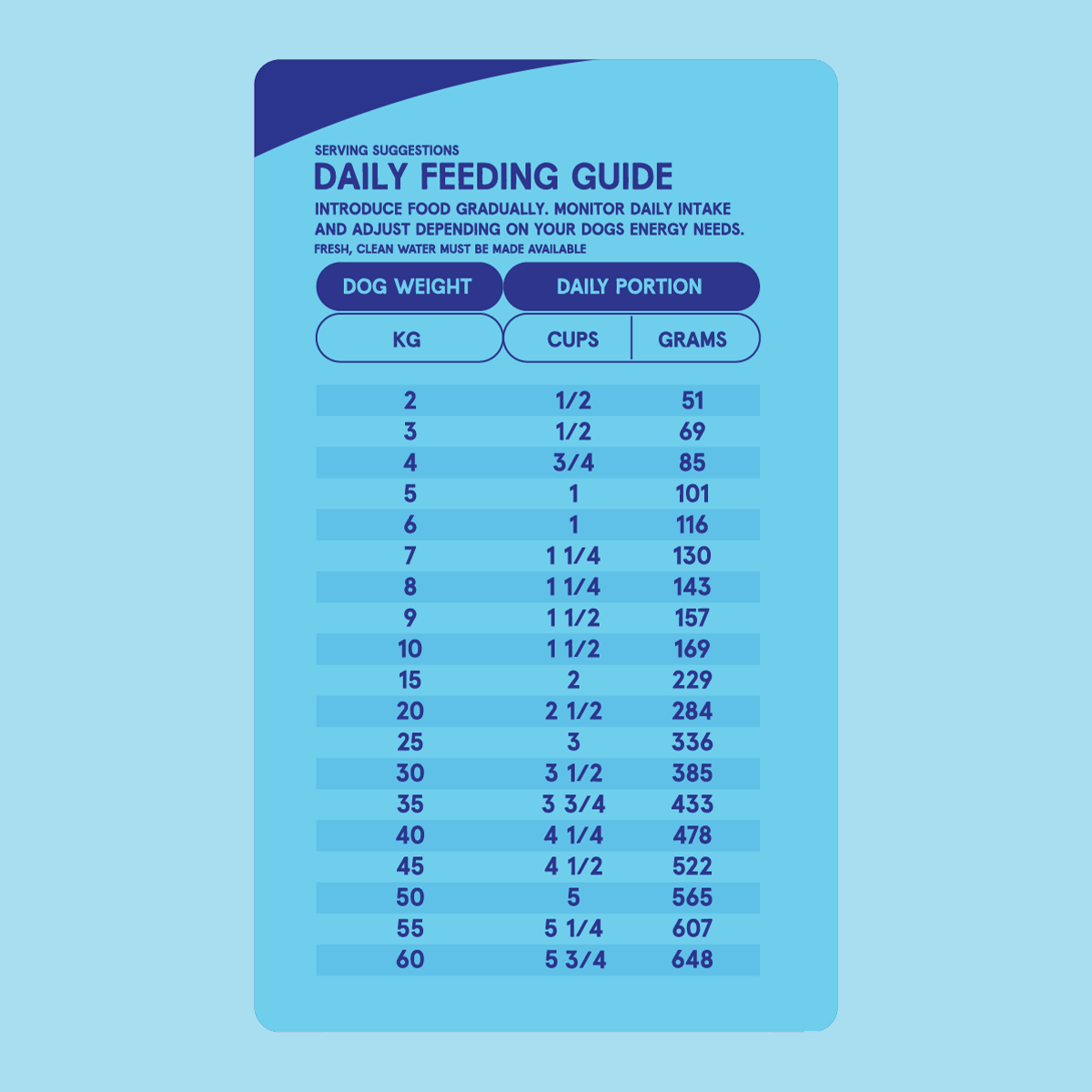
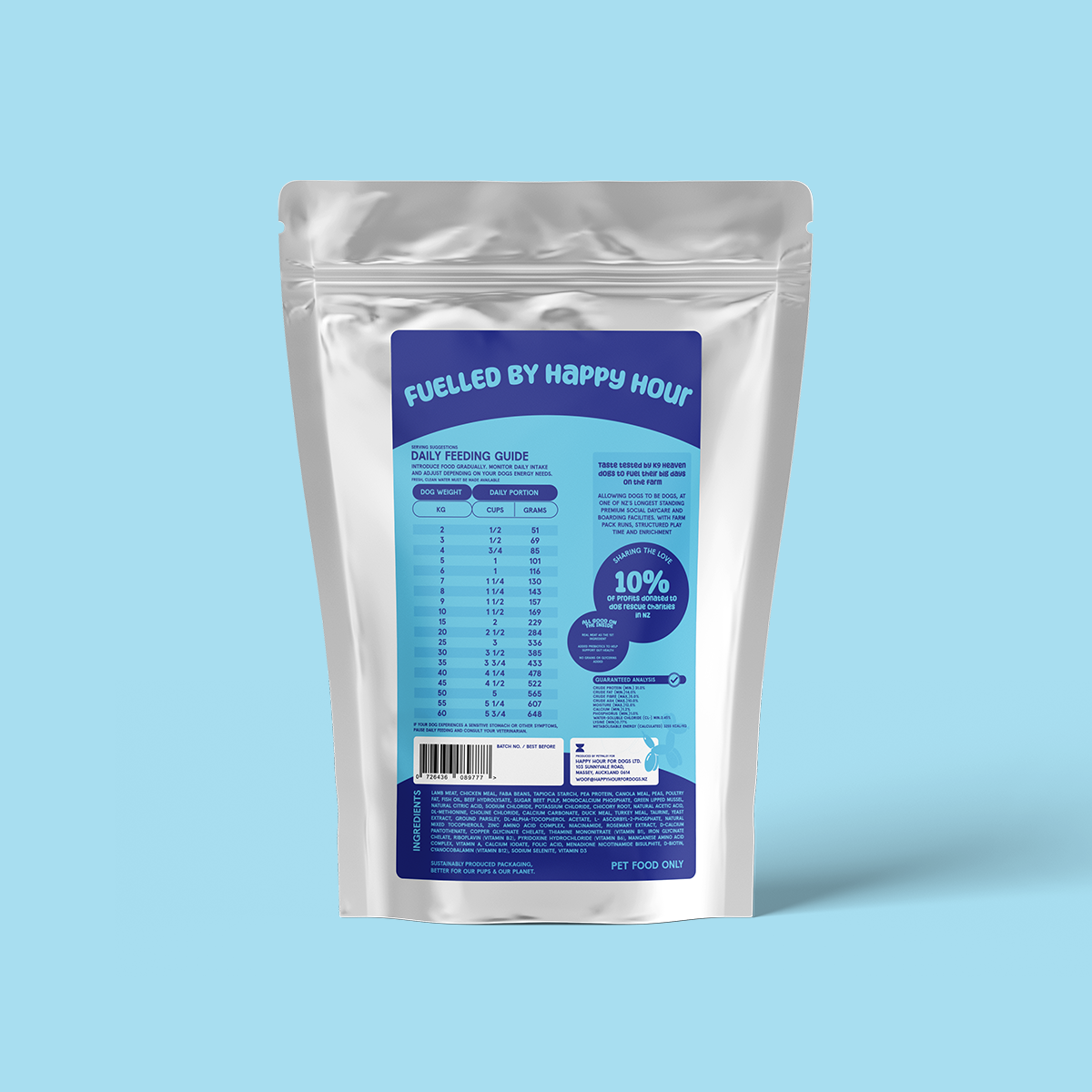
The golden rule for Labs: measure every meal. Not approximately — exactly. Use a kitchen scale and follow the feeding guidelines on your dog food, then adjust based on your dog's actual condition over time. A cup "slightly heaped" instead of level can mean 20-30% more calories per day, every day.
Feed twice a day rather than once. Splitting the daily ration into two meals helps Labs feel like they're eating more often, which eases the constant-hunger sensation. It also reduces the risk of bloat, which large deep-chested breeds like Labs are susceptible to.
Treats are a major source of hidden calories for Labs — precisely because they respond so enthusiastically to them. Keep treats small (thumbnail-sized), low-calorie, or use pieces of their kibble as training rewards. When the whole family is involved in treating, set a daily treat budget and stick to it. A Post-it note on the treat bag or jar works surprisingly well.
For Labs that inhale their food and still seem ravenous, slow-feeder bowls and puzzle feeders are worth using. They make the meal last longer, which gives the digestive system time to start sending satisfaction signals — even in dogs with the POMC mutation.
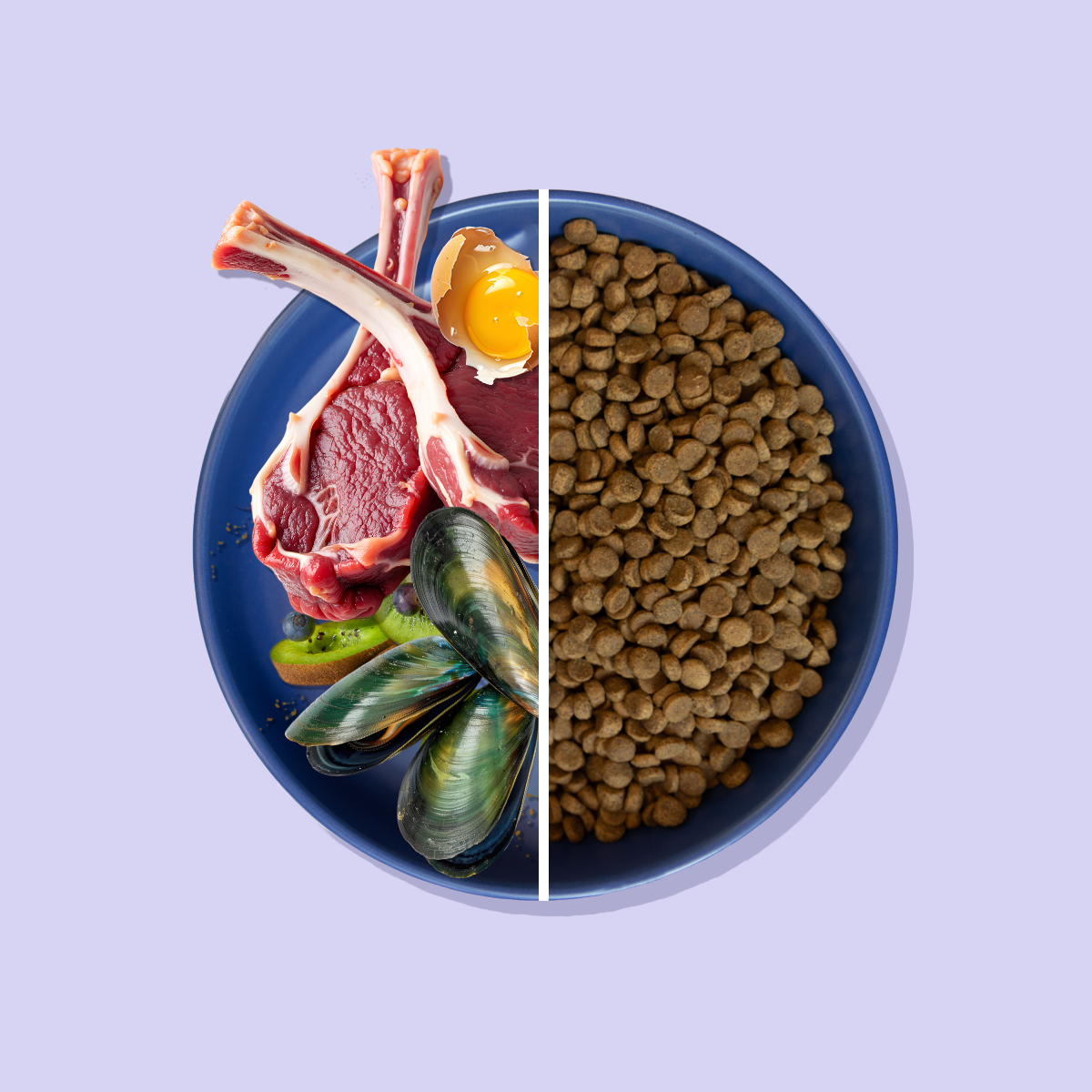
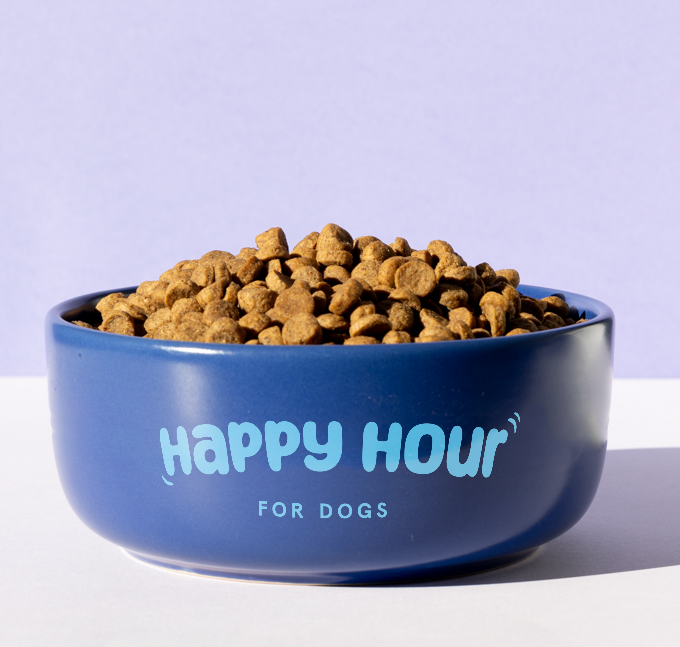
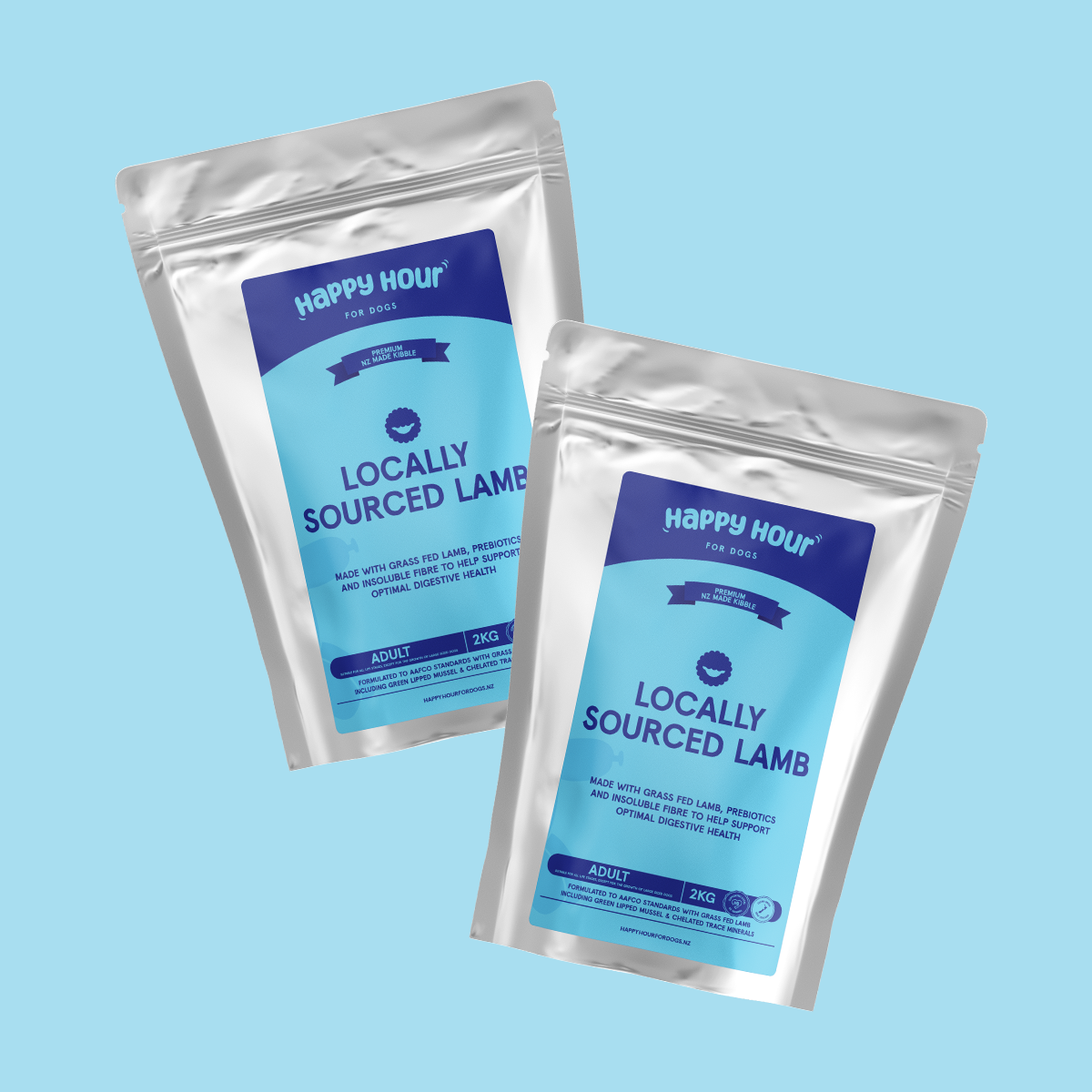
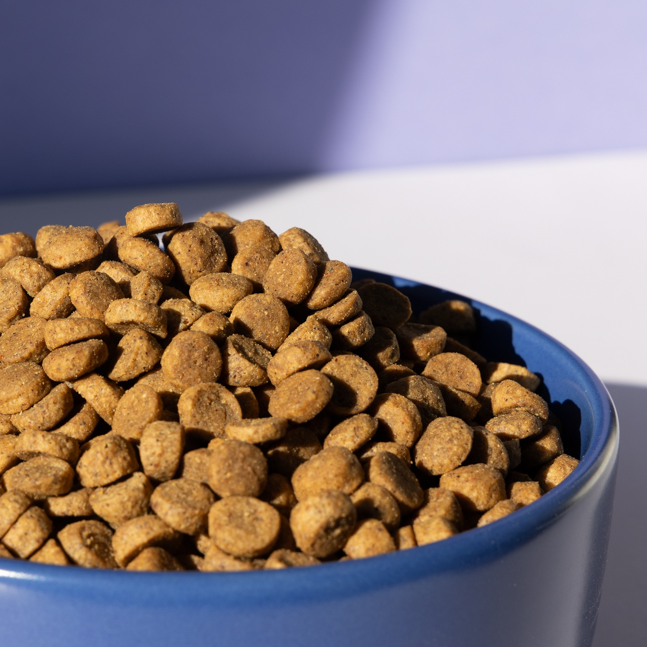
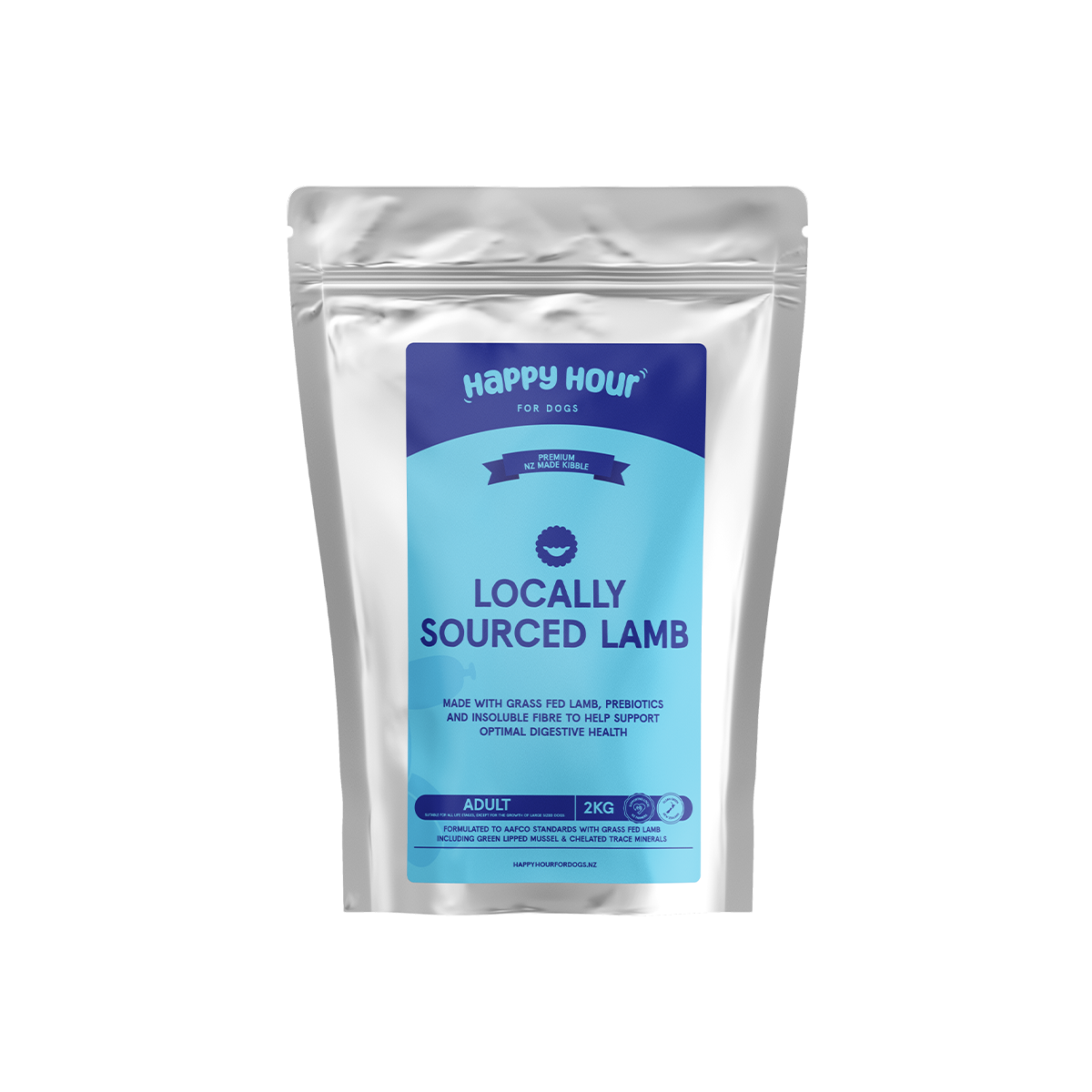
When it comes to food choice, look for something with high protein to support muscle mass, genuine fibre to promote fullness, and lower fat to make calorie management easier. Happy Hour is a NZ-made grain-free lamb kibble that ticks those boxes — no grain fillers padding out the calories, just real ingredients in sensible proportions. It was developed and tested at K9 Heaven doggy daycare in Auckland, where Labs are a regular fixture.
Exercise Tips for Labradors
Labs are built for work, and they do best with proper daily exercise. Adult Labs generally need 60-90 minutes of exercise per day, split across at least two sessions.
Good options include swimming (exceptional for Labs and easy on joints), retrieving games, long walks, and off-leash running when safely possible. Mental exercise matters too — training sessions, scent games, and puzzle toys tire a Lab out faster than pure physical activity alone.
For Labs with existing joint issues, low-impact exercise is better: swimming, gentle walks on soft ground, and hydrotherapy if available through your vet.
Puppies and senior Labs need different approaches. Puppies shouldn't do repetitive high-impact exercise until their growth plates close (around 12-18 months for large breeds). Seniors may need shorter, more frequent walks rather than long ones.
Exercise helps with fitness and muscle tone, but it won't outrun a poor diet in a breed prone to weight gain. Diet is the bigger lever.
What to Look for in Dog Food for Labradors
For Labs, food composition is everything. Avoid foods with high fat content, large amounts of grain fillers, or artificial additives. Look for:
- Named animal protein as the first ingredient — not "meat meal" or "animal derivative"
- Real dietary fibre from vegetables or legumes — helps Labs feel fuller for longer
- Lower fat content — keeps calorie density manageable
- No grains, soy, or corn — these add calories without quality nutrition
- No added sugars or artificial flavours — Labs don't need any more food motivation
Happy Hour's grain-free lamb kibble is made from NZ-sourced lamb, with real fibre, prebiotics, and green-lipped mussel for joint support. For a breed prone to both weight gain and joint problems, that combination is genuinely useful. You can find it at happyhourfordogs.nz.
For more on managing weight across dog breeds, see our guide to dog breeds prone to weight gain.