Gut health has become a bit of a buzzword in human nutrition, and for good reason. The research connecting the gut microbiome to overall health, immunity, mood, and disease prevention is compelling. Dogs have the same biological reality: a healthy gut supports virtually everything else in the body. And prebiotics are one of the most effective ways to build and maintain that gut health.
Key Takeaways
- Prebiotics vs Probiotics: The Key Difference
- Why Gut Health Matters for Dogs
- What Prebiotics Actually Do in the Gut
- The Main Prebiotic Sources for Dogs
- Signs Your Dog Might Need More Prebiotic Fibre
But prebiotics are often confused with probiotics, and the difference matters. Here's a clear guide to what prebiotics are, what they do for your dog, and how to know if your dog's food is actually supporting gut health or just claiming to.
Key Takeaways
- Prebiotics feed beneficial gut bacteria; probiotics add new bacteria - they work differently
- A healthy gut microbiome affects digestion, immune function, coat quality, and even mood
- Chicory root (inulin) is one of the most effective and well-researched prebiotic sources for dogs
- Signs of poor gut health include loose stools, gas, inconsistent digestion, and dull coat
- Prebiotic fibre also adds bulk to stools, which is important for natural anal gland expression
Prebiotics vs Probiotics: The Key Difference
Most people have heard of probiotics. They're live bacteria, often from fermented foods or supplements, that add beneficial microorganisms to the gut. Think yoghurt, kefir, or the refrigerated supplements you see in pharmacies.
Prebiotics are different. They're not bacteria themselves. They're food for bacteria. Specifically, prebiotics are types of dietary fibre that pass through the stomach and small intestine undigested, arriving intact in the large intestine where they're fermented by beneficial gut bacteria.
Think of it this way: probiotics are new residents moving into the neighbourhood; prebiotics are the food supply that lets the residents already living there thrive. Both can be valuable, but prebiotics are often the more practical choice in a dry dog food context because they survive the manufacturing process far better than live bacteria do.
You can have a food packed with probiotics on the label that delivers very little by the time it's been cooked, extruded, and stored for months. Prebiotics, being non-living fibres, survive that process intact.
Why Gut Health Matters for Dogs
The gut is not just about digestion. Here's what a healthy gut microbiome actually supports:
Digestion and Nutrient Absorption
The most obvious function. A balanced gut microbiome helps break down food properly, produces enzymes that aid digestion, and improves the absorption of key nutrients. Dogs with poor gut health often show this as inconsistent stools, excessive gas, or food that seems to "pass straight through."
Immune Function
Around 70% of the immune system is located in the gut-associated lymphoid tissue. The composition of the gut microbiome directly influences how well this system functions. Dogs with disrupted gut bacteria tend to have more frequent infections, slower recovery, and more pronounced allergy responses.
Coat and Skin Health
The gut-skin axis is increasingly understood in both human and veterinary medicine. Poor gut health often manifests as dull coat, dry skin, dandruff, or increased shedding. Improving gut health frequently improves these symptoms even when no topical treatment has changed.
Mood and Behaviour
The gut-brain connection is real in dogs as in humans. Research in veterinary science has linked gut microbiome health to anxiety, reactivity, and general mood. This is an emerging area but the early evidence is interesting.
Stool Quality
This is usually the most visible sign. Consistent, well-formed stools are a reliable indicator of good gut health. Loose, variable, or excessively smelly stools often point to gut microbiome imbalance.
What Prebiotics Actually Do in the Gut
When prebiotic fibre arrives in the large intestine, beneficial bacteria ferment it. This fermentation process produces short-chain fatty acids (SCFAs), particularly butyrate, propionate, and acetate. These SCFAs are remarkable little compounds:
- Butyrate is the primary energy source for the cells lining the colon, keeping the gut wall healthy and intact
- SCFAs lower the pH of the gut environment, making it less hospitable to harmful bacteria
- They signal immune cells in the gut to regulate inflammatory responses appropriately
- They support the mucus layer that lines and protects the intestinal wall
The net result: more beneficial bacteria, fewer harmful bacteria, a stronger gut wall, better stool consistency, and improved overall gut function. Prebiotics essentially tilt the ecological balance of the gut in your dog's favour.
The Main Prebiotic Sources for Dogs
Chicory Root (Inulin)
The gold standard of prebiotic fibres for dogs. Chicory root is high in inulin, a type of fructooligosaccharide (FOS) that is particularly well-studied for prebiotic effects. It's highly fermentable, well-tolerated by most dogs, and consistently effective at increasing beneficial Bifidobacterium and Lactobacillus populations in the gut.
Fructooligosaccharides (FOS)
These are the same compounds found in chicory root but sometimes added directly as a purified ingredient. FOS is one of the most well-researched prebiotic compounds for both human and animal health.
Beet Pulp
A common fibre source in dog food. Beet pulp is a moderate prebiotic, and it also provides bulk fibre that supports stool formation. It's less potent than chicory root for microbiome purposes but serves double duty as a stool-quality aid.
Psyllium Husk
A soluble fibre with both prebiotic and stool-forming properties. Particularly useful for dogs with loose stools, as it absorbs water and adds bulk.
Signs Your Dog Might Need More Prebiotic Fibre
Not every dog shows obvious signs of poor gut health. But these patterns are worth paying attention to:
- Loose or inconsistent stools that come and go without a clear cause
- Excessive gas or bloating after meals
- Stools that are excessively smelly (beyond what's normal for dogs)
- Frequent bouts of soft stools after minor dietary changes, stress, or travel
- Dull coat or flaky skin without an obvious explanation
- Slow recovery from gastrointestinal upsets
If you recognise several of these in your dog, gut health is probably worth addressing. Dietary change is the most sustainable long-term approach, and prebiotic-containing food is the foundation.
What to Look for on a Dog Food Label
Reading dog food labels for gut health support requires knowing what to look for:
- Chicory root or chicory root extract: this is your clearest signal that a food has been formulated with prebiotic gut health in mind
- Fructooligosaccharides (FOS) or inulin: these may appear as separate inclusions
- Beet pulp: a useful supporting fibre
- Balanced fibre sources generally: the total dietary fibre should come from quality sources, not just cheap fillers
Be wary of foods that list probiotics on the label but provide no prebiotic support. Without a prebiotic food supply, probiotics have limited ability to colonise the gut. The best formulations provide both, but if you had to choose one for sustainability and effectiveness in a dry food, choose prebiotics.
Also watch for ingredient quality overall. A food built on cheap grains and by-products creates a different gut environment than one built on quality protein and whole food ingredients. Prebiotic fibre is one part of the picture.
Prebiotics in Happy Hour
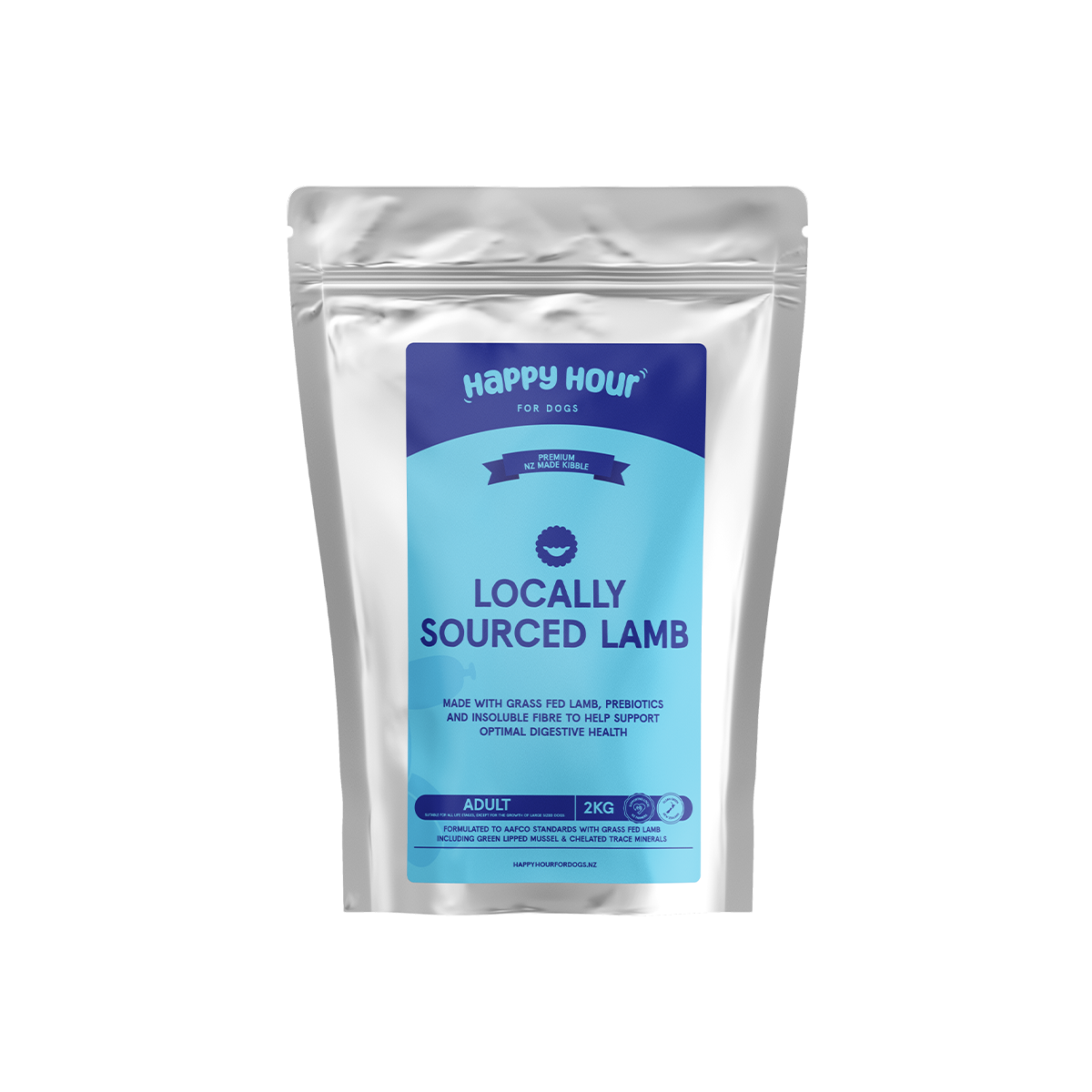
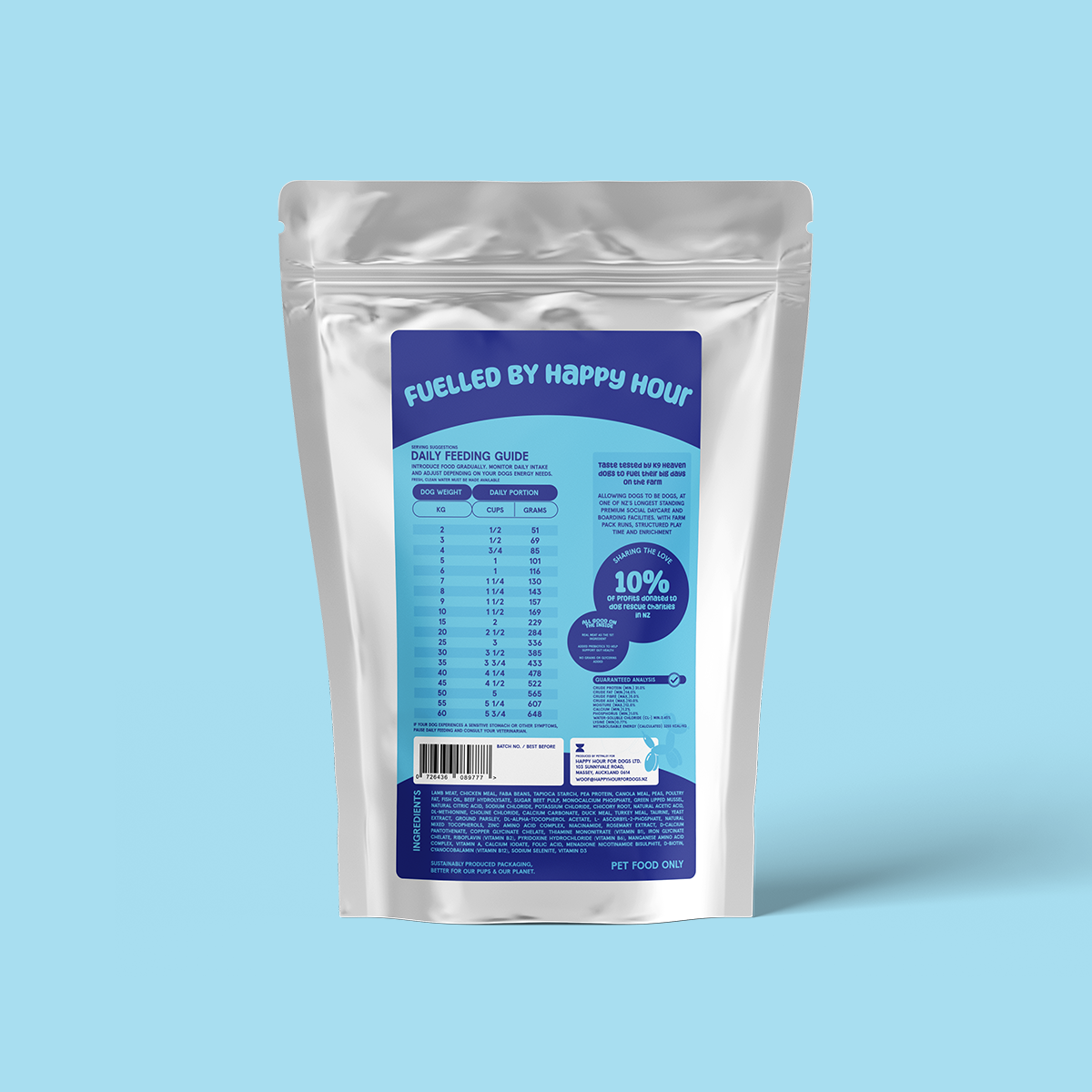
Happy Hour includes chicory root as a deliberate prebiotic inclusion. This wasn't a box-ticking exercise. Chicory root is in the formula because gut health is foundational, and the research on chicory inulin for canine gut microbiome health is solid.
The inclusion works alongside the grain-free, high-quality protein base of the food. Quality animal protein feeds the dog; chicory root feeds the microbiome. The combination supports not just gut function but the whole cascade of benefits that flows from a healthy gut: better nutrient absorption, more consistent stools, improved immune function, and a better-looking coat.
If your dog has struggled with inconsistent digestion on other foods, it's worth asking whether that food was supporting gut health or just ignoring it. A lot of budget and mid-range dog foods treat digestive ingredients as an afterthought. In a premium formula, they're a priority.
The Practical Takeaway
Gut health isn't a trend. It's a foundation. For your dog, a healthy gut means better digestion, a stronger immune system, a better coat, and more consistent wellbeing across the board.
Prebiotics are the most practical and sustainable way to support that gut health through food. Look for chicory root or FOS on the ingredient label of your dog's food. If it's not there, it's not supporting the microbiome.