Rottweiler Weight Management: Keeping Your Rottie Lean (NZ)
Rottweilers are powerful, loyal dogs that can look impressively solid even when they're carrying too much weight. That's part of the challenge — an overweight Rottweiler can still look "big and healthy" to a casual observer. But a Rottie carrying extra kilograms is putting serious daily strain on joints that are already vulnerable to dysplasia, and shortening a life that's already not long enough. Keeping your Rottweiler lean is one of the most important things you can do for them.
Key Takeaways
- Rottweilers have a natural tendency to slow down as they age while their appetite stays constant
- Extra weight compounds the breed's existing joint and cardiac health vulnerabilities
- They're a large, heavy breed — portion control requires discipline even if the dog seems to handle large quantities
- A high-protein, lower-fat diet supports lean muscle while managing overall weight
- Regular exercise is important, but diet is the bigger lever for long-term weight management
Why Rottweilers Are Prone to Weight Gain
Rottweilers were originally bred as droving dogs in Germany — herding cattle and pulling carts for butchers. That working heritage produced a naturally strong, muscular dog with a hearty appetite. In a modern home where that physical output doesn't happen, a Rottweiler's calorie needs are much lower than their size and appetite might suggest.
The weight gain often happens gradually across middle age. Young Rottweilers are typically active and maintain good condition without much effort. But from around 5-7 years, Rotties often slow down significantly — they exercise less, rest more, and their metabolism shifts. If feeding stays at the same rate as their active years, weight gain is almost inevitable.
Desexing is another common tipping point. Like most breeds, desexed Rottweilers have lower energy requirements, and owners who don't adjust food intake accordingly will see gradual weight accumulation.
Rottweilers are also a breed where "big" is part of the identity — which can lead owners to be less alert to extra weight than they would be with a smaller breed. An extra 5kg on a 50kg Rottweiler feels like less than it is. But in a breed prone to hip dysplasia, elbow dysplasia, and heart conditions, those extra kilograms add real daily strain to systems that are already working hard.
How to Tell If Your Rottweiler Is Overweight
Adult male Rottweilers typically weigh between 50-60kg; females between 35-48kg. Body condition scoring matters more than hitting a specific number.
Run your hands firmly along the ribcage. On a well-muscled large breed, you'll need to apply some pressure — but you should still be able to distinguish individual ribs. If the ribs are completely lost under a thick layer of fat and you're pressing quite hard to find them, that's too much. From above, there should be a visible waist. From the side, the belly should tuck up behind the ribcage.
A Rottweiler at healthy weight looks muscular and athletic — not bony, but not round either. If their side profile is straight or rounded rather than tucked, or if they've lost the slight waist when viewed from above, it's time to address it. Our overweight dogs NZ guide covers body condition scoring in detail.
Feeding a Rottweiler for a Healthy Weight
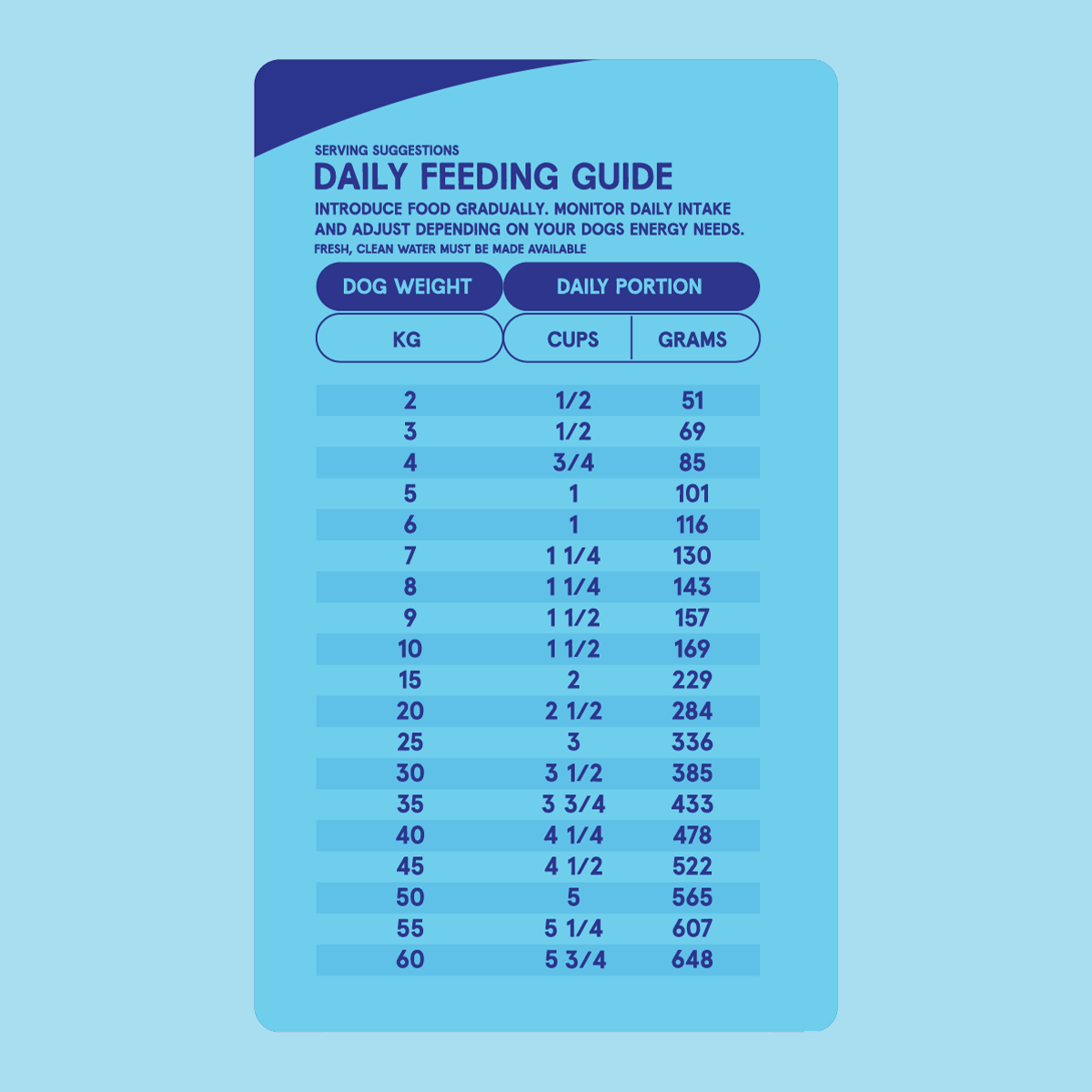
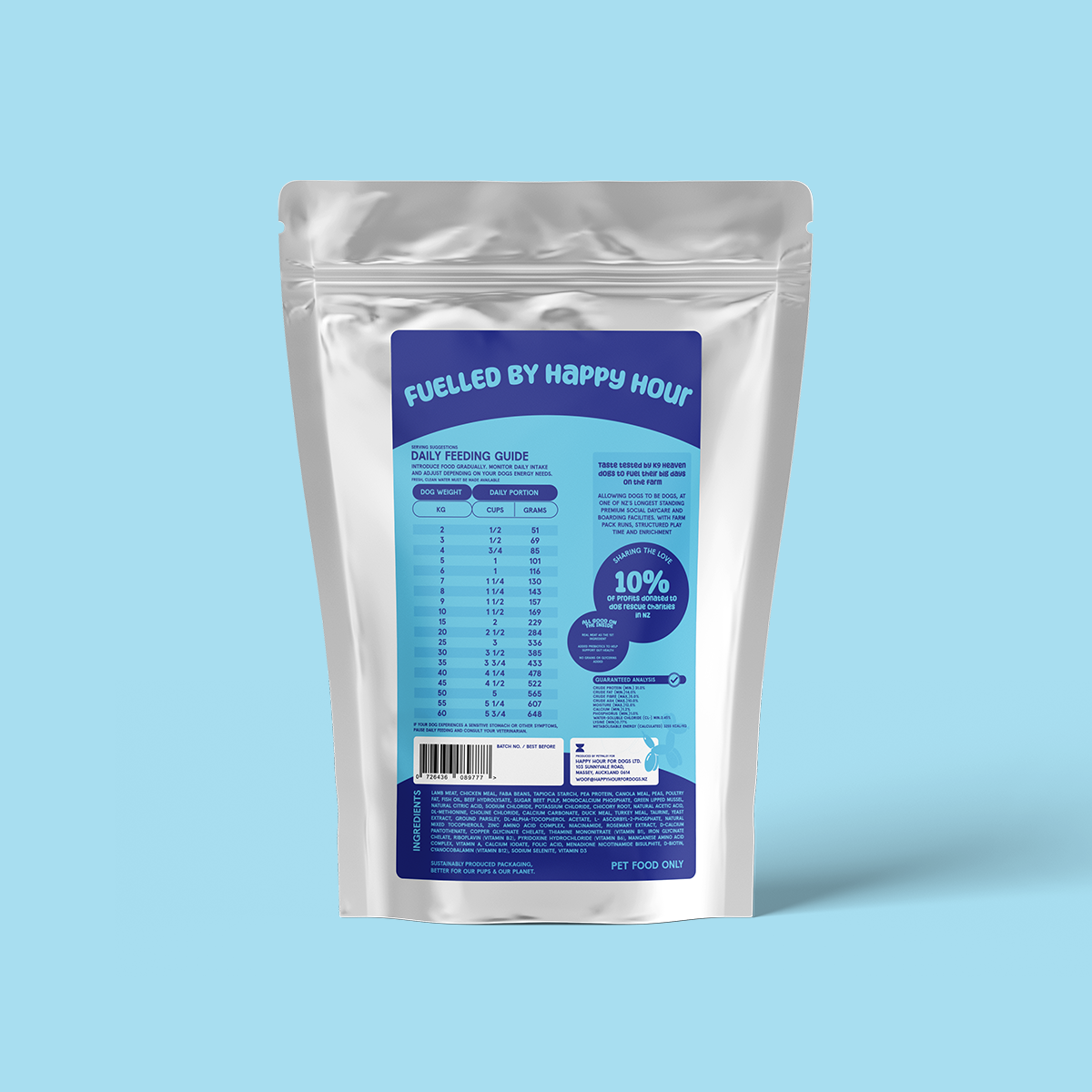
Measure meals on a kitchen scale. Large breeds are particularly prone to gradual portion creep — a generous scoop each meal adds up to significant extra calories per week for a dog this size. Follow the food's guidelines for your dog's target weight, adjusted based on their actual body condition over time.
Feed twice daily. Once-daily feeding of a large amount can contribute to bloat risk in deep-chested breeds — Rottweilers are in this category. Twice-daily feeding is better for digestion and portion management.
Adjust portions as your Rottweiler ages. A 3-year-old Rottweiler in peak activity needs more food than a 7-year-old who spends most of the day sleeping. Regularly reviewing portion sizes against your dog's current activity level and body condition is important maintenance, not a once-off.
Treats need to be managed. Large dogs often get large treats — it's proportional in the owner's mind, but a large commercial treat can be hundreds of calories. Use smaller pieces, choose lower-calorie options, or use pieces of their regular kibble as training rewards.
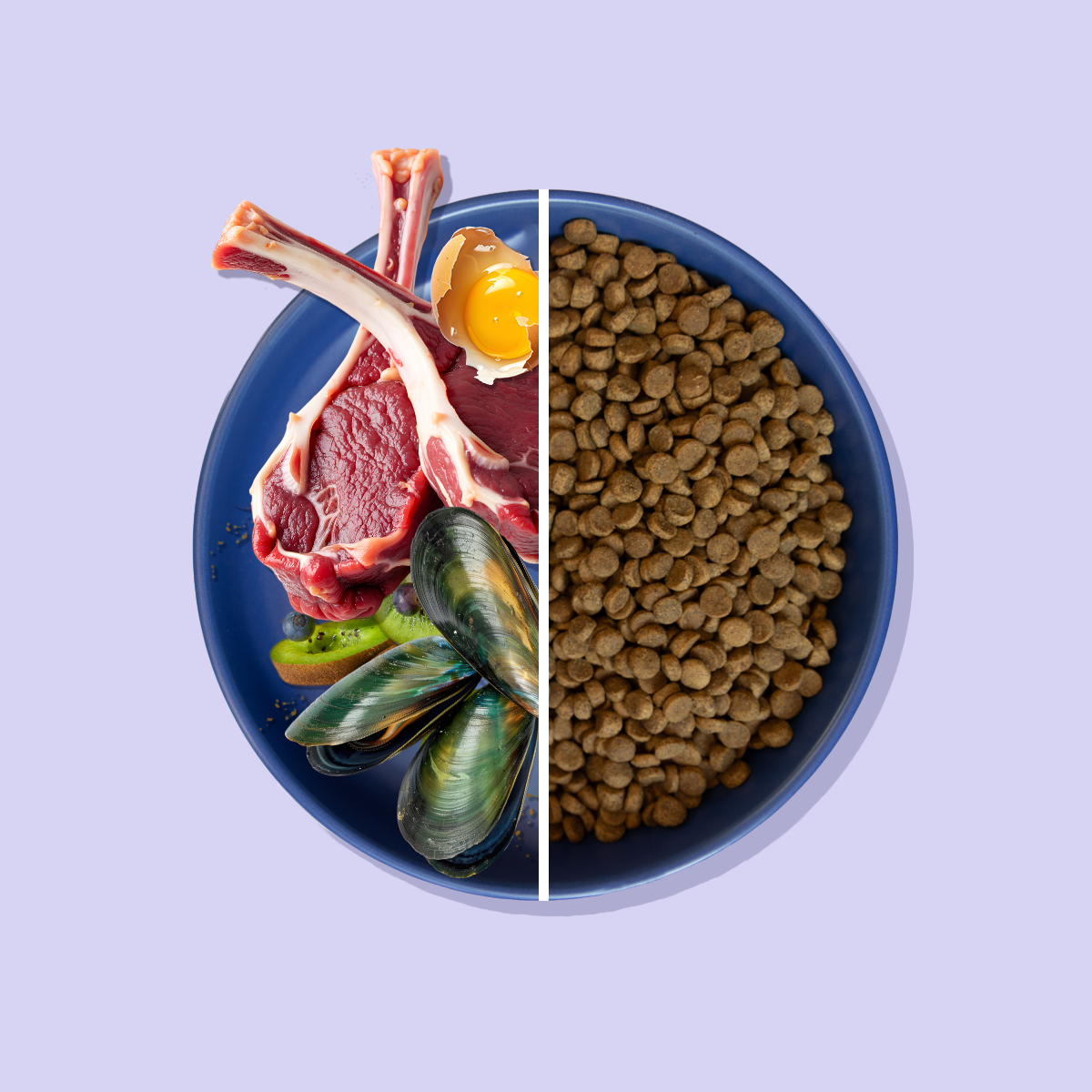
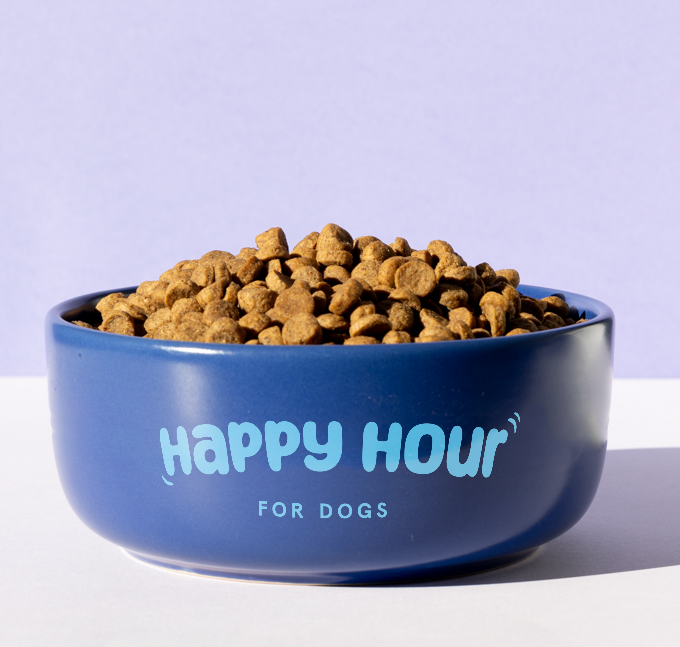
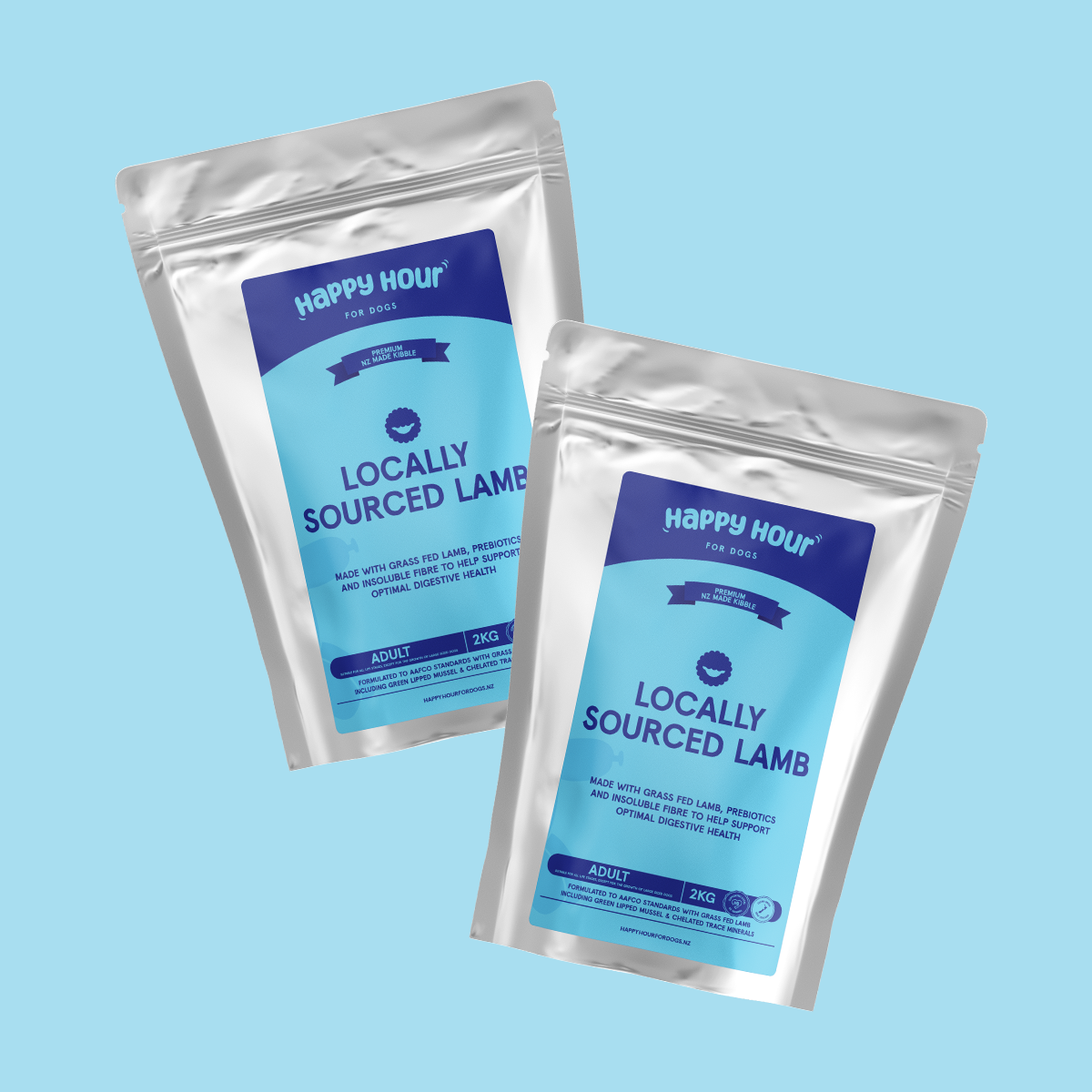
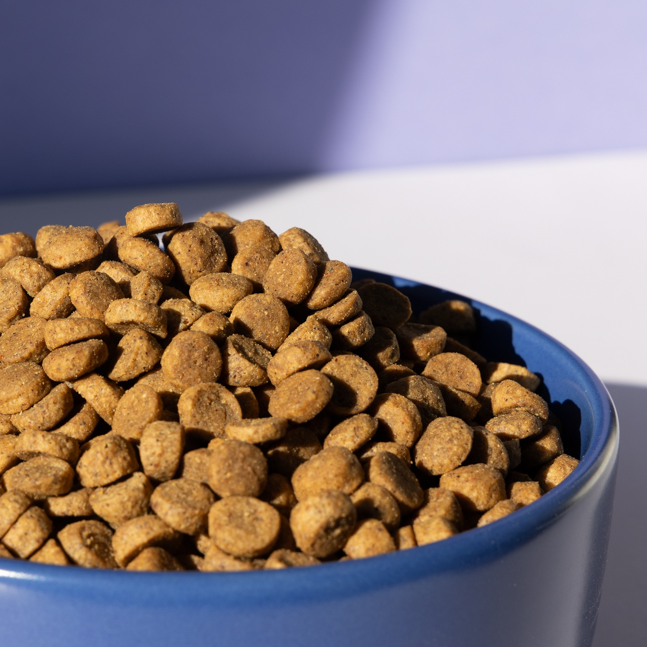
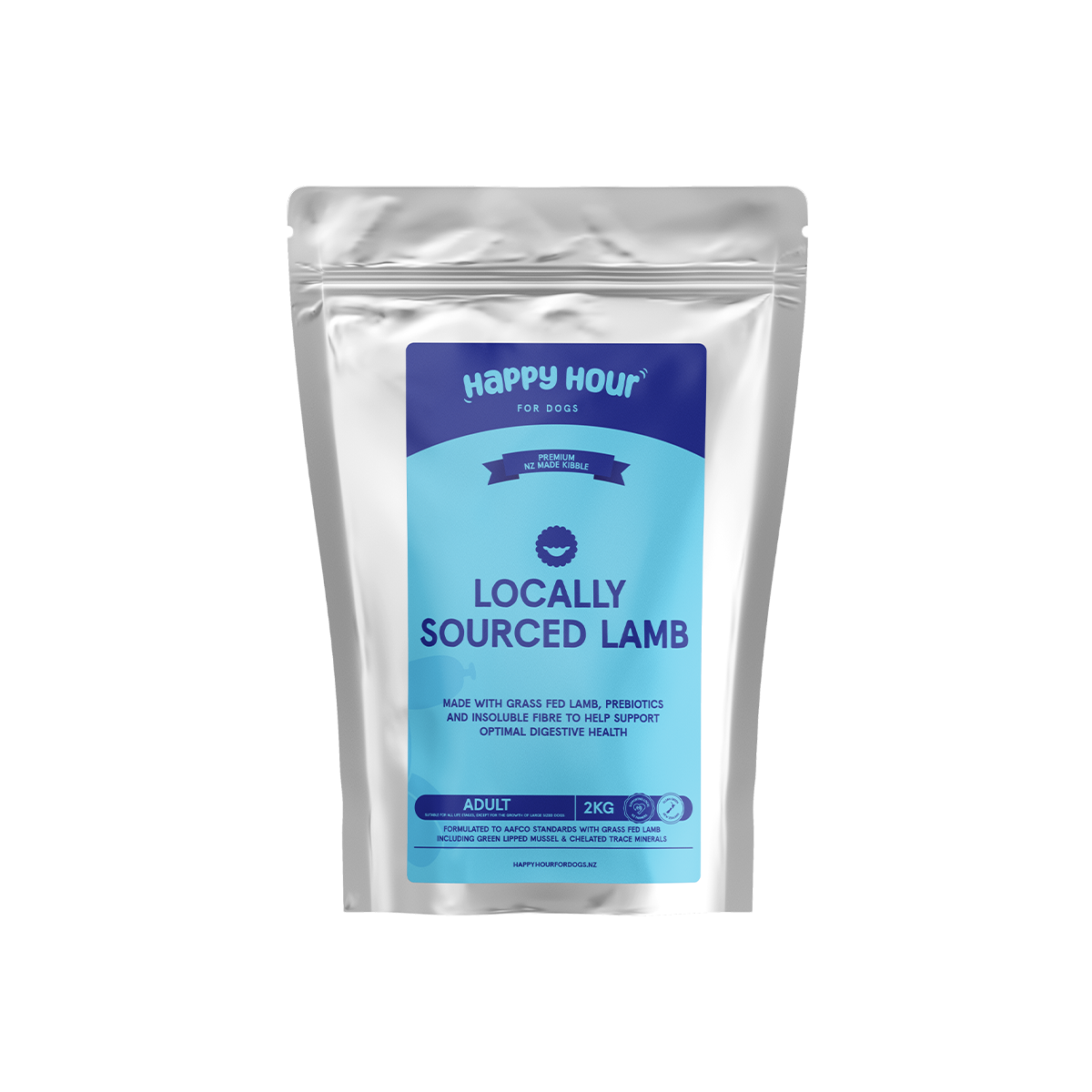
For large, heavy breeds prone to joint issues, a food that supports lean muscle without excess fat is the right approach. Happy Hour is a NZ-made grain-free lamb kibble with quality protein from NZ-sourced lamb, real dietary fibre, and green-lipped mussel for joint support. For a Rottweiler managing their weight while protecting their joints, those ingredients are working together in a useful way. Find it at happyhourfordogs.nz.
Exercise Tips for Rottweilers
Rottweilers need meaningful daily exercise — they're powerful dogs that do better with regular physical and mental challenge. Adult Rotties generally do well with 60-90 minutes of exercise per day.
Good exercise options for Rottweilers:
- Walking and hiking: Rotties are good walking companions and can handle varied terrain
- Swimming: Excellent for joint-stressed or older Rottweilers — low-impact but good whole-body exercise
- Obedience and training work: Rottweilers are intelligent and respond well to structured training, which provides mental exercise alongside physical movement
- Tracking and nosework: Mentally engaging and physically active
- Fetch and retrieving: Good for younger Rottweilers with healthy joints
As your Rottweiler ages, reduce intensity and impact. Older Rotties with joint issues do better with shorter, more frequent gentle walks than long demanding sessions. Hydrotherapy can be a good option for seniors or dogs recovering from joint surgery.
Avoid very high-impact repetitive activity (like extended jogging on hard surfaces) in dogs with hip or elbow concerns. Work with your vet if your Rottweiler has been diagnosed with dysplasia — exercise recommendations will be specific to their condition.
Exercise is important for Rottweiler health and muscle maintenance, but diet is the larger variable for weight management.
What to Look for in Dog Food for Rottweilers
For Rottweilers, especially those in middle age and beyond, food composition matters. Look for:
- High-quality animal protein as the primary ingredient — supports lean muscle mass, which helps maintain a healthy metabolism
- Joint-supporting ingredients — green-lipped mussel, omega-3 fatty acids, or glucosamine for a breed prone to hip and elbow dysplasia
- Appropriate fat levels — enough to support coat and energy, but not so high that calorie management becomes difficult
- Real dietary fibre — helps with satiety and digestive health
- No low-quality fillers — corn, wheat, and soy add empty calories without quality nutrition
Happy Hour's grain-free lamb kibble provides quality NZ protein, real dietary fibre, prebiotics, and green-lipped mussel. For a large breed with joint vulnerabilities and a tendency toward middle-age weight gain, that combination — lean protein, joint support, real fibre — addresses the most important nutritional priorities in one straightforward food.
For a broader overview of breeds that need weight management attention in NZ, see our dog breeds prone to weight gain guide.