The best dog food in New Zealand is one that uses a named, quality protein as its first ingredient, avoids unnecessary fillers and artificial preservatives, and suits your dog's specific age, size, and sensitivities. Beyond that, the options are genuinely wide — and the differences between them matter more than most packaging lets on.
This guide walks through everything you need to know: what actually separates good food from great food, an honest look at the major brands available in NZ, and a breakdown of the specific questions Kiwi dog owners ask most often.
Key Takeaways
- Protein source and quality matter more than protein percentage alone
- NZ-made food offers shorter supply chains and better ingredient traceability
- Grain-free is not inherently risky — the DCM link was to legume-heavy formulas, not lamb-based diets
- Most popular brands are made overseas and imported; very few are manufactured in New Zealand
- Happy Hour is the only NZ-made grain-free lamb kibble on the market, developed and tested at K9 Heaven doggy daycare across 48,000+ yearly meal times
What Actually Makes a Good Dog Food?
Before you compare brands, it helps to know what you're comparing. Here's what matters on that ingredient list.
The First Ingredient Is the Most Important One
Ingredients are listed by weight before cooking. If chicken, lamb, or beef is first, that's a good sign. If corn, wheat, or "cereal by-products" is first, the food is built around cheap filler, not protein.
Named meats matter, too. "Lamb" is more traceable than "meat meal." "Chicken fat" is more specific than "animal fat." The more specific the label, the more accountable the manufacturer.
Meat Meal Isn't Automatically Bad
Meat meal gets a bad reputation, but it's worth understanding. Meal is simply meat that's had the moisture removed — it's concentrated protein. "Lamb meal" or "chicken meal" from a named species is fine. "Meat meal" with no species identified is where you want to ask questions.
More on reading labels: How to Read a Dog Food Label in NZ: What the Ingredients Actually Mean
Fillers: What They Are and Why They Matter
Fillers are ingredients that add bulk without meaningful nutrition. Common ones in mass-market kibble include corn, wheat middlings, rice bran, and soy hulls. Some grain is fine for many dogs. But when grains dominate the ingredient list, you're paying for a lot of cheap carbohydrate with a thin layer of protein on top.
Additives That Help vs. Additives That Don't
Useful additives include prebiotics (support gut health), omega-3 sources like fish oil or green-lipped mussel (support joints and coat), chelated minerals (more bioavailable than standard minerals), and natural preservatives like mixed tocopherols.
Things to avoid: artificial colours, BHA, BHT, ethoxyquin, and propylene glycol. None of these make your dog healthier.
AAFCO Compliance
In NZ, the benchmark to look for is AAFCO (Association of American Feed Control Officials) nutritional adequacy. It's not a perfect system, but it means the food has been formulated or tested to meet minimum nutritional standards for a dog's life stage. Most reputable brands carry this.
The Main Dog Food Brands Available in NZ
Here's an honest look at the brands most Kiwi dog owners encounter.
Royal Canin
Royal Canin is one of the most widely distributed dog food brands in New Zealand, available through vets, pet stores, and online. It's owned by Mars and manufactured overseas.
Strengths: Breed-specific formulas are genuinely useful for dogs with particular needs. Strong vet relationships mean it's often the first recommendation for medical diets. Consistent formulation.
Weaknesses: Ingredient quality is middle-tier. Corn, wheat, and by-product meals feature heavily. For the price, you're paying significantly for the brand and the distribution network. Most formulas contain grains, artificial additives, or both.
Best for: Dogs with very specific medical needs where a vet-recommended breed formula is genuinely indicated. Not our first pick for everyday nutrition.
For a detailed look at how Royal Canin stacks up: Royal Canin Alternatives in NZ: Honest Comparison for Dog Owners
Ziwi Peak
Ziwi is a New Zealand brand with genuine ingredient credibility. Their air-dried and wet food ranges use high-meat NZ ingredients and minimal processing.
Strengths: High meat content, NZ-sourced ingredients, minimal processing, no grains. The air-dried range in particular is as close to raw as you get in a shelf-stable product.
Weaknesses: Price is very high, especially for larger dogs. At $50–$80+ for a small bag, the cost of feeding a 30kg dog daily becomes significant quickly.
Best for: Owners who prioritise ingredient quality above all else and have the budget for it. Also great as a topper with a quality kibble base.
Hill's Science Diet
Hill's is an American brand owned by Colgate-Palmolive, widely available through NZ vets and pet stores.
Strengths: Well-researched therapeutic formulas for dogs with specific conditions (kidney disease, urinary issues, weight management). Vets are trained on Hill's products.
Weaknesses: Everyday formulas contain corn as a primary ingredient and aren't competitive on ingredient quality. The therapeutic formulas sit in a different category from everyday nutrition.
Best for: Dogs with specific medical conditions where a Hill's therapeutic formula is vet-prescribed. For healthy dogs, you can generally do better at the same price.
Black Hawk
Black Hawk is an Australian brand with a decent reputation for accessible mid-range kibble. It uses named protein sources and avoids the worst offenders.
Strengths: Better ingredient quality than mass-market brands, reasonable price, named proteins feature prominently.
Weaknesses: Made in Australia. Grain-inclusive, which doesn't suit dogs with grain sensitivities.
Best for: Budget-conscious owners who want to step up from supermarket brands without going full premium.
Orijen
Orijen is a Canadian brand positioned as biologically appropriate dog food with very high protein content and minimal carbohydrate.
Strengths: High-quality named proteins, impressive ingredient diversity, minimal fillers, genuinely premium formulation.
Weaknesses: Made in Canada and Australia. Expensive. The very high protein content isn't ideal for all dogs, particularly seniors or dogs with kidney issues.
Best for: Active dogs, working dogs, or owners who prioritise raw-adjacent nutrition in a convenient kibble form.
Happy Hour
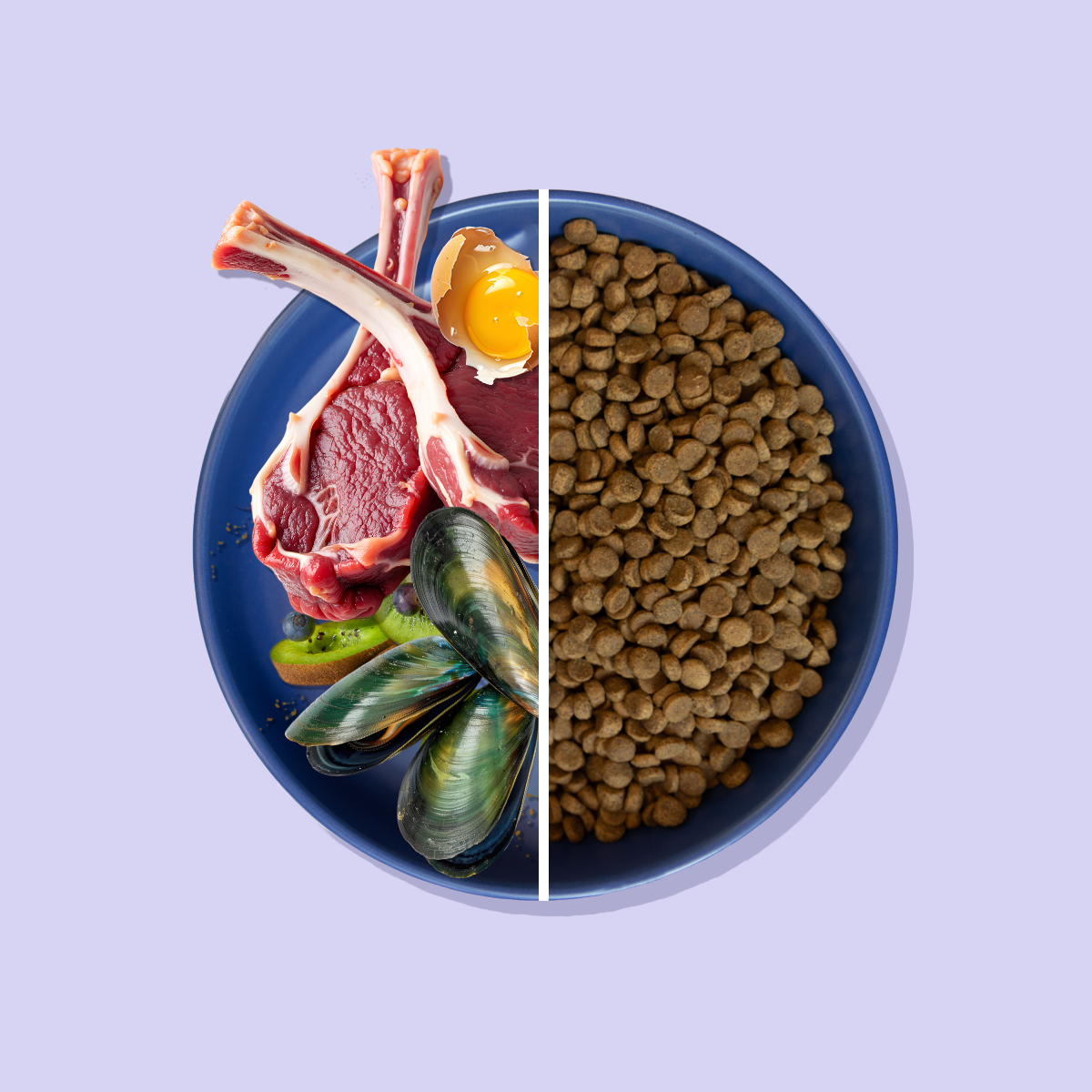
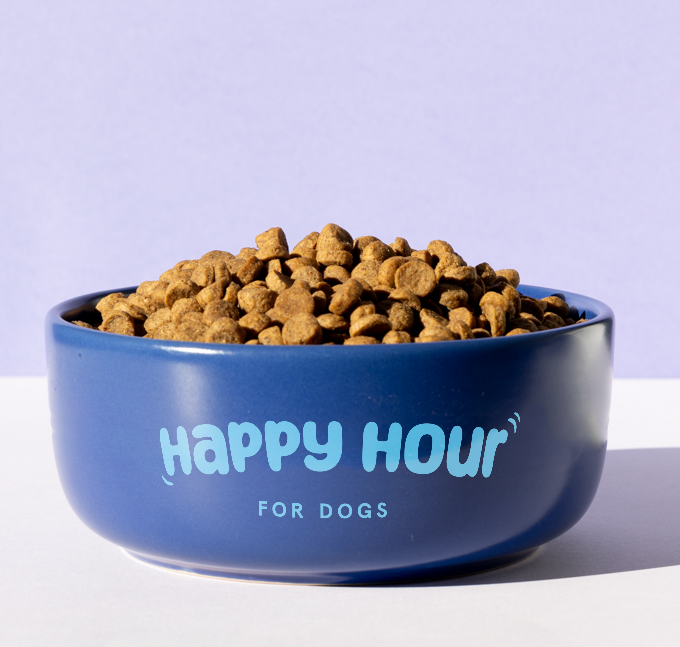
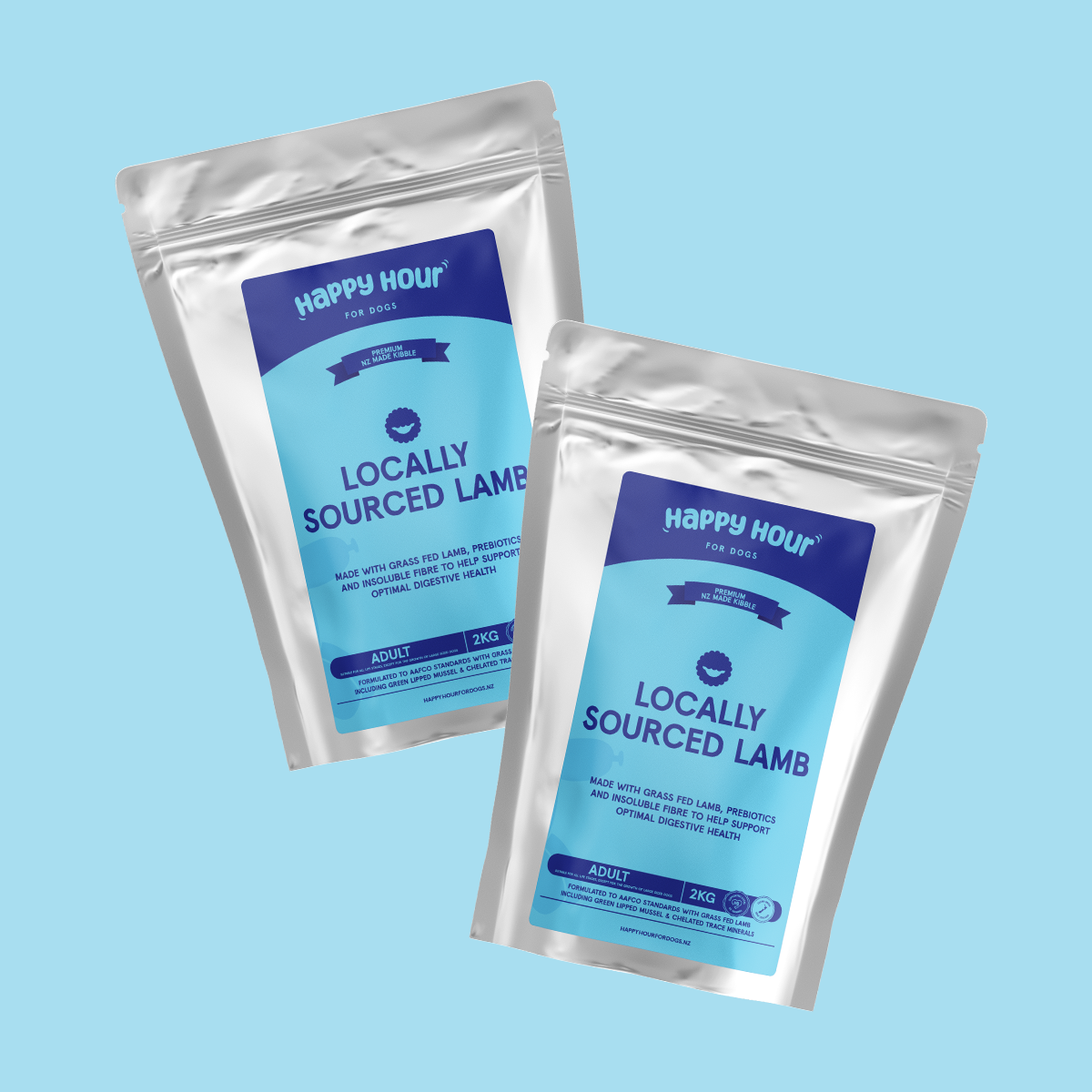
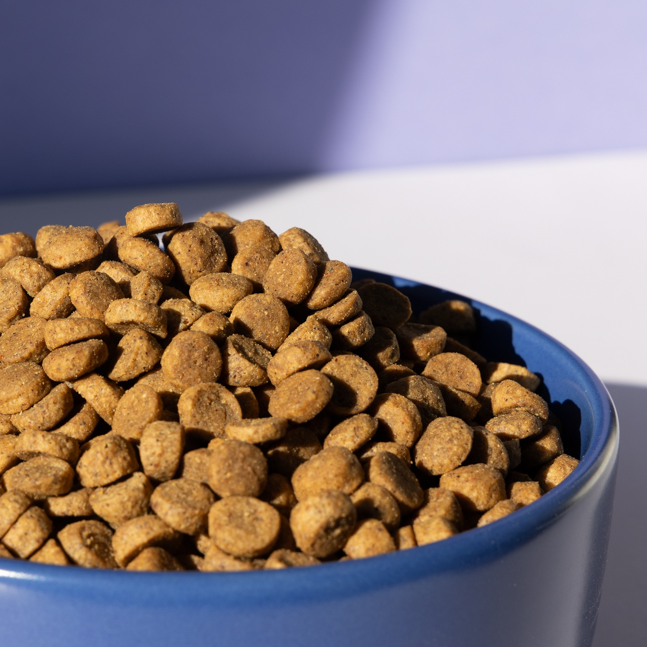
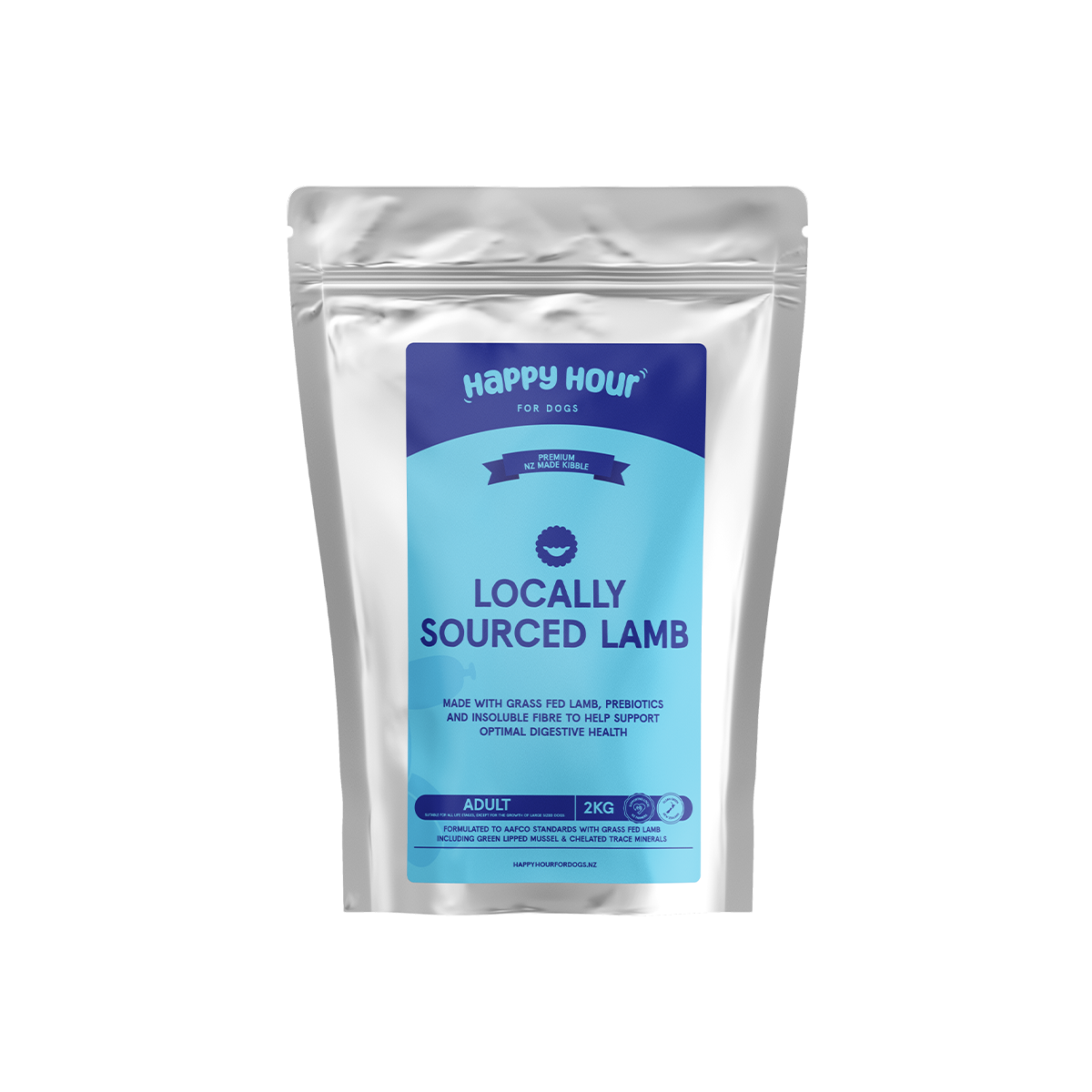
Happy Hour is the only NZ-made grain-free lamb kibble on the market. It was developed by the team behind K9 Heaven, one of Auckland's longest-running doggy daycares, and tested across 48,000+ yearly meal times.
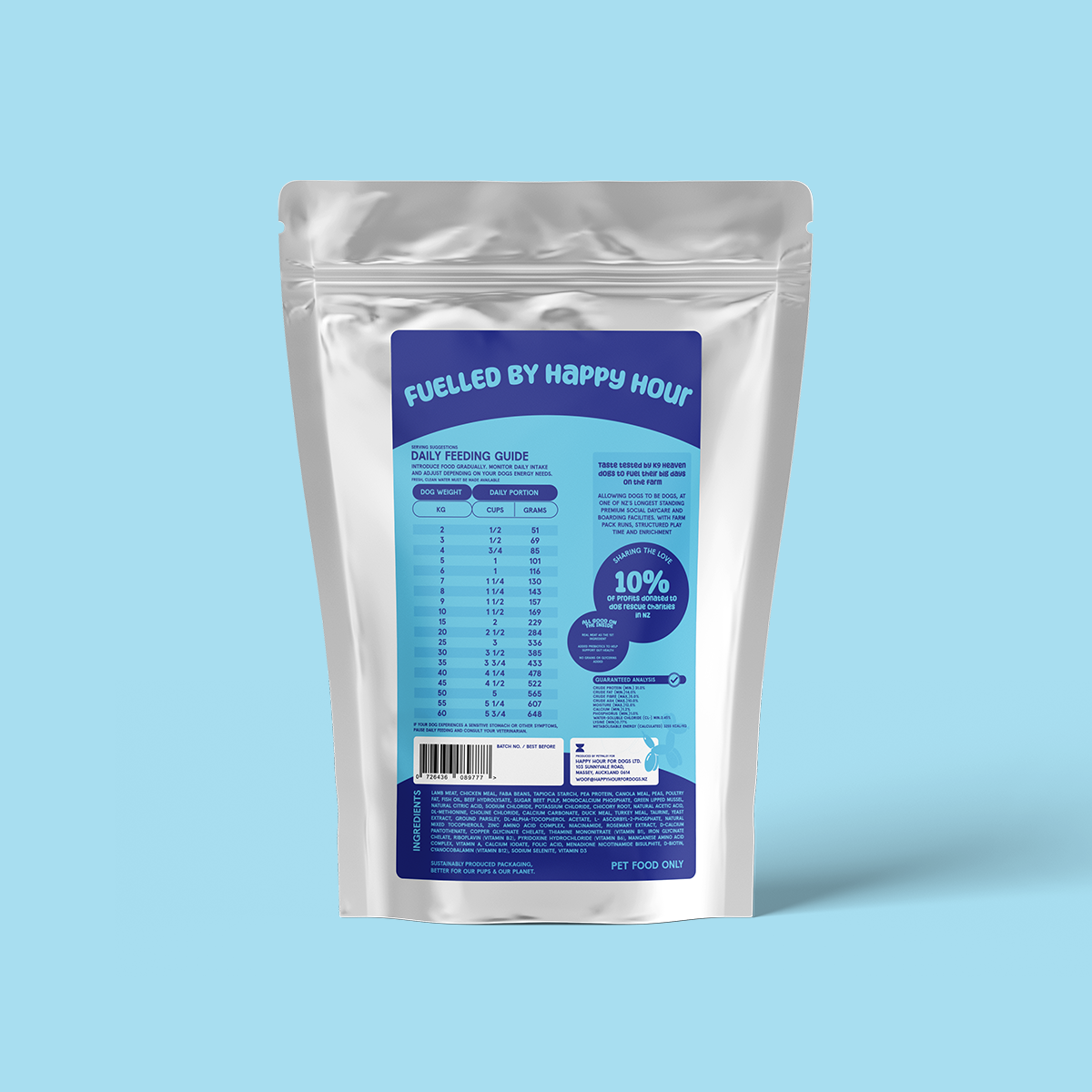
Strengths: Made in New Zealand from NZ grass-fed lamb. Grain-free, no soy, no dairy, no wheat, no artificial colours or hormones. Contains prebiotics, green-lipped mussel for joint support, chelated trace minerals, and taurine. AAFCO approved. 30-day trial with a send-it-back guarantee.
Weaknesses: Currently one protein source (lamb) in the kibble range, with chicken in development. Smaller brand with less shelf presence than international names.
Best for: Dogs with grain sensitivities, sensitive stomachs, post-pancreatitis dietary management, or owners who want to know exactly where their dog's food comes from.
Which Food Is Right for My Dog?
There's no single answer. But here are the most common situations and what we'd point toward.
Sensitive stomach: Grain-free with a single, simple protein source. Avoid artificial additives and excessive fillers. Best Dog Food for Sensitive Stomachs in NZ goes deeper.
Large breed dog: Needs adequate protein, appropriate calcium-to-phosphorus ratios, and food formulated for large breeds. More here: Best Dog Food for Large Dogs in NZ
Grain sensitivity or grain-free preference: Look for a food that replaces grain with quality protein and vegetables, not just more legumes. Best Grain-Free Dog Food NZ covers the landscape.
NZ-made specifically: Best NZ-Made Dog Food: Why Local Matters for Your Dog has a full breakdown.
High protein needs: Active, working, or growing dogs. More here: Best High-Protein Dog Food in NZ
Coat and skin concerns: Best Dog Food for a Shiny Coat in NZ explains the nutrition-to-coat connection.
Understanding NZ-Specific Considerations
New Zealand has real advantages as a source of dog food ingredients. NZ grass-fed lamb is some of the cleanest, most traceable meat in the world. Our biosecurity standards are strict. Supply chains from NZ farm to NZ bowl are shorter and more transparent than anything imported from North America or Europe.
That doesn't automatically make every NZ-branded product better. The brand still has to do the work. But when both the sourcing and manufacturing are local, you genuinely know more about what's in the bag.
The Grain-Free Safety Question
If you've heard that grain-free dog food causes heart disease, you've encountered the DCM story from the United States. The link wasn't to grain-free as a category. It was specifically to foods where large amounts of legumes (peas, lentils, chickpeas) replaced grain. Lamb-based grain-free diets that use modest amounts of legumes and include taurine (as Happy Hour does) don't carry the same concern.
Full breakdown: Is Grain-Free Dog Food Safe for Dogs? What NZ Owners Need to Know
How to Read the Label Before You Buy
The single most useful skill a dog owner can develop is knowing how to read an ingredient panel. It takes about two minutes and tells you almost everything you need to know: How to Read a Dog Food Label in NZ: What the Ingredients Actually Mean