The best grain-free dog food in NZ uses a quality named protein as its base, replaces grain with digestible alternatives like sweet potato or pumpkin, and avoids overcrowding the formula with legumes. Grain-free done well genuinely suits a lot of dogs. Grain-free done poorly is just another way to cut corners.
Here's how to tell the difference, what options exist in New Zealand, and what to reach for if you want genuinely quality grain-free food for your dog.
It’s also worth knowing why dog food made in New Zealand matters when you’re comparing brands.
Key Takeaways
- Grain-free means no wheat, corn, oats, barley, or rice — not no carbohydrates entirely
- The best grain-free foods use sweet potato, pumpkin, or other vegetables as the carb source
- Too many legumes as the primary carb replacement is what attracted the DCM concern in the US — not grain-free as a category
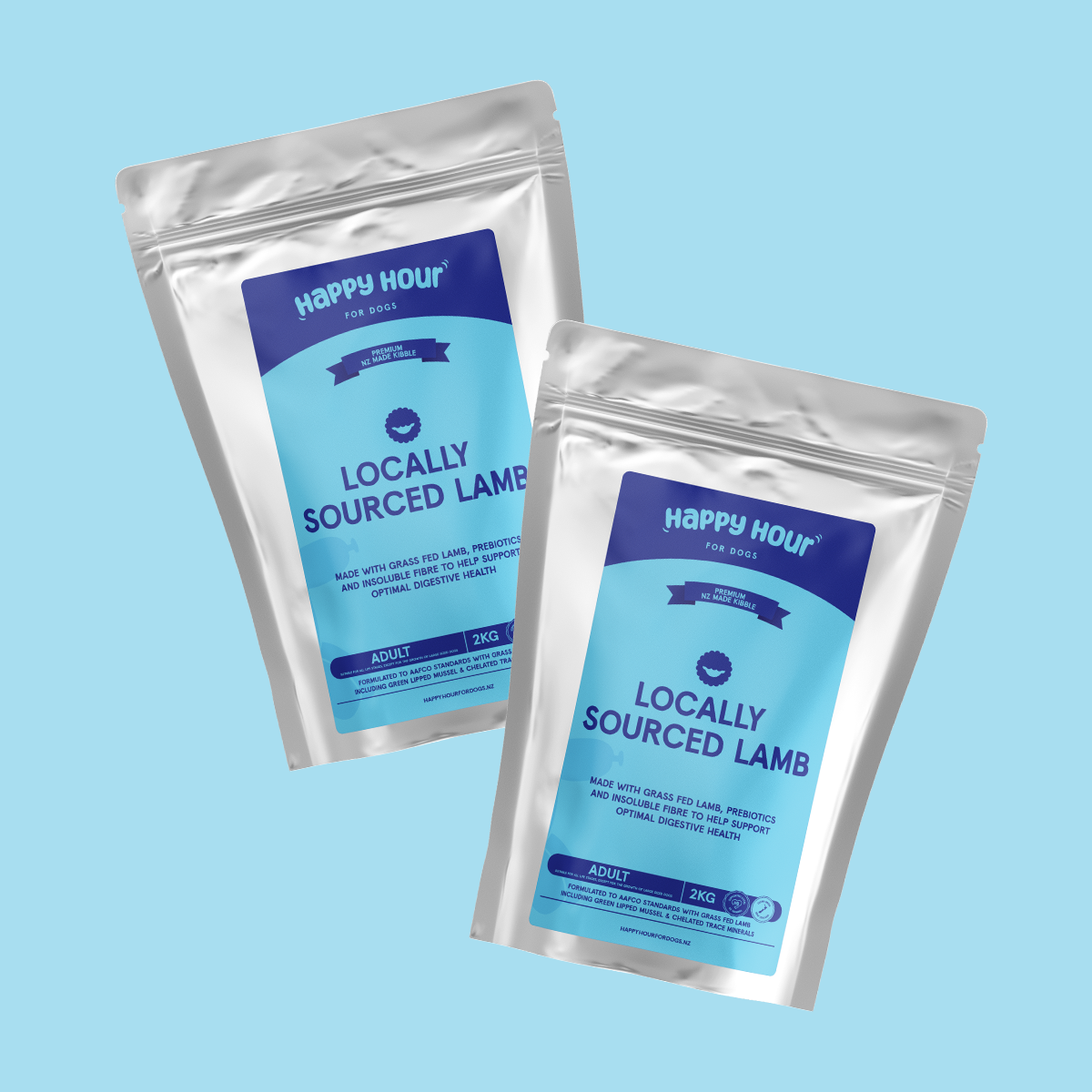
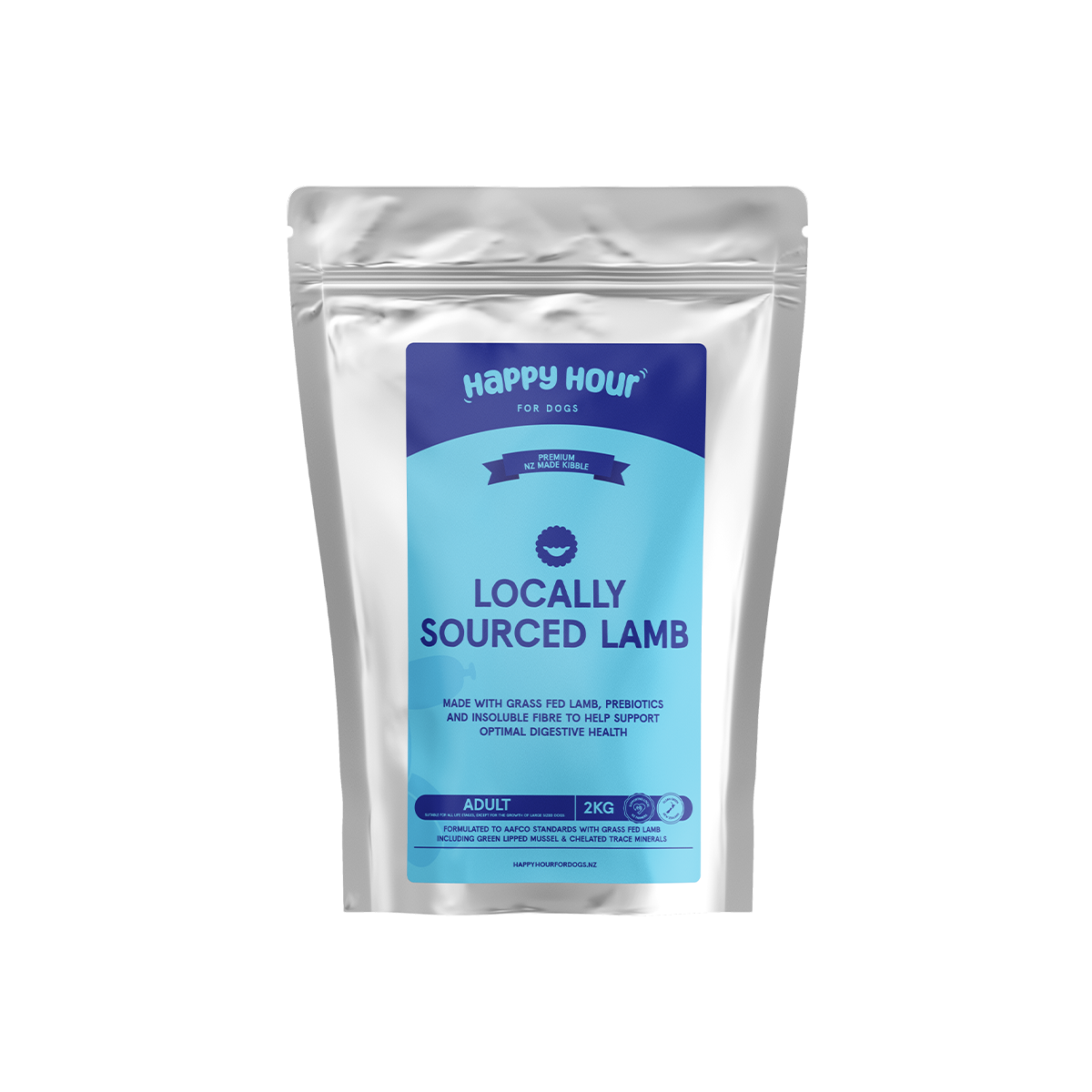
- Happy Hour is NZ's own grain-free lamb kibble, made from grass-fed NZ lamb with prebiotics, green-lipped mussel, and taurine
- Grain-free is well-suited to dogs with grain sensitivities, itchy skin, soft stools, or chronic digestive issues
Why Some Dogs Do Better Without Grain
Not every dog needs to be grain-free. But for a meaningful number of dogs, removing grains from the diet makes a noticeable difference.
Grains like wheat, corn, and barley are common allergens in dogs. Food sensitivities often present as itchy skin, ear infections, loose stools, excessive licking of paws, or a dull coat. Switching to grain-free for 8–12 weeks is one of the first things many vets and nutritionists suggest as an elimination trial.
Beyond allergies, grains are also cheaper to include than meat, so heavily grain-inclusive foods often have a lower protein-to-filler ratio than their labels suggest. Going grain-free tends to push the formula toward more animal protein and more digestible carbohydrate sources, which suits most dogs better biologically.
What to Look For in a Grain-Free Dog Food
Named Protein as the First Ingredient
This is the same rule as any dog food, but it's especially important in grain-free because the carbohydrate replacement matters. A grain-free food with a weak protein base is not an upgrade. Look for lamb, chicken, beef, fish, or venison as the first ingredient.
Sensible Carbohydrate Alternatives
The best grain-free foods use sweet potato, pumpkin, or other vegetables as their primary carbohydrate source. These are digestible, nutrient-dense, and don't carry the same concerns as grains or large quantities of legumes.
Legumes in Moderation
Peas, lentils, and chickpeas are common in grain-free formulas because they're cheap and easy to process. Some is fine. A formula where peas or lentils are the second or third ingredient is leaning heavily on legumes as a filler replacement.
The DCM scare from the US was specifically linked to diets where large legume quantities replaced grain and appeared to interfere with taurine metabolism. A grain-free food that uses moderate legumes and includes added taurine — as Happy Hour does — isn't in that risk category. More detail: Is Grain-Free Dog Food Safe for Dogs?
Added Taurine
Taurine is an amino acid that supports heart health. If you're going grain-free, choosing a formula with added taurine is a sensible extra step. Happy Hour includes it explicitly.
No Artificial Preservatives
Grain-free should mean genuinely cleaner food. If a grain-free food still contains BHA, BHT, or ethoxyquin, the brand is missing the point.
Signs Your Dog Might Benefit From Grain-Free
- Itchy skin or chronic skin irritation not explained by environmental allergens
- Recurring ear infections (often linked to food sensitivities)
- Soft or inconsistent stools that haven't responded to other changes
- Excessive paw licking
- Dull or flaky coat
- General digestive upset that comes and goes
These signs are worth discussing with your vet, but a trial on a grain-free, single-protein formula is often the first practical step.
Grain-Free Dog Food Options in NZ
Happy Hour
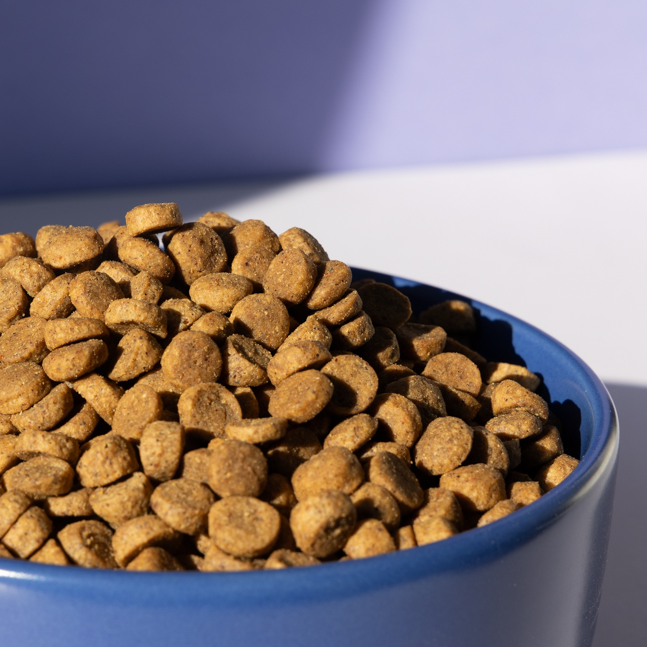
Happy Hour is New Zealand's own grain-free lamb kibble. Developed by the team at K9 Heaven and tested across 48,000+ yearly meal times before commercial launch.
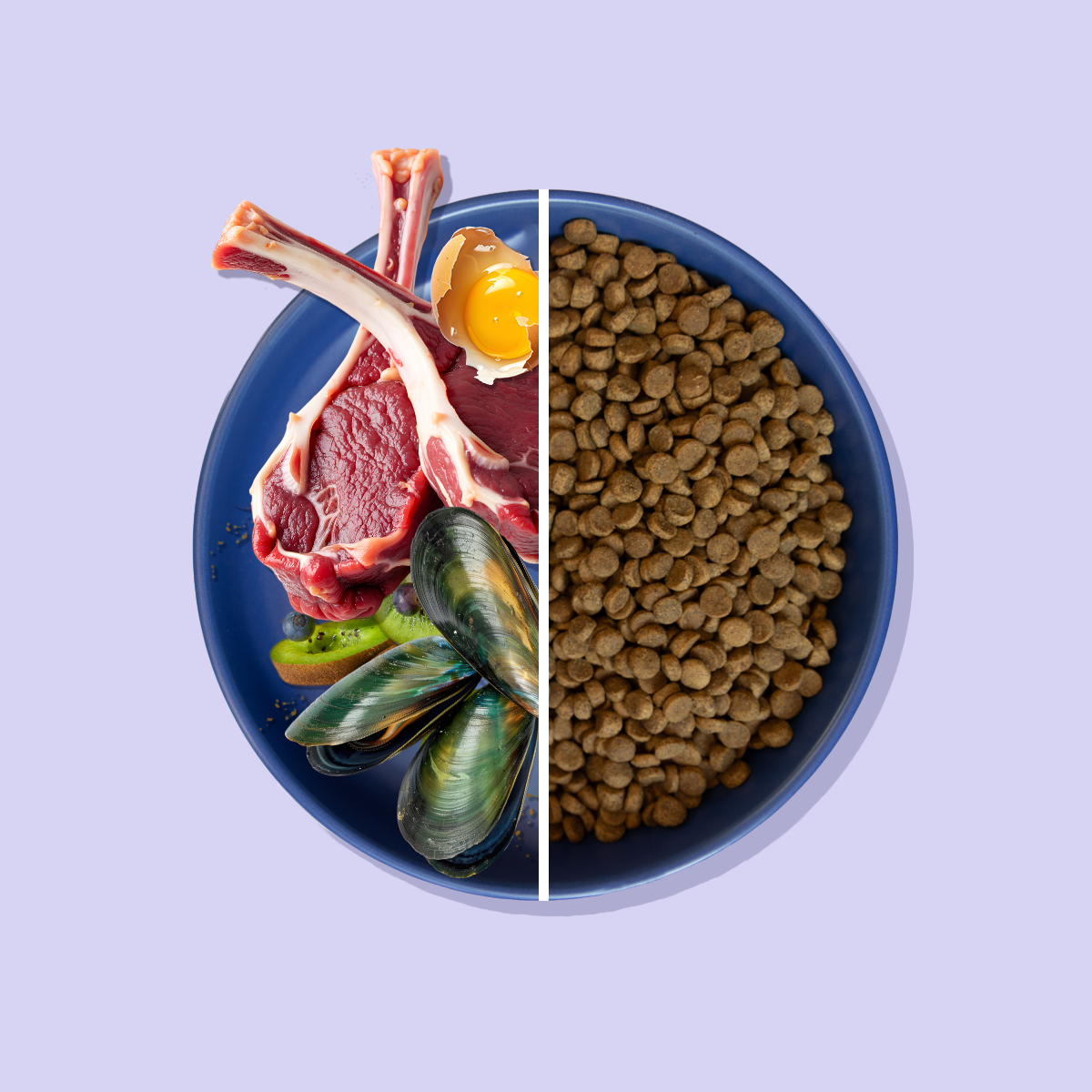
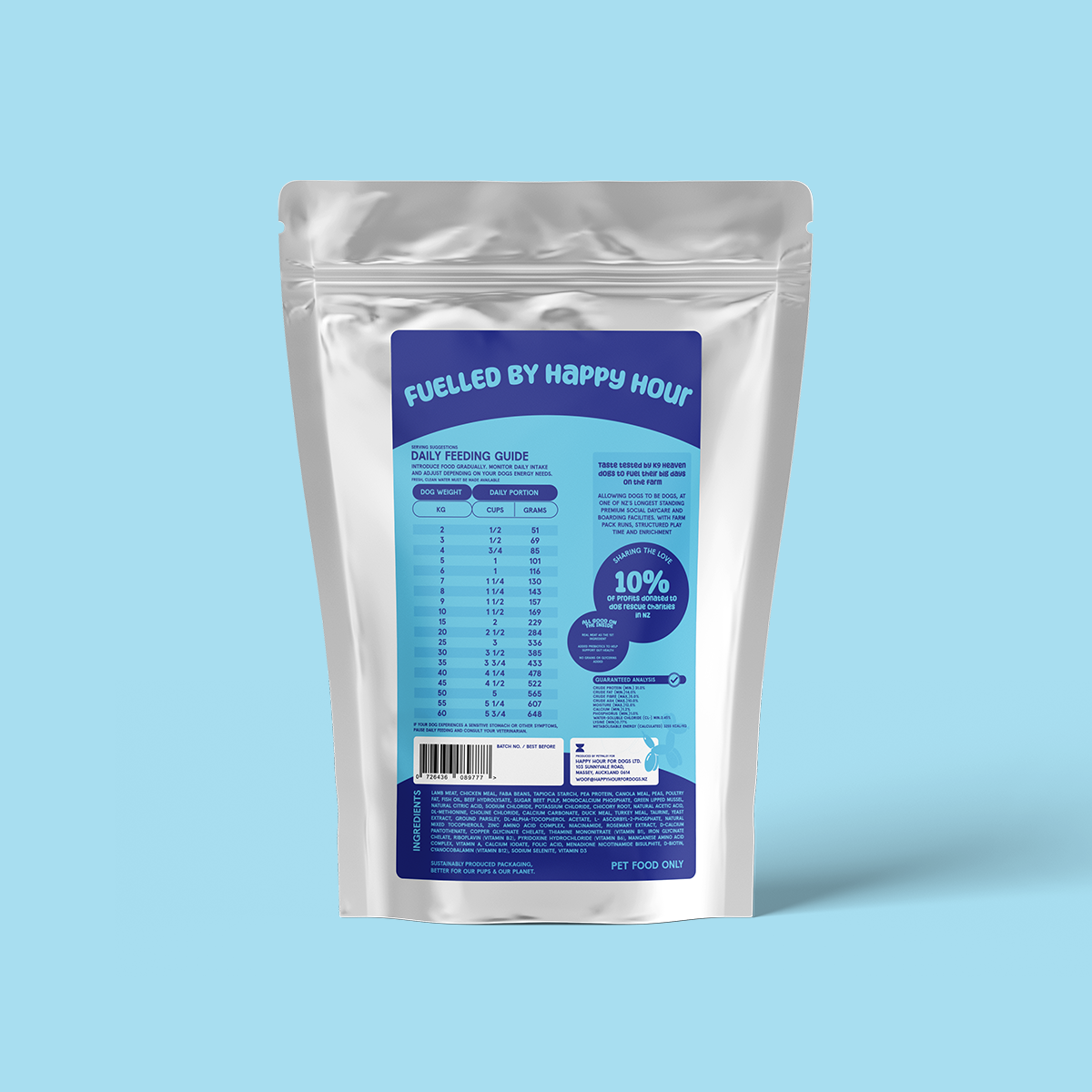
Ingredients: NZ grass-fed lamb, lamb meal, sweet potato, peas, chickpeas, green-lipped mussel, prebiotics, chelated minerals, taurine. No grains, no soy, no dairy, no wheat, no artificial colours or hormones.
The formula is built around lamb as the dominant protein, with sweet potato as the main carbohydrate source. Legumes are present but in moderate amounts, well below the threshold associated with the US DCM concerns. Taurine is added. The 30-day send-it-back guarantee means there's no risk in trying it.
Why it's the hero pick: It's made here. Grass-fed NZ lamb. Short supply chain. Tested at scale. Nothing else quite like it in the NZ market.
Ziwi Peak Grain-Free
Ziwi's kibble range is grain-free and made with NZ ingredients. Their air-dried range is the standout but the kibble is solid. Expensive, but high ingredient quality.
Orijen
Canadian brand, high-protein, grain-free, available in NZ. Very impressive on ingredient quality. The price point is significant, especially for large dogs.
Taste of the Wild
An American grain-free brand available in NZ at accessible price points. Better ingredient quality than most mass-market options. Uses novel proteins (bison, salmon) which are useful for allergy elimination. Not NZ-made, but a reasonable mid-range option.
What to Avoid When Buying Grain-Free
Grain-free with legumes as the primary ingredient. If peas or lentils appear before any named meat, the food hasn't improved the protein situation — it's just swapped one filler for another.
Grain-free with unnamed meat sources. "Meat meal" without a species is less traceable. In a premium grain-free food, you should be able to identify every protein source.
Grain-free supermarket brands. Some major retailers have launched grain-free lines that are grain-free in name only — the protein quality and overall formulation don't improve meaningfully.