The best dog food for a shiny coat in NZ provides a complete amino acid profile from quality animal protein, adequate omega-3 and omega-6 fatty acids, and includes specific functional ingredients like green-lipped mussel that support skin and coat health from the inside. If your dog's coat is dull, dry, or flaky, the food is usually the first place to look.
Key Takeaways
- Coat quality is a direct reflection of nutritional status — a dull coat often signals a dietary gap
- Omega-3 and omega-6 fatty acids are the most important nutrients for coat and skin health
- Protein quality matters too: amino acids are the building blocks of hair and skin
- Green-lipped mussel is a standout NZ ingredient for both coat health and joint support
- Happy Hour includes lamb, green-lipped mussel, and chelated minerals for genuine coat support
Why Coat Health Starts With What's in the Bowl
A dog's coat is essentially a protein structure — hair is made of keratin, which is built from amino acids. And the oils that give a coat its shine and condition come from the fats in the diet. What your dog eats directly determines what their coat is built from.
When owners use expensive shampoos and conditioners to improve their dog's coat, they're treating the symptom. The cause is almost always nutritional. Get the food right, and the coat follows.
The Key Nutrients for a Shiny Coat
Omega-3 Fatty Acids
Omega-3s — specifically EPA and DHA — reduce inflammation in the skin, support the skin's moisture barrier, and give the coat a visible sheen. Dogs can't produce omega-3s themselves; they have to come from the diet.
Green-lipped mussel. A uniquely New Zealand ingredient, green-lipped mussel (Perna canaliculus) is one of the richest natural sources of ETA (eicosatetraenoic acid), a form of omega-3 that's particularly effective at reducing inflammatory processes. It also contains glycosaminoglycans that support joint health. The coat benefits are real and well-documented. More on green-lipped mussel: Green-Lipped Mussels, Taurine and Prebiotics: Why They Matter
Fish oil. Salmon oil, sardine oil, and other fish oils are rich in EPA and DHA. Highly effective for coat health.
Flaxseed. A plant-based omega-3 source. Dogs can convert it to EPA and DHA, but the conversion rate is low. Fish and marine-sourced omega-3s are more efficient.
Omega-6 Fatty Acids
Omega-6s — particularly linoleic acid — support skin cell function and help maintain the skin's moisture barrier. They work in balance with omega-3s. Animal fats (chicken fat, lamb fat) are good sources of omega-6. Most quality kibbles have adequate omega-6; it's omega-3 that's more commonly lacking.
Protein Quality
Hair is made of protein. Keratin requires a full range of amino acids to be synthesised properly. A diet with adequate crude protein from poor-quality sources may still leave certain amino acids limiting. Animal-sourced protein from named meats with a full amino acid profile produces better coat outcomes than protein from plant sources like corn gluten or soy.
Zinc and Biotin
Zinc deficiency in dogs is directly linked to skin problems and coat quality. Chelated zinc (zinc bound to an amino acid for better absorption) is more bioavailable than standard zinc sulphate. Foods using chelated minerals are making a meaningful formulation choice. Biotin (vitamin B7) also supports fat metabolism and healthy skin.
Signs a Poor Diet Is Affecting Your Dog's Coat
- Dull, dry coat without shine
- Excessive shedding beyond normal seasonal loss
- Flaky, dry skin or dandruff
- Itchy skin without an obvious environmental trigger
- Thinning coat or bare patches (worth a vet check to rule out other causes)
- Brittle hair that breaks easily
If you're seeing several of these together, diet is the most likely common factor.
Dog Foods in NZ That Support Coat Health
Happy Hour
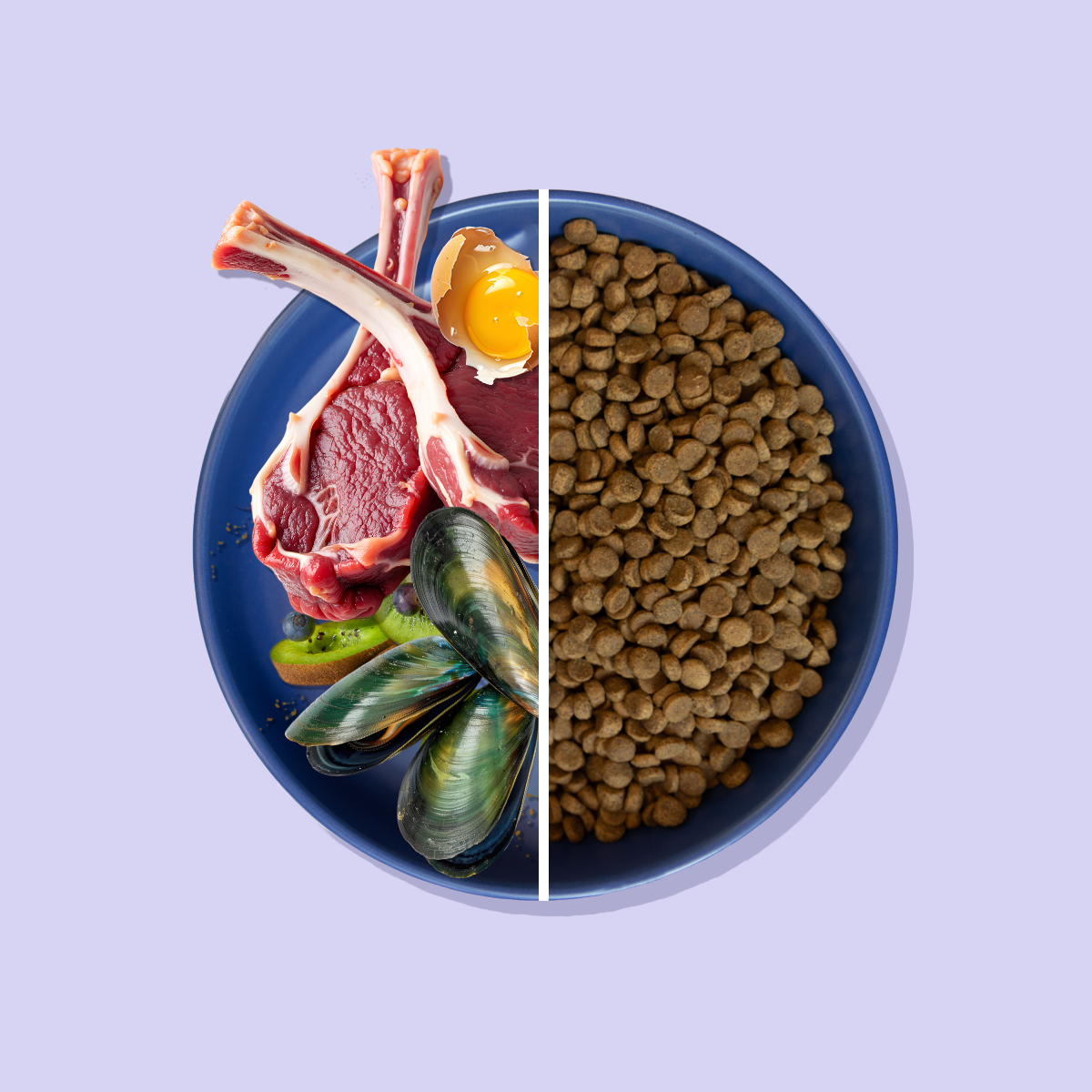
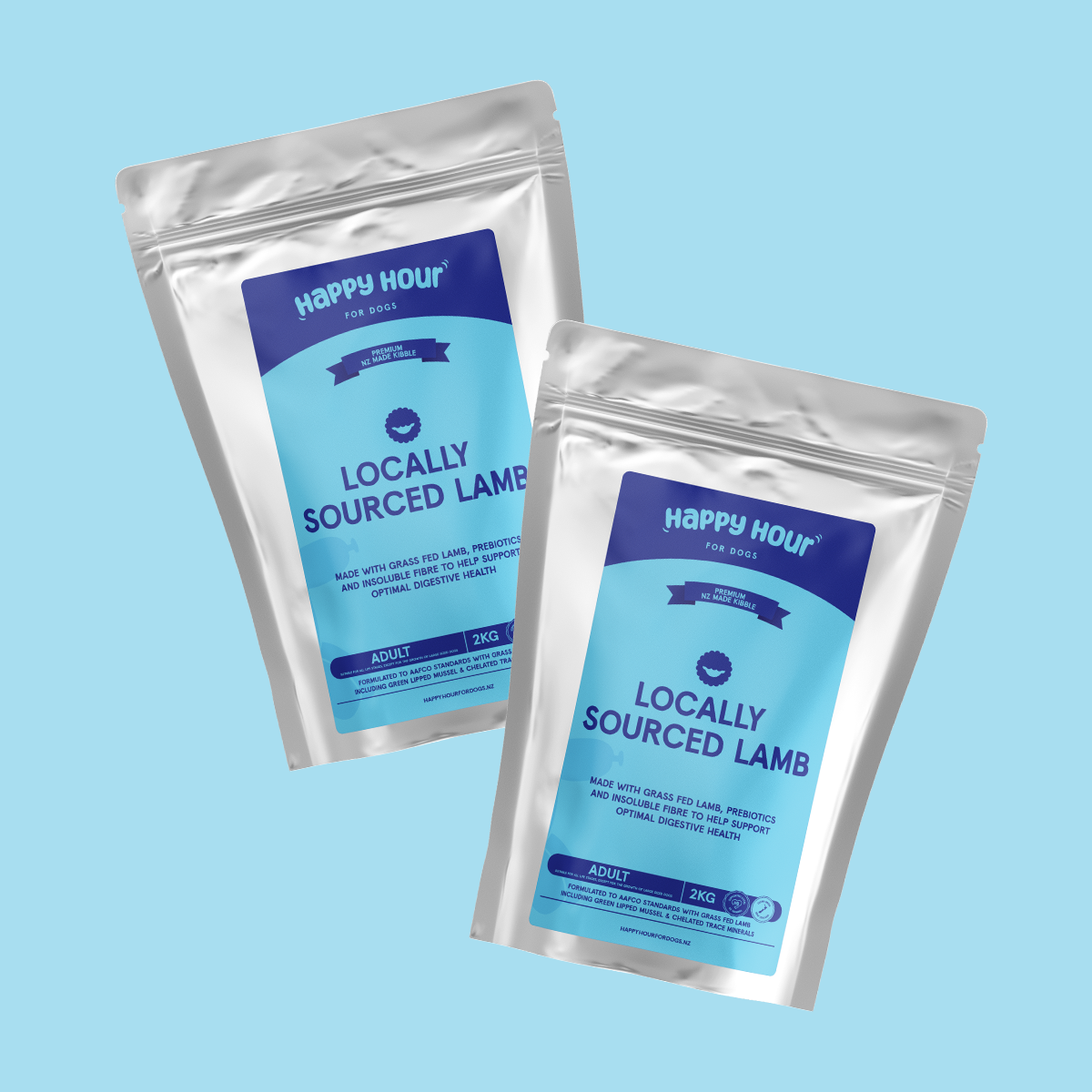
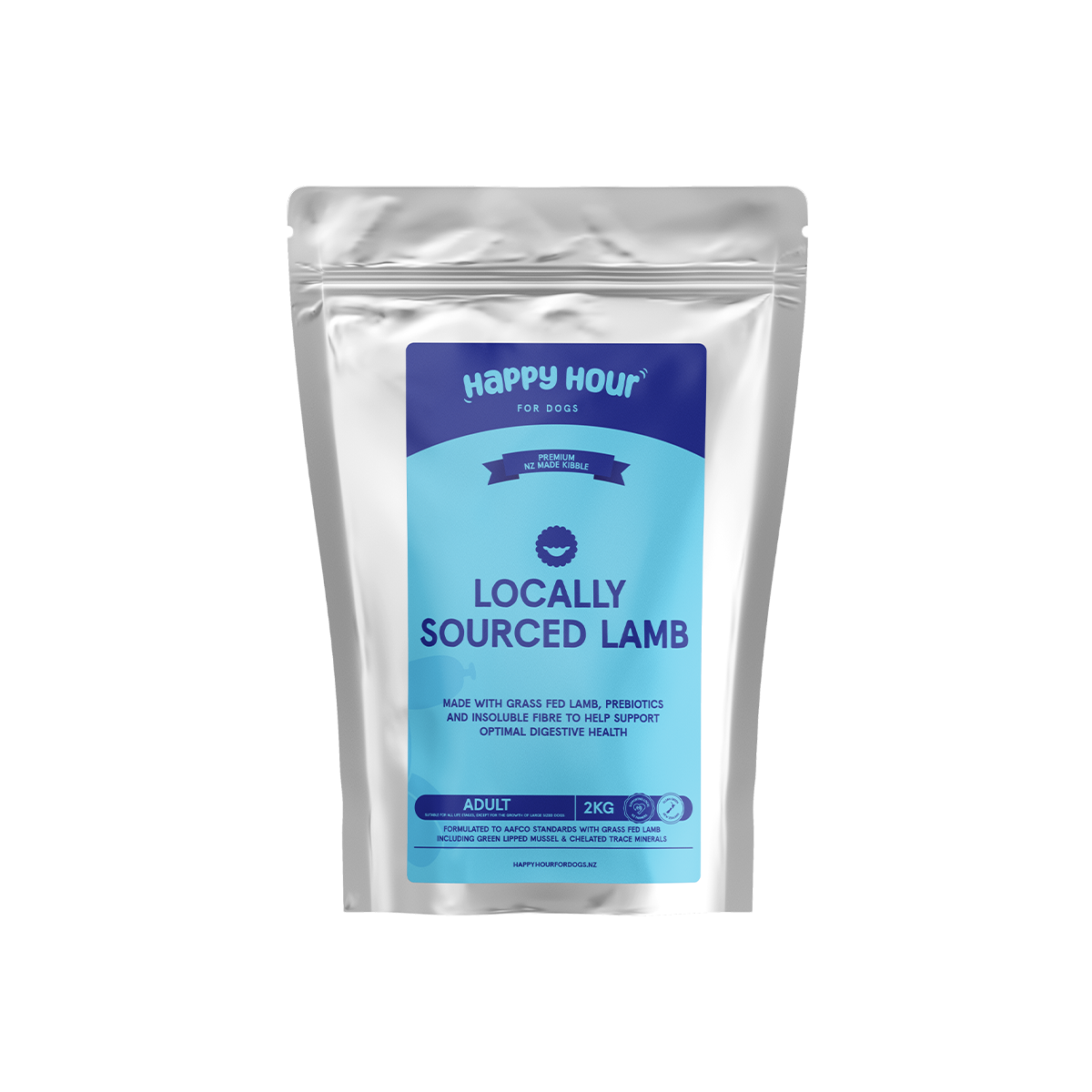
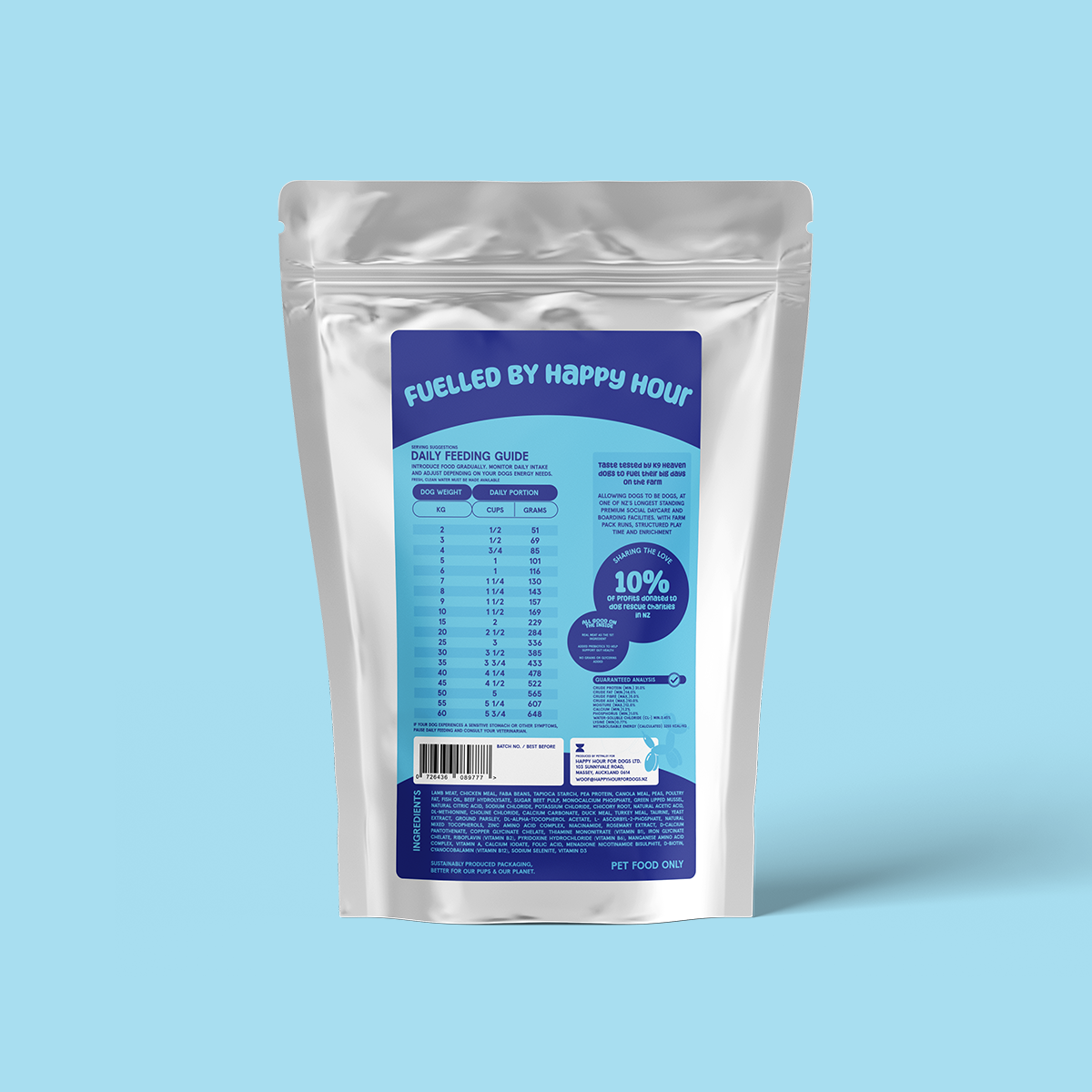
Happy Hour is the standout option for NZ owners focused on coat health. The formula includes NZ grass-fed lamb and lamb meal (complete animal protein with a full amino acid profile), green-lipped mussel (one of the richest natural omega-3 sources, native to New Zealand), and chelated trace minerals including chelated zinc for bioavailable supplementation that directly supports skin and coat health.
No grains or artificial additives — grain sensitivities often show up as skin and coat issues, and removing grain can make a visible difference in dogs with underlying sensitivities.
Ziwi Peak
The high meat content and NZ-sourced ingredients in Ziwi make it an excellent choice for coat health. Their formulas include green-lipped mussel and a range of NZ-sourced proteins. Premium price, but the coat outcomes match the ingredient quality.
Orijen
Very high animal protein and diverse ingredient sources. Typically includes fish (a good omega-3 source) alongside meat proteins. Strong for coat health from a protein and fat perspective.
How Long Does It Take to See Coat Improvement?
Coat change is slow because you're waiting for new hair growth to reflect improved nutrition. Expect:
- Skin condition: 4–6 weeks
- Coat shine and texture: 8–12 weeks
- Full coat quality with new growth: up to 6 months
Take a photo of your dog's coat when you switch foods and compare at 3 months — the difference is often clearer in comparison than in day-to-day observation.
For the full dog food guide for NZ: Best Dog Food NZ 2026: An Honest Guide for Kiwi Dog Owners