Reading a dog food label in NZ is simpler than it looks once you know the rules. Ingredients are listed by weight before cooking, so whatever appears first is present in the greatest quantity. A clean label has a named meat protein first, recognisable ingredients throughout, and no artificial preservatives or unnamed meat sources.
The label also tells you where the food is actually made, and why that matters.
Here's everything you need to know, section by section.
Key Takeaways
- Ingredients are listed by pre-cooking weight, so moisture matters when interpreting order
- The first ingredient tells you the most about what the food is actually built on
- Named species matter: "lamb meal" is better than "meat meal"
- Watch for ingredient splitting, where one ingredient appears multiple times under different names to push it down the list
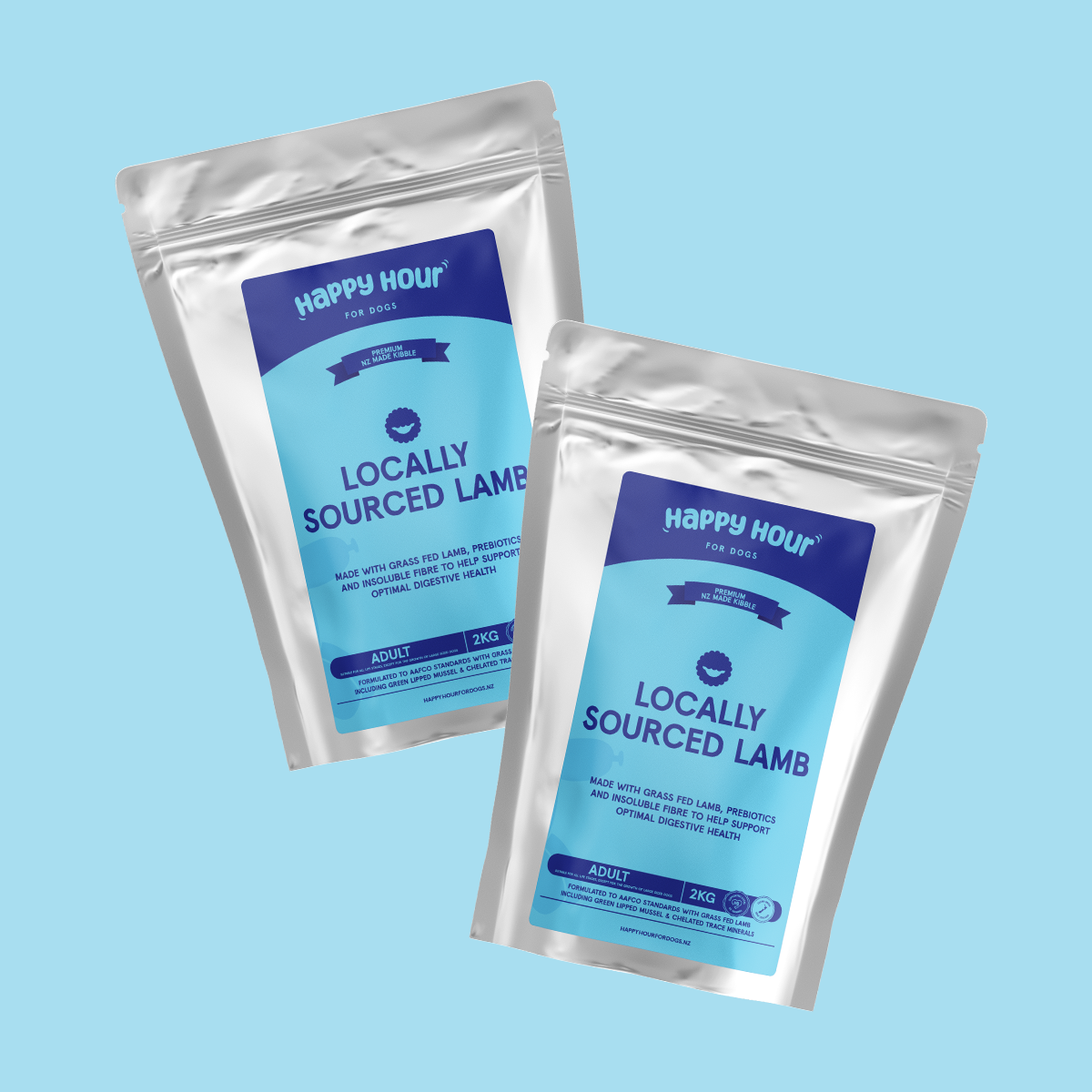
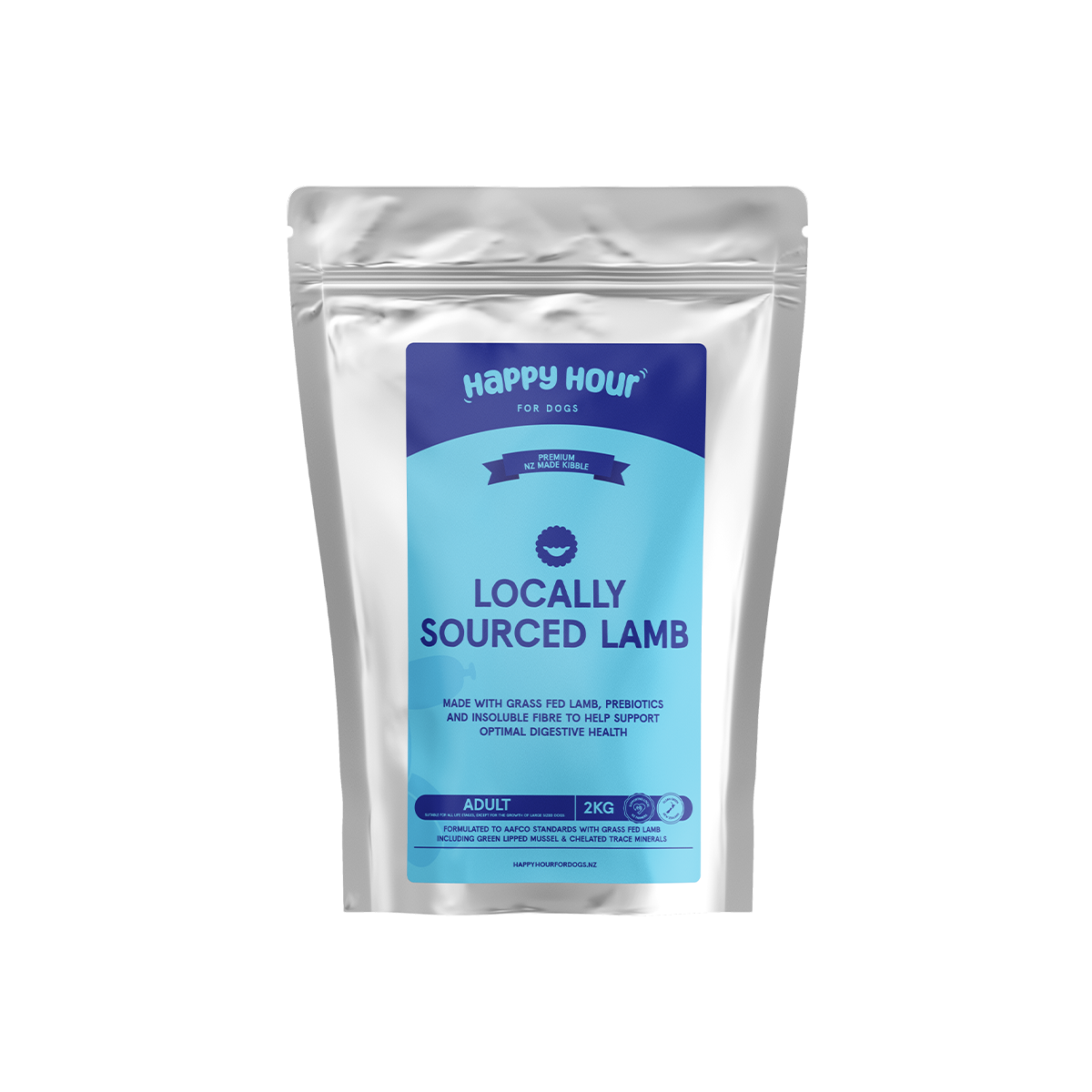
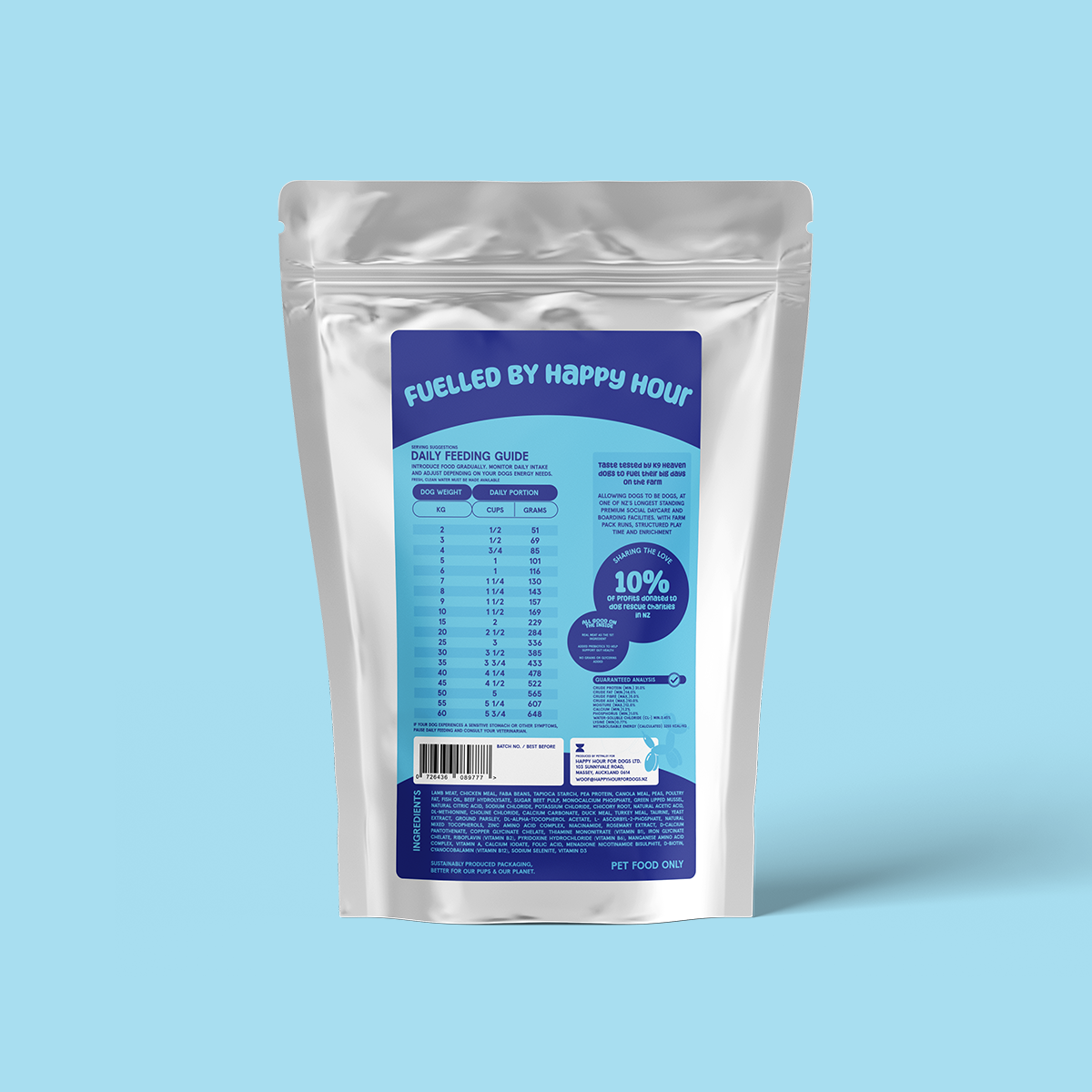
- Happy Hour's ingredient list is a clean example: named proteins, traceable sources, no artificial additives
Section 1: The Product Name
NZ pet food labelling follows voluntary guidelines aligned with AAFCO. The product name gives you your first clue.
"Lamb Dog Food" or "Chicken Recipe": These terms indicate that the named ingredient makes up a large proportion of the formula.
"Lamb Dinner" or "Lamb Entrée": These names typically indicate a lower percentage of the named ingredient. The word "dinner" or "entrée" often signals that the protein is not the lead ingredient.
"With Lamb" or "Lamb Flavour": The most ambiguous. "With lamb" can mean as little as 3% of the formula. "Lamb flavour" may include only enough lamb to provide flavouring.
The name is marketing. The ingredient list is information.
Section 2: The Ingredient List
This is the most important part of any dog food label.
The Rule of Ingredient Order
Ingredients are listed in descending order by weight before cooking. The first ingredient is present in the greatest amount. Here's a nuance worth understanding: fresh meat contains a lot of moisture (around 70%). A "lamb meal" listed third may actually contribute more protein to the finished product than fresh "lamb" listed first, because meal has already had the moisture removed. Neither fresh meat nor meal is automatically better — what matters is overall protein quality and source.
Named Proteins vs. Anonymous Proteins
Named species = more accountable. "Lamb," "lamb meal," "chicken," "chicken meal" — you know exactly what species you're dealing with.
Unnamed proteins = less accountable. "Meat meal," "animal meal," "poultry meal" — these can come from any species, including lower-quality rendering sources. Premium foods name their proteins. If your dog has an allergy or sensitivity, you need to know what proteins are in the food.
What Is Meat Meal?
Meat meal is cooked, dried, and ground meat — not a low-quality ingredient by definition. "Lamb meal" is a concentrated source of lamb protein with most of the moisture removed. The species name is what matters. "Meat meal" without a species is less traceable.
Identifying Fillers
Fillers add bulk without significant nutritional value. Common fillers include:
- Corn/corn meal
- Wheat middlings or wheat bran
- Soy hulls or soybean meal (also a common allergen)
- Rice bran
- Cellulose (often from wood pulp)
Some carbohydrate is fine. The concern is when fillers make up the bulk of the formula and push quality protein further down the list.
Ingredient Splitting: A Sneaky Trick
Some manufacturers split a single ingredient across multiple forms to push it down the list. For example: "Chicken, rice flour, rice bran, rice middlings, chicken by-product meal." Here rice appears three times. Combined, those rice ingredients might outweigh the chicken — but individually, each appears after chicken on the list. This is a known labelling tactic to watch for.
Section 3: The Guaranteed Analysis
The guaranteed analysis shows minimum or maximum percentages for crude protein, crude fat, crude fibre, and moisture. These numbers are not the whole picture. "Crude protein" includes all nitrogen-containing compounds, not just bioavailable animal protein. Use the guaranteed analysis alongside the ingredient list, not instead of it.
Section 4: The Additives and Preservatives List
Natural preservatives (fine): Mixed tocopherols (vitamin E), rosemary extract, vitamin C. These preserve the food without adding anything harmful.
Artificial preservatives (avoid): BHA, BHT, and ethoxyquin. BHA and BHT are classified as possible carcinogens. Ethoxyquin was developed as a rubber hardener and pesticide. Their presence on a label is a signal to look elsewhere.
Functional additives (look for): Prebiotics and probiotics (gut health), omega-3 sources such as fish oil or green-lipped mussel, chelated minerals (more bioavailable), and taurine (heart health — especially useful in grain-free formulas).
Section 5: The Nutritional Adequacy Statement
Look for a statement like: "This food is formulated to meet the nutritional levels established by the AAFCO Dog Food Nutrient Profiles for [life stage]." This tells you the food meets minimum nutritional standards. "All life stages" is the most flexible — suitable from puppy through adult.
Happy Hour as a Clean Label Example
Here's what a clean, readable ingredient list looks like:
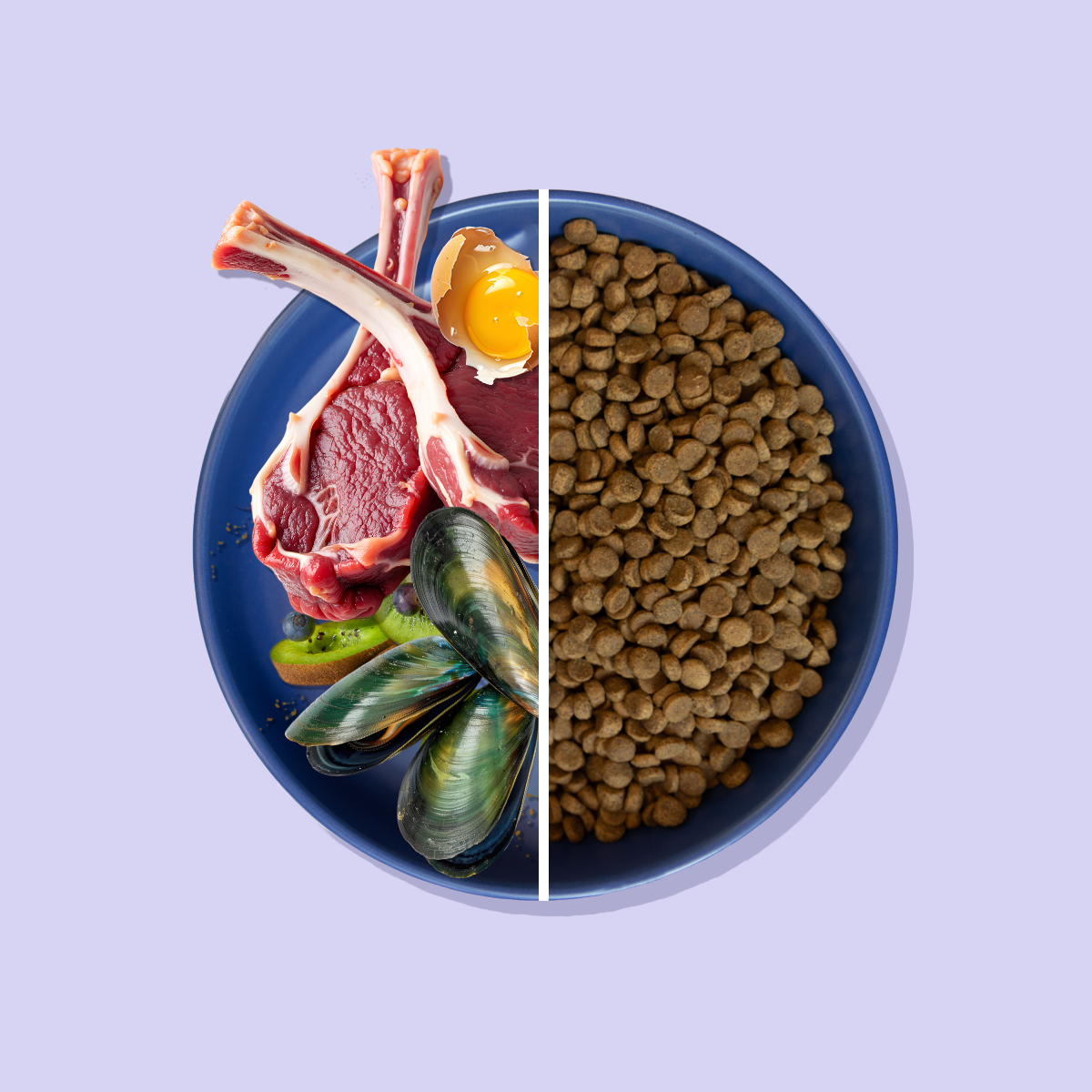
Ingredients: NZ grass-fed lamb, lamb meal, sweet potato, peas, chickpeas, green-lipped mussel, prebiotics, chelated trace minerals, taurine, mixed tocopherols.
What this tells you: named species first and second, local source, digestible carbohydrate base, legumes present but not dominant, functional NZ ingredient (green-lipped mussel), gut health support (prebiotics), bioavailable supplementation (chelated minerals), heart health support (taurine), natural preservation (mixed tocopherols).
No corn, wheat, soy, dairy, unnamed meat sources, artificial colours, hormones, or artificial preservatives. Every ingredient is identifiable and serves a purpose.
For the full guide to dog food options in NZ: Best Dog Food NZ 2026: An Honest Guide for Kiwi Dog Owners