The best dog food for a sensitive stomach uses a single, named protein source, avoids common trigger ingredients like grains and artificial additives, and is high enough in fibre to support consistent, well-formed stools. For most dogs with ongoing digestive issues, the food is the first place to look.
This guide covers what a sensitive stomach actually looks like, what's causing it in most cases, and which dog foods in NZ are genuinely suited to dogs that struggle.
Key Takeaways
- Digestive issues in dogs are often diet-related and can be improved significantly with the right food
- Single-protein, grain-free formulas are the easiest starting point for an elimination trial
- Avoid artificial additives, excessive fillers, and high-fat formulas
- Prebiotics in the food support the gut microbiome and help regulate digestion
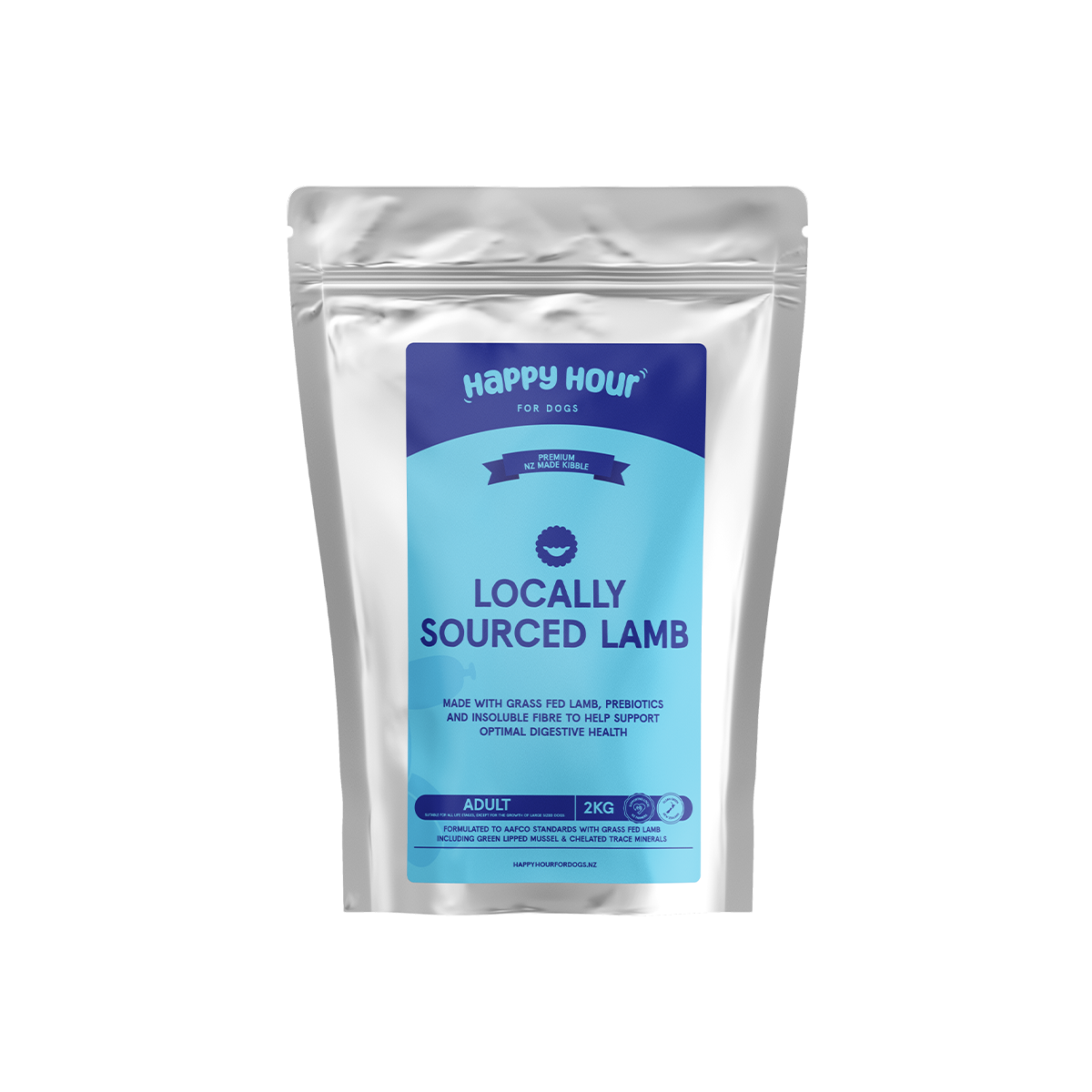
- Happy Hour is a grain-free, high-fibre NZ lamb kibble designed with digestive health in mind
What Does a "Sensitive Stomach" Actually Look Like?
Sensitive stomach is a catch-all phrase that covers a range of digestive symptoms. The most common ones:
Loose or soft stools. Not always diarrhoea, but consistently soft, poorly formed output that doesn't firm up regardless of hydration.
Intermittent vomiting. Some dogs vomit after meals or bring up partially digested food. Regular or consistent vomiting after eating is a sign something isn't right.
Gas and bloating. Excessive flatulence, a distended abdomen, or audible gut sounds that seem beyond normal.
Scooting and anal gland issues. Soft stools mean the anal glands don't empty naturally with each bowel movement, leading to impaction and discomfort. Diet is the most common underlying cause of chronic anal gland problems.
Irregular appetite. Some dogs with gut issues become fussy or reluctant eaters — not because they're picky but because eating has become associated with discomfort.
These symptoms have other possible causes, so a vet check is worth doing if symptoms are severe or persistent. But for many dogs, the answer is in the bowl.
What's Causing Digestive Problems in Most Dogs?
Poor-quality ingredients. The most common culprit. Mass-market kibble tends to be high in cheap fillers — corn, wheat, soy, rice bran — that some dogs simply don't digest well. The gut manages them but not efficiently, leading to gas, loose stools, and inconsistent output.
Multiple or unknown protein sources. When a food contains multiple protein sources, pinpointing a sensitivity becomes very difficult. "Meat meal" from an unnamed species is particularly unhelpful.
Artificial additives. Artificial colours, flavours, and preservatives add nothing nutritional and create additional work for the digestive system.
High fat content. High-fat diets can trigger pancreatitis in susceptible dogs and more commonly contribute to loose stools in dogs that don't handle fat well.
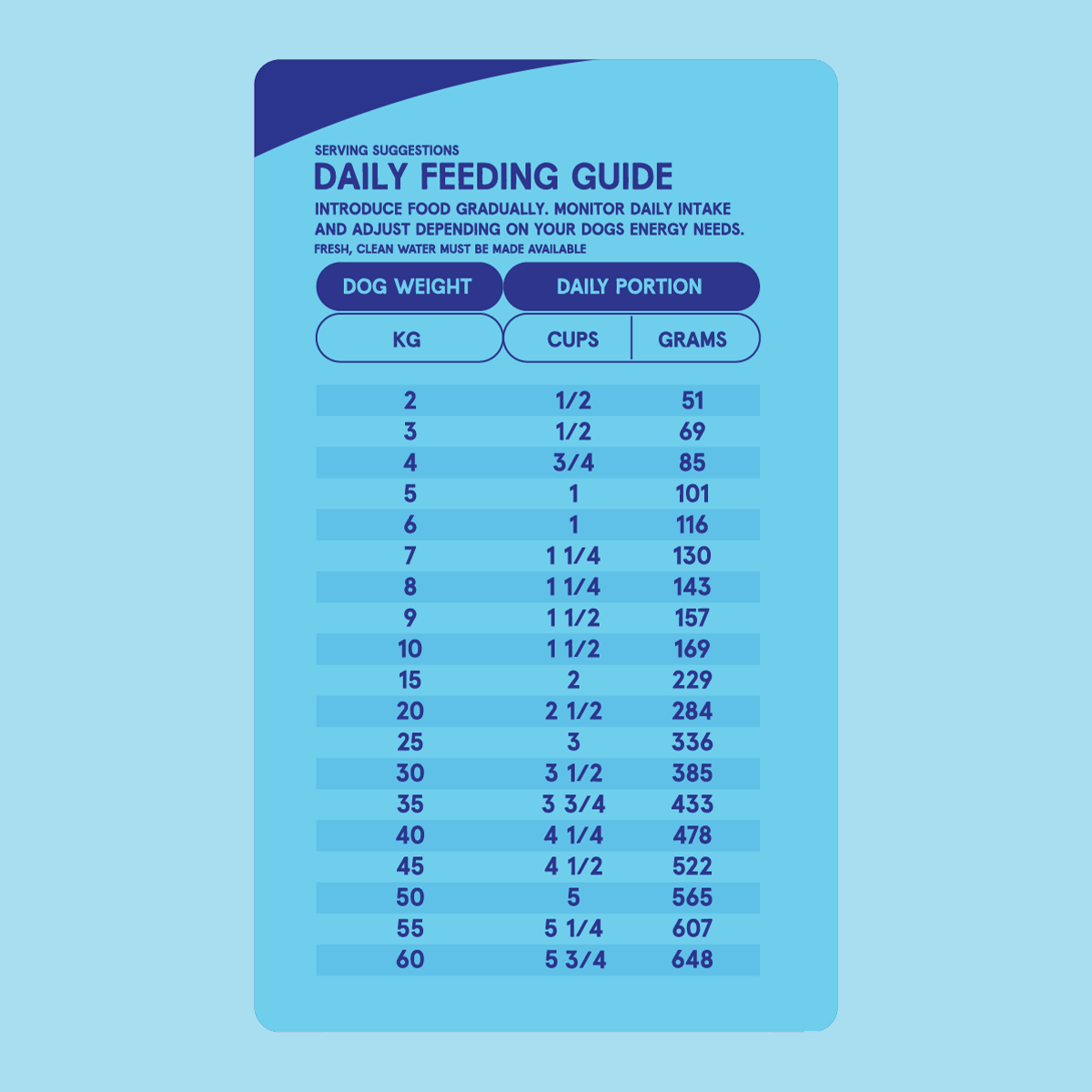
Sudden food changes. A dog that was fine on one food and suddenly has digestive issues after a change hasn't developed a new sensitivity — the gut microbiome needs time to adjust. Always transition slowly over 7–10 days.
What Ingredients Help a Sensitive Stomach?
Single Named Protein
The simpler the protein profile, the easier it is to manage sensitivities and identify triggers. Lamb is one of the most useful proteins for sensitive dogs — it's a novel protein for many dogs, digestible, and complete.
Grain-Free Carbohydrate Sources
Sweet potato, pumpkin, and similar vegetables are gentler on the gut than corn or wheat for many dogs. They're also higher in fibre, which supports gut motility and stool firmness.
Prebiotics and Probiotics
Prebiotics feed beneficial gut bacteria and probiotics are live beneficial bacteria — both support a healthy gut microbiome. A balanced gut microbiome produces more consistent digestion and more regular, well-formed stools. Happy Hour includes prebiotics in its formula for exactly this reason.
Insoluble Fibre
Insoluble fibre adds bulk to stools and supports natural gut movement. It's what helps stools form properly and creates enough pressure to empty the anal glands naturally.
Omega-3 Fatty Acids
Omega-3s have a mild anti-inflammatory effect on the gut lining. Dogs with chronic digestive inflammation benefit from adequate omega-3 intake. Green-lipped mussel and fish oil are both good sources.
Dog Food Options for Sensitive Stomachs in NZ
Happy Hour
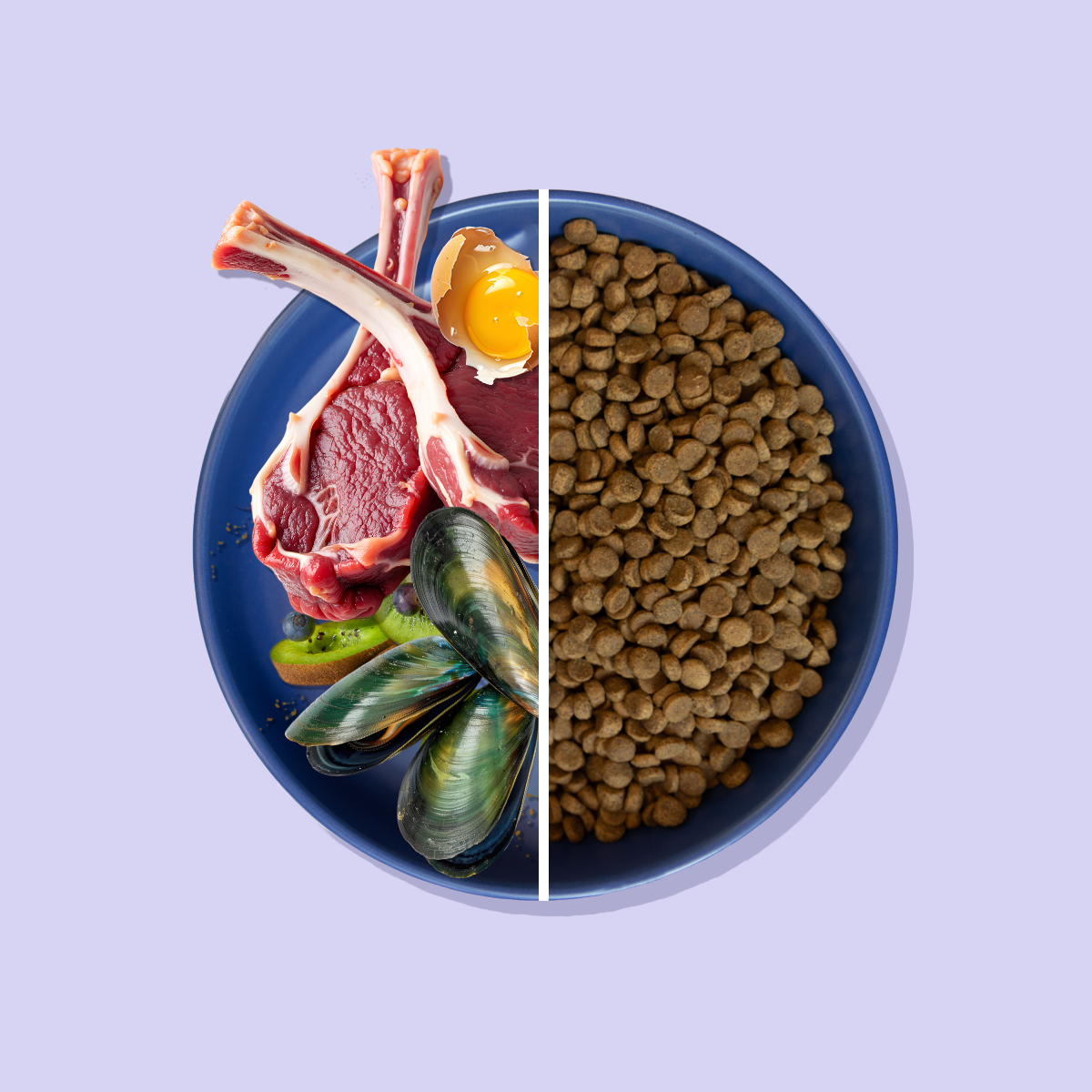
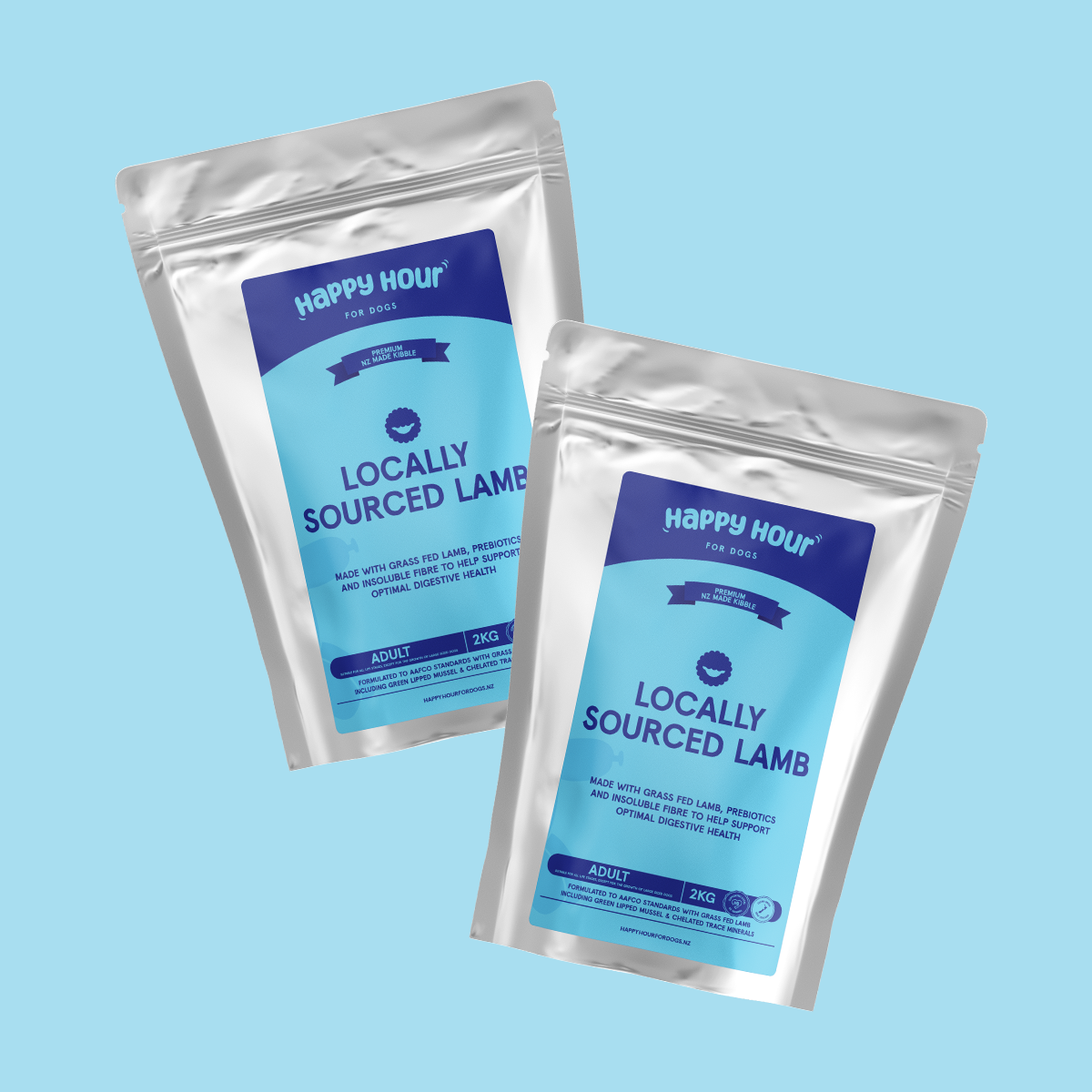
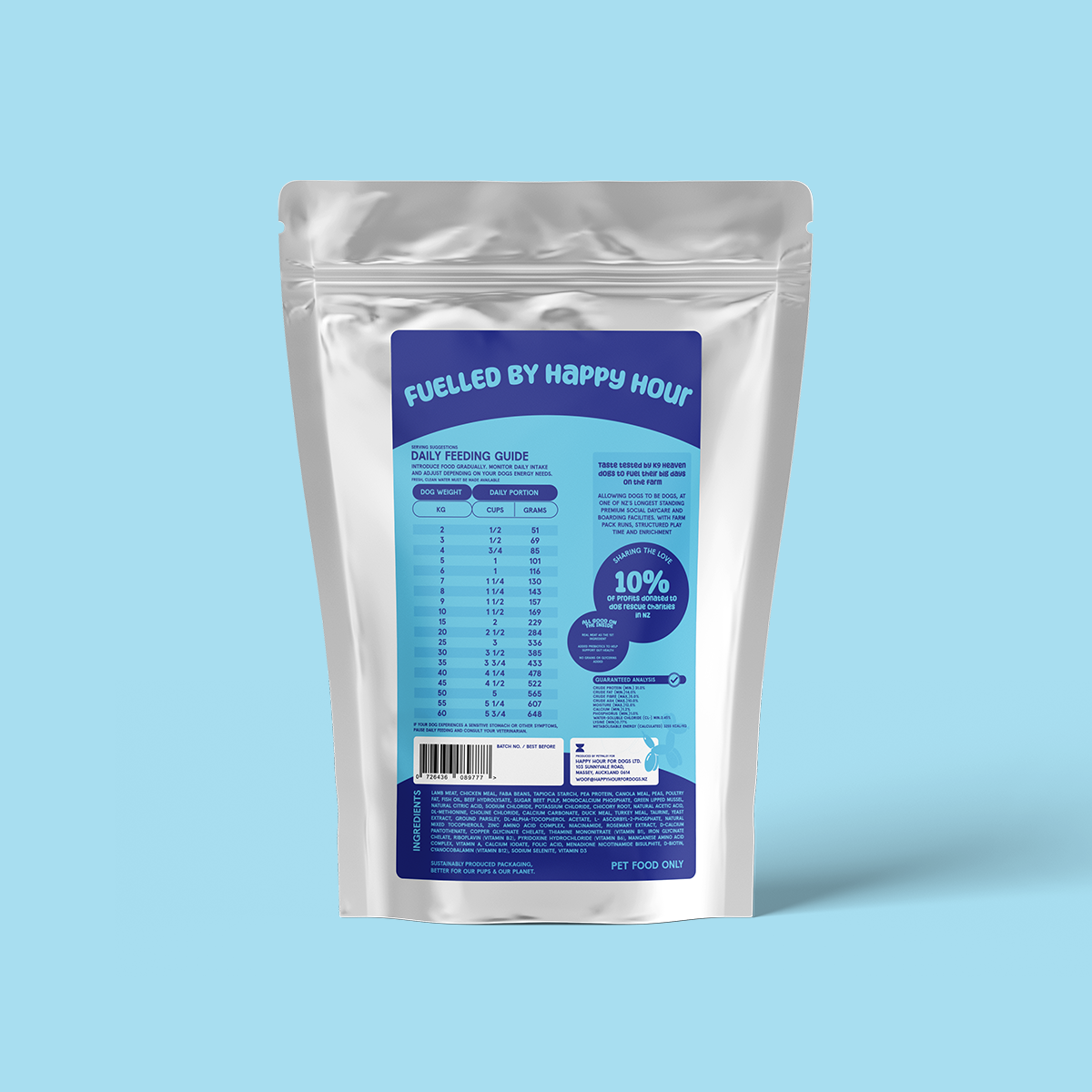
Happy Hour is the pick for NZ dog owners with a sensitive-stomached dog. The formula is built around digestive health: NZ grass-fed lamb as the primary protein (single, named source), sweet potato and peas as the carbohydrate base, prebiotics, insoluble fibre, and green-lipped mussel.
No grains, no soy, no dairy, no wheat, no artificial colours, no hormones. AAFCO approved. Tested across 48,000+ yearly meal times at K9 Heaven. 30-day send-it-back guarantee.
Ziwi Peak
For dogs that need the absolute highest-quality, lowest-filler option and budget allows, Ziwi's air-dried food is excellent. Very clean ingredient profile.
Royal Canin Digestive Care
Royal Canin's therapeutic digestive formulas are vet-designed for dogs with chronic GI issues. Worth considering for dogs with severe, ongoing issues under vet guidance.
How to Run a Food Elimination Trial
- Switch to a single-protein, grain-free food your dog has never eaten before (lamb is ideal if they've previously only had chicken or beef).
- Stick to that food only for 8–12 weeks. No treats from the old food source, no table scraps.
- Note changes in stool consistency, skin condition, energy, and coat quality.
- If symptoms improve significantly, you've identified a dietary trigger. If symptoms persist, go back to your vet.
For broader context on what to feed your dog in NZ: Best Dog Food NZ 2026: An Honest Guide for Kiwi Dog Owners