If your dog has just been diagnosed with pancreatitis, or you're trying to figure out why they've been vomiting and acting off, you've come to the right place. This is a real, serious condition — but most dogs do recover, and there's plenty you can do to help yours.
Let's go through everything: what the pancreas actually does, what goes wrong with pancreatitis, how vets diagnose it, and how diet plays a huge role in both recovery and preventing it coming back.
What does the pancreas actually do?
The pancreas sits tucked behind the stomach and does two important jobs.
The first job is endocrine function: it makes hormones like insulin and glucagon to regulate blood sugar. The second job is exocrine function: it produces digestive enzymes that get sent into the small intestine to break down fats, proteins, and carbohydrates.
Those digestive enzymes are the key thing here. Normally, they stay inactive until they reach the intestine, where they're safely activated and get to work. But with pancreatitis, they activate too early, while still inside the pancreas itself. And then they start digesting the pancreas. (Source: Pancreatitis and Other Disorders of the Pancreas in Dogs, Merck Veterinary Manual)
That's what pancreatitis is: inflammation of the pancreas, caused by its own enzymes turning on it.
Acute vs chronic pancreatitis: what's the difference?
This matters a lot for how you and your vet handle it.
Acute pancreatitis comes on suddenly. Your dog is fine one day, and the next they're vomiting, hunched over, and miserable. It can range from mild and manageable to severe and life-threatening. The good news is that most mild acute cases resolve well with treatment. (Source: Merck Veterinary Manual)
Chronic pancreatitis is a lower-grade, ongoing inflammation that can rumble along for months or years. It's trickier because the signs are often subtler — intermittent vomiting, a bit of weight loss, occasional lethargy. You might not even realise something is wrong until it flares up. Certain breeds are more prone to the chronic form. (Source: Blackwell's Five-Minute Veterinary Consult, Wiley)
Both forms can permanently damage pancreatic tissue over time, so managing either one properly matters.
What causes pancreatitis in dogs?
Honestly, in a lot of cases vets can't identify one specific cause. But there are well-known risk factors.
High-fat diet or dietary indiscretion is the big one. Eating a fatty meal, raiding the rubbish, stealing food at a barbecue — these are classic triggers for acute pancreatitis in dogs. The sudden flood of fat into the gut stimulates a large burst of enzyme secretion from the pancreas, and in susceptible dogs that can set off the cascade. (Source: Merck Veterinary Manual)
Obesity increases the risk. Overweight dogs tend to have higher circulating blood fats (triglycerides), which is a known risk factor. (Source: Merck Veterinary Manual)
Certain medications can trigger pancreatitis, including some corticosteroids, diuretics, and seizure medications. Always let your vet know your dog's full medication history. (Source: Merck Veterinary Manual)
Genetics and breed. Some breeds are significantly more prone — more on this below.
High blood triglycerides (hyperlipidaemia). Some dogs naturally run high blood fats, which is a direct risk factor for repeated pancreatitis attacks. This is especially common in Miniature Schnauzers. (Source: Merck Veterinary Manual)
Hyperadrenocorticism (Cushing's disease) is also associated with pancreatitis. (Source: Merck Veterinary Manual)
Which breeds are more prone?
Pancreatitis isn't exclusive to any breed, but some are statistically over-represented. These include Miniature Schnauzers, Yorkshire Terriers, Cocker Spaniels, Dachshunds, and Poodles. (Source: Merck Veterinary Manual)
Miniature Schnauzers in particular have a genetic tendency toward hyperlipidaemia — high blood triglyceride levels — which is a direct driver of pancreatitis risk. (Source: AJVR, American Journal of Veterinary Research, Vol 71, 2010)
If you have one of these breeds, managing their diet proactively is really worthwhile. See our dedicated article: Dog Breeds Prone to Pancreatitis: What Owners Need to Know.
Signs of pancreatitis in dogs
The classic signs to look for:
- Vomiting, often repeated
- Lethargy — your dog just doesn't want to move
- Loss of appetite, sometimes complete refusal to eat
- Abdominal pain — they may flinch if you touch their belly, or seem uncomfortable
- The "prayer position" — front end down, back end up. Dogs do this to stretch out the abdomen and relieve pressure on the pancreas. It's a genuinely useful sign that something is going on in their belly.
- Diarrhoea in some cases
- Fever in more severe cases
In chronic cases the signs are often milder and intermittent — occasional soft stools, not quite right, not very hungry. It's easy to miss.
For a full breakdown of what to watch for and when to act immediately, read: Signs of Pancreatitis in Dogs: What to Look For.
When to go to the vet immediately
Go now (emergency) if your dog is:
- Vomiting repeatedly and can't keep anything down
- Collapsed or extremely weak
- In obvious pain
- Has a distended or rigid belly
- Showing signs of shock (pale gums, rapid breathing, unresponsive)
Call your vet today if your dog:
- Has been vomiting but is still alert
- Is off their food but otherwise seems okay
- Seems uncomfortable but not in acute distress
Do not wait to see if it passes. Pancreatitis can escalate quickly, and early treatment leads to better outcomes. (Source: Merck Veterinary Manual)
How vets diagnose pancreatitis
There's no single test that tells a vet "yes, definitely pancreatitis" — diagnosis usually combines a few things.
History and physical exam. Your vet will ask about recent meals, any dietary indiscretions, and medications. They'll feel your dog's abdomen.
Blood tests. Standard blood panels can show elevated liver enzymes, white blood cell changes, and electrolyte abnormalities, but these aren't specific to pancreatitis.
Spec cPL (Specific Canine Pancreatic Lipase) test. This is the most useful blood test for pancreatitis in dogs — it measures a pancreas-specific form of the enzyme lipase. IDEXX Laboratories developed and validated this test, and it's now widely used in veterinary practice in NZ and internationally. A positive Spec cPL with matching clinical signs is strong evidence of pancreatitis.
Ultrasound. Abdominal ultrasound can show an enlarged, inflamed pancreas and is often used alongside the Spec cPL to confirm diagnosis.
Biopsy. Technically the most definitive test, but rarely done in practice because it's invasive.
Treatment: what to expect
Most dogs with mild to moderate pancreatitis are treated with:
Fluids. IV or subcutaneous fluids to correct dehydration and support circulation. This is often the most important early step.
Anti-nausea medication. To stop vomiting and make the dog comfortable.
Pain relief. Abdominal pain is assumed to be present and is treated accordingly. (Source: Merck Veterinary Manual)
Rest and restricted feeding. In the past, vets routinely fasted dogs with pancreatitis for several days. Current thinking is more nuanced — prolonged fasting is now mainly recommended when the dog is vomiting uncontrollably, while early return to gentle feeding is preferred where possible. (Source: Merck Veterinary Manual)
Hospitalisation is needed for severe cases.
Long-term management: diet as the cornerstone
Once your dog has had pancreatitis, diet becomes one of the most important tools you have to prevent recurrence.
The central principle is simple: keep dietary fat low. Fat is the primary stimulator of pancreatic enzyme secretion. Reduce fat intake, and you reduce the workload on a pancreas that's already been damaged or sensitised.
Veterinary guidelines recommend less than 15% dry matter fat for dogs with pancreatitis, and less than 10% DM for dogs who are obese or have high blood triglycerides. (Source: Key Nutritional Factors in Treating Pancreatitis, Today's Veterinary Nurse, Burns & Poulin)
What this means in practice:
- Switch to a purpose-formulated low-fat kibble as the main diet
- Cut out high-fat treats entirely (cheese, sausage, fatty scraps)
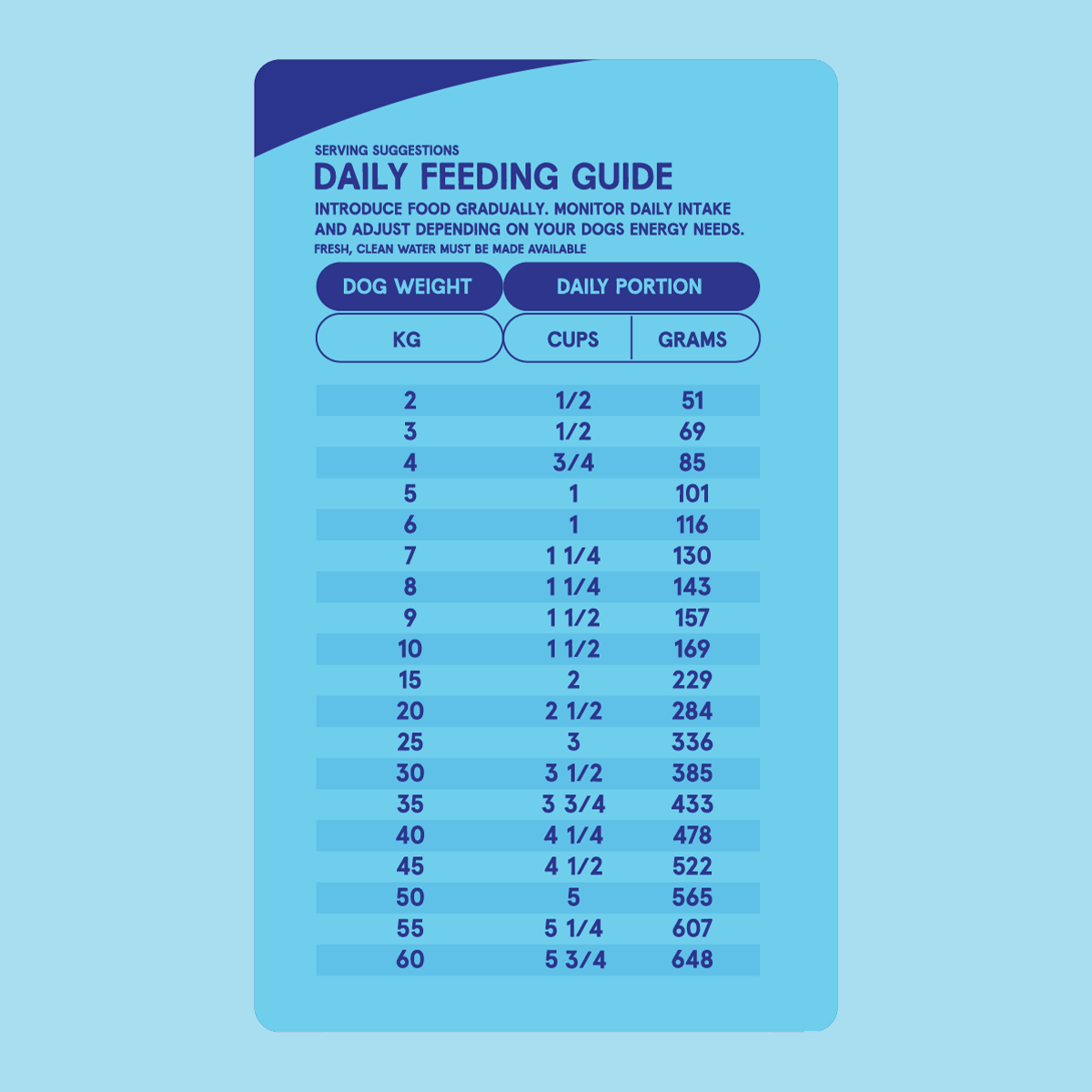
- Switch gradually, over 1-2 weeks, to avoid GI upset
- Maintain a healthy weight — obesity is a direct risk factor
Long-term diet, and where Happy Hour fits in
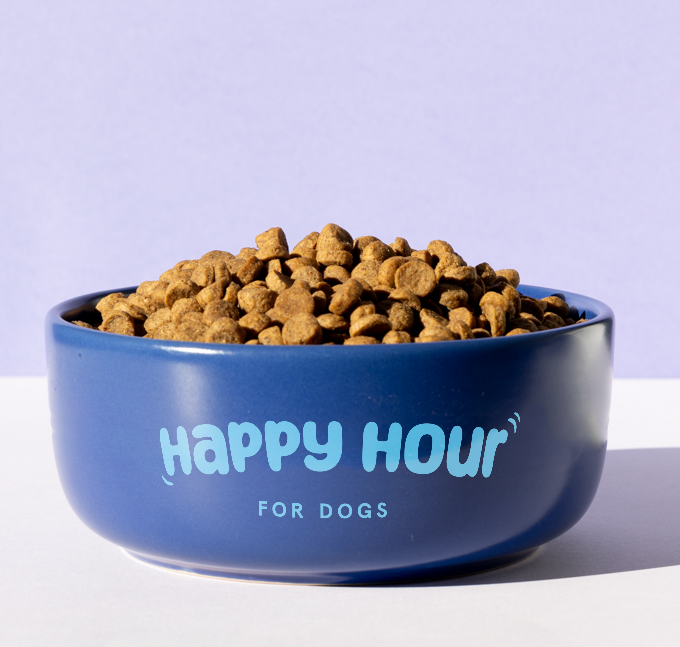
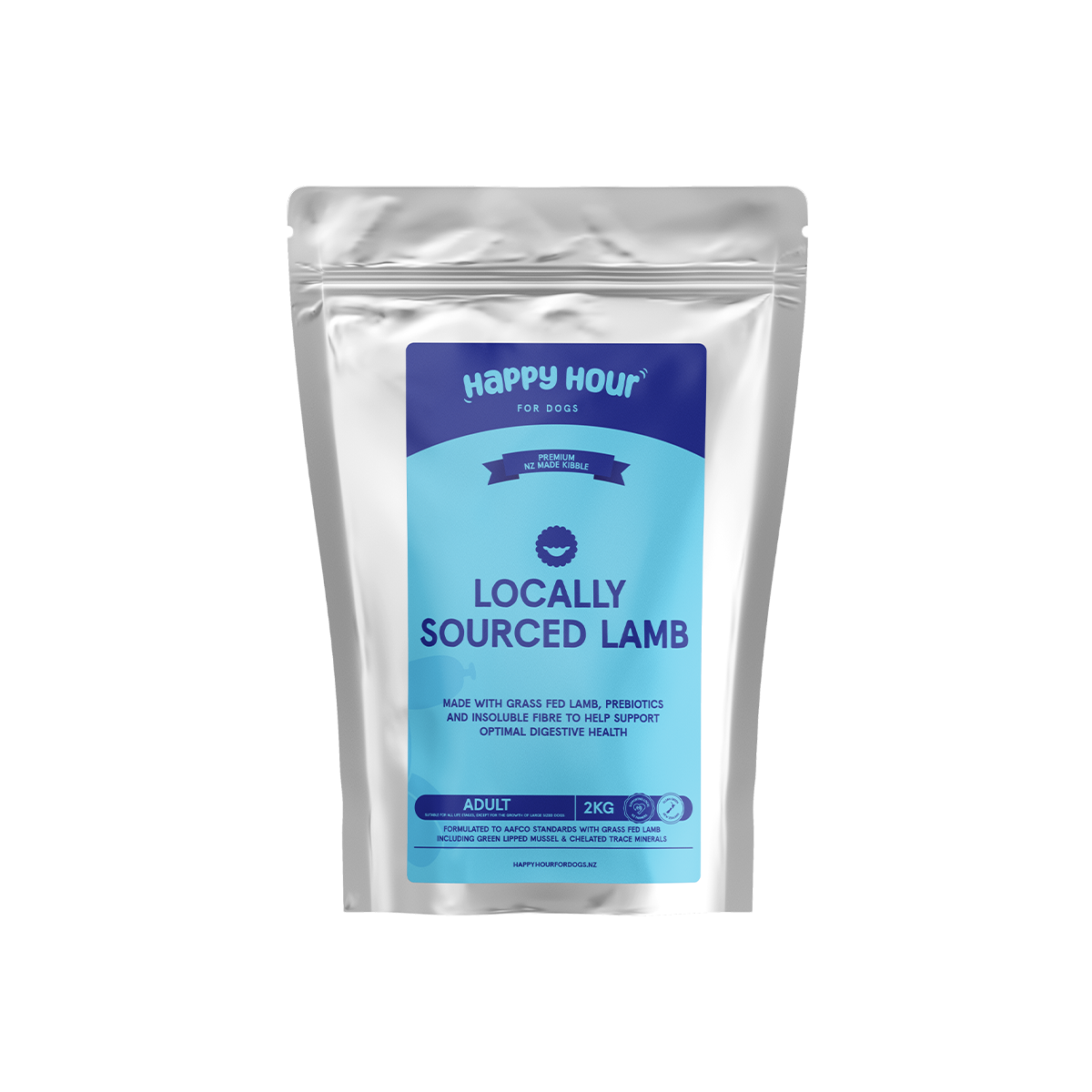
If you're in New Zealand and choosing a long-term everyday diet once your dog has recovered, Happy Hour For Dogs is one NZ option worth knowing about. It isn't a therapeutic pancreatitis diet, and we'd never pretend it was, but it's a quality kibble to put on your list to talk over with your vet.
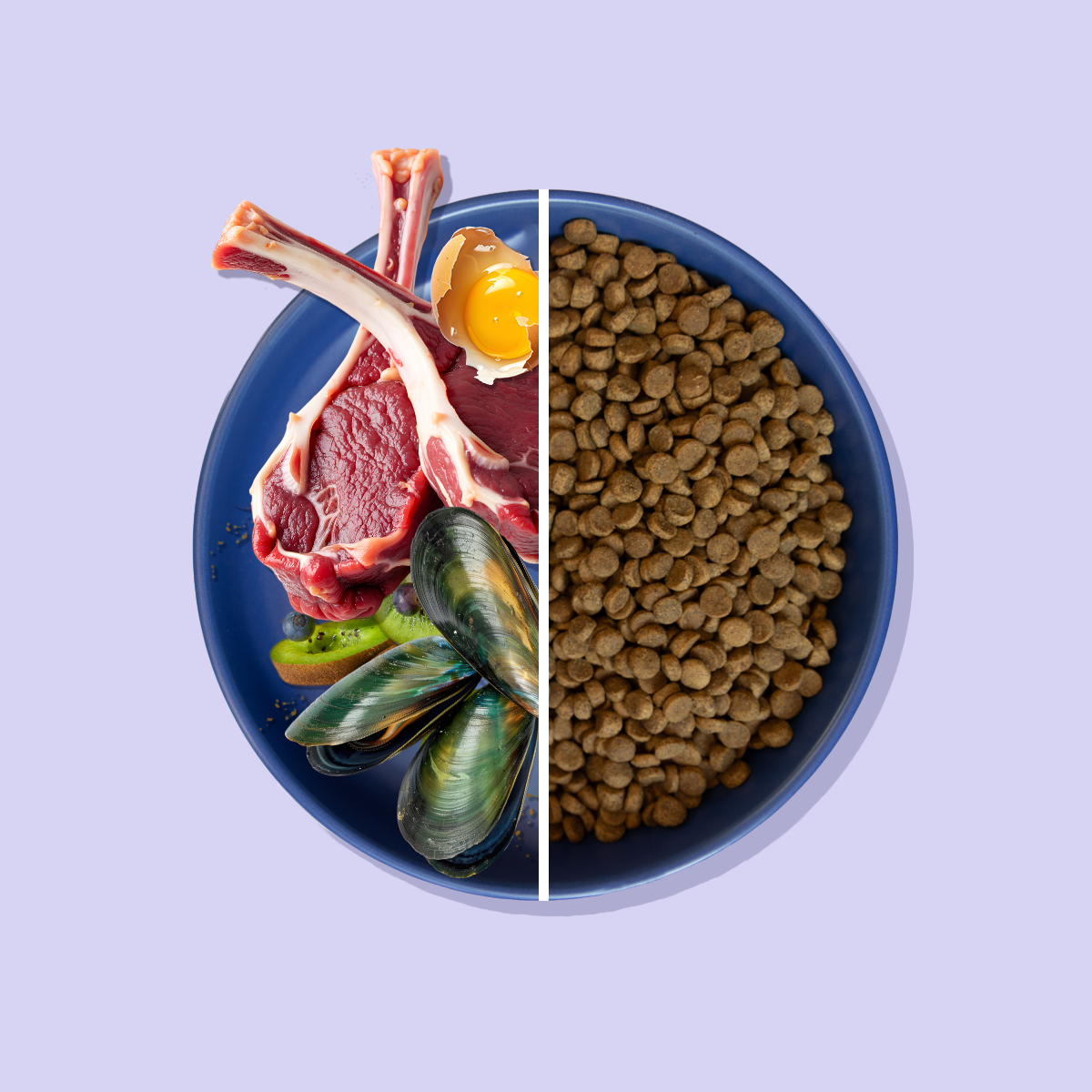
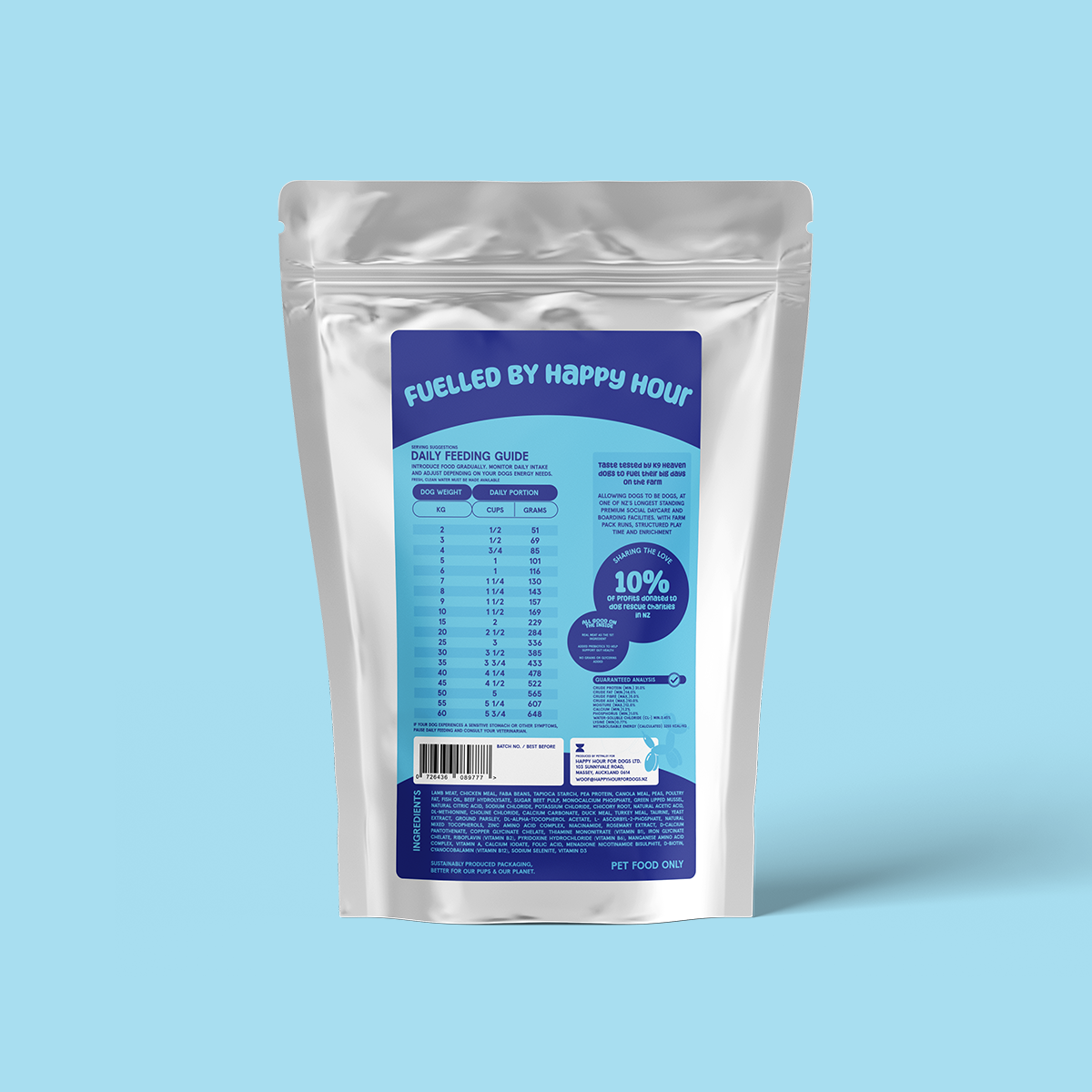
Happy Hour is a grain-free, grass-fed New Zealand lamb kibble that's lower in fat than many premium kibbles, though still at a moderate level rather than the sub-10% of a therapeutic low-fat diet. The formula also includes added prebiotics and insoluble fibre, which help support gut health and digestion.
We'd never say Happy Hour is a treatment for pancreatitis, that's your vet's territory, and the low-fat target for a recovering dog is theirs to set. What we can say honestly is that it's a quality everyday kibble, lower in fat than many, with good fibre. If your vet's happy to have it in the mix, that's a conversation worth having.
For more on what to look for in a post-pancreatitis kibble in NZ: Low-Fat Dog Food for Pancreatitis NZ: A Practical Guide.
Can dogs recover from pancreatitis?
Yes, most dogs recover well — especially from mild acute episodes. With prompt treatment and dietary management, dogs can go on to live completely normal lives. The key is consistency: keeping fat low, maintaining a healthy weight, and avoiding the triggers that started it.
Severe acute pancreatitis is a different situation and can be life-threatening, but even those dogs often recover with intensive care.
For a full picture of what recovery looks like: Can Dogs Recover from Pancreatitis?