Your dog has just been diagnosed with pancreatitis, and your vet has said something like "keep them on a low-fat diet." Clear enough in principle. But then you go to the pet food aisle and... every bag looks the same.
This guide is for NZ dog owners in exactly that situation. What does low-fat actually mean? What should you look for on a label? And what are the traps?
Why fat is the issue with pancreatitis
The pancreas produces digestive enzymes, including lipase, which breaks down dietary fat. When fat hits the small intestine, it sends a signal back to the pancreas to release more enzymes.
In a healthy dog, that's fine. In a dog whose pancreas is inflamed or damaged, that burst of enzyme activity can re-trigger or worsen the inflammation. It's a bit like asking someone with a sprained ankle to go for a run.
Reducing fat in the diet reduces the stimulus on the pancreas, giving it a chance to settle down and reducing the risk of flare-ups. This isn't a new idea — it's been the cornerstone of pancreatitis dietary management for decades, and vets consistently recommend it as one of the most important long-term lifestyle changes after a pancreatitis episode. (Source: Pancreatitis and Other Disorders of the Pancreas in Dogs, Merck Veterinary Manual)
What does "low fat" actually mean in dog food?
This is where things get a bit technical, but it matters.
Dog food fat content is measured as dry matter (DM) percentage. This strips out the moisture so you can compare foods fairly. Many labels show "as-fed" figures, which include water content and can be misleading when comparing wet versus dry food.
Veterinary guidelines recommend:
- Less than 15% DM fat for dogs with pancreatitis generally
- Less than 10% DM fat for dogs with pancreatitis who are also obese or have elevated blood triglycerides
(Source: Key Nutritional Factors in Treating Pancreatitis, Today's Veterinary Nurse, Burns & Poulin)
Some diets marketed as "gastrointestinal" or "digestive care" are actually not that low in fat and would not be appropriate for pancreatitis management. It's worth checking the actual numbers rather than assuming a "GI diet" label means low fat. (Source: Nutritional Management of Canine Pancreatitis, WSAVA 2006)
To convert a label figure to dry matter: Take the "as-fed" fat percentage, divide by (100 minus the moisture percentage), then multiply by 100.
For example: a kibble with 12% fat and 10% moisture would be 12 / (100 - 10) x 100 = 13.3% DM fat.
Most dry kibbles have 8-10% moisture, so for many kibbles the as-fed and DM numbers aren't hugely different. But for wet food, the difference is significant.
What to look for on a label
When you're standing in the pet food aisle (or scrolling online at 11pm, which is more likely), here's what to check:
1. Fat percentage. Below 15% DM for most pancreatitis dogs; below 10% if your vet has flagged obesity or high triglycerides.
2. Named protein source first. Look for "lamb", "chicken", "fish" etc. as the first ingredient — not vague terms like "meat by-products." Good protein matters even on a low-fat diet.
3. Fibre content. A moderate amount of dietary fibre is helpful for pancreatitis dogs. Soluble fibres like chicory root and sugar beet pulp support gut health and slow fat absorption. (Source: Effects of Beet Pulp on Nutrient Digestibility and Faecal Characteristics in Dogs, Journal of Animal Science, 2001; Effects of Chicory Inulin on Gut Microbiota in Dogs, Journal of Animal Science, 2012)
4. No added fat sources high up in the ingredient list. If "beef tallow," "chicken fat," or "vegetable oil" appears in the first five ingredients, the food is likely too high in fat for a pancreatitis dog.
5. Grain-free isn't automatically low-fat. Grain-free kibbles vary enormously in fat content — some are actually higher fat than grain-inclusive options. Always check the analysis panel, not just the marketing.
Common mistakes NZ dog owners make
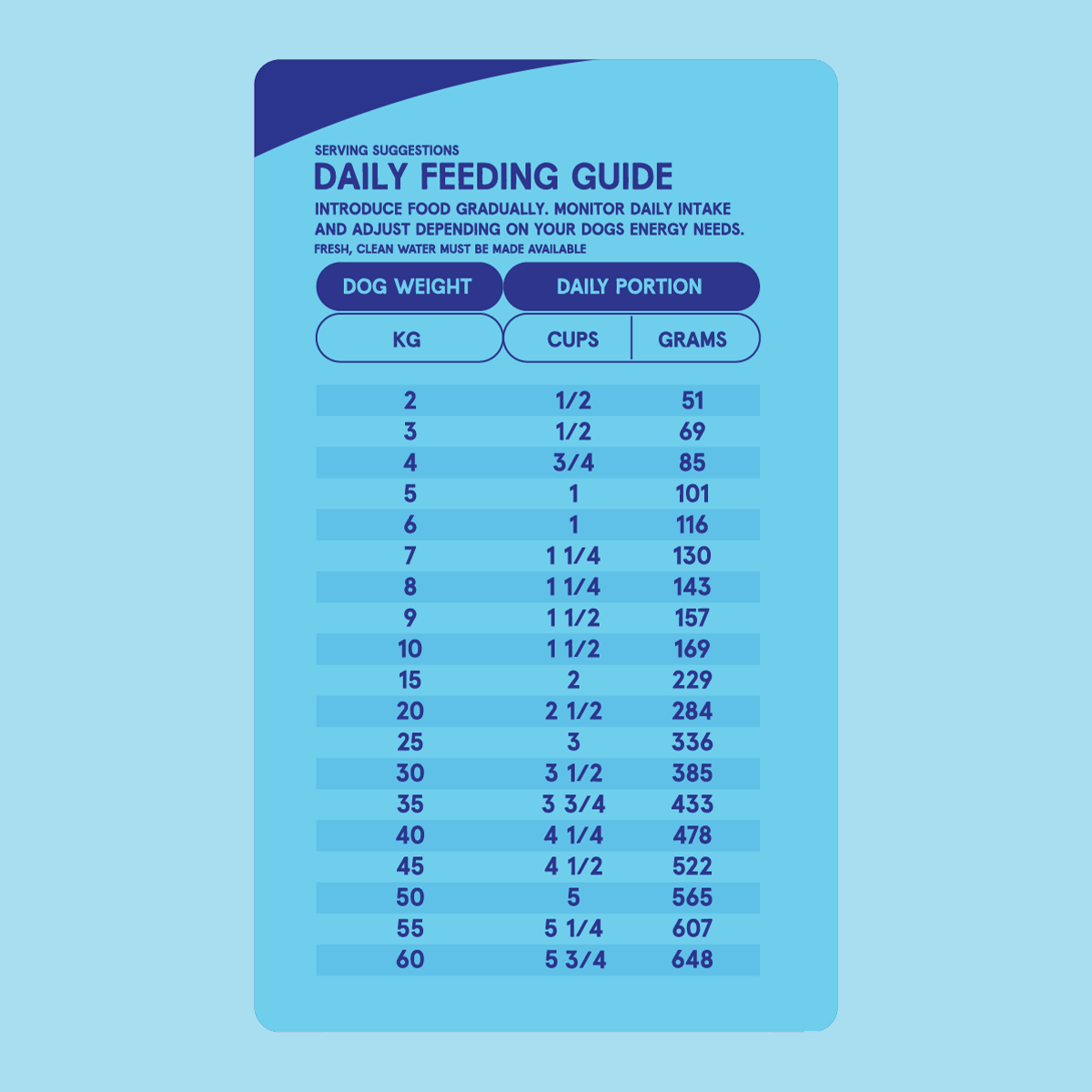
Switching too fast. Even switching to a better food too quickly can cause GI upset. Go slowly: 25% new food for two days, 50% for two days, 75% for two days, then fully transitioned. This is especially important for a dog whose gut is still recovering.
High-fat treats. This is a big one. You've carefully chosen a low-fat kibble, but then your dog gets a piece of cheese at the kids' table, or a sausage off the barbie. Those single high-fat hits are exactly the kind of trigger that can set off an acute flare. (Source: Merck Veterinary Manual)
Low-fat treat options: plain rice crackers, small pieces of carrot, blueberries, plain cooked chicken breast, commercial low-fat dog treats (check the analysis).
Not reading the label carefully. "Natural," "premium," "healthy" — none of these words tell you the fat percentage. Look at the guaranteed analysis panel.
Going back to the old food once your dog seems better. Pancreatitis dogs are sensitised. Even if they've fully recovered, returning to a high-fat diet significantly increases the risk of recurrence.
A NZ option worth knowing about
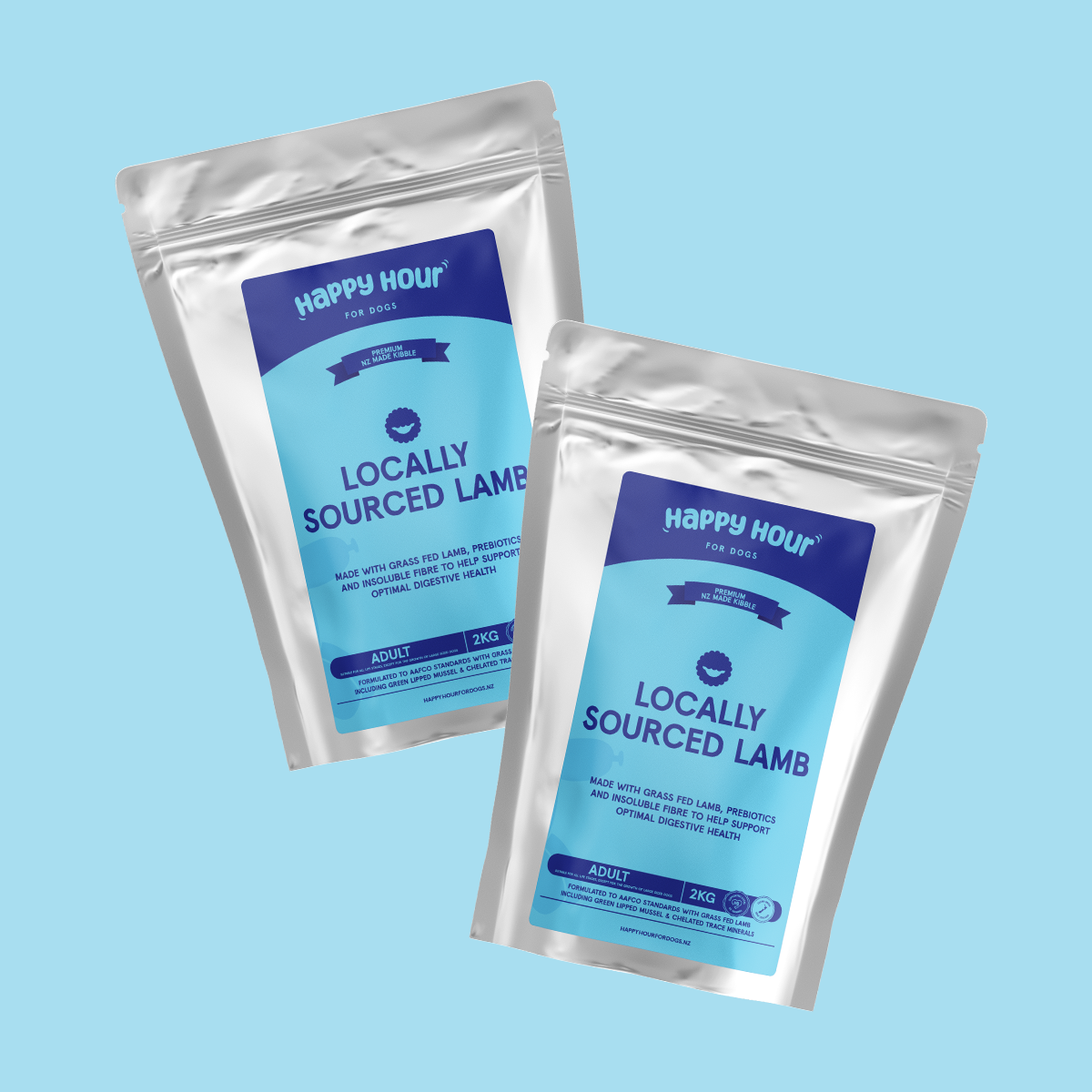
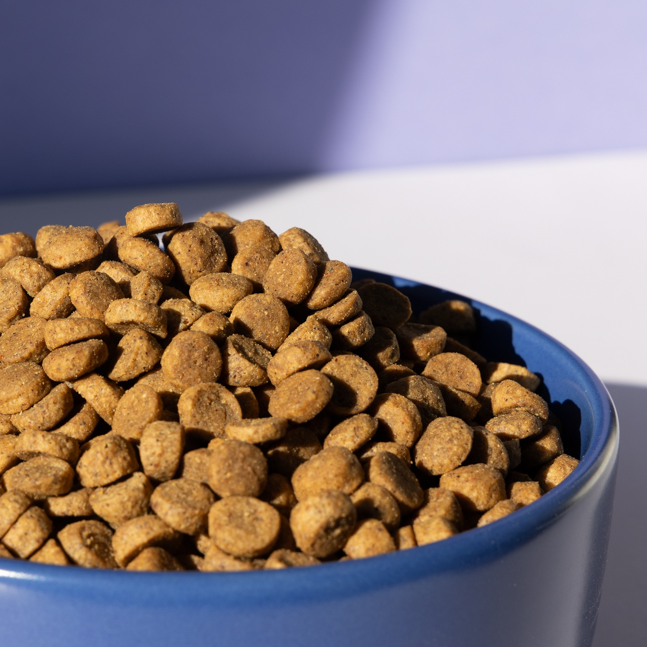
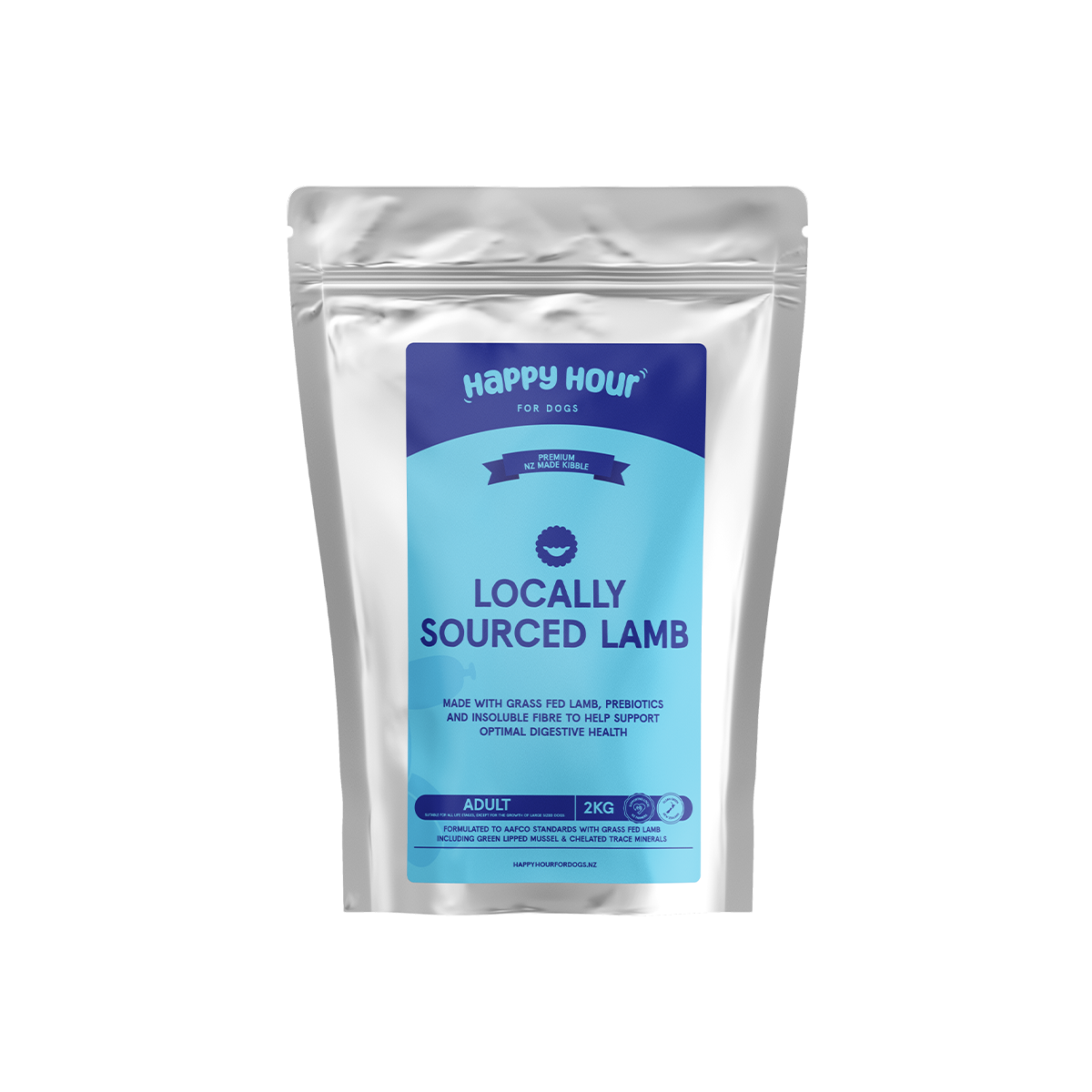
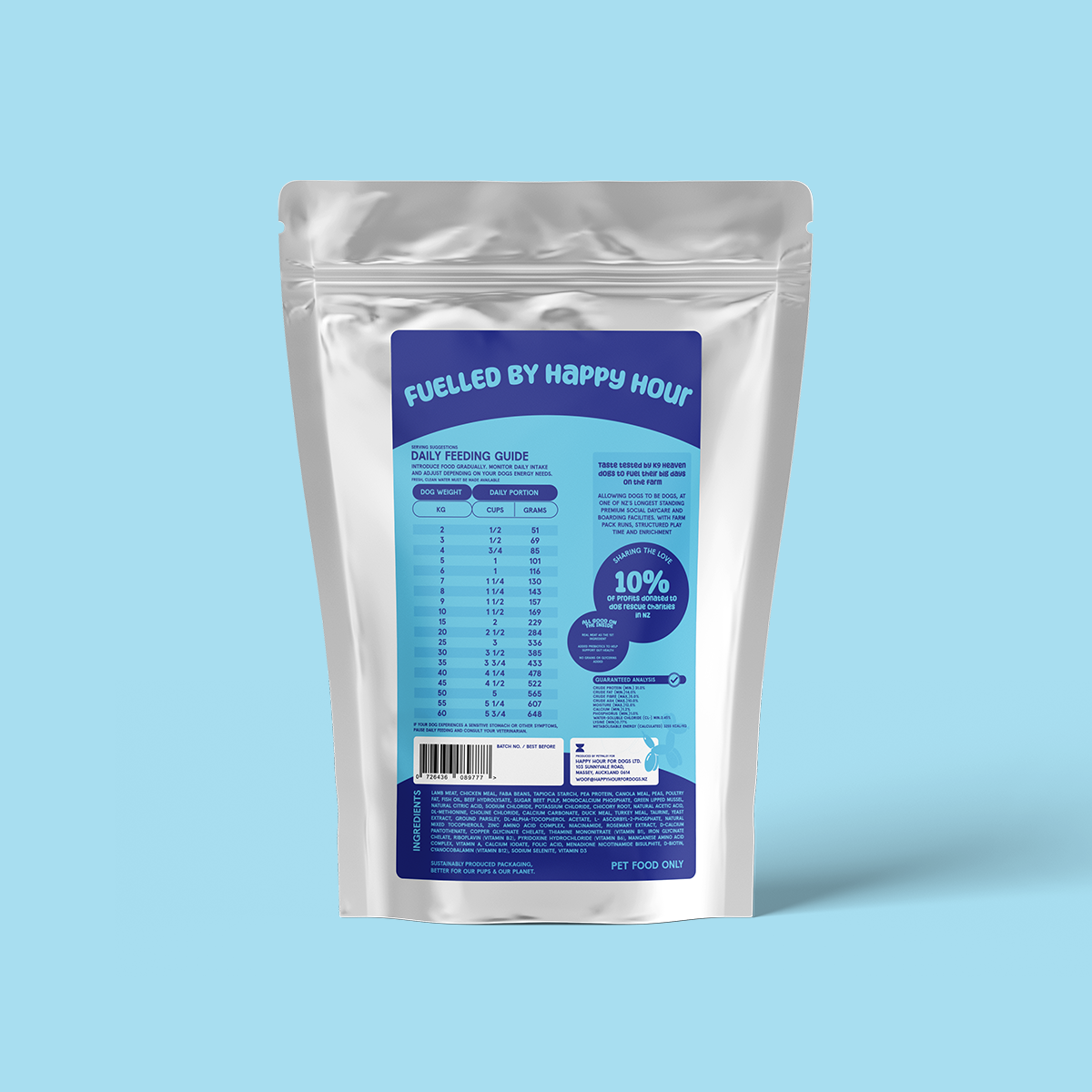
One NZ-made option worth knowing about is Happy Hour For Dogs. It's a grain-free, grass-fed NZ lamb kibble, and it's lower in fat than a lot of premium kibbles. We'll be straight with you though: it sits at a moderate fat level, not in the very low, therapeutic range a vet targets for a pancreatitis dog, so it isn't a low-fat prescription diet. It also includes added prebiotics and insoluble fibre for digestive support, both with solid research behind them for gut health in dogs.
Tanya and Ollie, who co-founded Happy Hour, run K9 Heaven, a dog boarding and daycare on a 10-acre farm in Auckland. They know dogs. And they formulated a food that makes sense for dogs with sensitive digestive systems.
We're not saying kibble alone manages pancreatitis, your vet is in charge of that, including where the fat level needs to sit. Happy Hour isn't a substitute for a prescribed low-fat diet, but as a quality everyday food it's a sensible one to discuss with your vet.
Transition guidance
When your dog is ready to move onto their long-term diet (your vet will advise when), here's how to do it safely:
- Days 1-2: 75% old food, 25% new food
- Days 3-4: 50/50
- Days 5-6: 25% old food, 75% new food
- Day 7 onwards: 100% new food
Watch for soft stools, vomiting, or reduced appetite during the switch — these can signal you're going too fast. Slow down if needed. And go easy on the treats for a while. Keep them plain, keep them small, keep them low-fat.