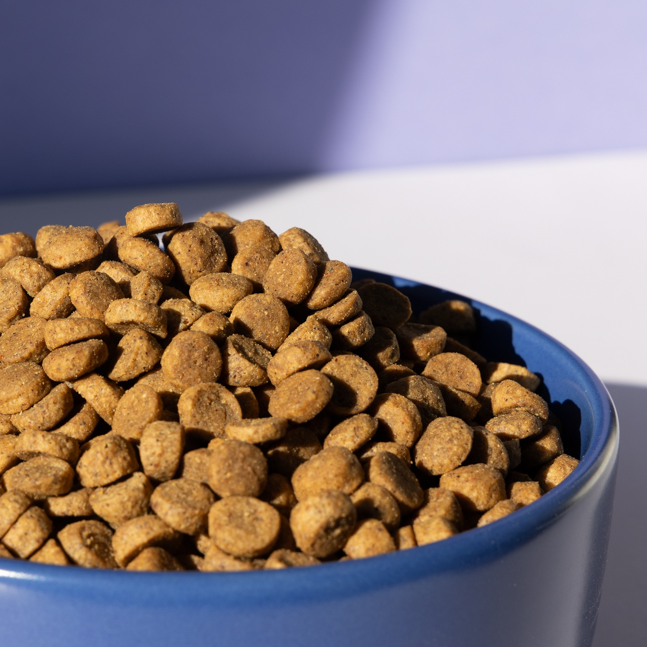
Cleo would eat until she physically couldn't. Given half a chance she'd polish off her bowl, start on Merc's, then stand next to the cupboard looking at us like we'd forgotten a step. Merc treats dinner as an opening offer he might consider later. Same house, same food, completely different appetites.
Key Takeaways
- The bag is a starting point, not an instruction
- A rough daily starting point by weight
- Weigh it, don't scoop it
- The real test is your hands
- Small dogs have almost no margin for error
So the honest answer to how much you should feed your dog is that it depends on the dog standing in front of you. Which is useless on its own. Here's a real starting number instead, and then the part that matters more: what you do with that number over the next four weeks.
The bag is a starting point, not an instruction
Every feeding guide on every bag of dog food in New Zealand is built around an average dog. Average activity, average metabolism, average everything. Your dog is a specific animal with a specific life.
A desexed nine-year-old Cavalier who does one gentle lap of the block burns nothing like a three-year-old Lab that swims most mornings. Two dogs, two very different fuel bills. The chart can't know that.
One thing to check before anything else: feeding guides give a daily total, not a per-meal amount. If you feed twice a day, that number gets halved. It's easy to read past, and it's the difference between a lean dog and a soft one.
A rough daily starting point by weight
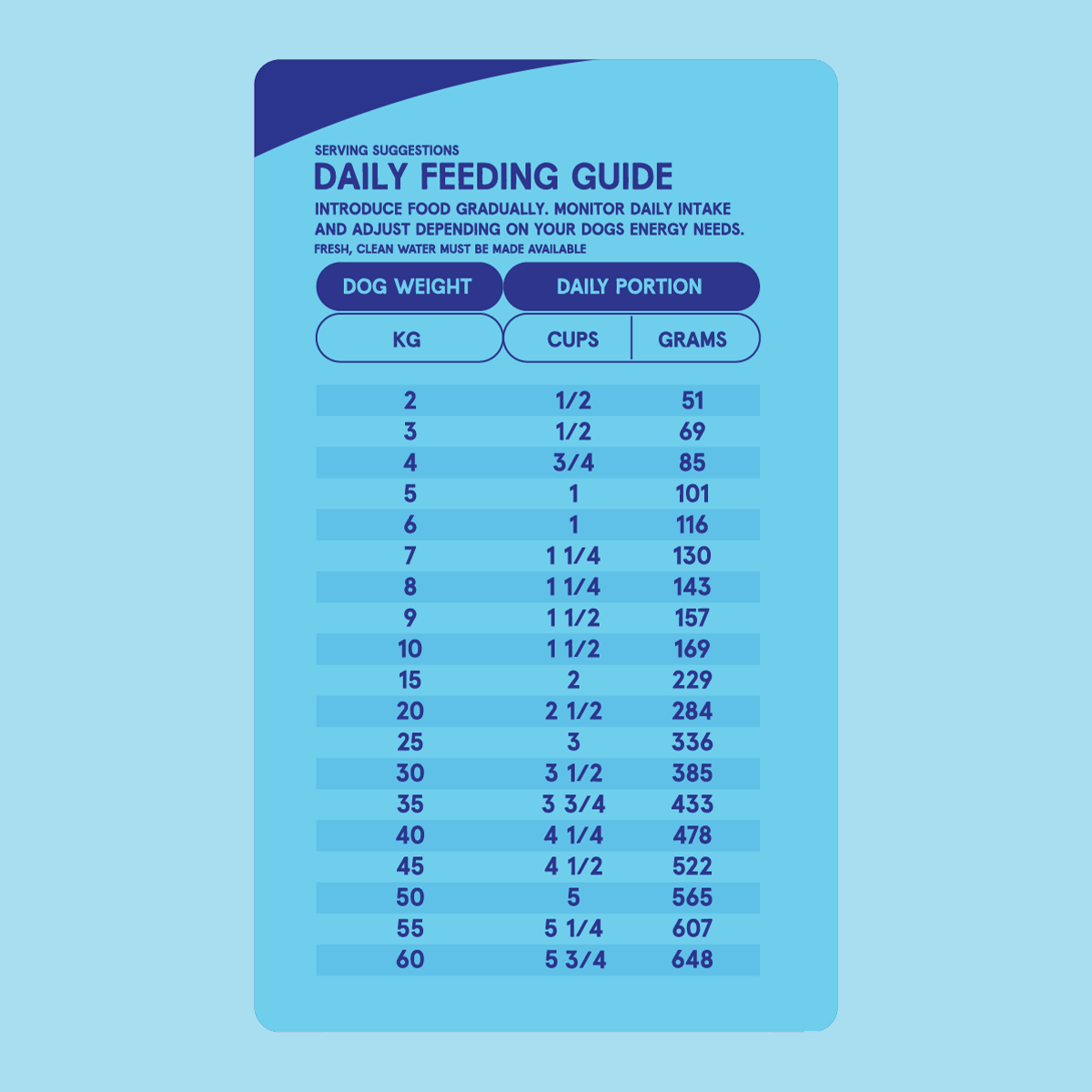
For an adult dog on a nutrient-dense premium kibble, doing a normal amount of walking:
| Your dog's weight | Rough daily amount |
| --- | --- |
| 2 to 5 kg | 45 to 90 g |
| 5 to 10 kg | 90 to 150 g |
| 10 to 20 kg | 150 to 240 g |
| 20 to 30 kg | 240 to 310 g |
| 30 to 40 kg | 310 to 380 g |
| 40 kg and up | 380 g and up |
Cross-check that against your own bag, because energy density varies a lot between brands. A cheaper food padded out with grain fillers needs a bigger serve to deliver the same nutrition, which is one of the reasons the cheap bag doesn't always work out cheaper by the month.
Weigh it, don't scoop it
A cup of kibble tipped in loosely and the same cup pressed down are not the same amount of food. Not even close. Do that twice a day for a year and the gap is measured in kilos.
Kitchen scales cost about twenty dollars and take five seconds to use. Tip the bowl on, hit tare, pour until you hit the number. That single habit fixes more weight problems than any diet food does.
The real test is your hands
Charts are guesses. Your hands aren't.
Run a flat palm along your dog's side with light pressure. You want to feel the ribs easily under a thin layer of cover, roughly like the back of your knuckles when your hand is relaxed. Sharp and obvious like a closed fist means too lean. Having to press to find anything at all means they're carrying extra.
Then look. From above, there should be a narrowing behind the ribs. From the side, the belly should slope up toward the back legs instead of running level.
Most NZ vet clinics are happy for you to walk in and use the waiting room scales without an appointment. Do it monthly and write the number on the fridge. If you need to adjust, move by about 10% and hold it for three or four weeks before changing again. Slow is the whole point.
And if your dog's weight is moving without any change to their food or exercise, that's a vet conversation, not a portion one.
Small dogs have almost no margin for error
This is where precision really counts. On a 5 kg dog, 500 g of extra weight is 10% of their body. The same proportional gain on a 30 kg Labrador would be 3 kg, which you'd notice immediately.
Most adult Bichon Frises sit between 5 and 8 kg, so somewhere around 90 to 140 g a day is a fair starting point. Most Cavalier King Charles Spaniels land between about 5.9 and 8.2 kg fully grown. Both breeds carry enough coat to hide a fair bit, so the hands-on check matters more than the eyeball.
Small dogs also need more calories per kilo than big dogs, which is why their portions look surprisingly dense for their size. We wrote more about that in our guide to the best dog food for small dogs in NZ, and there's a breed-specific one on managing a Bichon Frise's weight.
Puppies, adults and old girls
Puppies eat more per kilo than they ever will again, split across three or four meals a day until about six months, then two. The amount climbs as they grow and then drops off once they hit their adult frame, which catches a lot of people out. If you're working out portions for a pup, start with what puppies actually need.
Older dogs usually need less food and just as much protein. Elsa, our rescue girl, slowed right down in her last few years but still needed decent protein to hold onto muscle. Cutting the total while keeping the quality up is the move, and we've gone through it properly in our guide to feeding senior dogs in NZ.
Treats count. So does the crust of your toast.
The general rule vets use is that treats shouldn't make up more than about 10% of a dog's daily intake. That includes training treats, the dental chew, the bit of cheese used to get tablets down, and whatever fell off the bench.
The easiest fix for a slightly chubby dog isn't cutting dinner. It's counting the treats inside the daily total instead of adding them on top of it. Take a small handful of their kibble out of the daily amount at breakfast and use that for training through the day.
Things that shift the number
Desexing slows metabolism, and a lot of dogs need noticeably less food within a few months of the op. Age does the same thing more gradually.
Winter is the one people get backwards. Most Kiwi dogs sleep inside, so they're not burning extra energy staying warm. What actually happens between June and August is that it's dark and hammering down and the walk gets cut short, so plenty of dogs need slightly less food over winter rather than more. Working farm dogs out in it all day are a genuine exception.
If you're changing brands as well as amounts, change one thing at a time and go slowly. Our guide on switching your dog's food without upsetting their stomach walks through the week-long transition we use.
Where Happy Hour fits
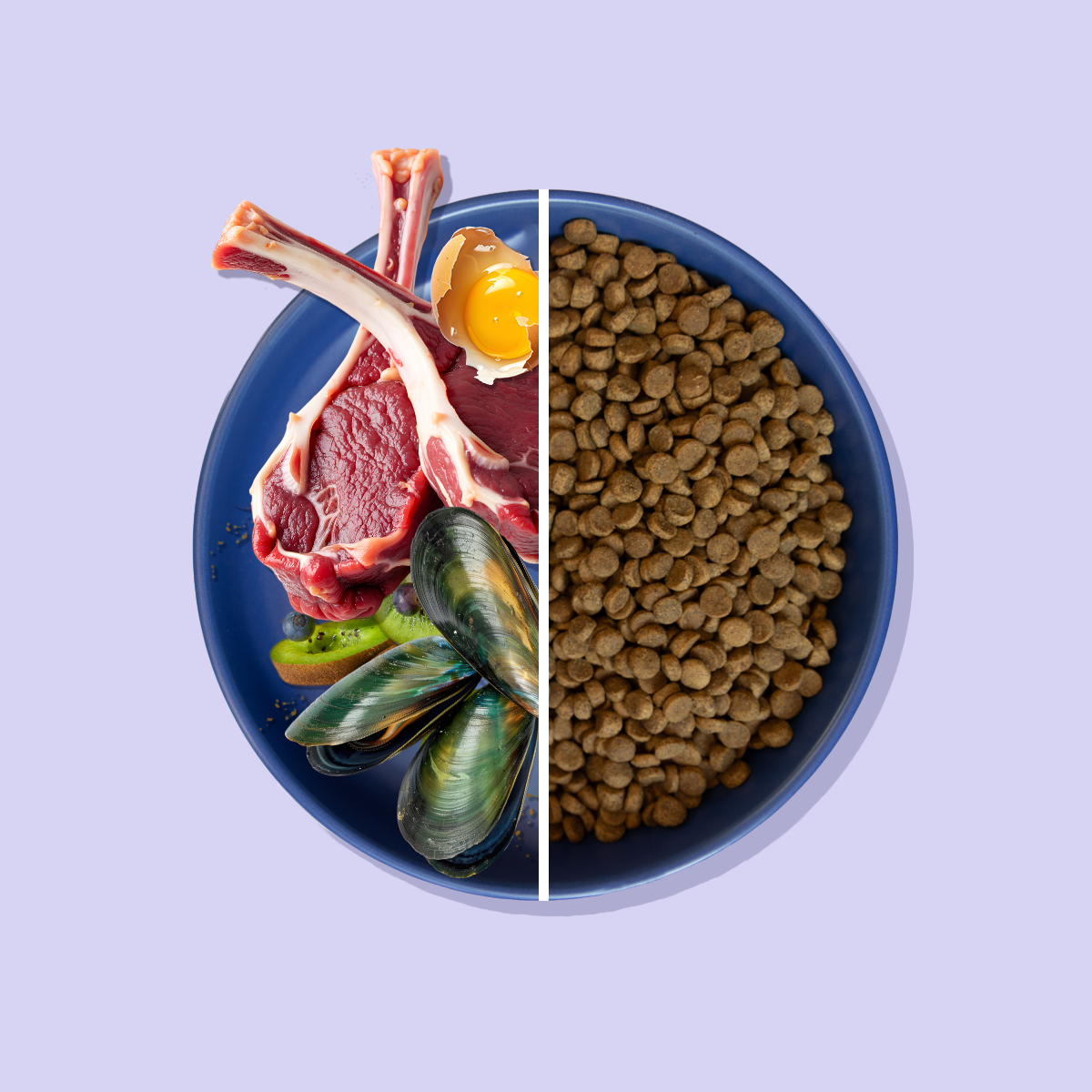
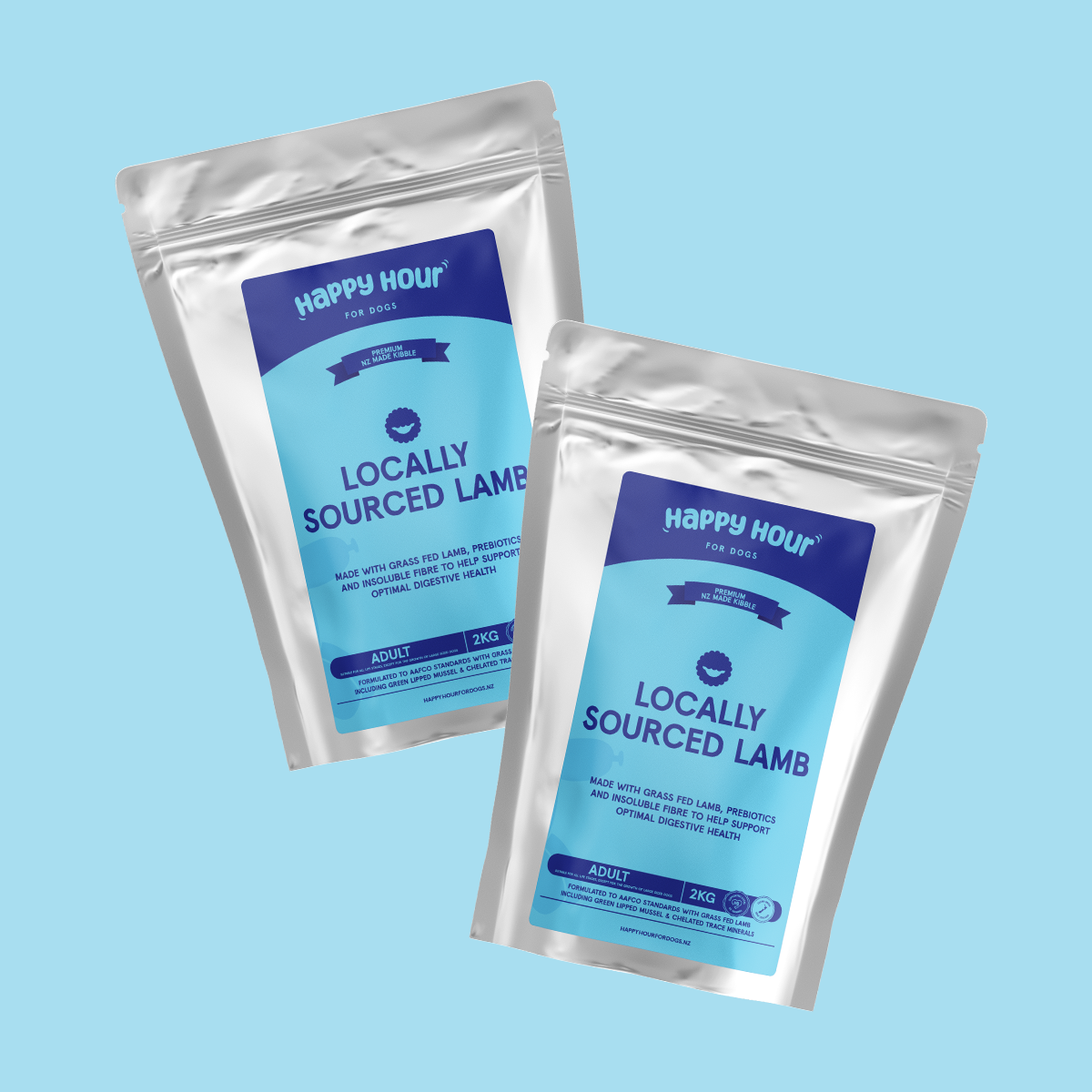
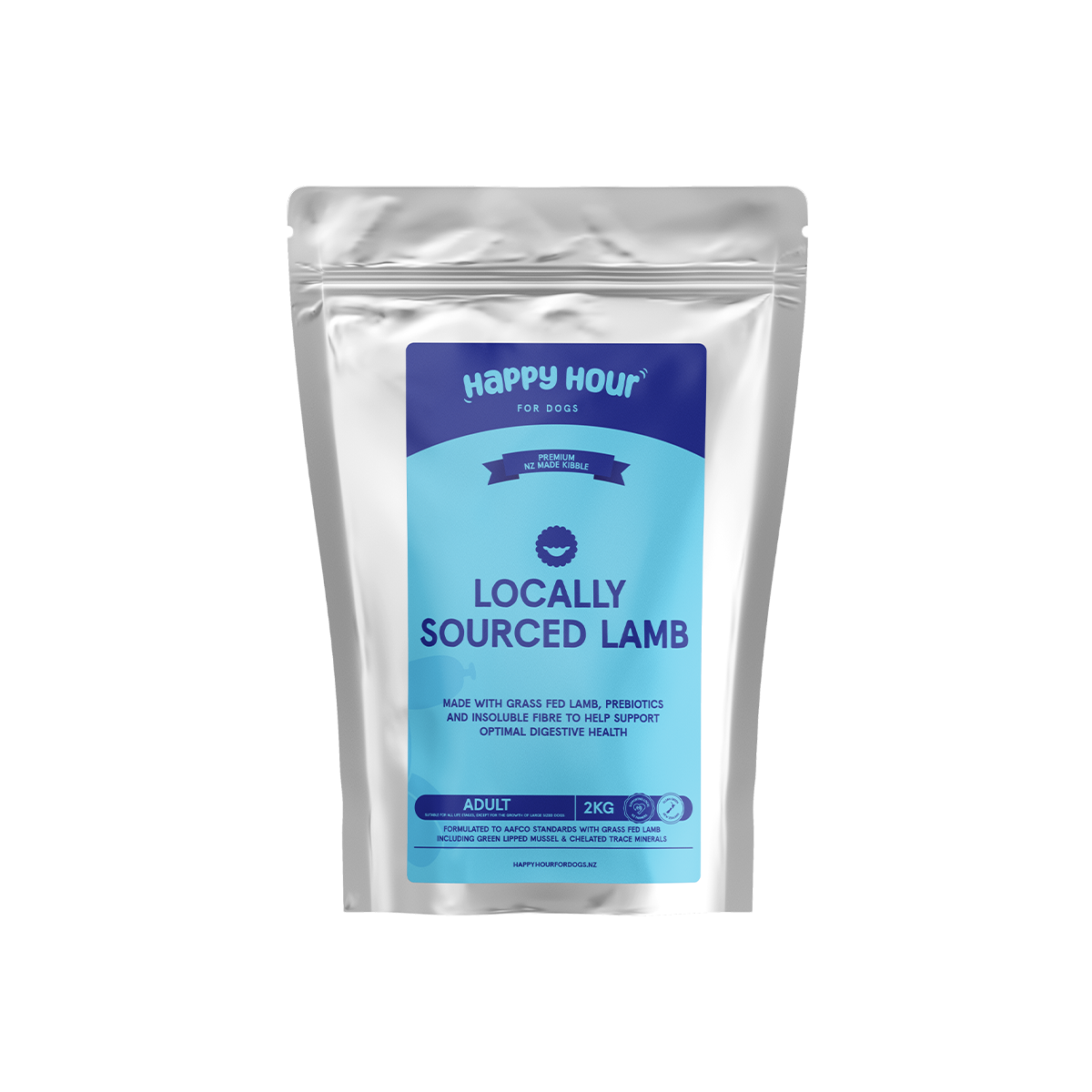
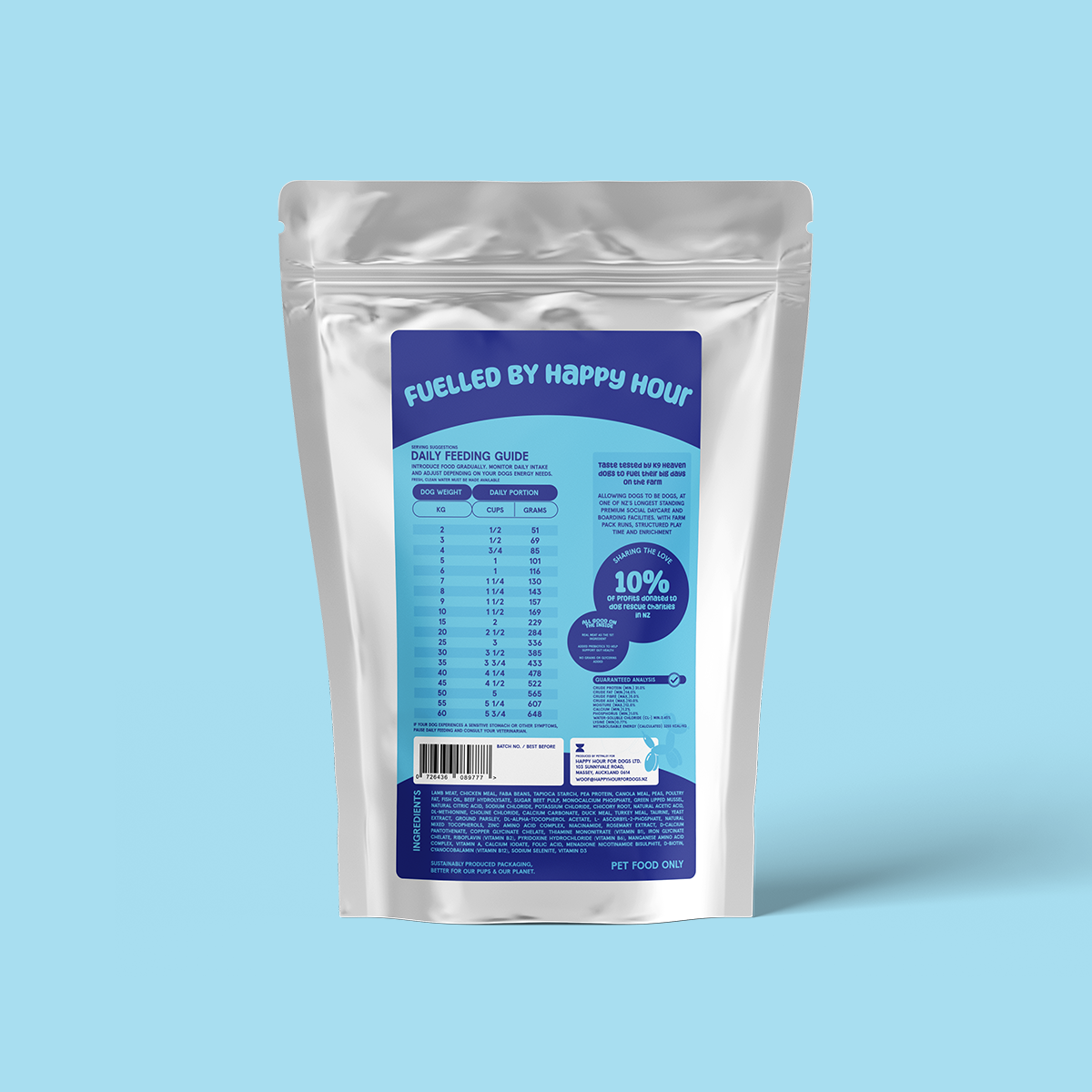
Happy Hour is a grain-free kibble made here in New Zealand, built on real NZ grass-fed lamb or cage-free chicken rather than meat meal of unnamed origin. The lamb recipe runs 31% protein, 14% crude fat and 5% fibre, with green-lipped mussel, added prebiotics and insoluble fibre, and chelated trace minerals so the minerals are in a form dogs absorb well. It meets AAFCO standards, and it's been palatability and digestibility tested at a leading NZ university.
Two things that matter for portions. First, because there's no grain bulking it out, the serve size looks small compared to a supermarket bag. That's normal, and it's why the scales beat the eyeball. Second, at 14% fat it sits lower than a lot of premium kibbles, which often run 16 to 20%. Combined with the added fibre, plenty of owners find their dog seems more settled between meals rather than pacing the kitchen.
If you're moving your dog onto it, start with the guide on the bag, split it across two meals, then do the rib check in three weeks and adjust from there.
We back it with a 30-day money-back guarantee, so if your dog turns out to be a Merc rather than a Cleo and simply won't have a bar of it, you're not stuck with a bag you can't use.