Last updated: August 2026
Bichon Frise Weight Management: NZ Owner's Guide
Bichon Frises are small, fluffy, and extremely good at getting fed. This is a breed that works the room at dinner time, and because there's a cloud of white coat over the whole operation, most owners don't notice the weight going on until someone at the vet clinic mentions it.
Key Takeaways
- The coat hides everything, so weight checks have to be done by hand, not by eye
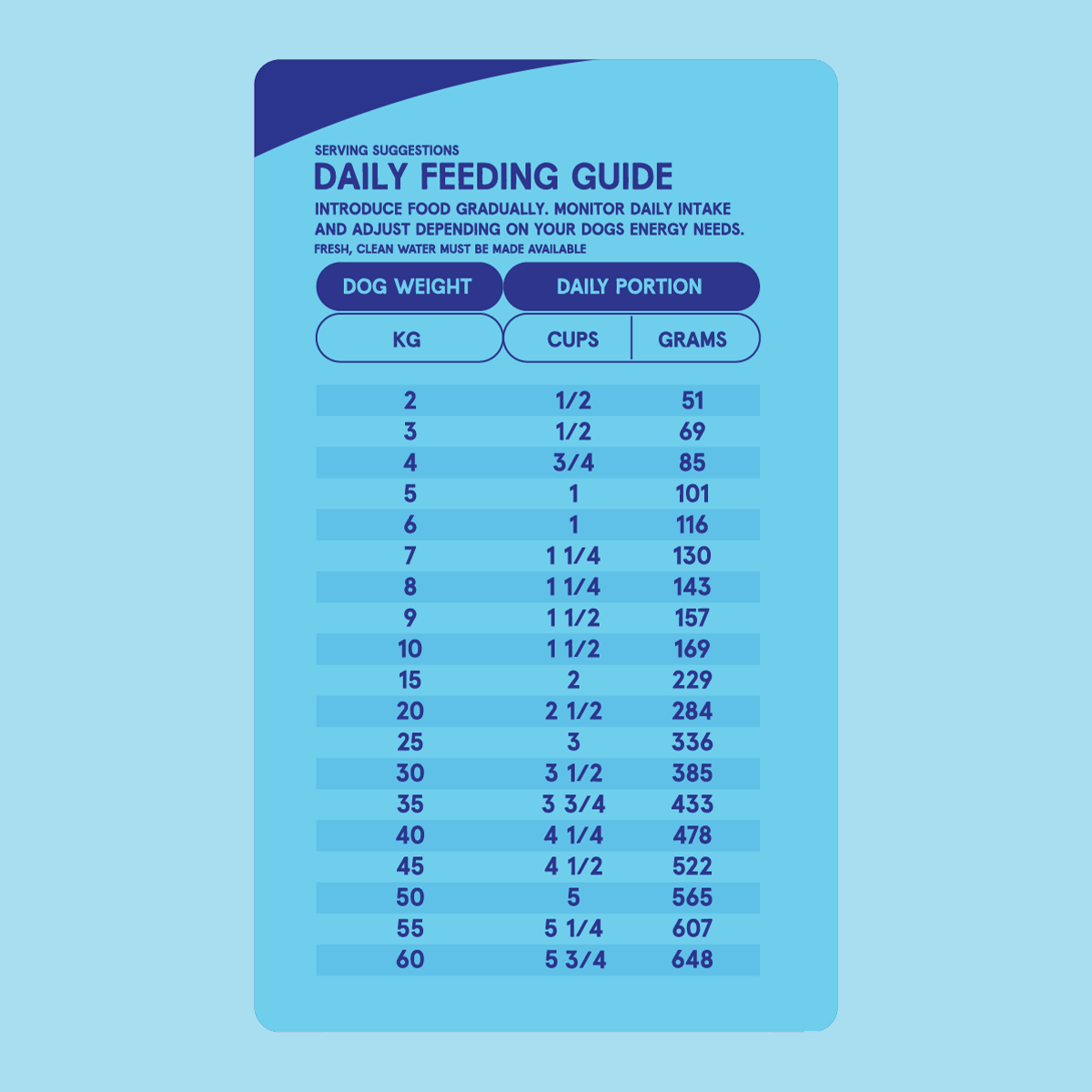
- A healthy adult Bichon sits around 5 to 8 kg and usually eats 90 to 130g of kibble a day, less than most owners expect
- One 20g dental chew can be close to a fifth of a small dog's daily food, so treats come out of the bowl, not on top of it
- Weigh food on kitchen scales instead of scooping with a cup, because scoop portions drift upward over the months
- Check the kcal per 100g on the bag: 400 versus 360 isn't the same dinner at the same gram weight
- Safe weight loss is slow: about 1 to 2% of body weight a week, so plan on 8 to 12 weeks, not a fortnight
- Weigh your dog on the same scales at the same time of day, write it down, and trust the trend rather than one reading
It comes down to two things: measuring what goes in the bowl, and getting everyone in the house to agree on treats. Neither is complicated. Both are harder than they sound when a Bichon is looking at you like that.
Why Bichon Frises Are Prone to Weight Gain
Bichons were bred to be companions and nothing else. No herding, no ratting, no retrieving. Their whole job description is being near people, and they're brilliant at it. That closeness is exactly why they get overfed. They're present at every meal, every cuppa, every packet of chippies on the couch, and they've worked out which face gets results and which person in the house folds first.
The rest is arithmetic. A 6 kg Bichon runs on somewhere around 400 to 450 calories a day, which usually lands near 110g of kibble depending on the food. Against that, a 20g dental chew is nearly a fifth of the day's ration before you've counted the crust of toast, the corner of cheese off the chopping board, and whatever went under the table at dinner. Put those same extras into a 30 kg Labrador and they barely register. One chippie is a rounding error for a big dog and a genuine snack for a Bichon. That's why the same handful of treats that keeps a Lab ticking along quietly turns a Bichon round over a single winter.
They're calmer than the fluff suggests, too. A Bichon loves a good walk and a mad five minutes around the lounge, but they aren't burning energy the way a Border Collie does. Desexing tends to slow the metabolism a little, and most dogs are desexed well before they're fully grown, so the portion that suited them at nine months can be too much at eighteen. The household calendar does its bit as well: Christmas here lands in the middle of summer, with a ham on the bench for a week and people in and out all day, and that's often when a small dog picks up weight that never quite comes off.
Two quiet culprits are worth checking on top of that. The first is a bigger dog in the house. If you've got a food vacuum like our Cleo in the mix, the Bichon is the one hoovering both bowls the second the big dog wanders off, and nobody counts that as a meal. Feed them in separate rooms and pick the bowls up after ten minutes. The second is age. A Bichon at eleven is doing shorter, slower laps of the block than they were at five, often with a bit of stiffness in the back end, while the bowl stays exactly where it was. Same food, half the output, and the difference goes on the ribs.
How to Tell If Your Bichon Frise Is Overweight
Looking at a groomed Bichon in full coat tells you close to nothing. The fur is designed to look like a cloud, and it does that job whether there's a lean dog underneath or a chubby one. You have to use your hands.
The check takes about thirty seconds and has three parts. Stand your dog on the floor rather than holding them, part the coat, and run your fingers down either side of the chest with light pressure, the sort you'd use to feel the knuckles on the back of your own hand. You should find each rib without pushing. If you have to press through a soft layer to get there, that layer is fat. Next, flatten the coat along the back and look from directly above: there should be a clear narrowing behind the ribcage before the hips. Then look from the side, where the belly should tuck up rather than run in a straight line from chest to back legs. A Bichon shaped like a fluffy sausage from shoulder to hip is carrying too much. Vets score this out of nine on a body condition chart, with four to five being about right, and most clinics will happily run through it on your own dog in a couple of minutes.
Bath time is your best look at the actual animal. A wet Bichon is startlingly small, and if the shape that appears in the laundry tub surprises you, that's useful information. Your groomer sees the same view every six to eight weeks and will usually tell you straight if something's changed, so ask them outright rather than waiting for them to raise it. For numbers, most adult Bichons sit between 5 and 8 kg, though frame size varies and the weight alone doesn't tell the whole story. Nearly every NZ vet clinic has scales in the waiting room and is happy for you to pop in and use them, no appointment needed, which beats the bathroom method: on a 6 kg dog, standing on your own scales holding them can be out by a couple of hundred grams either way, and a couple of hundred grams is the whole month's progress. If that's your only option, use the same scales every time, weigh before breakfast, and keep the numbers in a note on your phone with the date beside each one.
Watch how they move as well. A Bichon lagging on a walk they used to trot through, hesitating before jumping onto the couch, taking the stairs one at a time, or waiting to be lifted into the boot of the car is telling you something. Weight can also mask or worsen other things, so if you're not sure whether it's the diet or something else going on, talk to your vet before you start changing the food.
Feeding a Bichon Frise for a Healthy Weight
Buy kitchen scales and use them for every meal. A scoop or a mug feels accurate and isn't: the same cup holds noticeably different amounts depending on how you fill it, how settled the bag is, and whether you're in a hurry, and portions poured by eye grow over the months rather than shrink. For a dog whose entire daily ration is around 110g, a 15g drift is more than a tenth of their food, every day, forever. Over a year that's the best part of six extra kilos of kibble going into a dog who weighs six. Scales that read in single grams cost about the same as a bag of treats and live in the pantry next to the food.
Split the day's food into two meals, morning and evening. It doesn't change the total, but it cuts down the mid-afternoon hovering. Feed to the weight you want your dog to be, not the one they currently are, because the guide on the back of the bag is written for maintaining a dog at that body weight. A 7.5 kg Bichon who should be 6 kg gets the 6 kg portion. Life stage matters too: a puppy needs more food for their size than an adult and should be fed to a growth guide, while a quieter twelve-year-old often needs a little less than they did at six.
Then sort out the treats, because that's where most Bichons come unstuck. The usual guidance is that treats shouldn't make up more than about 10% of daily calories, which on 110g of kibble is roughly 11g of food. That's one small biscuit, or half a dental chew, for the whole day. The fix that works in most households isn't willpower, it's logistics. Weigh the full day's kibble into one container each morning and let anyone who wants to give a treat take it from there. When the container's empty, that's it. Nobody has to be the bad guy, and you stop the classic scenario where three people each give just one and the dog quietly eats a fourth meal. If someone needs something to hand over, raw carrot sticks, a few green beans or a couple of blueberries do the job for almost no calories.
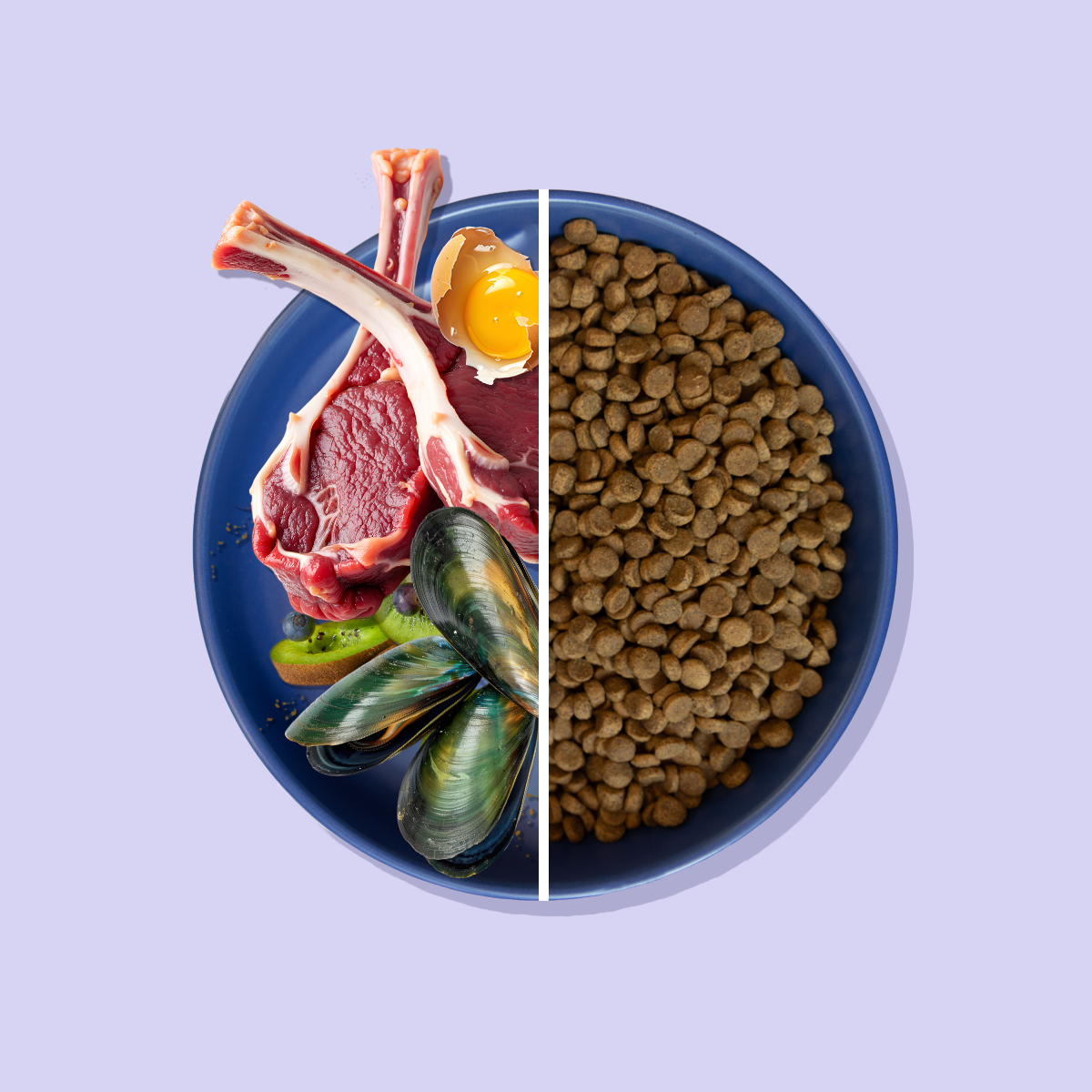
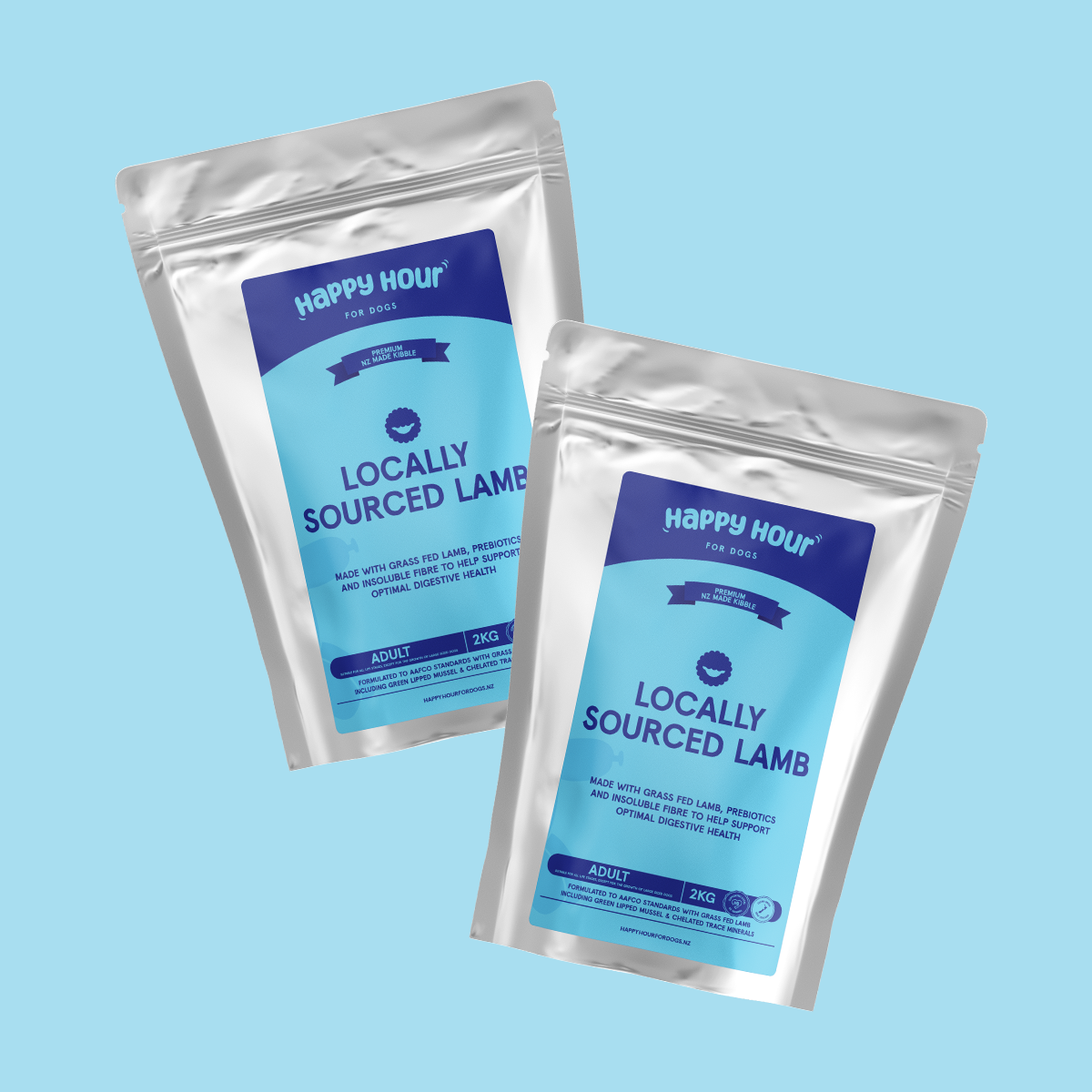
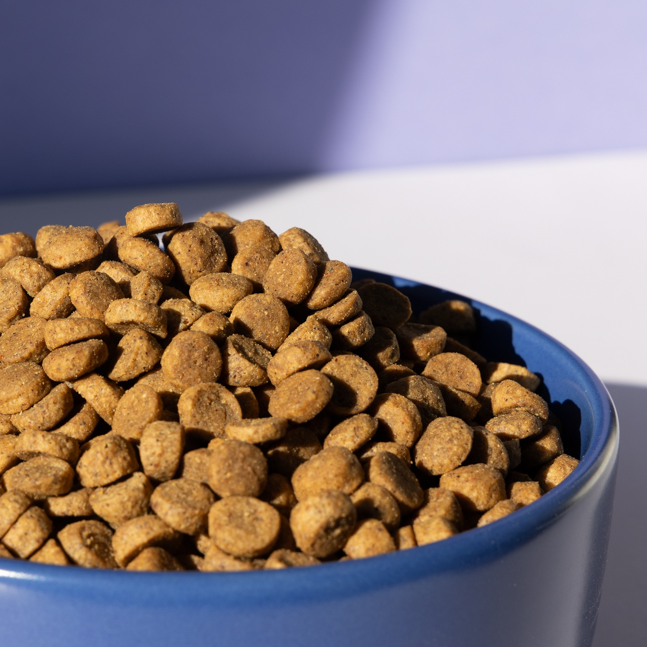
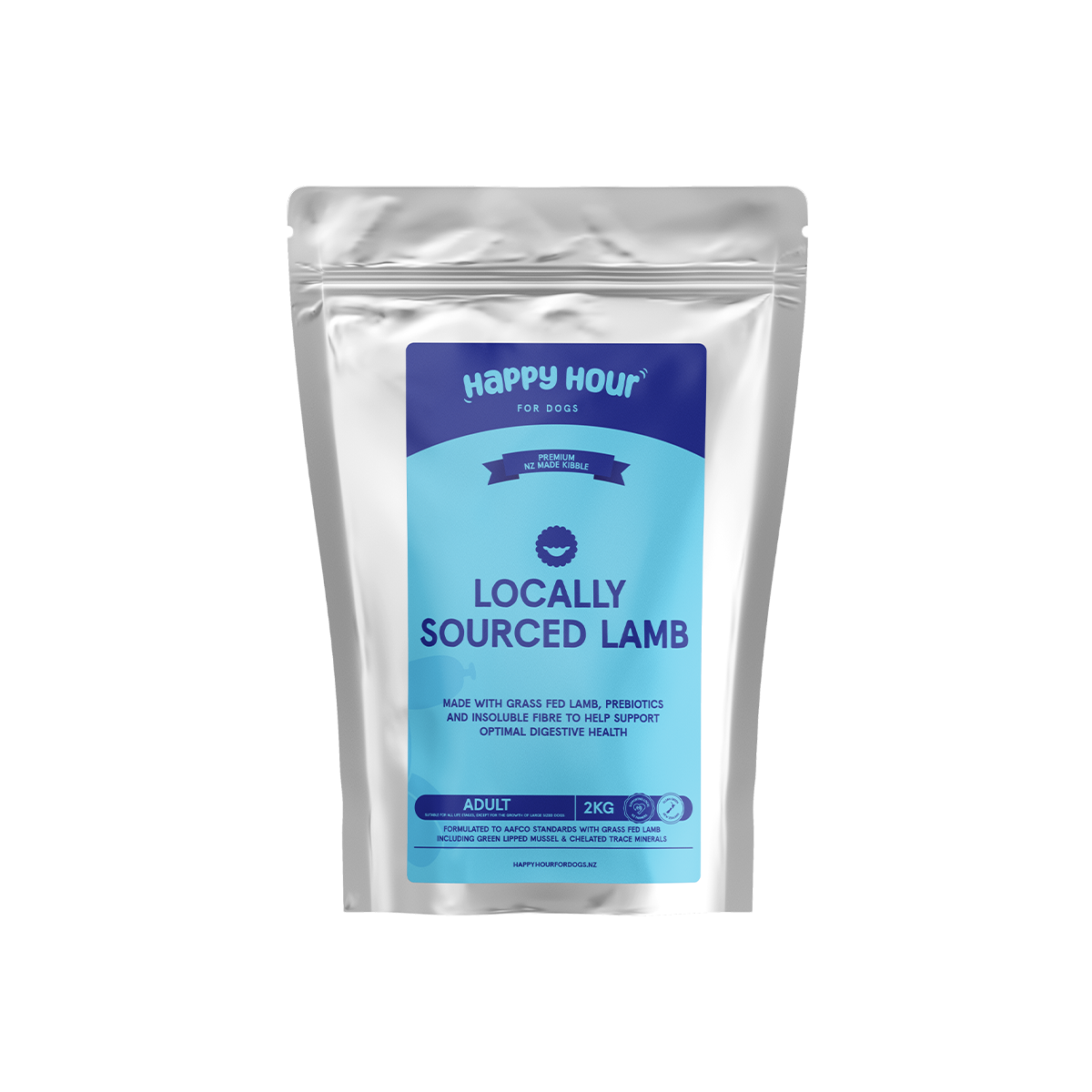
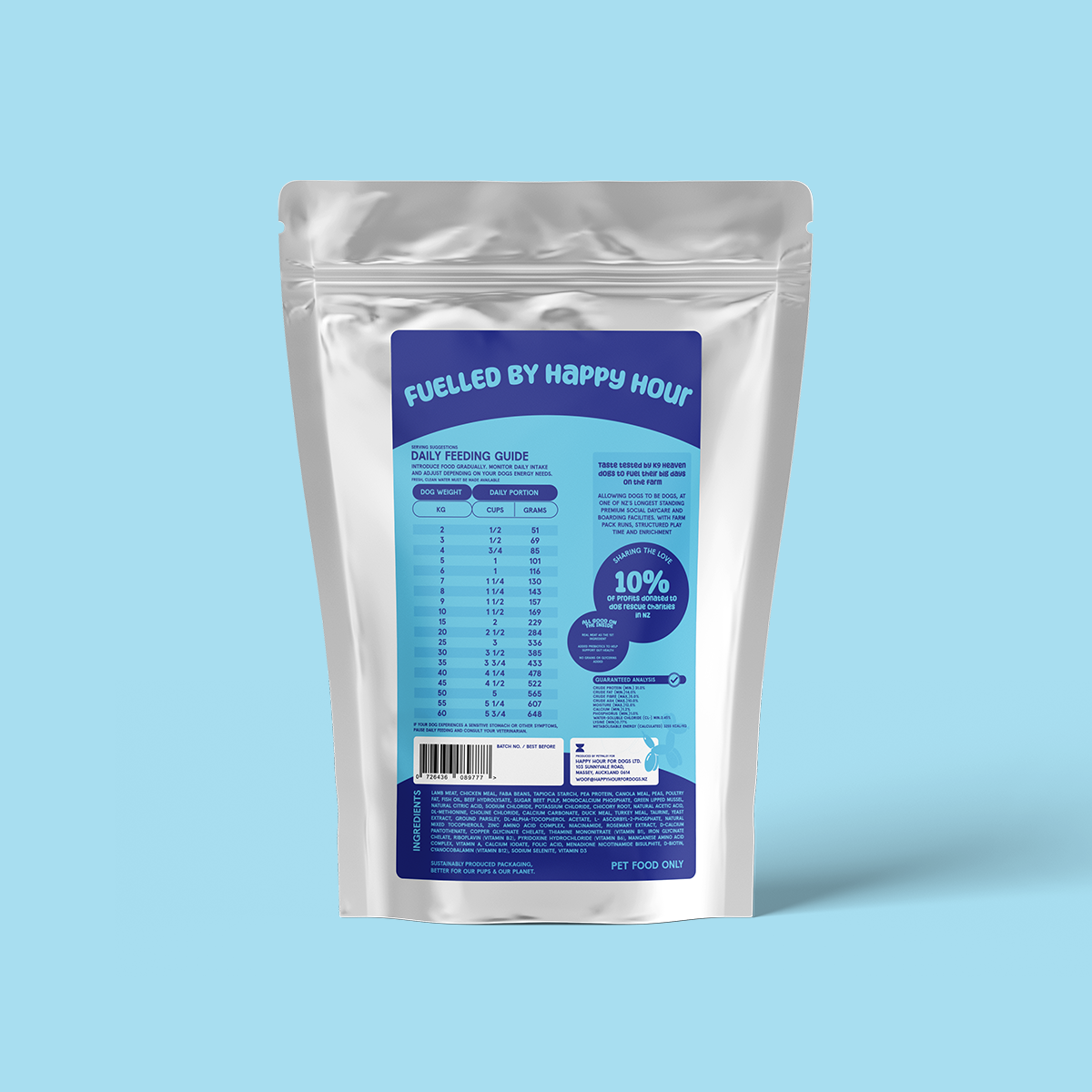
Food quality matters more than volume for a dog eating this little, because every gram has to carry its weight nutritionally. Happy Hour is a New Zealand made grain-free kibble built on real NZ grass-fed lamb, with added prebiotics and insoluble fibre to help small dogs feel satisfied on a modest portion, green-lipped mussel, and chelated trace minerals, which is a fancy way of saying the minerals are in a form dogs find easier to absorb. Green-lipped mussel is a New Zealand shellfish that many owners give for joint support, and it's in the recipe rather than sold to you separately in a tub. The lamb recipe runs 31% protein, 14% fat and 5% fibre, lower in fat than a lot of premium kibbles sitting in the 16 to 20% range, which helps when the portion is small and you still want the protein up while your dog is losing weight. If you're comparing options, our guide to the best dog food in NZ walks through what to look for on a label.
If your Bichon needs to lose weight, drop the daily portion by 10 to 15% and hold it there for three to four weeks before reassessing. On 110g a day that's a cut to roughly 95 to 100g, which looks like almost nothing in the bowl and is plenty. Resist the urge to halve it. A drastic cut usually just produces a hungrier, noisier dog, a bin raided at 2am, and a plan nobody sticks to past the second week.
A Realistic Twelve-Week Plan
Week one: weigh your dog and write the number down. Weigh out the current daily portion so you know your actual starting point, not the one you assumed. Then spend the week noting every single thing your Bichon eats, who gave it and roughly when, because that last column is what solves the mystery. Stick the list on the fridge so everyone can watch it fill up. Most owners find at least one surprise on there, and it's usually somebody else's.
Weeks two to five: cut the daily food by 10 to 15%, move to two measured meals, and set up the one-container treat system. Keep the walks steady rather than doubling them, because a sudden jump in exercise on a dog carrying extra weight tends to end in a sore back leg. Weigh once a week at the same time of day on the same scales, and expect the trend to be gradual and a bit uneven rather than a neat line down. A 7 kg Bichon losing 70 to 140g in a week is doing well, even though that's completely invisible under the coat. Photograph the fridge list each Sunday if you want a record that doesn't get thrown out.
Weeks six to twelve: reassess. If the ribs are easier to find and the weekly loss is sitting around 1 to 2%, nothing needs changing. If the scales haven't moved in a month, something is going in that isn't in the container, so audit again before you cut food further. The usual culprits are a chew nobody counted, a second breakfast from whoever gets up first, a dog-sitter working off the old portion while you were away, or a neighbour over the fence with a soft spot and a biscuit tin. Once your Bichon is where you want them, feed the amount that's holding them there rather than reverting to the old portion. That last step is the one people skip, and it's why the weight is back by autumn. There's more on the general approach in our NZ overweight dogs guide.
Exercise Tips for Bichon Frises
Two walks of 20 to 30 minutes a day suits most healthy adult Bichons, plus a bit of play and some training at home. They're clever and social, so tricks, recall games in the backyard and puzzle feeders loaded with part of the daily ration all burn energy without needing a big outing. Feeding half the morning meal out of a snuffle mat, rolled up inside a towel, or scattered across the lawn turns two minutes of eating into fifteen minutes of work, and a dog who has worked for breakfast is far less interested in supervising your lunch.
Let them sniff. A slow, nose-down wander around the block does more for a small dog's contentment than a brisk march, and a mentally tired dog pesters you less about food. If your Bichon is well overweight, start shorter and flatter and build from there: two ten-minute walks on the flat beat one thirty-minute hill climb while they're carrying extra. Think about the house too. Slipping kneecaps and sore joints are common in small breeds and extra weight doesn't help, so a runner on polished floorboards and a small ramp onto the couch save more joints than they look like they should. If your dog has a history of lameness or has been favouring a back leg, check with your vet before you ramp anything up.
NZ weather needs planning at both ends of the year. From December to February, especially in humid Auckland and the upper North Island, walk early morning or after dinner and skip the middle of the day. A white double coat traps more heat than people expect, and if the footpath is too hot for the back of your hand it's too hot for their pads. Sand at a Coromandel beach in January is worse again. Then daylight saving ends in early April, the after-work walk disappears into the dark, and the slide starts. Through June to August the walks are the first thing to get dropped, and that's exactly when the weight arrives, so a head torch and a reflective harness are cheaper than a weight-loss plan in September. Wet Wellington fortnight? Trick sessions in the hallway, a scatter feed across a towel, hide and seek with someone holding a piece of kibble. It's no substitute for a walk, but it keeps the routine alive until the weather turns.
What to Look for in Dog Food for Bichon Frises
For a dog eating around 100g a day, the label matters more than the bag size. Look for:
- A named meat first, like lamb or chicken, rather than vague meat derivatives
- Sensible calorie density, and a feeding guide you read against your dog's target weight
- Decent fibre, which helps a small portion feel like an actual meal
- Omega fatty acids, which support skin and coat condition, and Bichon coats need all the help they can get
- No artificial colours or cheap fillers that add calories without adding much else
If two bags look similar, find the calories per 100g, usually printed as kcal somewhere near the feeding guide. A food at 400 kcal per 100g and one at 360 aren't the same dinner even at the same gram weight, and on a small dog that difference shows up on the scales within a couple of months. It's also the fair way to compare price in a Kiwi pet shop. A $90 bag you feed 100g a day from lasts a 10 kg bag one hundred days, about 90c a day. A $70 bag you have to feed 140g a day from runs out in seventy-one days, closer to 98c. The cheaper bag isn't cheaper, and you're carting more of it home.
Kibble size is worth a thought too. Small dogs with small jaws chew properly on a smaller piece and inhale a larger one, and a dog that chews eats more slowly and finishes feeling like they've had a meal. Fibre does a similar job from the inside: it adds bulk without much energy, which is the difference between a 90g dinner that satisfies and a 90g dinner that leaves your dog staring at the cupboard. Plenty of Bichons do well on grain-free food, particularly the ones with itchy skin and the tear staining the breed is known for, though skin problems have a long list of possible causes and food is only one of them, so get your vet's read before you start working through recipes on your own. For the wider picture on which dogs put weight on most easily, see our guide to dog breeds prone to weight gain in NZ.