Meta title: Dog Diarrhoea Diet NZ: What to Feed and Avoid [46 chars]
Meta description: Practical NZ guide for when your dog has an upset stomach: what to feed, what to avoid, when to call the vet, and how to get back to normal. [141 chars]
Target keyword: dog diarrhea diet | URL slug: dog-diarrhoea-diet-nz
There are few things more alarming than a dog with an upset stomach at 6am. You're cleaning up the floor, your dog is looking at you with that confused expression, and you're trying to figure out whether this is a vet situation or a wait-and-see situation.
Most of the time it's the second one. Diarrhoea in dogs is common, usually short-lived, and often resolves on its own with a bit of dietary management. But knowing what to feed, what to hold back, and when to actually be worried makes all the difference.
Key Takeaways
- Most cases of acute diarrhoea in dogs are self-limiting and resolve within 24-48 hours with rest and a bland diet.
- A bland diet (plain boiled chicken and white rice) gives the gut a chance to settle. Keep portions small and frequent.
- Hydration is the most important factor. Diarrhoea causes fluid loss, and dehydration can become serious quickly — especially in puppies and small dogs.
- See a vet immediately if there's blood in the stool, your dog is vomiting repeatedly, seems lethargic or in pain, or diarrhoea continues beyond 48 hours.
- Once settled, transition back to regular food gradually over several days to avoid triggering another episode.
When to See a Vet — Get This Right First
Before anything about diet, the most important call is whether this needs a vet.
Go to the vet straight away if:
- There is blood in the stool (red or dark/tarry black)
- Your dog is also vomiting repeatedly or can't keep water down
- Your dog seems lethargic, weak, or in obvious pain
- It's a puppy, a senior dog, or a dog with a known health condition
- You know or suspect your dog has eaten something toxic
Monitor at home if:
- Your dog had one or two loose stools but is otherwise alert and comfortable
- They're drinking water normally
- There's no blood, no vomiting, and no sign of distress
- The diarrhoea came on after a dietary change or something new they ate
Even in the monitor-at-home category: if things aren't improving within 24-48 hours, call your vet. When in doubt, a quick call to your vet clinic is always the right move.
What Causes Diarrhoea in Dogs
Knowing the likely cause helps you know what to do about it. Common triggers include:
- Dietary indiscretion: the polite term for eating something they shouldn't have. Rubbish bin raiding, something off the ground at the park, a piece of table scrap that didn't agree with them.
- Sudden food change: switching foods too quickly is one of the most common causes. The gut needs time to adjust.
- Stress: a change in routine, a new environment, fireworks, travel. Dogs' digestive systems are surprisingly sensitive to emotional state.
- Viral or bacterial infection: less common, but a cause of more serious or persistent cases.
- Parasites: worms and giardia are relatively common in NZ dogs and can cause ongoing digestive upset.
- Food intolerance or allergy: recurring diarrhoea, especially alongside skin issues, can point to a food sensitivity.
For one-off, mild cases, you don't necessarily need to know the exact cause to manage it. For recurring episodes, finding the cause matters.
The Bland Diet: What It Is and When to Use It
The classic bland diet for dogs is boiled chicken and white rice. It works because both ingredients are easy to digest, low in fat, and gentle on an irritated gut.
Use a bland diet for 1-3 days when your dog has a mild, uncomplicated case of diarrhoea that you're managing at home.
To make it: plain boiled or poached chicken breast (no skin, no seasoning, shredded) mixed with plain white rice cooked soft. Use roughly 1 part chicken to 2 parts rice. Keep serving sizes smaller than your dog's normal meal, spread across three or four small meals through the day. A small amount of plain, unsweetened pumpkin puree (not pie filling) can be added to help bulk up loose stools.
If your dog won't eat at all, don't force it. A brief fast of 12-24 hours (with water always available) can give the gut time to rest. Check with your vet before fasting a puppy or very small dog.
Foods That Can Help Settle an Upset Stomach
Beyond chicken and rice, a few other foods are gentle enough to use during recovery:
- Plain boiled white fish: another easy-to-digest protein if your dog isn't interested in chicken.
- Plain boiled sweet potato or white potato: soft carbohydrates that are gentle on the gut.
- Plain canned pumpkin (not pie filling): soluble fibre that helps firm up stools. A teaspoon or two mixed into food.
- Bone broth (unseasoned, no onion or garlic): good for hydration and palatability if your dog is off their food.
Foods to Avoid When Your Dog Has Diarrhoea
Fatty foods: high-fat foods are harder to digest and can worsen diarrhoea or trigger pancreatitis in susceptible dogs. No skin, no cooked meat fat.
Dairy: most dogs are lactose intolerant to some degree. Milk, cream, and most cheeses can make things worse.
Spices and seasonings: anything prepared for human palates is off the table.
Raw food: even if your dog normally eats raw, an upset gut is not the time for it. Raw meat is harder to digest when the gut is already compromised.
High-fibre foods: too much insoluble fibre (from bran, whole grains, or large amounts of vegetables) can irritate an inflamed gut. Soluble fibre from pumpkin is different.
Their normal food (at least for the first day or two): if their regular diet is rich or high in fat, rest the gut on bland food before returning to it.
Hydration: The Most Important Factor
Diarrhoea causes your dog to lose fluid and electrolytes faster than normal. Dehydration is the most serious short-term risk.
Make sure fresh water is always available. If your dog is reluctant to drink, try offering ice cubes to lick, flavouring water with a small amount of low-sodium bone broth, or offering small amounts frequently rather than a full bowl at once.
Signs of dehydration: skin that doesn't spring back immediately when gently pinched, dry or tacky gums, sunken eyes, and lethargy. If you see these signs, go to the vet. Severe dehydration needs veterinary treatment, not just water at home.
Probiotics and Gut Support
Diarrhoea disrupts the gut microbiome, and supporting its recovery can help. Veterinary-formulated probiotic supplements (not human ones) can be useful alongside a bland diet. Talk to your vet about what they recommend.
For long-term gut health, a food with prebiotics included in the regular diet helps maintain a healthy microbiome so recovery from disruptions is faster. We've written about how diet affects your dog's gut microbiome and why prebiotics in dog food matter if you want to go deeper.
Getting Back to Normal Food
Once your dog has had solid or near-normal stools for 24 hours on the bland diet, you can start transitioning back to their regular food. Don't switch back overnight.
A 3-5 day gradual transition works well:
- Days 1-2: 75% bland diet, 25% regular food
- Days 3-4: 50/50
- Day 5: 75% regular food, 25% bland
- Day 6 onwards: back to normal
If diarrhoea returns during the transition, pause, go back to bland for another day, and try again more slowly. Our food-switching guide covers transitioning in more detail.
What to Look for in a Regular Food for Gut Health
If your dog has recurring digestive issues, it's worth taking a proper look at what they eat every day.
Digestibility. A highly digestible food means more of what goes in is absorbed, and less residue ends up fermenting in the large intestine. Named protein sources are generally more digestible than unnamed meat meals.
Prebiotics. Insoluble fibres that feed beneficial gut bacteria. A food that includes them means the good bacteria in your dog's gut have something to work with.
No unnecessary additives. Artificial colours, preservatives, and glycerines can irritate sensitive guts. A short, clean ingredient list leaves fewer variables.
Stable formula. Frequent recipe changes mean your dog's gut is constantly adapting. A consistent formula from a brand that doesn't reformulate regularly is easier on a sensitive digestive system.
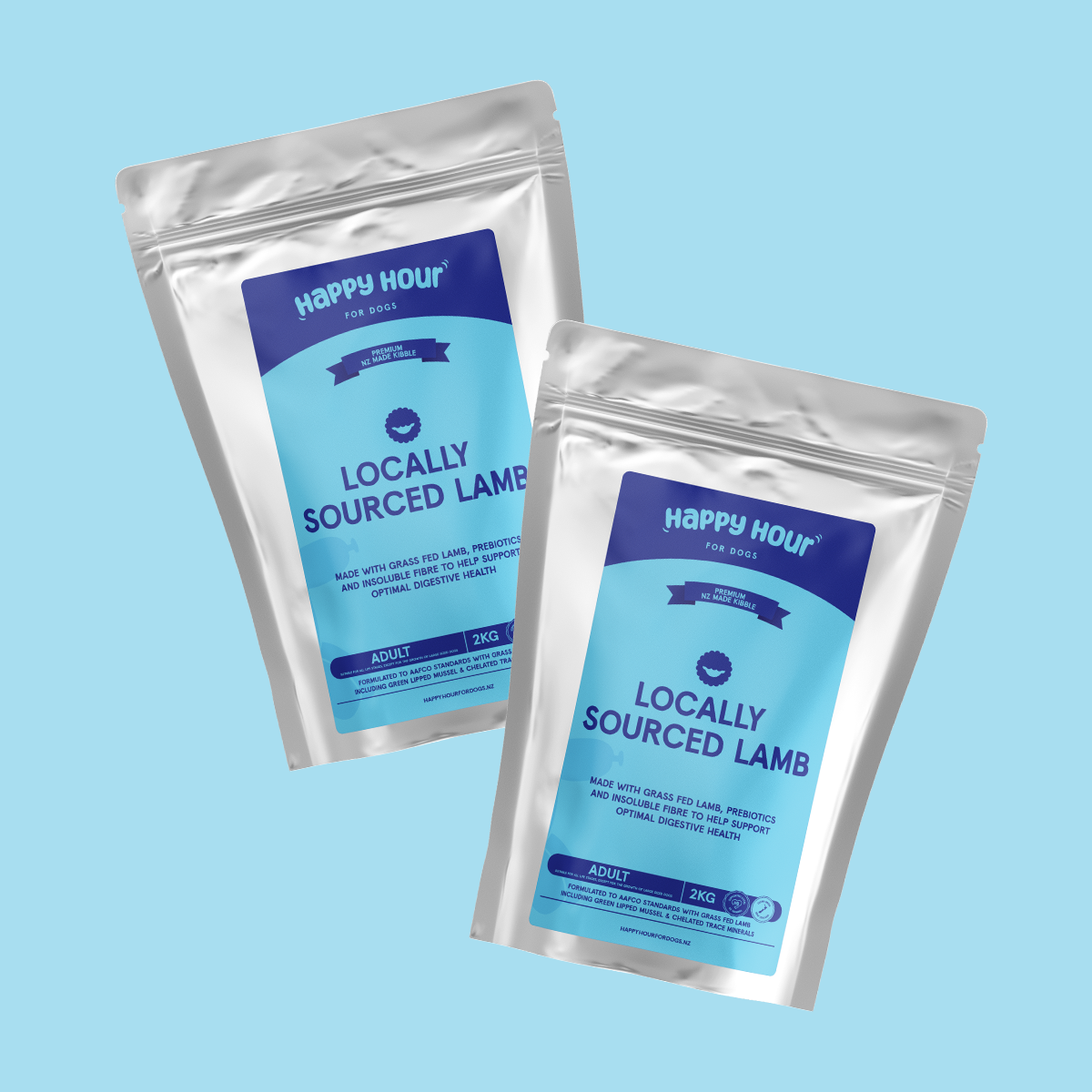
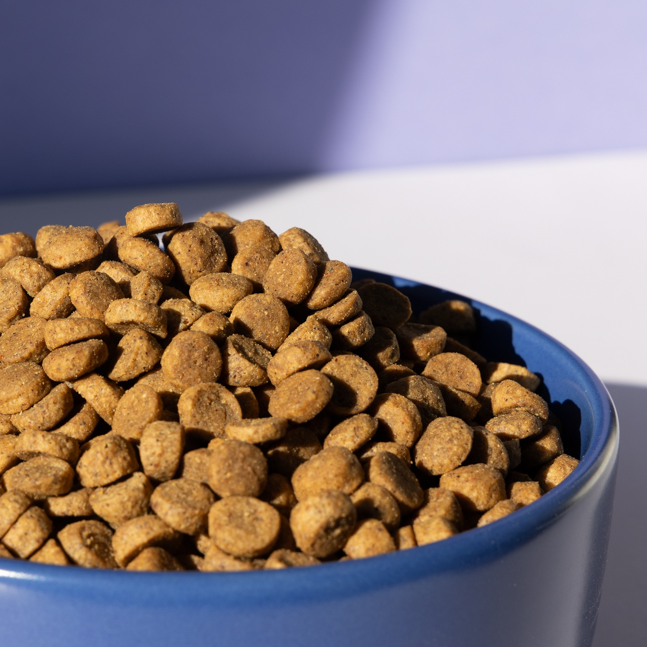
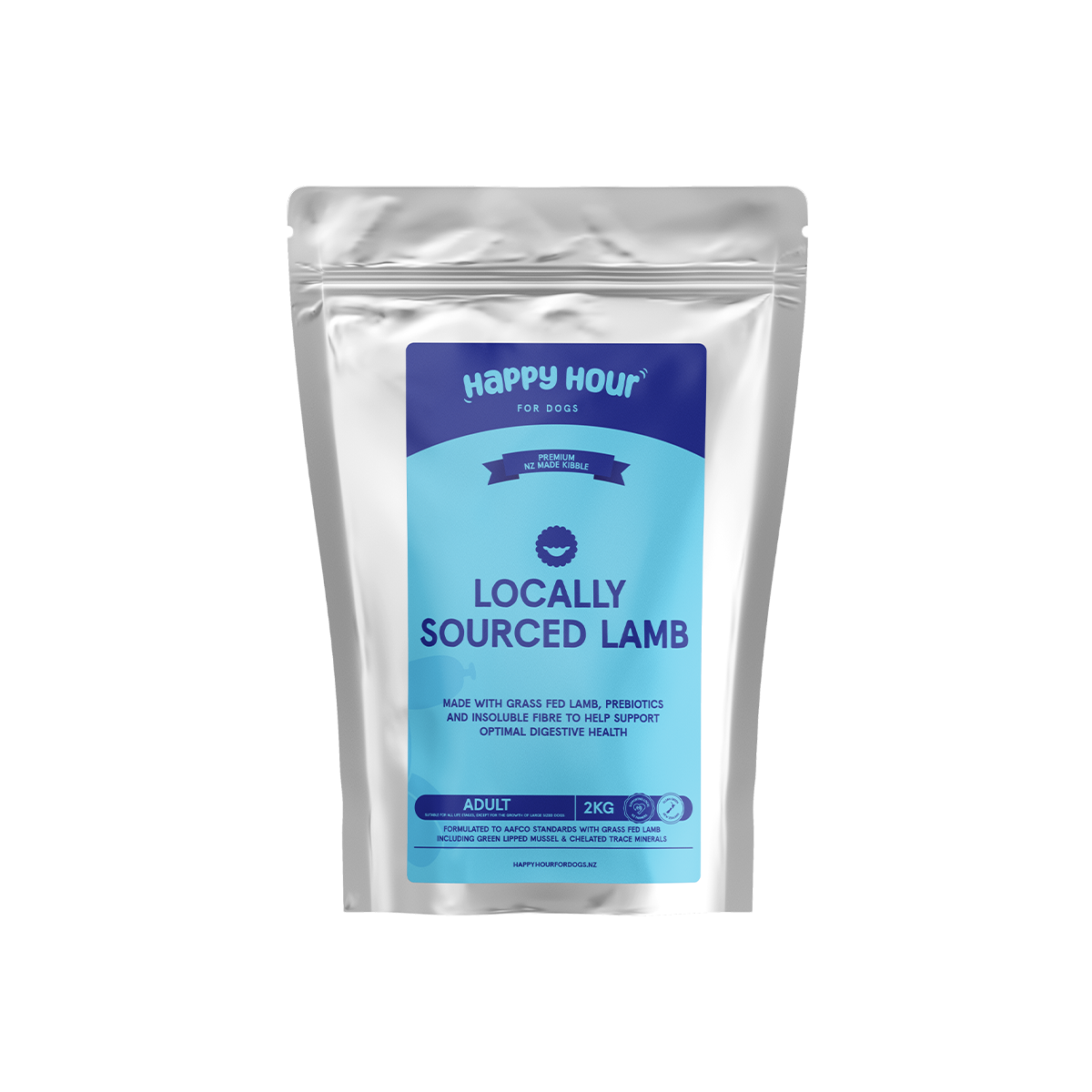
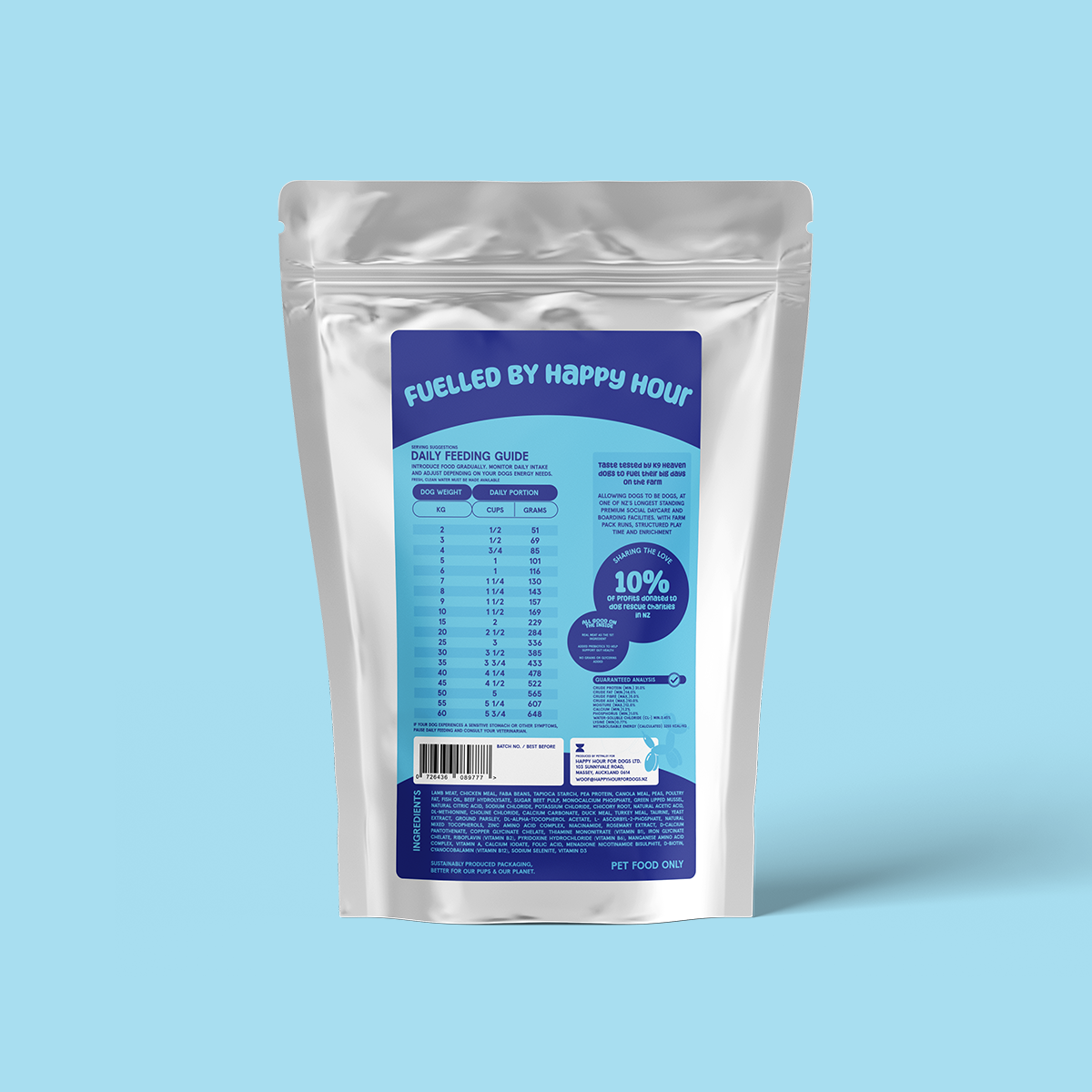
Happy Hour is made with named NZ proteins, includes added prebiotics and chelated trace minerals, and contains no glycerines or artificial additives. It meets AAFCO standards and has been digestibility tested at a leading NZ university. If your dog's regular food might be part of the problem, it's worth a trial. There's a 30-day money-back guarantee: if your dog doesn't get on with it, send it back.