The first hard southerly always does the same thing at our place. Walks get shorter, the dogs spend the afternoon flat out in front of the heat pump, and by 4pm Cleo is standing at the pantry door giving me the look. The one that says a meal has clearly been forgotten.
Key Takeaways
- Do dogs actually need more food in winter?
- The dogs who genuinely need more
- Winter weight creeps on quietly
- Old joints and cold mornings
- Coats, skin, and the heat pump problem
Every June we get the same question from customers: does my dog need more food now that it's cold? It feels like it should be yes. Cold weather, more energy burned, bigger dinner.
For most dogs living in most Kiwi houses, the answer is no. If anything, slightly less.
Do dogs actually need more food in winter?
The "feed more in winter" idea is real, but it was written for a specific dog: one who spends most of the day and night out in the cold. A huntaway working stock through July is burning serious energy just holding body temperature, on top of the actual work. Same for a dog kennelled outside in Central Otago when the frost sits for a week.
Most pet dogs in New Zealand aren't that dog. They sleep inside, on a bed, in a house with the heat pump running. They step out to wee and come straight back in. Their body isn't fighting the cold for more than a few minutes at a time, so their energy needs barely move.
What does move is exercise. It's dark at 5:30, it's raining sideways, and the hour on the beach becomes fifteen minutes round the block. That's a genuine drop in calories burned, and the bowl almost never changes to match.
That gap is where winter weight comes from. Not the cold. The shorter walks.
The dogs who genuinely need more
Some dogs do need a bump:
- Working farm dogs, right through winter.
- Dogs kennelled or sleeping outside overnight.
- Thin dogs, or dogs recovering from illness. Talk to your vet on this one rather than guessing.
- Young, lean, high-drive dogs who still get their full exercise regardless of the forecast. Fair enough.
If that's your dog, go up in small steps. About 10% more, hold it for two or three weeks, then weigh and reassess. Big jumps upset stomachs, and it's much easier to add food than to get it back off a dog later.
Winter weight creeps on quietly
Dogs gain weight in winter the way people do. Two hundred grams at a time, under a thicker coat, where you can't see it.
Two checks, both free.
Use your hands, not your eyes. Run your fingers flat along your dog's ribs. You should feel each rib under light pressure, the way you feel your knuckles through the back of your hand. If you have to press to find them, there's a layer sitting on top. Then look from above: there should be a waist behind the ribs. From the side, the belly should tuck up rather than running straight and level.
Weigh them monthly. For anything you can lift, weigh yourself, pick up the dog, weigh again, subtract. For bigger dogs, most vet clinics will happily let you use the scales in the waiting room. Do it on the first of the month, June through September, and write the number in your phone. A dog who has put on 1.5kg since May isn't a disaster, but you want to know before it's 4kg.
Old joints and cold mornings
Elsa, our old rescue girl, knows winter has arrived before the forecast does. She takes longer to get up off her bed, and the first few minutes of a walk look stiff.
Cold weather doesn't cause arthritis, but plenty of owners notice their older dogs move worse in it. Keeping weight off matters more here than anything else you can do at home, because every extra kilo is load going through joints that are already having a hard time. Short, frequent walks usually suit a stiff dog better than one long one on a Sunday.
Diet plays a supporting role, not a starring one. Omega-3 fatty acids and green-lipped mussel are the two additions most often talked about for joint comfort, and many owners find they help some dogs. Neither is a treatment for anything. If your dog is limping, yelping, or reluctant to jump into the boot of the car, that's a vet conversation, not a food one.
We've gone deeper on both here: Dog Joint Health and Diet NZ and Omega-3 for Dogs. If your dog is over about seven, what changes for senior dogs is worth a read too.
Coats, skin, and the heat pump problem
Winter dries dogs out from two directions: cold air outside, and a heat pump running eight hours a day inside. Flaky skin and a duller coat by August is a common combination.
Bathe less over winter, not more, and go easy on harsh shampoos. Brush more, because brushing moves the natural oils along the coat and pulls the dead undercoat out. And have a look at the fat and omega-3 side of their food, since coat condition is largely built out of what's in the bowl.
Water still matters when it's cold
Dogs drink less in winter, but they don't need less. Dry food plus reduced drinking is how you end up with a mildly dehydrated dog in July and never notice.
Keep the bowl inside where it won't ice over, top it up with room temperature water rather than freezing water off the outside tap, and if your dog is a poor drinker, a splash of warm water over dinner gets some in without them thinking about it.
The warm water trick
This one costs nothing and works. Add a couple of tablespoons of warm, not hot, water to dry food and leave it a minute. It lifts the smell, and smell is most of what makes a dog decide a bowl is worth crossing the room for. Merc, who has opinions about everything, eats noticeably better on a cold morning when we do this.
Feed them inside if you can, too. A bowl sitting on a wet, freezing concrete step is a far less appealing dinner than the exact same food indoors by the door.
Less food means the food has to work harder
Here's the part people skip. If you're feeding 10 or 15% less through winter to hold your dog's weight, you're also feeding 10 or 15% less of everything else in the bag: protein, minerals, the useful stuff. Nutrition per gram matters more when there are fewer grams.
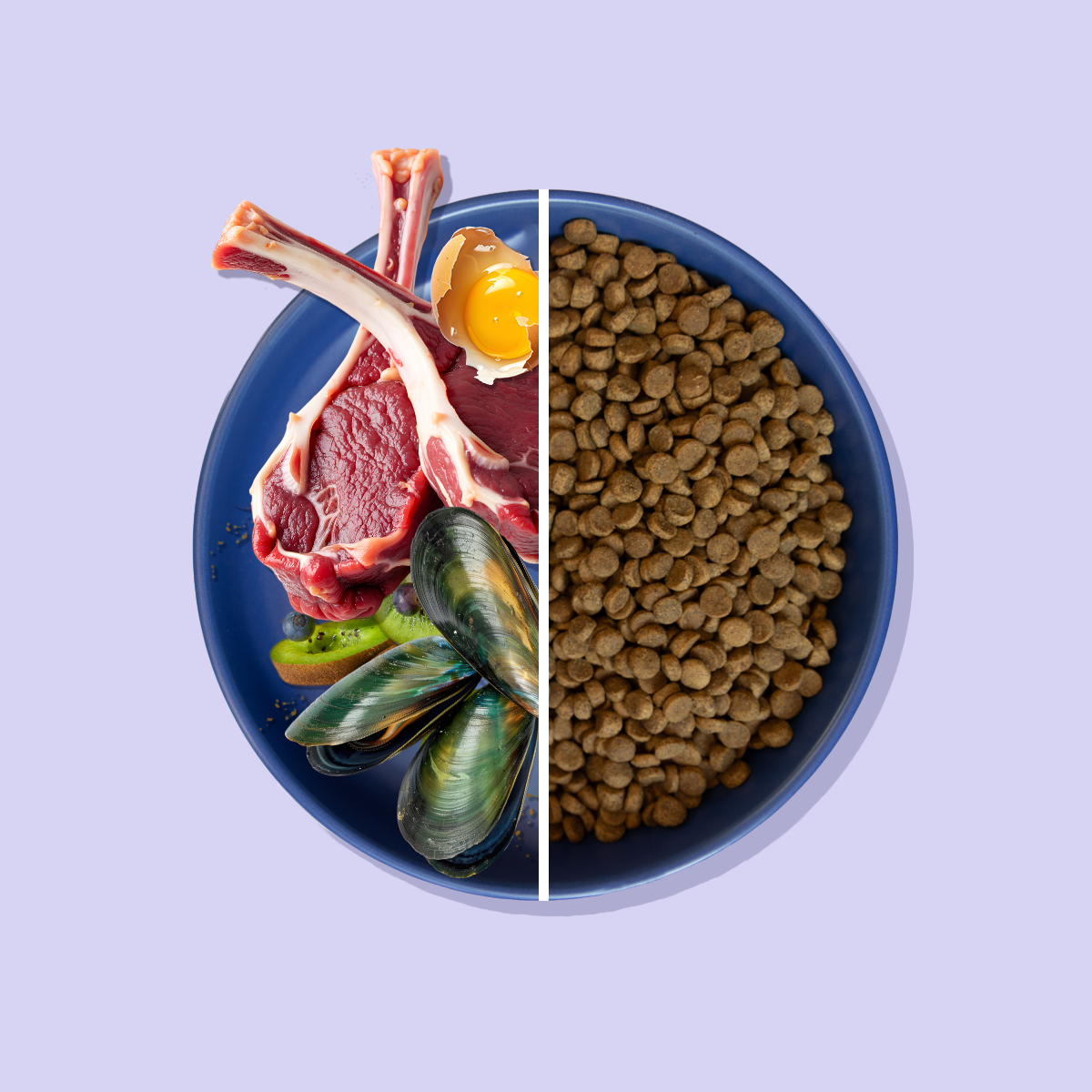
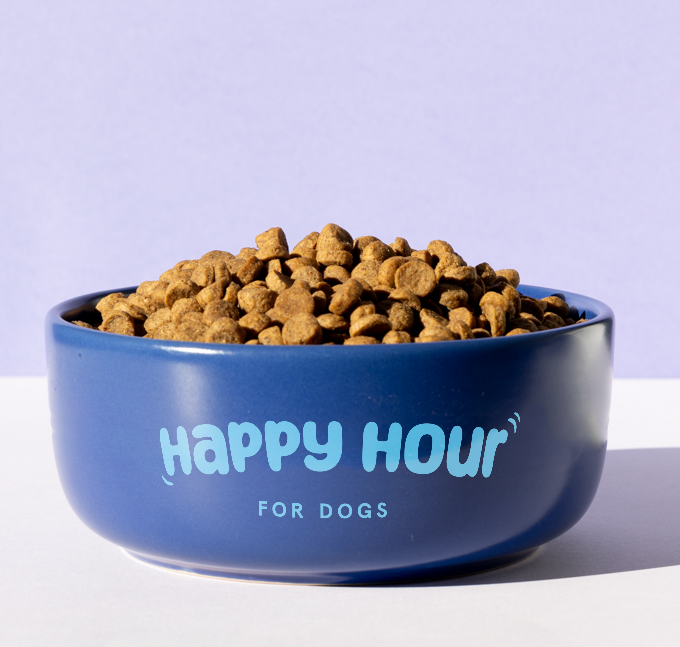
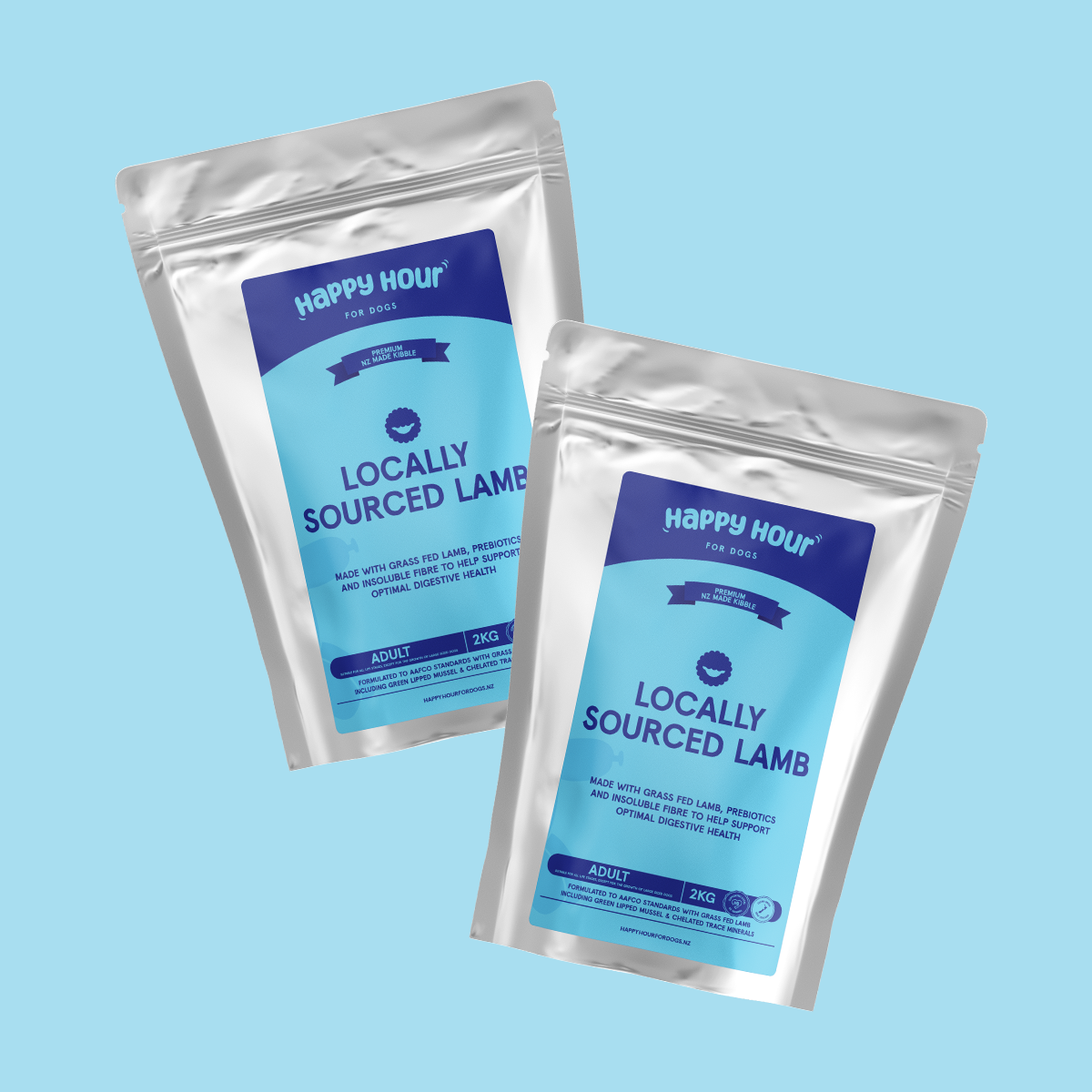
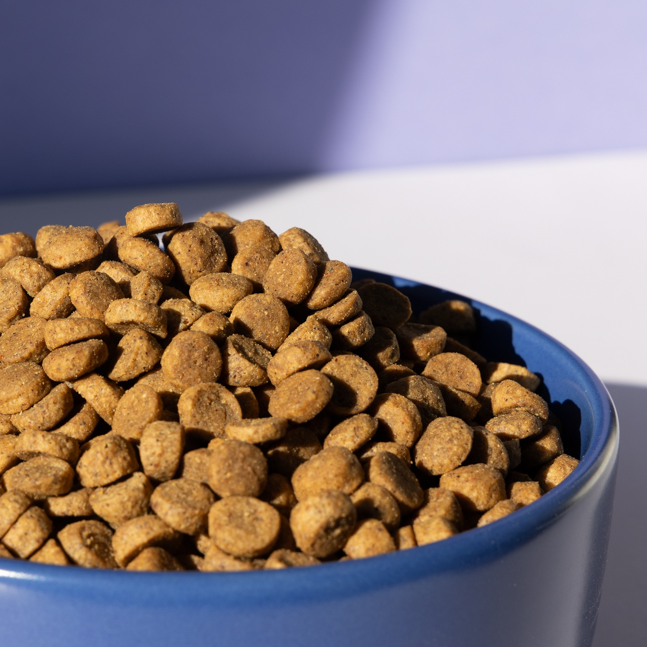
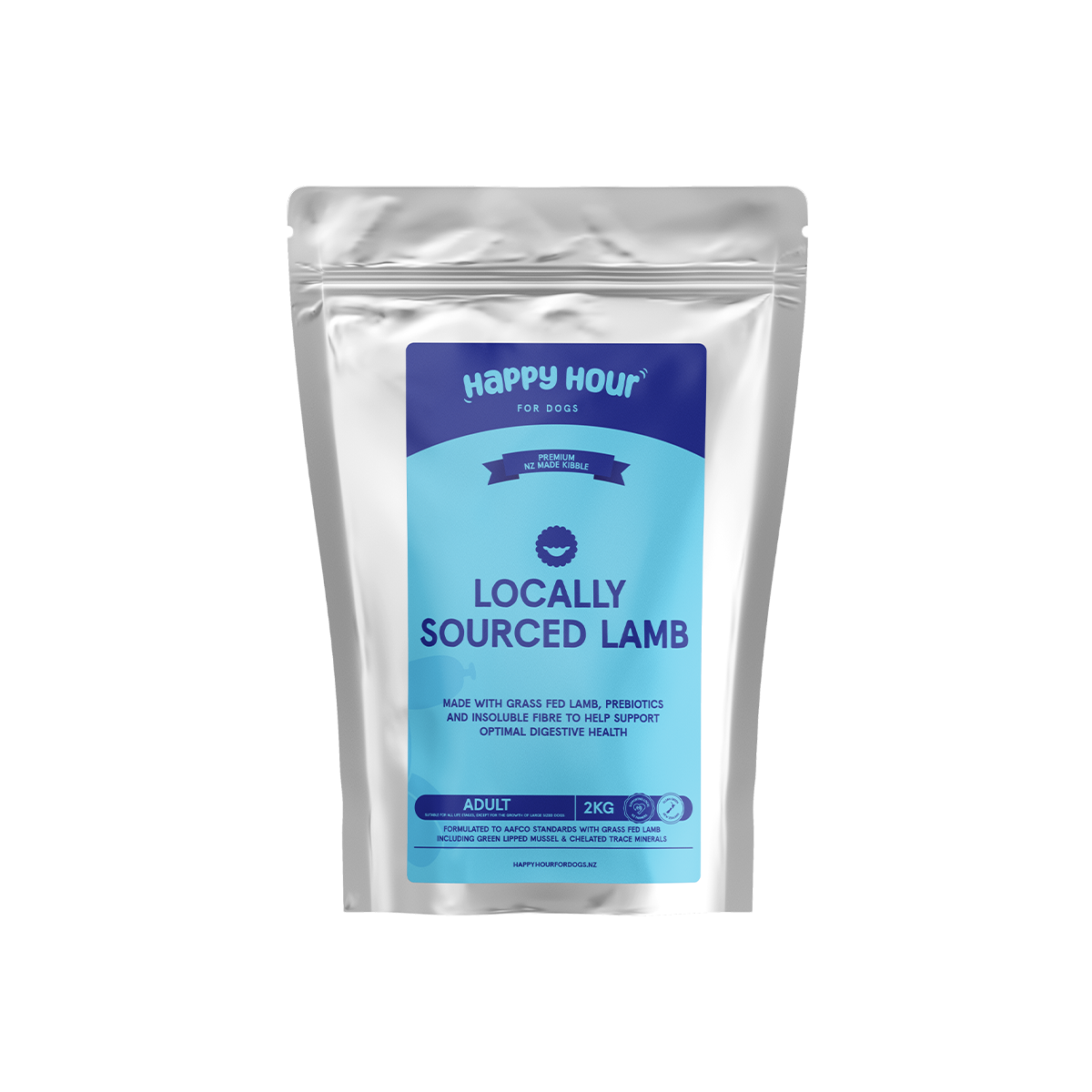
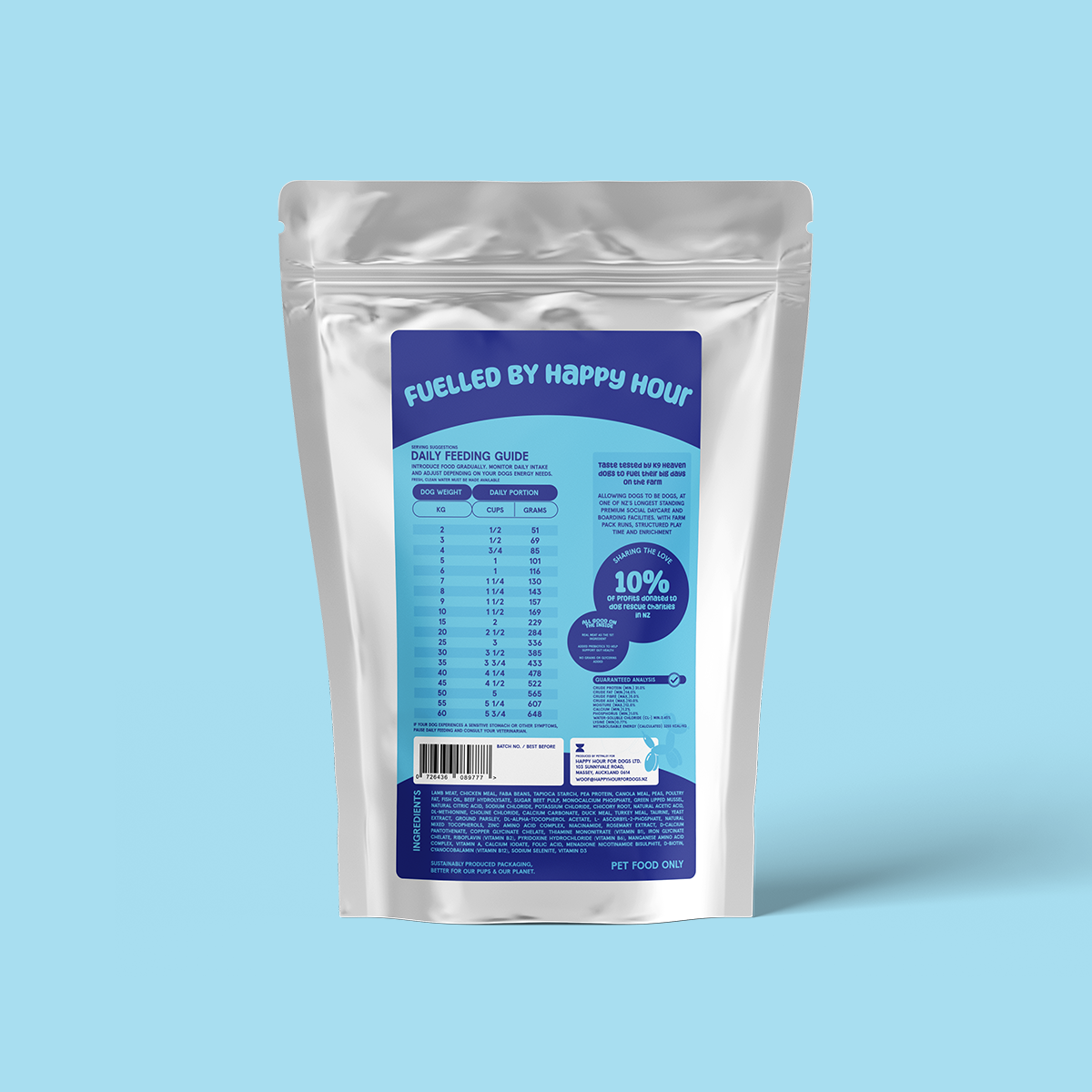
That's the case we'd make for Happy Hour in the cold months. It's a New Zealand made grain-free kibble built on real NZ grass-fed lamb or cage-free chicken, with green-lipped mussel, added prebiotics and insoluble fibre, and chelated trace minerals, which is the form dogs absorb more readily. The lamb recipe runs 31% protein and 14% fat. That's lower in fat than a lot of premium kibbles sitting at 16 to 20%, without being a low-fat diet. For a dog eating a slightly smaller bowl through July, that's a sensible place to be.
If you do change food over winter, take it slowly, over seven to ten days. Cold weather is no reason to rush. Here's how to switch your dog's food without upsetting their stomach.
A winter routine that takes five minutes a month
- Weigh on the 1st, June through September.
- Rib check every couple of weeks.
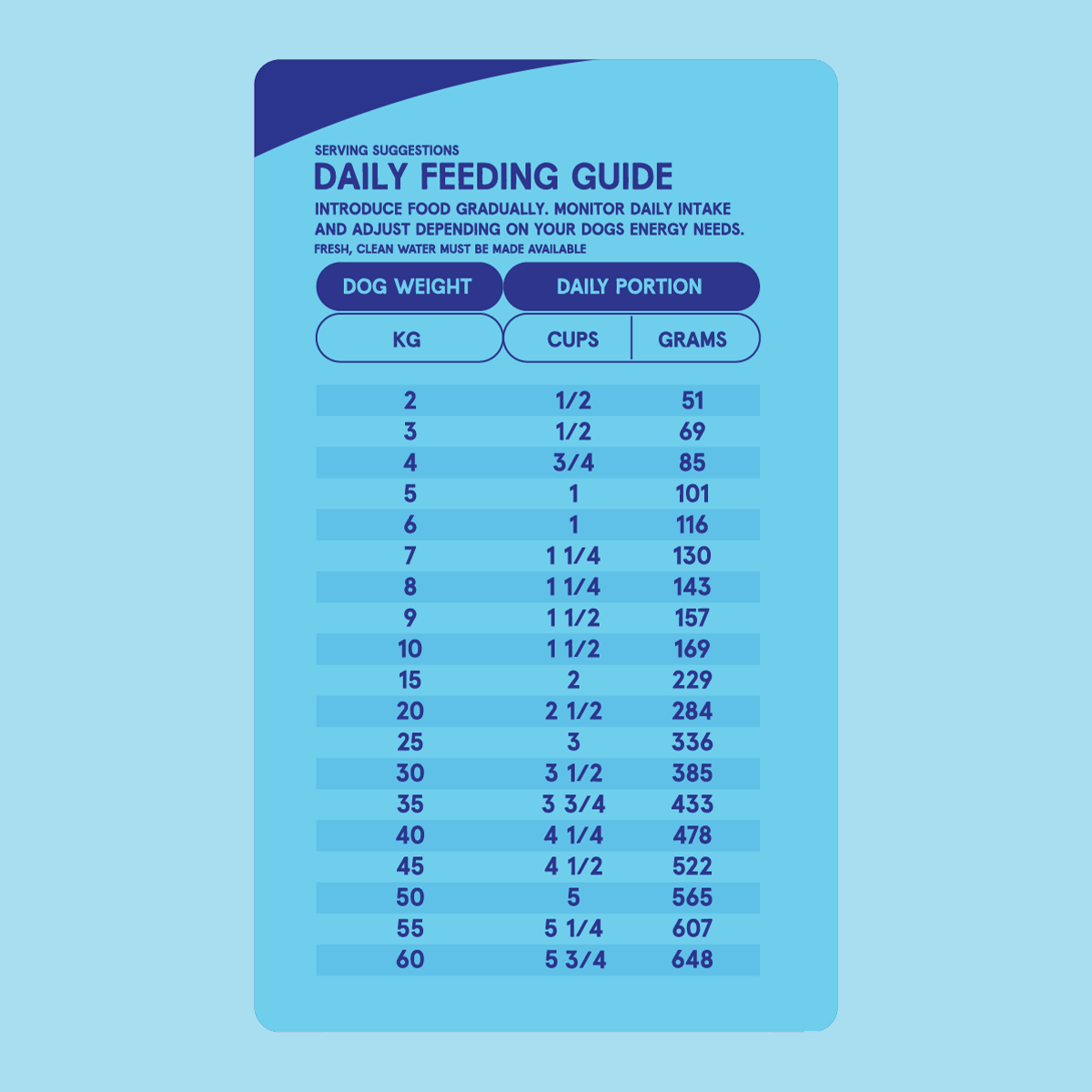
- If exercise has dropped by a third, drop food by roughly 10% and watch the ribs.
- Feed indoors, add warm water, keep the drinking bowl topped up.
- Trade lost walk time for indoor work: scatter feeding, a snuffle mat, five minutes of training. A dog who has used their brain settles about as well as one who has run 5km.
- Come September, put the food back up as the walks come back.
Winter doesn't call for a special diet. It calls for noticing that both sides of the equation moved, and moving the bowl to match.
Give it a winter
If you want to see how your dog goes on Happy Hour through the back end of winter, there's a 30-day money-back guarantee on your first order. Feed it for a month, watch the coat and the energy on a cold morning, and if your dog isn't into it, tell us and we'll refund it. Elsa's opinion of frosty mornings hasn't shifted in years, but she still gets up for dinner.