Omega-3 for Dogs: Why It Matters and How to Get It Through Food (NZ)
Omega-3 fatty acids come up a lot in dog nutrition conversations, and for good reason. They affect your dog's coat quality, joint function, brain health, and inflammatory response. But not all omega-3 is the same, and how you deliver it matters as much as whether you deliver it. Here's what NZ dog owners need to know.
- EPA and DHA are the omega-3 forms that actually do the work in your dog's body, supporting coat, skin, joints, brain, and immune function. The plant-based form (ALA) is far less useful.
- Dogs convert only about 5-15% of plant-based ALA (from flaxseed or chia) into EPA, and even less into DHA, so a high total omega-3 figure on the label can be misleading.
- Bottled fish oil oxidises fast and often arrives rancid, which can damage cells and cause oxidative stress rather than help. Dogs detect rancid fat easily, which is why many start refusing oil-topped food.
- Whole food marine ingredients built into the food at manufacturing, with antioxidant protection, deliver EPA and DHA far more reliably than poured-on supplements.
- Green-lipped mussels (Perna canaliculus), native to New Zealand, are one of nature's richest sources of EPA and DHA and add ETA, a unique anti-inflammatory omega-3 not found in fish oil, making them especially valuable for joint health.
What Is Omega-3 and Why Do Dogs Need It?
Omega-3 is a family of polyunsaturated fatty acids. The three main types relevant to your dog are ALA (alpha-linolenic acid), found in plant sources like flaxseed and chia; EPA (eicosapentaenoic acid), found primarily in marine sources; and DHA (docosahexaenoic acid), also found primarily in marine sources.
EPA and DHA are the biologically active forms that do the work inside a dog's body. They support coat health and reduced shedding, skin barrier function and reduced dryness, joint health through anti-inflammatory effects, brain development and cognitive function, heart health, and immune system regulation.
ALA is a precursor that the body can theoretically convert to EPA and DHA, but the conversion rate in dogs is very poor. More on that below.
Why Plant-Based Omega-3 Doesn't Work Well for Dogs
Many dog foods include omega-3 from flaxseed or similar plant sources. The labelling looks good. But there's a significant problem: dogs can't convert ALA into EPA and DHA efficiently.
The conversion pathway exists, but studies show dogs convert only around 5-15% of dietary ALA into EPA, and even less into DHA. Most of the plant-based omega-3 in the food passes through without providing meaningful benefit.
This is why the omega-3 source matters, not just whether omega-3 appears on the label. ALA from flaxseed won't deliver the same outcomes as EPA and DHA from a marine source, even if the label shows a similar total omega-3 figure.
Why Fish Oil Supplements Often Fail
Fish oil supplements seem like an obvious solution. Pour some over the food and you're done. But fish oil is one of the most rapidly oxidising nutrients in existence. When it oxidises, it goes rancid.
Rancid fish oil doesn't just fail to deliver omega-3 benefits. It can actively cause harm: damaging cell membranes, reducing fat-soluble vitamin activity, and contributing to oxidative stress in your dog's body.
Most bottled fish oil sold for dogs (and humans) is significantly oxidised by the time it reaches your dog's bowl, even if it smells acceptable to you. Dogs have a far more sensitive ability to detect rancid fat, which is one reason many dogs refuse to eat fish oil-supplemented food after a while.
Whole Food Sources of Omega-3: The Better Approach
The most reliable way to deliver EPA and DHA to your dog is through whole food marine ingredients incorporated into the food at the manufacturing stage, with proper antioxidant protection built into the formulation.
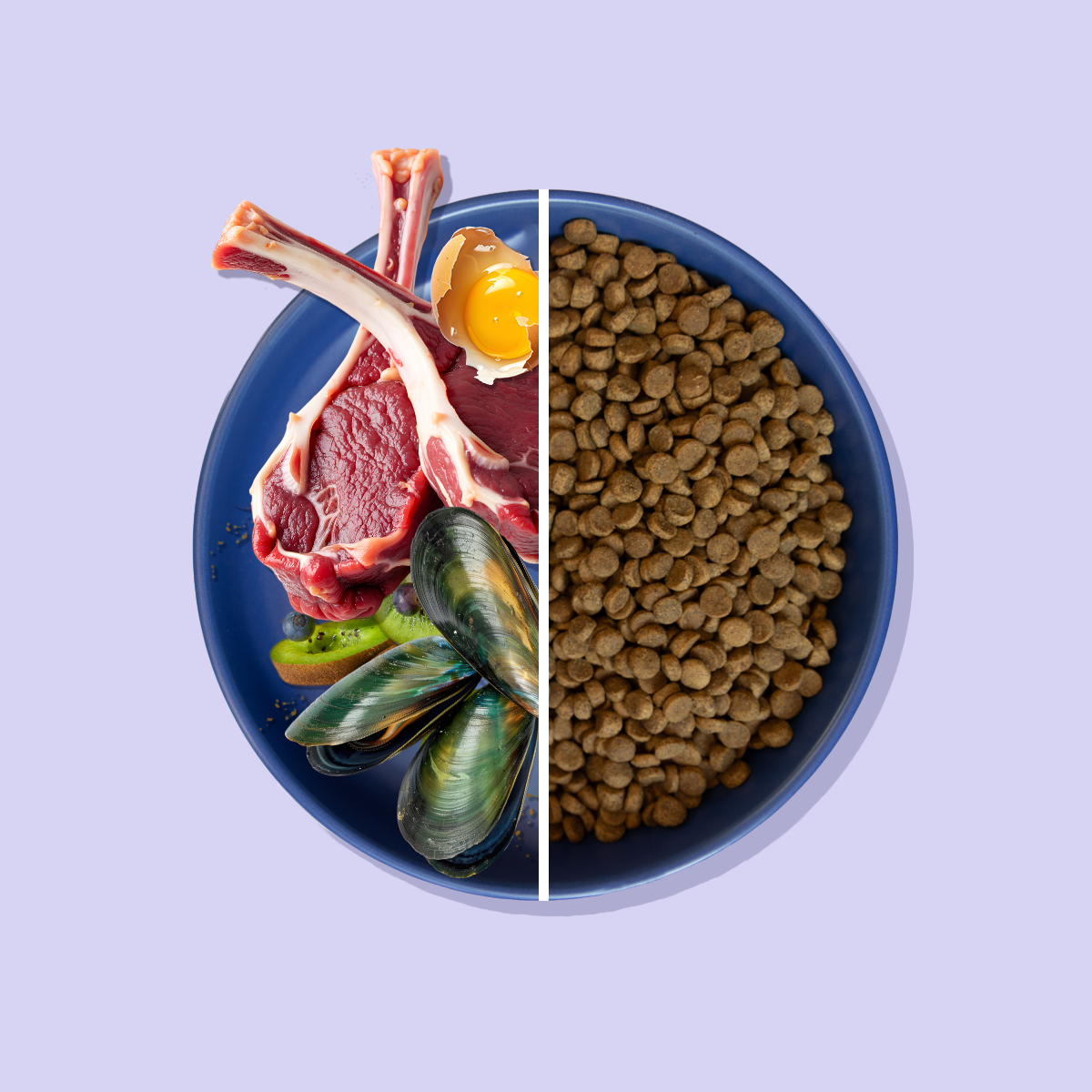
This is why ingredients like green-lipped mussels and whole fish are genuinely valuable in dog food, rather than added fish oil. Whole food sources have natural antioxidant protection that slows oxidation, a complex matrix of other nutrients that support absorption, and more stable omega-3 delivery over the life of the bag.
Green-Lipped Mussels: NZ's Omega-3 Superfood
Green-lipped mussels (Perna canaliculus) are native to New Zealand and are one of the richest natural sources of omega-3 fatty acids, particularly EPA and DHA. They also contain a unique omega-3 called ETA (eicosatetraenoic acid) that has specific anti-inflammatory properties not found in fish oil.
Research has supported green-lipped mussel extract for joint health in dogs. The combination of EPA, DHA, and ETA makes them particularly effective for inflammation reduction, which matters for arthritic dogs, active dogs, and breeds prone to joint issues.
For NZ dog owners, green-lipped mussels are a local superfood with genuine science behind them. They're not a marketing ingredient thrown on a label for appeal. They're one of the best natural sources of bioavailable omega-3 your dog can get.
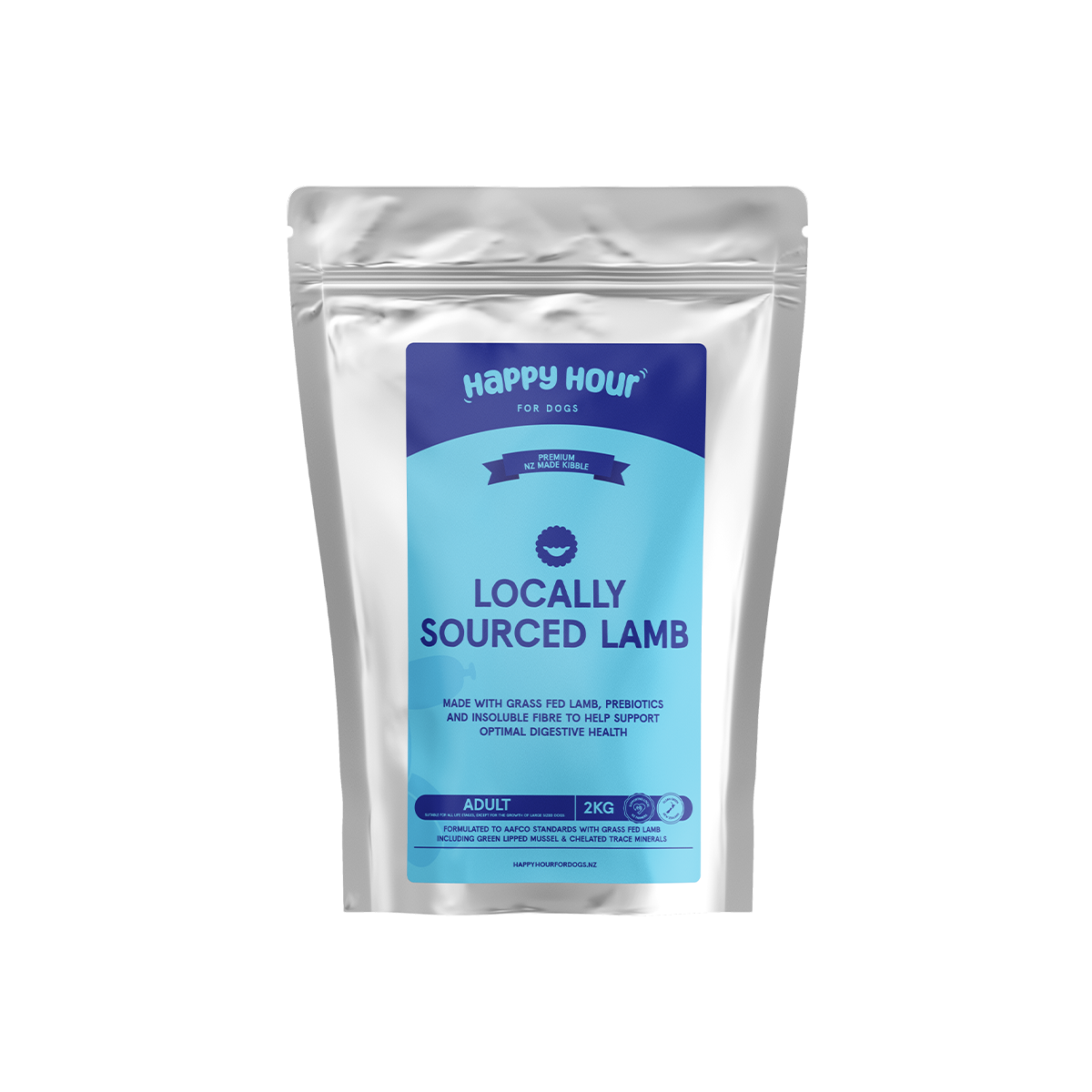
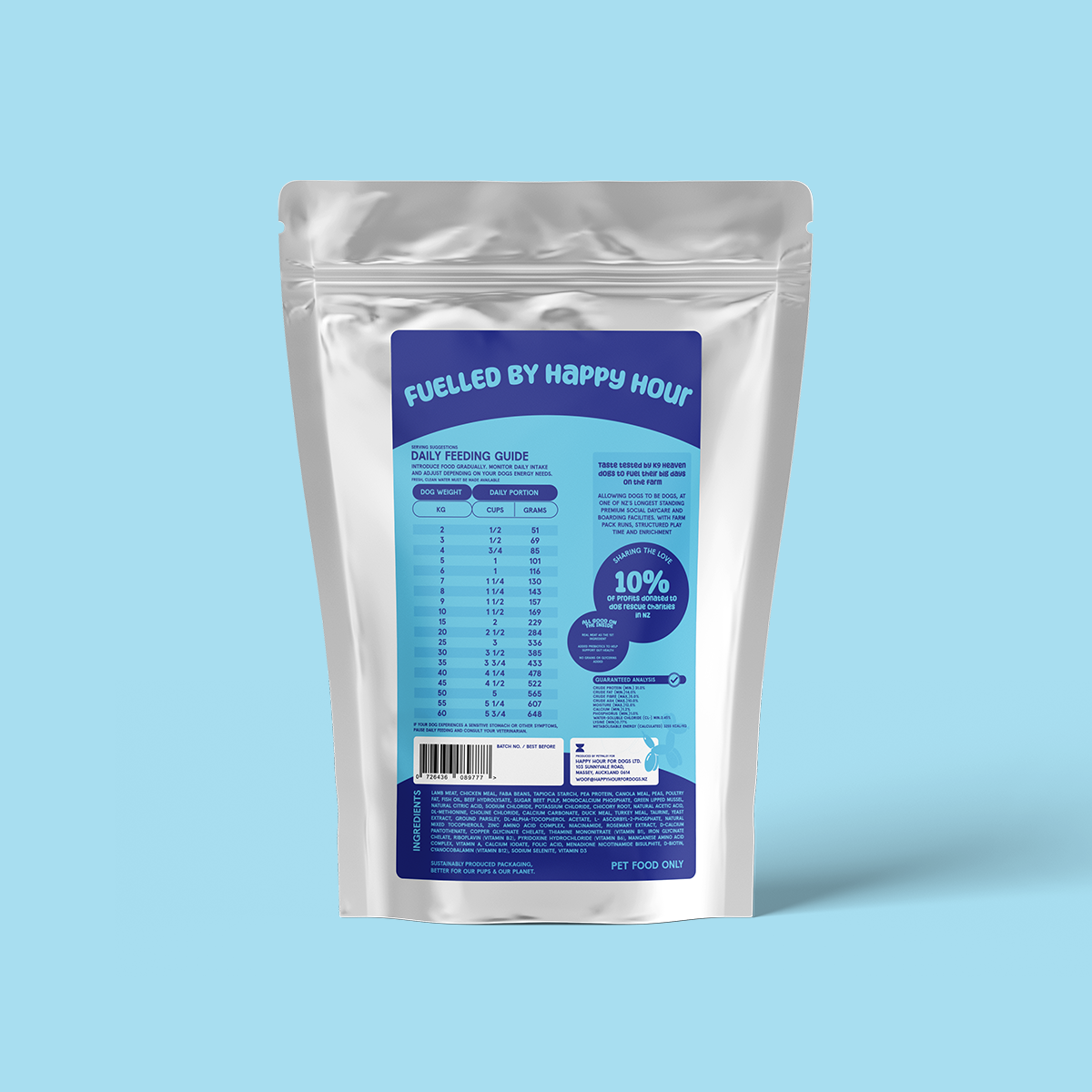
Happy Hour For Dogs includes green-lipped mussels as a core ingredient, delivering EPA and DHA in whole food form alongside the mussel's other natural compounds.
What to Look for on a Dog Food Label
When evaluating a dog food for omega-3 quality:
- Look for named marine ingredients: green-lipped mussels, salmon, sardines, or whole fish meal
- Flaxseed or flaxseed oil as the primary omega-3 source is a weak choice for dogs
- 'Fish oil' as an added supplement is less ideal than whole fish or mussel ingredients
- Check whether the food uses antioxidants to protect the omega-3 during storage
- Avoid foods where the only omega-3 mention is buried deep in the ingredient list
How Much Omega-3 Does a Dog Need?
The optimal level depends on your dog's size and health status. Dogs with joint issues, skin conditions, or inflammatory diseases may benefit from higher levels than a healthy young dog. Your vet can advise if your dog has a specific condition that warrants targeted supplementation.
For a healthy dog eating a quality food that includes whole marine ingredients, dietary omega-3 from the food itself is often sufficient without additional supplementation.
Omega-3 and Specific Health Conditions
Joint health is the most researched application of omega-3 in dogs. Dogs with hip dysplasia, osteoarthritis, or breeds prone to joint issues see measurable benefit from consistent, bioavailable EPA and DHA. Our article on Dog Joint Health and Diet NZ covers this in more detail.
For coat and skin health, omega-3 reduces the inflammatory processes that underlie conditions like hot spots, excessive shedding, and dry flaky skin. If coat health is your primary focus, our guide to Best Dog Food for a Shiny Coat in NZ covers the full picture.
The Practical Takeaway
Don't just look for 'contains omega-3' on a label. Ask: what's the source? Is it likely to be bioavailable (EPA/DHA from marine, not ALA from plant)? Is the omega-3 protected from oxidation in the formulation?
A food with green-lipped mussels or whole fish as named ingredients is delivering a meaningfully different level of omega-3 benefit than one relying on flaxseed or added fish oil. The label can look similar. The result in your dog's body is not.
Try It and See the Difference
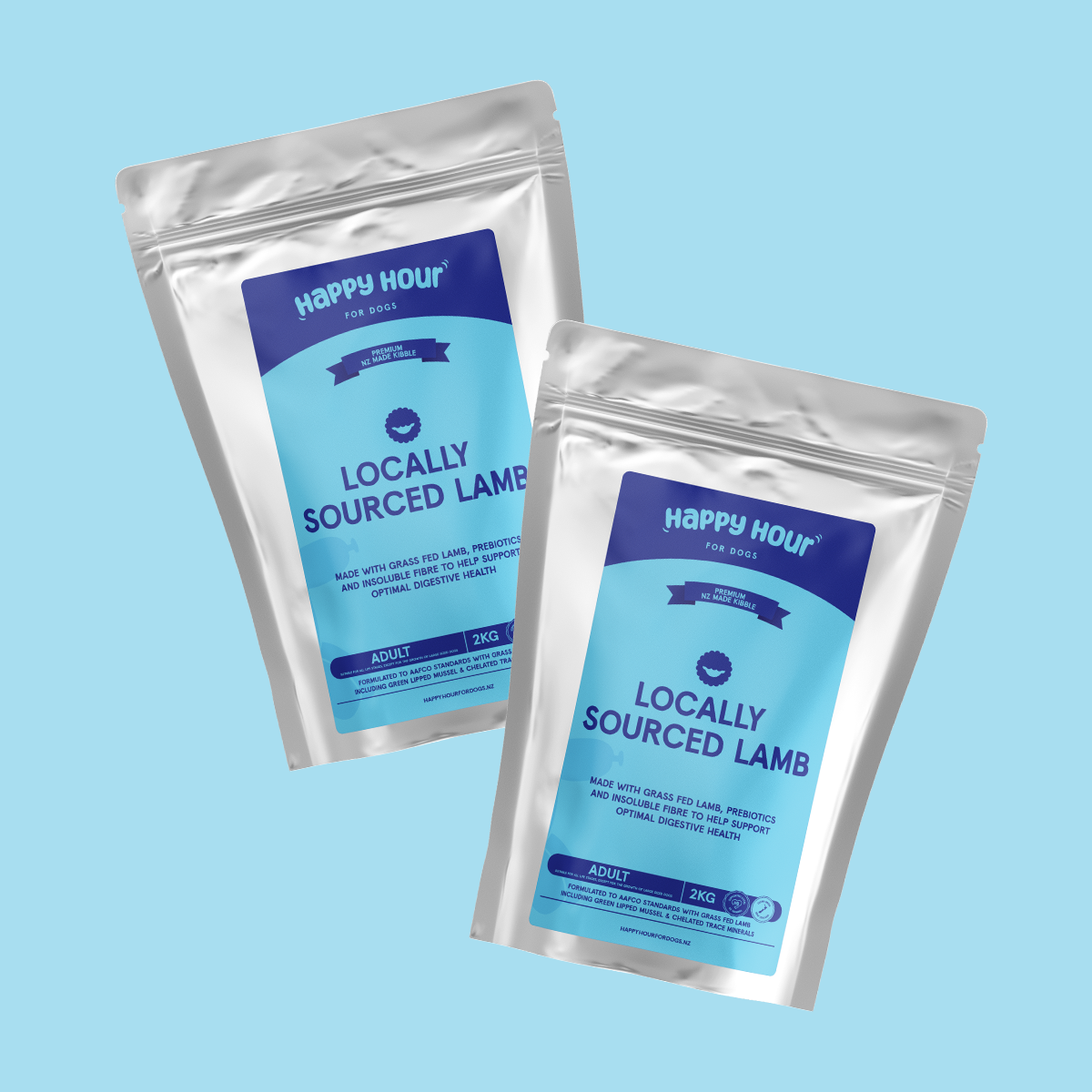
Happy Hour For Dogs includes green-lipped mussels as a core ingredient, delivering marine omega-3 in whole food form. Combined with cage-free chicken and NZ grass-fed lamb, it's built to support your dog's coat, joints, and long-term health. Try it risk-free with a 30-day money-back guarantee at happyhourfordogs.nz.