Most dog owners know that puppies need special food. Fewer realise that senior dogs have just as specific nutritional needs, and that most "senior" branded dog foods on the NZ market don't actually meet them. If you've got an older dog and you're wondering whether their food is still working for them, this is worth reading.
Key Takeaways
- Large breeds are considered senior from around 6-7 years, small breeds from 9-10 years
- Older dogs need MORE quality protein, not less, to maintain muscle mass
- Joint support ingredients like green-lipped mussel and omega-3s become more important with age
- "Senior" branded dog foods are often just lower-calorie versions of adult food, not genuinely better
- Lower fat and higher digestibility matter more than the word "senior" on the bag
When Does a Dog Become "Senior"?
The answer depends on breed size, and it's earlier than most people expect.
- Large and giant breeds (over 25kg): senior from around 6-7 years
- Medium breeds (11-25kg): senior from around 8-9 years
- Small breeds (under 11kg): senior from around 10-11 years
Large breeds age faster in general. A 7-year-old Labrador is well into their senior years. A 7-year-old Maltese is still comfortably middle-aged. This matters when you're thinking about nutrition.
How a Dog's Nutritional Needs Change with Age
Ageing changes what a dog needs from their food in several important ways.
Joint health becomes a priority
Arthritis and joint degeneration are extremely common in older dogs. Ingredients that support joint health, such as omega-3 fatty acids and glucosamine, become genuinely important rather than a nice-to-have.
Digestibility matters more
Older digestive systems are less efficient. A food that your dog processed easily at 3 years old may not be as well digested at 10. Highly digestible protein and carbohydrate sources become more important as dogs age.
Calorie management
Many senior dogs become less active and are prone to weight gain. Lower overall fat content helps manage this. However, the answer isn't to switch to a watered-down food with less of everything.
Protein quality is more important, not less
This is the most commonly misunderstood aspect of senior dog nutrition. Many owners assume older dogs need less protein. The research tells a different story. Senior dogs actually need high-quality, digestible protein to maintain muscle mass, which naturally decreases with age. A low-protein senior food actively accelerates muscle wasting. The issue isn't the amount of protein. It's the quality and digestibility of it.
What to Look For in a Senior Dog Food
Quality named protein as the first ingredient
Whole meat or specifically named meat meal (lamb meal, salmon meal, not just "meat meal") should be first. Senior dogs need this more than ever.
Joint support ingredients
Green-lipped mussel (GLM) is one of the most powerful natural joint support ingredients available, and New Zealand has the best in the world. GLM contains a unique combination of omega-3 fatty acids, glycosaminoglycans, and antioxidants that support cartilage and reduce joint inflammation. Most international senior dog foods use glucosamine derived from crustacean shells, often from overseas sources of variable quality. NZ green-lipped mussel is genuinely superior.
Fish oil is also valuable for joint support and general anti-inflammatory benefit.
Moderate fat content
Not low-fat to the point of sacrificing palatability or energy, but lower than a working or performance food. This helps manage weight in less active older dogs.
Higher fibre content
Supports digestive regularity and gut health, which tends to become more of an issue as dogs age.
High overall digestibility
Grain-free formulas with digestible carbohydrate sources like sweet potato tend to be easier on older digestive systems than grain-heavy formulas.
What to Avoid
- Cheap fillers: corn, wheat by-products, and soy are hard to digest and nutritionally poor
- Generic "meat meal" with no named source
- High fat content designed for active adult dogs
- Low protein content sold as appropriate for seniors
- Artificial preservatives and additives that increase inflammatory load
The "Senior Formula" Trap
Here's something worth knowing: many commercial dog foods marketed as "senior" are simply the same formula with less protein and less fat, and sometimes a joint supplement added at the end of the ingredient list. The reduction in protein is often driven by cost-cutting rather than nutritional science.
A well-formulated adult dog food with quality protein, joint support ingredients, and clean additives can be a better choice for a senior dog than a marketing-led "senior formula" with poor quality ingredients.
Read the ingredient list, not the label.
The New Zealand Advantage: Green-Lipped Mussel
If there's one ingredient that NZ dog owners should know about for senior dog health, it's green-lipped mussel. New Zealand's Perna canaliculus is widely considered the gold standard for natural joint support. Studies have shown it to be more effective than fish oil alone for managing joint inflammation in dogs.
The fact that NZ is literally where this ingredient comes from is an advantage worth using. Look for it listed on the ingredient panel, not just mentioned in marketing.
Happy Hour for Senior Dogs
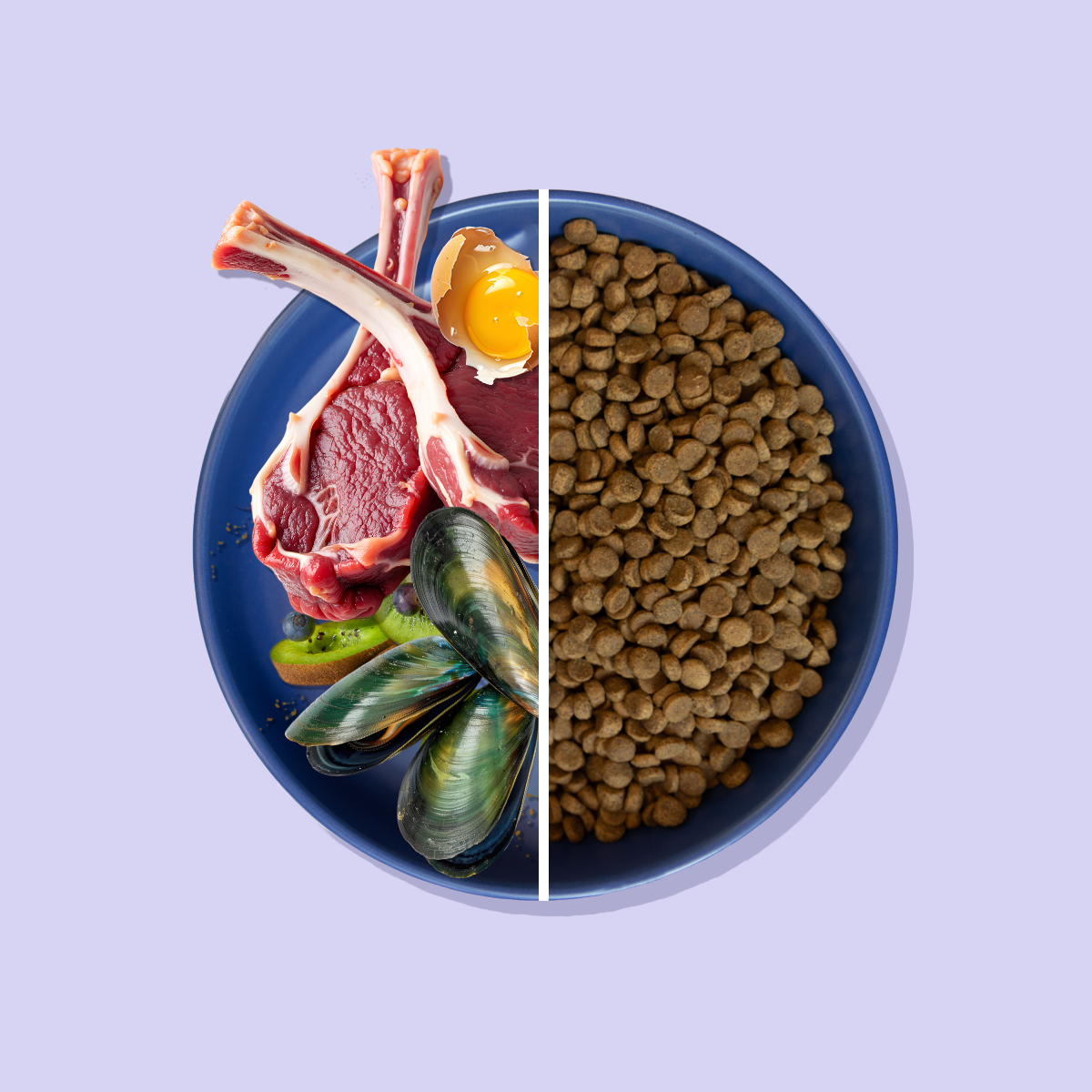
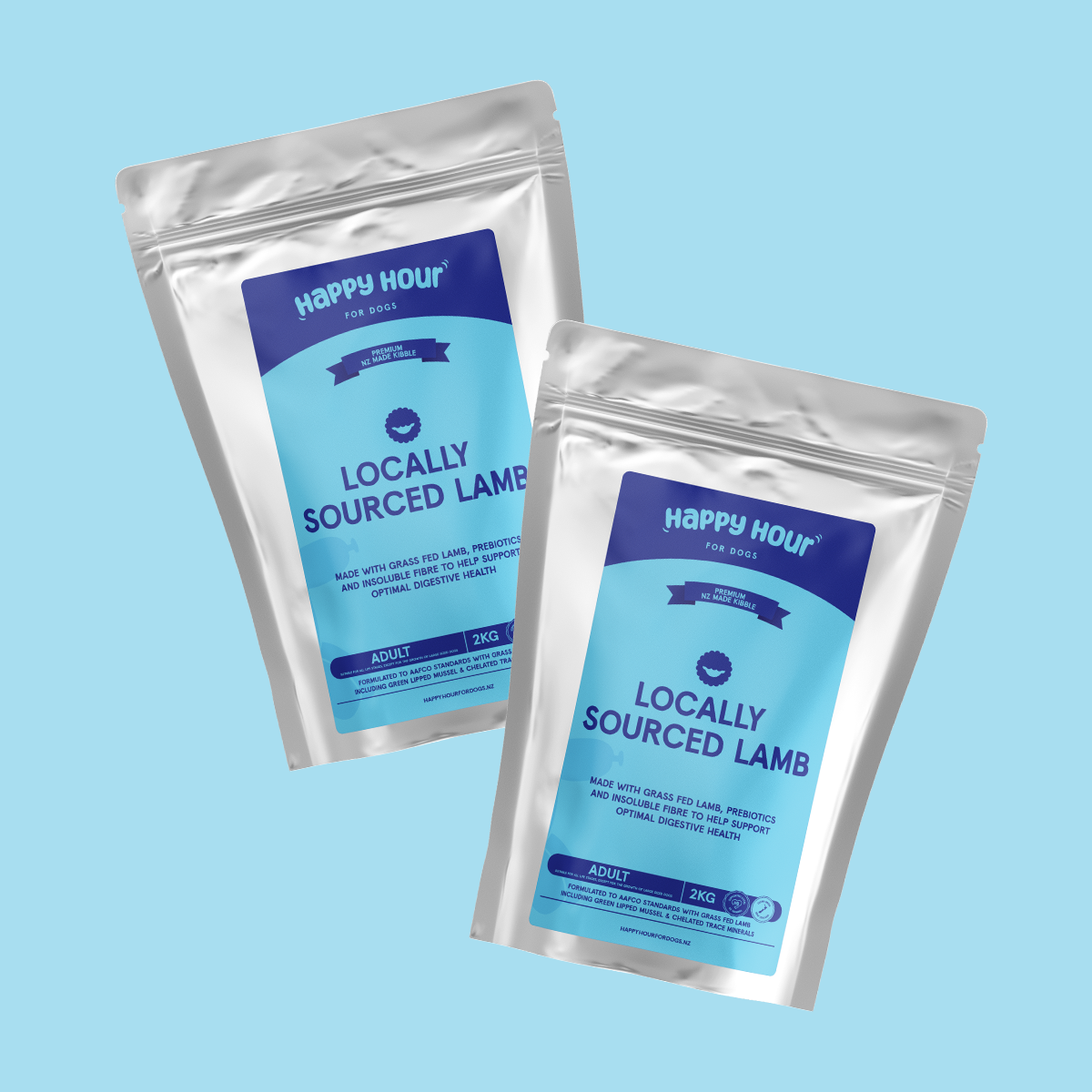
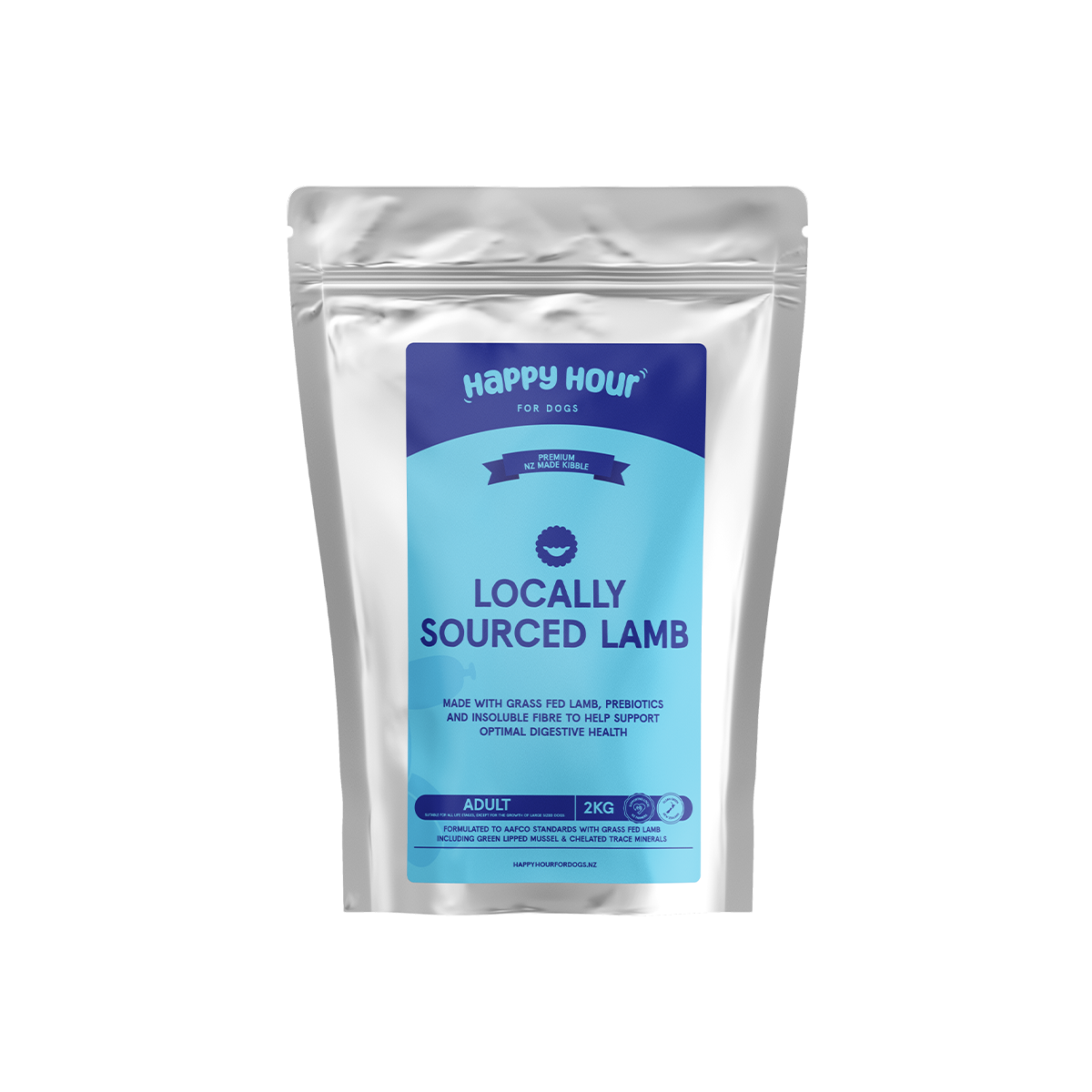
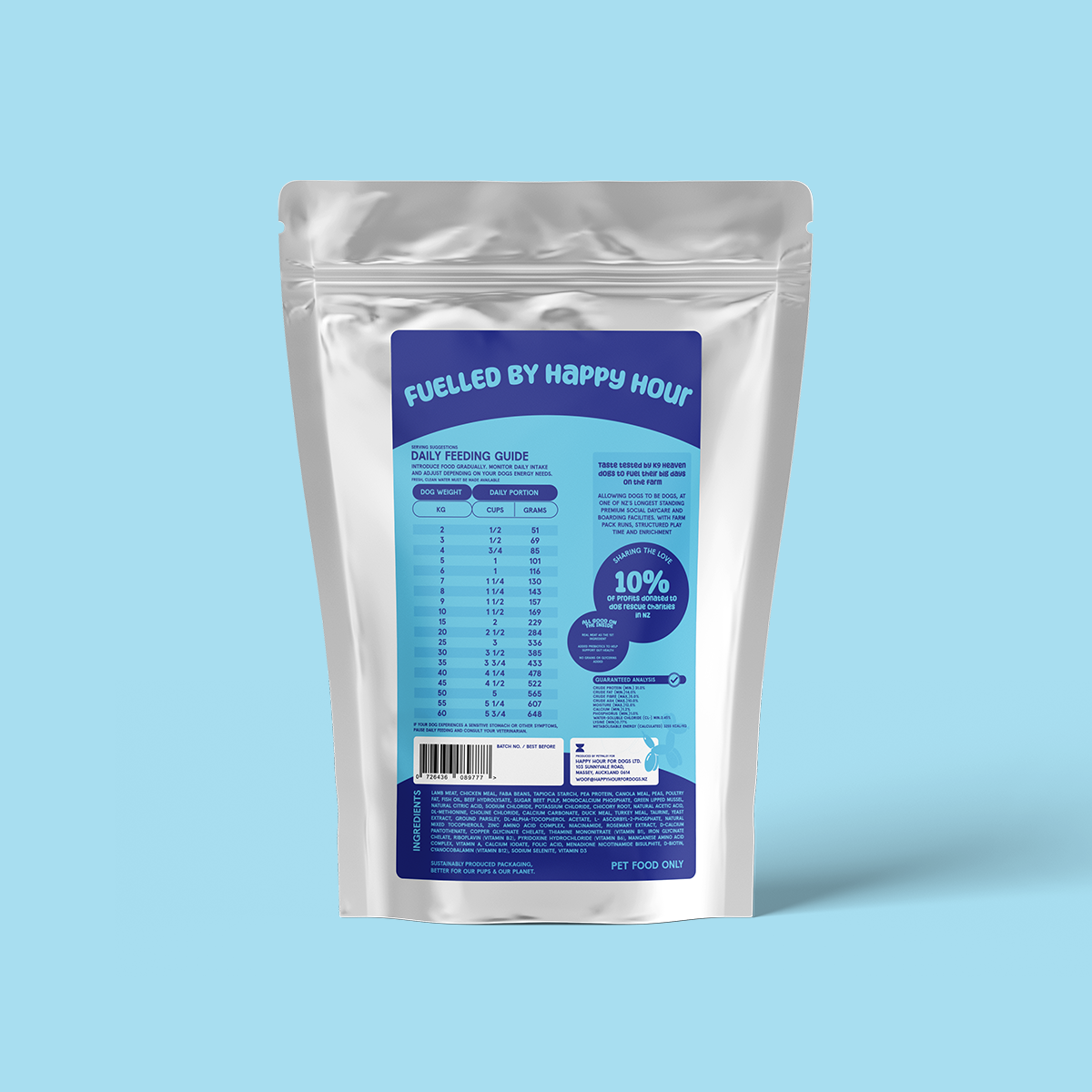
Happy Hour isn't specifically formulated as a senior food, and it's worth being honest about that. But if you look at what senior dogs actually need, it checks the important boxes: high-quality single NZ lamb protein for muscle maintenance, NZ green-lipped mussel for joint support, fish oil for omega-3s, grain-free for digestibility, and no artificial anything to reduce inflammatory load.
For a lot of senior dogs, particularly those who were already doing well on it as adults, it continues to serve them well. If your older dog has specific medical conditions, talk to your vet about tailored nutrition. But for a healthy senior who needs a quality everyday food, it's a strong option.
The Bottom Line
Senior dogs need quality protein (not less protein), joint support, digestibility, and a clean ingredient list. Most "senior" branded foods don't deliver this. The NZ green-lipped mussel advantage is real and worth seeking out.
Read ingredients, not marketing. And give your older dog the same standard of food they deserved at every other life stage.