Meta title: Best Dog Food for Staffies NZ: What They Actually Need [54 chars]
Meta description: Staffies need more than just any kibble. NZ guide to feeding a Staffy: protein for muscle, skin health, energy needs, and what to look for in a food. [152 chars]
Target keyword: best dog food for Staffies NZ | URL slug: best-dog-food-for-staffies-nz
Staffies are one of those breeds that look like they're built for power but feel like they're made of love. And their food needs reflect both sides.
A good Staffy diet has to support that lean, muscular build, work with what can be a famously reactive skin, and suit a dog that might be doing sprints at the park one day and sleeping across your feet the next.
Get it right and your Staffy looks the part: glossy coat, strong frame, bright eyes. Get it wrong and you'll often see it in their skin first. The itch, the hot spots, the paws they won't leave alone.
Key Takeaways
- Staffies need high-quality protein for muscle maintenance. Named animal proteins are the starting point.
- Skin sensitivity is a genuine breed trait. Ingredient quality and simplicity often make a visible difference.
- Energy levels vary widely between individual Staffies. Portion control matters more than picking a specific "high energy" formula.
- Common food triggers for Staffy skin issues include beef, chicken (with long-term exposure), and artificial additives. A novel protein can help if your dog reacts to their current food.
- Green-lipped mussel and omega-3s support joint health in a muscular, active breed.
What Makes Staffies Different from a Feeding Standpoint
Staffordshire Bull Terriers aren't the most complicated breed to feed, but there are a few things worth knowing before you just grab whatever's on special.
They're muscular and they earn it. A Staffy's compact, solid build requires a food with decent protein and fat. Not extreme amounts, but enough to maintain lean muscle on a body that's proportionally heavier than it looks.
Their skin is notorious. Atopic dermatitis (skin allergy) is one of the most common vet complaints in the breed. Some of that is environmental, some of it is food-driven, and often it's both. Food won't fix a Staffy with a serious allergy on its own, but the wrong food can absolutely make things worse.
They can go either way on energy. Young Staffies are relentless. Older ones can become quite settled. The same dog might need very different portions at two years versus seven. A food that's appropriate for your dog's actual activity level matters more than one that's marketed at 'active breeds.'
They can be prone to weight gain. That solid Staffy silhouette can tip into overweight surprisingly quickly if food intake isn't kept in check. You should be able to feel your Staffy's ribs without pressing hard. If you can't, it's time to cut back portions.
Protein: Why Quality Matters for a Muscular Breed
Protein is where a Staffy's diet starts. Not just how much, but from where.
Muscle maintenance requires a diet with enough high-quality protein, meaning protein that comes from a named, identifiable source and is highly bioavailable. Chicken meal, lamb, salmon: these are named proteins your dog's body can actually use. "Meat meal" or "animal protein" on an ingredient list tells you nothing about what animal it came from or how digestible it is.
For Staffies with skin issues, protein source also matters for a different reason. Many Staffies that develop food-related skin problems have become sensitised to a protein they've been eating repeatedly, most often beef or chicken. Switching to a novel protein (one they haven't eaten before) is often the first step in settling their skin down.
If your Staffy has been on chicken-based food their whole life and their skin is struggling, lamb or fish is worth trying. Not because chicken is inherently bad, but because it's the most common sensitiser in dogs who've had it for years.
The Skin Issue: What Food Can (and Can't) Do
Staffy owners know the signs: the constant scratching behind the ears, the belly that never quite looks right, the paws that get chewed until they're stained rust-red from saliva.
Food plays a role in skin health in a few ways:
Ingredient quality. Artificial colours, flavours, and preservatives can aggravate sensitive dogs. So can low-quality rendered proteins with variable composition. A food with fewer, cleaner ingredients tends to be kinder to reactive skin.
Protein allergens. If your Staffy is genuinely food-allergic, the trigger is almost always a protein. Beef, chicken, and dairy are the most common culprits. A named, novel protein with limited other ingredients gives you the best chance of avoiding the trigger.
Omega-3 fatty acids. These support the skin barrier and reduce inflammation. A food that includes omega-3s from a real source (fish, green-lipped mussel) is worth the extra consideration for a breed prone to skin trouble.
Grain-free isn't a magic solution, but grain-free foods often have simpler carbohydrate profiles and fewer common allergens. For some Staffies, the change makes a difference. For others, the protein source matters far more than the presence of grains.
If your Staffy's skin is a serious ongoing problem, talk to your vet before overhauling their diet. Our guide to food and itchy skin in NZ dogs covers what to look for in a food when your dog's skin is the main concern.
Energy Needs and Portion Guidance
Staffies are medium-sized dogs (typically 11-17 kg for adults) with a moderate-to-high activity level when young that often mellows significantly with age.
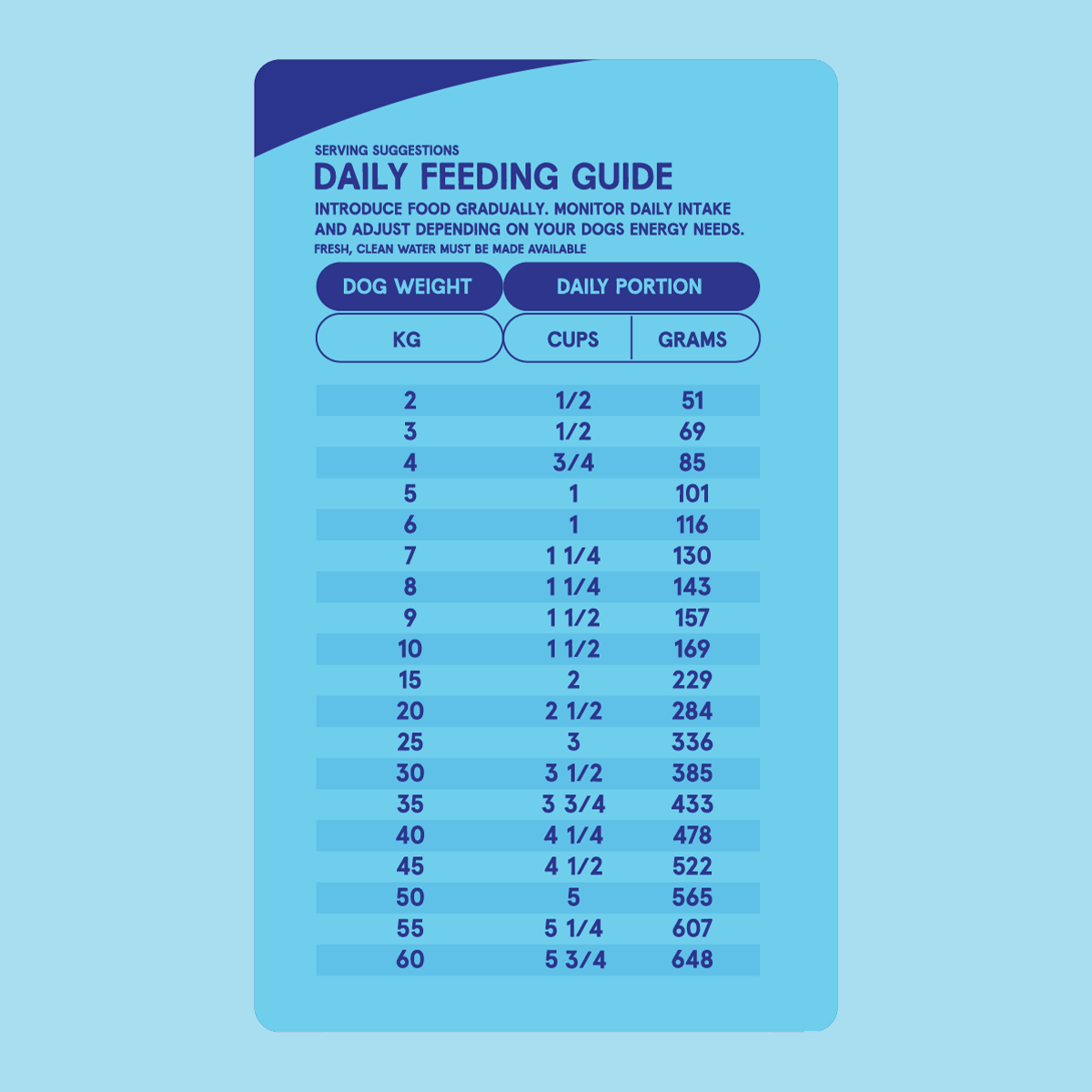
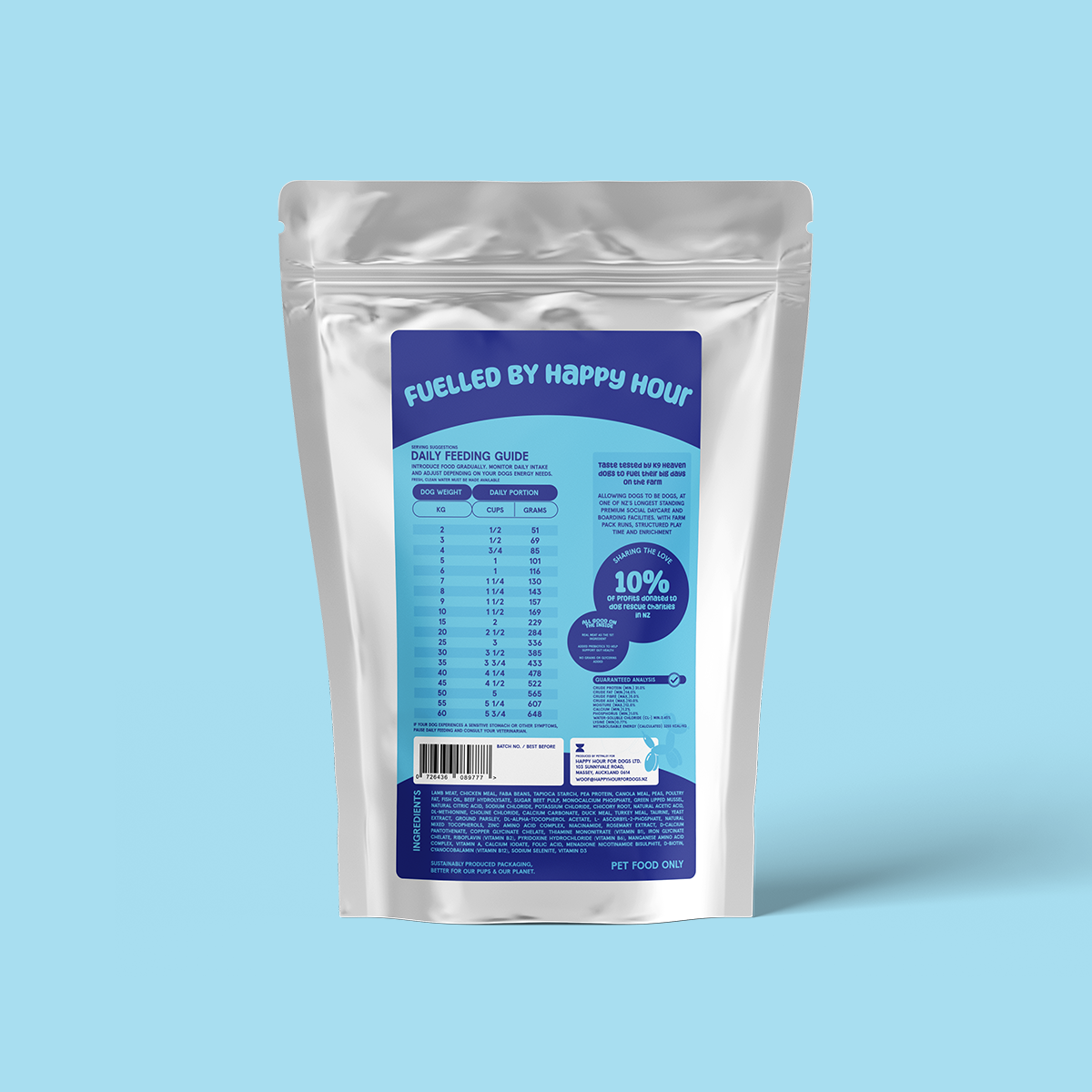
Most standard kibble feeding guides are based on weight and activity level, and they're a reasonable starting point. The key is to adjust based on what you see. Weigh your dog every month or two. Feel for their ribs. A Staffy who's getting slightly too much food over a year ends up appreciably heavier than one whose portions are managed well, and excess weight compounds joint load in a breed that's already working hard to carry a dense, muscular frame.
Split daily portions into two meals if you can. Staffies can be enthusiastic eaters, and one large meal on an empty stomach increases the small but real risk of bloat.
What to Look For in a Food for Staffies
- Named single protein at the top of the list: grass-fed lamb, cage-free chicken, salmon. If the first protein is unnamed, keep looking.
- Adequate protein content. For an adult Staffy in normal condition, look for 28-32% protein on a dry matter basis.
- Omega-3 sources: fish oil, flaxseed, or green-lipped mussel in the ingredient list.
- No artificial colours, flavours, or preservatives.
- Clean carbohydrate sources: sweet potato or similar, rather than wheat or corn, especially for dogs showing any skin reactivity.
What to Avoid
- Unnamed proteins. If you can't tell what animal the protein came from, it's a red flag.
- Beef or chicken as the primary protein if your Staffy has a history of skin issues and has been eating those proteins for years.
- Artificial additives: propylene glycol, BHA, BHT, ethoxyquin. These are preservatives most quality brands no longer use.
- Excess fat for inactive dogs. A working-dog formula fed to a Staffy who mostly goes for one walk a day can quietly contribute to weight creep.
Green-Lipped Mussel and Joint Health
Here's something Staffy owners sometimes overlook: that dense muscle mass and solid frame puts real load through their joints, especially as they age. They're not a breed known for catastrophic joint problems the way a German Shepherd might be, but they're not immune to joint wear either.
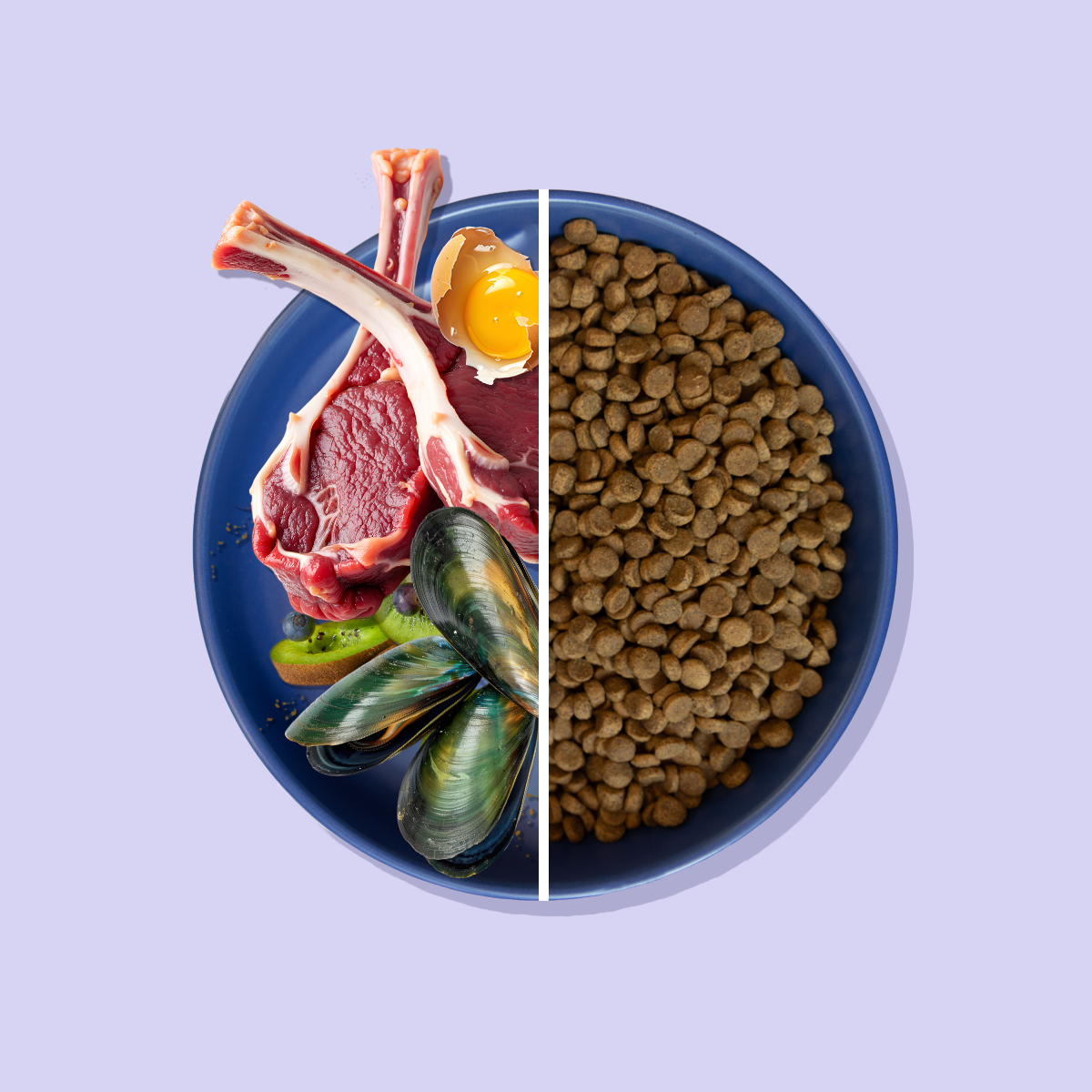
Green-lipped mussel is a New Zealand shellfish that's well-supported by research for joint health. It contains omega-3 fatty acids, glucosamine, and chondroitin in a form that's highly bioavailable. Including it in your Staffy's diet from a reasonable age is worth it as long-term maintenance.
More on why green-lipped mussel is in Happy Hour and what the research actually says about it.
Where Happy Hour Fits
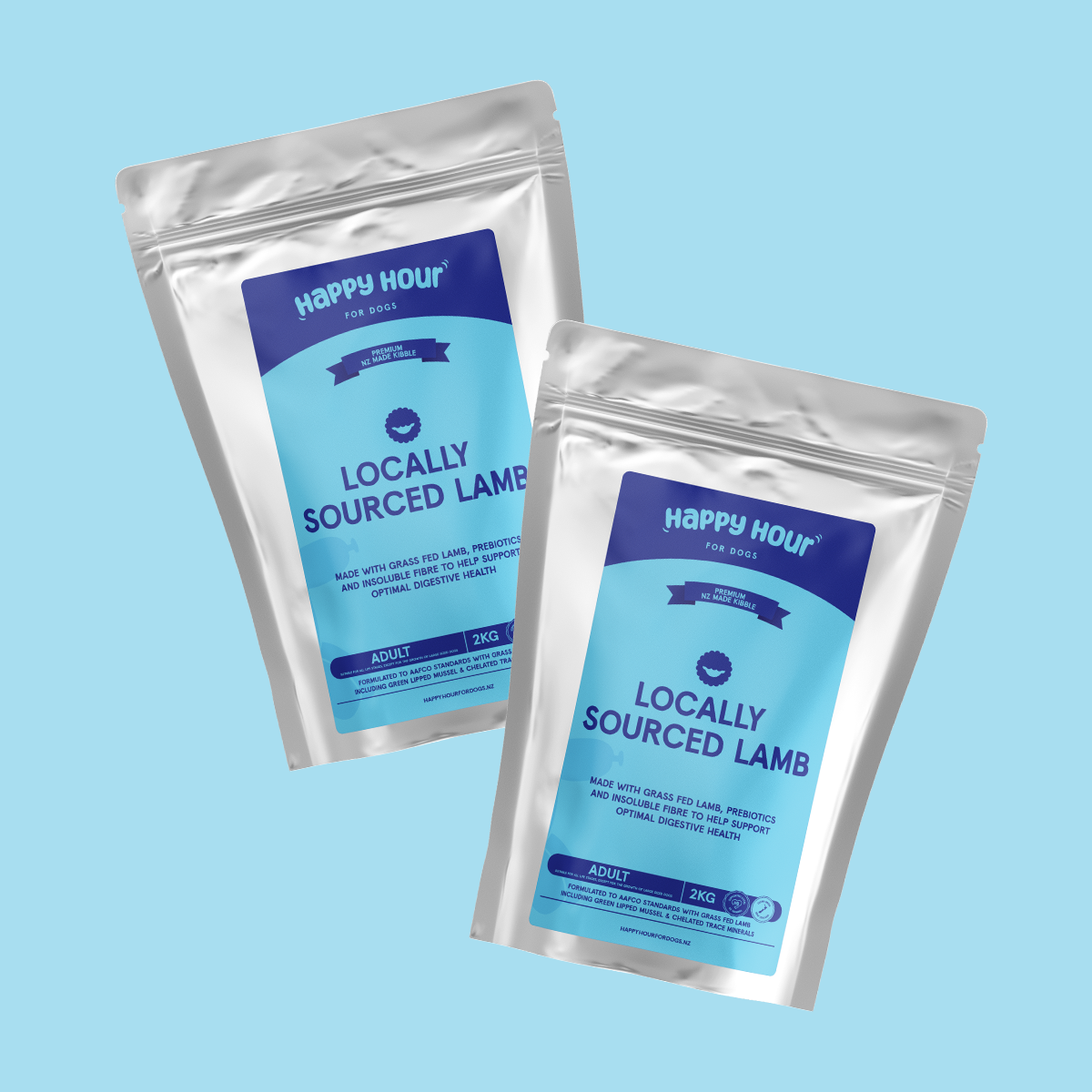
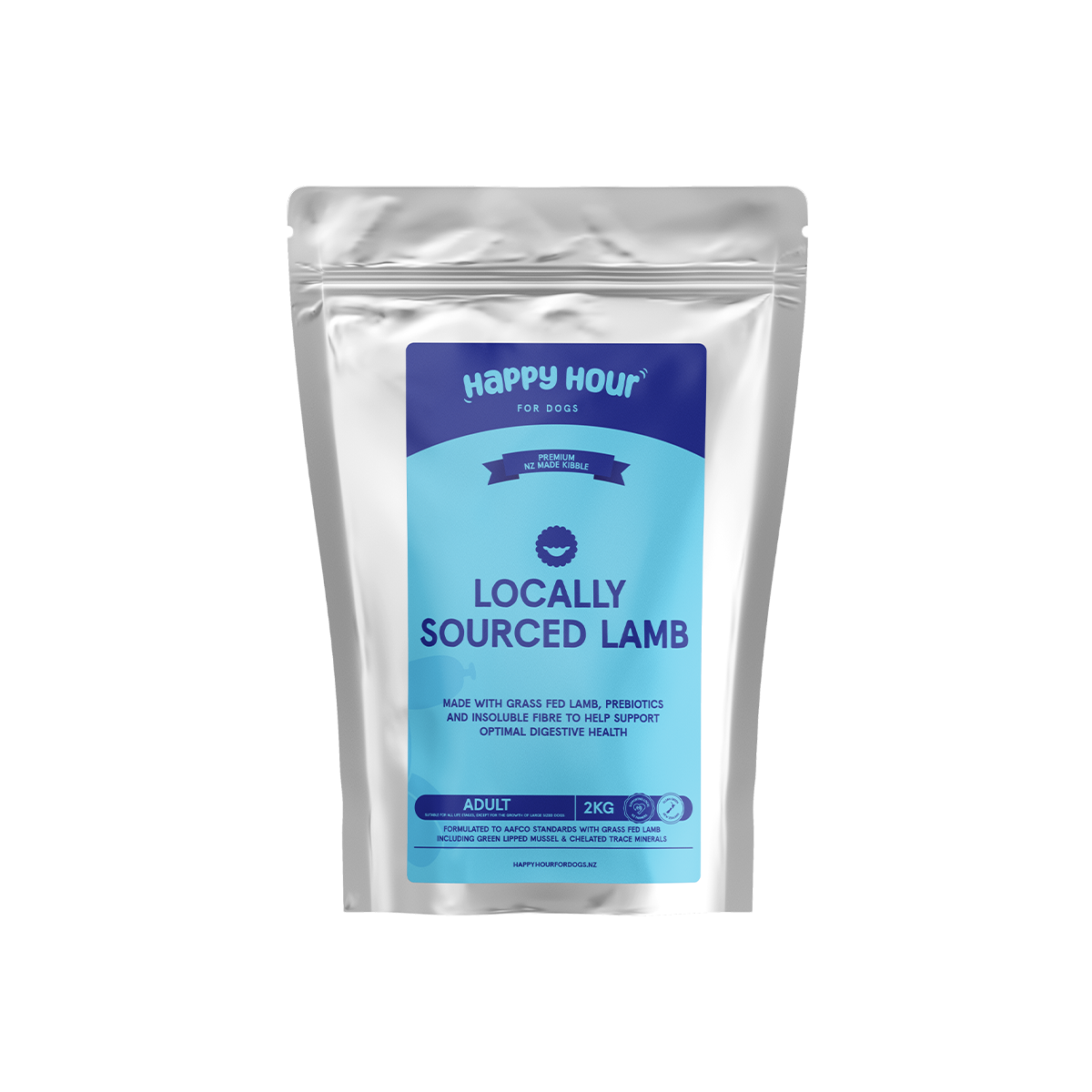
Happy Hour is a grain-free NZ kibble made with real grass-fed lamb or cage-free chicken, green-lipped mussel, added prebiotics, and chelated trace minerals. No glycerines, no unnamed proteins.
For Staffies, a few things make it relevant. The protein is named and single-sourced. If your Staffy has been on chicken-based food, the Grass-Fed Lamb recipe offers a novel protein without a long ingredient list to unpick. The grain-free formula keeps the carbohydrate profile simple. Green-lipped mussel is in every bag. The fat content (14% minimum) is moderate, which suits an active-but-not-working dog without pushing weight gain.
Many Staffy owners find that the shift to a named, simpler protein makes a visible difference to their dog's skin and coat over several weeks. We can't promise it will fix a serious allergy, and if your dog has a confirmed condition, work with your vet. But if you want to try it, there's a 30-day money-back guarantee. Your Staffy doesn't take to it?
If your Staffy is also showing signs of joint stiffness, the omega-3s in the food are one piece of the puzzle. We've written more about omega-3 for dogs and how to get enough through diet if you want to go deeper.