Best Dog Food for Itchy Skin NZ: What to Look For (and What to Avoid)
When your dog is constantly scratching, chewing their paws, or rubbing their face along the carpet, food is often one of the first things worth reviewing. Your dog's skin is actually one of the best indicators of how well their diet is working. Good ingredients support a healthy skin barrier; poor-quality ones can undermine it. Here's how to shop smarter.
If you’re not sure where the itching is coming from, it’s worth working out whether your dog’s itch could be down to their food before you change anything.
Key Takeaways
- Best Dog Food for Itchy Skin NZ: What to Look For (and What to Avoid)
- Why Food Affects Skin Health
- Ingredients to Avoid for Itchy Dogs
- What to Look For Instead
- How to Read Ingredients for Skin Health
Why Food Affects Skin Health
Skin is the body's largest organ and it requires significant nutritional support to stay healthy. Protein provides the building blocks for skin cell renewal. Omega-3 fatty acids support the skin's moisture barrier and help regulate inflammatory responses. Prebiotics feed beneficial gut bacteria, and the gut-skin connection is real: disrupted gut flora has been linked to increased skin sensitivity in both humans and dogs.
When a dog's diet is missing key nutrients, or contains ingredients that trigger an immune response, you'll often see it first in their skin and coat. Dull fur, flakiness, persistent itching, and hot spots can all have a dietary component.
Ingredients to Avoid for Itchy Dogs
If you're reading ingredient labels (and you should be), here's what to watch out for. Our Dog Food Ingredients to Avoid article covers this in more depth.
Artificial Preservatives
BHA, BHT, and ethoxyquin are synthetic preservatives used to extend shelf life. Some dogs with sensitive skin react poorly to these. Look for foods preserved naturally with vitamin E (tocopherols) or vitamin C instead.
Artificial Colours and Flavours
Dogs don't need their food to look colourful, that's for your benefit, not theirs. Artificial colours add no nutritional value and may cause reactions in sensitive dogs. Same goes for artificial flavour enhancers: a good-quality food should be palatable because it uses real ingredients.
Generic Meat Meals and By-Products as Primary Protein
'Meat meal' or 'animal by-products' listed as the main protein source can contain highly variable ingredients from batch to batch. For a dog with sensitive skin, consistency matters. Identified protein sources (lamb, chicken, fish) are more predictable and easier to track if you're trying to identify a trigger.
Corn Syrup and High-Sugar Fillers
Sugar in dog food is unnecessary and can contribute to inflammatory responses in some dogs. Cheap kibbles sometimes use corn syrup or similar sweeteners to improve palatability. It's not great for teeth or skin.
Common Allergen Proteins (for reactive dogs)
If your dog has a suspected food allergy, the most commonly implicated proteins are beef, chicken, dairy, and wheat. Switching to a novel protein (one they haven't eaten before) is a key part of identifying and managing food-triggered skin issues.
What to Look For Instead
Now the good news. Here's what actually supports healthy skin in dogs:
Omega-3 Fatty Acids
Fish oil is the most bioavailable omega-3 source for dogs. Look for it listed in the ingredients, not just mentioned vaguely on the packaging. Omega-3s help regulate the skin's inflammatory response and support the moisture barrier that keeps the skin healthy. Our Omega-3 for Dogs article explains the science if you want more detail.
Quality Named Protein Sources
Real, identifiable meat at the top of the ingredients list. Not 'poultry meal' or 'animal protein', but something specific. NZ grass-fed lamb, for example, is a single identifiable protein that's less common in many commercial dog foods, making it a useful option for dogs who've been on chicken or beef their whole lives.
Prebiotics for Gut Health
The link between gut health and skin health is well established. Chicory root is a natural prebiotic that feeds beneficial gut bacteria. A healthier gut often means a calmer immune system, which can translate to less reactive skin. See our Prebiotics for Dogs article for more on how this works.
Chelated Minerals
Zinc, copper, and other minerals play important roles in skin health. Chelated minerals (bound to amino acids) are absorbed more efficiently than the raw mineral forms used in cheaper foods. This means your dog actually gets the benefit rather than just passing it through.
Natural Ingredients with Skin-Supportive Properties
Green-lipped mussel (from NZ's Marlborough Sounds) naturally contains omega-3s and glycosaminoglycans that support tissue health. Manuka honey has been studied for its antimicrobial and soothing properties. These aren't miracle cures, but in a balanced diet, they contribute positively.
How to Read Ingredients for Skin Health
Ingredients are listed by weight, so the first few ingredients are what the food is primarily made of. If a named meat is first, followed by other real-food ingredients, you're generally on the right track. If the first ingredients are grains, corn, or vague 'meat meals', followed by a long list of additives, the nutritional quality may not be what the marketing suggests.
Check our How to Read a Dog Food Label article for a step-by-step guide to ingredient lists, guaranteed analysis, and AAFCO statements.
Why Happy Hour Is Worth Considering for Itchy Dogs
Happy Hour was developed by the team behind K9 Heaven, NZ's longest-running doggy daycare, with 11,000+ dogs through their doors. They've fed a lot of dogs and seen what works and what doesn't. Elsa, one of the founder dogs and a rescue with ongoing skin sensitivity, was one of the dogs they developed the formula around.
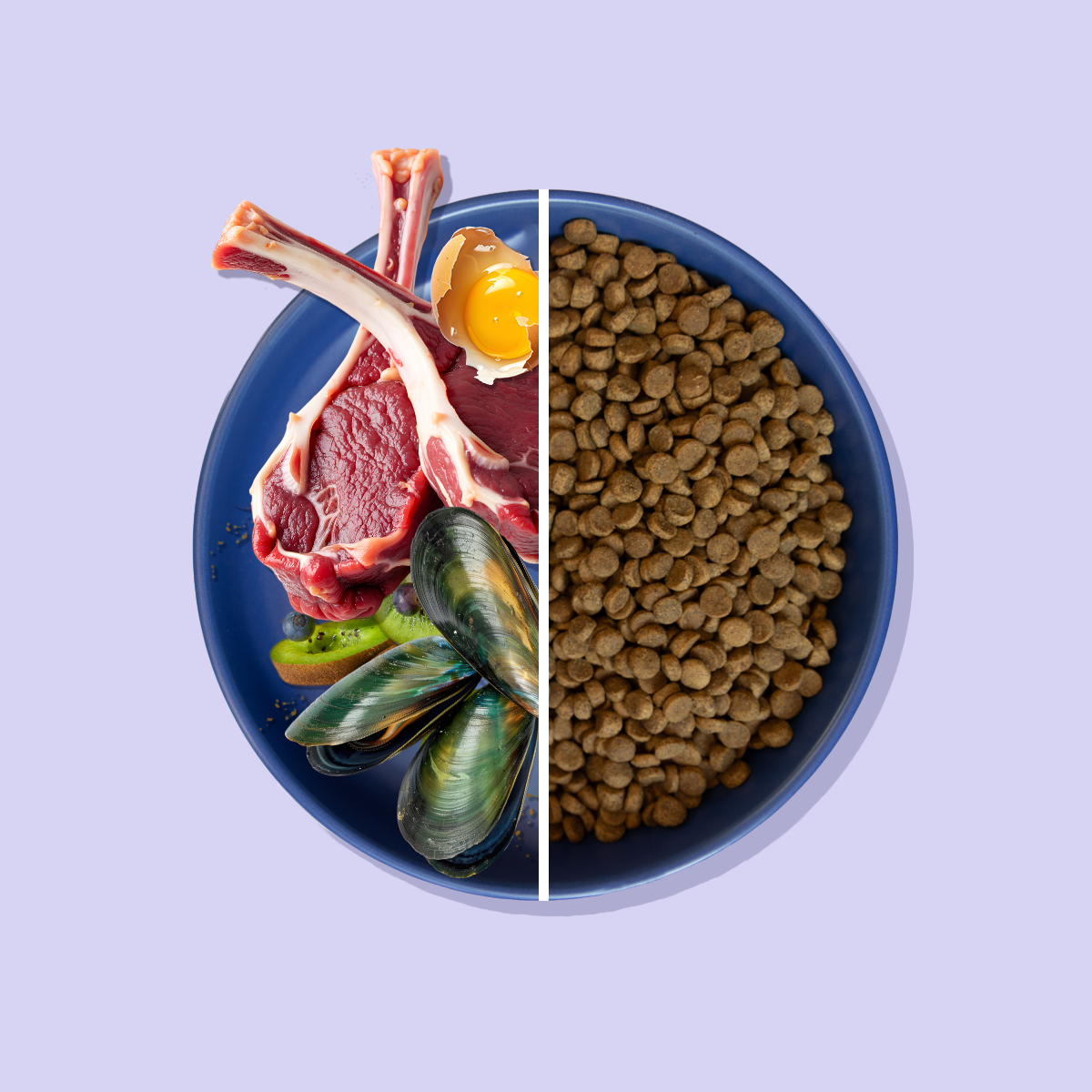
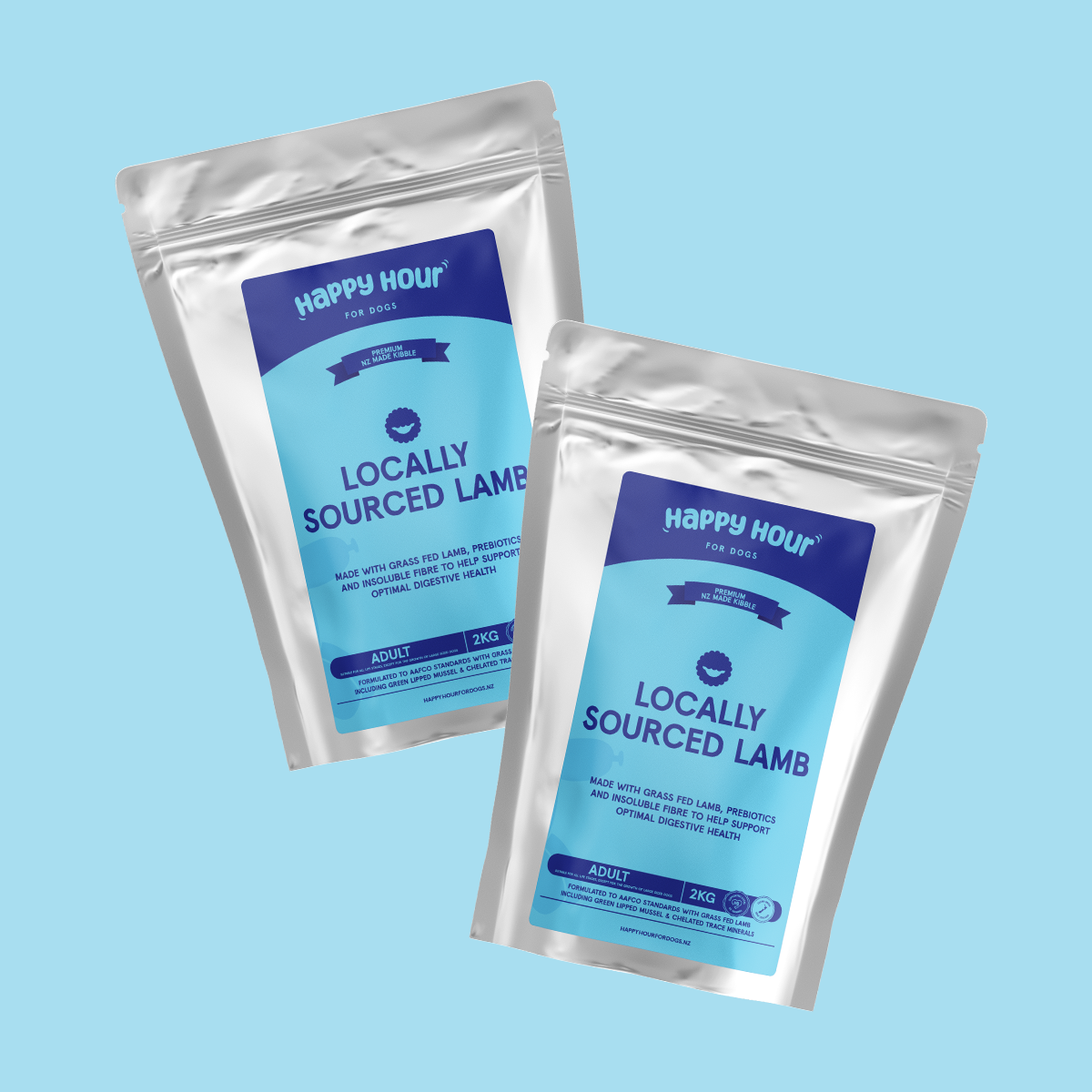
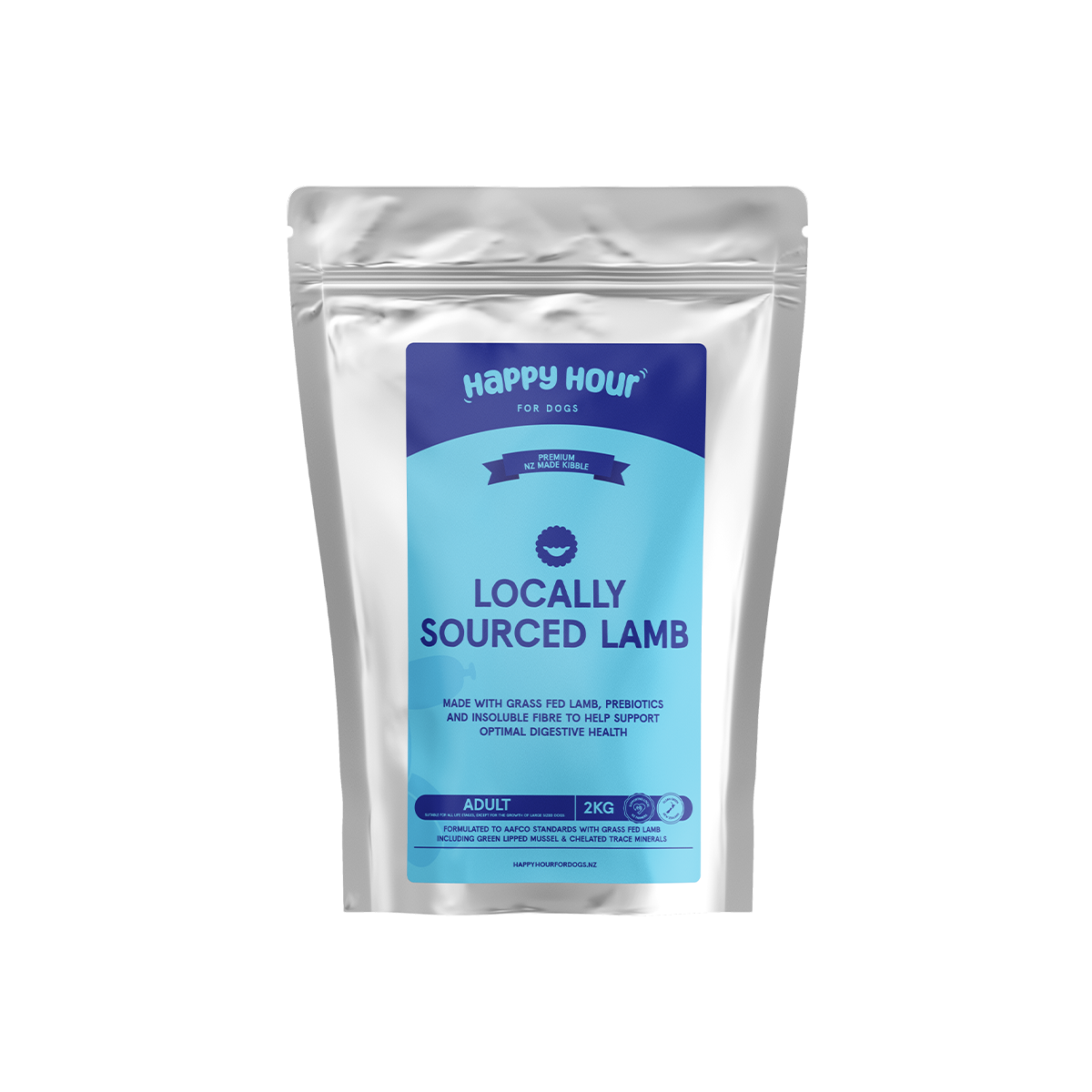
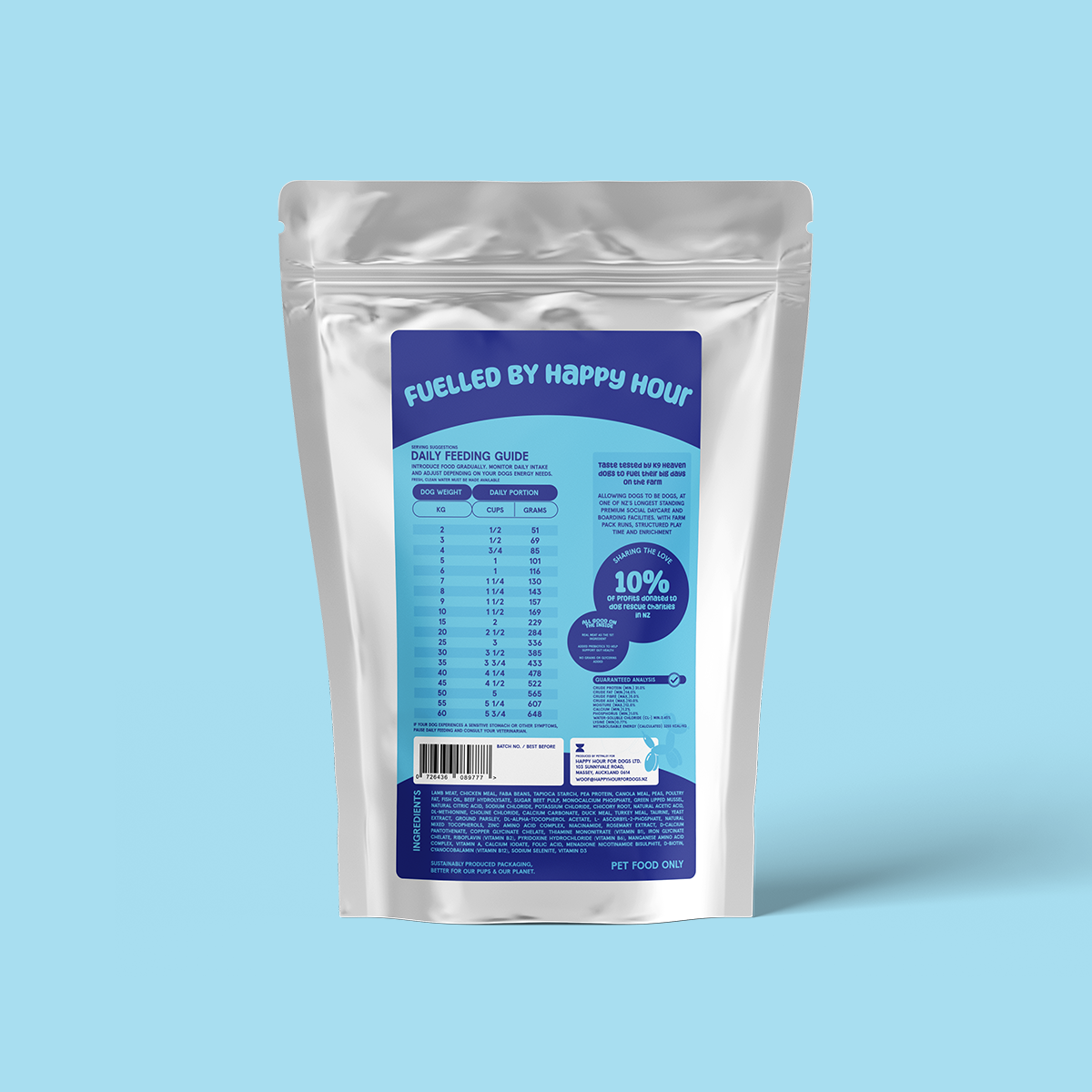
The formula uses NZ grass-fed lamb as the lead protein, which is a less common protein source than chicken or beef, making it useful for dogs who've built up reactions to those. It includes fish oil for omega-3 support, chicory root as a prebiotic, chelated minerals for absorption, and green-lipped mussel from the Marlborough Sounds. No artificial preservatives, colours, or flavours. It's also a low-fat formula, which is easier on digestion for some sensitive dogs.
It won't fix every itchy dog, nothing will without identifying the actual trigger, but for dogs reacting to common proteins or additives, it's a well-considered option.