Meta title: Wet Dog Food vs Dry Dog Food NZ: Which Is Better? [48 chars]
Meta description: Wet or dry dog food: which is actually better? Honest NZ breakdown of the real differences, when each format suits which dogs, and what quality looks like. [153 chars]
Target keyword: wet vs dry dog food NZ | URL slug: wet-dog-food-vs-dry-dog-food-nz
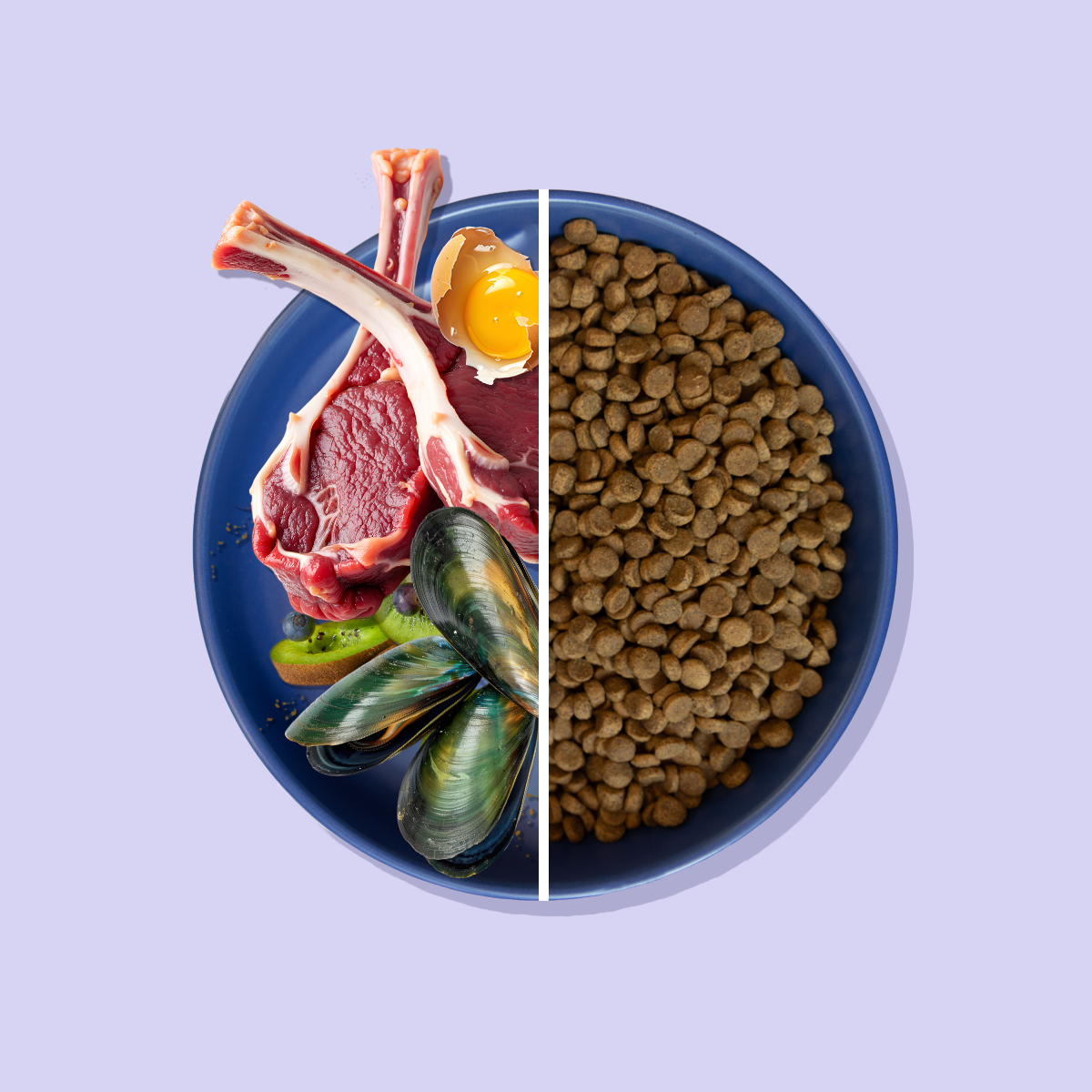
Every dog owner has stood in the pet food aisle and wondered which one to grab. Wet food looks more like something a dog would actually want to eat. Dry food is easier to store, easier to measure, and usually cheaper per day. But which is actually better for your dog?
The honest answer: neither is categorically better. What matters far more than format is what's inside the can or the bag. A well-formulated kibble beats a poorly-made wet food. A high-quality wet food beats a low-grade dry food. Format is secondary to ingredients.
That said, each format has real advantages and disadvantages depending on your dog and your situation. Here's what you actually need to know.
Key Takeaways
- Wet food contains 70-80% moisture; dry food (kibble) typically 10%. This affects how you compare them nutritionally.
- Wet food is more palatable for most dogs and is a genuinely better choice for dogs who don't drink enough water.
- Dry food is more economical per calorie, easier to store and portion, and provides some dental benefit through chewing.
- Quality matters more than format. Named proteins and a short, recognisable ingredient list beat a premium label in either category.
- Mixed feeding (a base of dry food with wet food as a topper) is a practical middle ground that many owners use successfully.
The Fundamental Difference: Moisture
The biggest difference between wet and dry dog food is water content, and it affects everything else.
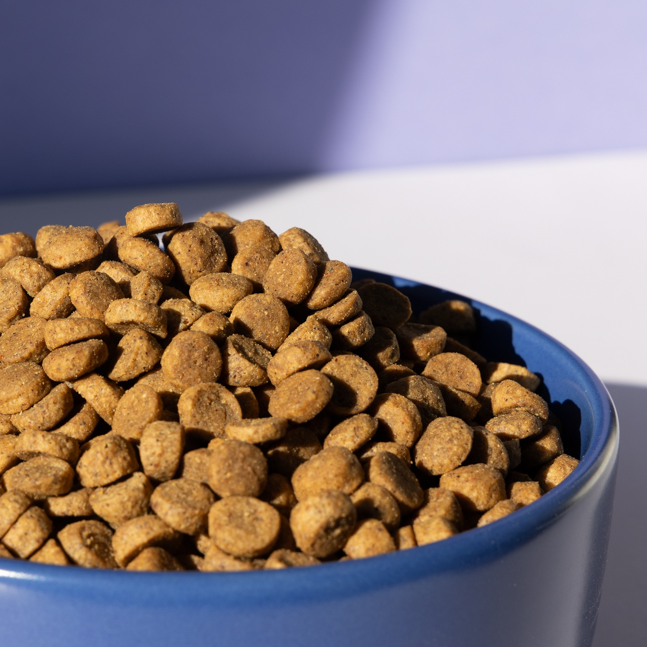
Wet food typically contains 70-80% moisture. Dry food (kibble) typically sits around 8-12%. This sounds like a trivial difference in processing, but it changes the way you compare the two formats in important ways.
Because wet food is mostly water, a 400g can of wet food contains far fewer actual nutrients by weight than a 400g serving of kibble. When you see a wet food that lists chicken as the first ingredient and the kibble shows chicken meal at the top, the wet food hasn't necessarily won: the chicken in the wet food is largely water weight. On a dry matter basis (once moisture is stripped out), the comparison often looks very different.
This doesn't make wet food worse. But it means the label comparison isn't straightforward.
What Wet Food Does Well
Palatability. Most dogs find wet food more appealing. The aroma is stronger, the texture is closer to fresh meat, and fussy eaters who turn their nose up at kibble will often clean a bowl of wet food without hesitation. If you've got a picky dog, wet food gets the job done.
Hydration. Dogs who don't drink enough water independently benefit from the moisture content in wet food. This is particularly relevant for dogs with kidney conditions (where hydration matters a lot), dogs in hot NZ summers, and older dogs whose thirst drive sometimes diminishes. If your vet has flagged that your dog needs more fluid intake, wet food is a practical way to address it.
Senior dogs and dental issues. Dogs with sore teeth, missing teeth, or dental problems that make chewing painful do better on wet food. The same goes for dogs recovering from dental procedures. Soft food is simply more comfortable.
Dogs who struggle to maintain weight. Wet food tends to be more palatable for dogs who are underweight or who have trouble eating enough. The palatability boost also helps with dogs who are off their food due to illness or stress.
What Dry Food (Kibble) Does Well
Cost per day. On a calorie-equivalent basis, good kibble is almost always cheaper than comparable wet food. Once you remove the moisture from a can of wet food, you're often paying significantly more for the actual nutrition. For larger dogs eating substantial daily amounts, the cost difference is real.
Storage and convenience. A bag of kibble keeps for weeks once opened (stored properly in a cool, dry place). An open can needs to be refrigerated and used within a couple of days. For families whose dogs don't eat large daily volumes, wet food can generate a lot of food waste.
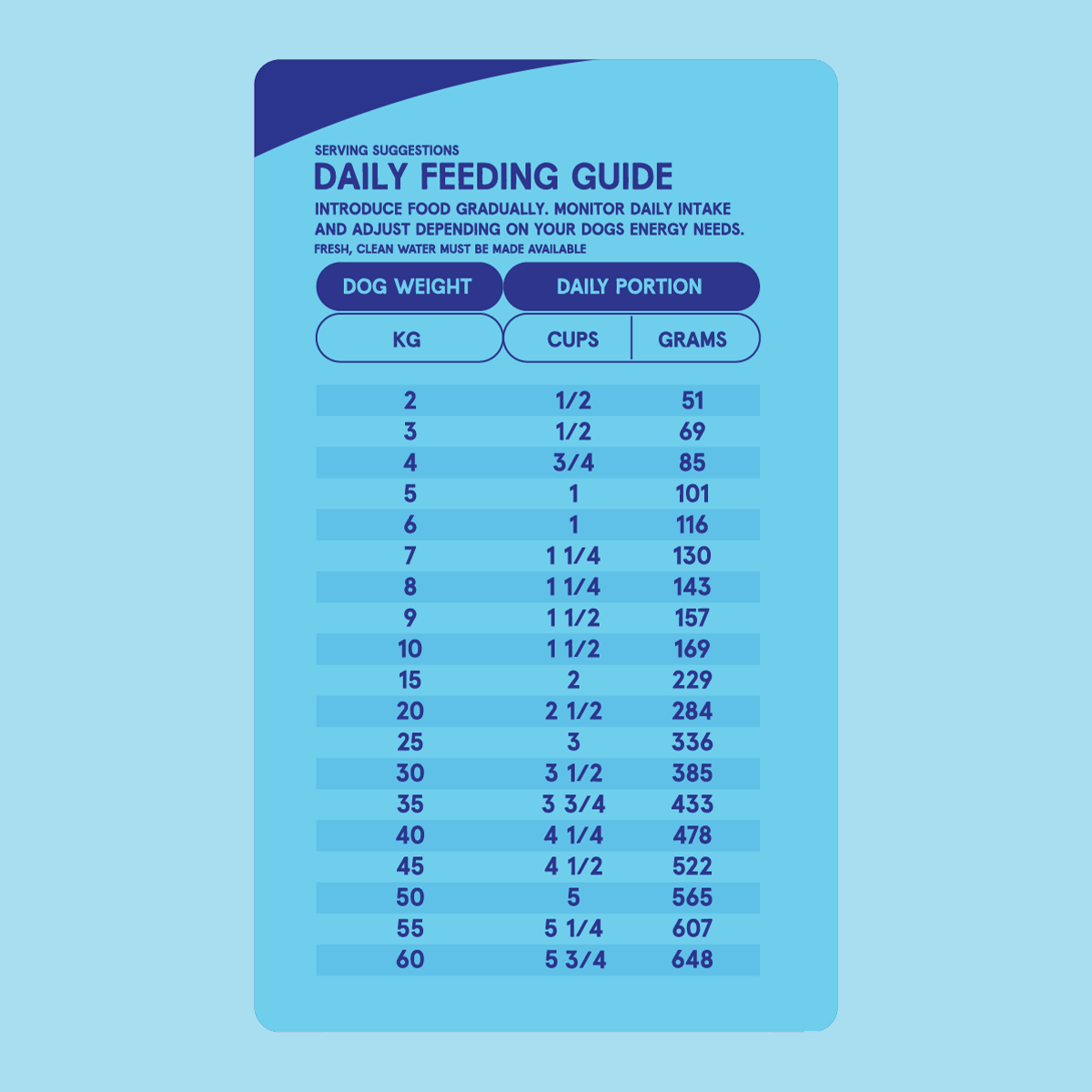
Portioning. Kibble is easy to measure precisely. A consistent scoop of dry food is a consistent number of calories. With wet food, portions are less standardised and harder to track across different brands.
Some dental benefit. Dry food provides mechanical abrasion when dogs chew it, which can help slow tartar build-up on certain tooth surfaces. It's not a substitute for brushing or professional dental cleans, but it's a genuine, if modest, benefit.
Nutrient density. Because kibble has had moisture removed, a small volume delivers a lot of nutrition. This makes it practical for larger dogs who need significant daily calories without enormous bowl volumes.
The Kibble-Cleans-Teeth Question
You'll often see dry food marketed on its dental benefits. The claim is partially true and partially overstated.
Kibble does create friction against tooth surfaces when chewed, which can help mechanically remove some plaque. But the benefit is limited to the tooth surfaces that actually make contact with the kibble, which doesn't include the gum line, where periodontal disease starts. And dogs who bolt their food whole get essentially no dental benefit at all.
Wet food tends to be softer and doesn't provide the same mechanical benefit. If dental health is a concern, neither format replaces brushing or regular vet dental checks.
We've got a longer breakdown of how diet affects dog dental health that goes into this properly.
When Wet Food Is the Better Choice
- Your dog is a fussy eater who consistently refuses dry food
- Your vet has recommended increased fluid intake
- Your dog has dental pain or has recently had a dental procedure
- Your dog is a senior with reduced appetite or difficulty chewing
- You're using it as a high-value topper or training reward
When Dry Food Is the Better Choice
- You have a larger dog and cost-per-day matters
- Storage and shelf life are practical concerns
- Your dog eats well on dry food and maintains good body condition
- Portion consistency matters, such as for weight management
- You want the convenience of a food that travels and stores well
The Mixed Feeding Approach
Many owners use a dry food base with wet food as a topper, and it's a practical approach that captures benefits from both. The kibble provides the nutritional completeness and cost efficiency; the wet food boosts palatability and adds some moisture.
If you do this, account for the combined calories. It's easy to underestimate how much energy wet food adds on top of a full dry food portion, particularly for dogs who are already at a healthy weight.
A useful rule of thumb: treat the wet food topper as a partial replacement for an equivalent kibble portion rather than as an addition to a full serving.
What Actually Matters: How to Evaluate Quality in Either Format
Once you've decided on the format that suits your dog, the real work is reading the label.
In either format, look for:
- Named proteins at the top of the ingredient list: chicken, lamb, beef, salmon. Not "meat meal," "animal protein," or "poultry."
- A short ingredient list where you can identify most ingredients without a chemistry background.
- AAFCO compliance, which tells you the food meets minimum nutritional standards for your dog's life stage.
- No artificial colours, flavours, or preservatives.
- A guaranteed analysis that shows protein and fat levels consistent with what your dog needs.
In wet food specifically, watch for:
- High moisture content that inflates the apparent protein percentage. Compare on a dry matter basis.
- Added salt, sugar, or gelling agents. Some wet foods rely heavily on these.
- "Gravy" or "in sauce" varieties, which often contain more thickeners and additives than pâté-style foods.
In dry food specifically, watch for:
- Grains or fillers as the primary ingredient (corn, wheat, soy sitting before the protein source).
- Vague protein sources like "meat meal" or "animal by-products."
- Long lists of artificial additives: propylene glycol, BHA, BHT, ethoxyquin.
Where Happy Hour Fits
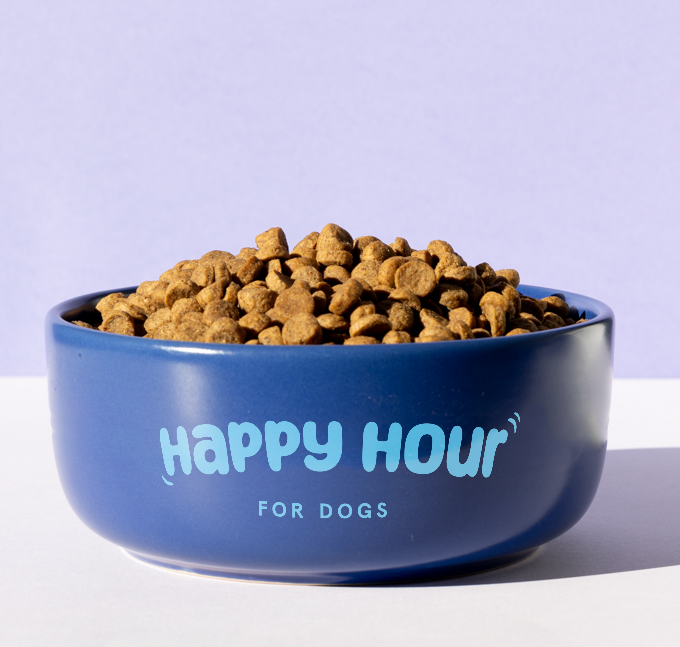
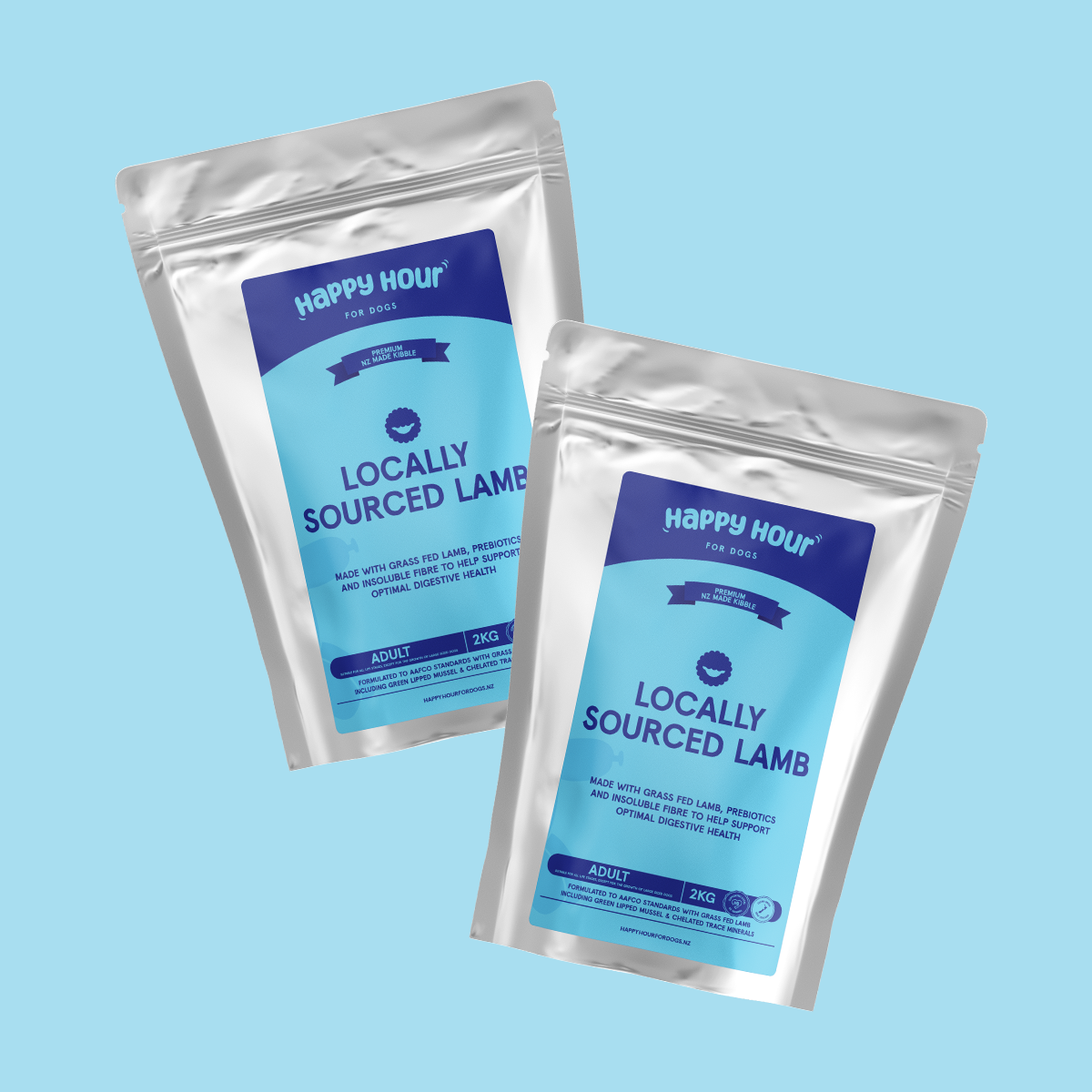
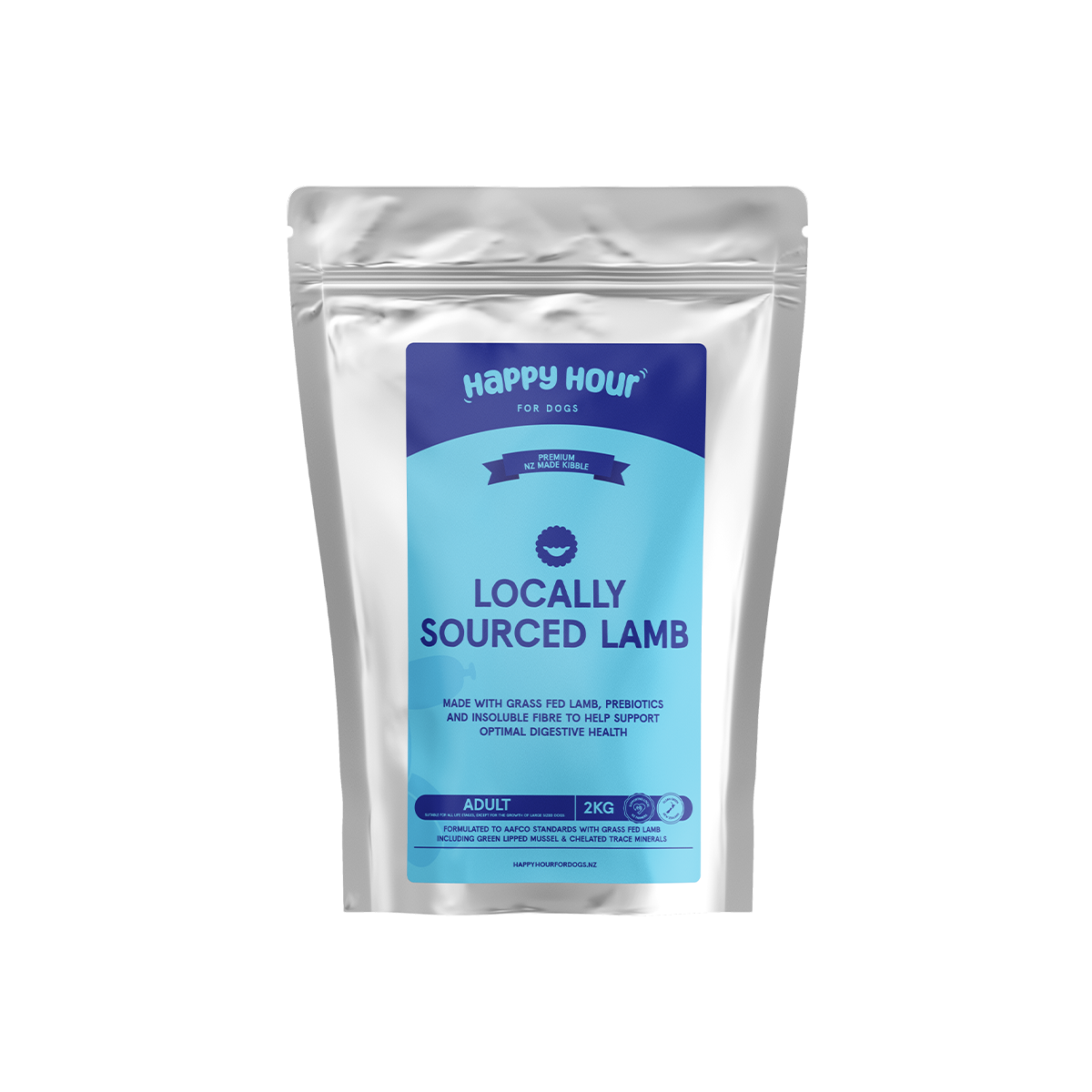
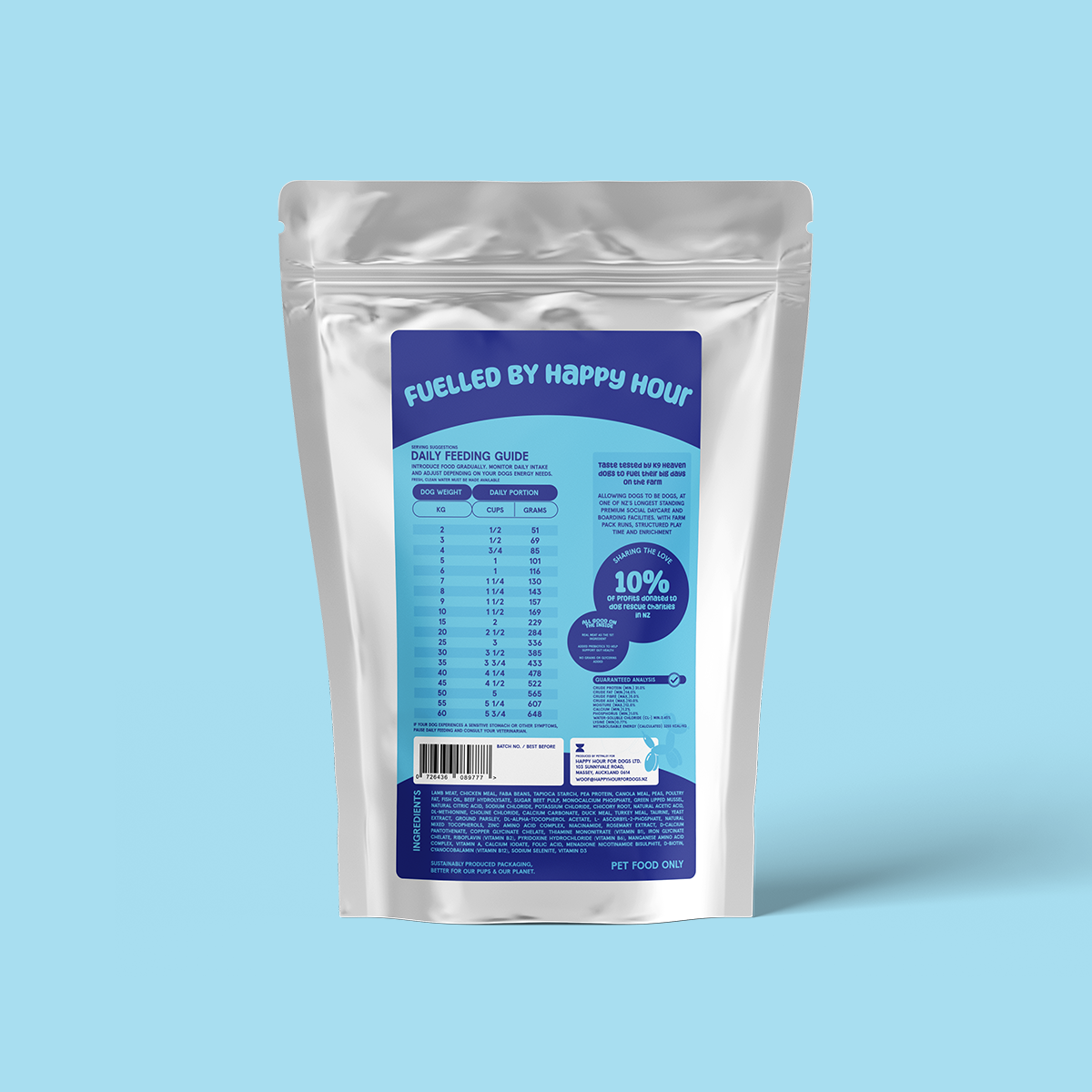
Happy Hour is dry food: a grain-free NZ kibble made with real grass-fed lamb or cage-free chicken, green-lipped mussel, added prebiotics, and chelated trace minerals. No glycerines, no unnamed proteins.
It's not trying to out-compete wet food on moisture or palatability. What it does offer is a dry food where you know exactly what's in it. Named, single-source protein. A clean ingredient list. AAFCO compliant, palatability and digestibility tested at a leading NZ university.
If your dog thrives on dry food and you want the reassurance of knowing what's actually in the bag, the full Happy Hour ingredient breakdown is worth a read.
For dogs who need a palatability boost, it also works well as a mixed-feeding base. Most dogs transition to it readily. If yours doesn't take to it, there's a 30-day money-back guarantee. Send it back.
If you're switching from wet food or a different dry food, transition over 7-10 days to avoid digestive upset. Our food-switching guide walks through the process.