Meta title: Large Breed Puppy Food NZ: What Big Dogs Actually Need [54 chars]
Meta description: Not all puppy food suits large breeds. NZ guide to what big-breed puppies actually need, how to read labels, and when to switch to adult food. [142 chars]
Target keyword: large breed puppy food NZ | URL slug: large-breed-puppy-food-nz
There's a particular joy in a large breed puppy: the enormous paws, the clumsy enthusiasm, the gap between what they think they can do and what their body is actually ready for. And underneath all of that is a skeleton growing faster than almost any other creature on the planet.
That growth is the reason large breed puppies can't just eat any puppy food. What goes into the bowl during those first 18 months has a disproportionate effect on how that skeleton develops, how the joints form, and what kind of long-term structural health they carry into adulthood.
Key Takeaways
- Large breed puppies (dogs that will be 25 kg+ as adults) have specific nutritional needs that differ from small and medium breeds.
- The biggest risk is too much calcium, not too little. Over-supplementing calcium causes rapid, uneven bone growth that leads to skeletal problems.
- Controlled growth is the goal. A large breed puppy growing slower is actually healthier than one growing as fast as possible.
- Look for foods with an AAFCO statement that specifically covers large breed puppies, or ask your vet to assess the calcium and phosphorus levels.
- Most large breeds should transition to adult food at around 18-24 months. Some, like Great Danes, benefit from early vet guidance on timing.
What Counts as a Large Breed?
For nutritional purposes, large breed typically refers to dogs with an expected adult weight of 25 kg or more. In NZ, that covers a wide range of common dogs: German Shepherds, Labrador and Golden Retrievers, Border Collies (upper end), Rottweilers, Weimaraners, Mastiffs and Mastiff crosses, Great Danes and other giant breeds.
Giant breeds (expected adult weight over 45 kg) have even more specific needs and often benefit from food specifically formulated for giant-breed growth. If you have a Great Dane, Saint Bernard, or similar, a vet consultation about nutrition during puppyhood is genuinely worthwhile.
The Calcium Problem: Why More Isn't Better
This is the most counter-intuitive thing about large breed puppy nutrition, and the most important.
Most people assume that a fast-growing puppy needs lots of calcium for strong bones. The logic makes sense: bigger bones need more calcium. But large breed puppy research consistently shows that excess calcium is more dangerous than deficiency during growth phases.
Large breed puppies can't regulate their calcium absorption the way adult dogs can. When a small breed puppy eats too much calcium, the body excretes the excess. Large breed puppies absorb it regardless. Too much calcium drives disproportionately rapid bone growth, which leads to abnormal bone development — and in serious cases, painful conditions like osteochondrosis dissecans (OCD) and hypertrophic osteodystrophy (HOD).
The calcium-to-phosphorus ratio also matters. The ideal ratio sits between 1:1 and 1.5:1. Foods heavy in bone meal without matching phosphorus create an imbalance that affects bone quality. In practice this means:
- Don't supplement calcium on top of a complete puppy food unless your vet specifically tells you to
- Don't feed calcium-dense extras like cottage cheese or yoghurt as a regular addition to a complete diet
- Choose a food where calcium content is specified and appropriate for large breed growth
Controlled Growth: Slower Is Healthier
The goal with a large breed puppy is not to get them to adult size as fast as possible. The goal is to get them there without the skeleton developing problems along the way.
A large breed puppy growing at a controlled, steady rate develops denser, better-formed bones and healthier joint surfaces than one pushed to maximum growth rate. Foods marketed around rapid development are working against the science here.
What controlled growth looks like in practice:
- A body condition that's lean rather than chunky (ribs easy to feel without pressing hard)
- Growth that follows a steady curve rather than sudden spurts
- Appropriate energy density, not maximum calorie density
- Twice-daily meals rather than one large feeding, particularly for deep-chested breeds prone to bloat
Protein Quality for Large Breed Puppies
Large breed puppies still need substantial, high-quality protein for muscle development, organ function, and immune system support. Named animal protein sources (chicken, lamb, fish) are more digestible and deliver a more complete amino acid profile than unnamed rendered proteins.
DHA (an omega-3 fatty acid) is particularly important during puppyhood, supporting brain and eye development during the critical growth window. Look for fish meal, fish oil, or other omega-3 sources in the ingredient list of whichever food you choose.
Reading the Label: What to Look For
The most important thing to check on any large breed puppy food is the AAFCO nutritional adequacy statement. This small-print section tells you what life stage the food has been formulated for.
What you want to see: "[Product name] is formulated to meet the nutritional levels established by the AAFCO Dog Food Nutrient Profiles for all life stages including the growth of large size dogs (70 lbs. or 32 kg or more as an adult)."
That specific large-breed growth statement is the gold standard. A food that only says "all life stages" without the large-breed qualifier may have calcium levels too high for a large breed puppy. A food labelled for "adult maintenance" only is not appropriate for a growing large breed puppy.
Other things to check:
- Calcium: look for around 1.0-1.8% in the guaranteed analysis (on an as-fed basis) for large breed growth
- Named protein at the top of the ingredient list
- Omega-3 source: fish meal, fish oil, or flaxseed
- No excess supplements or added bone meal that could push calcium too high
How Much to Feed
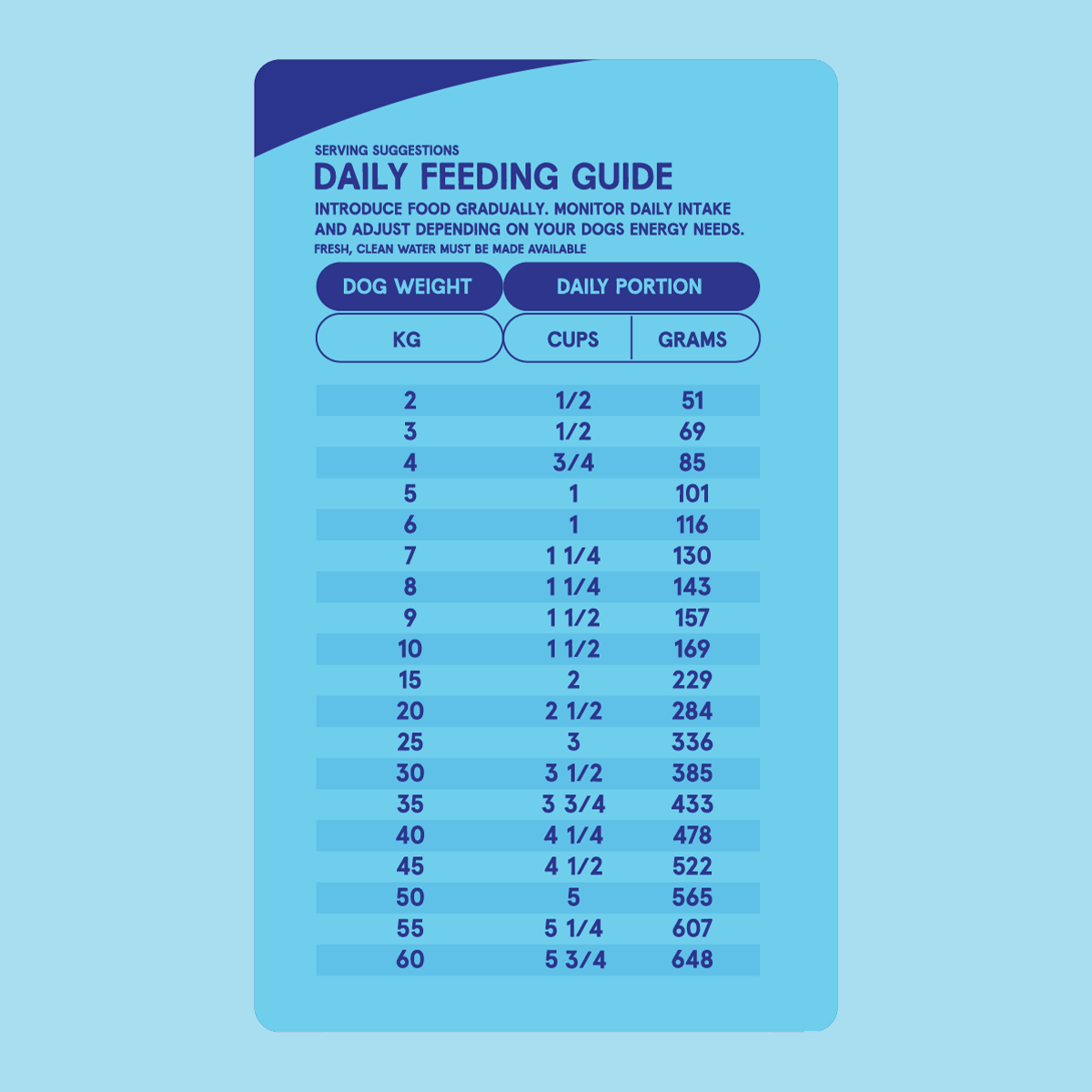
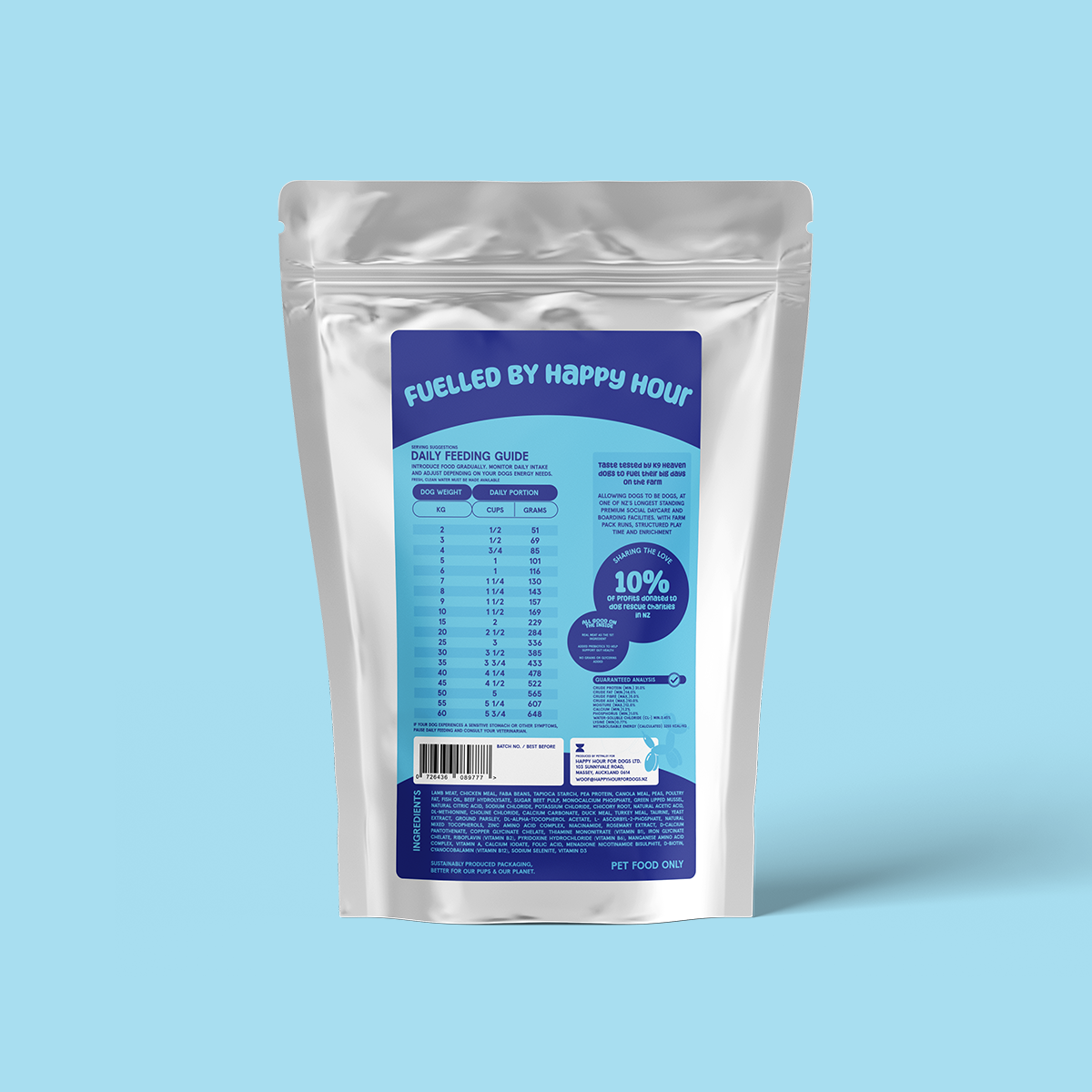
Follow the feeding guide on your specific food's packaging as a starting point, but adjust based on your puppy's body condition, not just their weight. A large breed puppy should be lean, not plump. You should be able to feel their ribs without pressing hard.
Split daily portions into at least two or three meals. Large breed puppies are at higher risk of bloat (gastric dilatation-volvulus) than smaller dogs, particularly deep-chested breeds like German Shepherds and Weimaraners. Multiple smaller meals reduce the risk compared to one large daily feeding.
Avoid vigorous exercise immediately before or after meals for the same reason.
When to Switch to Adult Food
One of the most common mistakes with large breed dogs is switching to adult food too early. Small breeds can go to adult food at 9-12 months. Large breeds aren't done growing until considerably later.
General guidance:
- Large breeds (25-45 kg adult weight): transition at 12-18 months
- Giant breeds (45 kg+ adult weight): transition at 18-24 months
Signs your large breed is ready for adult food: their height has been stable for at least 6-8 weeks and they're approaching their expected adult weight. Your vet can confirm with a growth assessment.
When you do switch, transition gradually over 7-10 days to avoid digestive upset. Our guide to switching your dog's food covers how to do this properly.
For a broader look at puppy nutrition through the earlier growth stages, our puppy food guide for NZ owners covers what puppies generally need from weaning through to adolescence.
Where Happy Hour Fits
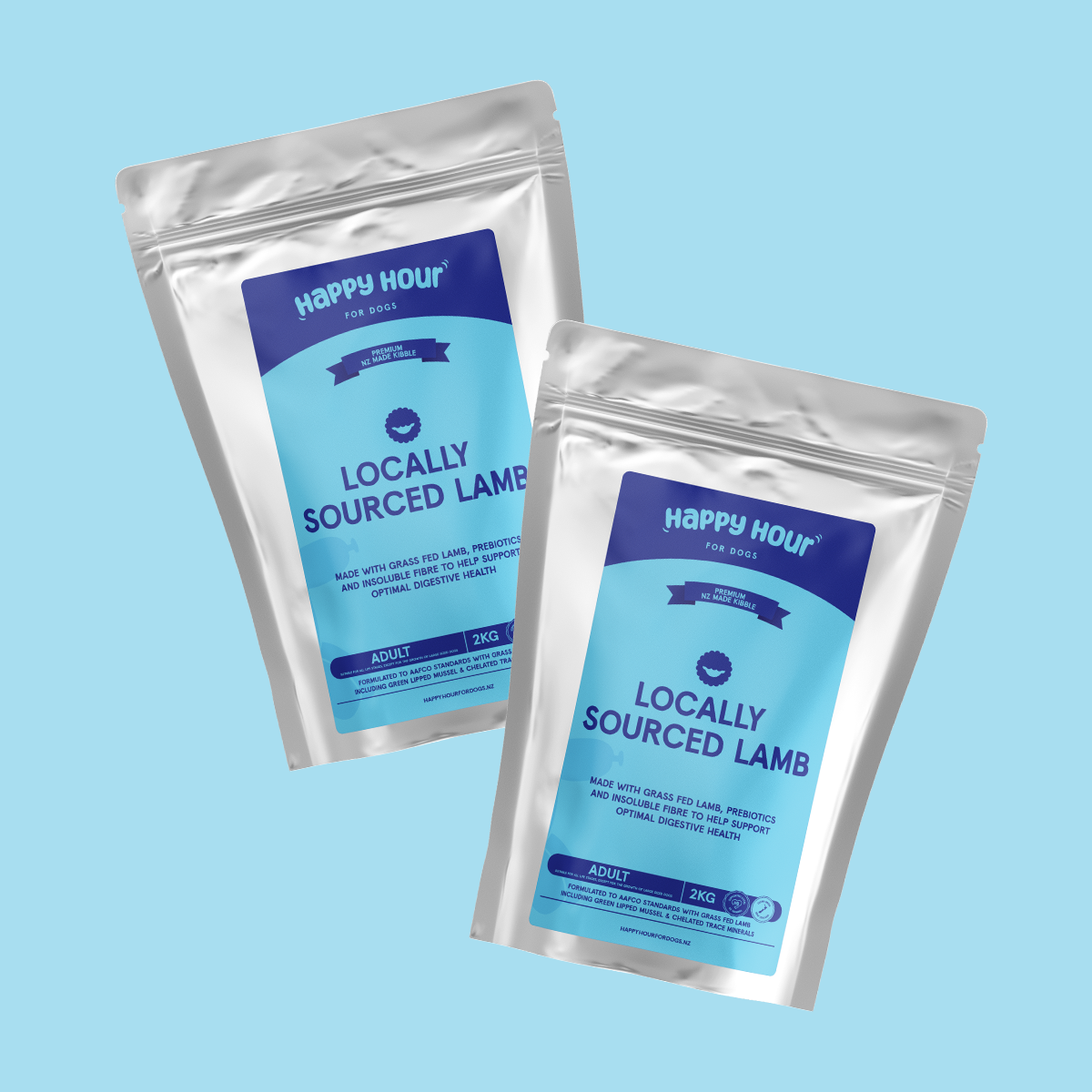
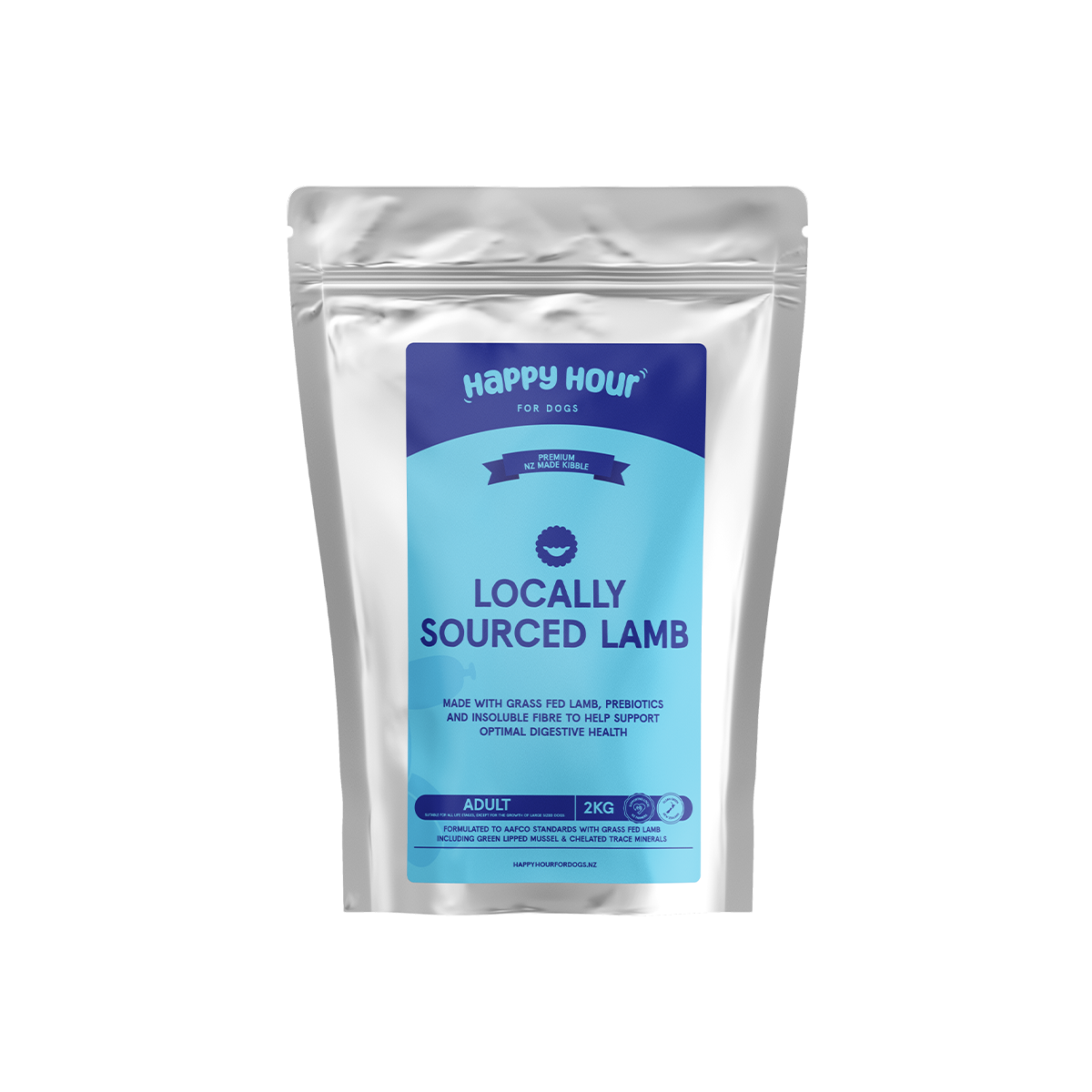
Happy Hour is formulated as an adult dog food. It's the right food when your large breed puppy finishes growing and transitions into adulthood, not during the puppy phase itself.
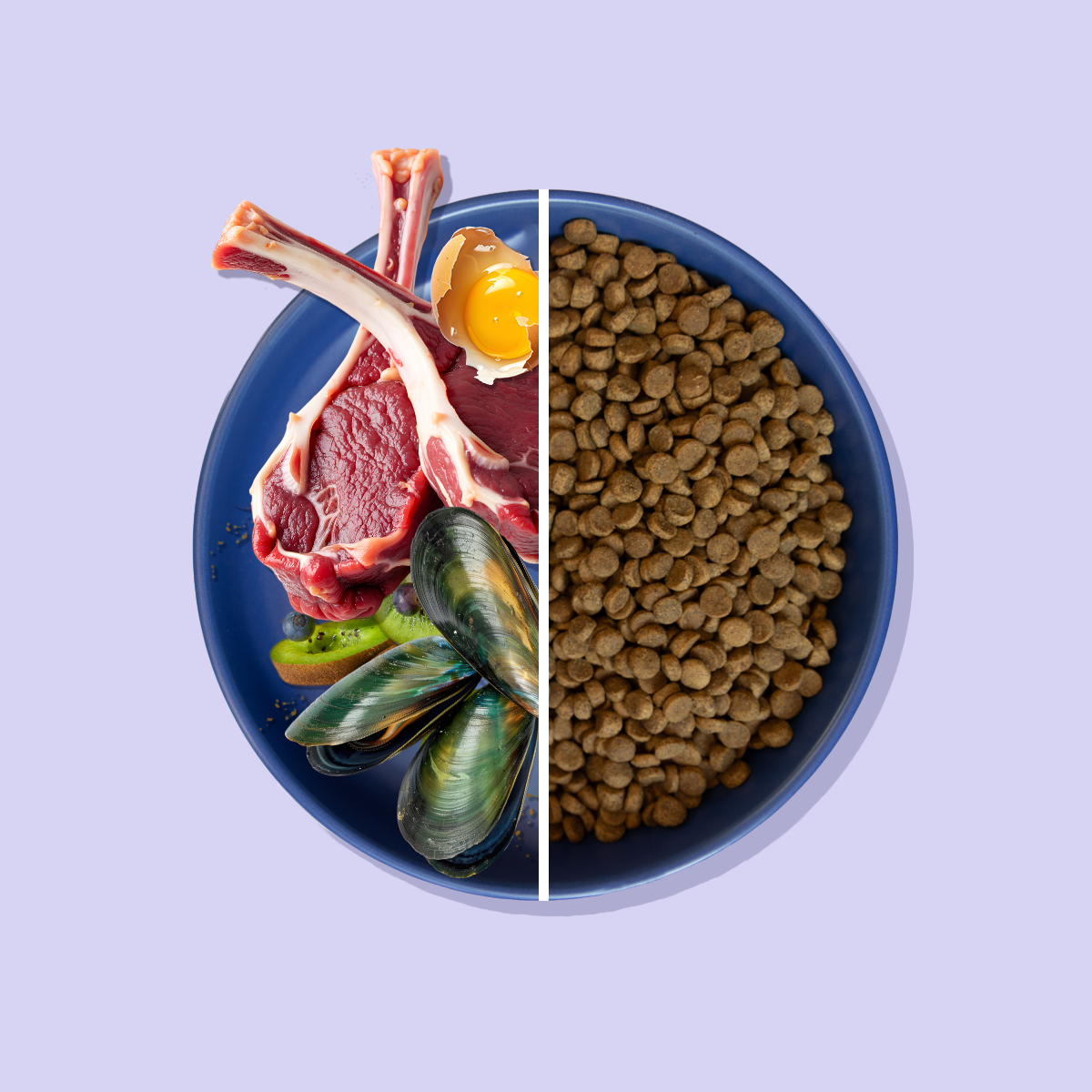
At that transition point, the things that make Happy Hour relevant for a large adult dog: named single-source NZ protein for digestibility, green-lipped mussel for joint health (particularly relevant for large breeds that put significant load through joints throughout their lives), added prebiotics, moderate fat content, and no glycerines or unnecessary additives.
If you've got a large breed puppy on an appropriate puppy formula and you're thinking about what comes next, Happy Hour is worth considering for that adult transition. There's a 30-day money-back guarantee. Send it back if it doesn't suit.
If your large breed puppy has any growth concerns or health issues, talk to your vet before changing their diet.