Getting a puppy is exciting. The food decision, on the other hand, can feel overwhelming. Walk down any pet store aisle in New Zealand and there are dozens of options all claiming to be the best. Here's a clear-headed breakdown of what puppies actually need nutritionally, what to look for on the label, and where most budget options fall short.
Key Takeaways
- Puppies need food labelled for "growth" or "all life stages" to ensure correct nutrition
- DHA from fish oil supports brain development during the critical first year
- Large breed puppies have specific calcium needs and should use a large-breed puppy formula
- The calcium-to-phosphorus ratio matters more for puppies than for adult dogs
- Most supermarket puppy foods meet minimum standards but use cheaper ingredients than premium options
Why Puppy Nutrition Is Different from Adult Dog Nutrition
A puppy isn't just a small adult dog. They're growing at a rate that requires specific nutritional support, and getting this wrong in the early months can have lasting effects on bone structure, muscle development, brain function, and immune health.
The first 12 months (or longer for large breeds) are when the nutritional foundations are laid. This is not the place to cut corners.
Key Nutrients Puppies Need
DHA for brain and eye development
DHA is an omega-3 fatty acid that's critical for brain and eye development in the first months of life. Puppies who receive adequate DHA during development show measurably better trainability and cognitive function. Look for a food that lists fish oil or DHA as a specific ingredient. Not all puppy foods include it.
Calcium and phosphorus in the right ratio
Calcium and phosphorus work together to build strong bones and teeth. The ratio matters as much as the absolute amounts. Too much calcium is actually harmful in puppies, particularly large breed puppies, because excess calcium can accelerate bone growth and lead to skeletal problems. Look for an AAFCO-compliant food that specifies appropriate calcium levels for growth.
Quality protein for muscle development
Protein drives muscle growth. Puppies need more protein as a percentage of their diet than adult dogs, and the quality of that protein matters. A named whole meat or meat meal (lamb, chicken, salmon) is far more bioavailable than generic "meat by-products" or plant-based protein fillers.
Higher calorie density
Growing takes energy. Puppy formulas are more calorie-dense than adult formulas to fuel development without requiring huge meal volumes. This is why feeding adult food to puppies in normal portions often leaves them underfed.
Large Breed vs Small Breed Puppies: Not the Same
This distinction is important and often overlooked.
Small and medium breed puppies
Reach their adult size within 10-12 months. They need high calorie density, good protein, and appropriate calcium levels for rapid growth. Most quality puppy foods work well for this group.
Large and giant breed puppies
Great Danes, Rottweilers, German Shepherds, and similar breeds have a specific risk: if they grow too fast due to excess calories and calcium, they develop skeletal conditions including hip dysplasia and osteochondrosis. Large breed puppies specifically need a food formulated for large breed growth, with controlled calcium levels and a more moderate calorie density. This is not something to be casual about.
What to Look For on the Label
AAFCO "growth" or "all life stages" statement
This is the most important label check. A food labelled for "adult maintenance" only is not suitable for puppies. It hasn't been formulated or tested to meet the higher nutritional demands of growth. Look for "formulated to meet the nutritional levels established by AAFCO for growth" or "all life stages". If you don't see that statement on the label, don't use it for a puppy.
Named protein as the first ingredient
Chicken, lamb, salmon, or their meal equivalents should lead the ingredient list. Not "meat meal", not "poultry by-products". Named and specific.
DHA source
Fish oil, salmon oil, or DHA specifically called out. This matters for brain development and is a sign the manufacturer has thought about puppy-specific nutrition.
No excessive calcium claims
For large breed puppy owners especially, avoid foods that market themselves as "extra calcium for strong bones". More calcium is not better for puppies.
What to Avoid
- Adult-only formulas not approved for growth stages
- Grain-heavy formulas using wheat, corn, or soy as main carbohydrate sources
- Artificial colours, flavours, and chemical preservatives (BHA, BHT, ethoxyquin)
- Vague protein sources like "meat meal" or "animal by-products"
- Foods where the first ingredient is a grain rather than a protein
Why Most Supermarket Puppy Foods Fall Short
Budget puppy foods from supermarkets typically use cheap protein sources, high levels of grain fillers, artificial preservatives, and minimal quality controls. They often technically meet AAFCO minimums, but meeting minimums isn't the same as optimising for growth. You wouldn't feed a growing child the cheapest nutritionally-minimum food and call it done. The same logic applies.
New puppy owners in NZ are often surprised by how much better their puppy does on a quality food: better coat condition, more consistent energy levels, better stool quality, and less digestive upset.
When to Transition to Adult Food
This depends on breed size.
- Small breeds (under 10kg adult): transition at 9-12 months
- Medium breeds (10-25kg adult): transition at 12 months
- Large breeds (25-40kg adult): transition at 15-18 months
- Giant breeds (over 40kg adult): transition at 18-24 months
Transitioning too early means cutting off growth-stage nutrition before development is complete. Transitioning large breeds too late on a high-calorie puppy food risks excess weight gain once they've slowed down.
A Note on Happy Hour for Puppies
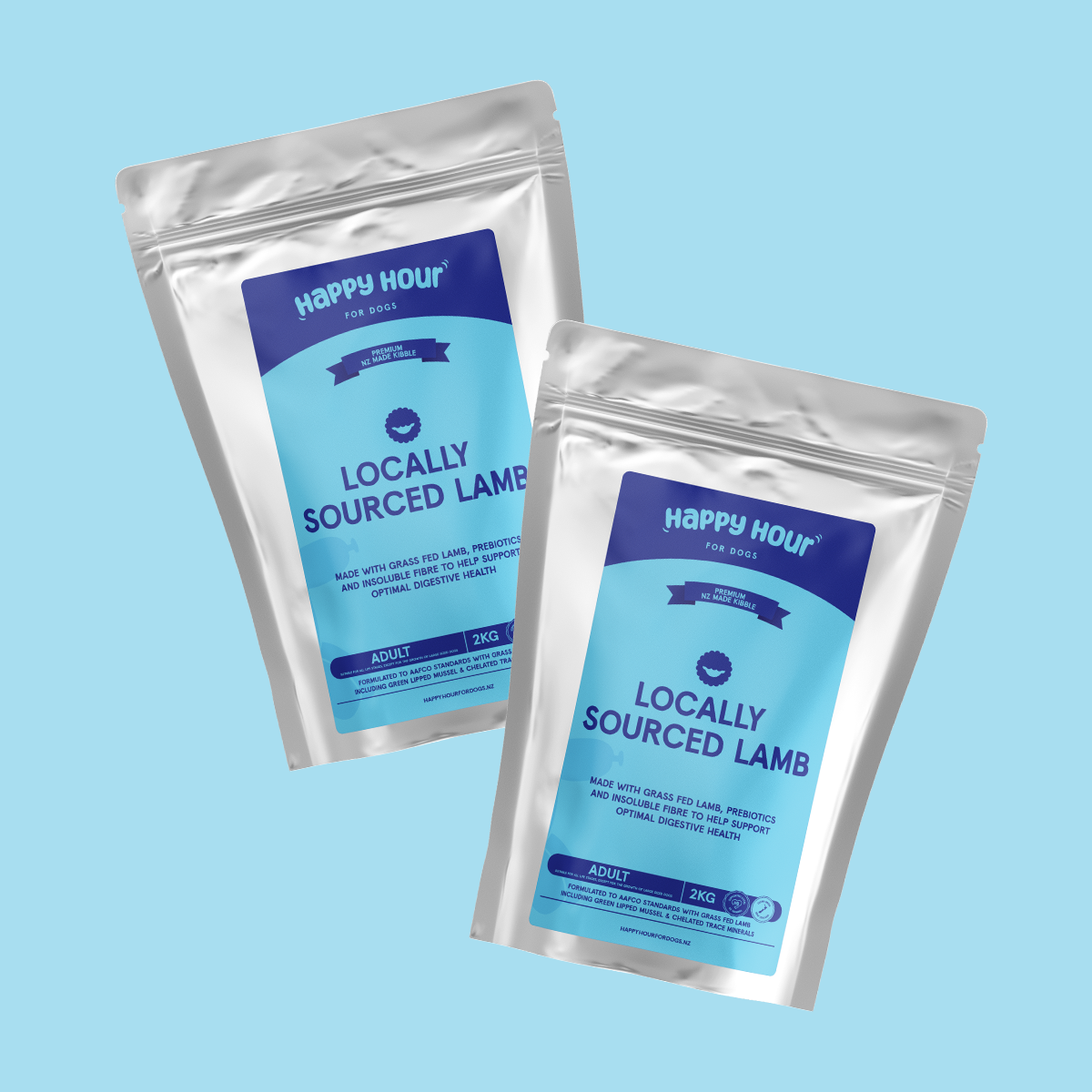
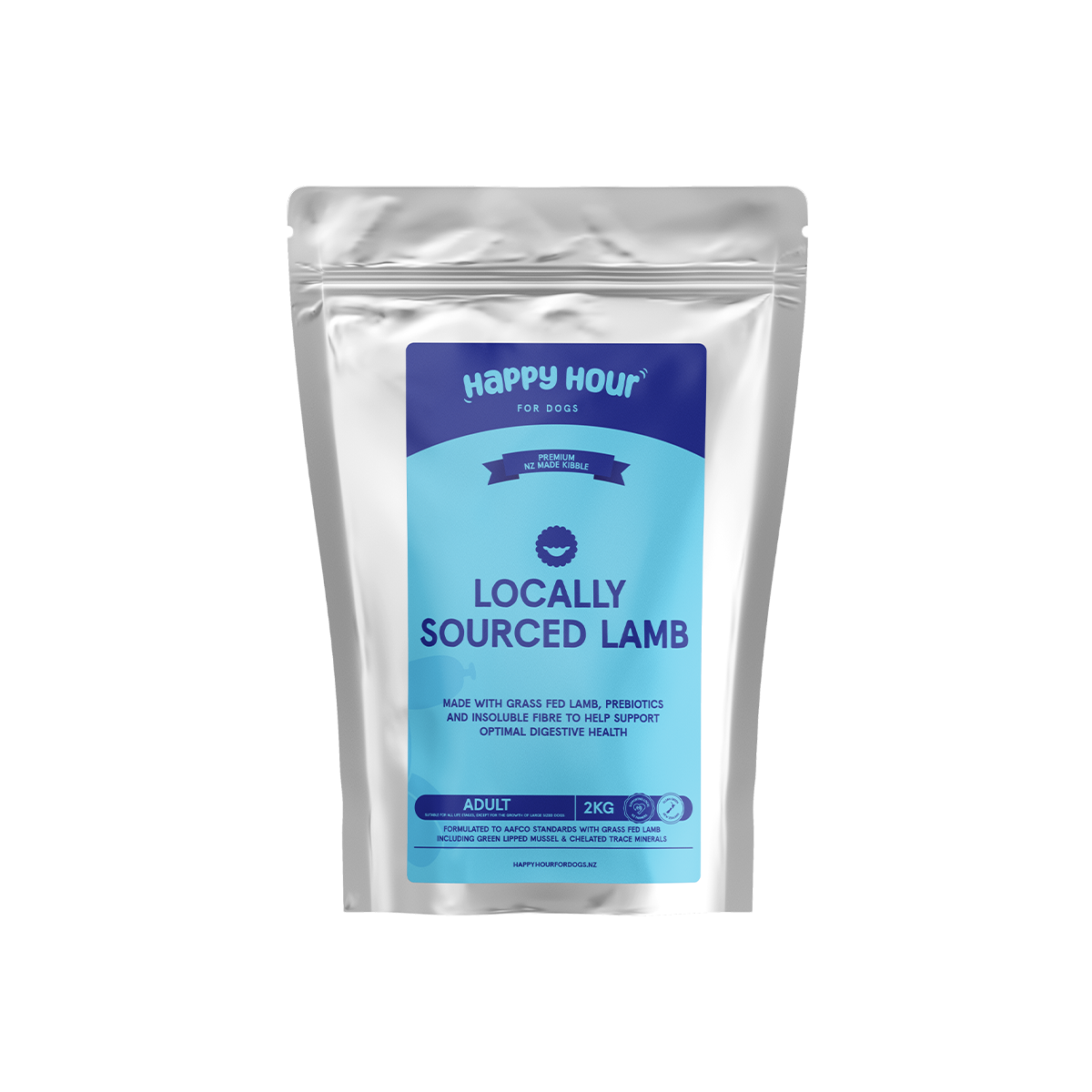
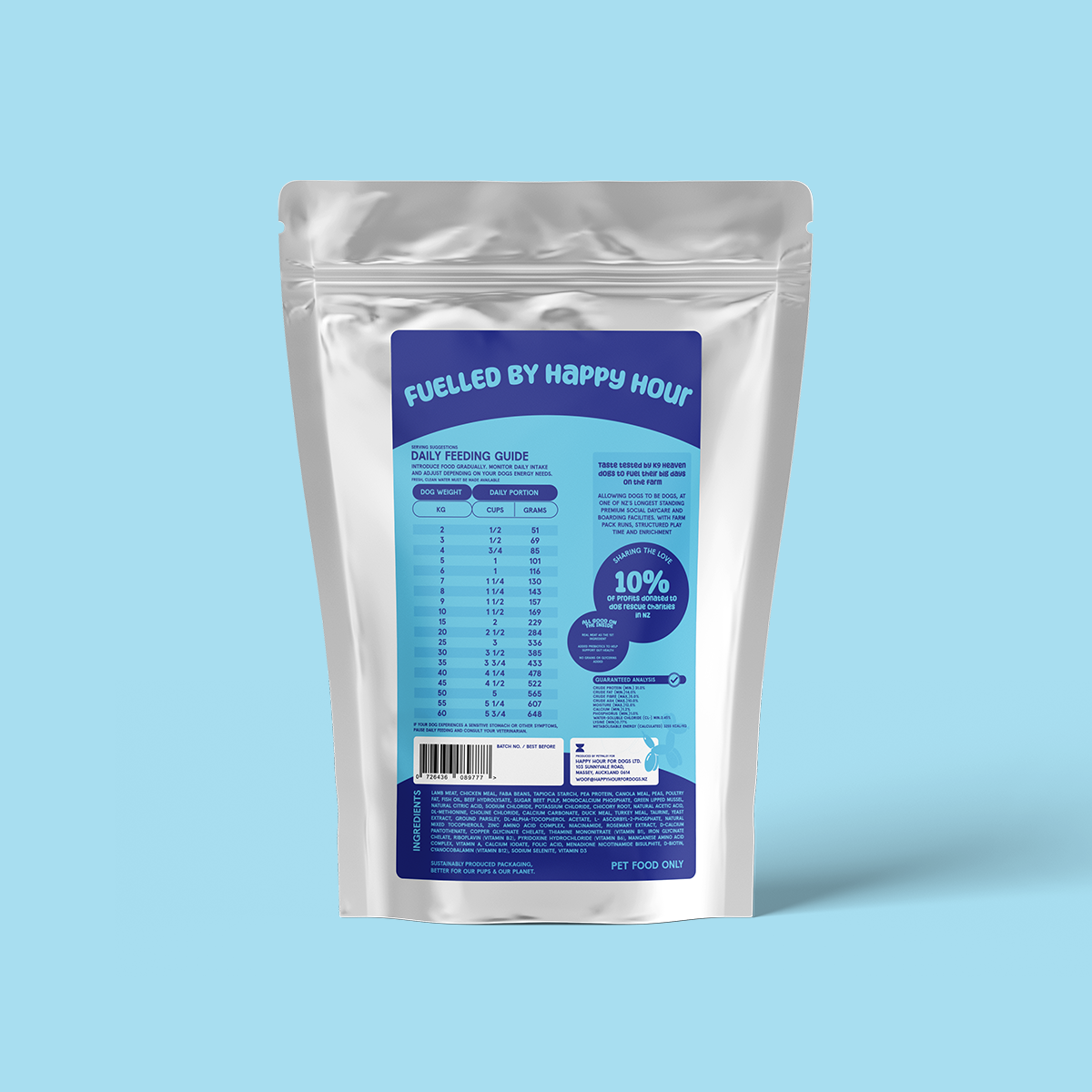
Happy Hour is AAFCO approved for all life stages, including growth. That means it meets the nutritional requirements for puppy development. It's not a puppy-specific formula, but it was tested and approved for this stage.
It works well for small and medium breed puppies. For large breed puppies specifically, the recommendation is different: large breed pups should use a food specifically formulated for large breed growth, with controlled calcium levels. Happy Hour isn't that. For a Labrador or German Shepherd puppy, seek out a large-breed-specific formula. For a Cavoodle or Border Collie pup, Happy Hour is a solid option that meets the nutritional brief.
It's worth being upfront about that distinction rather than claiming it's suitable for every puppy regardless of breed.
The Bottom Line
Puppies need quality protein, the right calcium balance, DHA for brain development, and enough calories for growth. Check the AAFCO statement first. Look for named proteins. Avoid grain-heavy formulas and artificial additives. And know the large breed vs small breed distinction before you buy.
The first year sets the foundation. It's worth doing right.