

Safe weight loss for dogs is slower than most owners expect, and that's actually a good thing. The target is 1-2% of body weight per week. For a 20kg dog, that's 200-400 grams. It can take three to five months to reach a healthy weight, and rushing it risks more harm than the extra weight itself. Here's what realistic progress actually looks like, what to track along the way, and what to do when things seem to stall.
Key Takeaways
- Safe weight loss is 1-2% of body weight per week, not faster
- For a 20kg dog, that's 200-400g per week, or roughly 1-2kg per month
- Body condition score is more useful than the scale alone for tracking progress
- Plateaus are normal and usually mean it's time to reassess portions or treat intake
- Most dogs show visible improvement within 8-12 weeks on the right food and portions
- Faster weight loss risks muscle loss and can stress the liver
Why Safe Weight Loss Is Slow
There's a reason vets recommend 1-2% per week rather than anything more aggressive. Rapid weight loss in dogs, just like in humans, doesn't just burn fat. It burns muscle too. Lean muscle mass is critical for mobility, energy, and long-term metabolic health. A dog that loses weight too quickly can end up lighter but physically weaker, with less muscle to carry them through their later years.
For significantly overweight dogs, rapid calorie restriction can also put strain on the liver. The liver plays a key role in fat metabolism, and when a large amount of fat is mobilised too quickly, it can overwhelm normal liver function. This is more of a concern in cats than dogs, but it's a real consideration for dogs that are very obese or already have health issues.
The other practical reason to go slow: rapid restriction makes dogs miserable. A dog that's drastically underfed is anxious, food-obsessed, and often more difficult to live with. Gradual reduction, combined with food that keeps them genuinely satiated, is easier to maintain over the months that proper weight loss takes.
What the Numbers Actually Look Like
Let's make the safe rate concrete, because the percentages don't always translate intuitively into day-to-day reality.
A 20kg dog at 1% per week loses 200g per week. That's roughly 800g per month, or just under 1kg. At 2% per week, they'd lose 400g per week and around 1.6kg per month.
If that same 20kg dog needs to lose 4kg to reach a healthy weight, you're looking at two to four months minimum at a safe rate. It might feel frustratingly slow at the start, especially when you're being careful with portions and your dog still looks the same.
A smaller dog has smaller absolute numbers. A 10kg dog losing 1% per week is losing just 100g. That's hard to even see on a home scale week to week, which is one reason the scale isn't the only tool worth using.
What to Track (Not Just the Scale)
The scale gives you a number. Body condition score tells you whether that number represents a healthy body.
The rib test. Run your hands along your dog's ribcage. At a healthy weight, you should feel each rib clearly without having to press through a layer of fat. As weight comes off, this gets easier. The rib test is often the first place owners notice genuine progress, before the scale has moved significantly.
Waist definition. Looking down at your dog from above, a healthy weight dog has a visible narrowing behind the ribcage. A dog that's losing weight will develop more definition here as the fat around the midsection reduces.
Belly tuck. From the side, the belly should draw slightly upward behind the ribcage at a healthy weight. As a dog loses weight, this tuck becomes more visible.
Energy and movement. Many owners notice their dog becomes more willing to exercise as the weight comes off, sometimes weeks before the scale shows a meaningful change. A dog that used to run out of steam on short walks starts lasting longer. They get up from rest more easily. They play more readily. These behavioural changes are a meaningful indicator of progress.
Weigh monthly rather than weekly. Weekly weighing on a home scale can be discouraging because the natural fluctuations in water weight and gut contents can mask real fat loss. Monthly weighing gives you a cleaner trend line and keeps you from over-adjusting based on day-to-day noise.
For a complete overview of body condition scoring: My Dog Is Overweight: How to Help Them Lose Weight Safely
Why Faster Isn't Better
It's tempting to cut portions more aggressively to speed things up, especially when you're impatient to see results. But the problems with aggressive restriction are real.
Muscle loss. Dogs losing weight faster than 2% per week are likely losing muscle alongside fat. This isn't visible the way fat loss is, but it affects mobility, strength, and long-term health.
Nutritional gaps. Steep calorie cuts can mean a dog isn't getting adequate vitamins and minerals, particularly if the food quality isn't high. A better approach is high-quality, nutrient-dense food at a moderate reduction rather than poor-quality food at deep restriction.
Rebound. Dogs that lose weight rapidly on aggressive restriction often regain it quickly when the restriction lifts. The slow approach builds new habits and appetite baselines that stick.
Unhappy dog, stressed owner. A significantly underfed dog is vocal, persistent, and hard to live with. Weight management works better as a sustainable shift than a crash program.
Plateaus: What to Do When Progress Stalls
Most dogs will hit a plateau at some point. You've been careful with portions, progress has been solid, and then suddenly the scale stops moving for two or three weeks. This is normal.
The most common reasons:
Treat creep. What started as strict treat accounting has loosened slightly. A few extra treats per day across several weeks adds up. Go back to basics and tighten up the tracking.
Portion measurement drift. The precise weighing from the first few weeks has shifted to a rougher estimate. Pull out the scale again and check whether the portion that goes in the bowl matches the target.
Metabolic adaptation. As dogs lose weight, they need fewer calories to maintain their new, lighter body. The portion that was a reduction at 20kg might be close to maintenance at 18kg. If your dog has lost meaningful weight and progress has stalled, it may be time to reduce slightly again.
Increased treats from other household members. Someone else in the house has been a bit more generous. A conversation and a refresh of the household treat rules often fixes this quickly.
If you've genuinely tightened everything up and there's still no movement after four to six weeks, a vet check is worthwhile. Thyroid issues and other metabolic conditions can slow weight loss to a near standstill despite good management.
The Role of Food Quality During Weight Loss
This matters more than most people think. A low-fibre, low-protein food makes weight loss harder in two ways: the dog is hungrier (making management more stressful), and the weight they lose is more likely to include muscle alongside fat.
During weight loss, high protein is essential for preserving lean muscle. High fibre keeps your dog fuller for longer, making the reduced portions more bearable for everyone. Lower fat naturally reduces calorie density, making it easier to hit a meaningful reduction without cutting volume so dramatically that your dog is miserable.
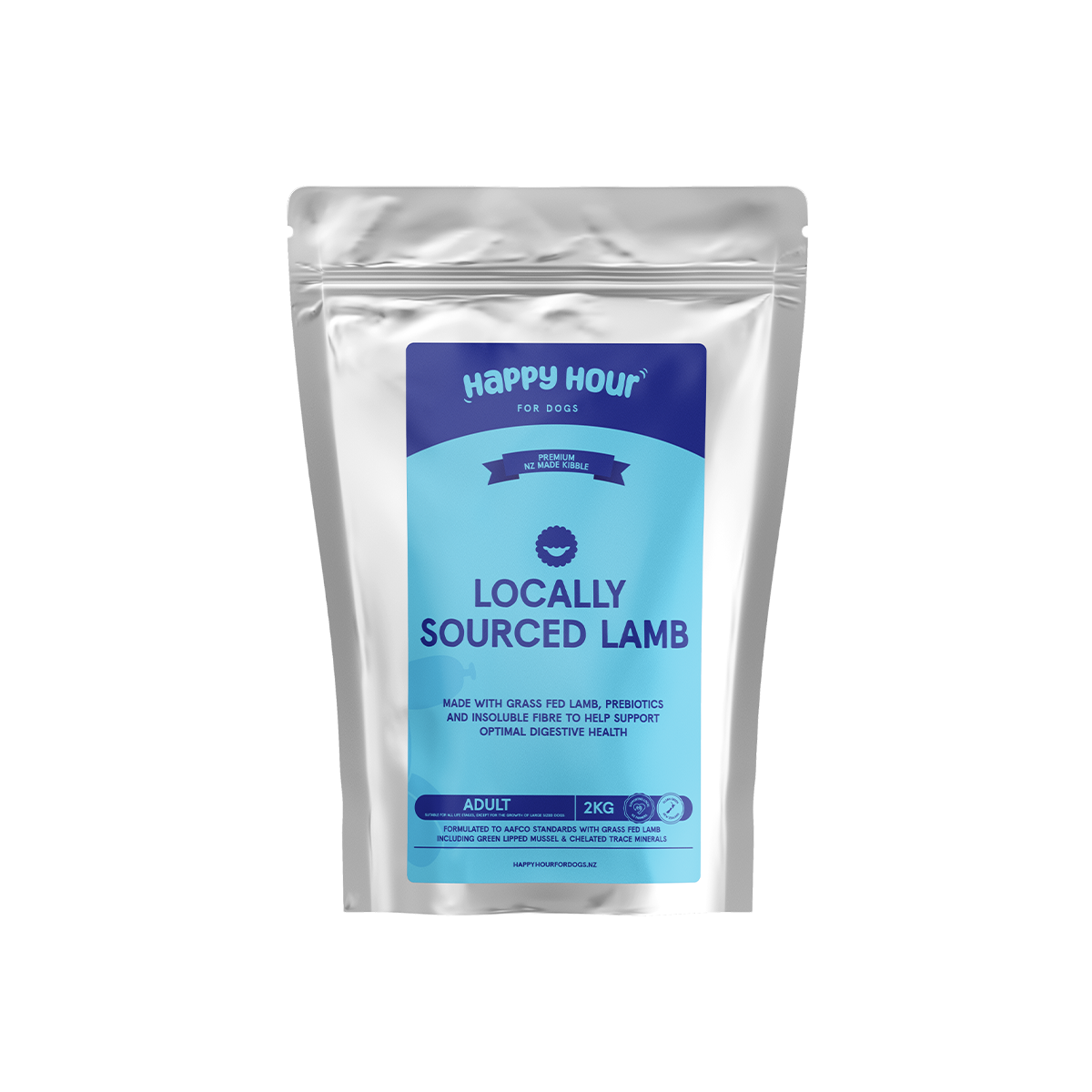
Happy Hour is a NZ-made, grain-free kibble built around grass-fed lamb, with a high-fibre formula designed to support good digestion and sustained fullness. It's not specifically a "light" or "diet" food, but its ingredient profile is well suited to dogs managing their weight. Dogs on Happy Hour tend to be more settled between meals, which makes portion control easier to maintain over the months a proper weight loss programme takes.
If your dog has had pancreatitis or is at elevated risk, keeping their weight down is particularly important. Obesity is a known risk factor for pancreatic episodes. More on that connection: Pancreatitis in Dogs
For guidance on getting portions right during weight loss: How Much Should I Feed My Dog?
When to Involve the Vet
Most overweight dogs don't need ongoing veterinary supervision to lose weight safely. But there are situations where a vet is the right call.
Before you start, if your dog is significantly obese, has mobility issues from the weight, or has any existing health conditions. A baseline check helps rule out medical causes and gives you a clear target weight.
If there's no progress after eight to twelve weeks of careful management. No movement at all, despite consistent effort, often points to an underlying issue worth investigating.
If weight loss is happening too fast. If your dog is losing more than 2% per week, increase their portion slightly. Faster isn't better, and the risks are real.
If your dog seems unwell. Lethargy, increased thirst, vomiting, or any unusual symptoms alongside weight loss should prompt a vet check, not a wait-and-see approach.
For very overweight dogs. A dog that's significantly obese may benefit from a structured programme with specific calorie targets, regular weigh-ins, and professional oversight. Your vet can refer you to a veterinary nutritionist if needed.
Frequently Asked Questions
How long will it realistically take my dog to lose weight?
At the safe rate of 1-2% of body weight per week, a dog that needs to lose 3-4kg will take roughly two to four months. The exact timeline depends on consistency, food quality, and whether treats are properly accounted for. Most dogs start to show visible changes in body condition within eight to twelve weeks of being on the right programme.
Why hasn't my dog lost any weight even though I'm feeding less?
The most common hidden culprits are treats (including dental chews and table scraps), measurement drift in the food portion, or multiple people in the household feeding the dog. Go back to weighing portions precisely, account for every treat, and check whether everyone in the house is on the same page.
Is it okay to exercise my dog more to speed up weight loss?
Exercise supports weight loss and has real health benefits, but it won't outrun a poor diet. A 30-minute walk burns far fewer calories than most owners expect. Focus on getting the food and portions right first. As your dog loses weight and gains energy, they'll naturally become more enthusiastic about exercise, which helps maintain the loss long term.
What's a good target weight for my dog?
Your vet can give you a specific target based on breed standards and your individual dog's build. A rough guide is that your dog should be a 4-5 on the body condition scale: ribs easily felt without pressing, visible waist from above, belly tuck visible from the side. That's the feel to aim for, not just a number on the scale.
My dog has lost some weight but seems to have stalled. What now?
Reassess portion sizes using a scale, recheck treat intake across all household members, and consider whether the current food portion needs a small additional reduction. As dogs get lighter, their calorie needs decrease, so a portion that was a reduction at the start might be maintenance now. A small downward adjustment of 5-10% often gets things moving again.
