Most dogs in NZ are being overfed, and most of their owners have no idea. The bag guide says one thing, the scoop delivers another, and the treats don't get counted at all. Getting portion sizes right is one of the most effective things you can do for your dog's weight and long-term health. And it's easier than it sounds once you know what to actually look for.
Key Takeaways
- Feeding guides on dog food bags are starting points, not rules, and they're often generous
- Treats should come out of the daily food allowance, not be added on top
- A kitchen scale is more accurate than a scoop for portion control
- Two meals a day is better than one for keeping hunger manageable
- Adjust portions based on body condition score, not just body weight
- If your dog needs to lose weight, start with a 10-20% reduction and reassess in four weeks
Why Most NZ Owners Overfeed Without Knowing It
There are a few reasons this happens, and almost none of them are about a lack of care.
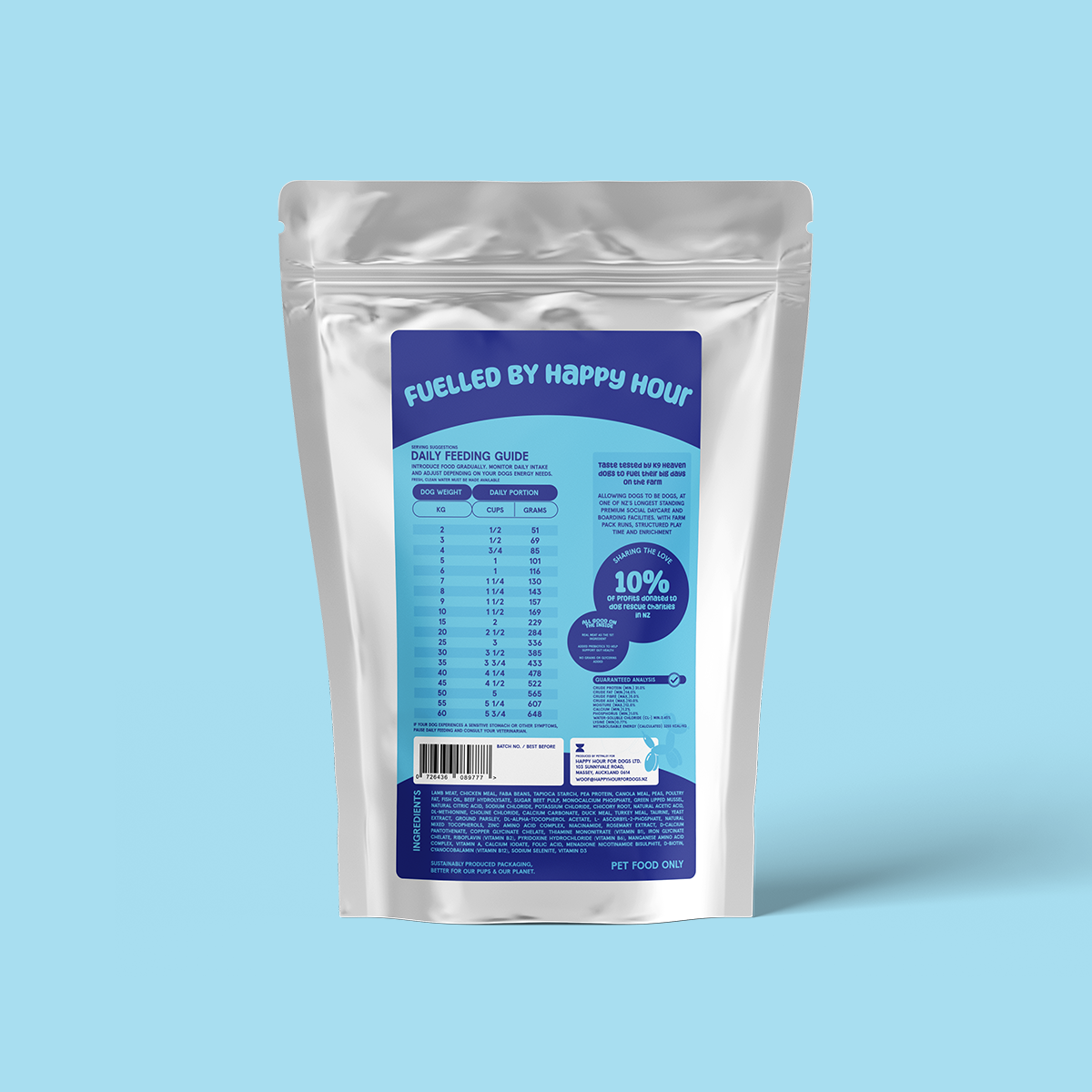
The bag guide is designed to be generous. Feeding guides are calculated to cover the higher end of what dogs at a given weight might need. They factor in active, intact dogs with faster metabolisms. If your dog is desexed, older, or mostly a couch potato, they almost certainly need less than the guide suggests. Using the bag amount as gospel is a reliable way to feed too much.
Treats don't get counted. This is the big one. A training session with a handful of treats, a dental chew before bed, a bit of toast off the bench. None of it gets factored in, but all of it adds calories. Treats can account for 20-30% of a dog's daily calories when you actually add them up. Most owners are genuinely shocked when they do the maths.
Multiple feeders in one household. When two or more people are responsible for feeding, miscommunication happens. Both people top up the bowl. One feeds breakfast, one feeds dinner, and both give treats throughout the day. Nobody is trying to overfeed, but the result is the same.
Scooping instead of measuring. A standard measuring cup or scoop doesn't give you exact amounts. Depending on whether the food is packed or level, how the scoop is angled, or how much air is in the bag, you can easily deliver 10-20% more than intended. That adds up fast over weeks and months.
How to Calculate the Right Daily Amount
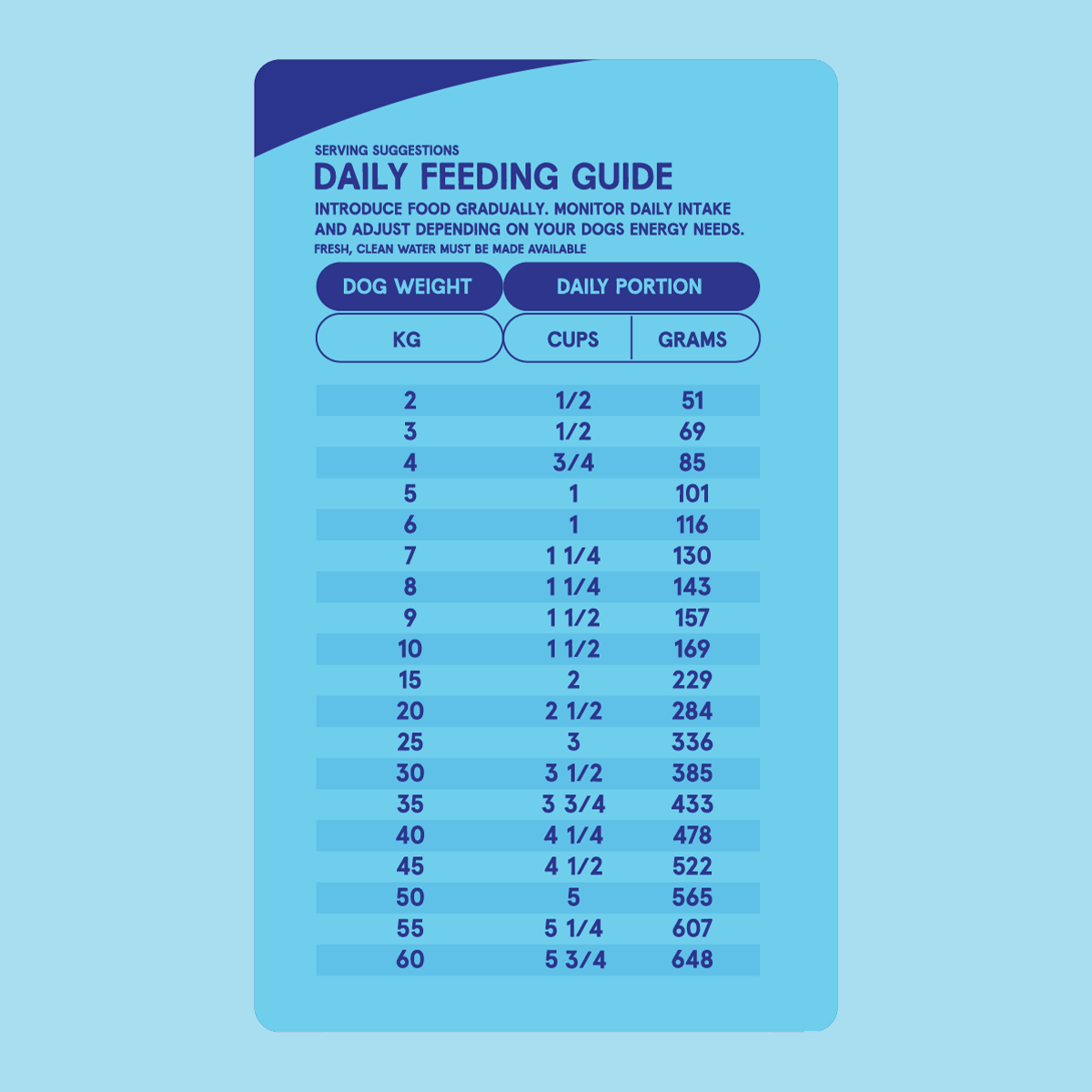
Start with the feeding guide on your dog's food as a baseline. Find the weight range that matches your dog and use the lower end of the recommended amount, especially if their activity level is moderate rather than high.
Then account for body condition. If your dog is at a healthy weight, the guide figure is a reasonable starting point. If they're overweight, reduce by 10-20% from that number. If they're underweight, increase slightly.
Then subtract treats. Whatever your dog gets in treats each day should come out of their main meal allowance, not sit on top of it. If you don't know the calorie content of the treats you use, check the packaging. Most commercial treat bags list calories per piece.
Finally, weigh the food. Use a kitchen scale and weigh portions in grams. It takes 10 seconds and gives you an actual number rather than an estimate. It's especially useful in multi-person households, where different people might be filling the bowl to different levels.
The Body Condition Adjustment Method
The scale tells you your dog's weight, but it doesn't tell you whether that weight is healthy. Body condition scoring gives you a more accurate picture.
The rib test. Run your hands along your dog's ribcage. You should feel each rib clearly without pressing hard. If you have to dig through a layer of fat to find them, your dog is carrying extra weight. If the ribs jut out visibly with no padding, they're too lean.
The waist check. Look at your dog from above. A healthy dog has a visible narrowing behind the ribcage. A dog that's a straight rectangle from shoulder to hip, with no waist definition at all, is almost always overweight.
The belly line. From the side, the belly should tuck slightly upward behind the ribcage. A belly that hangs level or sags downward is a sign of excess weight.
If your dog shows signs of being overweight in these checks, reduce their daily portion by 10-20% and reassess in four weeks. Don't make dramatic cuts. Gradual reduction works better and keeps your dog from feeling deprived.
For a complete guide to reading body condition and what to do about it: My Dog Is Overweight: How to Help Them Lose Weight Safely
Feeding Twice Daily vs Once
Most dogs do better on two smaller meals a day rather than one large one. The total daily amount stays exactly the same. You're just splitting it across morning and evening.
A dog fed once a day spends a long stretch without food. For food-focused breeds or naturally anxious dogs, this can mean they become obsessive around feeding time and beg heavily throughout the day. Two meals spreads that hunger more evenly.
It also gives you two natural check-in points to notice changes in appetite. A dog that suddenly loses interest in a meal, or suddenly becomes ravenous when they weren't before, is often telling you something. You'll notice it much faster with structured twice-daily feeding than with a free-fill bowl.
For dogs that eat too quickly, splitting meals also helps. A smaller serving is less overwhelming and a bit easier to pace.
Measuring vs Scooping: Why the Difference Matters
If you're actively trying to manage your dog's weight, this is worth paying attention to.
A "cup" is not a precise measurement. Packed vs loosely filled can vary by 30% or more depending on the kibble shape and density. Over a month, that variation compounds into a meaningful difference in total intake.
A kitchen scale eliminates the guesswork completely. Weigh the portion in grams, put it in the bowl, done. You know exactly what you're feeding. Once you have the right number, you can mark it on the scale so anyone in the household can hit the same target every time.
This matters most when you're making deliberate reductions. If you're trying to cut by 15%, you need to know the cut is actually happening. Eyeballing a slightly smaller scoop isn't going to get you there reliably.