Safe weight loss for dogs is slower than most owners expect, and that's actually a good thing. The target is 1-2% of body weight per week. For a 20kg dog, that's 200-400 grams. It can take three to five months to reach a healthy weight, and rushing it risks more harm than the extra weight itself. Here's what realistic progress actually looks like, what to track along the way, and what to do when things seem to stall.
Key Takeaways
- Safe weight loss is 1-2% of body weight per week, not faster
- For a 20kg dog, that's 200-400g per week, or roughly 1-2kg per month
- Body condition score is more useful than the scale alone for tracking progress
- Plateaus are normal and usually mean it's time to reassess portions or treat intake
- Most dogs show visible improvement within 8-12 weeks on the right food and portions
- Faster weight loss risks muscle loss and can stress the liver
Why Safe Weight Loss Is Slow
There's a reason vets recommend 1-2% per week rather than anything more aggressive. Rapid weight loss in dogs, just like in humans, doesn't just burn fat. It burns muscle too. Lean muscle mass is critical for mobility, energy, and long-term metabolic health. A dog that loses weight too quickly can end up lighter but physically weaker, with less muscle to carry them through their later years.
For significantly overweight dogs, rapid calorie restriction can also put strain on the liver. The liver plays a key role in fat metabolism, and when a large amount of fat is mobilised too quickly, it can overwhelm normal liver function. This is more of a concern in cats than dogs, but it's a real consideration for dogs that are very obese or already have health issues.
The other practical reason to go slow: rapid restriction makes dogs miserable. A dog that's drastically underfed is anxious, food-obsessed, and often more difficult to live with. Gradual reduction, combined with food that keeps them genuinely satiated, is easier to maintain over the months that proper weight loss takes.
Think of it the way you'd think of any lasting change: the goal isn't the fastest possible result, it's the result that holds. A Labrador that drops from 38kg to a healthy 32kg over four months and stays there has done far better than one crash-dieted down in six weeks and back up by Christmas. The slow version rebuilds habits, the fast version just resets the clock.
What the Numbers Actually Look Like
Let's make the safe rate concrete, because the percentages don't always translate intuitively into day-to-day reality.
A 20kg dog at 1% per week loses 200g per week. That's roughly 800g per month, or just under 1kg. At 2% per week, they'd lose 400g per week and around 1.6kg per month. Neither of those is dramatic on a single weigh-in, which is exactly why owners get discouraged early even when everything is working. To put 200g in perspective, it's about the weight of a small apple. You will not see that come off a 20kg dog by eye in a single week, and you are not meant to.
If that same 20kg dog needs to lose 4kg to reach a healthy weight, you're looking at two to four months minimum at a safe rate. It might feel frustratingly slow at the start, especially when you're being careful with portions and your dog still looks the same. That gap between effort and visible result in the first few weeks is normal, and it is not a sign the plan is failing.
Here's how that plays out month by month for a 20kg dog aiming to reach 16kg at around 1.5% per week. Month one: down to roughly 18.8kg, and you'll feel the ribs more easily before you see much on the scale. Month two: around 17.6kg, with a waist starting to appear from above. Month three: about 16.5kg, noticeably more energy on walks. Month four: at or near the 16kg target, with a clear tuck and defined waist. The early weeks always feel the slowest, and that's exactly when most owners give up too soon.
A smaller dog has smaller absolute numbers. A 10kg dog losing 1% per week is losing just 100g. That's hard to even see on a home scale week to week, which is one reason the scale isn't the only tool worth using. For small breeds, the bathroom-scale trick works well: weigh yourself, then weigh yourself holding the dog, and take the difference. Do it the same way each time, same scale, same time of day, so the comparison stays honest. A cheap digital bathroom scale from The Warehouse or Kmart is accurate enough for this once you're subtracting two readings, and a firm floor gives a steadier number than carpet.
The reverse holds for big breeds. A 45kg Mastiff or Saint Bernard losing 1.5% a week is shedding close to 700g, which can look like fast progress on paper but is still perfectly safe given the body mass involved. The percentage is what matters, not the raw grams, so anchor every target to your own dog's starting weight rather than a number you read for someone else's dog. For a fuller picture of what a healthy weight looks like for your breed, see My Dog Is Overweight: How to Help Them Lose Weight Safely.
What to Track (Not Just the Scale)
The scale gives you a number. Body condition score tells you whether that number represents a healthy body. The two together are far more useful than either alone, and the body condition checks below often move before the scale does.
The rib test. Run your hands along your dog's ribcage. At a healthy weight, you should feel each rib clearly without having to press through a layer of fat. As weight comes off, this gets easier. The rib test is often the first place owners notice genuine progress, before the scale has moved significantly. A useful reference: at a healthy weight, the ribs feel a bit like the back of your hand, bones present under a thin cover, not like the padded back of your palm.
Waist definition. Looking down at your dog from above, a healthy weight dog has a visible narrowing behind the ribcage. A dog that's losing weight will develop more definition here as the fat around the midsection reduces. On heavy-coated breeds like a Golden Retriever or a Huntaway, wet the coat down flat or feel through it rather than relying on what you can see, because a thick coat hides real progress.
Belly tuck. From the side, the belly should draw slightly upward behind the ribcage at a healthy weight. As a dog loses weight, this tuck becomes more visible. A flat or sagging underline that starts to lift is a good early sign the fat is coming off.
Energy and movement. Many owners notice their dog becomes more willing to exercise as the weight comes off, sometimes weeks before the scale shows a meaningful change. A dog that used to run out of steam on short walks starts lasting longer. They get up from rest more easily. They play more readily. These behavioural changes are a meaningful indicator of progress, and worth noting down alongside the numbers.
Take photos. Shoot the same three angles once a month: from above, from the side, and a straight-on rib feel. Change that's invisible day to day becomes obvious across a month of photos, and it's genuinely motivating when the scale is being stubborn. Keep them in one album on your phone so the before-and-after is always a swipe away.
Weigh monthly rather than weekly. Weekly weighing on a home scale can be discouraging because the natural fluctuations in water weight and gut contents can mask real fat loss. Monthly weighing gives you a cleaner trend line and keeps you from over-adjusting based on day-to-day noise. Many NZ vet clinics will let you pop in and use their floor scales for free, which is more accurate than a home setup for larger dogs, and it doubles as a chance to ask the nurse whether the body condition is heading the right way.
Keep it simple and keep it consistent. A single note in your phone with the date, the weight, and a one-line comment on how the ribs feel is enough to see the trend over three or four months. The owners who succeed are almost always the ones who write it down, because memory quietly rounds everything in the direction of what you were hoping to see. If you want a benchmark for where your dog should land, the body condition scale in our overweight dogs guide is the reference most NZ vets use.
Why Faster Isn't Better
It's tempting to cut portions more aggressively to speed things up, especially when you're impatient to see results. But the problems with aggressive restriction are real, and they tend to undo the progress you were chasing. Every one of the shortcuts below trades a quick number on the scale for a worse outcome down the track.
Muscle loss. Dogs losing weight faster than 2% per week are likely losing muscle alongside fat. This isn't visible the way fat loss is, but it affects mobility, strength, and long-term health. For an older dog, that lost muscle is hard to rebuild, and it's the muscle that keeps them steady on their feet in their senior years.
Nutritional gaps. Steep calorie cuts can mean a dog isn't getting adequate vitamins and minerals, particularly if the food quality isn't high. A better approach is high-quality, nutrient-dense food at a moderate reduction rather than poor-quality food at deep restriction. Cutting the volume of a cheap food just concentrates the shortfall.
Rebound. Dogs that lose weight rapidly on aggressive restriction often regain it quickly when the restriction lifts. The slow approach builds new habits and appetite baselines that stick, so the lighter weight becomes the new normal rather than a temporary dip.
Unhappy dog, stressed owner. A significantly underfed dog is vocal, persistent, and hard to live with. They counter-surf, raid the cat's bowl, and turn every meal into a performance. Weight management works better as a sustainable shift than a crash program, and a hungry, stressed dog rarely stays on plan for the months that real progress takes.
How Exercise Fits the Timeline
Diet drives the weight off, but movement protects the muscle you want to keep and speeds up the day-to-day energy improvements owners notice first. The two work together: the food creates the calorie deficit, and gentle, consistent exercise makes sure more of what's lost is fat rather than lean tissue. You do not need a boot camp, you need a routine your dog can actually sustain while carrying extra weight.
Start where your dog is. A very overweight dog is carrying the equivalent of a loaded backpack on every joint, so long or fast walks early on do more harm than good. Two or three short, flat walks a day beat one long slog, and swimming or wading is ideal if you have access to it because the water takes the load off sore hips and knees. In much of New Zealand a quiet beach, estuary, or river edge over summer is perfect for this, and it keeps an unfit dog cool while they build stamina. Sniffing walks count too: letting your dog nose along a fence line for twenty minutes tires them mentally with almost no joint load, which is exactly what a stiff, heavy dog needs early on.
Build up gradually as the weight comes off and fitness returns. By month two or three, most dogs are ready for longer walks and a bit of play, and that rising willingness to move is itself one of the clearest signs the plan is working. A rough progression that works for most dogs: weeks one to four, keep it to short flat strolls and sniffing; weeks five to eight, add a little distance and a gentle hill; from month three, longer walks and short bursts of play as the dog leads the way. Let their enthusiasm set the pace rather than a fixed schedule.
Just keep an eye on the weather. Over a Kiwi summer, walk in the early morning or evening rather than the middle of the day, and take water, because an overweight dog overheats faster than a lean one. Hot footpaths and dark sand can also burn pads, so test the ground with the back of your hand first: if you can't hold it there for five seconds, it's too hot for their feet. In winter, a short warm-up amble before any brisk stretch helps protect joints that are already carrying extra load.
Plateaus: What to Do When Progress Stalls
Most dogs will hit a plateau at some point. You've been careful with portions, progress has been solid, and then suddenly the scale stops moving for two or three weeks. This is normal, and it's rarely a sign that anything is wrong. Work through the usual causes below before you panic or reach for a steeper cut.
Treat creep. What started as strict treat accounting has loosened slightly. A few extra treats per day across several weeks adds up. A single large dental chew can carry more calories than a small meal, and those calories almost never get counted. As a rule of thumb, treats should stay under 10% of your dog's daily calories, so on a weight-loss plan the everyday biscuits and chews are usually the first thing to trim. Go back to basics and tighten up the tracking.
Portion measurement drift. The precise weighing from the first few weeks has shifted to a rougher estimate. A heaped cup instead of a level one can be 20-30% more food without you noticing. Pull out the kitchen scale again and check whether the portion that goes in the bowl matches the target in grams, not cups.
Metabolic adaptation. As dogs lose weight, they need fewer calories to maintain their new, lighter body. The portion that was a reduction at 20kg might be close to maintenance at 18kg. If your dog has lost meaningful weight and progress has stalled, it may be time to reduce slightly again, usually by 5-10%.
Increased treats from other household members. Someone else in the house has been a bit more generous, or the kids have been slipping crusts under the table. A conversation and a refresh of the household treat rules often fixes this quickly. Sticking the daily food and treat allowance on the fridge keeps everyone honest.
If you've genuinely tightened everything up and there's still no movement after four to six weeks, a vet check is worthwhile. Thyroid issues and other metabolic conditions can slow weight loss to a near standstill despite good management, and hypothyroidism in particular is common enough in middle-aged dogs to be worth ruling out. It's a simple blood test, and if that's the cause, no amount of portion cutting will fix it on its own. Breeds like the Labrador, Golden Retriever, and Cocker Spaniel sit at the higher-risk end for hypothyroidism, so if you own one and the numbers won't budge, mention it to your vet directly.
The Role of Food Quality During Weight Loss
This matters more than most people think. A low-fibre, low-protein food makes weight loss harder in two ways: the dog is hungrier (making management more stressful), and the weight they lose is more likely to include muscle alongside fat. The quality of what goes in the bowl often decides whether the whole plan holds together over the months it takes.
During weight loss, high protein is essential for preserving lean muscle, which is exactly the tissue a calorie deficit tends to eat into first. High fibre keeps your dog fuller for longer, making the reduced portions more bearable for everyone. Lower fat naturally reduces calorie density, making it easier to hit a meaningful reduction without cutting volume so dramatically that your dog is miserable. Picture the difference: a dog on a cheap, low-protein food at a 20% cut spends the evening pacing and begging, while a dog on a dense, high-fibre food at the same cut settles after dinner. Same calorie reduction, completely different experience for both of you.
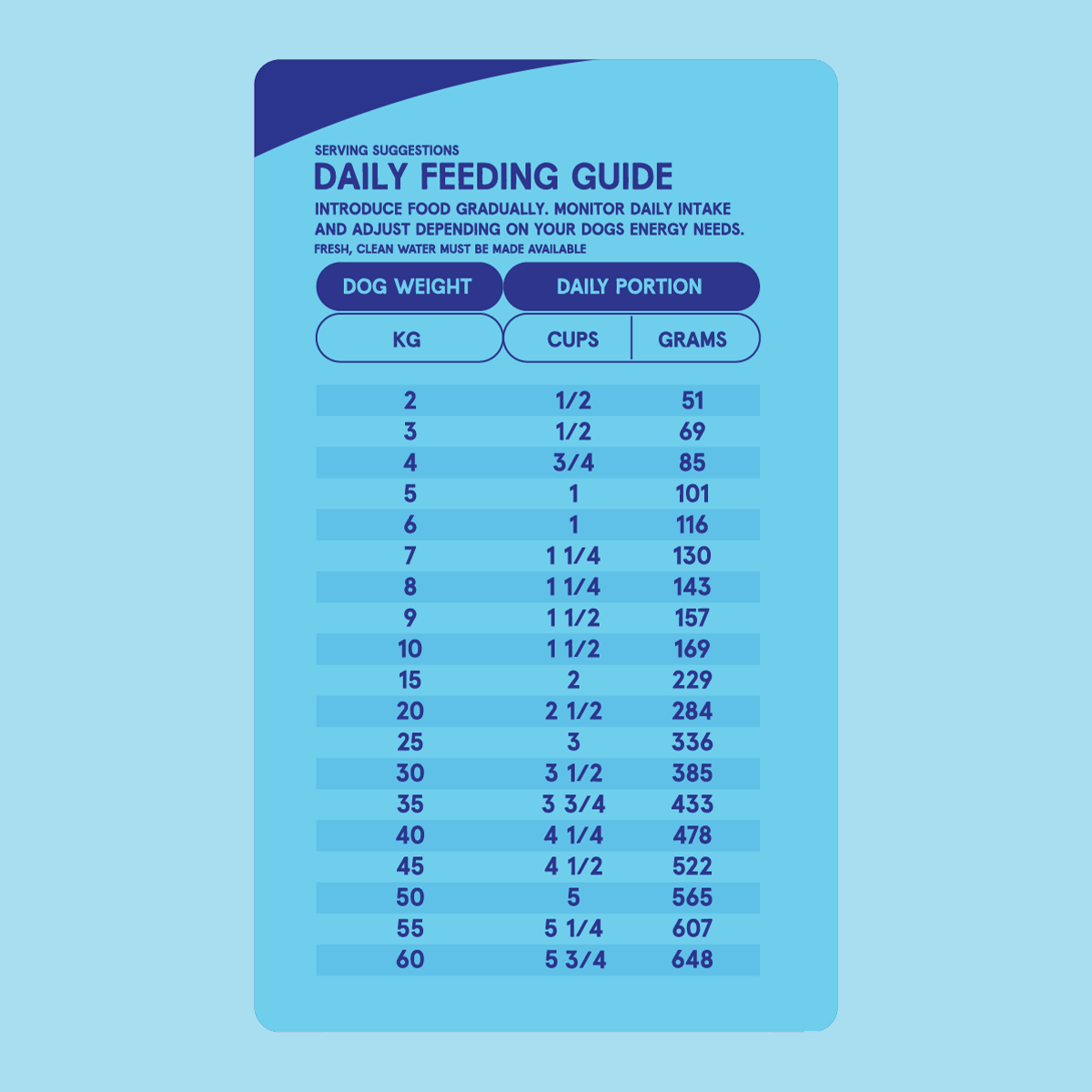
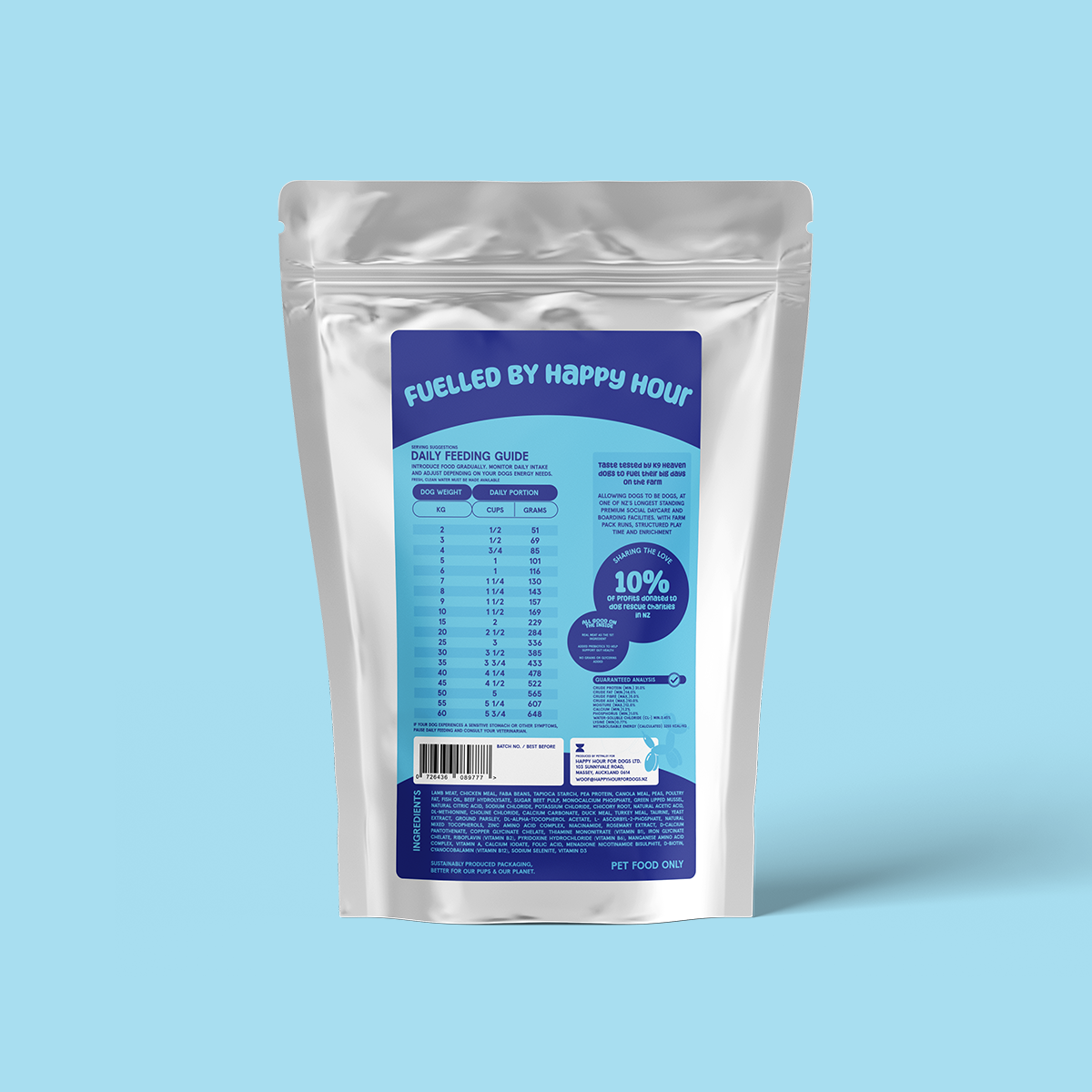
When you're comparing bags in the store, read the analysis rather than the marketing on the front. A food built around a named meat as the first ingredient, with protein well up in the listing and a decent fibre level, will do more for a dieting dog than a cheaper option padded out with grain fillers and labelled "light". The word "light" on a bag is not regulated the way owners assume, so two light foods can be worlds apart on actual calorie density. Check the feeding guide on the back too: if the recommended daily amount for your dog's target weight looks huge, the food is likely low in calories per gram because it's bulked with filler, not because it's doing anything clever. If your dog turns their nose up at a switch, our guide to fussy eaters covers how to make a new food more appealing without piling on calories.
There's also a simple trick that food quality makes possible: bulking the bowl. A dog eating a nutrient-dense, high-fibre kibble can have their portion padded out with steamed green beans, pumpkin, or grated courgette, all cheap and easy to find at any NZ supermarket. A handful of steamed green beans adds almost nothing to the calorie count but fills real space in the bowl. Plain cooked pumpkin and a spoon of grated carrot work the same way, and most dogs treat them as a bonus rather than a punishment. Skip the onions, and go easy on anything rich or fatty, since the point is to add bulk without adding calories. That only works when the base food is doing its job on protein and micronutrients, otherwise you're just adding filler to an already thin diet.
One caution on the switch itself: if you're moving to a higher-quality food as part of the weight plan, transition over seven to ten days rather than overnight, mixing increasing amounts of the new food in with the old. A sudden change on top of a portion cut is a common cause of loose stools, and it muddies your read on how the new food is actually working. For a fuller walk-through of portions and switching, see How Much Should I Feed My Dog?
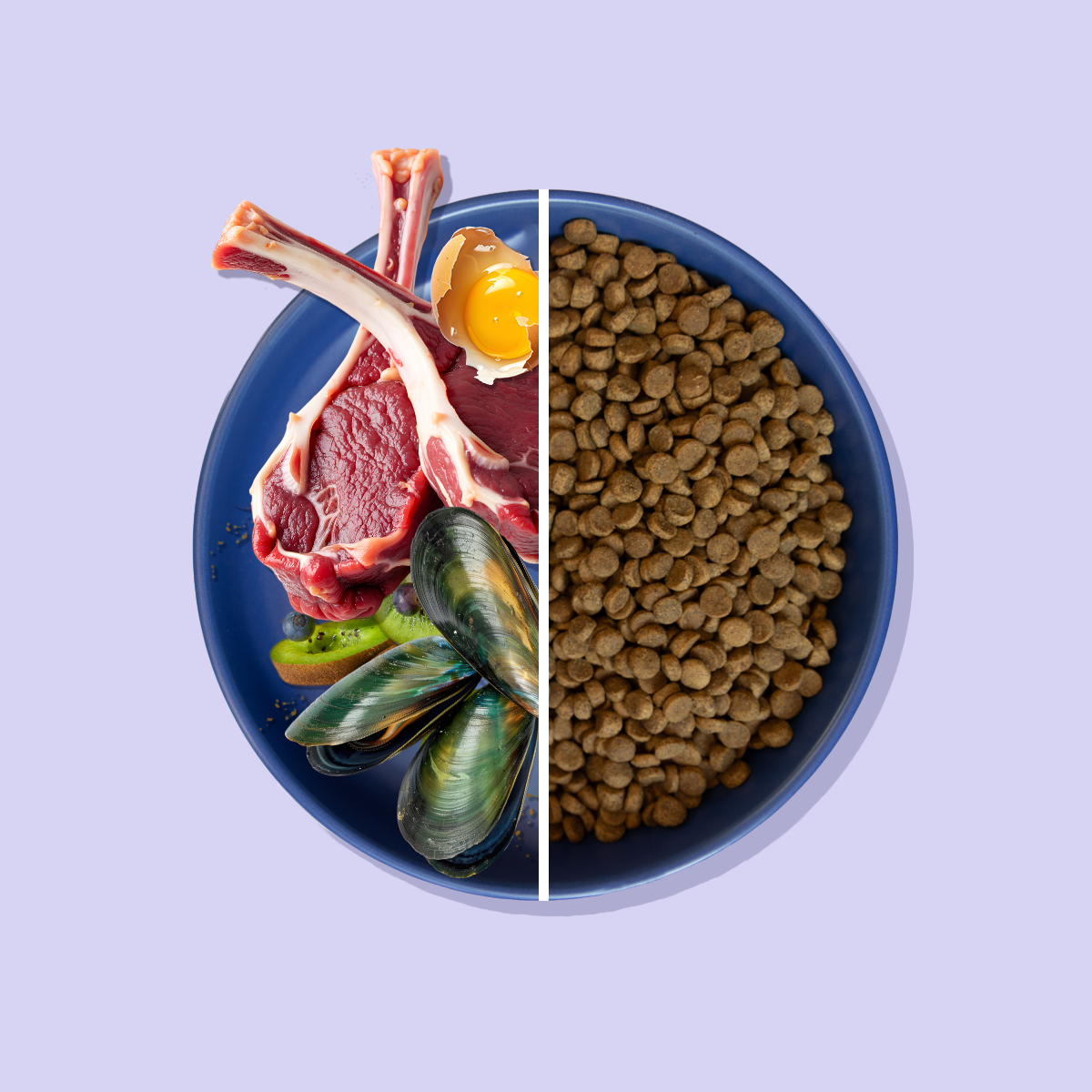
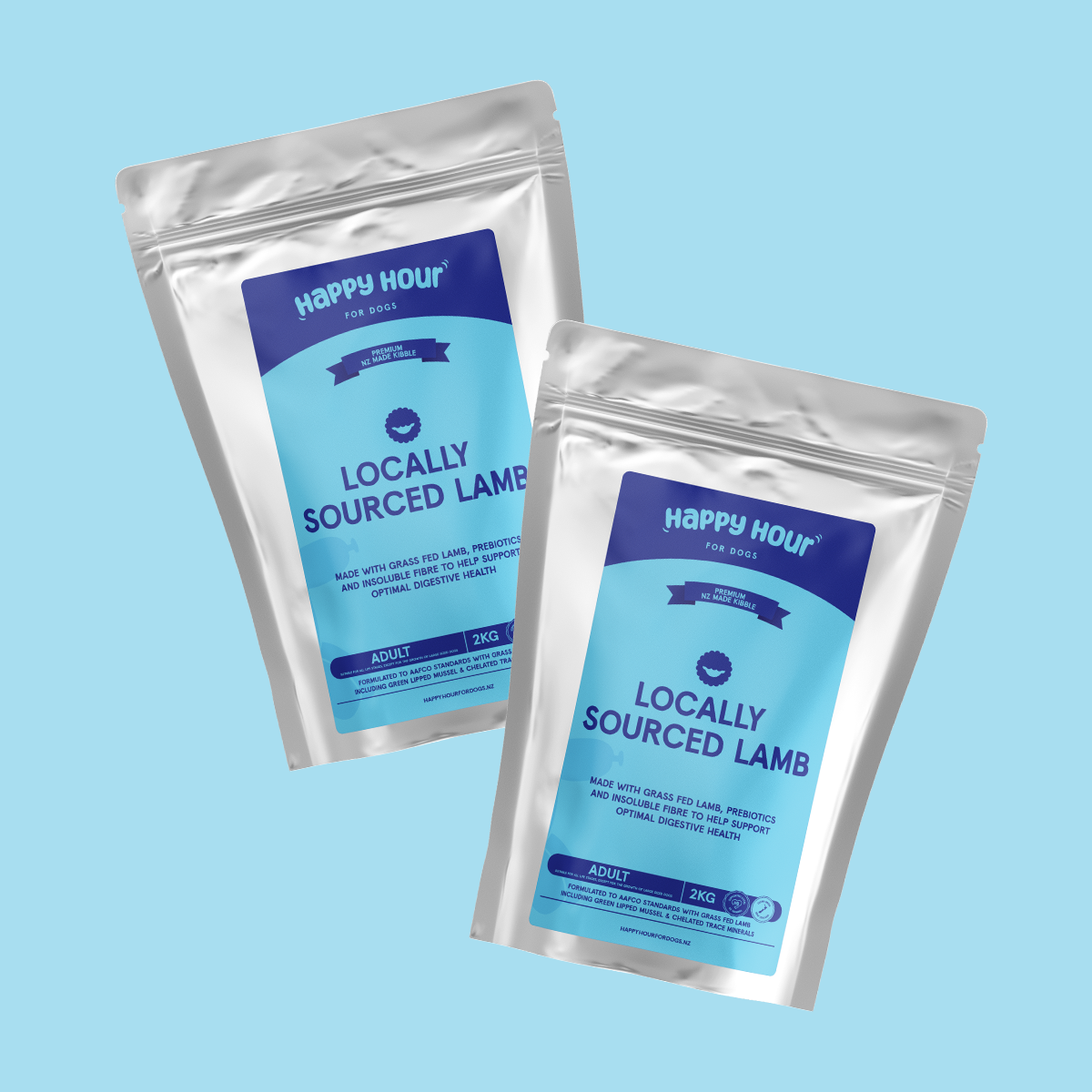
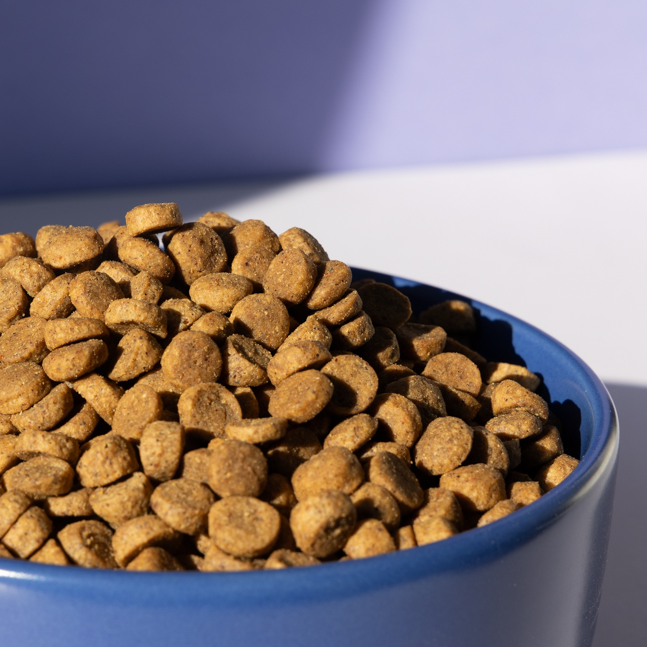
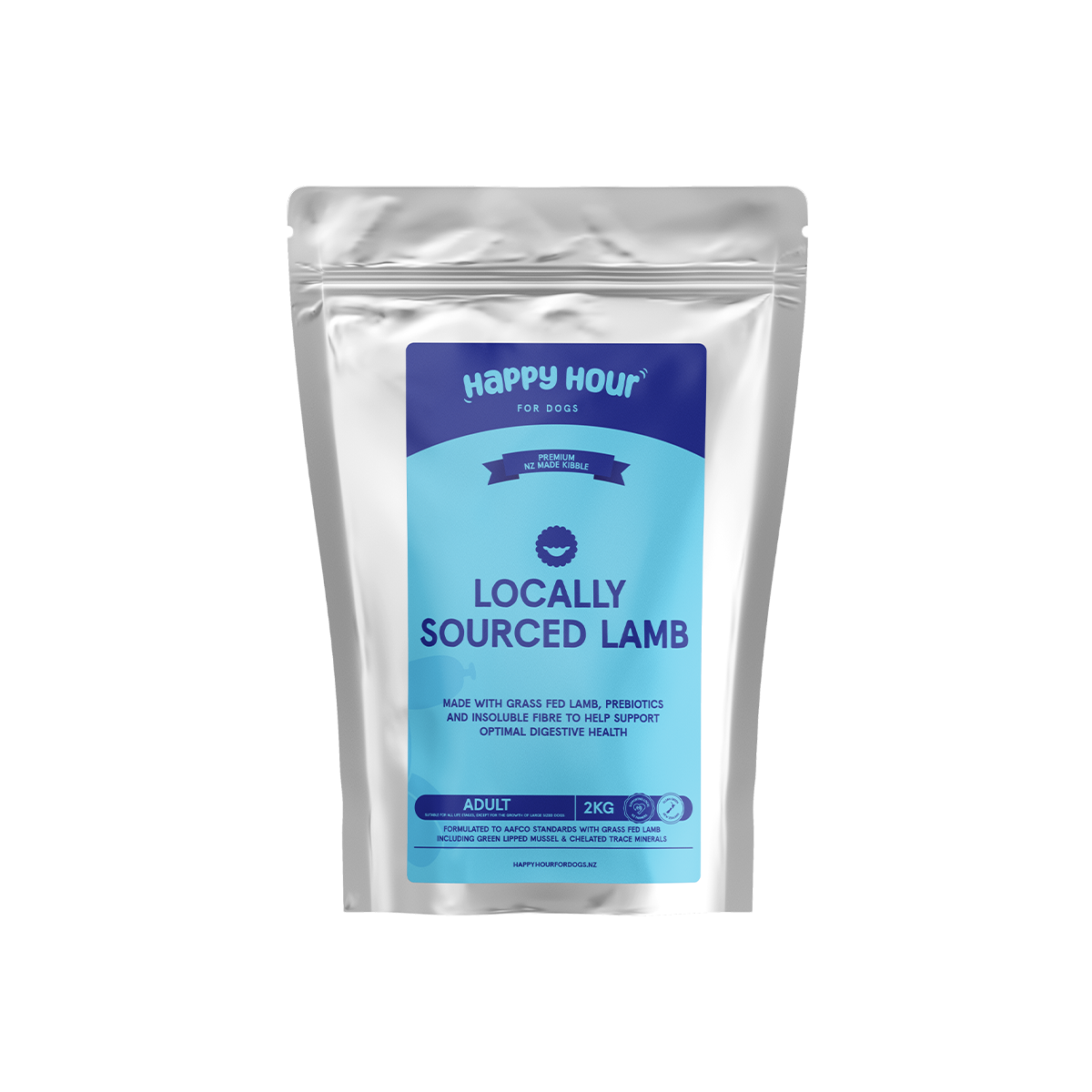
Happy Hour is a NZ-made, grain-free kibble built around grass-fed lamb, with a high-fibre formula designed to support good digestion and sustained fullness. It's not specifically a "light" or "diet" food, but its ingredient profile is well suited to dogs managing their weight. Dogs on Happy Hour tend to be more settled between meals, which makes portion control easier to maintain over the months a proper weight loss programme takes.
If your dog has had pancreatitis or is at elevated risk, keeping their weight down is particularly important. Obesity is a known risk factor for pancreatic episodes, and the lower-fat, gradual approach that suits weight loss also happens to be gentler on the pancreas. More on that connection: Pancreatitis in Dogs.
When to Involve the Vet
Most overweight dogs don't need ongoing veterinary supervision to lose weight safely. With careful portioning, honest treat accounting, and a good food, most owners can manage the whole process at home. But there are situations where a vet is the right call, and knowing them saves you from either worrying too much or missing something that matters.
Before you start, if your dog is significantly obese, has mobility issues from the weight, or has any existing health conditions. A baseline check helps rule out medical causes and gives you a clear target weight to aim for, which takes the guesswork out of the whole plan.
If there's no progress after eight to twelve weeks of careful management. No movement at all, despite consistent effort, often points to an underlying issue worth investigating.
If weight loss is happening too fast. If your dog is losing more than 2% per week, increase their portion slightly. Faster isn't better, and the risks are real.
If your dog seems unwell. Lethargy, increased thirst, vomiting, or any unusual symptoms alongside weight loss should prompt a vet check, not a wait-and-see approach.
For very overweight dogs. A dog that's significantly obese may benefit from a structured programme with specific calorie targets, regular weigh-ins, and professional oversight. Many NZ clinics run free nurse-led weight clinics with monthly weigh-ins, which are a great low-cost way to stay accountable, and the nurse can set the target weight and calorie figure for you so you are not guessing. Your vet can also refer you to a veterinary nutritionist if needed. Booking the first weigh-in is often the nudge that turns a good intention into an actual plan.