Walk into any butcher in New Zealand and the lamb in the cabinet grew up outside on grass, because that's simply how we farm sheep here. Walk into the pet food aisle and you'll find bags with a lamb photographed on a green hillside on the front, and three lines into the ingredient panel, something called "meat meal".
Key Takeaways
- What "grass-fed" actually means in New Zealand
- What grass actually changes in the meat
- Why lamb suits a lot of Kiwi dogs
- Reading the label properly
- Why it costs more, honestly
Those two things are not the same, and the gap between them is what this whole article is about.
Grass-fed lamb dog food is worth paying for. But only when the lamb in the bag matches what the front of the bag is selling. Here's how to tell the difference before you hand over $100.
What "grass-fed" actually means in New Zealand
Overseas, grass-fed is a certification programme. Farmers opt in, meat gets audited, and the label carries a genuine premium because the default is a feedlot and a grain ration.
Here, it's just Tuesday. NZ sheep spend their lives on pasture eating grass and clover, in weather that grows both without much help. There's no feedlot finishing step to opt out of.
Which means something slightly awkward for anyone shopping: in an NZ-made dog food, "grass-fed lamb" is closer to the baseline than the headline. It's true, and it's genuinely good, but on its own it doesn't separate one bag from another. The questions that do the actual separating are how much lamb is in the recipe, whether the label names it properly, and what's built around it. We've written more on why NZ pasture-raised lamb makes better dog food if you want the farming side of it.
What grass actually changes in the meat
Diet shows up in fat. Ruminants raised on pasture tend to have a better balance of omega-3 to omega-6 fats in their meat than animals finished on grain, and the meat is generally leaner.
That balance matters more than most people realise. Omega-3 is the one doing quiet work on skin, coat condition and joints, and most dog food is heavily weighted the other way because plant oils and grain are cheap sources of omega-6. Starting from meat that's already better balanced means you're not trying to fix the ratio later with a splash of oil.
It's a real difference, not a dramatic one. Your dog will not detect the paddock. But if you're already paying for lamb, grass-fed is the version worth having.
Why lamb suits a lot of Kiwi dogs
Lamb is a proper red meat: digestible, decent iron and zinc, and rich enough that most dogs are extremely keen on it. Cleo, our resident food vacuum, has never once needed convincing.
The other reason it comes up so often is what dogs have already been eating. Sensitivities tend to build against proteins a dog has had for years, and in the cheap end of the aisle that means chicken and beef, over and over. Lamb is less common there, so plenty of dogs meet it with a clean slate. Some owners find that moving to a single named protein settles down a dog who's been scratching, which is why lamb shows up so often in advice about food for itchy dogs.
Worth being straight about, though: itchiness has plenty of causes that have nothing to do with the bowl. Fleas, grass pollen, a humid Auckland February. Food is one variable of several. If your dog is properly uncomfortable, get them seen by your vet, then sort the diet alongside whatever they suggest.
Reading the label properly
This is the part that saves you money. Four things to check, in order.
Is the meat named? "Lamb" and "lamb meal" tell you the species. "Meat meal", "meat and bone meal" and "animal derivatives" don't, and they mean the recipe can quietly change with whatever protein was cheapest at the time. For a dog with any sensitivity, that's a problem you can't troubleshoot.
Where does it sit? Ingredients run in order of weight. Lamb should be first, or a very close second. If it's sitting fourth behind three separate plant proteins, those plant proteins together are doing more of the heavy lifting than the lamb is.
Is there a percentage? Brands using a lot of real meat like telling you the number. Brands using a little tend to prefer the photo.
Made here, or just packed here? "Made in New Zealand" means manufactured here. "Packed in New Zealand" or "distributed by" can mean food made offshore, sometimes with meat from somewhere else entirely. That wording lives in tiny type near the barcode. It's worth turning the bag over, and it's the reason we banged on about it in our guide to dog food made in New Zealand.
One myth to retire while we're here: lamb meal isn't a cheat. Fresh lamb is mostly water, and meal is lamb with the water already removed, so a bag listing lamb meal high up often carries more actual lamb protein than one listing fresh lamb first. Named meal is a fine ingredient. Unnamed meal is the one to walk away from.
Why it costs more, honestly
Lamb is expensive. It's expensive at the butcher and it's expensive as a pet food ingredient, partly because NZ lamb competes with a very healthy export market. Any food genuinely built on it will cost more than the chicken version.
What's fair to expect for that money is a high meat inclusion and named, useful additions rather than a long tail of fillers. What isn't fair is paying a lamb price for a bag where lamb is a supporting act.
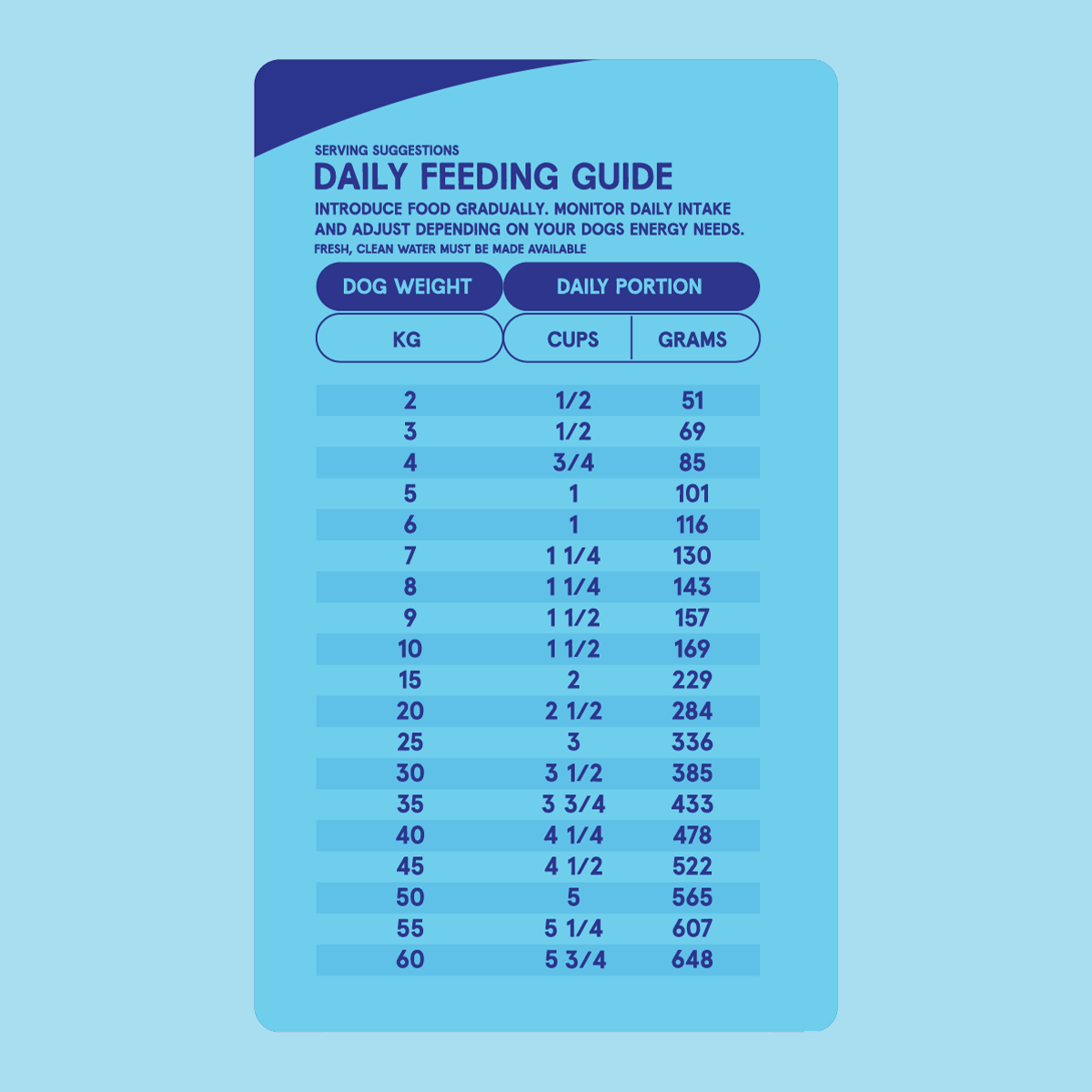
Also worth doing the maths on portions before you decide anything's too dear. A food with real meat and good digestibility usually means feeding less of it, so the price per kilo and the cost per day tell different stories.
What we put around the lamb
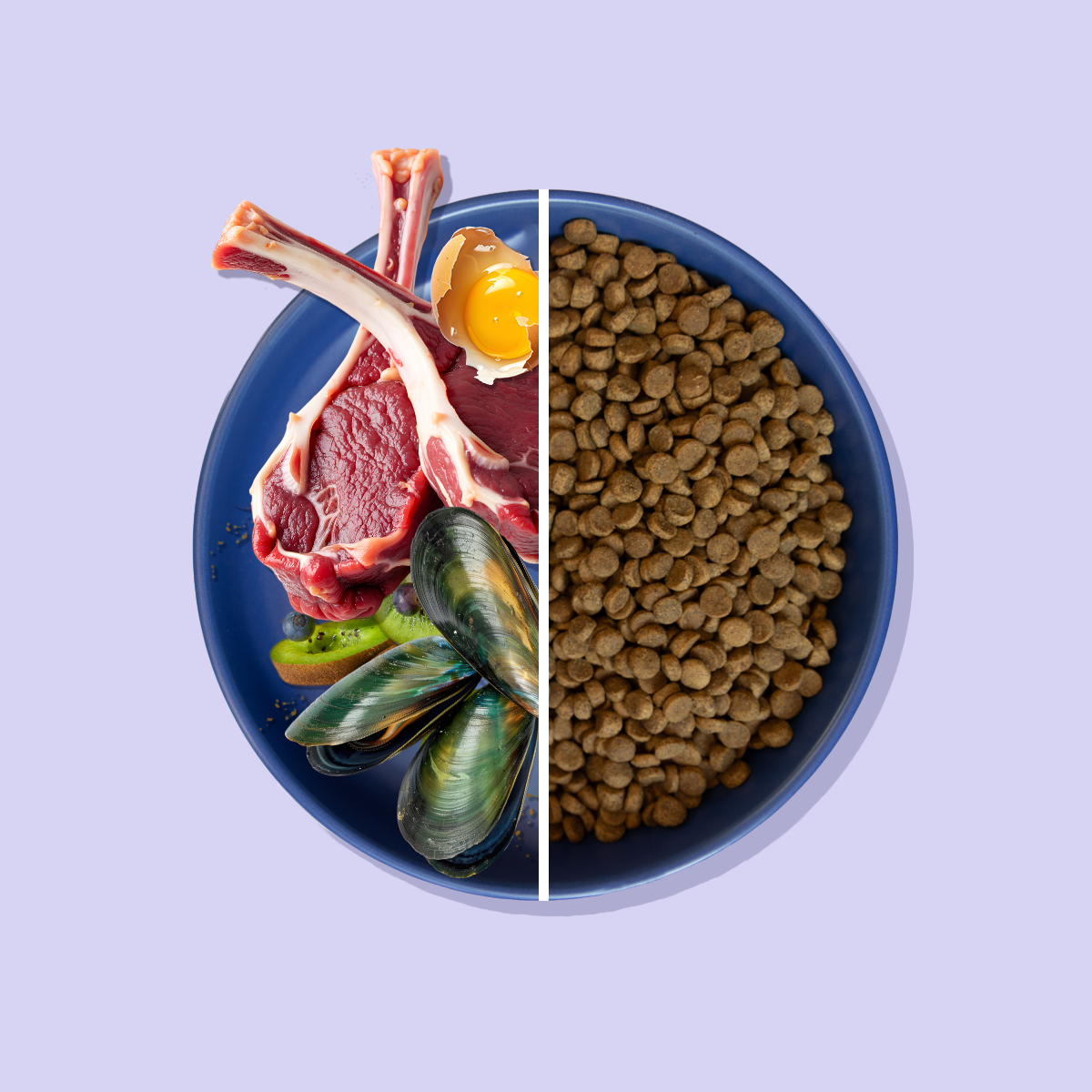
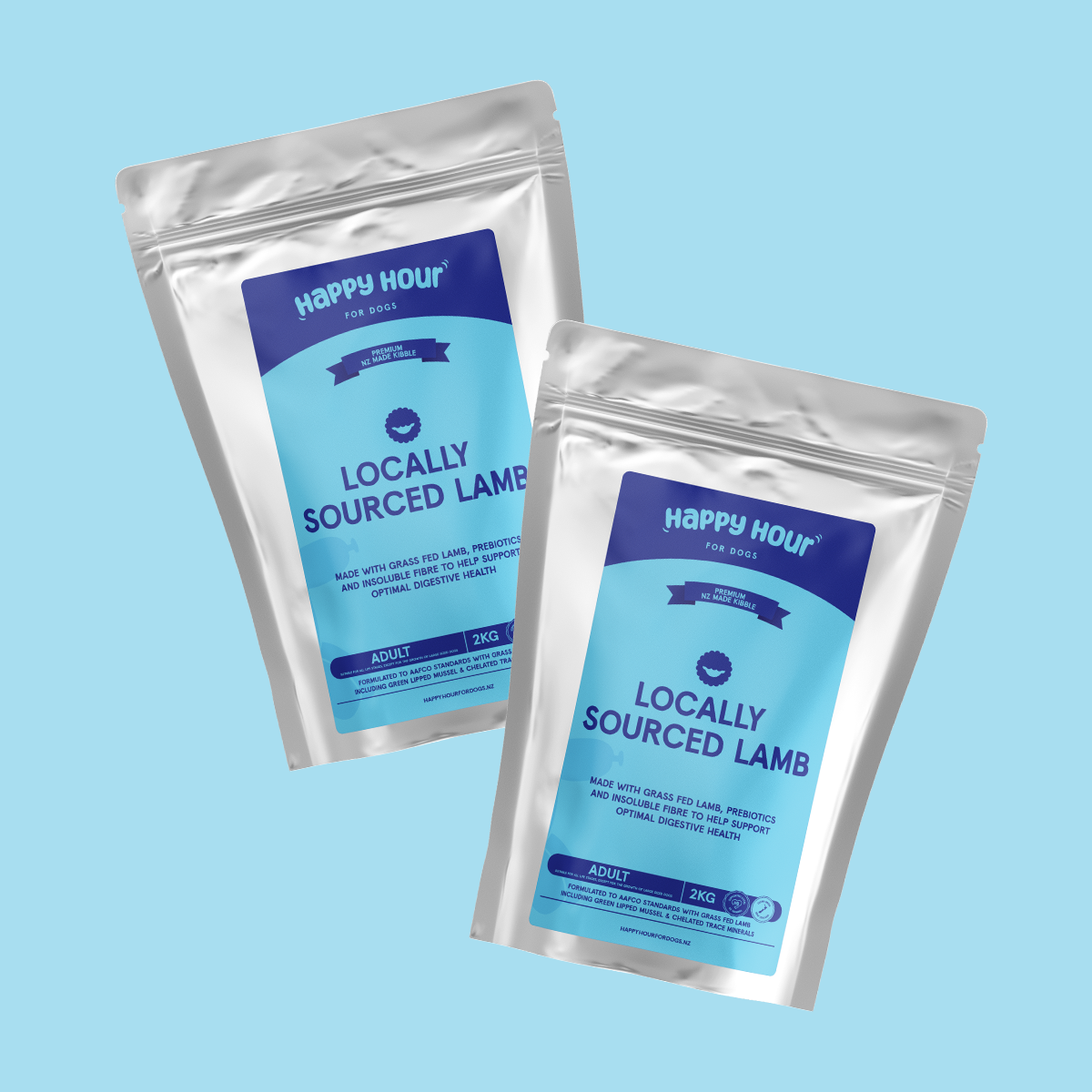
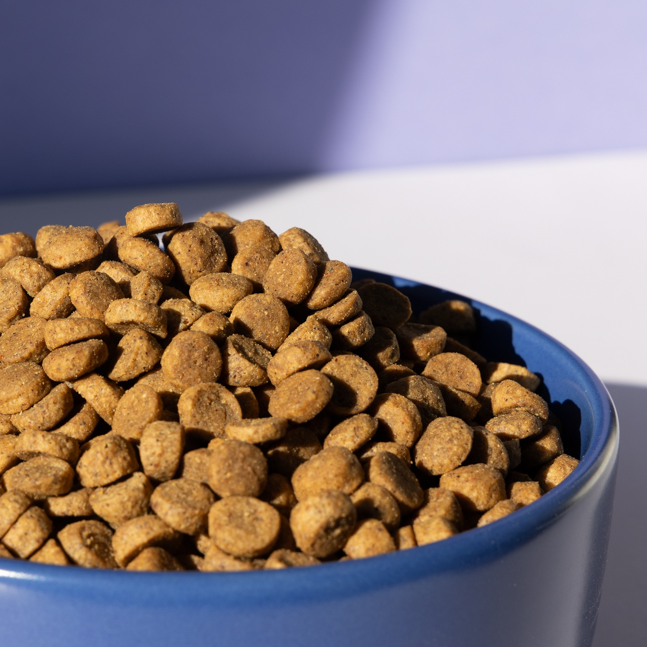
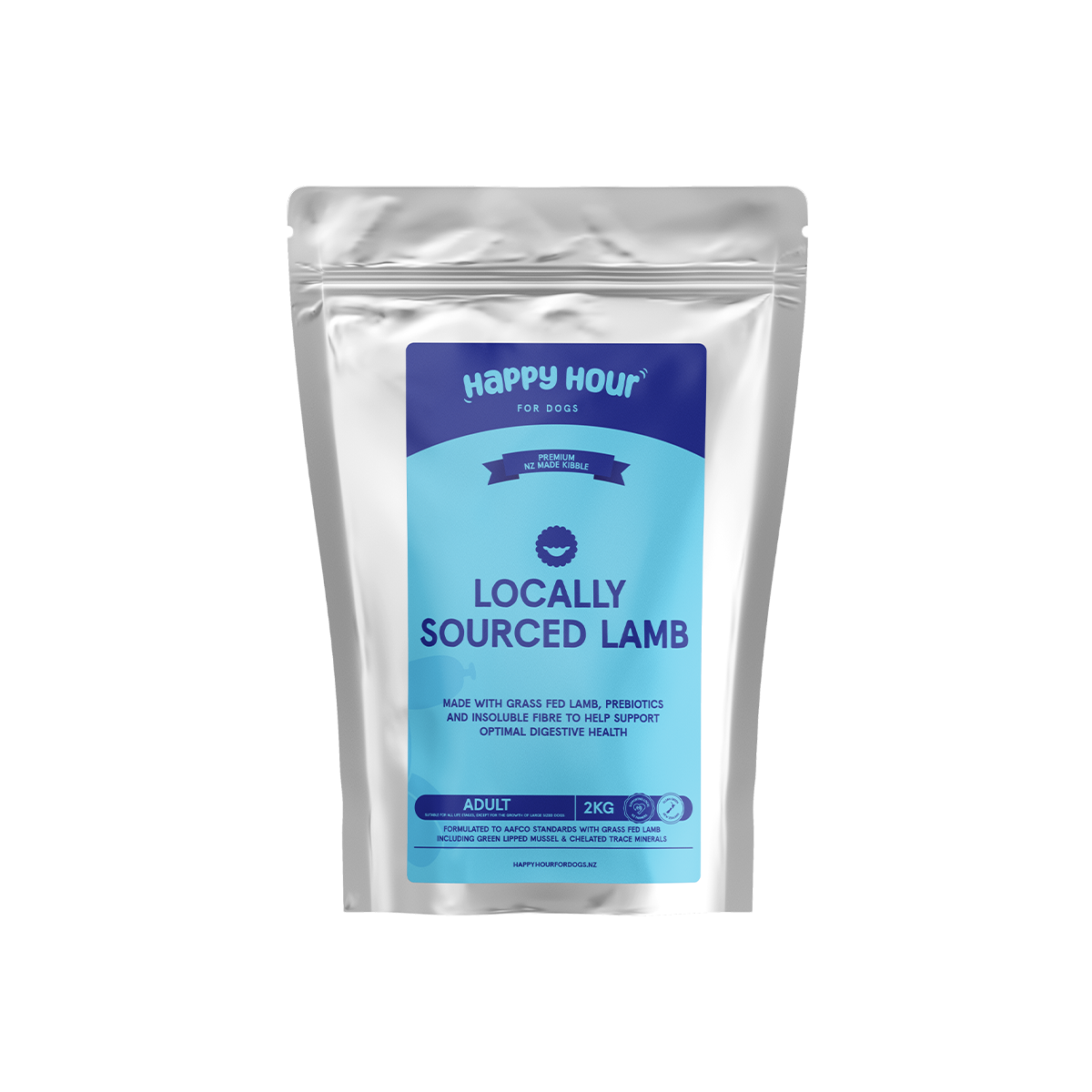
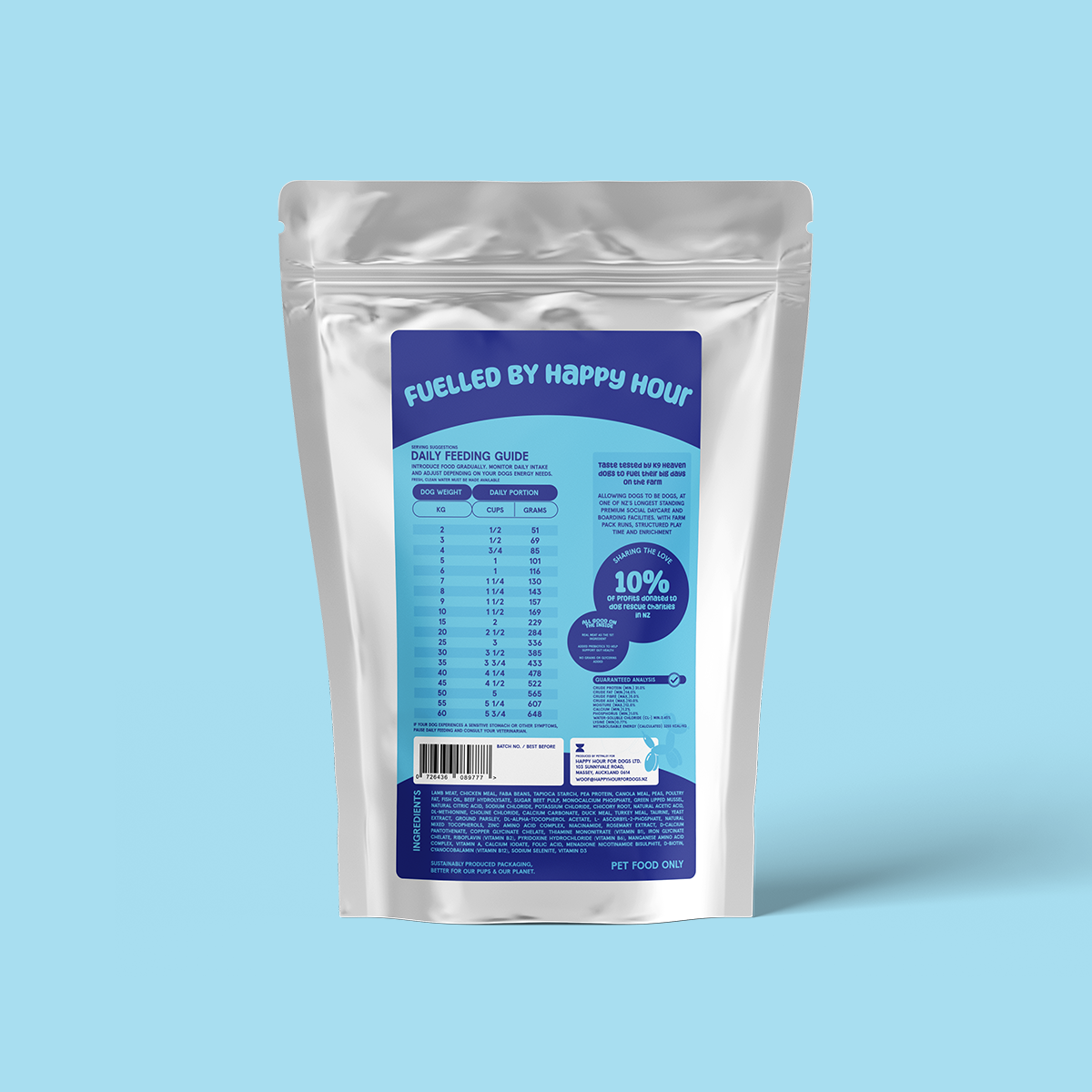
Happy Hour's Grass-Fed Lamb recipe is grain-free kibble, made here in New Zealand with real NZ grass-fed lamb. Guaranteed analysis is 31% protein, 14% fat, 5% fibre. That fat figure is lower than a lot of premium kibbles, which tend to sit closer to 16 to 20%, and it's one of the reasons the food suits dogs who put weight on easily. It's a moderate fat level, not a therapeutic low-fat diet, so if your vet has put your dog on one of those, this isn't it.
The rest of the recipe is there because it does something specific. Green-lipped mussel, for joints and its own omega-3s. Added prebiotics and insoluble fibre, for the gut and for firmer output, which anyone who has followed a dog around a Wellington park with a bag in hand will appreciate. Chelated trace minerals, which are minerals bound to amino acids so they're easier for a dog to absorb than the cheap sulphate forms. No grains, no glycerines, no added hormones. It meets AAFCO standards, and both palatability and digestibility were tested at a leading NZ university, which is a polite way of saying we checked that dogs actually want to eat it before we sold it to anyone.
And we fed it to our own three first. Merc, who has turned his nose up at more expensive food than we care to admit, cleans the bowl.
If you're switching over
Don't do it in one go. Mix the new food in with the old across seven to ten days, starting at about a quarter and working up, and expect the stools to look a bit unfamiliar in the middle of that. Grain-free food with real prebiotics in it often changes things for a week before it settles. There's a full walkthrough in our guide to switching your dog's food without upsetting their stomach.
Give it a solid month before you judge it. Coat and condition move slowly, and the first fortnight is mostly their gut catching up.
If your dog doesn't get on with it, tell us and we'll sort you out. Every bag comes with a 30-day money-back guarantee, because asking someone to gamble $100 on a bag of food their dog might snub isn't much of an offer. Start with the lamb trial pack if you'd rather test the water, and see what your dog makes of a bowl that started life on a hillside somewhere south of here.