Why NZ Dog Owners Are Choosing Locally Made Food
More and more Kiwi dog owners are reading the small print on dog food bags. They want to know where the meat comes from, where it was made, and whether the brand they are buying from actually has roots here or just likes to use a fern leaf in their logo.
Key Takeaways
- Why NZ Dog Owners Are Choosing Locally Made Food
- What Made in New Zealand Actually Means on a Dog Food Label
- The Real Advantages of NZ-Made Dog Food
- NZ's World-Class Ingredients
- What to Look For When Buying NZ-Made Dog Food
The shift toward local is not just a trend. It is a response to experience. Over the past decade, several high-profile pet food recalls have originated overseas, particularly from large-scale manufacturing operations in Asia. New Zealand dog owners watched those stories unfold and started asking harder questions about what was in their dog's bowl.
At the same time, the buy-local movement that reshaped how Kiwis think about their own food has naturally extended to their pets. If you care about where your chicken comes from for your own dinner, it makes sense to care about the same thing for your dog.
The logic holds up: shorter supply chains mean less handling, less time in transit, and fresher ingredients by the time the food reaches your dog.
What Made in New Zealand Actually Means on a Dog Food Label
This is where it gets nuanced, and where some brands take shortcuts. Made in New Zealand can mean a few different things depending on who is using it:
- Ingredients sourced from NZ, manufactured in NZ: The genuine article. Proteins, produce, and manufacturing all happen here.
- Ingredients sourced from NZ, manufactured overseas: The raw materials are local, but the product is made elsewhere, then imported back.
- Ingredients sourced overseas, manufactured in NZ: Raw ingredients come from other countries, but the food is blended and packaged here.
- Ingredients sourced overseas, packaged in NZ: The most misleading version. Foreign-made food is simply put into bags here. Packed in NZ does not mean made in NZ.
The safest approach: look for brands that explicitly name their protein sources and manufacturing location, not just wave a flag.
The Real Advantages of NZ-Made Dog Food
Fresher Ingredients
New Zealand produces some of the world's finest animal proteins. Grass-fed lamb, free-range chicken, and wild-caught fish are harvested here and can move from farm or sea to processing facility in days, not weeks. Compare that to imported proteins that spend weeks in shipping containers crossing oceans before they are even processed into dog food.
Freshness directly affects nutritional quality. Proteins degrade over time. Fats oxidise. The shorter the journey from source to bowl, the more nutrition ends up in the food.
Shorter Supply Chain
Fewer hands, fewer facilities, fewer opportunities for contamination or quality drift. A product made from NZ ingredients in an NZ facility has a much simpler journey than something assembled from components sourced across multiple countries.
This matters for traceability. If something goes wrong, a local manufacturer can identify the issue faster and act on it. The recall process is shorter. The accountability is clearer.
NZ Quality Standards
New Zealand's food safety regulations are among the tightest in the world. MPI (Ministry for Primary Industries) oversees food production, including pet food, and the standards applied to NZ-made products reflect that. Imported products must meet NZ import rules, but they are not always manufactured to equivalent standards in their country of origin.
Supporting Local
There's a straightforward economic argument too. Buying NZ-made keeps money circulating in the local economy, supports local farmers, and helps sustain the kind of clean, high-welfare farming NZ is known for.
NZ's World-Class Ingredients
New Zealand's geography and farming practices produce ingredients that are genuinely exceptional. These are not marketing claims: they are backed by how NZ farming actually works.
Grass-Fed Lamb
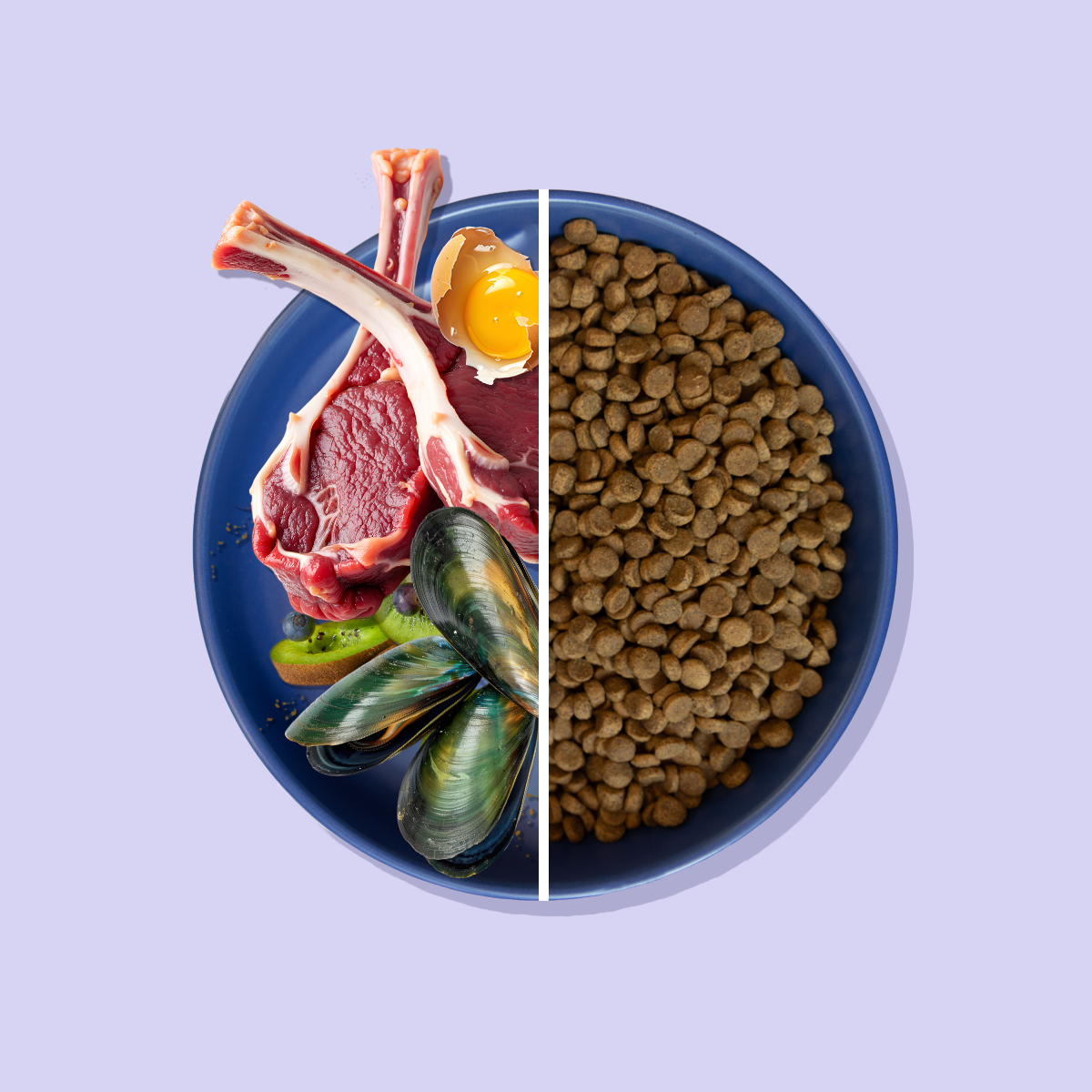
New Zealand lamb spends most of its life on open pasture, eating grass rather than grain. Grass-fed meat has a different nutritional profile from grain-fed, with higher levels of omega-3 fatty acids and conjugated linoleic acid (CLA). For dogs, this means a quality protein source that is also easier to digest than heavily processed alternatives.
Cage-Free Chicken
NZ's poultry farming standards have moved significantly toward higher-welfare systems. Cage-free chicken is a cleaner protein source, without the stress hormones associated with intensive confinement.
Green-Lipped Mussels
This is one of NZ's genuinely unique superfoods. Green-lipped mussels (Perna canaliculus) are native to NZ waters and contain a specific blend of omega-3 fatty acids, including ETA (eicosatetraenoic acid), which is not found in fish oil. Research has shown green-lipped mussel extract to support joint health and reduce inflammation in dogs, particularly useful for active breeds or older dogs with mobility issues.
Manuka Honey
The antibacterial properties of manuka honey are well documented. With a UMF (Unique Manuka Factor) rating that makes it unlike any other honey on the planet, manuka is a genuine functional ingredient, not just a marketing addition.
What to Look For When Buying NZ-Made Dog Food
When you are evaluating a brand's NZ credentials, here is what to check:
- Named NZ protein sources: The ingredient list should specify where proteins come from. "NZ lamb" or "New Zealand chicken" is meaningful. Just "lamb" or "meat meal" without origin tells you nothing.
- Transparent manufacturing: Look for a physical NZ address, NZBN, and ideally some transparency about the facility. Brands that manufacture here should be willing to say so clearly, not bury it in fine print.
- Not just packed in NZ: This phrase means very little. It refers only to the packaging step, not the sourcing or manufacturing.
- Ingredient quality beyond protein: What else is in the food? A brand using NZ meat alongside imported fillers, artificial preservatives, and synthetic vitamins is only half the story.
- Grain-free if appropriate: Grain-free formulas typically use higher proportions of meat protein and rely on whole-food carbohydrate sources like kumara or potato, which suit dogs with sensitivities.
NZ Ingredients vs Made in NZ: An Important Distinction
Some brands have worked out that "NZ ingredients" is a powerful phrase without requiring full local manufacturing. They may source NZ lamb, but blend and cook the food in Australia, the US, or Asia, then import it back.
This is not fraud, exactly. But it is worth understanding what you are getting. A product made with NZ proteins but manufactured overseas still involves long shipping times, may not be subject to NZ food manufacturing standards, and often passes through multiple intermediaries, increasing cost and reducing traceability.
The gold standard is NZ-sourced proteins and NZ manufacturing. That combination delivers on every front: freshness, quality control, supply chain simplicity, and genuine support for local industry.
Happy Hour: NZ-Made in Practice
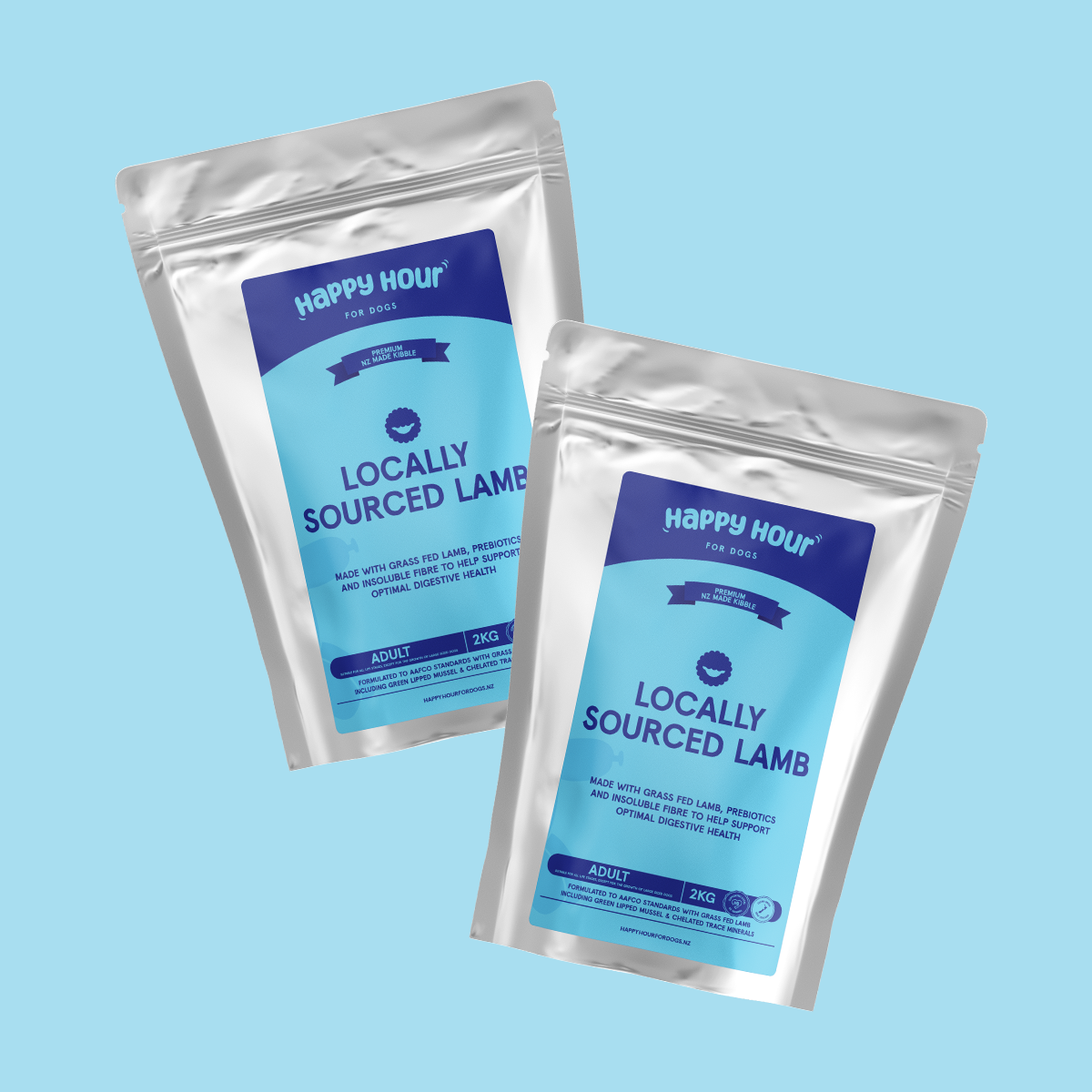
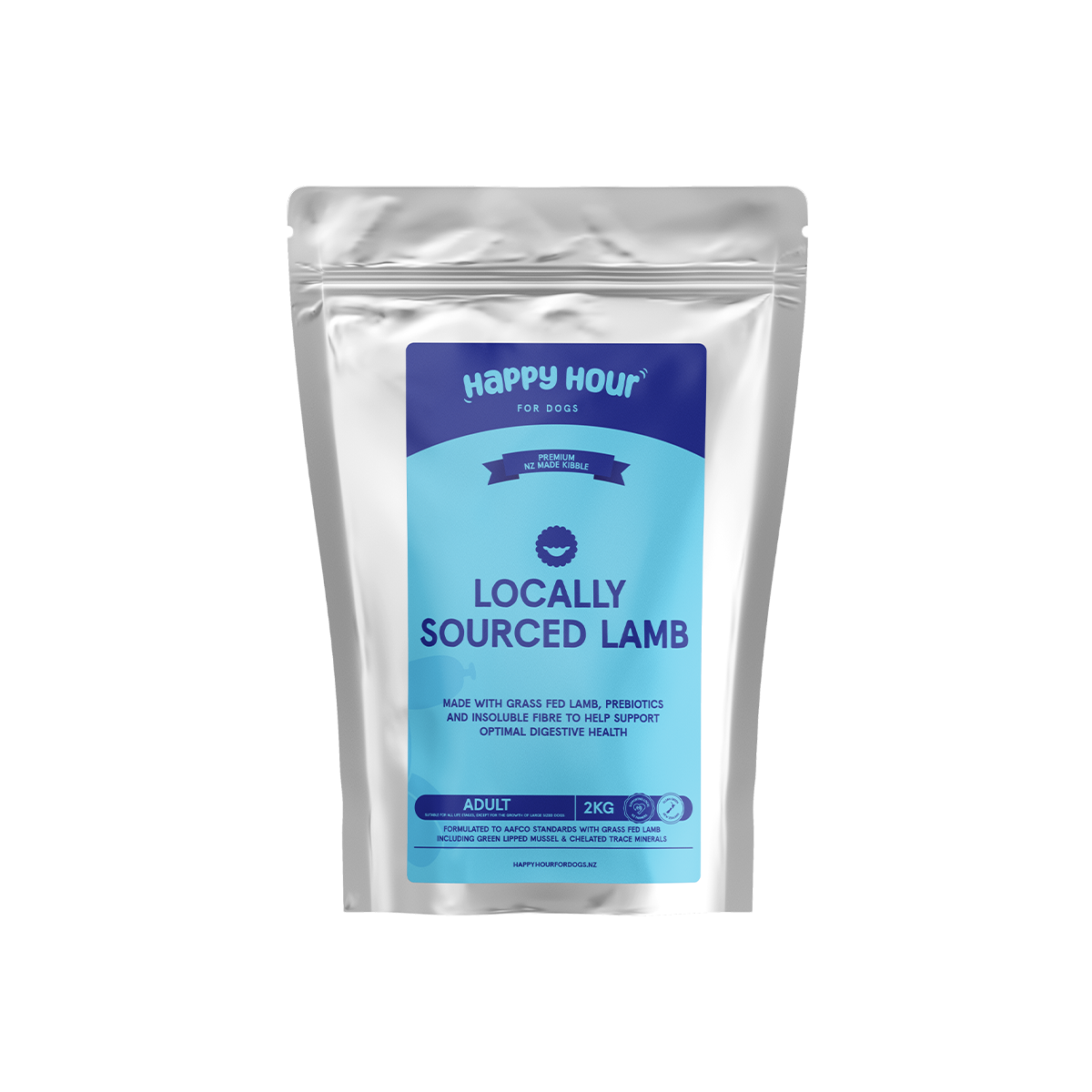
Happy Hour is made in New Zealand. Not packed in NZ, not inspired by NZ: actually manufactured here, using NZ-sourced proteins including grass-fed lamb and cage-free chicken.
The brand was built around the premise that premium, grain-free nutrition should not require importing food from the other side of the world. The supply chain is short: NZ proteins, NZ manufacturing, shipped direct to NZ dog owners nationwide.
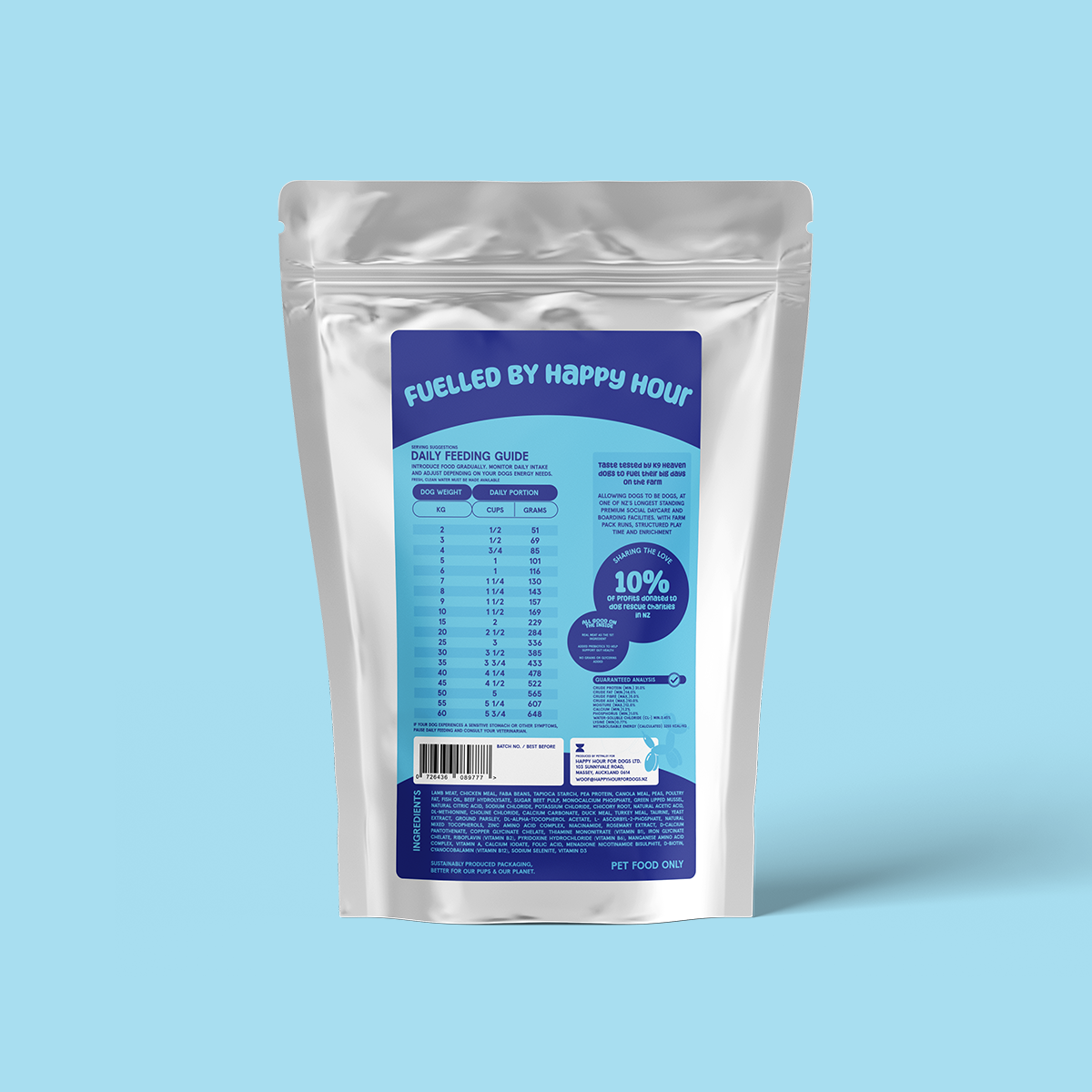
If the criteria above matter to you, Happy Hour meets them. You can verify that by reading the label, not just the marketing.
The Bottom Line
NZ-made dog food is worth seeking out, but the claims deserve scrutiny. The meaningful version means NZ protein sources plus NZ manufacturing, and the two are not always the same thing.
When a brand is transparent about both, you get genuinely fresher food, cleaner ingredients, and the confidence that comes from a short, accountable supply chain.