The best dry dog food in NZ is one where a named meat protein leads the ingredient list, fillers are minimal, and the formula is designed to support digestion and long-term health, not just to fill a bowl cheaply. Kibble is the everyday choice for most Kiwi dog owners, and the range in quality is wider than most packaging suggests.
Here's what to look for, what to avoid, and which dry foods are worth considering in New Zealand right now.
Key Takeaways
- Named meat should be the first ingredient, not corn, wheat, or "cereal by-products"
- Meat meal from a named species (lamb meal, chicken meal) is fine and concentrated in protein
- Avoid artificial preservatives like BHA, BHT, and ethoxyquin
- Grain-free kibble can be a genuinely better fit for dogs with sensitivities
- Happy Hour is the only NZ-made grain-free lamb kibble, developed and tested at K9 Heaven across 48,000+ yearly meal times
What Makes a Great Dry Dog Food?
Kibble has a reputation in some circles as processed, inferior dog food. That's not quite fair. A well-formulated kibble can be an excellent everyday diet. The key word is "well-formulated."
Protein Quality Over Protein Quantity
A bag that shouts "30% protein" on the front isn't telling you enough. Where that protein comes from matters just as much. Animal-sourced protein from named meats is more bioavailable and nutritionally appropriate for dogs than plant-sourced protein from soy or wheat gluten. Two bags can both say 28% crude protein — one from lamb and chicken, one from corn gluten meal and soy — and they're fundamentally different products.
The Ingredient Order Tells the Real Story
Ingredients are listed by weight before cooking. Whatever is first is present in the greatest amount. In a good dry food, that's meat. In a cheap one, it's corn or rice.
One nuance worth knowing: dry ingredients like grains are listed before cooking, so their water weight isn't included. Meat, which contains a lot of moisture, may drop further down the cooked list. This is why "meat meal" sometimes appears before fresh meat on a dry food label — it's a more stable measure of protein contribution. More on understanding labels: How to Read a Dog Food Label in NZ
Fillers and What They Actually Do
Fillers add bulk, keep costs down, and extend shelf life. They don't add much nutritional value. Common fillers in mass-market kibble include corn, wheat, rice bran, soy hulls, and potato starch. Some carbohydrates are fine for dogs. But a food that's 60% starch is not a high-quality food, regardless of what the packaging says.
Preservatives: Natural vs. Artificial
Dry food needs preservation to stay shelf-stable. Natural preservatives include mixed tocopherols (vitamin E), rosemary extract, and vitamin C. These are fine.
Artificial preservatives to avoid: BHA, BHT, and ethoxyquin. BHA and BHT are classified as possible human carcinogens. Ethoxyquin was originally developed as a rubber hardener. None of them belong in your dog's food.
Added Functional Ingredients
The best dry foods go beyond basic nutrition. Things like prebiotics and probiotics support gut health. Omega-3 fatty acids (from fish oil, green-lipped mussel, or flaxseed) support joints and coat condition. Chelated minerals are more bioavailable than standard mineral supplements. Taurine supports heart health, particularly in grain-free formulas.
Top Dry Dog Foods Available in NZ
Happy Hour (NZ-Made)
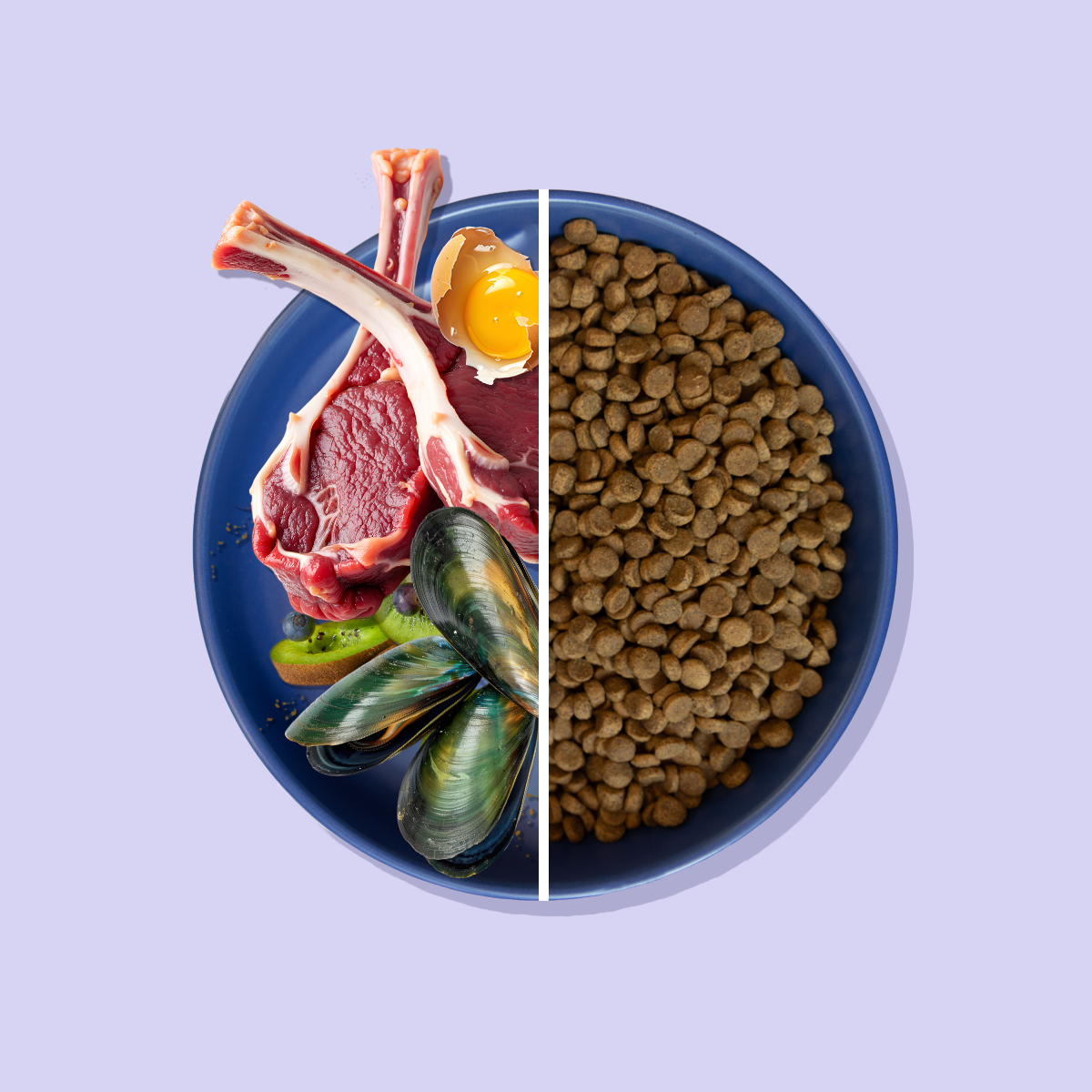
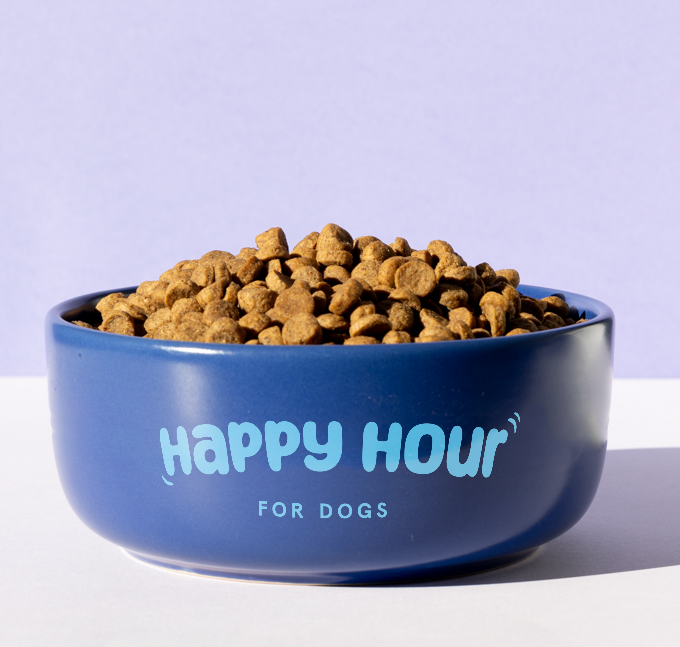
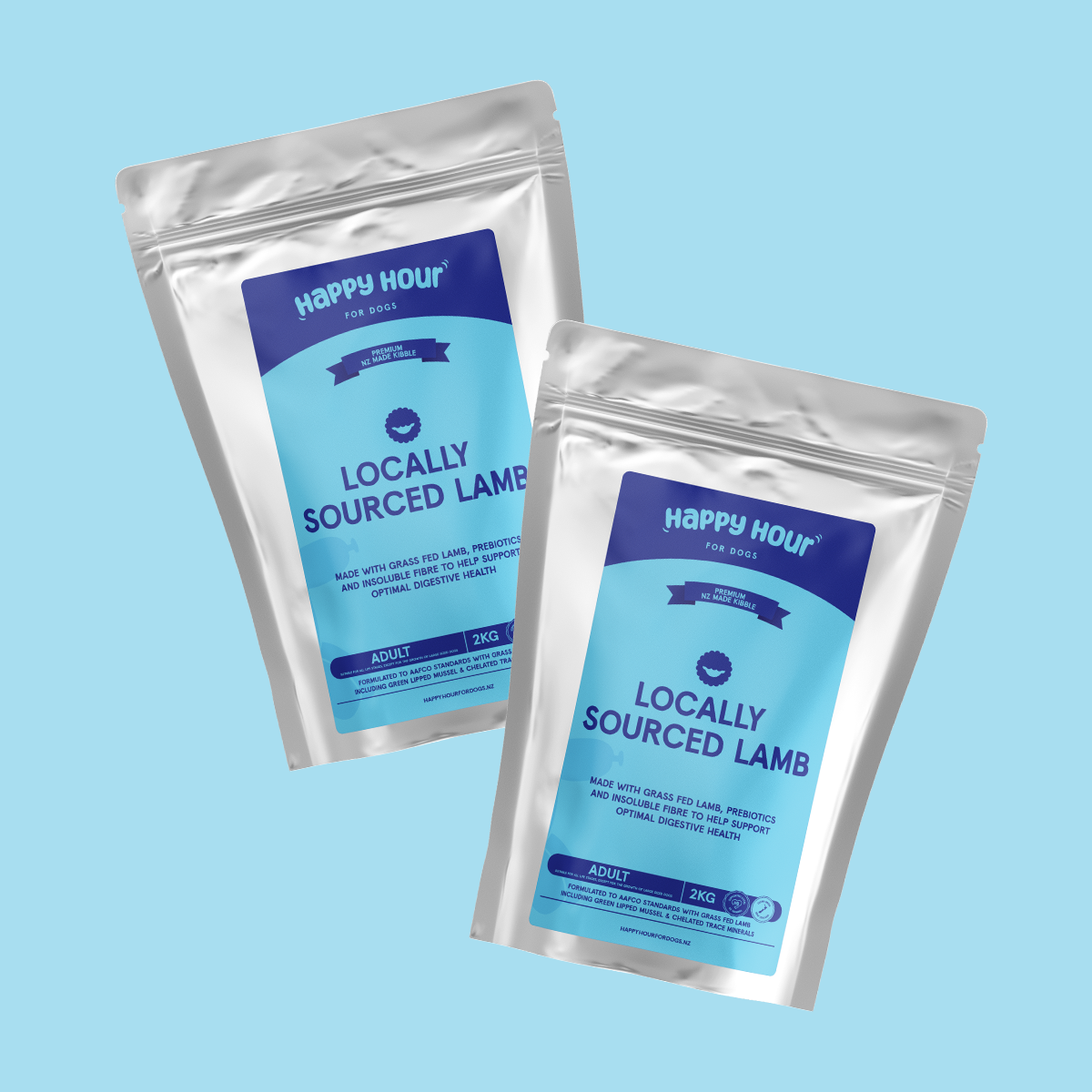
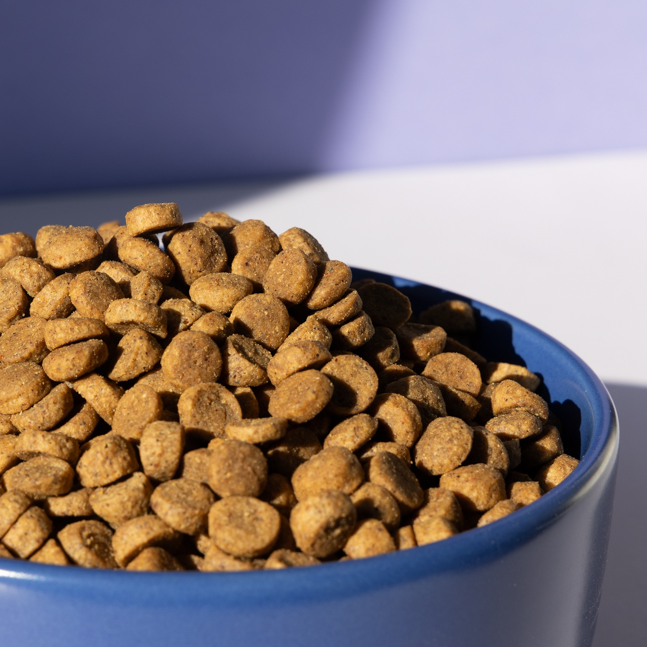
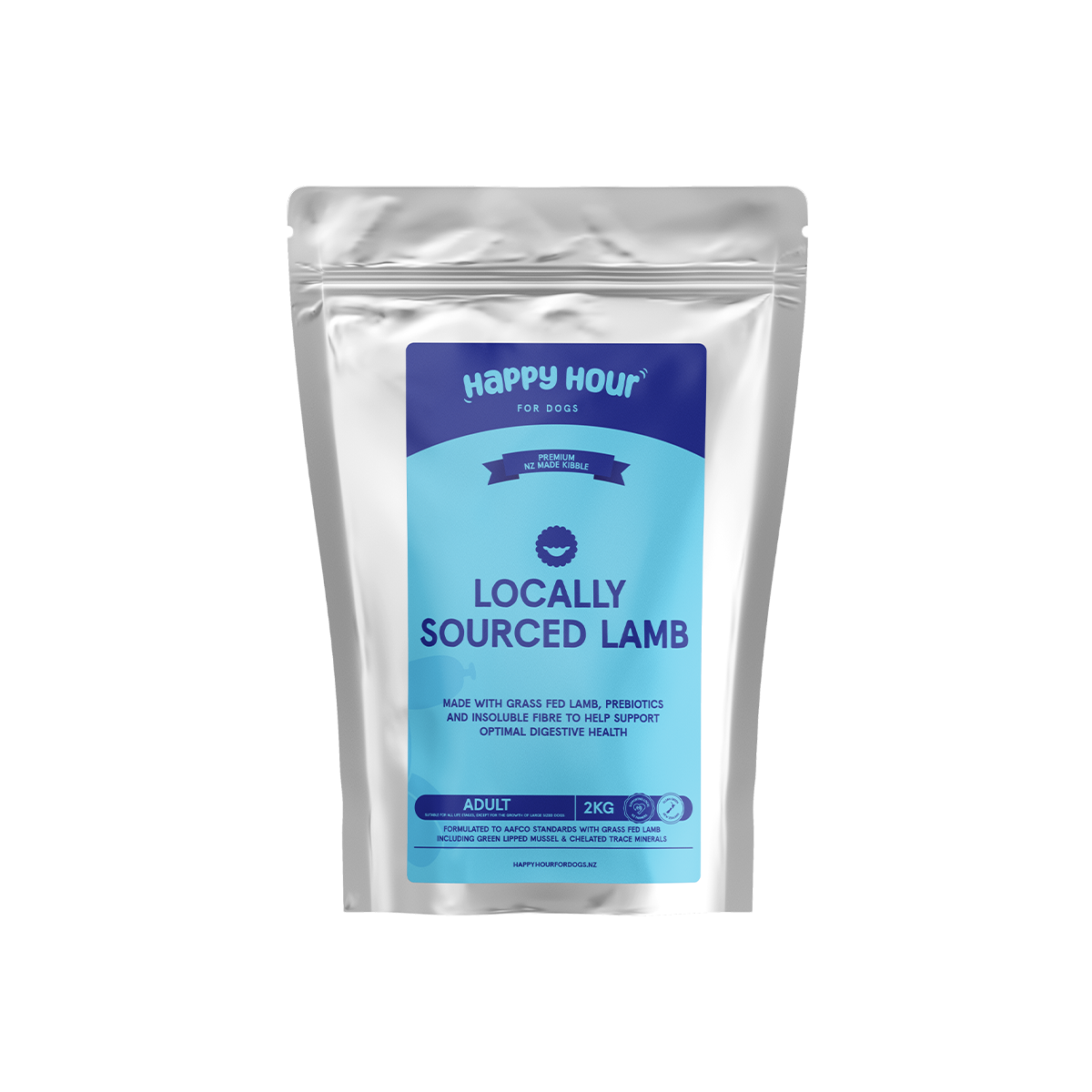
Happy Hour is New Zealand's own grain-free lamb kibble, made from NZ grass-fed lamb and developed by the team behind K9 Heaven doggy daycare. It's the standout NZ-made option in the dry food space.
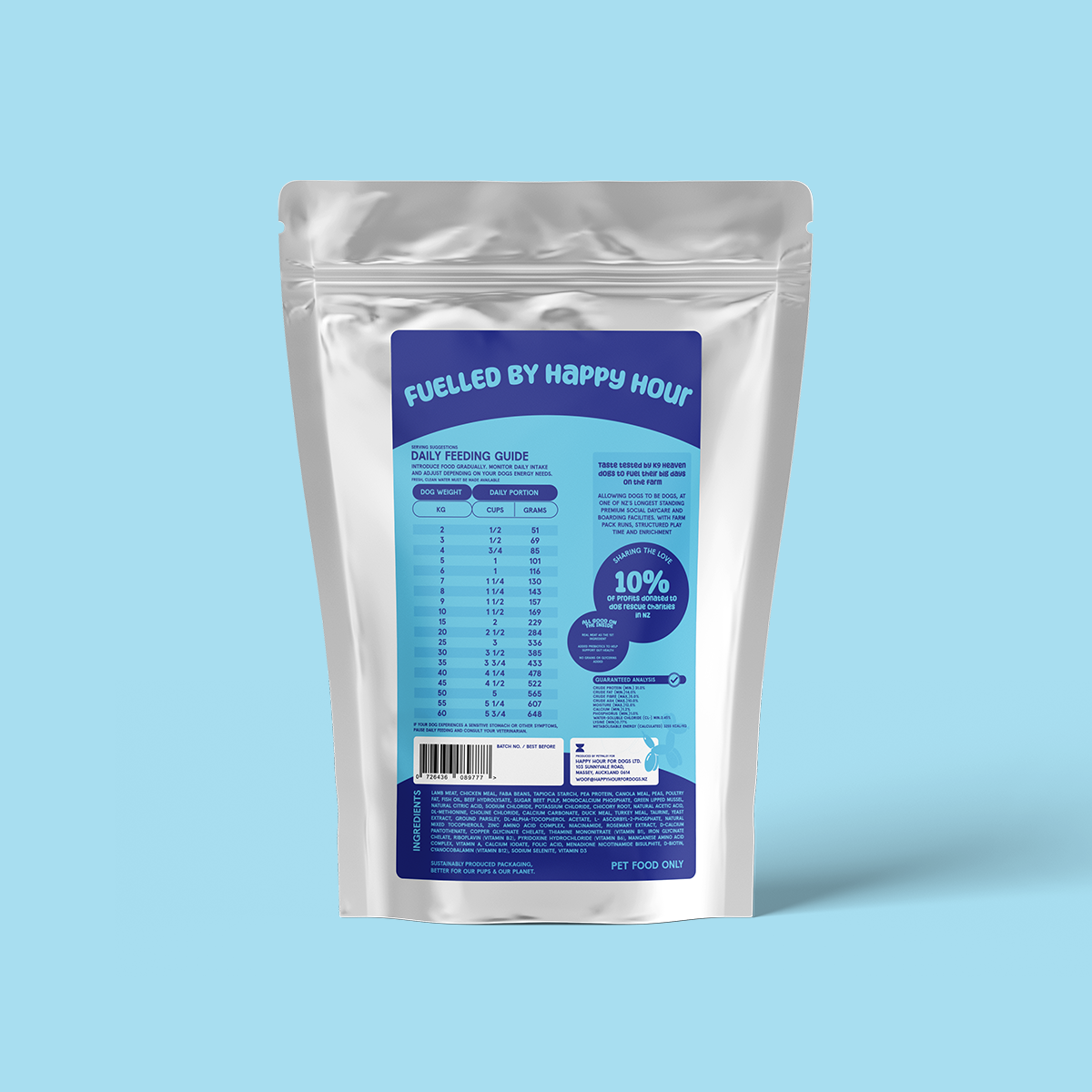
Ingredients: NZ grass-fed lamb, lamb meal, sweet potato, peas, chickpeas, green-lipped mussel, prebiotics, chelated trace minerals, taurine. No grains, soy, dairy, wheat, artificial colours, or hormones.
What sets it apart: everything is made here. The provenance is traceable, the supply chain is short, and the formula has been tested across tens of thousands of real meals at K9 Heaven before commercial launch. There's a 30-day trial with a send-it-back guarantee if your dog doesn't take to it.
Best for: Dogs with grain sensitivities, sensitive stomachs, or owners who want NZ-made provenance in their dog's everyday food.
Orijen
A Canadian brand available in NZ, Orijen formulates around the concept of biologically appropriate nutrition: high animal protein, minimal carbohydrate, diverse protein sources. Their Original formula includes fresh and raw chicken, turkey, fish, and egg. Very impressive ingredient quality.
Best for: Active dogs with high protein needs. Budget is a consideration — Orijen sits at the higher end of the premium market.
Ziwi Peak Kibble
Ziwi is a NZ brand and their kibble range uses high-meat NZ ingredients and is grain-free. It's not as impressive as their air-dried range, but it's a solid option.
Best for: Owners who want to stay within the Ziwi ecosystem but need the convenience and cost of kibble over air-dried.
Black Hawk
An Australian brand with a solid reputation for mid-range quality. Uses named protein sources, avoids the worst fillers, and is reasonably priced for the quality. Their grain-free range is worth a look.
Best for: Budget-conscious owners stepping up from supermarket brands.
What to Skip
Supermarket-brand kibble and budget pet store options tend to lead with grains, use unnamed meat sources, and include artificial preservatives. They're cheap for a reason. You can do meaningfully better for a modest price increase.
Dry Food vs. Wet Food: A Quick Note
Kibble is practical: shelf-stable, convenient, consistent, and cost-effective per serving. Wet food has higher moisture content, which can help dogs that don't drink enough, and is often more palatable for fussy eaters.
The best approach for most dogs is a quality dry food as the base, with wet food or a nutritious topper added if your dog needs the extra incentive.
How to Make the Switch
Switching dry foods too quickly causes digestive upset in a lot of dogs. The right approach is a gradual transition over 7–10 days:
- Days 1-3: 25% new food, 75% old food
- Days 4-6: 50% new food, 50% old food
- Days 7-9: 75% new food, 25% old food
- Day 10: 100% new food
Dogs with sensitive stomachs may need a slower transition. If you're seeing loose stools or vomiting, back off the ratio and go slower.
More on the full landscape of dog food options in NZ: Best Dog Food NZ 2026: An Honest Guide for Kiwi Dog Owners