The best dog food for weight loss isn't always the one marketed as "diet" or "light." Those labels can mean very different things depending on the brand. What you actually want is a food with the right nutritional profile: enough protein to protect muscle, enough fibre to keep your dog full, and a fat level that makes hitting the right calorie target manageable. Here's what to look for and how the main options stack up.
Key Takeaways
- High protein is essential during weight loss to preserve muscle mass, not just burn fat
- Fibre is the most underrated tool for managing a dog's appetite and portion control
- Lower fat reduces calorie density, making it easier to feed the right amount
- "Light" or "diet" labels don't guarantee the right nutritional balance
- Happy Hour is a NZ-made option with the right profile: quality protein, high fibre, lower fat, no grain fillers
- Royal Canin and Hill's have dedicated weight loss options, but come with trade-offs worth knowing
What Actually Makes a Dog Food Good for Weight Loss?
Weight loss in dogs comes down to a calorie deficit. Your dog needs to burn more than they eat. But the composition of those calories matters enormously for how healthy the weight loss is and how manageable the process is for you.
Protein: Preserve the Muscle, Lose the Fat
When a dog loses weight, you want them to lose fat, not muscle. Muscle is metabolically active tissue that helps with everything from movement to metabolism. If a dog loses significant muscle during weight loss, they end up lighter but weaker and with a slower resting metabolism, which makes maintaining a healthy weight harder long-term.
High protein during weight loss protects that muscle. Look for a food where a quality animal protein (real meat, not meal or by-product) is the first ingredient. Protein percentage in the dry matter analysis should be on the higher end.
Fibre: The Underrated Tool
This is the one that catches most people by surprise. Fibre doesn't contribute many calories, but it adds bulk to food and slows digestion significantly. A dog eating a high-fibre food stays fuller for longer after each meal. They're calmer, less food-fixated, and much easier to portion-control.
Low-fibre kibble moves through the digestive system quickly. Dogs get hungry again fast, which creates pressure to overfeed. A higher-fibre formula changes the whole dynamic of feeding a dog on a weight management plan.
Fibre also supports good gut health, consistent stool quality, and natural anal gland expression. It's doing a lot of work in the background.
Fat: Fewer Calories Per Gram
Fat contains more than twice the calories per gram compared to protein or carbohydrates. A high-fat food has a much higher calorie density, which means even small amounts add up fast. For a dog that needs to eat less overall, lower fat makes hitting the calorie target easier without leaving them genuinely miserable.
You don't want a food with almost no fat, which would affect coat health and energy. But comparing fat percentages across foods is worth doing, especially if your dog is currently on a rich, high-calorie formula.
No Unnecessary Fillers
Cheap fillers like low-quality grains, starches, and refined carbohydrates bulk out kibble without contributing meaningful nutrition. They tend to be quickly digested, which means dogs get hungry faster. They also often cause inconsistent digestion and softer stools.
A grain-free or low-grain formula with quality ingredients tends to produce better digestion, more consistent stools, and a more satisfied dog between meals.
Happy Hour: The NZ-Made Option Worth Knowing
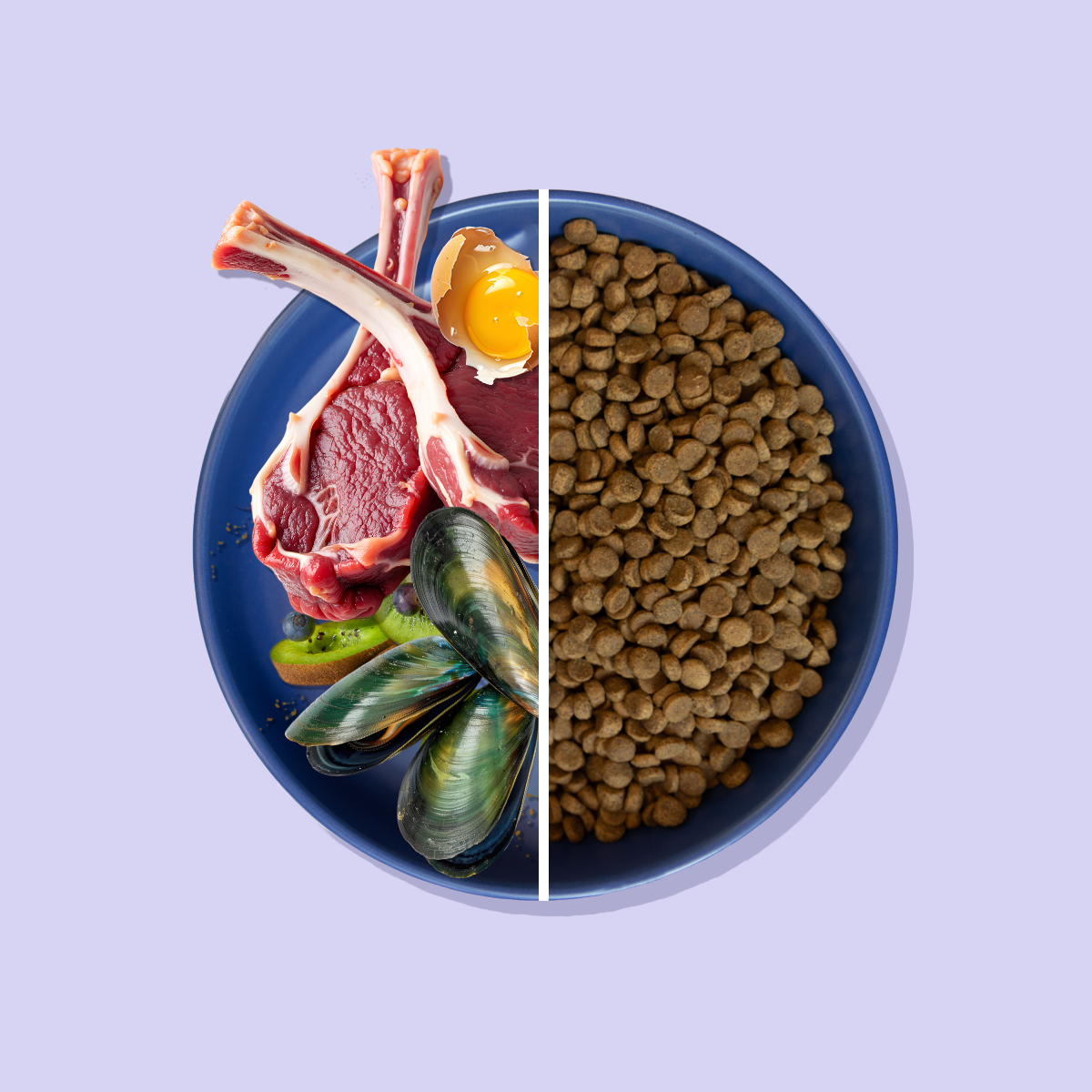
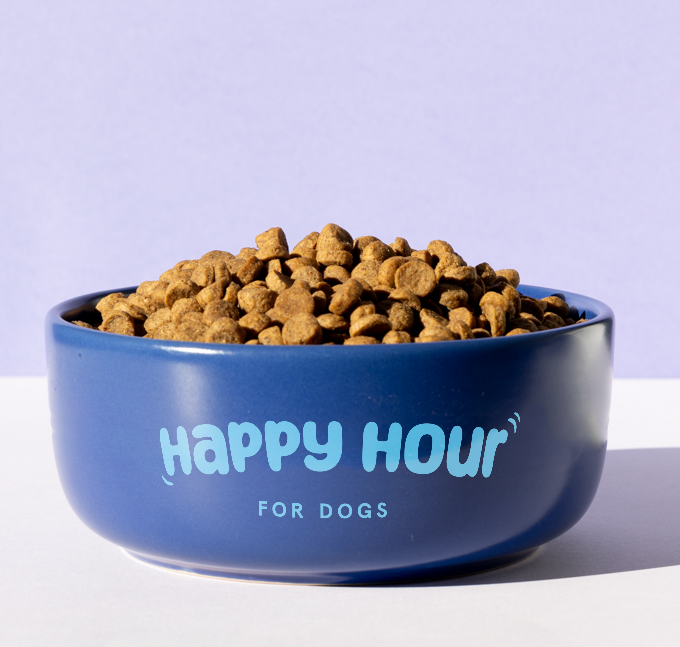
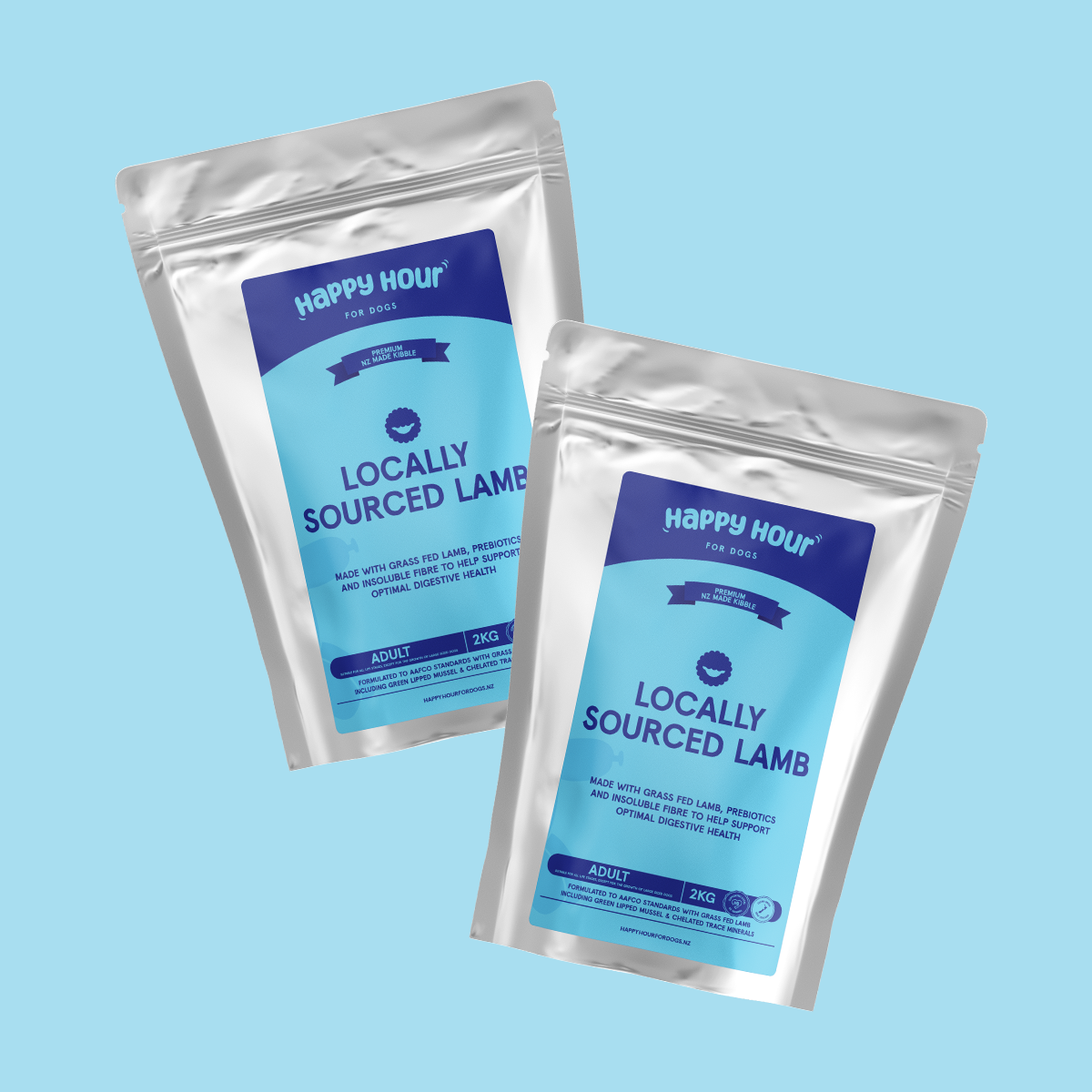
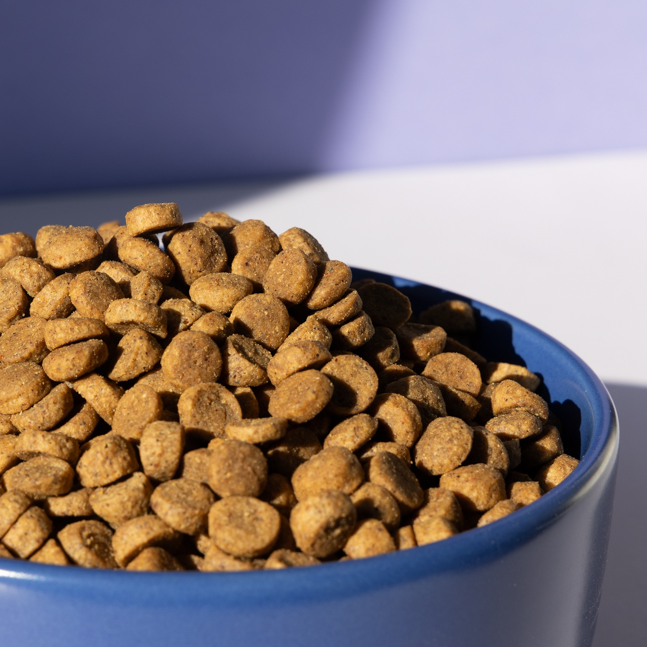
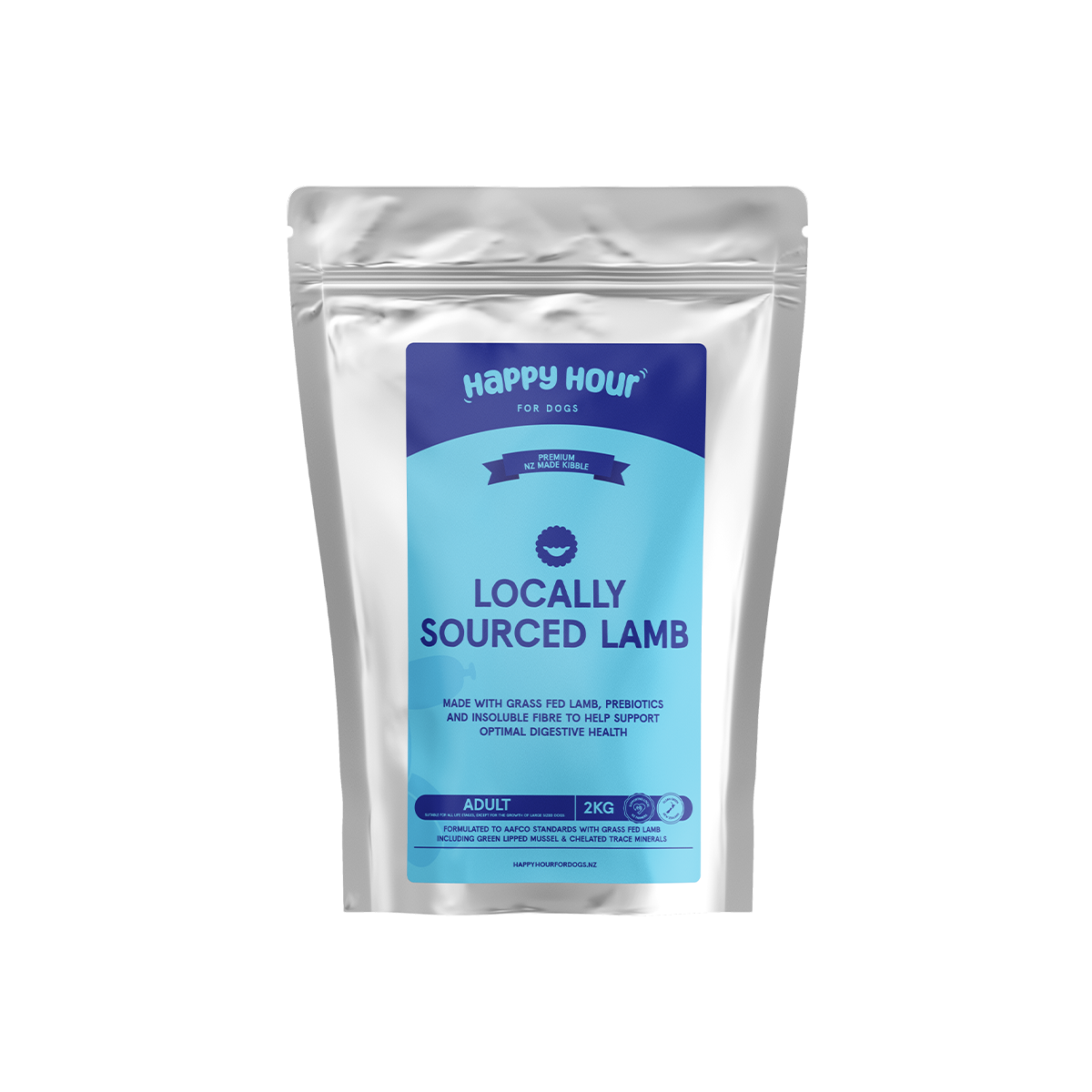
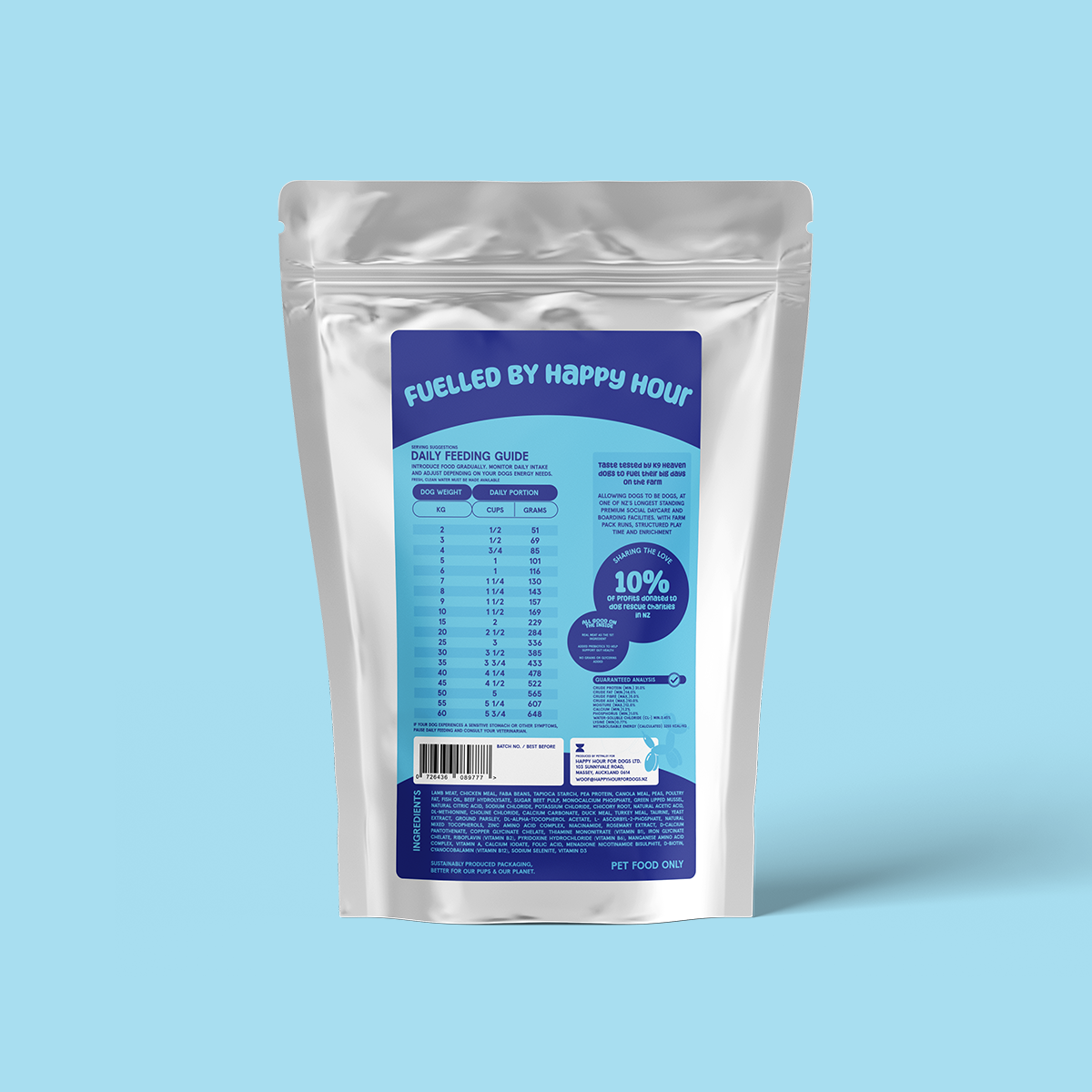
Happy Hour is a NZ-made grain-free kibble built around grass-fed NZ lamb. It's not specifically marketed as a weight loss food, but its ingredient profile lines up well with what you want for a dog managing their weight:
Quality protein first. Grass-fed NZ lamb is the primary ingredient. Real meat, not a by-product or meal. This preserves muscle during weight loss and supports overall body condition.
High fibre. Happy Hour includes prebiotics and insoluble fibre sources that support digestive health and sustained fullness. Dogs on Happy Hour tend to be more settled between meals.
Lower fat than many mainstream options. The formula is designed for everyday health, not performance dogs or puppies, so the fat level is appropriate for adult dogs managing their weight.
Grain-free and no unnecessary fillers. No wheat, soy, dairy, or artificial additives. The ingredients are clean and digestible, which matters for gut health and stool quality.
NZ-made with real transparency. You know where the protein comes from. That's not always true with imported products.
Happy Hour isn't the cheapest option on the market, and it's not trying to be. But for NZ owners who want a clean, quality food that genuinely supports healthy weight management without the pharmaceutical-grade marketing, it's a strong choice.
If your dog also has a sensitive stomach, the grain-free formula with real lamb is worth noting there too: Best Dog Food for Sensitive Stomachs in NZ
How Happy Hour Compares to the Prescription Options
Royal Canin Satiety Support
Royal Canin's Satiety range is purpose-built for weight management. It has a high fibre content (using a combination of fibre sources to create bulk and satiety), very low fat, and is formulated to create a feeling of fullness. It works, and many dogs do lose weight on it.
The trade-offs: it contains grain-based fillers, the protein sources are not as high-quality as lamb-first options, and the ingredient list is long and not especially clean. It's a functional food. It does its job, but it's not something you'd choose for a healthy dog as a general-purpose feed.
Royal Canin Satiety is worth discussing with your vet if your dog has significant weight to lose and needs a heavily calorie-controlled, high-satiety formula. For dogs that are moderately overweight and just need better diet management, there are better everyday options.
Hill's Prescription Diet Metabolic
Hill's Metabolic is a veterinary diet that targets metabolism as well as calorie restriction. It includes a specific combination of nutrients claimed to support metabolic rate and fat burning. It requires a prescription in NZ, and it's priced accordingly.
The research behind Hill's Metabolic is more solid than most commercial weight loss foods, and some dogs do respond well. The ingredient list is similar to Royal Canin: functional, grain-based, not the cleanest. It also tends to be expensive per-kg and is intended as a short-term weight loss tool rather than a long-term everyday food.
If your vet recommends it for a specific reason, it's worth trying. But many dogs lose weight just as effectively on a high-quality everyday kibble with appropriate portion control, without needing the prescription price tag.
What to Actually Look at on the Label
When you're comparing foods for a dog that needs to lose weight, here's what matters:
Guaranteed analysis: Look at the protein, fat, and fibre percentages. Compare them on a dry matter basis (remove the moisture to make a fair comparison between different foods).
First ingredient: Should be a named meat source, not a by-product, meal, or grain.
Fibre percentage: Aim for crude fibre above 3-4% on a dry matter basis. Some high-satiety foods go higher.
Calorie count (kcal/kg): Often printed on the bag or available on the brand's website. Lower calorie density means more food for the same calorie budget, which makes your dog feel less restricted.
Ingredient list length: Shorter and more recognisable tends to be better. If you can't picture most of the ingredients as actual food, that's worth noting.
The Bottom Line
There's no single "best" food for all overweight dogs. The right choice depends on how much weight your dog needs to lose, whether they have other health conditions, and how they respond to different ingredients.
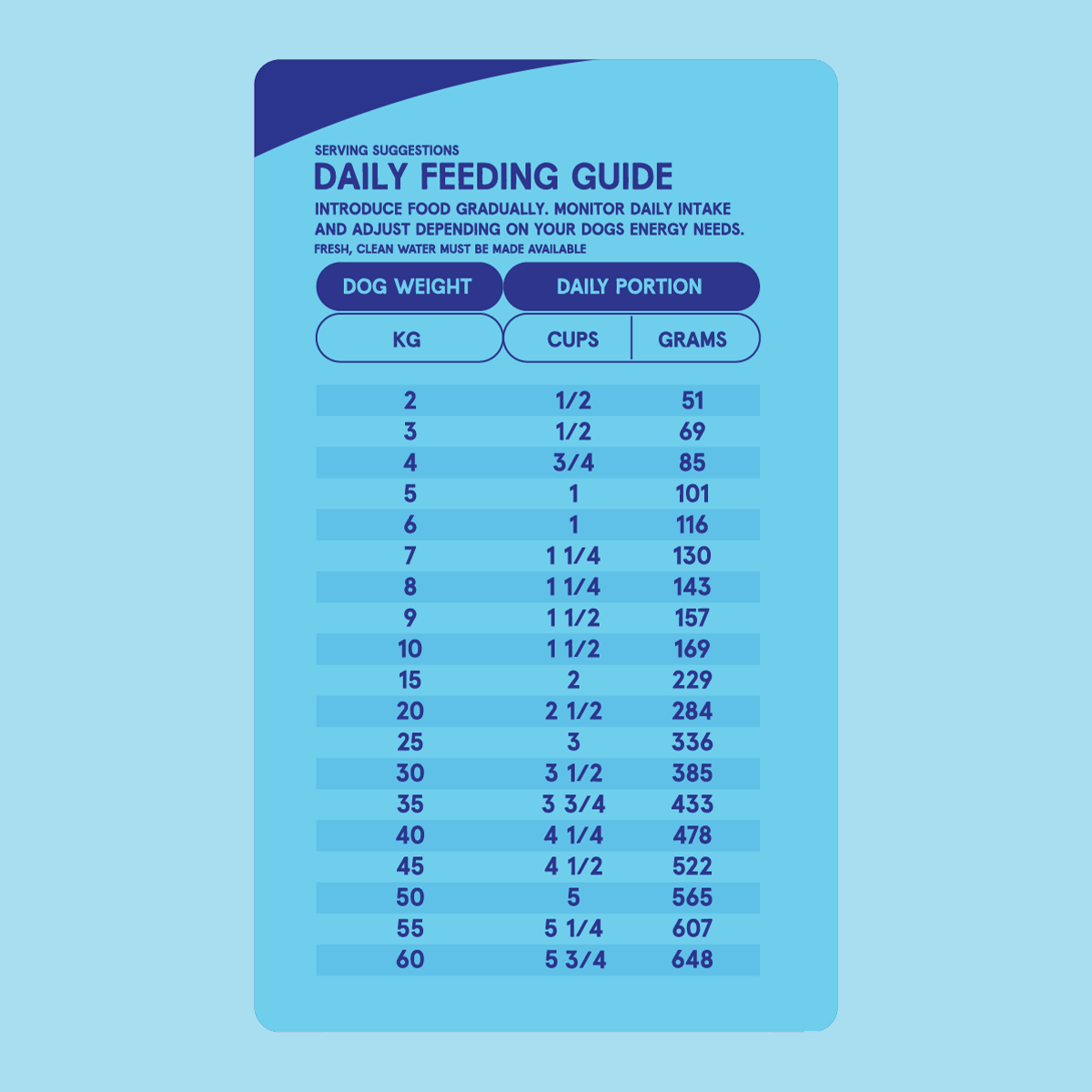
But the framework is consistent: high protein, meaningful fibre, lower fat, clean ingredients. Happy Hour ticks all of those boxes as a NZ-made everyday food. Royal Canin Satiety and Hill's Metabolic are stronger tools for dogs with significant obesity or specific veterinary guidance. For the average moderately overweight NZ dog, the everyday food approach with proper portions is usually enough.
For the full weight management guide: My Dog Is Overweight: How to Help Them Lose Weight Safely