Pick up almost any bag of dog food in a NZ supermarket and the front tells you a great story. Natural. Premium. Wholesome. Flip it over and read the ingredients list. That's where the real story is.
Key Takeaways
- Why Labels Are Designed to Confuse You
- Ingredients to Avoid
- How to Read the Guaranteed Analysis
- What Good Ingredients Look Like
- Happy Hour: What the Good List Looks Like in Practice
Most dog owners don't read labels because the terminology is confusing by design. This guide cuts through that. Here's what to avoid, what to look for, and how to spot the difference quickly.
Why Labels Are Designed to Confuse You
Dog food labelling in NZ follows relatively loose standards. Manufacturers aren't required to specify the source of every ingredient, which means terms like 'animal by-products' or 'meat meal' can legally cover a wide range of materials.
The ingredient list is ordered by weight before processing. Fresh meat is heavy because it contains water - after cooking it shrinks significantly. Once you know what to look for, reading a label takes about 30 seconds.
Ingredients to Avoid
Unnamed meat meal and animal by-products
Meat meal can be fine when the source is named: 'chicken meal' or 'lamb meal' tells you what's in the bag. 'Meat meal' or 'animal meal' without a species specified is a red flag. These are often rendered from multiple unspecified sources.
Corn, wheat, and soy as primary ingredients
These are cheap calorie sources used to bulk out a product inexpensively. Dog digestive systems are designed for animal protein, not grain. If corn, wheat, or soy appears in the first three ingredients, the food is grain-padded.
Artificial preservatives: BHA, BHT, and ethoxyquin
These synthetic antioxidants extend shelf life. BHA and BHT have raised concerns in animal studies. Ethoxyquin was originally developed as a pesticide. Natural alternatives like mixed tocopherols and ascorbic acid do the same job without the concerns.
Artificial colours and flavours
Dogs don't choose food based on appearance. Artificial colours serve no nutritional purpose. Any food that needs artificial flavour enhancers to be palatable is compensating for low-quality base ingredients.
Added sugars
Corn syrup, glucose, and similar sweeteners appear in some dog foods to improve palatability. They contribute to weight gain, dental disease, and blood sugar instability. If sugar appears anywhere in the ingredient list, that's a flag.
Salt as a primary flavour enhancer
Sodium is a necessary part of any dog's diet, and sodium chloride appears on most dog food labels for good reason. The concern is when salt appears prominently high in the ingredient list, suggesting it's being used in larger-than-necessary quantities to compensate for low-quality base ingredients.
Rendered fat from unnamed sources
'Animal fat' without a species is the most concerning version. 'Poultry fat' is a step better - it at least identifies the category of animal. Named single-source fats like chicken fat, salmon oil, or flaxseed oil offer the most transparency.
How to Read the Guaranteed Analysis
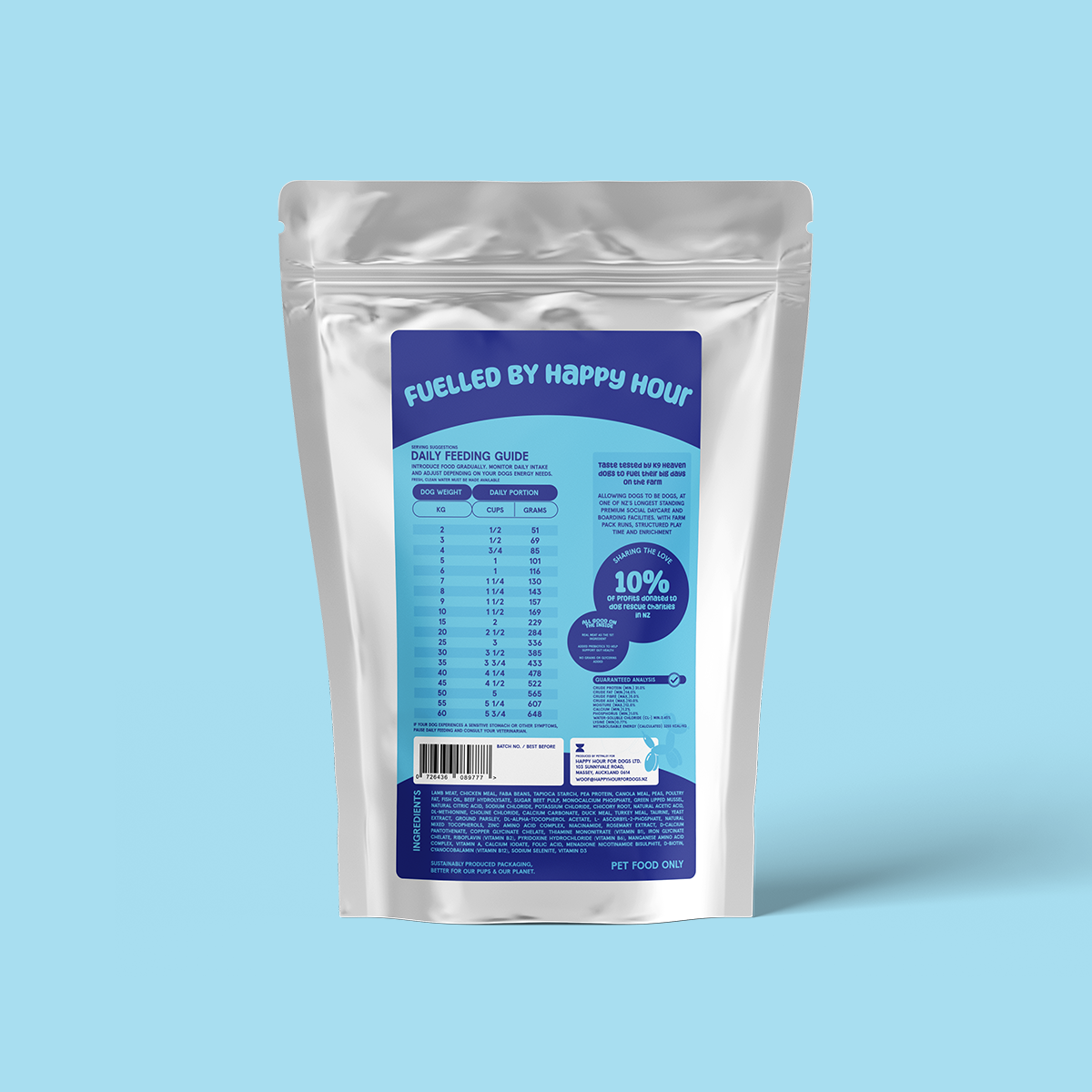
The guaranteed analysis shows minimum protein, minimum fat, maximum fibre, and maximum moisture. Benchmarks for adult dogs:
- Protein: 25%+ crude protein from quality named sources
- Fat: 10-16% is a reasonable range. Lower suits dogs prone to weight gain or pancreatitis.
- Fibre: 3-6% crude fibre supports good digestion and firm stools
Protein percentage isn't quality. A food can have 30% protein while most comes from plant sources or low-quality by-products.
What Good Ingredients Look Like
- Named protein first: New Zealand lamb, cage-free chicken, wild salmon
- Quality fibre sources: sweet potato, chicory root, beet pulp
- Named fats: chicken fat, salmon oil, flaxseed
- Natural preservatives: mixed tocopherols, rosemary extract, vitamin C
- No added sugar, no artificial colours, no unnamed by-products
Happy Hour: What the Good List Looks Like in Practice
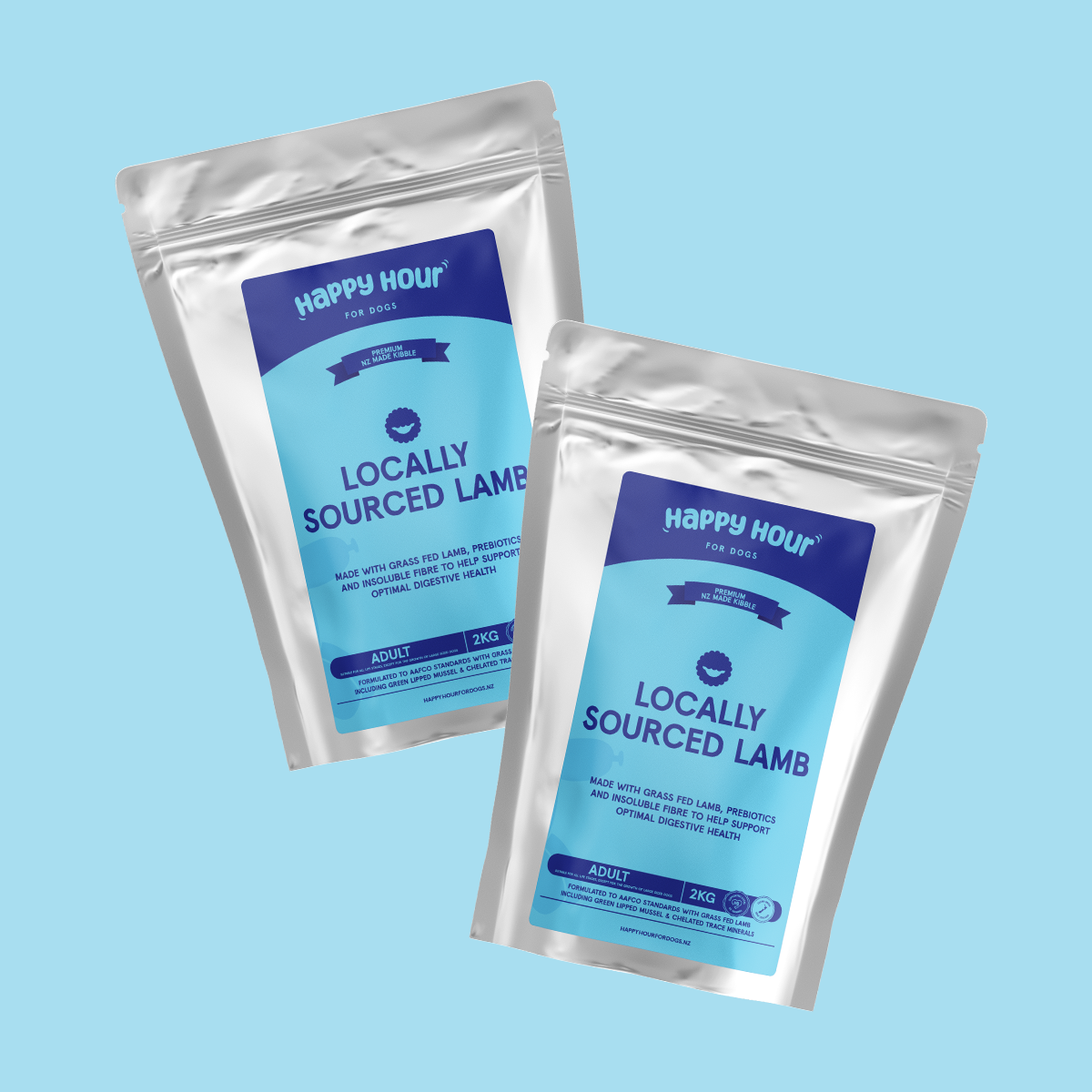
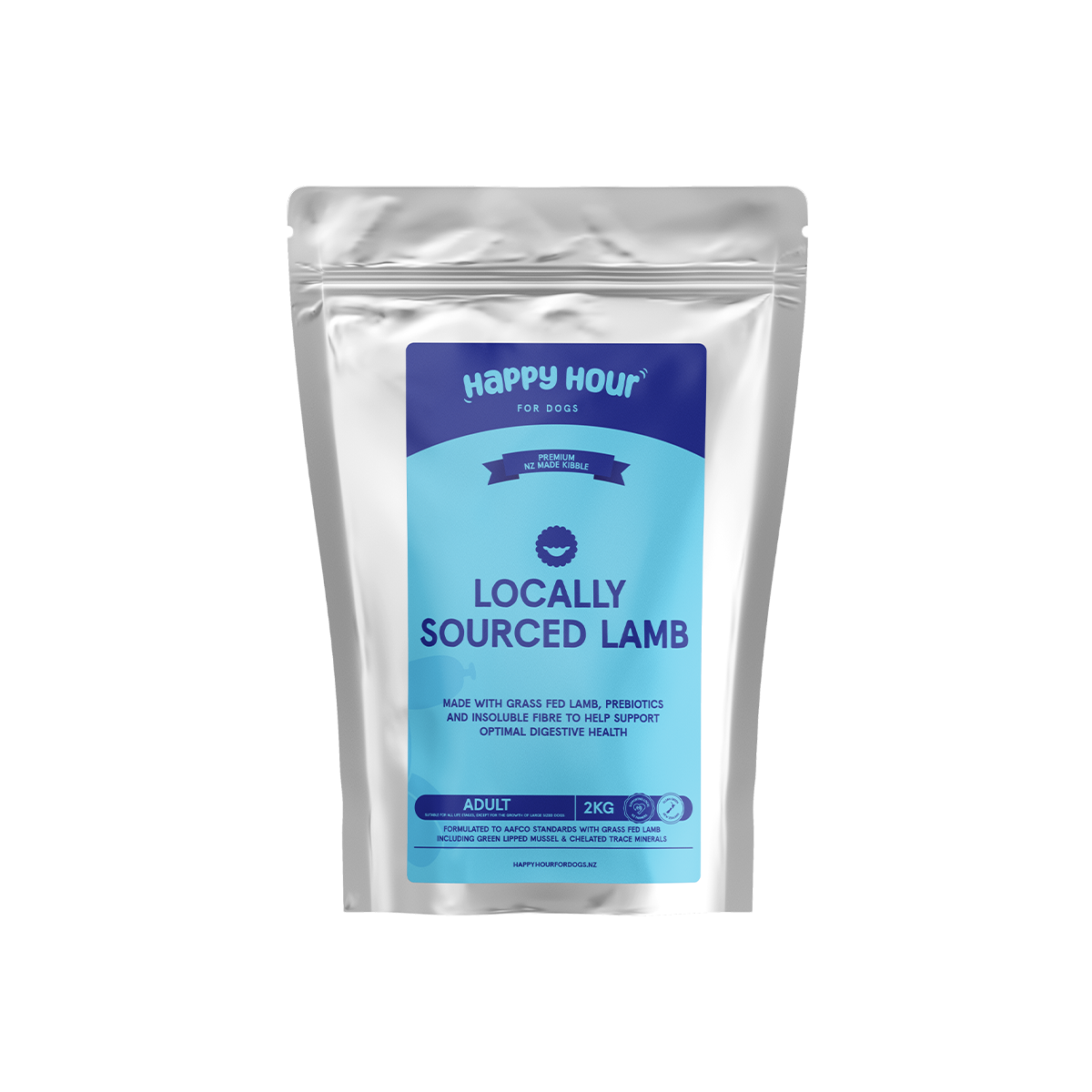
Happy Hour is a NZ-made, grain-free formula. Running it through the criteria above:
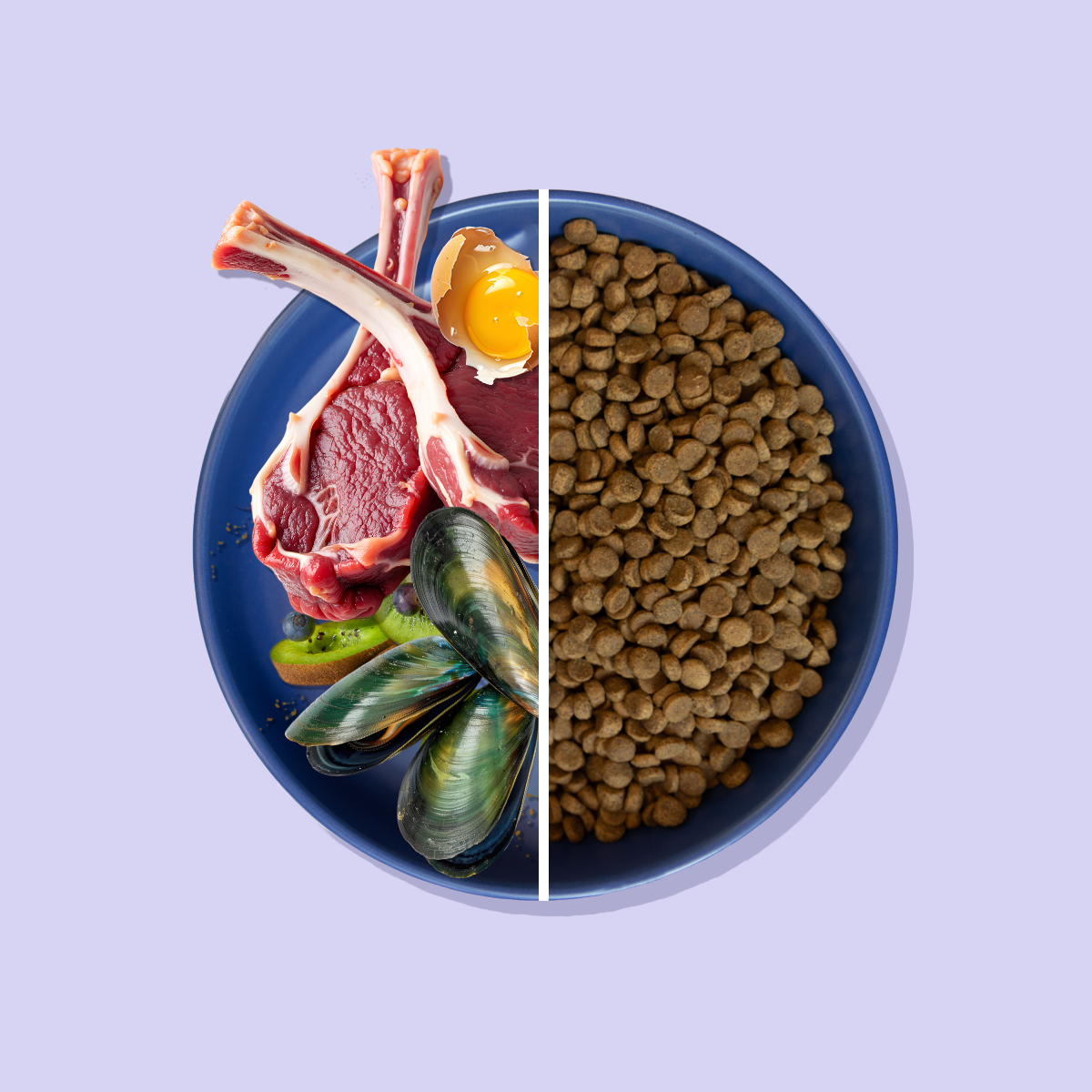
- Named NZ protein sources: grass-fed New Zealand lamb as the primary ingredient
- No unnamed by-products
- Grain-free: no wheat, corn, or soy
- Natural preservatives only: citric acid, acetic acid, mixed tocopherols, rosemary extract
- No artificial colours or flavours
- No added sugars
- Functional additions: green-lipped mussel, manuka honey, prebiotics, chelated minerals
The Bottom Line
The pet food industry relies on most owners not reading labels carefully. Once you know what the terminology actually means, the quality differences become obvious. Your dog eats the same food every day. It's worth two minutes reading what's actually in it.