When to Switch From Puppy to Adult Dog Food (NZ Guide)
Puppy food is designed for rapid growth and development. Adult dog food is designed for maintenance. These are different nutritional jobs, and the crossover point matters. Switch too early and your puppy misses critical developmental nutrients. Switch too late and you may be overfeeding calcium and calories to a dog whose growth plates have already closed. Here's how to get the timing right.
- The right time to switch depends on breed size, not a fixed age: small breeds are ready around 10-12 months, while giant breeds like Great Danes may need puppy food until 18-24 months.
- Switching too early shortchanges your puppy on growth nutrients; switching too late overloads a mature dog with calcium and calories, which is linked to bone and joint problems in larger breeds.
- Large and giant breed puppies should be on a large-breed-specific puppy formula with calcium kept around 0.9-1.2%, lower than standard puppy food, to prevent growth outpacing bone development.
- Use physical signs, not just the calendar: slowing height growth, a stable weight, and a filled-out body shape all signal your dog is ready, and a vet can confirm via growth-plate X-rays.
- Even after months on puppy food, transition gradually over 7-10 days, shifting from 75% puppy food down to 100% adult food, to avoid digestive upset.
Why the Timing Matters
Puppy food is typically higher in calories, protein, and calcium than adult food. That's intentional. Growing dogs need more energy and more calcium for bone development. But once a dog reaches physical maturity, those elevated levels become a problem rather than a benefit.
Too much calcium after growth plates close has been linked to bone and joint issues, particularly in large breeds. Excess calories contribute to weight gain. Continuing with puppy food past physical maturity isn't neutral nutrition. It's actively the wrong formula for the body your dog now has.
The Right Age to Switch by Breed Size
Physical maturity varies significantly by breed size. This is where most owners get it wrong, because they use age alone without accounting for how differently small and large breeds develop.
Small breeds (under 10kg adult weight)
Small dogs mature faster than large dogs. Most small breeds, including Chihuahuas, Maltese, Miniature Schnauzers, Pomeranians, and Shih Tzus, reach physical maturity at around 9-12 months. Start transitioning to adult food from about 10-12 months of age.
Medium breeds (10-25kg adult weight)
Medium breeds, including Cocker Spaniels, Border Collies, and Labrador mixes, typically reach maturity around 12 months. Begin the transition to adult food between 12-14 months.
Large breeds (25-45kg adult weight)
Large breeds, including Labradors, Golden Retrievers, Boxers, and German Shepherds, develop more slowly, typically reaching physical maturity between 15-18 months. Hold off on the switch until at least 14-16 months.
Giant breeds (over 45kg adult weight)
Giant breeds, including Great Danes, Saint Bernards, Newfoundlands, and Bernese Mountain Dogs, are the slowest to mature, often not reaching full adult size until 18-24 months. These dogs should stay on large-breed puppy food (which is specifically lower in calcium and calories than standard puppy food) until your vet confirms growth is complete.
Signs Your Puppy Is Ready to Switch
Beyond age, physical signs indicate your dog is approaching full maturity. Look for: growth has visibly slowed or stopped, they're not getting taller; body condition is filling out rather than constantly changing shape; weight is stable and appropriate for their breed; and your vet has confirmed growth plates are closing (can be checked via X-ray if you're unsure).
For large and giant breeds in particular, confirming with your vet before making the switch is a good idea.
Why Large Breed Puppies Need Special Attention
Large breed puppies are particularly vulnerable to nutritional issues if food is switched at the wrong time, or if they're fed the wrong puppy food to begin with. Standard puppy food is often too high in calcium and phosphorus for large breeds, which can cause rapid growth that outpaces bone development.
If you have a large breed puppy, check whether their current puppy food is specifically formulated for large breeds. It should say so on the label, and the calcium levels should be in the range of 0.9-1.2%, lower than standard puppy food.
How to Make the Switch
Use the same gradual transition approach as any food switch: 7-10 days moving from mostly puppy food to mostly adult food. Even though your dog has been eating puppy food for months, an abrupt switch can still cause digestive upset.
- Days 1-2: 75% puppy food, 25% adult food
- Days 3-4: 50% puppy food, 50% adult food
- Days 5-6: 25% puppy food, 75% adult food
- Days 7 onwards: 100% adult food
For a more detailed guide on managing food transitions, read our article on How to Switch Your Dog's Food Without Upsetting Their Stomach.
What to Look for in an Adult Dog Food
Once you're ready to switch, the adult food choice matters as much as the timing. Look for:
- Named animal protein as the first ingredient
- Appropriate calorie density for your dog's size and activity level
- No unnecessary fillers or by-products
- Good digestibility (this shows in firm, healthy stools)
- Joint support ingredients for large breeds (omega-3, green-lipped mussels)
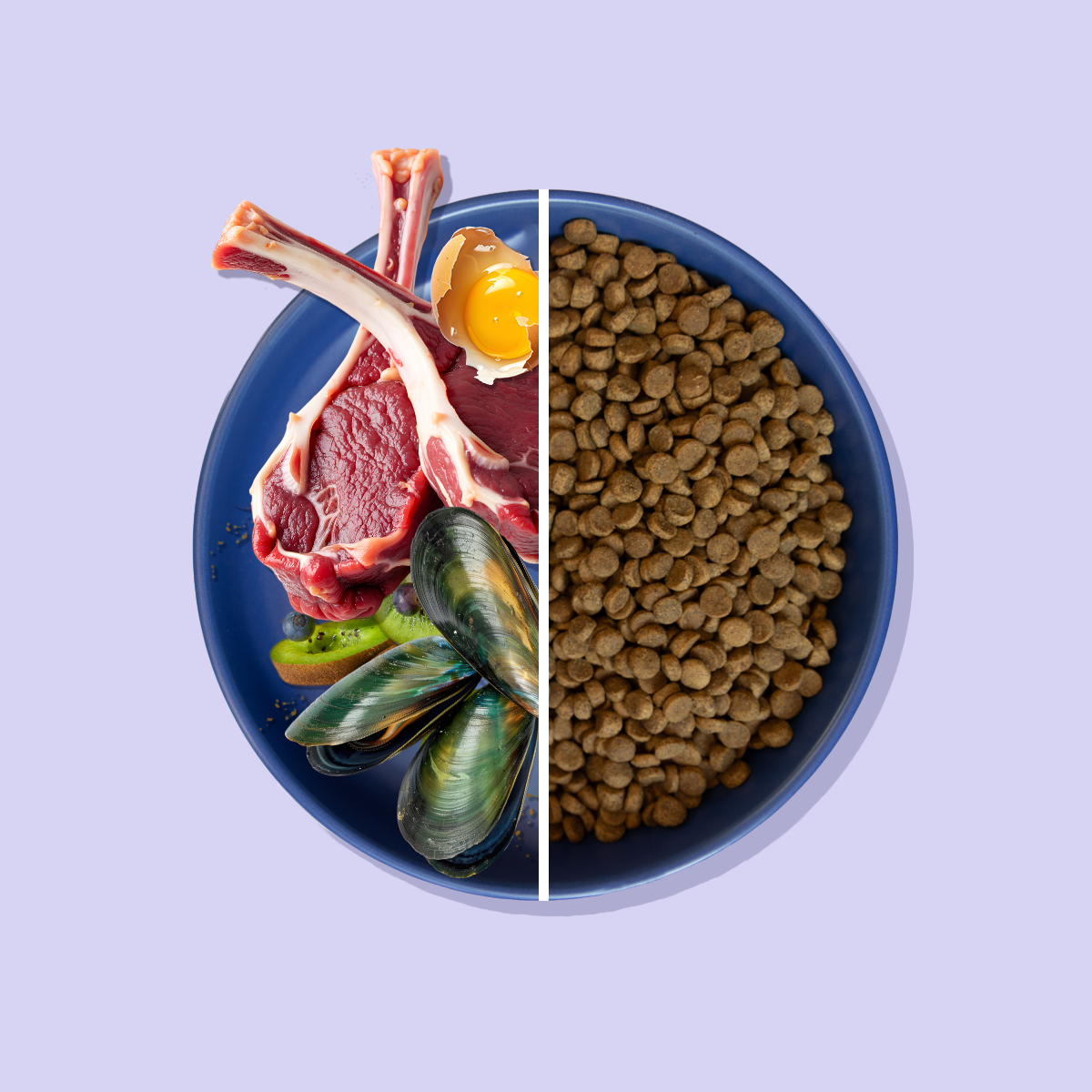
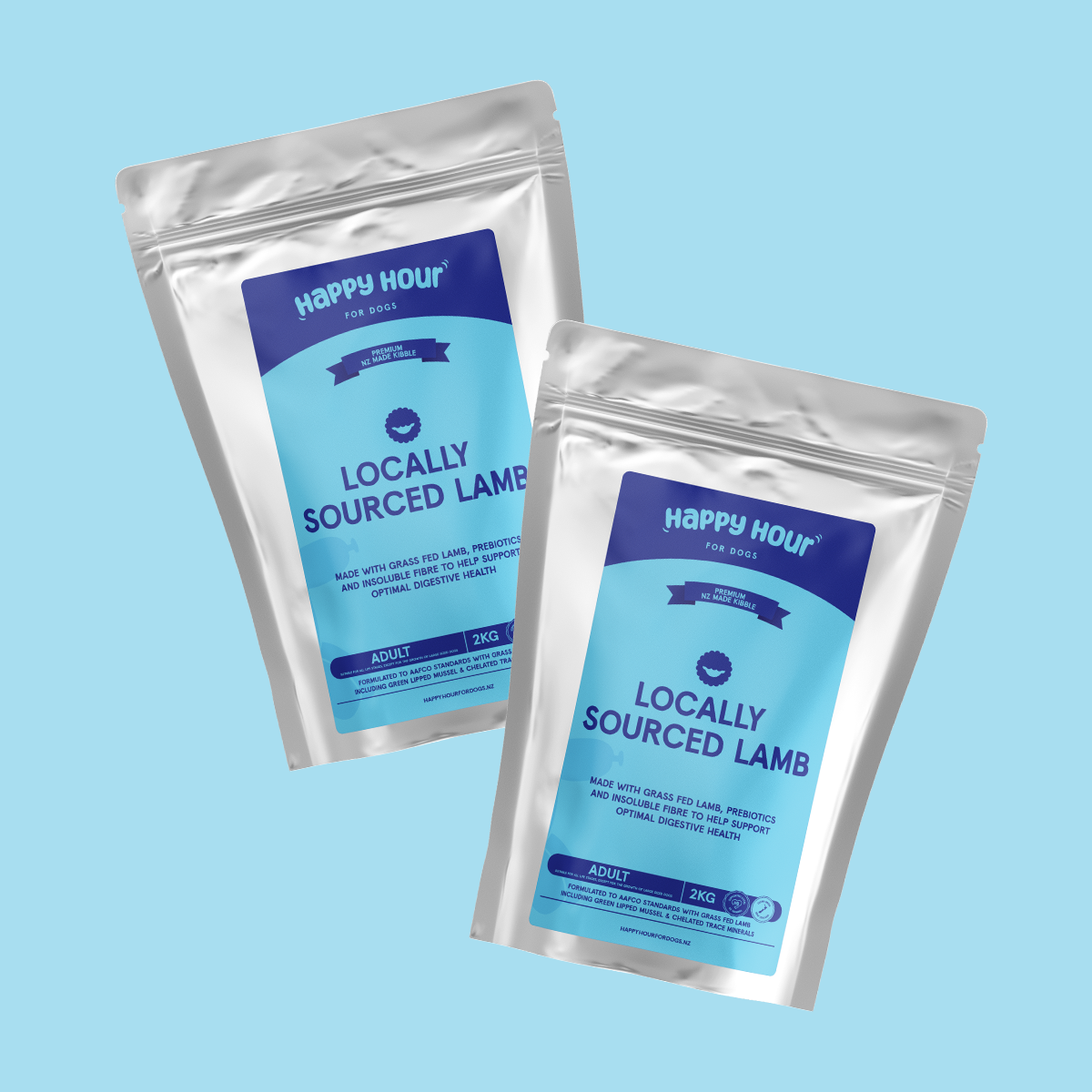
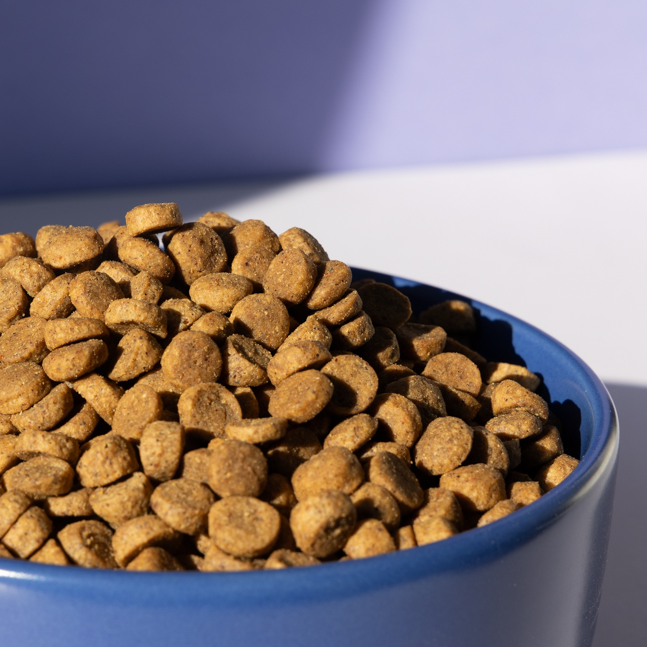
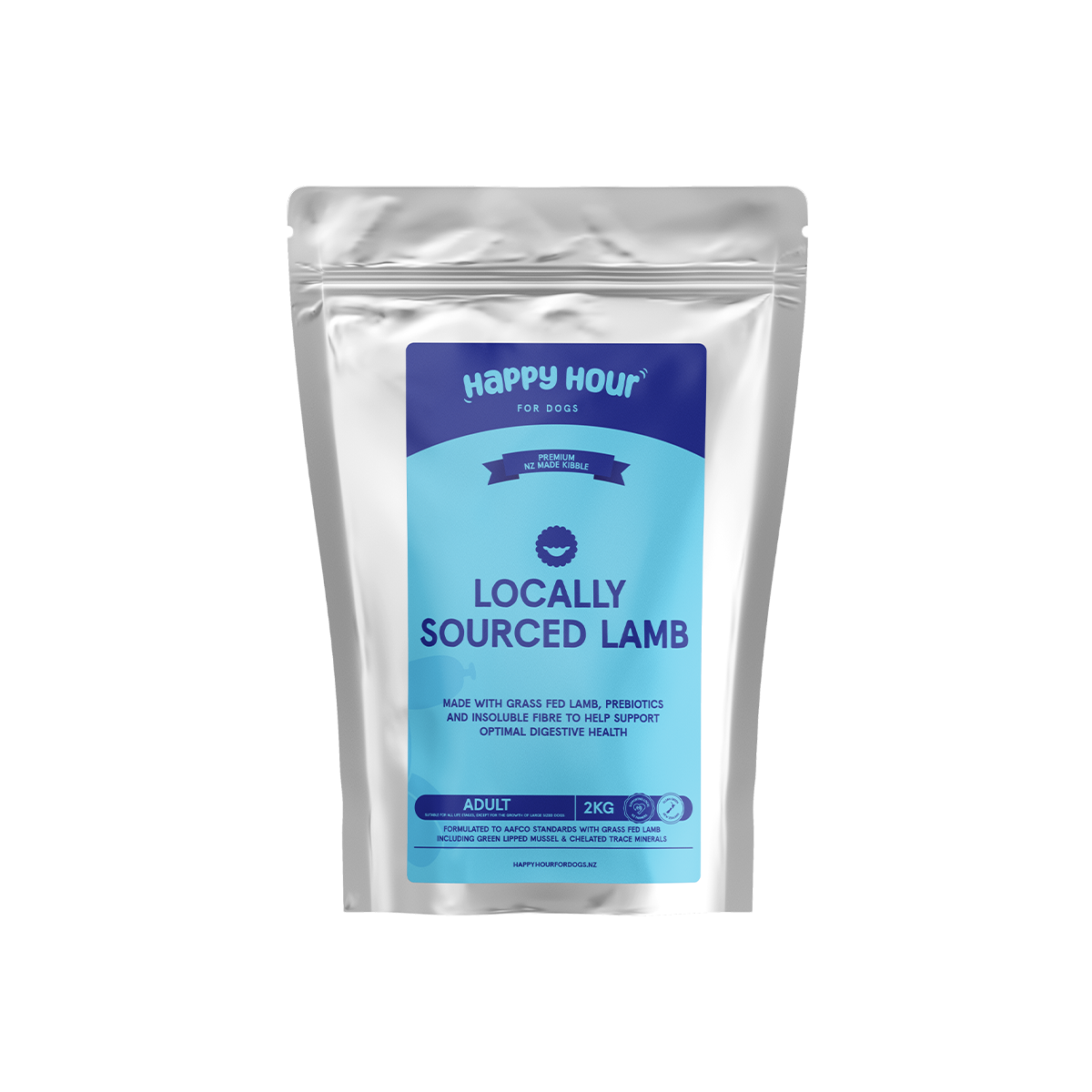
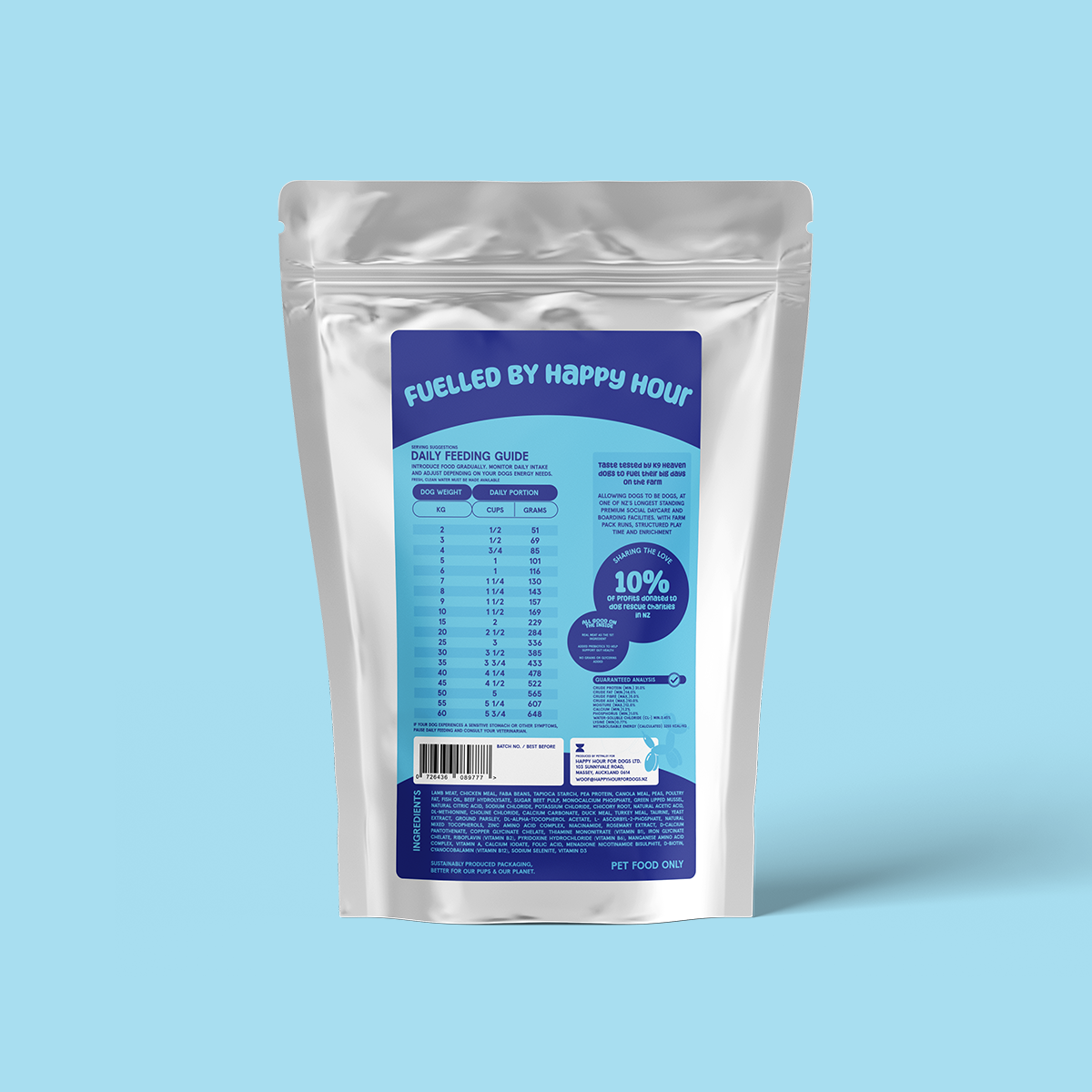
Happy Hour For Dogs is formulated for adult dogs, with cage-free chicken and NZ grass-fed lamb as base proteins, green-lipped mussels for joint support, prebiotics for gut health, and chelated minerals for better nutrient absorption. It's a strong next step from a quality puppy food.
Can You Feed Adult Food to a Puppy?
Generally, no. A fully balanced puppy formula is important for development. However, there are 'all life stages' formulas that meet the nutritional requirements for both puppies and adults. If a food is labelled 'all life stages' and meets AAFCO puppy requirements, it can technically be fed to puppies.
That said, a purpose-built puppy formula is usually the better choice for the first year of life, particularly for large breeds where growth rate management is critical.
For more on puppy nutrition, see our article on Best Dog Food for Puppies NZ. For guidance on the adult food you're transitioning to, our Best Dog Food NZ 2026 guide covers what to look for.
Making the Change at the Right Time
Getting the timing right on this transition is one of the most impactful nutritional decisions you'll make for your dog. Too early, and development is compromised. Too late, and you're feeding the wrong formula to an adult dog. Use breed size as your guide, watch for the physical signs of maturity, and make the switch gradually when the time comes.
Happy Hour For Dogs is there when your dog is ready. Made in New Zealand with cage-free chicken, NZ grass-fed lamb, and green-lipped mussels, with a 30-day money-back guarantee so the switch is risk-free. Visit happyhourfordogs.nz to learn more.