Grain-free was the thing every dog food brand shouted about for the better part of a decade. Then a US investigation into heart disease landed in 2018, the headlines travelled, and now we get messages from Kiwi owners asking whether the bag in their pantry is quietly hurting their dog.
Key Takeaways
- The short answer
- What DCM actually is
- Where the worry came from
- What the investigation actually concluded
- Grains were probably never the point
We make grain-free kibble, so read this knowing we've got skin in the game. But the honest answer is more useful than either side of the argument usually admits, and it isn't "she'll be right, don't worry about it".
The short answer
No food has been shown to cause dilated cardiomyopathy, and no food has been shown to prevent it. The US Food and Drug Administration looked into a possible link for four years and never established one.
What the investigation did surface is a better question than "grains or no grains", which is: what's actually filling out this recipe, and how much of the protein on the label came from an animal?
And if your dog has a heart condition, or you suspect one, that conversation belongs with your vet rather than a blog. Including this one.
What DCM actually is
Dilated cardiomyopathy is a disease of the heart muscle. The walls stretch and thin, the chambers get bigger, and the heart gets worse at pumping blood around the body. Dogs with it tire quickly, cough, breathe faster than normal at rest, and in bad cases collapse. It's serious, and it can be fatal.
It's also, in most cases, genetic. Dobermanns, Great Danes, Boxers, Irish Wolfhounds, Newfoundlands and Cocker Spaniels have carried a recognised predisposition to DCM for decades. Vets were diagnosing it in these breeds long before anyone in pet food was arguing about peas.
That context went missing from a lot of the 2018 coverage, and it matters.
Where the worry came from
In July 2018 the FDA announced it was investigating reports of DCM in dogs eating foods that were frequently labelled grain-free, and frequently had peas, lentils, other pulses or potatoes sitting high on the ingredient list. Some of the affected dogs were breeds with no known genetic link to the disease. That's the detail that made vets sit up, and fairly so.
Reports came in. A 2019 update named the brands that appeared most often in them. The story got picked up everywhere, here included, and grain-free went from a badge of honour to a source of guilt in about a fortnight.
Two things about that deserve to be said plainly. Reports to a regulator are reports, not confirmed cases with a proven cause, so the raw numbers were never the indictment they were presented as. At the same time, a spike in people reporting something isn't nothing either. Both can be true, and mostly people picked whichever one suited them.
What the investigation actually concluded
By December 2022 the FDA said it hadn't found a definitive link between grain-free diets and DCM, described the relationship as complex and not explained by any single ingredient or class of ingredients, and said it wouldn't be publishing further updates unless meaningful new science turned up. That's still roughly where things sit.
That isn't a formal all-clear and we're not going to sell it as one. "We couldn't establish causation" is a different sentence from "there's nothing here". But four years of looking, plus follow-up research out of several universities, didn't produce the smoking gun the headlines implied had already been found.
The other thing to hold onto is that this was an American investigation into American reports about American products. It stayed one.
Grains were probably never the point
Here's the bit that got lost in the noise. Nothing about removing grain from a recipe damages a heart. Grain is a carbohydrate source. Take it out and you have to put something else in, because kibble needs starch to hold its shape.
What a lot of brands put in was pulses. Peas, pea protein, pea starch, lentils, chickpeas, and plenty of them. They're cheap, and pea protein in particular lifts the protein percentage on the label without much meat behind it. When researchers started pulling apart the recipes involved, the attention moved away from the missing grain and toward what had replaced it, and how much of the bag it took up.
So the question worth asking isn't grain or no grain. It's whether the food is built on named animal protein or padded out with plant protein in a good costume. A grain-free food stacked with pea protein and a wheat-based food stacked with wheat gluten have more in common with each other than either has with a recipe built on real meat. We've gone through what that padding looks like on a label in Dog Food Ingredients to Avoid.
The taurine thread
Taurine came up early, because taurine deficiency is a known cause of DCM in cats and in some dogs. Unlike cats, dogs normally make their own taurine from two amino acids, methionine and cysteine, and both come from animal protein. So the theory went that a diet light on quality animal protein, or heavy in certain fibres, could make that job harder.
Some of the reported dogs did have low taurine and improved when their diet changed and taurine was supplemented, which is a genuinely interesting result. Plenty of others had perfectly normal taurine and still had DCM, which is why nobody could turn it into a neat explanation. Golden Retrievers turned up more often than their numbers would predict, and there's decent evidence some individual dogs are just less efficient at making the stuff.
None of that is a reason to stand over the bowl in a panic. It is a solid reason to care how much real meat is in the bag. There's more on it in Taurine for Dogs.
What we'd actually read on the bag
Start at the top of the ingredient list, because it's ordered by weight. You want a named animal protein leading it, and ideally animal protein showing up more than once. "Lamb" and "lamb meal" tell you something. "Meat meal" tells you nothing about which animal, which is usually the point.
Then count the pulses. One or two are fine and normal. Four or five stacked together, especially with pea protein among them, usually means a chunk of that headline protein number came from a plant.
Check the food meets AAFCO standards for your dog's life stage, which is the baseline for a complete diet. And it's fair to ask whether the company has actually fed the food to real dogs and measured what happened, rather than just running the numbers on a spreadsheet.
Where Happy Hour sits in this
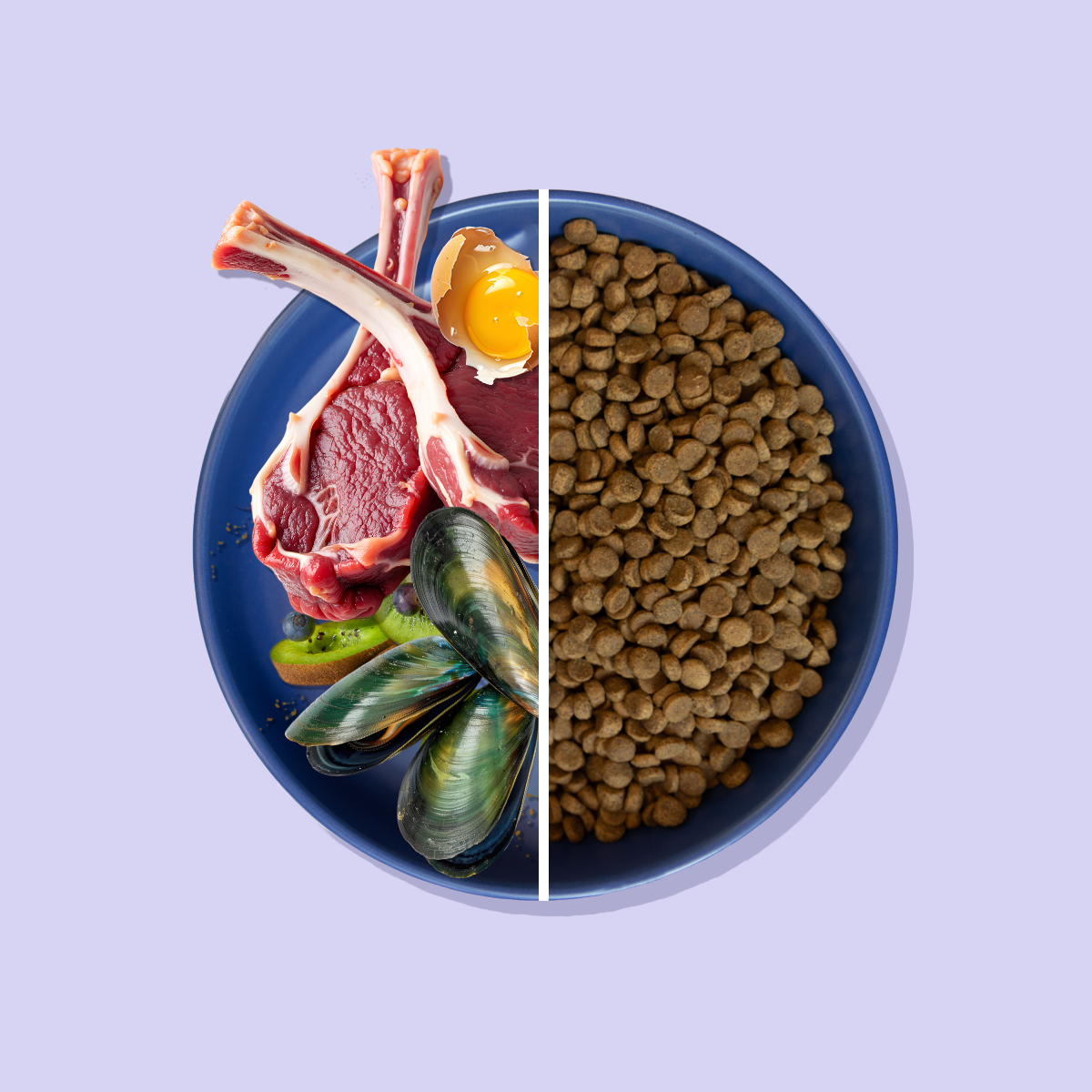
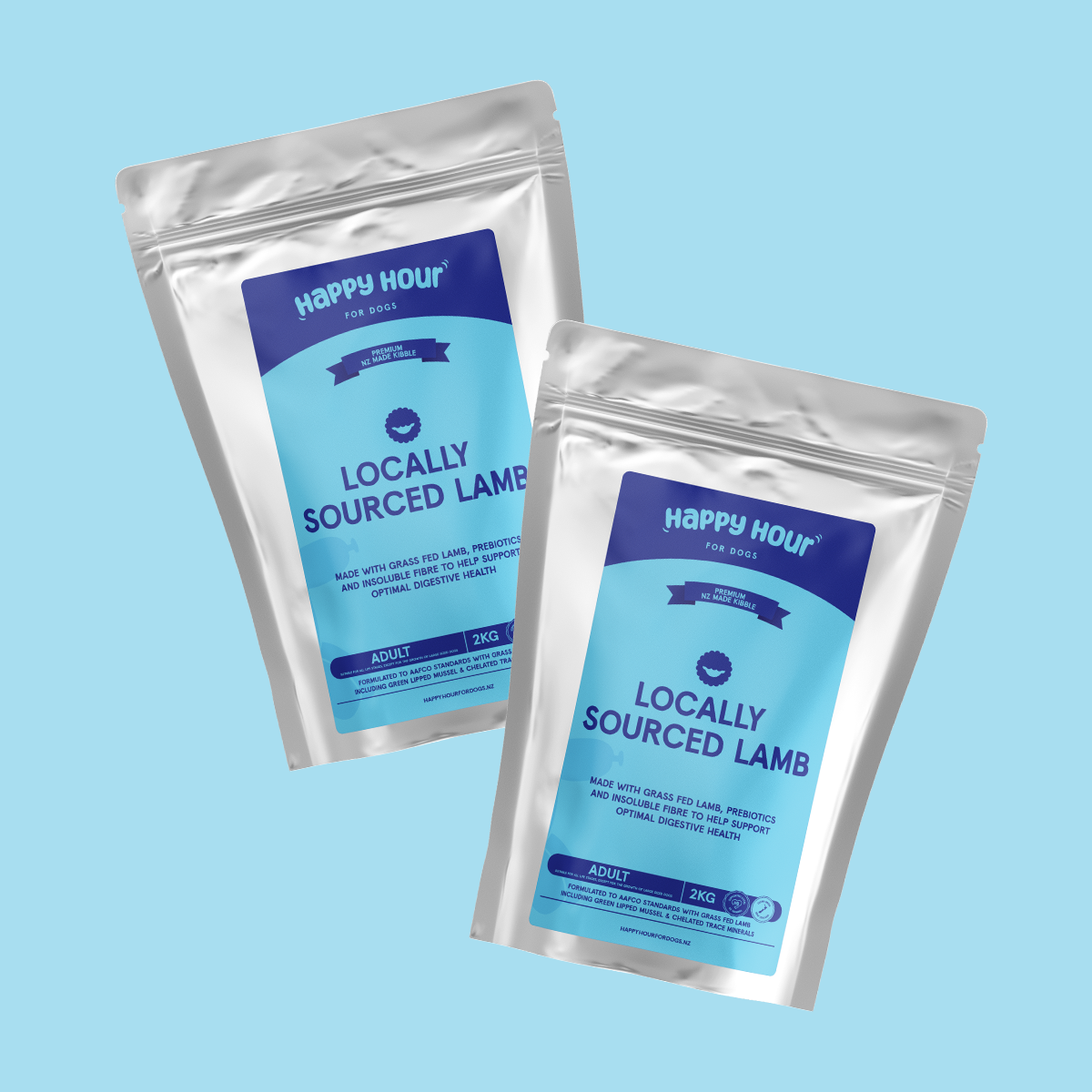
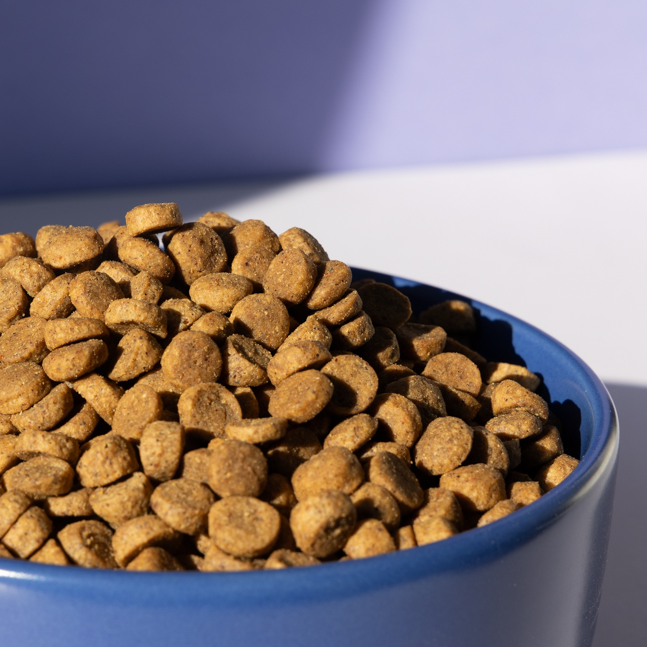
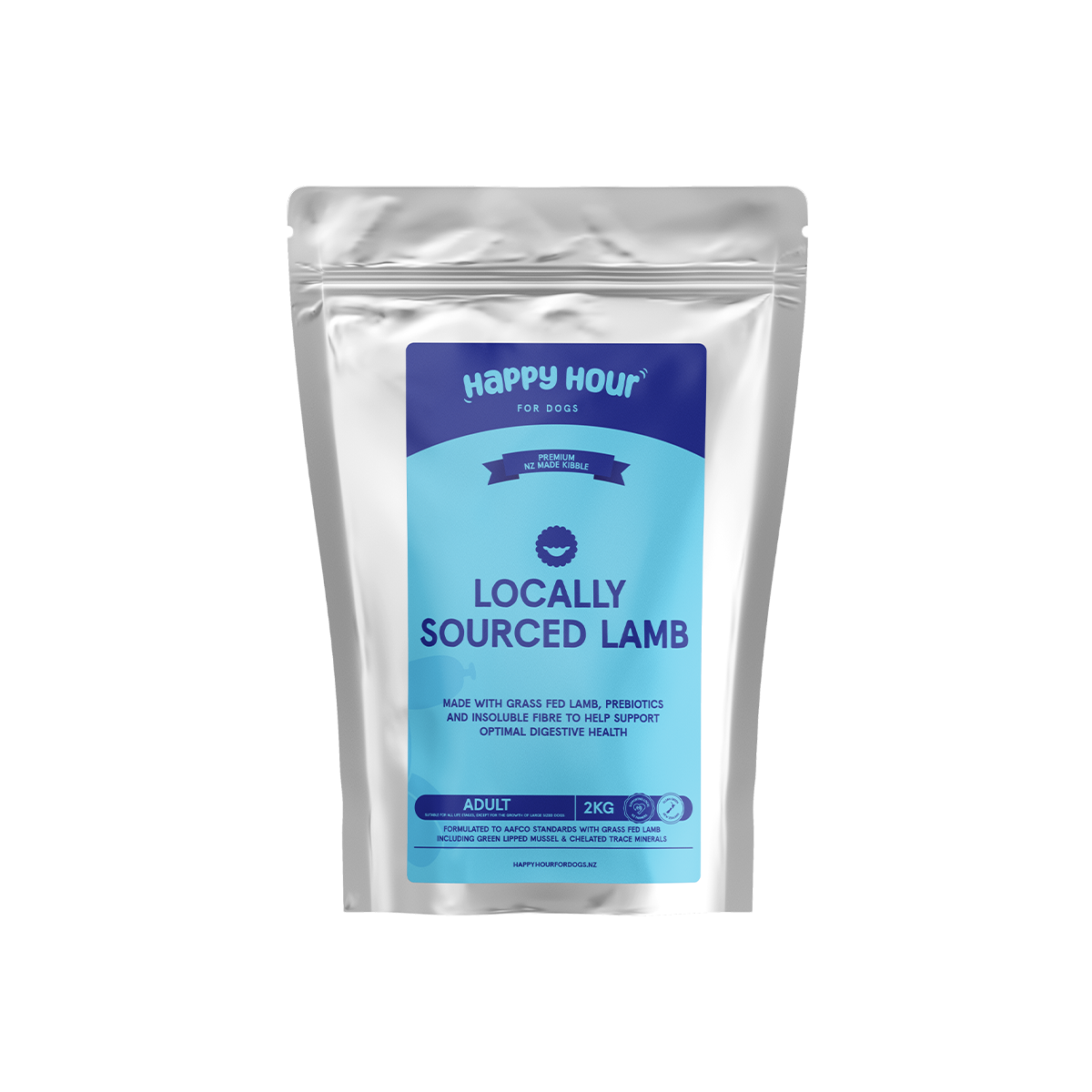
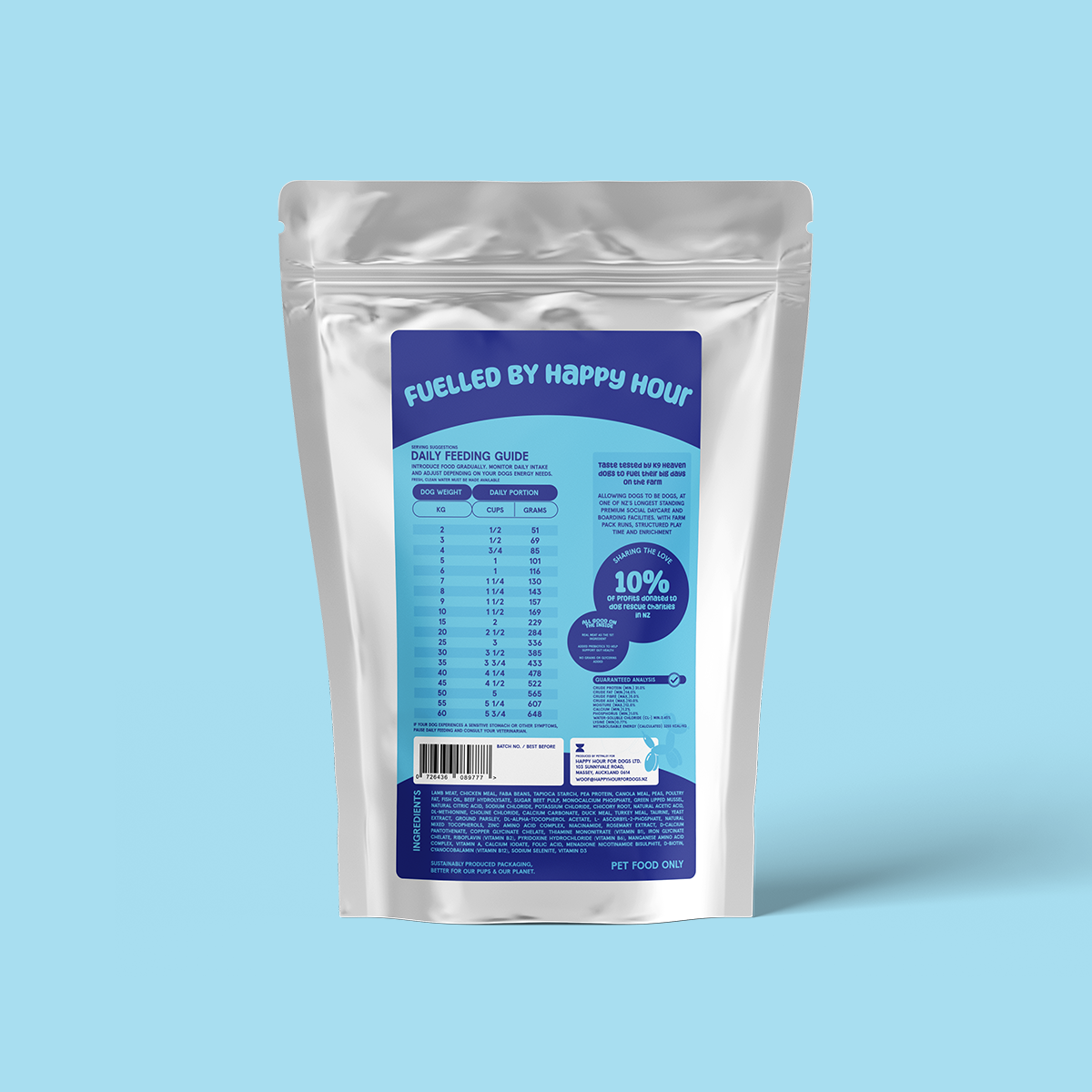
We make grain-free kibble. Two recipes, New Zealand grass-fed lamb and cage-free chicken, and the meat is the point of the recipe rather than a flavour note perched on a pile of pulses. There's green-lipped mussel in there, added prebiotics and insoluble fibre for the gut, and chelated trace minerals, which are simply a form of minerals dogs absorb more readily than the cheap versions. It meets AAFCO standards, and it's been through palatability and digestibility testing at a leading New Zealand university.
What we won't tell you is that it prevents heart disease. We don't know that, nobody does, and any brand that tells you otherwise is making it up. The reason we're grain-free has nothing to do with a trend and everything to do with what we wanted the recipe built on, which is meat. The longer version of why we use NZ lamb specifically is in NZ Grass-Fed Lamb: Why It Makes Better Dog Food.
And the important line, because this is a heart article and we're a dog food company: if your dog is a breed with known heart risk, or you've noticed them tiring quickly, coughing, or breathing faster than usual while they're resting, book the vet. That's not a food decision. If your dog is already on a specific diet for any condition, talk to your vet before you change anything.
If you do decide to switch
Whatever you land on, take your time getting there. A week to ten days of mixing, starting small and building up, saves you a bad weekend and saves the food from being blamed for something the transition caused. We've written the whole method out in How to Switch Your Dog's Food Without Upsetting Their Stomach.
Merc, Cleo and Elsa were eating this food before it had a label on it, and it's fed more than 40,000 meals since. If you want to see how your own dog goes on it, there's a 30-day money-back guarantee on the first bag, so the worst case is you learn something about your dog's opinions.