Goldendoodle Weight Management: NZ Owner's Guide
Goldendoodles have become one of the most loved family dogs in New Zealand. Friendly, gentle, and low-shedding, they seem almost designed for a family home. But they also inherit the Golden Retriever's relationship with food: they love it, they'll eat a lot of it if given the chance, and the extra weight tends to accumulate quietly while everyone's busy adoring them.
Getting on top of a Goldendoodle's weight before it becomes a real problem is much easier than fixing it after. Here's what you need to know.
Key Takeaways
- Goldendoodles inherit the Golden Retriever's appetite and tendency toward weight gain
- Their wavy or curly coat hides extra weight well — always use touch to assess body condition
- Joint health is a key concern; extra weight puts real pressure on hip and elbow joints
- They're active dogs that need consistent daily exercise to stay lean
- A high-protein, high-fibre diet helps manage their appetite and maintain lean muscle
Why Goldendoodles Are Prone to Weight Gain
The Golden Retriever side of the Goldendoodle brings warmth, gentleness, and a genuine enthusiasm for eating. Golden Retrievers are consistently among the breeds most likely to become overweight, partly because of their food motivation and partly because their loveable nature makes owners more inclined to feed them treats and extras.
Goldendoodles inherit that same appetite. They're not picky eaters. They enjoy food enthusiastically and will eat whatever is offered without much sense of restraint. In households where food is freely available — through over-generous portions, treats from multiple family members, or access to other pets' bowls — weight gain happens fast.
Their wavy or curly coat also makes it easy to miss. A Goldendoodle at 5 kg over their ideal weight doesn't necessarily look dramatically different than one at a healthy weight. By the time the excess is visually obvious, there's often a meaningful amount to shift.
Happy Hour was partly shaped by a Golden Retriever named Neo, who had been on a commercial diet (Hill's Science Diet) and was carrying extra weight with it. After switching to a cleaner, grain-free food made from quality NZ meat, Neo lost weight and his overall condition improved noticeably. It's a reminder that the food in the bowl matters a lot, not just the portion size.
How to Tell If Your Goldendoodle Is Overweight
Part the coat and feel along either side of the chest. You should be able to locate each rib with light to moderate pressure, without needing to push through a thick fat layer. If the ribs are hard to find, excess fat is present.
From above, a healthy Goldendoodle has a visible waist — a clear narrowing between the ribcage and the hips. A padded, uniform shape with no definition at the waist is a sign of excess weight.
Healthy adult Goldendoodles vary significantly in size depending on whether they're a Standard, Medium, or Mini. Standard Goldendoodles typically weigh between 23 and 36 kg, Medium varieties between 14 and 22 kg, and Mini Goldendoodles between 7 and 14 kg. Body condition is more informative than the number on the scale.
Watch for signs that weight is affecting comfort and movement: getting winded faster than expected, reluctance to run or jump, stiffness after rest, or less enthusiasm for play. Joint stiffness in particular is worth taking seriously — Goldendoodles share the Golden Retriever's susceptibility to hip and elbow dysplasia, and excess weight makes these conditions worse.
Feeding a Goldendoodle for a Healthy Weight
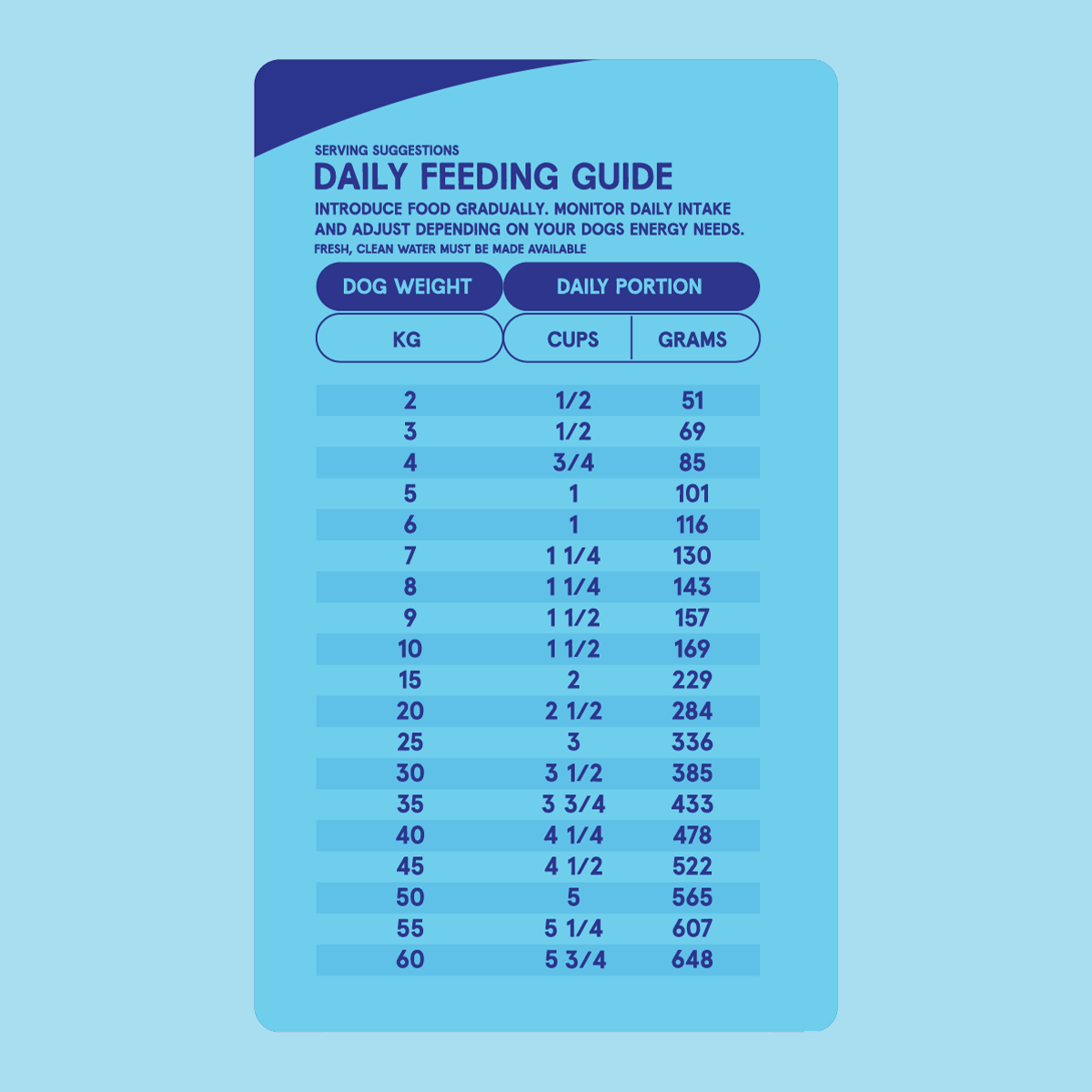
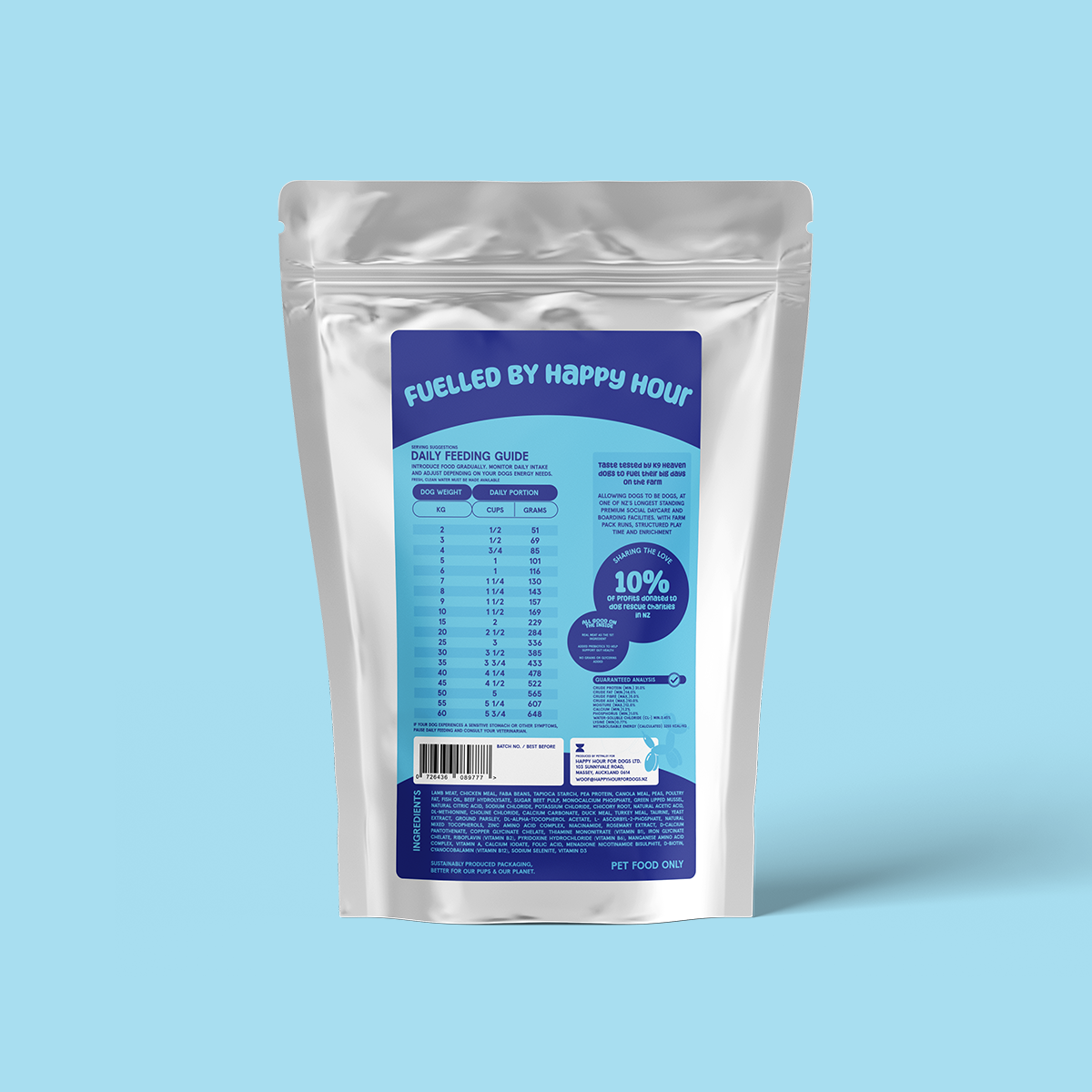
Measure every meal. This is the most important thing you can do. Goldendoodles will eat whatever is in the bowl and enthusiastically communicate that they'd like more, regardless of whether they need it. Don't let that guide your portions.
Feed twice daily to distribute calorie intake and reduce the space between feeds.
If your Goldendoodle is overweight, feed to their target weight rather than their current weight. A dog that should be 28 kg but weighs 33 kg should be fed for 28 kg. Their vet can help confirm an appropriate target.
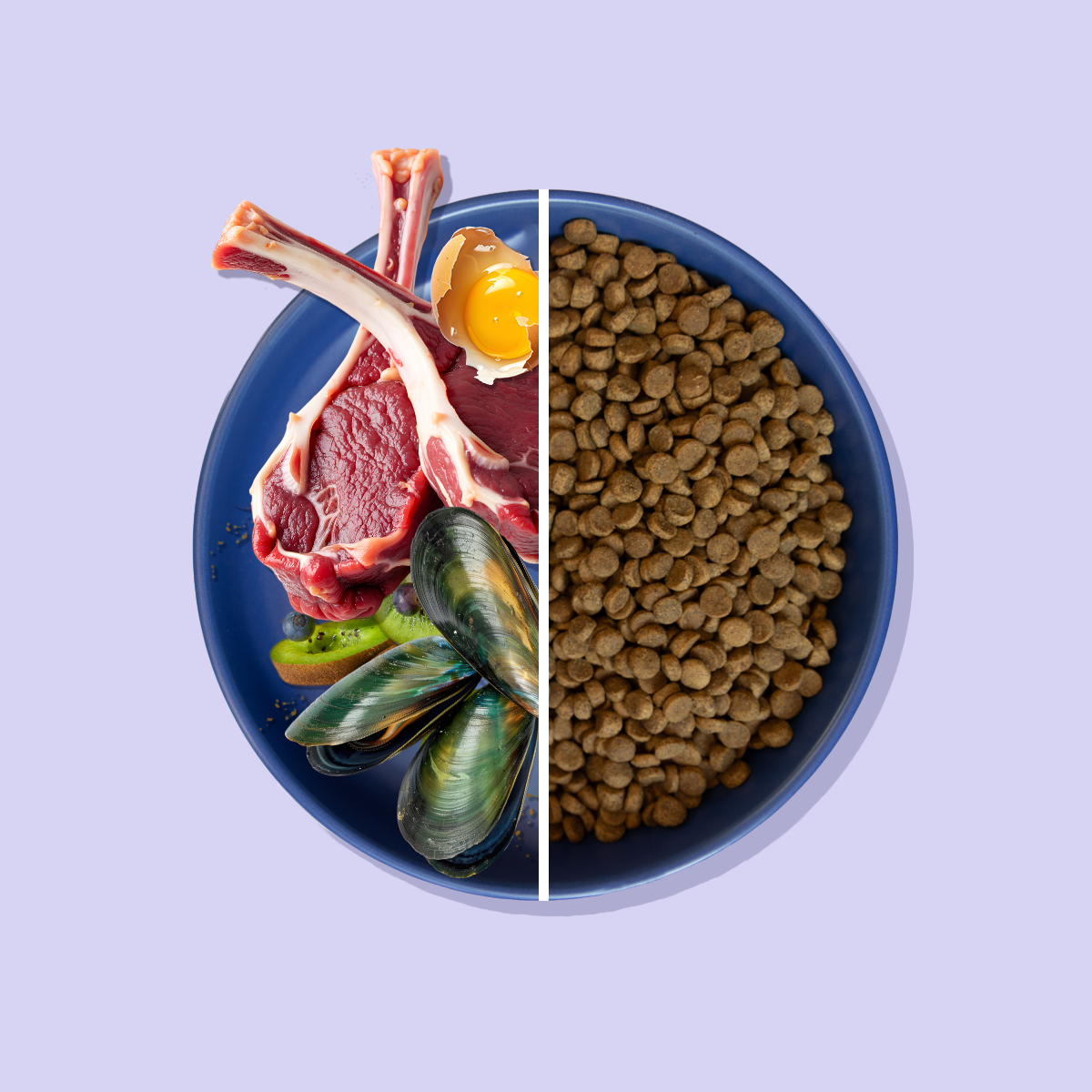
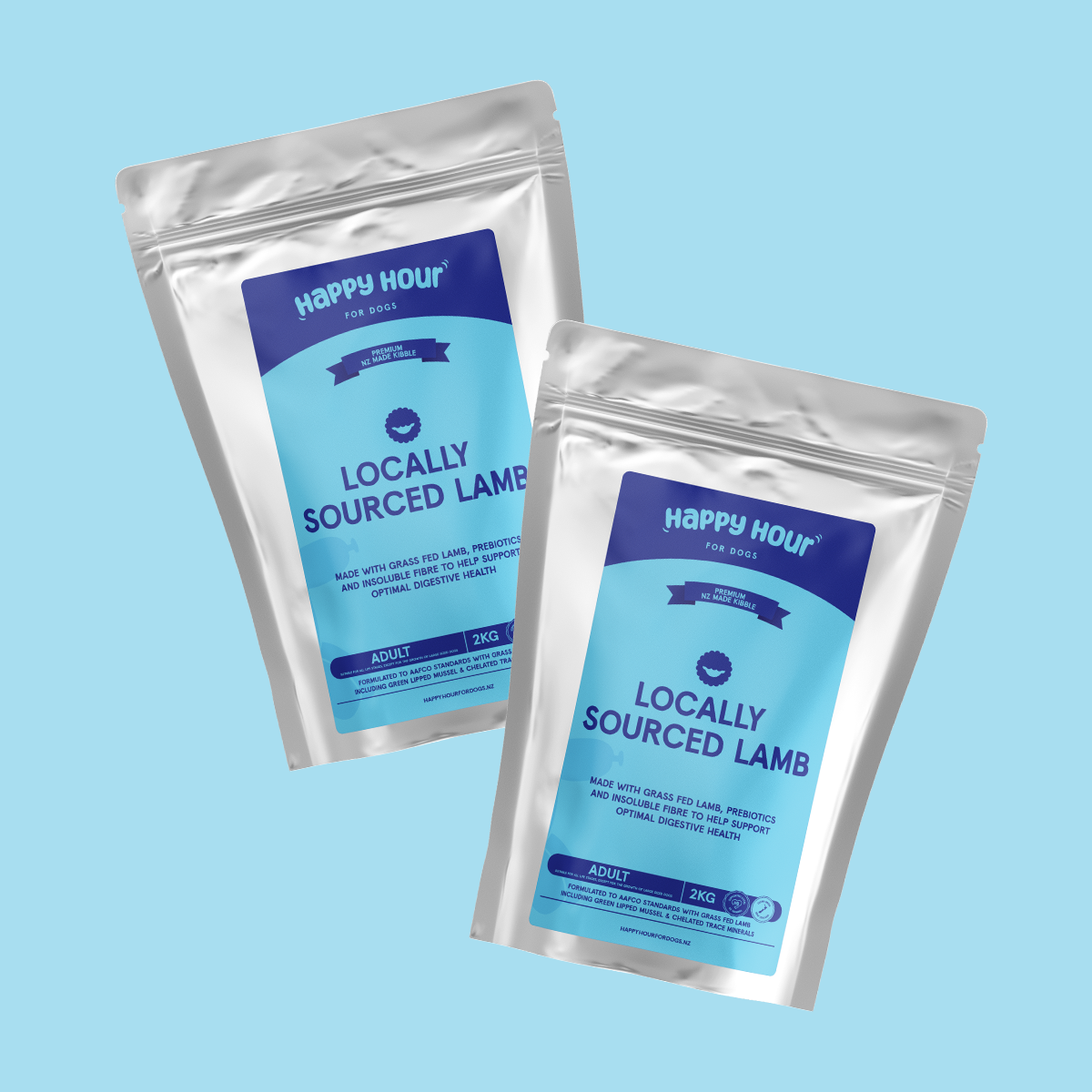
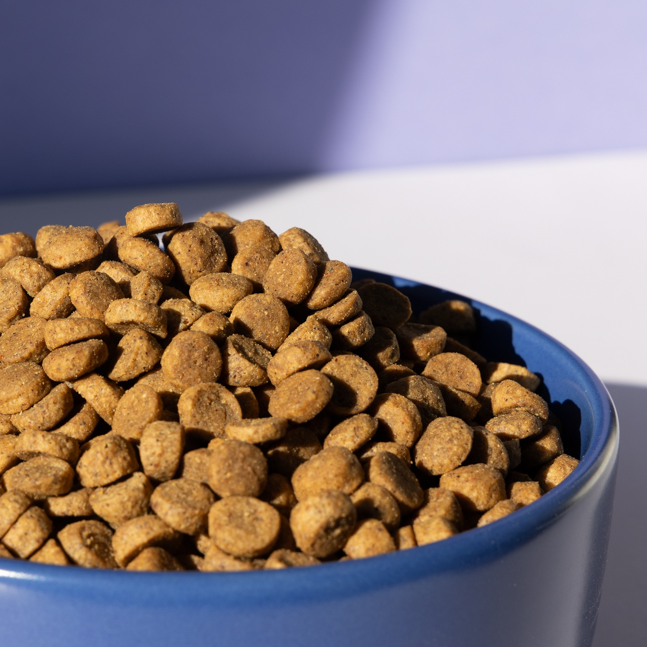
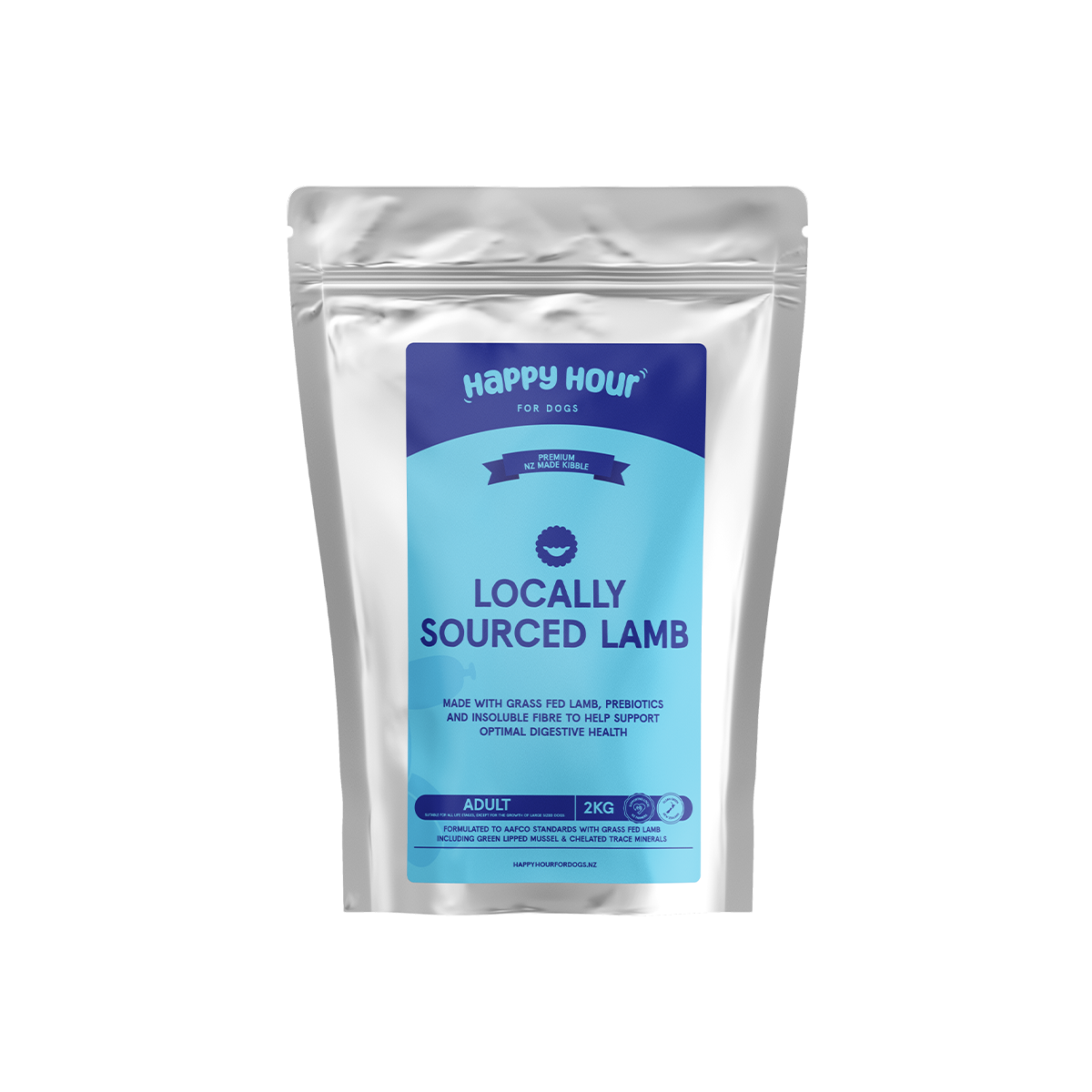
Happy Hour is made from NZ grass-fed lamb, is grain-free, and contains added insoluble fibre and prebiotics to support digestion and satiety. For a food-motivated breed like the Goldendoodle, a kibble that genuinely keeps them full between meals is a practical advantage.
Treats should be kept to under 10% of daily calorie intake. Use the smallest pieces possible, and consider using a portion of their daily kibble as training rewards. Get the whole household aligned on treat limits — it only takes one generous family member to undermine a week of careful feeding.
Eliminate table scraps. Goldendoodles are charming and persistent, but the habit of sharing human food is one of the most common causes of gradual weight gain in family dogs.
Exercise Tips for Goldendoodles
Goldendoodles are active, energetic dogs that need regular exercise to maintain a healthy weight. Aim for at least 45 to 60 minutes of active exercise per day, including off-leash time where possible.
They tend to enjoy fetch, swimming, and running alongside their owners. Swimming in particular is an excellent low-impact option for heavier Goldendoodles, as it burns energy without stressing already-loaded joints.
Daily consistency is more effective than occasional big outings. A walk and play session every day is better for weight management than a long hike once a week.
Mental stimulation matters too. Goldendoodles are intelligent dogs that enjoy learning and problem-solving. Puzzle feeders, training sessions, and nose-work games keep them occupied and reduce food-seeking behaviour between meals.
What to Look for in Dog Food for Goldendoodles
For a food-motivated breed with a tendency toward weight gain and joint issues, the ideal food supports lean muscle, provides satiety, and doesn't load up unnecessary calories. Look for:
- Named meat as the first ingredient — quality protein to support muscle mass
- High fibre content — helps manage appetite between meals
- Moderate fat — enough for energy, not so high it drives weight gain
- Protein above 25% dry matter — especially important during weight loss to preserve muscle
- Joint-supportive ingredients — green-lipped mussel (a natural source of omega-3 fatty acids) is relevant for a breed prone to joint issues
- No cheap fillers or artificial additives
Avoid calorie-dense, high-fat foods, and skip any treats that are fatty or processed. The quality of the base diet matters just as much as the portion size.
Read more on dog breeds prone to weight gain in NZ and our complete NZ overweight dogs guide.