Last updated: August 2026
Your dog has gone from clearing the bowl in nine seconds flat to sniffing it, sighing, and wandering off to the sun patch. It's one of the most common things NZ owners ring their vet about, and most of the time there's a plain explanation sitting behind it: a bag of kibble that's gone stale in a warm pantry, a week of fireworks, a sore back tooth, or a gut having an off day. Occasionally it's something that needs a vet today.
Key Takeaways
- Most sudden food refusal is minor: stress, a food change, hot weather, or mild nausea. Healthy adult dogs are usually back to normal inside 24 to 48 hours.
- Judge the dog, not the bowl. A dog that's off their food but still bright and nagging for a walk is telling you something very different from one that's gone quiet and taken herself to bed.
- Water matters more than food. A dog can skip a meal or two, but one that's stopped drinking, or is drinking far more than usual, needs a vet sooner than the food timeline suggests.
- Ring the vet now for: lethargy, repeated vomiting, blood in vomit or stool, a hard or swollen belly, obvious pain, or any refusal past the 48-hour mark.
- Check the food itself before you panic. Stale fats and a quietly reformulated bag account for a lot of dogs that look fussy.
- Check the timing against anything new they're taking. Antibiotics and post-op pain relief knock plenty of dogs off their dinner for a few days.
- Hormones count too. An entire dog with a bitch in season down the road, or a bitch in season herself, will often eat almost nothing for the best part of a week.
- If your dog is diabetic, or on medication that's meant to go down with a meal, a skipped dinner is a phone call, not a wait-and-see.
- Never force feed. It's stressful, food can go down the wrong way, and it builds a lasting bad association with mealtimes.
- Puppies, seniors, toy breeds and lean working dogs have far less in the tank. Halve every timeline in this guide for them.
- If skipped meals have become your dog's default rather than a one-off, that's a habit, not an illness. Our complete fussy eaters guide covers how to reset it.
The trick is working out which situation you're actually in. A healthy adult dog skipping one dinner is rarely worth losing sleep over. A dog that hasn't eaten in two days, or one that's off their food and flat at the same time, needs a vet's eyes on them sooner rather than later. Here's how to tell those two apart, what to try at home tonight, and the point where you stop watching and start dialling.
The Most Common Reasons Dogs Suddenly Stop Eating
Dogs can't tell you what's wrong, so a refused meal is often the first signal that something has shifted. Appetite works a bit like a barometer: when everything's well, most dogs eat with enthusiasm, and when something changes in their body, their bowl or their household, the bowl is where you notice it first. Work through the everyday explanations in order of how common they are, rather than jumping to the worst thing you can imagine.
Illness or infection. Any time the body is fighting something, appetite is the first casualty. Bacterial infections, viruses, kidney and liver problems, pancreatitis and hormonal conditions like Addison's disease can all put a dog off their food. Pancreatitis deserves a flag of its own, because it usually follows a dog getting into rich, fatty food, and NZ vets see a spike after Christmas when dogs hoover up ham fat, leftover roast, or a sausage that hits the deck at the barbecue. A dog with pancreatitis will often stand hunched, refuse food outright and vomit. Some breeds carry more risk, so if you've got a Miniature Schnauzer or a Cocker Spaniel, keep it high on your list and read up on the early warning signs and the breeds most at risk. Our full guide to pancreatitis in dogs walks through the whole picture. If the refusal comes with vomiting, a hunched back, a temperature or low energy, treat it as medical until proven otherwise and ring your vet.
Dental pain. This one gets missed constantly. A cracked tooth, sore gums or an abscess makes eating genuinely painful. Dogs show it by chewing on one side, dropping bits of food, or walking up to the bowl, sniffing, and walking off. You might notice bad breath, drooling, or a dog that won't touch kibble but will happily lap up something soft. A look inside the mouth sometimes reveals it, though plenty of problems sit below the gumline and only show up on a dental X-ray, which is why an on-again off-again appetite is always worth a dental check. Older small breeds are the usual suspects, so a senior Poodle or Cavalier that's gone soft-food-only is often telling you their teeth hurt. Dogs that chew hard bones, antlers or beach stones get slab fractures on the big back teeth too, and that can stop a keen eater overnight.
Pain that has nothing to do with the mouth. Eating is a physical job. A dog has to walk over, stand still, and hold their head down for a few minutes, and any one of those can hurt. An arthritic old Lab on a slippery kitchen floor will often give up on the bowl rather than brace herself over it, and owners read that as fussiness. Same with a sore neck or back, a dog who's tweaked something on the farm, or one recovering from surgery. The tell is that they want the food, they just approach it and stall, or eat a few mouthfuls standing awkwardly and then quit. Raising the bowl onto a low box, putting a rubber mat or an old towel underneath for grip, or letting them eat lying down out of a shallow dish is a five-minute experiment that either fixes it or rules it out. If lifting the bowl gets them eating again, that's worth mentioning at your next vet visit, because pain that shows up at dinner is usually showing up elsewhere too.
Something they're already taking. Medication is the cause people forget to check, because the dog was fine when the course started. Antibiotics are the usual offender, and a dog three days into a course for a hot spot or an infected ear will often go quiet on their dinner. Anti-inflammatories after a knee op, some heart medications and a few of the itch treatments can do the same. The pattern to look for is timing: the appetite dipped within a day or two of starting something new, and the dog is otherwise bright. Giving the tablet wrapped in a bit of food rather than on an empty stomach settles some dogs, but ring the clinic that prescribed it before you change anything or stop the course. They'd much rather talk it through on the phone than have you quietly abandon it, and there's usually an alternative.
Stress or a change in routine. Dogs are creatures of habit. A house move, a new baby, a different feeding time, someone leaving the household, even a new bowl can be enough. It's especially common around Guy Fawkes and New Year's Eve, when fireworks leave an anxious dog too wound up to eat for a day. The first week of the school year does it too, when a family member suddenly vanishes every morning. So does a run of thunderstorms, or a boarding kennel stay while everyone's away over summer. A newly adopted dog is its own case: plenty won't eat properly for the first two or three days in a strange house, and the harder you push the longer it takes. Elsa, our old rescue girl, ignored dinner for the best part of three days before deciding we were staying. Anxious dogs tend to eat less or stop entirely for a day or two, then settle once normal service resumes. If you know a stressful stretch is coming, holding feeding times, walks and their sleeping spot steady gives them fewer things to worry about and usually shortens the dip.
Hormones. This one catches first-time owners completely off guard. An entire male dog will go off his food for days if there's a bitch in season anywhere within a few streets, and he'll pace, whine, ignore his dinner and stare out the window while he's at it. There's nothing wrong with him and nothing to treat: he simply has other priorities and will eat again once she's out of season. Bitches often eat less during their own season too, and again six to eight weeks later if they go through a phantom pregnancy, when some will refuse food, mother a soft toy and look thoroughly miserable for a few days. If the timing lines up with a season in your dog or a neighbour's, factor it in before you start ringing round about bloods. If it drags on well past the fortnight, or she seems genuinely unwell rather than just distracted, that's a vet conversation.
Going off a food they used to love. Dogs can turn on a food they've eaten happily for months. It sometimes happens after a bad stomach experience while eating it, even when the food wasn't the culprit. It also happens when a manufacturer changes a formula without changing the bag. Dogs pick up shifts in smell long before we notice anything, and a dog with a sensitive gut will refuse food that no longer agrees with them. If you've recently swapped brands, opened a new bag, or grabbed a substitute at the supermarket when you ran out, rule that out first. Any change is best done over five to seven days, mixing a bit more of the new food in each day rather than switching overnight. We've written up how to transition a fussy dog onto a new food, and if you're not sure whether you're dealing with pickiness or a genuine gut issue, this guide helps you tell them apart.
Nausea. Car sickness on a winding road, eating grass, scavenging something questionable on a walk, a side effect of medication: nausea has dozens of causes. A nauseous dog licks their lips repeatedly, swallows a lot, drools, or eats grass and then snubs their dinner. A classic NZ version is the drive to the bach, because our coastal and rural roads are windier than owners expect and a car-sick dog will refuse the meal at the other end. Anyone who's driven the Kaimais or the Coromandel loop with a dog in the boot knows the look they arrive with. Empty-stomach nausea is the one people miss: a dog fed once a day builds up bile overnight, brings up a bit of yellow froth at 5am, then won't touch breakfast. Splitting the daily ration into two smaller meals usually fixes it. For poor travellers, feed a few hours before you leave rather than right beforehand, and your vet can prescribe something safe for longer trips.
A recent vaccination or worming tablet. Dogs can feel a bit flat for 24 to 48 hours after their shots, much like the day-after tiredness people get. Puppies working through their first course are where you'll notice it most, and the same mild dip can follow a worming tablet or a flea treatment. Leave food and water down, let them sleep it off, and expect them back to normal within a couple of days. If it drags past two days, or comes with swelling at the injection site, a puffy face or a fever, call your vet.
The weather. Don't underestimate a NZ summer. Dogs eat less when it's hot and muggy, and a dog that skips lunch on a 28-degree Waikato afternoon is often just regulating themselves. Double-coated breeds feel it first, so a Husky, a Golden Retriever or a Bernese will go off dinner on a humid Auckland night while the short-coated dog next door eats fine. Feed in the cool of the early morning or after the evening walk, and soaking kibble in cool water or freezing a little low-sodium bone broth into an ice block gets a lot of dogs through a heatwave. What matters is energy: a dog eating less but still nagging for a walk is fine, whereas a dog that's off their food, panting heavily and flat could be overheating and needs cooling down and a vet call. Winter has its own version. A dog fed outside in a Southland frost will often leave a cold bowl of kibble sitting there, and a splash of warm water through it is usually the whole fix.
Plenty of dogs land on two of these at once, which is why a single cause can be hard to pin down. A hot February week plus a bag that's been sitting open on the deck is a very common pairing, and so is a sore tooth in a dog who's also getting on in years. You don't have to name the culprit to act sensibly. You just have to work out whether you're watching a well dog make a choice, or an unwell dog give up.
The NZ Year: When Dogs Tend To Go Off Their Food
After enough emails from owners, patterns start showing up on the calendar. Refused dinners cluster around the same few weeks every year in this country, and knowing which week you're in narrows things down fast. It won't diagnose anything, but it will tell you whether the timing is suspicious or completely predictable.
- September to November. Snail and slug bait goes down in gardens right as dogs start spending more time outside, and spring growth brings out the plants worth worrying about. Guy Fawkes on 5 November flattens the appetite of every noise-sensitive dog in the neighbourhood for a day or two either side. Farm dogs hit their busiest stretch of the year, and a working dog burning through lambing will sometimes eat less for a few days before their intake catches up.
- December to February. The big one. Christmas ham fat, leftover roast and barbecue scraps put a real dent in NZ vet waiting rooms, and pancreatitis sits behind a lot of it. Then comes the heat, the drive to the bach, the boarding kennel stay, New Year fireworks, and blue-green algae in slow rivers and lakes. Kibble stored in a hot garage or on a sunny deck goes stale quickest in these months too.
- March to May. Routines flip when school goes back and the house empties out every morning. Autumn rain brings mushrooms and toadstools up on lawns overnight, and some dogs will chew them. Cooler evenings usually mean appetite comes back, so a dog still off their food in April doesn't have the weather to blame.
- June to August. Cold bowls left outside in a frost put dogs off, and a splash of warm water is usually the entire fix. Shorter, wetter walks mean less exercise and genuinely less hunger, so a slightly smaller winter appetite in a dog who's otherwise well is often just maths.
Where you live shifts the emphasis. A Northland or Bay of Plenty summer is humid as much as it's hot, and humidity is what turns the fats in a bag of kibble rancid, so the smell a dog rejects in Kerikeri in February is a different problem from the frozen bowl a Central Otago dog walks away from in July. Most Kiwi houses store dog food in the worst possible spot as well: the garage, the laundry, or a lean-to off the back deck, all of which swing 15 degrees or more between a summer afternoon and a winter dawn. If your dog goes off their food in the second half of a bag rather than the first, storage is the first thing to look at, not the dog.
None of that changes the rules further down. A dog that's flat and refusing food on Boxing Day gets the same phone call as one doing it in the middle of a quiet May. What the calendar gives you is a shortlist and a bit of perspective, so you can check the obvious thing first instead of working through worst cases at 10pm.
Behavioural vs Medical: How to Tell the Difference
This is the split that matters most, and getting it wrong hurts in both directions. Treat a medical problem as behavioural and you miss something serious. Treat a behavioural one as medical and you end up with an anxious dog and a bill you didn't need.
The most useful signal is your dog's general demeanour. A dog that's stopped eating but is still bright, playful and nosy about the world is saying something completely different from a dog that's gone quiet and taken herself off to bed. Watch how they move, whether they still meet you at the door, and how keen they are to get the lead on. Selectivity is the second test. A dog who refuses dinner but snaps up a bit of cheese, or works the table at your dinner, is making a choice rather than fighting an illness. A dog who turns down the treat they'd normally do backflips for is a different story. The further the refusal spreads from their own bowl to food in general, the more it points at something medical.
Timing is the third, and owners skip past it. A refusal that lines up with something you can name, a house guest, a thunderstorm, a swapped bag of food, leans behavioural. A refusal that arrives out of nowhere in a dog whose world hasn't changed deserves more suspicion. Picture two dogs on the same Tuesday. Cleo turns down breakfast, then pinches a crust off the bench twenty minutes later and spends the afternoon terrorising a tennis ball. Nothing has changed except a new bag of food opened on Monday. The other dog eats nothing, ignores the cheese, sleeps through the sound of the lead coming off the hook, and has no trigger anyone can name. Same symptom, two completely different phone calls. No single test is reliable on its own, so weigh all three. When two agree, trust that verdict. When they disagree, take the more cautious reading and watch the clock.
Partial refusal muddies things, and it's more common than a flat no. A dog who eats half the bowl and walks away, or takes a few mouthfuls every couple of hours instead of clearing it in one go, is worth watching more carefully than one who simply skips a meal and then eats normally at the next. Slow, hesitant eating often points at pain, either in the mouth or in the joints holding them over the bowl, while eating half and losing interest can be nausea building as the meal goes down. Note how long they spend at the bowl and whether the pattern repeats, because "she eats about a third of it and takes ten minutes to do it" is a far more useful thing to tell a vet than "she's being fussy".
There are a few things you can look at yourself that give the picture more weight. Lift a lip and check the gums: healthy ones are a bubblegum pink and damp, and press a thumb on them and the colour should flood back in a second or two. Pale, white, brick red or tacky gums are a reason to ring, not a reason to keep watching. Pinch the skin at the scruff and let go, and in a well-hydrated dog it drops straight back. Have a gentle feel along the belly for anything hard, tight or sore, and note whether they flinch. None of this is a diagnosis, and it isn't meant to be, but a two-minute check gives your vet far more to go on than "she's just not herself", and it sometimes turns a wait-and-see into a same-day appointment.
Signs it's probably behavioural:
- Your dog is energetic, alert and otherwise completely themselves
- They're interested in treats or your dinner, just not their own bowl
- The refusal started around a change in their environment or routine
- It's been under 48 hours with no other symptoms
- They've pulled this stunt before
Signs it's probably medical:
- Your dog is lethargic, quiet, or off in other ways
- No interest in food at all, including the stuff they normally go mad for
- Other symptoms: vomiting, diarrhoea, heavy drinking, weight loss, or pain when you touch them
- It came on suddenly with no trigger you can point to
- They're a senior, where underlying conditions often show up as appetite loss first
When you're on the fence, lean towards the vet check. You know your dog better than anyone, and if something feels off beyond the food, that instinct is usually worth acting on. A dog who refuses meals regularly while staying perfectly well is generally telling you about habit rather than health, and our complete fussy eaters guide covers how to turn that around.
What To Do First
Before you call the vet or start googling worst-case scenarios, work through a few checks at home. They often solve the problem outright, and when they don't, they hand your vet the exact information they were going to ask for anyway. Take them in order and give each one a bit of time.
- Skip a meal on purpose. Offer nothing for 12 hours, with water always available. It gives the gut a rest and resets appetite in plenty of healthy dogs. Skip this step entirely for puppies, seniors and toy breeds, who shouldn't go without food for long, and skip it for any dog on insulin or medication that's meant to go down with a meal.
- Check the food itself. Smell it. Check the best-before date. Work out whether you've recently opened a new bag or changed products. Kibble left in a warm pantry through a NZ summer goes stale faster than owners expect, and the fats turn first, which is exactly what a dog's nose picks up. Decanting into a sealed airtight container keeps the aroma intact, and the trick most people miss is to tip the kibble in bag and all, or at least keep the bag, because the roll-top liner holds the aroma better than bare plastic and the batch code is the first thing a manufacturer will ask you for.
- Check nobody's beaten you to it. In a busy house it's remarkably common for a dog to have been fed twice, or topped up with half a sausage by a visiting grandparent who thought they looked hungry. One question at the dinner table solves a surprising number of untouched bowls.
- Look in their mouth. Redness, swelling, a cracked tooth, anything wedged between teeth. A stick fragment or bit of bone jammed across the roof of the mouth is more common than you'd think, especially in dogs that chew whatever they find at the beach.
- Offer something bland. A small amount of boiled chicken and plain white rice tells you whether the problem is the food or the dog. If they wolf it, the appetite is there and you're looking at the bowl, not an illness.
- Watch the water. Fill the bowl to a level you'll remember, or run it through a measuring jug, and check it again in the evening. A dog eating nothing but drinking normally is a different animal from one who's stopped doing both, and a dog suddenly emptying the bowl twice over is its own red flag.
- Look around the house. New pet, new baby, builders next door, someone moved out, furniture rearranged? Dogs notice the things we've stopped noticing.
- Feed them on their own. In a multi-dog house, competition suppresses appetite in the more submissive dog. Feed the reluctant one in a quiet room away from the confident eater who inhales theirs in nine seconds flat.
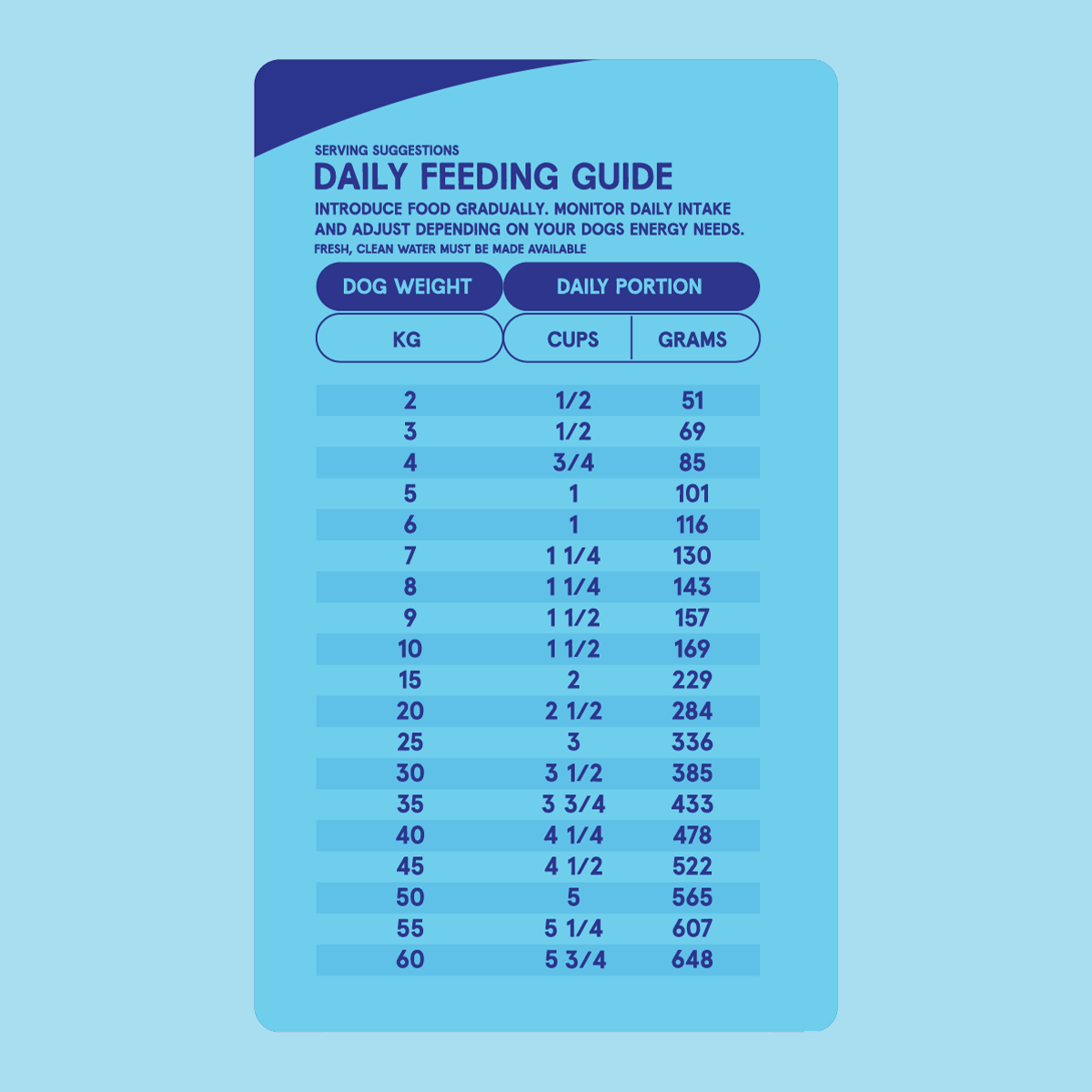
While you're at it, check whether the problem is the food or the delivery. Some dogs won't touch a bowl that's picked up a soapy film, a metallic tang, or the smell of the cat, and a rinse or a swap to clean ceramic or stainless occasionally fixes what looked like fussiness. Where the bowl sits matters too. A dog fed next to a rattling washing machine, in a busy hallway, or straight after a bath may be too on-edge to settle, and shifting the bowl to a quiet corner can be the whole fix. It's worth checking the portion as well, because a dog getting a generous scoop plus training treats plus the kids' leftovers isn't hungry, they're full. Our guide to how much to feed your dog has the maths.
Take the bowl up between meals while you're working this out. Food left down all day turns every reading into guesswork, because you can't tell a dog who ate a third of it at 2pm from one who hasn't touched it since breakfast, and grazing quietly undermines any attempt to reset the routine. Write down what you try and how they respond: time of each meal offered, what got eaten or ignored, roughly how much water went down, and any change in toilet habits or energy. Weigh them if you've got scales that will take it, even if it means standing on the bathroom scales holding the dog and subtracting yourself. If this does end up at the vet, that record makes the appointment far more useful and can save you a second visit. Photograph any vomit or odd-looking stool before you clean it up as well, because a photo tells your vet more than the best verbal description.
If the checks buy you a normal meal, don't sprint straight back to the old routine. Reintroduce the usual food gradually, keep portions modest for a day, and watch that energy and toilet habits hold steady. A dog who eats one good dinner and then refuses the next hasn't turned the corner, and that stop-start pattern is worth taking to your vet rather than riding out at home.
What Not To Do While You're Working It Out
Half the damage from a refused meal comes from the fixing, not the refusing. The instinct when a dog won't eat is to do something, anything, and a few of those somethings make the next few days harder than they needed to be.
Don't force feed. Prising a mouth open and pushing food in is stressful for both of you, it risks food going down into the lungs, and it teaches a dog that the bowl is where unpleasant things happen. If a dog genuinely needs feeding support, that's a conversation with your vet, not a job for the kitchen bench. Don't swap foods mid-refusal either. Changing brand while a dog is already unsettled makes it impossible to tell what caused what, and a sudden switch can upset a gut that was already grumbling. Rule out the simple things first, then change food properly once they're eating again.
Don't fill the gap with human food. This is the one that turns a boring problem into an expensive one. Fatty leftovers, ham off the bone, gravy and roast trimmings are exactly the trigger that fills NZ clinics with pancreatitis cases every January, and cooked bones splinter. Onion and garlic are toxic to dogs in quantities smaller than most people expect, and so are grapes, raisins and anything sweetened with xylitol. And never reach for the human medicine cabinet: paracetamol and ibuprofen are dangerous for dogs even in small doses, and there's nothing in there that's safe to guess with.
Don't leave the bowl down all day, and don't starve them into submission. Both extremes make things worse. Food sitting out for eight hours goes stale, attracts flies in a Kiwi summer, and destroys any ability to read what your dog actually ate. At the other end, deciding to simply wait a stubborn dog out for days is how a behavioural problem quietly becomes a medical one, particularly in a small, young, old or lean dog. Offer, wait 15 minutes, lift it, try again at the next meal, and keep the clock in the back of your mind.
When To Call Your Vet Immediately
Some situations don't get a wait-and-see. Here the food refusal is a symptom of something bigger, and waiting makes both the diagnosis and the outcome worse. Ring your vet straight away if your dog:
- Hasn't eaten in more than 48 hours
- Is showing pain: whimpering, hunching, unwilling to move
- Has a bloated, hard or distended belly
- Is vomiting repeatedly, or there's blood in the vomit or stool
- Is lethargic and won't rouse to the usual things
- Has dropped noticeable weight in a short window
- Is drinking a lot more than usual alongside the food refusal
- Has stopped drinking altogether, or has pale, white or tacky gums
- Is diabetic, or on any medication meant to be given with food
- Is a puppy under six months (they go downhill fast)
- Is a senior, particularly one with known health conditions
- May have eaten something toxic, including certain NZ garden plants, grapes, or anything with xylitol in it
The diabetic dog deserves a line of its own, because it catches people out. An insulin dose is worked out around a meal going in, so a diabetic dog who won't eat changes the picture immediately. Don't guess at it and don't just carry on as normal: ring the clinic that manages them and tell them what's been eaten and when, and they'll tell you what to do next. The same goes for a dog on anything else that's supposed to go down with food. It's a two-minute call that heads off a genuinely bad afternoon.
The hard or swollen belly deserves its own paragraph too. In deep-chested breeds like Great Danes, Weimaraners and Boxers it can mean bloat, or gastric dilatation-volvulus, and that's a genuine emergency where minutes count. Look for unproductive retching, restlessness and pale gums alongside the swelling. It often strikes in the hours after a big meal, or a long drink followed by hard exercise, so a dog who won't eat, can't settle, and keeps trying to be sick without bringing anything up goes to a clinic now, not in the morning. Most main centres have an after-hours service, and that number belongs in your phone before you need it, not at 11pm with a sick dog on the kitchen floor. If you're rural, work out tonight how far your nearest after-hours clinic actually is, because "forty minutes away" changes when you leave.
Toxins are the other reason not to wait. Grapes and raisins, onions, chocolate and xylitol (in sugar-free gum and some peanut butters) are all dangerous, and NZ gardens throw in their own hazards like oleander, macrocarpa and slug bait. Spring is the danger window, with snail bait going down right as curious dogs spend more time outside. Blue-green algae blooms on lakes and slow rivers over summer are another one, and a dog who's swum in or drunk from a suspect waterway and then gone quiet and off their food needs a vet fast. If you think they've eaten something they shouldn't have, don't sit on it. Ring and tell them what and when, and take the packet or a bit of the plant with you if you can.
Have your answers ready before you dial, because the nurse on the phone will ask the same handful of things every time: how old the dog is, roughly what they weigh, when they last ate a proper meal, what they've eaten or drunk since, whether they're on any medication, and whether anything has come out either end that looked wrong. Photos of the vomit or stool and the packet of whatever they got into save a lot of back and forth. If it's after hours, ask what the consult fee is when you ring rather than finding out at the counter, because emergency clinics cost real money and it's easier to make that call with the number in front of you. A vet nurse would far rather triage a well dog on the phone at 9pm than meet a very sick one at 3am.
Knowing your own dog's baseline is half the battle. An owner who can say their normally food-obsessed Labrador has refused two meals and skipped her morning walk is giving a vet far more to work with than someone reporting one missed bowl in a dog who's always grazed. The bigger the gap between what your dog usually does and what they're doing now, the more weight it carries, and the less you should talk yourself out of the call. Most NZ clinics are happy to do a quick phone triage before you decide whether to come in, and no good vet will make you feel daft for asking early.
What Usually Happens At The Vet
Owners put off the appointment partly because they don't know what they're walking into. It helps to know the shape of it. The consult almost always starts with questions rather than hands, and they're the same ones from the phone call: when the last proper meal was, what's been offered since, what the water's been doing, any vomiting or diarrhoea, what medication they're on, and whether anything in the house or the routine has changed. This is exactly why the notes you kept at home earn their keep. "Refused dinner Tuesday, ate half a bowl Wednesday morning, nothing since, drinking normally, one soft stool Thursday" gets a vet moving in a direction. "She's been a bit funny for a few days" doesn't.
Then comes the physical exam, and most of it is the same check you can do at home, only better. Temperature, gums, a listen to the chest, a proper look in the mouth, and a careful feel through the belly for anything hard, sore or out of place. Plenty of appetite mysteries get solved right there, especially the dental ones, because a vet knows what a fractured carnassial or a resorbing tooth looks like and where to press. If the exam turns up something specific, that's often the end of the investigation and the start of a plan. Take the bag of food along, or a photo of the ingredient panel and batch code, if a food change is anywhere in the story.
If nothing obvious shows up, the usual next step is blood and urine, which is how organs, blood sugar, hydration and signs of infection get checked without guessing. From there it might be an X-ray or an ultrasound if something feels off in the belly or there's any suspicion your dog has swallowed something they shouldn't have. Ask what each step is for and what it's likely to cost before you agree to it, because a good clinic will happily talk you through the order they'd do things in and where they'd stop. Cost is a fair thing to raise out loud, and it's better raised at the start than halfway through: most vets can stage the workup, start with the test most likely to change the plan, and tell you honestly which ones can wait a week.
Depending on what they find, a dog who's been off their food for a while might go home with anti-nausea medication, pain relief, or a few days of a bland diet, or stay in for fluids if they're dehydrated. Ask what should happen if the plan doesn't work: how many days to give it, what would count as getting worse, and at what point you ring back. Ask too whether the food they go home on is a short-term thing or a permanent change, because plenty of dogs get discharged on a bland diet and quietly never come off it. Going home with all that clear saves a lot of second-guessing at midnight.
How Long Is Too Long?
Use this as a framework rather than a rule, because age, size and general health all shift where the lines sit.
Under 24 hours: Monitor closely. Water available at all times. Watch for anything else cropping up. Most healthy adult dogs in this window are fine.
24 to 48 hours: Time for active attention. Try the bland food test. If they eat it, the issue is likely the food. If they refuse everything, ring your vet.
Over 48 hours: Book the appointment, whether or not there are other symptoms. Prolonged fasting puts stress on the organs and muddies the diagnosis.
Puppies and seniors: Don't wait 48 hours. If a puppy hasn't eaten in 24, or a senior seems off, call earlier. Small and toy breeds, so your Chihuahuas, Pomeranians and toy Poodles, can drop into dangerously low blood sugar quickly and sit at the cautious end of every timeline. If you're still working out what normal looks like for a young dog, our puppy feeding guide sets the baseline.
Water runs on a much shorter clock than food, and it's the one owners forget to watch while they're fixated on the bowl. A dog who's off their dinner but drinking normally has a lot more runway than one who's walked past the water bowl all day, and dehydration is what turns a manageable off-day into a drip and an overnight stay. It gets worse fast in a hot Northland February, and faster again if there's vomiting or diarrhoea on top, because they're losing fluid at both ends. If your dog hasn't had a proper drink in 12 hours, or you're seeing tacky gums and skin that's slow to spring back, that's a call today regardless of what the food timeline says.
The reason the timelines differ comes down to how the body copes without food. When a dog stops eating, the liver starts mobilising fat for energy, and in a small or already unwell dog that process can overwhelm the organ faster than owners expect. That's why a nine-week-old puppy never gets the same 48-hour grace period as a healthy adult Labrador. Body condition moves the lines as well: a lean working dog like a Huntaway or a Border Collie has less fat reserve to draw on than a stockier dog of the same age, so they hit the point of concern sooner. Same goes for pregnant and nursing bitches, diabetic dogs on a fixed insulin schedule, and dogs recovering from illness or surgery, who should be seen well before the standard window runs out.
Most of this comes to a head in the evening, once the clinic has shut. The question to ask yourself at 9pm isn't "how many hours has it been", it's "would I be comfortable finding this dog like this at 6am". If the answer is no, ring the after-hours number and let them triage it, because that's what it exists for. If the answer is yes, leave water down, keep the house quiet, skip the temptation to keep offering food every twenty minutes, and set an alarm to check on them once overnight. Write down what you see when you do. Either way you'll be first in the queue when your own clinic opens, and you'll have something useful to tell them.
And the clock is never the only input. A bright, playful dog at the 30-hour mark is in a much better place than a flat, withdrawn one at 12 hours, and the second dog shouldn't be made to wait out a timeline. Vets don't treat a long stretch without food as harmless, which is the argument for stepping in early rather than riding it out. Treat these hours as the outer limit of sensible monitoring, not a target to hit before you act, and talk to your own vet if you're unsure where your dog sits.
Getting Their Appetite Back Once the Worst Has Passed
Once your vet has ruled out anything serious, or the stressful week has passed, most dogs pick up where they left off within a day or two. A few need a hand, and the thing to lean on is smell. Dogs eat with their nose first, which is why a splash of warm water through kibble, a spoonful of plain pumpkin, or a little low-sodium bone broth stirred through often gets a hesitant dog started when nothing else will. Warm it to about body temperature rather than hot, and give them a bit of space instead of hovering over the bowl.
Coming off the chicken and rice is where a lot of people get stuck, because bland food is delicious and a dog who's worked that out has no reason to go back. Don't flip straight to a full bowl of their usual food. Start at roughly a quarter of the meal being their normal food and three quarters bland, then shift the ratio a bit each day over about four or five days until the bland is gone. If they start picking the chicken out and leaving the rest, you've moved too fast, so drop back a step and hold there for a day before trying again. The same slow approach applies if you're moving to a different food altogether, which our guide on transitioning a fussy dog onto a new food walks through properly.
Go easy on the toppers though. If every refused meal gets answered with roast chicken, a clever dog works that out fast, and you've swapped a one-off problem for a standing negotiation. Merc, one of our own, learned that game in about three days. The fix is boring and it works: offer the meal, give it 15 minutes, lift the bowl, no comment, no fuss, and try again at the next feed. Two or three cycles is usually all it takes with a healthy dog. Keep the routine tight while you're rebuilding it, same times, same spot, and hold off on treats and chews between meals so the bowl is the only game in town.
Build a bit of appetite into the day while you're at it. A decent walk before dinner does more for a hesitant eater than anything you can stir through the bowl, and feeding after the evening walk rather than before means they arrive at it already keen. Two smaller meals suit a lot of dogs better than one big one, particularly the ones bringing up yellow froth at dawn. Measure the portion with a proper cup or a set of kitchen scales rather than eyeballing a scoop, because half the dogs we hear about who "won't finish dinner" are being served more than they need and are finishing exactly as much as they want. Expect a few days of smaller-than-usual meals as things settle, and judge it on whether their energy, weight and toilet habits are holding rather than on whether the bowl comes back empty every single time.
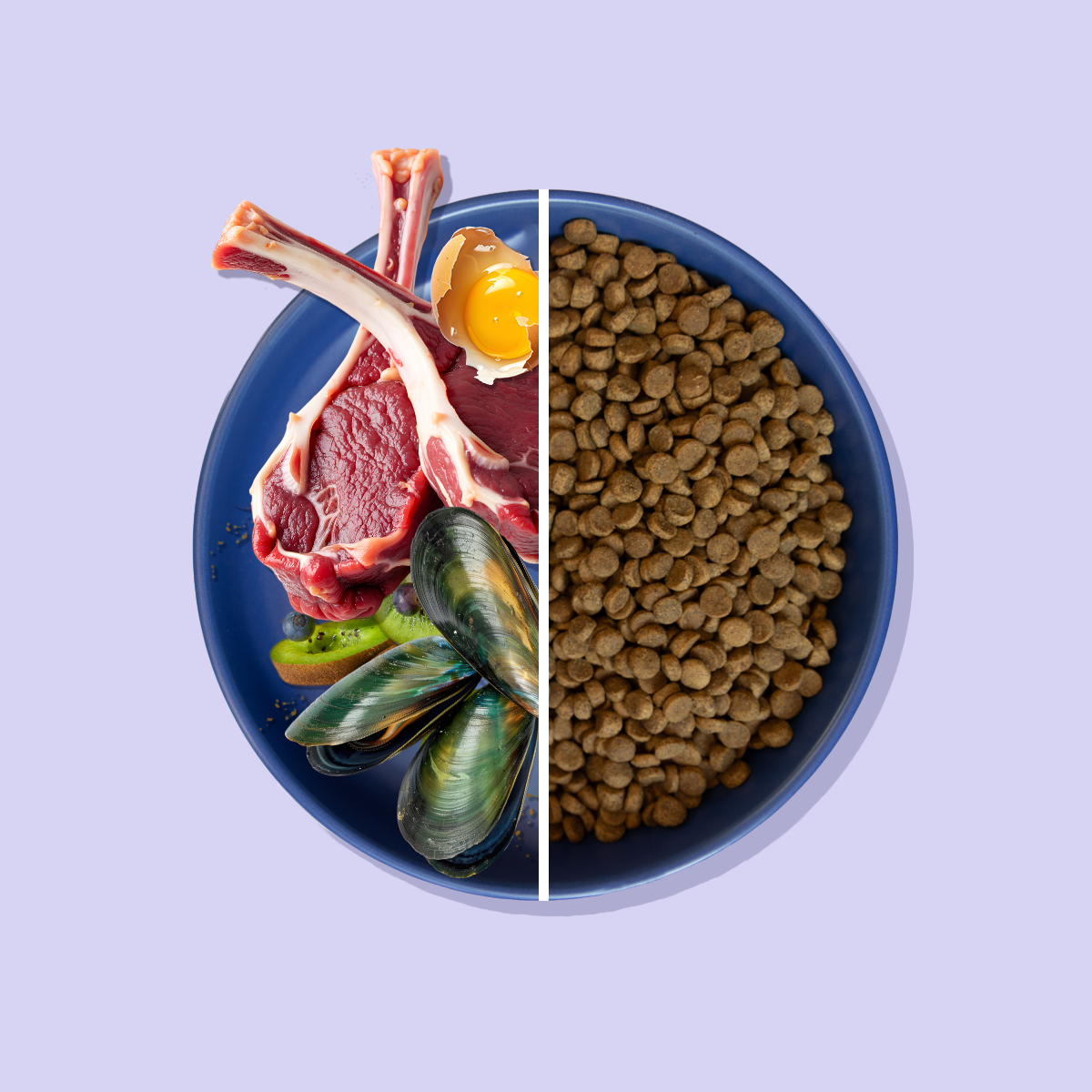
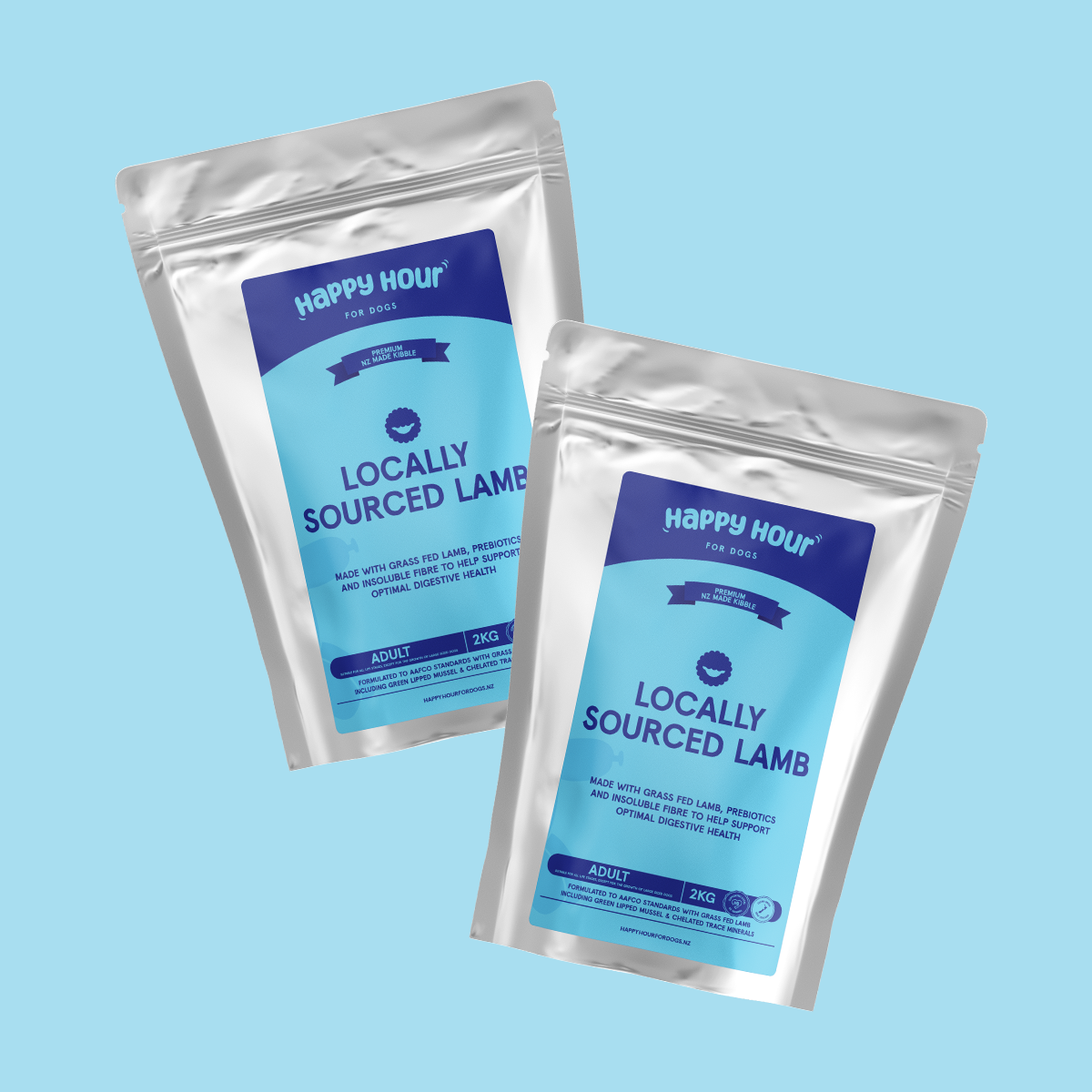
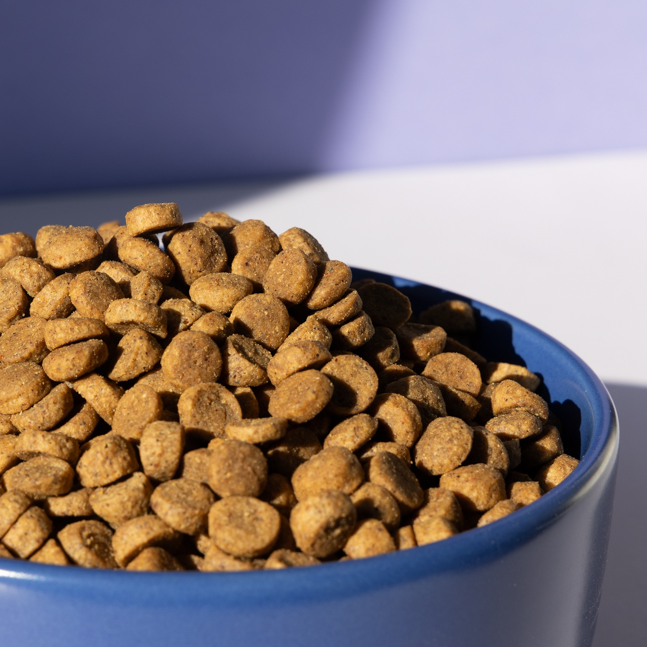
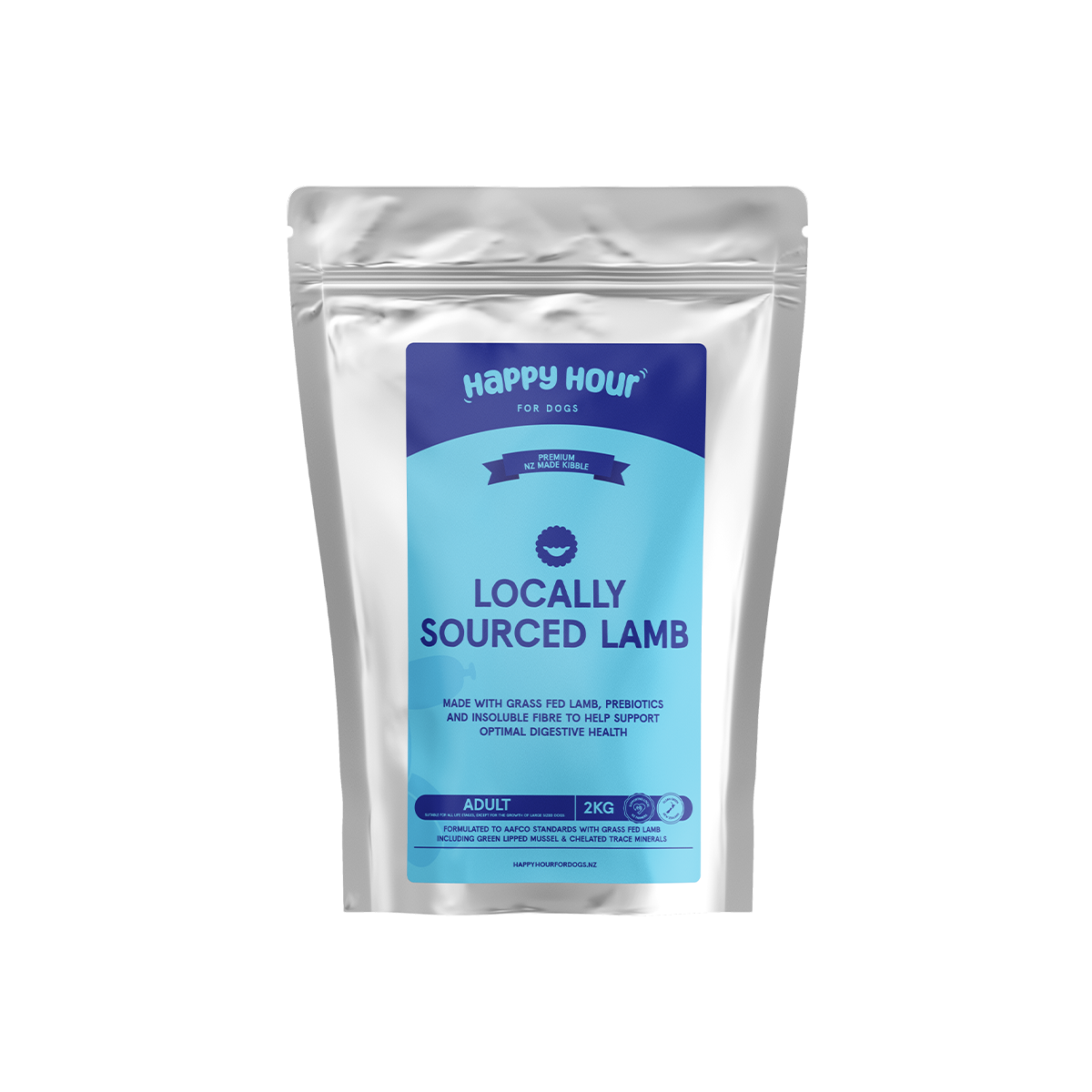
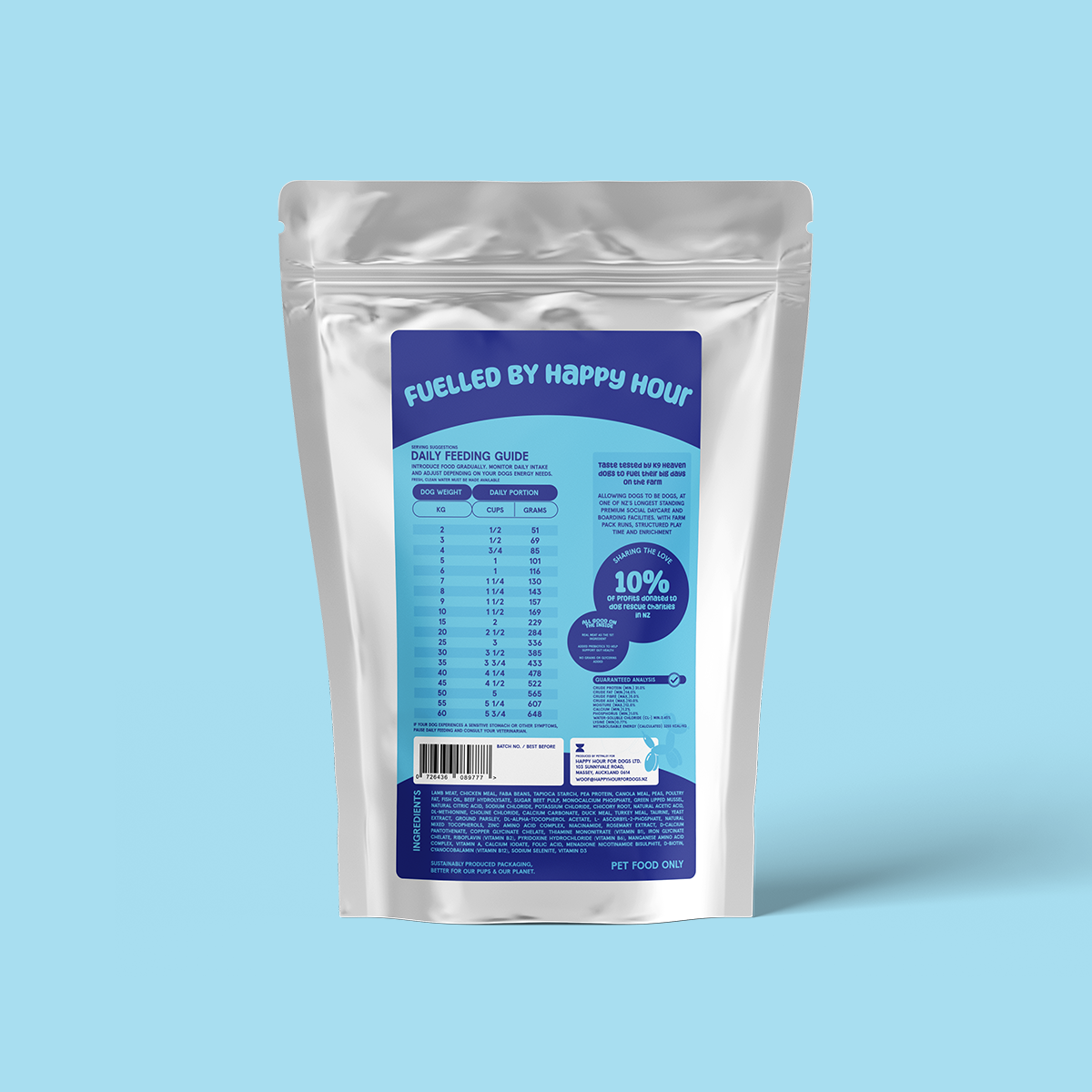
Sometimes the food genuinely is the problem, particularly if a formula has changed under you or the fats in the bag have gone stale. That's the case for a food with a strong, honest meat smell and an ingredient list you can actually read. Happy Hour is NZ-made grain-free kibble built on real grass-fed lamb or cage-free chicken, with green-lipped mussel, added prebiotics and insoluble fibre, and chelated trace minerals in the mix. No grains, no glycerines, no added hormones. Plenty of owners tell us their dog got interested again the moment the bag was opened, which is about as good a sign as you get from a dog. Not sure what to look for more generally? Our guide to the best dog food in NZ lays out how to compare them, and if you suspect the gut rather than the palate, start with the best food for a sensitive stomach.