It's one of the most common questions we hear from dog owners in New Zealand: "My dog won't eat his food — is he just being picky, or is something actually wrong?" The honest answer is that it depends, and getting it right matters.
A dog who turns his nose up at dinner could simply be a behavioural fussy eater who's learned that holding out gets him something tastier. Or he could be reacting to an ingredient in his food in a way that makes eating uncomfortable. These two things look similar on the surface but need very different responses.
The good news is that there are clear signs to watch for. Once you know what to look for, you can usually tell whether you're dealing with a diva or a dog with a genuine sensitivity — and act accordingly.
Key Takeaways
- Food sensitivity and food allergy are not the same thing. Sensitivity causes chronic digestive or skin symptoms; allergies trigger immune responses that can be more acute.
- A food-sensitive dog will usually show physical symptoms: itchy skin, loose stools, recurring ear infections, or paw licking — not just refusing to eat.
- A behaviourally fussy dog typically has no physical symptoms and often started refusing food after a change in routine or after being given too many treats.
- If you suspect a sensitivity, the only reliable way to confirm it is an elimination diet under vet guidance, lasting 8 to 12 weeks.
What Is a Food Sensitivity in Dogs?
Food sensitivity (also called food intolerance) is a chronic, non-immune reaction to one or more ingredients in your dog's diet. The most common culprits are proteins — beef, chicken, dairy, wheat, and eggs come up most often — though any ingredient can theoretically be the problem.
It's worth being clear on the difference between a food sensitivity and a food allergy, because these terms get used interchangeably when they shouldn't be.
A food allergy is an immune system response. The body identifies a protein as a threat and mounts a defence — sometimes rapidly, sometimes with significant symptoms. True food allergies can cause hives, facial swelling, or in serious cases, anaphylaxis. They're relatively uncommon in dogs.
A food sensitivity is different. There's no immune response involved. Instead, the digestive system simply doesn't tolerate a particular ingredient well, leading to chronic, ongoing symptoms that build up over time. Most of what dog owners in New Zealand encounter when their dog "reacts to food" is sensitivity, not allergy.
Both conditions can cause itchy skin, digestive upset, and general discomfort. The distinction matters when it comes to diagnosis and treatment, which is why a vet visit should always be your first step.
According to Veterinary Dermatology guidelines, food-related skin conditions in dogs are among the most under-diagnosed chronic issues in companion animals, partly because the symptoms overlap with environmental allergies and other conditions.
Signs Your Dog Has a Food Sensitivity, Not Just Fussiness
The key difference between a sensitivity and plain fussiness is physical symptoms. A picky eater might skip meals or push food around the bowl, but their body is otherwise fine. A food-sensitive dog will show signs of physical discomfort, usually across multiple body systems.
Watch for these signs:
Skin issues. Persistent itching, redness, or hot spots — especially around the face, groin, armpits, and belly. This is one of the most consistent signs of food sensitivity in dogs.
Paw licking. If your dog is constantly chewing or licking their paws, it often points to an allergic or sensitivity reaction rather than behavioural habit.
Recurring ear infections. Dogs with food sensitivities frequently get yeasty or bacterial ear infections that keep coming back despite treatment. If you've treated the same ear infection three times in a year, diet is worth investigating.
Loose or inconsistent stools. Chronic soft stools, diarrhoea, or mucus in the stool — especially when it seems unrelated to getting into the rubbish — can indicate the gut isn't tolerating something in the diet.
Inconsistent appetite with physical signs. A food-sensitive dog may eat reluctantly or inconsistently, but this is usually accompanied by the above symptoms. The food aversion is often because eating makes them feel unwell.
If your dog shows several of these signs together, don't put it down to fussiness. Get a vet check.
Signs Your Dog Is Just Behavioural Fussy
Behavioural fussiness is extremely common, and it's almost always owner-created — which means it can be owner-fixed. Here's what it looks like:
No physical symptoms. The dog is otherwise healthy. Coat looks good, stools are normal, no itching, no ear problems. They just won't eat.
It started after a routine change. You switched foods, started giving more treats, had guests who fed them scraps, or changed feeding times. The fussiness appeared alongside a change in the feeding environment, not out of nowhere.
They hold out for something better. You offer the bowl, they sniff it and walk away. You add a topper or swap to wet food, and suddenly they're interested. This is a dog who has learned that refusing food produces a better outcome.
They eat fine at other times. If your dog will eat enthusiastically when hand-fed, in a different location, or when you're not watching — that's behavioural, not physical.
They're a small dog or a dog that's been heavily humanised. Smaller breeds and dogs that spend a lot of time being treated like people tend to develop fussiness more easily. It's not a criticism of the dog or the owner — it's just a pattern we see repeatedly.
For a deeper dive into the behavioural side of fussy eating and how to reset it, check out our complete fussy eaters guide.
The Elimination Diet: How to Test for Food Sensitivity
If you and your vet suspect a food sensitivity, the elimination diet is the gold standard for identifying the culprit. There are no reliable at-home allergy tests for dogs — saliva and hair tests sold online have no scientific backing. The only way to confirm a dietary sensitivity is through feeding trial.
Here's how it works:
Step 1: Choose a novel protein. You need to feed your dog a protein source they have never eaten before. This is called a novel protein. The logic is simple: if they've never been exposed to the ingredient, they can't have developed a sensitivity to it. Common novel proteins used in elimination diets include venison, rabbit, kangaroo, and lamb (for dogs that haven't had lamb before).
Step 2: Feed only that protein and one carbohydrate source. No treats, no flavoured medications, no table scraps. Everything that goes in the mouth needs to be from the elimination diet. Even small amounts of the original protein can invalidate the trial.
Step 3: Stick with it for 8 to 12 weeks. This is where most people fall short. Skin symptoms in particular can take months to resolve once the offending ingredient is removed. Eight weeks is the minimum; twelve weeks gives you a cleaner result.
Step 4: Reintroduce ingredients one at a time. Once symptoms have cleared, you can reintroduce original ingredients one at a time, with two to four weeks between each one. If symptoms return after a reintroduction, you've found your culprit.
This process is slow, and it requires consistency. But it works — and it's the only approach that does.
What to Do If You Suspect a Sensitivity
Start with your vet. Before you trial diets or change anything, get a vet check. The symptoms of food sensitivity overlap with environmental allergies, mange, bacterial infections, and other conditions. You need to rule those out first. A vet can also guide your elimination diet and help you interpret results.
Once cleared, run a proper elimination trial. Your vet may refer you to a veterinary dermatologist for complex cases, but many straightforward food sensitivity trials can be managed with your regular vet's support.
Choose the right elimination food. For the trial to work, you need something genuinely novel. If your dog has been on a multi-protein kibble their whole life — which most dogs have — the novel protein pool can feel small. Lamb is a good option for many New Zealand dogs, because it's less commonly included in everyday dog food than chicken or beef.
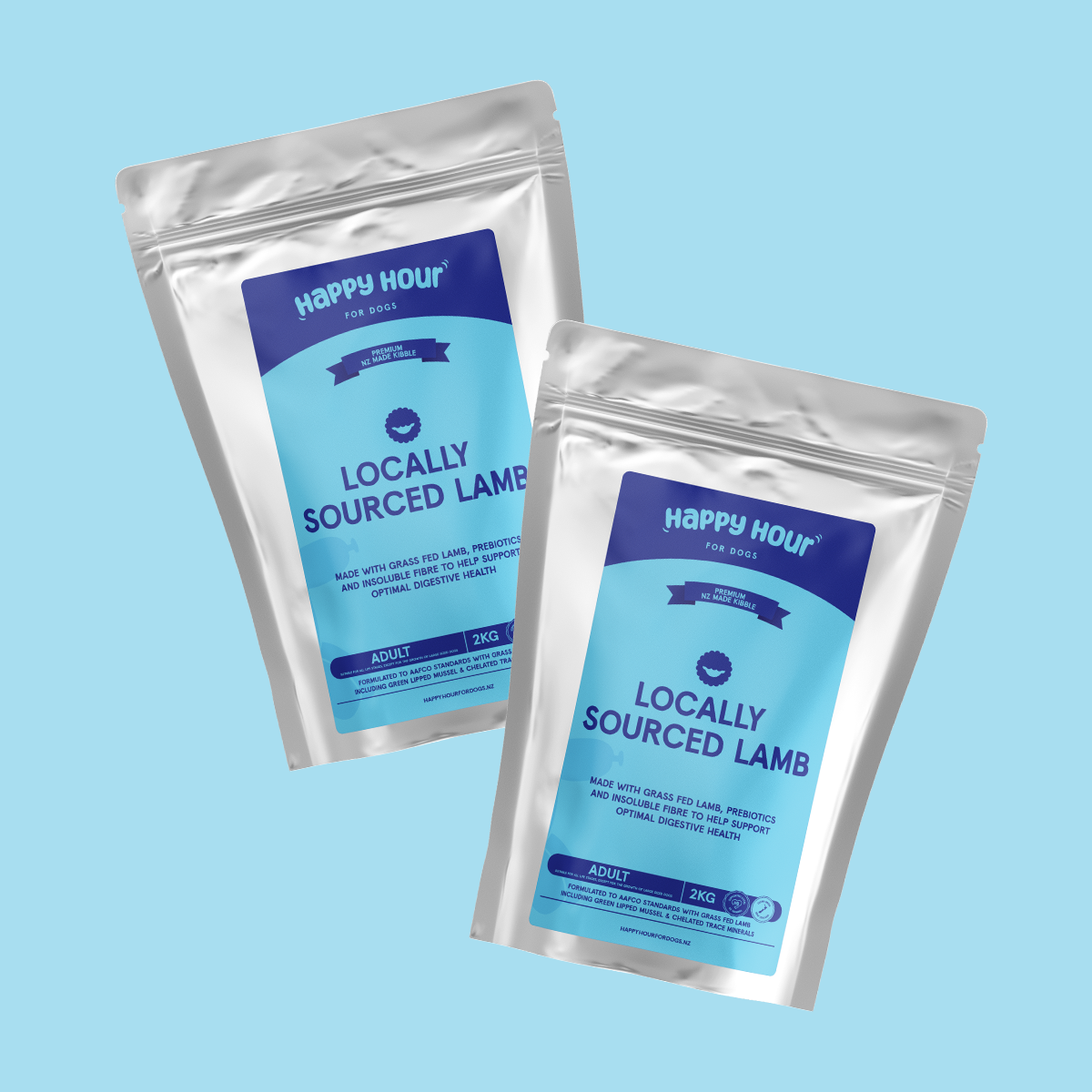
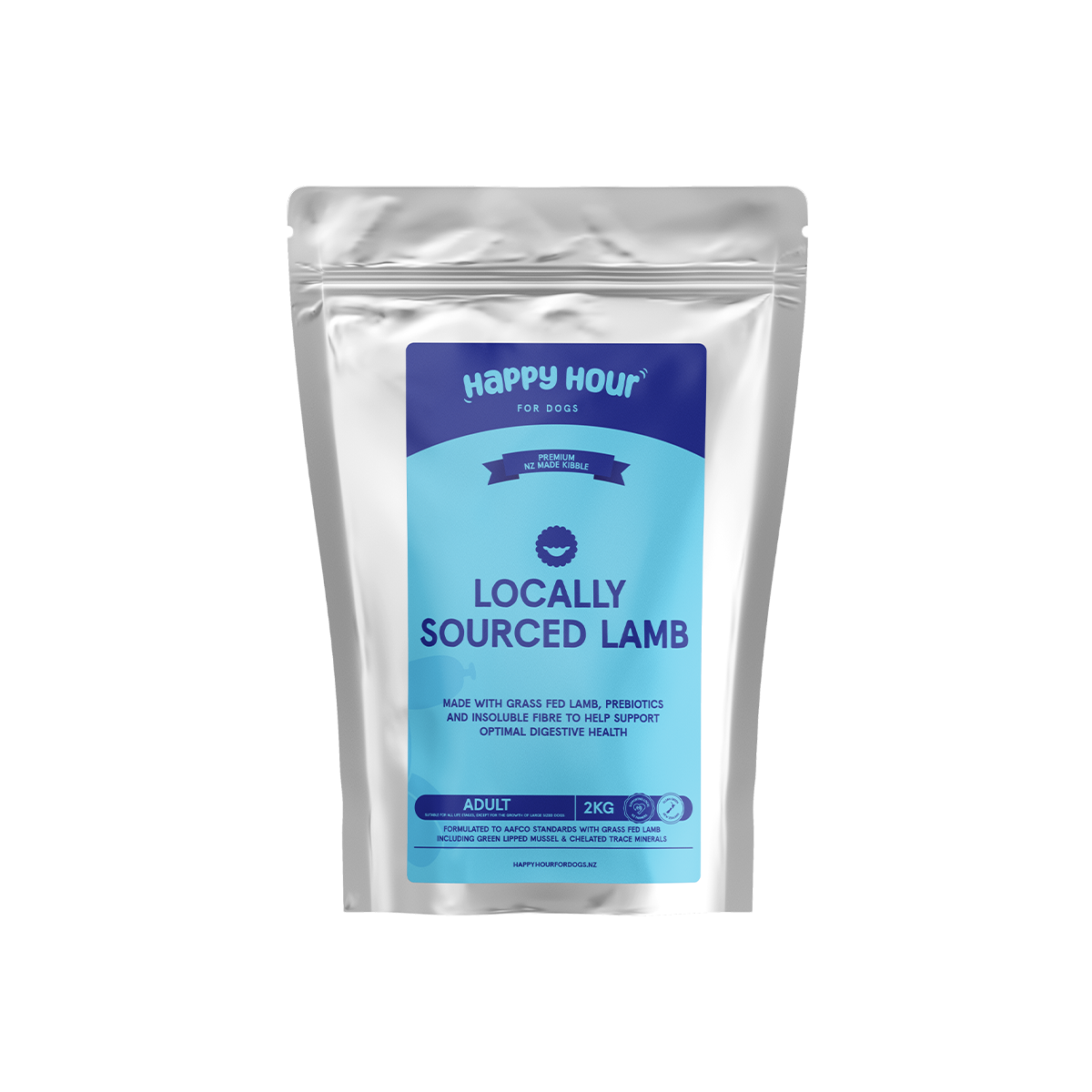
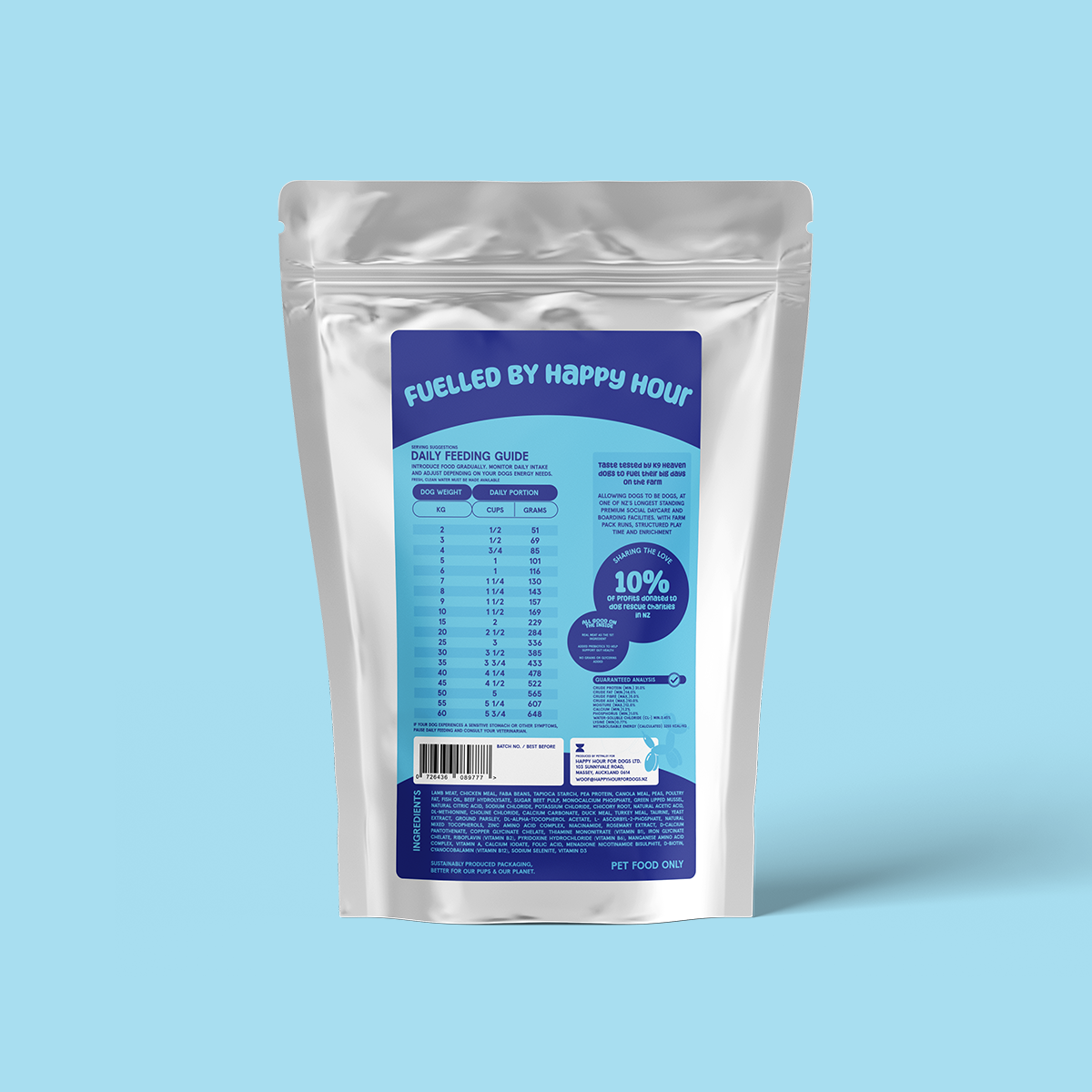
Happy Hour's single-protein lamb recipe is a clean option worth considering for an elimination trial: one protein, simple ingredients, no hidden additives. If your dog hasn't had lamb before, it ticks the "novel protein" box and is easy to source in NZ.
Talk to your vet before starting any dietary trial to make sure it's the right fit for your dog's specific situation.
FAQ
What are the most common food allergies in dogs in NZ?
The most frequently reported food sensitivities and allergies in dogs, both in New Zealand and globally, involve beef, chicken, dairy, wheat, and eggs. Beef and chicken are the most common because they appear in the majority of commercial dog foods, which means dogs have long-term, repeated exposure to them. This is why novel proteins like lamb, venison, or rabbit are often used in elimination diets.
Can kibble cause food sensitivity?
Yes, kibble can contribute to food sensitivity. It's not the kibble format itself that causes the issue, but the ingredients inside it. Many standard kibbles contain multiple protein sources, artificial additives, and preservatives, and long-term exposure to the same proteins is one of the main drivers of sensitivity. That said, kibble is not automatically harmful. A high-quality kibble with simple, transparent ingredients is a perfectly reasonable diet for most dogs.
How long does food sensitivity last in dogs?
Food sensitivity in dogs is typically a lifelong condition in the sense that the dog will always react to the offending ingredient. However, once that ingredient is removed from the diet, symptoms usually resolve within 8 to 12 weeks. Some skin conditions can take longer to fully clear. There's no cure, but it is entirely manageable with the right diet.
My dog is itchy after eating. Does that mean he has a food allergy?
Itching after eating can be a sign of food sensitivity or allergy, but it can also be coincidental — particularly if your dog is also reacting to environmental allergens like grass pollen or dust mites. A proper diagnosis from a vet is essential before drawing conclusions. Keep a symptom diary (when symptoms appear, what was eaten, what environment the dog was in) and bring it to your appointment. It will help your vet narrow things down faster.