Last updated: September 2026
If your dog is at the vet every month for their anal glands, or you've become uncomfortably familiar with the phrase “expressing the sacs,” you've probably already been told diet might be part of the problem.
Key Takeaways
- Firm stools are the whole game. The glands only empty when a solid stool presses past them on the way out.
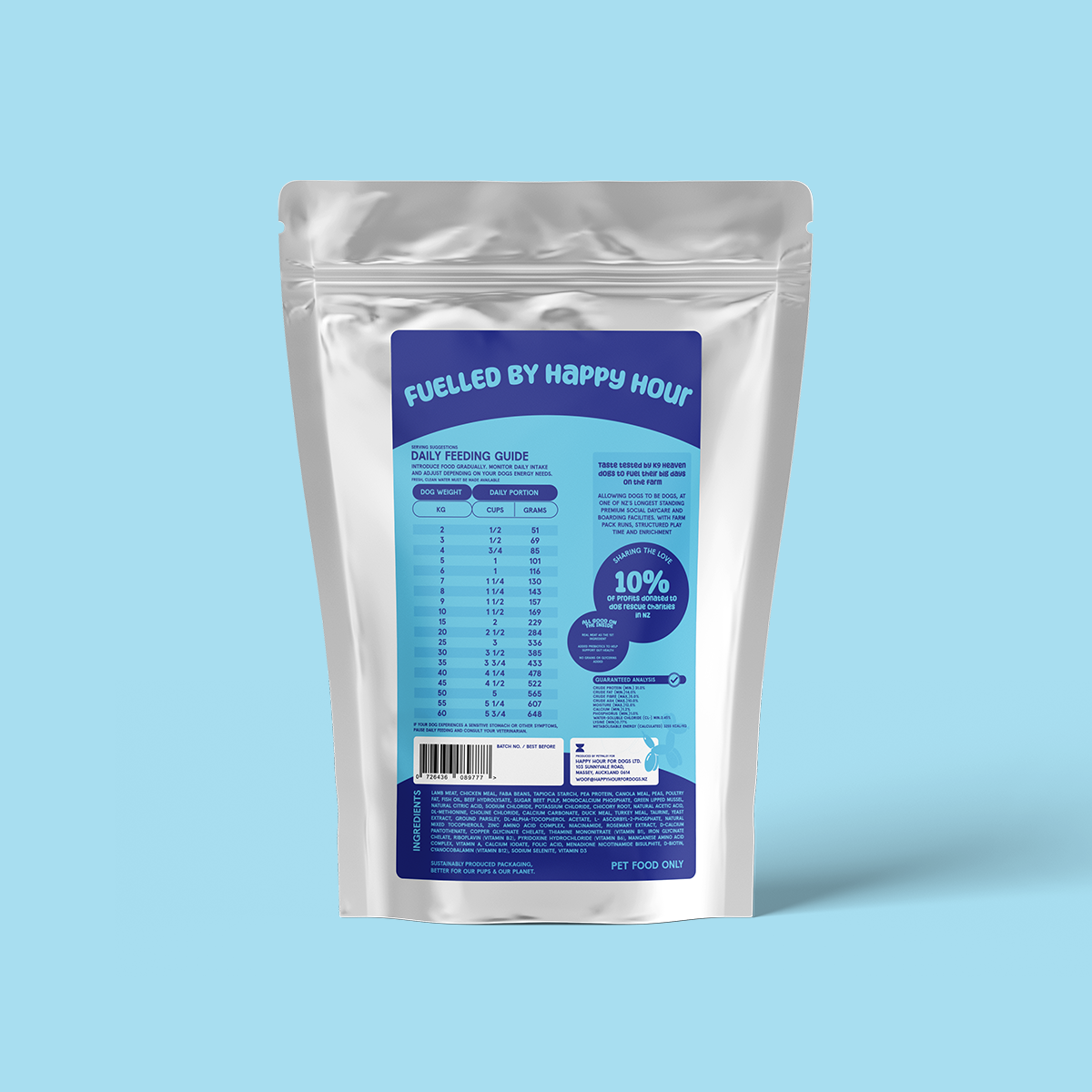
- Fibre matters most. Aim for the top end of 3 to 5% crude fibre, and read the guaranteed analysis on the back of the bag rather than the picture on the front.
- Fat is the quiet culprit. Plenty of premium kibbles sit at 16 to 20%, which is rich for a dog whose big daily event is a lap of the block.
- Rule out the simple things first. Grass seeds, fleas and tapeworm make a dog scoot just as convincingly as a full gland does.
- Chilled rolls, mince and home-cooked dinners carry almost no fibre, so they're harder to get right for a gland problem.
- Weight and movement count too. A heavy, under-exercised dog has a harder time draining those glands.
- Treats, chews and scraps can undo a good bag, so count them honestly while you're testing.
- Switch gradually over one to two weeks, then give the new food six to eight weeks before you judge it.
- If the stools are firm and the glands still fill, stop changing bags. That's the point where it's a vet question, not a food one.
- At 30 to 50 dollars a visit, a monthly expressing habit costs more over a year than the food difference usually does.
It's true. Food isn't a magic fix for every dog, but for a lot of dogs stuck in the monthly expressing cycle, getting the bowl right makes a genuine difference. Here's what actually matters when you're choosing food with anal gland health in mind, and how to tell within a few weeks whether it's working.
Why Food Affects Anal Glands
Quick anatomy recap. Your dog has two small sacs sitting just inside the anus, roughly at four o'clock and eight o'clock. They're about the size of a pea in a wee dog and closer to a grape in a Labrador. They empty when a firm stool passes and presses on them. Soft or sloppy stools don't create that pressure, so the glands don't drain. Fluid builds up, thickens, and eventually causes discomfort or infection.
Glands that are working properly are a complete non-event. They release a little with every decent stool, nobody notices, and most owners go a whole dog's lifetime without learning the word. If you know the word, something in that chain has broken, and more often than not it's the stool that's stopped doing the pressing rather than the gland itself being faulty. It's worth sitting with that for a second, because it changes what you're aiming at. You're not trying to do something to the gland. You're trying to build a better stool and let the gland do its own job.
Stool quality is almost entirely a function of what your dog eats, which makes food a direct lever. Try the firmness test on your morning walk. A healthy stool holds its shape when you pick it up, leaves the grass clean, and doesn't smear the bag. Vets often score stools on a 1 to 7 chart, and you want a solid 2 or 3: firm, segmented, holds together when you lift it. A 1 is dry little pellets, which usually means not enough water or too much fibre. A 5 or 6 is the formless mess that slides straight past the glands without touching them. If you're picking up something that needs three bags and a bit of hope, that's your answer.
Size counts as well as shape. A stool has to have some bulk to it to press on anything, which is why a dog on a very low-residue diet can produce something that's technically firm and still far too small and neat to do the job. Most adult dogs go once or twice a day, and the first one of the morning is your best sample because it's had all night to form. Judge the food on that one rather than the hurried afternoon effort halfway round the park. If the morning stool is a good 2 and the evening one is a 5, that's often less about the food and more about a mid-afternoon chew or a bit of something off the bench.
That's why so many dogs get stuck in a loop. The gland gets expressed, everyone's happy for three weeks, then it fills again because nothing about the stool changed. The appointment treated the symptom and left the cause sitting in the bowl. Repeated manual expression can also irritate the gland over time, so the aim is always to get the body doing the job itself. The scooting, the licking, the sudden nip at the back end and that fishy smell on the couch are all signs of a gland that keeps refilling.
Cocker Spaniels, mini Poodles, Chihuahuas, Pugs and the small fluffy crossbreeds that fill NZ groomers' books turn up for this again and again, partly because smaller glands and narrower ducts drain less easily. Size isn't destiny, though. Plenty of little dogs never have a bother, and the ones that do are often the ones on a soft, rich, snack-heavy diet. If you want the full picture of what the glands are and what your vet is actually doing in there, our guide to anal glands in dogs covers it properly.
Is It Actually the Glands, or Something Else?
Worth checking before you spend eight weeks and a hundred dollars testing a theory. The classic signs are scooting the bottom along the carpet or the lawn, licking and chewing at the base of the tail, spinning round to nip at the back end, and that unmistakable fishy, slightly metallic smell that turns up on a couch cushion or in the boot of the car. Some dogs sit down abruptly halfway through a walk and give you a look. Others say nothing at all and the only clue is a damp brown mark on the rug where they've been lying.
Not everything that makes a dog scoot is a gland, though. Grass seeds are a properly Kiwi problem from about November through to March, and one lodged near the tail base will have a dog worrying at their back end just as convincingly as a full sac would. Fleas are the other big one, because a flea-allergic dog gets itchiest right at the base of the tail, and a warm, humid Northland or Auckland summer keeps them going for most of the year. Worms, dried-on muck caught in a fluffy coat after a wet week, and plain itchy skin all look much the same from where you're sitting on the couch.
Two of those are worth a proper look right now, because they cost nothing to check. Tapeworm segments look like small grains of rice stuck to the fur around the tail or dried onto the bedding, and dogs get tapeworm from swallowing fleas, which most dogs manage at some point over a NZ summer. The other is matting. On a Cavoodle, a Cocker or anything with long feathering round the back end, a week of wet paddocks and no brush leaves a hard little mat sitting right against the skin, and it itches in exactly the spot a gland would. Groomers see it constantly. Lift the tail, part the coat, and have a look before you rewrite the menu.
If you want to shortcut the guessing, spend two minutes with your dog on the floor under a decent light. Lift the tail and look at the skin either side of the anus for redness, a shiny swollen patch, or a scab where a gland has been leaking. Part the coat around the tail base and run your fingers down to the skin, feeling for mats, scabs, or those little rice-grain segments. Check the ears and between the toes while you're down there, because a dog who's itchy in three places has a skin problem rather than a gland problem. Then look at the bedding and the spot on the couch they favour. A brown smear and that fishy smell point one way. A scattering of black grit that goes rusty red on a damp bit of paper towel is flea dirt, and it points somewhere else entirely.
A few things help you tell the rest apart. Gland trouble usually tracks the stools: worse in the days after a run of soft ones, quieter after a good firm week. Itchy skin tends to be steadier and rarely stays in one spot, so check the ears, paws and belly while you're looking. A grass seed usually turns up suddenly in a dog who was completely fine the day before. And if there's swelling, bleeding, a raw or weeping patch, or your dog flinches when you touch the area, that's a vet appointment rather than a food experiment. Get the simple things ruled out first, because no amount of pumpkin will shift a grass seed.
Fibre Is the Most Important Factor
Fibre adds bulk to stools and steadies how quickly food moves through the gut. Your dog benefits from both types, and they do different jobs. Insoluble fibre is the bulking kind, and it turns up as cellulose, pea fibre, bran and whole vegetables. It doesn't dissolve, so it holds its volume all the way through and gives the stool something to press with. Soluble fibre absorbs water and forms a gel, which is what firms up a loose stool and slows a gut that's running too fast. Psyllium is the obvious example. Beet pulp is useful precisely because it carries a bit of both, which is why it shows up in so many well-built foods. A food drawing on several sources beats one leaning on a single ingredient.
On the label, 3 to 5% crude fibre is a fair benchmark, and dogs with chronic gland trouble often do best at the top of that range. Plenty of supermarket bags sit nearer 2%, which is one quiet reason their stools never firm up. The guaranteed analysis is usually a small grey panel on the back, under the feeding chart, and it's the only place on the bag that has to tell you the truth. One catch worth knowing: crude fibre is listed as a maximum, so a bag promising 4% might contain rather less.
There's a second thing the panel won't tell you. Crude fibre is an old lab measure that picks up the tough insoluble stuff and misses a fair chunk of the soluble fibre, so two foods both printing 4% can behave differently in the bowl. That's not a reason to ignore the number, since it's still the fastest comparison you've got standing in the aisle, but it is a reason to read the ingredient list alongside it rather than shopping on the percentage alone.
Beet pulp cops a hard time online, usually from people who assume it's sugar-factory leftovers snuck into the bag. It's the fibre left over once the sugar has been taken out, and it's one of the more dependable stool-firmers in dog food. Psyllium is the same stuff people buy for themselves at the chemist. Neither one is filler. What you don't want is fibre that turned up by accident, as the hulls and bran that came along for the ride with cheap grain, because that's bulk with nothing useful attached to it.
There's a catch if you're comparing a kibble against a chilled roll, a tin or a wet topper. Those numbers are printed “as fed”, which means the moisture is included, and wet food is mostly water. To compare fairly, divide the figure by the dry matter. A tin showing 1.5% fibre at 78% moisture is really about 7% once you take the water out (1.5 divided by 0.22), while a kibble at 10% moisture barely moves. It cuts the other way on fat, too, which is how a wet food that looks gentle on the panel turns out to be the richest thing in the fridge.
Here's roughly how the shelf breaks down in a NZ pet aisle. Treat it as a shape rather than gospel, because ranges vary a lot between brands and the only numbers that count are the ones on the bag in your hand.
| Type of food | Typical crude fibre | Typical crude fat |
|---|---|---|
| Supermarket economy kibble | Around 2 to 2.5% | Around 10 to 14% |
| Mainstream premium kibble | Around 3 to 4% | Often 16 to 20% |
| Happy Hour Grass-Fed Lamb | 5% | 14% |
Next time you're standing in the pet aisle, flip two bags over and compare that panel. Say bag one shows 2.2% fibre and 18% fat, and the first five ingredients run chicken meal, ground corn, corn gluten meal, wheat, animal fat. Bag two shows 4.5% fibre and 14% fat, and reads lamb, lamb meal, peas, beet pulp, pea fibre. Both have a happy dog on a beach out the front, both might be within a few dollars of each other per kilo, and for a dog who scoots there's no contest. That's the difference between a stool that does its job and one that doesn't, and it's decided by a panel most people never read. Our guide to choosing the best dog food in NZ goes through the rest of that panel if you want the wider version.
While you're there, check whether any fibre source appears in the ingredient list at all. Beet pulp, psyllium, pea fibre, pumpkin and dried vegetables are the ones to look for. If nothing bulking shows up, that 2.5% is coming from whatever the grains happened to bring with them, and it won't behave like fibre that was put there on purpose.
If your dog is close but not quite there, top up gently at home. A spoonful of plain cooked pumpkin, tinned unsweetened or a bit of steamed and mashed, is cheap and easy to find in any NZ supermarket, and a crown or buttercup pumpkin in autumn does the same job for a couple of dollars. A small pinch of psyllium husk from the chemist or the health aisle, stirred through with water, works too. Start small, roughly a teaspoon for a wee dog and a tablespoon for a big one, and give it a few days. Go too hard and you'll swing the other way into dry little pellets, which press on nothing. Toppers help, but they don't rescue a food that gets the base level wrong. If your dog turns their nose up at pumpkin, our guide to feeding fussy dogs has gentler ways to get extras into the bowl.
Fat Levels Matter More Than Most People Think
Fat slows the stomach down. A rich meal sits longer, reaches the far end of the gut still being worked on, and whatever fat doesn't get absorbed tends to draw water in behind it. What lands on the grass comes out softer, darker, smellier and far less predictable, which is exactly the stool that slides past the glands without pressing on them. If your dog's food is rich, especially with fats coming from vague, unnamed meat meals, that could be feeding the problem.
Check the back of the bag. Many premium foods sit at 16 to 20% fat, which suits a heading dog mustering all day on a Southland farm and can be far too rich for a Kiwi lounge dog who gets a lap of the block and a nap. Those bags aren't badly made, they're just built for a different animal. Working-dog and performance formulas are the obvious ones to look twice at, and so is anything sold on being high-energy or calorie-dense, because that's the same thing said nicely. Puppy formulas count here too, and a surprising number of small dogs are still eating one at three years old because nobody ever changed the bag.
It helps to put a number on it, because four percentage points sounds like nothing until you do. A 10kg Cavoodle eating 150 grams a day on an 18% fat food is getting about 27 grams of fat. Move to a 14% food at the same portion and that's 21 grams, so you've taken roughly a teaspoon and a half of oil out of the day. The protein is doing the same job in both bowls and so is the fibre. Fat is the thing that changed, and it's usually the first thing you notice on the morning walk. For the dog on the couch, dropping to something leaner often settles the stools within a few weeks. Our Grass-Fed Lamb runs at 14% crude fat, lower than a lot of premium kibbles, though it's still a moderate level rather than a therapeutic low-fat diet.
There's one more number worth hunting down while you've got the bag turned over. Most brands print the energy content somewhere on the panel or on their website, as kilojoules per 100 grams or kilocalories per kilogram. A dense food is dense because of the fat, so if one bag wants 300 grams a day for your dog and another wants 380 grams for the same dog, the first one is the richer feed even before you read the fat line. If a brand doesn't publish the number anywhere at all, that's worth noticing too.
Be honest about the extras, because the kibble isn't the whole diet. Spend a week writing down everything your dog eats and most people are surprised by the list: a corner of the Sunday roast, the fat scraped off the mince, a daily dental chew that's oilier than anyone realises, a bit of cheese to hide a tablet, half a sausage off the barbecue in January. Any of those can push a borderline dog over. Cut them back while you test a leaner food and you'll get a much cleaner read. If pancreatitis is also on your radar, that's a stricter bar and a vet conversation, and our guide on low-fat food for dogs with pancreatitis explains why.
Chilled Rolls, Mince and Home-Cooked Dinners
Plenty of NZ dogs eat something out of the chiller as well as, or instead of, biscuits. A roll sliced onto the bowl, mince from the butcher, a bit of chicken and rice cooked up on Sunday and portioned into the fridge. None of that is a bad way to feed a dog. It's just harder to get right when the glands are the problem, because the fibre in most of it sits close to zero and the fat swings around depending on what you bought that week.
Mince is the big one. Have a proper look at the tray next time you're at the counter. Premium mince here usually runs somewhere around 5 to 10% fat, while the standard trays can sit two or three times higher, and lamb mince is often richer again. Feed the standard tray one week and the premium the next and you've changed the fat in that bowl substantially without changing anything you'd think of as the food. Plain meat with no bulk behind it produces exactly the soft, dark, strong-smelling stool that slips past the glands without touching them, and the week you grab whatever's on special is the week it changes again. Consistency is half the battle with glands, and mince makes consistency hard.
Rolls are worth turning over too, because the panel on the back tells the same story once you do the sum. A chilled roll might show something like 6% fat and under 1% fibre at around 70% moisture. Take the water out and that's closer to 20% fat and 3% fibre, so the thing that looked gentle in the fridge is often richer than the biscuits it replaced. The ingredient list usually runs meat, meat by-products, cereals and a binder, with nothing in there put in on purpose to add bulk. That's not a scandal. It's a food built around being easy to eat rather than around what comes out the other end, and glands care a great deal about what comes out the other end.
Home-cooked chicken and rice is the other trap. It's the standard NZ upset-tummy dinner and it's designed to be gentle and low-residue, which is the opposite of what a gland needs long term. Grand for a few days after a dodgy night on the compost heap. Not a diet for a dog who scoots. The same goes for the very soft, very palatable rolls that fussy dogs get moved onto: they solve the eating problem and quietly create this one. If that's the corner you've been backed into, our guide to fussy eaters is a better starting point than another roll.
If you're feeding wet or chilled alongside a kibble, keep the kibble as the base and treat the rest as a topper rather than half the bowl, and do the dry matter sum from earlier before you assume the wet stuff is the lighter option. A quarter of the bowl swapped to a rich roll can quietly cancel out the fibre you were counting on. And if you'd rather stay with a chilled or home-cooked diet, work through the fibre side with your vet rather than guessing, because balancing a home-cooked bowl properly takes more than a spoonful of pumpkin.
Weight and Movement Change the Picture Too
Diet isn't only about what lands on the grass. Extra padding around the rear can sit against the gland ducts and make draining harder, so a dog carrying a few too many kilos is fighting the problem from two directions at once. It's one of the reasons the same dogs come back to the clinic year after year while their leaner mates never have a bother. On a small breed it doesn't take much either. A 6kg Chihuahua carrying 900 grams is up a seventh of their body weight, which on a 30kg Lab would be more than four kilos, and nobody would call that nothing.
The rib test is the quickest check you can do at home. Run your hands along your dog's side. You should feel ribs under a thin layer, roughly like the back of your hand, without pressing. Then look down from above for a waist behind the ribs, and from the side for a tummy that tucks up rather than running straight through. Vets usually put a number on the same thing with a body condition score out of 9, where 4 or 5 is the target, and a lot of the dogs booked in for monthly expressing are sitting at a 6 or a 7. Ask for your dog's score at the next appointment, because it's a far more useful thing to track than the number on the scales alone.
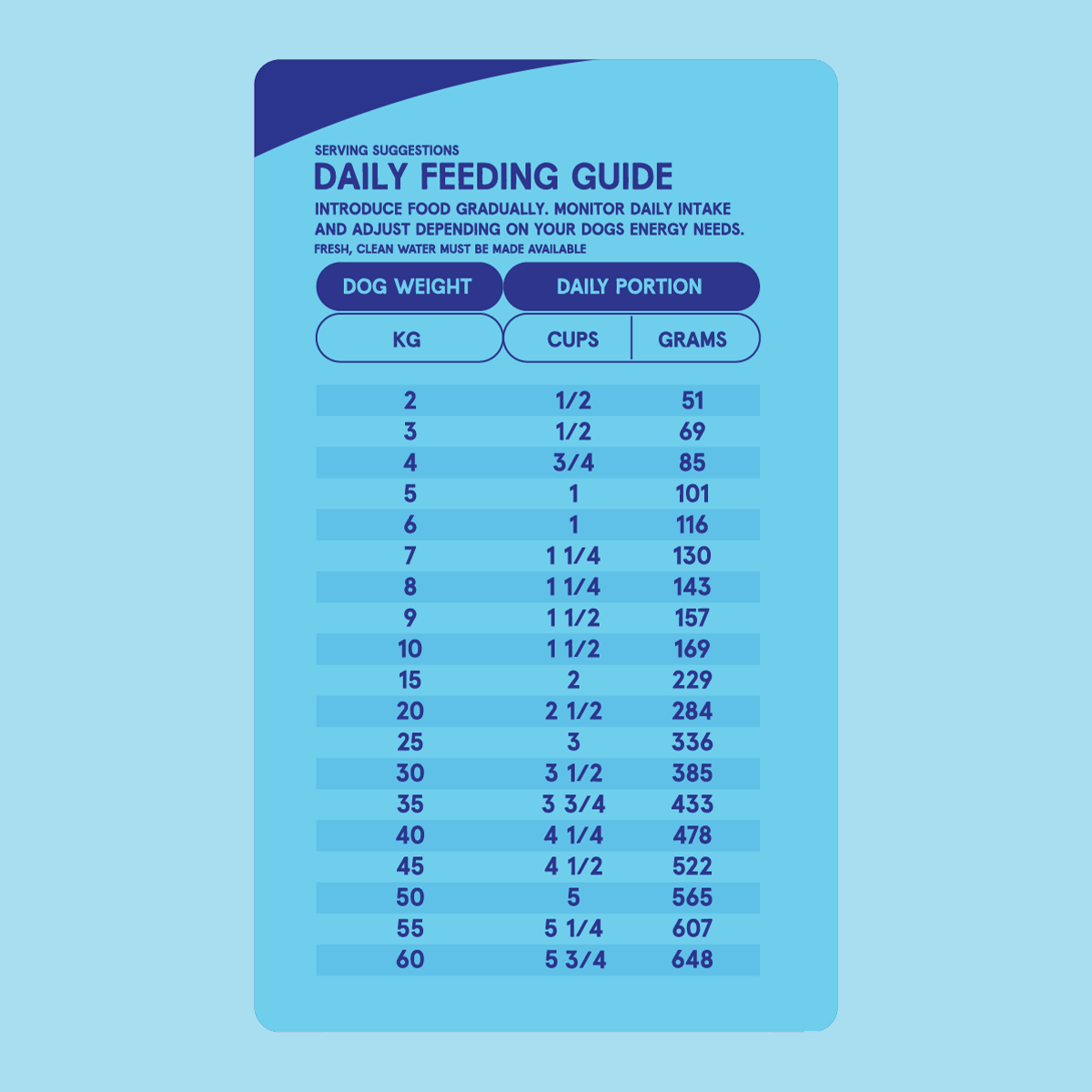
If you have to dig for ribs, the honest fix is usually portion size rather than a different bag. Weigh the food in grams on the kitchen scales rather than eyeballing a scoop, because a heaped cup can be half again what you think it is. Count the treats too. Vets often suggest keeping them under about 10% of the day's food, and for a 6kg dog eating roughly 110 grams that's about 11 grams of extras, which two dental sticks will swallow before lunchtime. Most NZ clinics keep a set of scales in the waiting room and won't mind you popping in to use them, so weigh on the same day each fortnight, before breakfast, and write it down. A trend tells you something. A single weigh-in on a random Tuesday doesn't.
Movement helps as well. Walking keeps the gut moving and encourages a regular, predictable morning routine, which is exactly what the glands need. Two solid walks a day beat one long weekend blast, and in a Wellington southerly or an Auckland downpour a short lap still counts for more than skipping it. If the weekday walk keeps getting squeezed, sniffing time in the backyard and a bit of play indoors will keep things ticking over until the weather turns. Our guide on choosing the best dog food in NZ covers portioning and feeding amounts in more detail if you want a starting point.
Treats and Chews Undo More Good Bags Than Anything Else
This is where most careful food changes quietly fall over. You've bought the leaner bag, you're weighing the portions, and the stools still aren't behaving, because roughly a fifth of what the dog eats never touches the bowl. Dental sticks, a pig's ear from the butcher, dried lamb ears, a bully stick on a Sunday, the last two bites of toast, a bit of cheese to get a worming tablet down. Most of that is fatty, none of it carries fibre, and it lands in the afternoon, which is exactly why so many dogs produce a decent morning stool and a shocker at four o'clock.
Read the chew packets the same way you read the bag. A lot of supermarket soft chews are held together with glycerine and sugars and sit well north of 20% fat, and rawhide and pigs' ears are richer again. Do the maths on one and it lands harder than you'd expect: a large dental stick can be 80 to 100 calories, which on a 6kg dog eating around 400 calories a day is a fifth of the diet gone before dinner. If your dog genuinely needs to chew, and plenty do, go for something dry and hard rather than bendy and greasy, keep it to a couple of times a week rather than daily, and take the equivalent grams off dinner. A dog who has to work at a chew for twenty minutes gets more out of it than one who inhales a soft stick in ninety seconds anyway.
December through February is when this falls over in most households, and it's worth knowing that before you start a trial. The barbecue is going, there's ham on the bench for a solid week after Christmas, the kids are home and feeding the dog under the table, and half the street is doing the same when you're out. It's also peak grass seed season, so you can end up with a scooting dog and three plausible explanations at once. If you're planning a proper six-week food trial, the school holidays are a rough time to start one. February or March, once the house has gone quiet again, gives you a much cleaner read.
For everyday rewards, the cheapest fix in the house is the food you've already bought. Weigh out the day's kibble into a container each morning, use a handful of it for training and pottering about, and feed the rest at meals. Nothing gets added, nothing gets double-counted. Raw carrot sticks, a few plain green beans, a slice of courgette or a bit of plain cooked pumpkin all work as well, and they push in the right direction on fibre rather than the wrong one on fat. If the only reliable way you get a tablet down is a lump of cheese, our guide to feeding fussy dogs has a few less greasy ways round it. It also helps to get everyone in the house on the same page, because the classic pattern is one person doing a careful six-week trial while somebody else keeps slipping the dog crusts at the bench. Change one thing at a time or you'll never know which change did the work.
Grain-Free vs Grain-Inclusive
This is more nuanced than the marketing suggests. Some dogs digest grains happily and produce excellent stools on a grain-inclusive food. Others are visibly better without them, with a lower digestive load and firmer output. There's no universal answer, only the right answer for the dog in front of you, and the grain-free badge on the front of the bag tells you almost nothing on its own. What matters for a gland problem is what the fibre and fat numbers are doing on the back, and whether the fibre came from somewhere deliberate.
It helps to separate two different questions that get muddled together. One is whether grain suits your particular dog. The other is what the grain is doing in that recipe. Oats or brown rice sitting behind a named meat in a well-built food behave nothing like corn gluten meal padding out a cheap bag, and a grain-free food stacked with pea starch and potato isn't automatically the better option just because the grain is gone. Most NZ premium brands now sell both versions of nearly the same recipe, so you can often test the question without changing much else.
If you want to actually test it rather than guess, run it properly. Pick two foods where the recipes sit close together, ideally same brand, same protein, similar fat, one with grain and one without. Feed the first for six weeks with the treats held steady, score the stools daily, then transition to the second and do it again. Most people change the protein, the grain, the fat level and the treat routine all in the same fortnight, then can't work out what happened, which is a fair chunk of why the internet is full of confident and contradictory advice about grain. A line in your phone after each walk is enough: firmness score out of 7, and whether there was any scooting that day. Three weeks of notes tells you far more than a vague sense that things seem better, because memory quietly rounds up when you're hoping for a result.
One thing grain-free isn't is allergy-proof. Reactions to grain are fairly uncommon in dogs, and the usual suspects are the proteins a dog has eaten most of their life, which in New Zealand tends to mean chicken or beef. Most grain-free bags change the meat as well as the grain, so if your dog improves you won't know which change did it. That's fine if all you want is a better result. It matters a lot if you're trying to pin down a trigger, in which case pick the new food for its protein first and treat the grain-free part as a bonus.
What to avoid is grain used purely as cheap bulk. Corn, wheat, soy or white rice leading the ingredient list with minimal real meat behind it rarely produces the stool you're after. One caution worth knowing: regulators overseas have looked into a possible link between some grain-free diets heavy in peas, lentils and potatoes and heart problems in a small number of dogs. It stays rare and unproven, but it's a good reason to pick a properly formulated food that leads with quality meat rather than one swapping grain for a mountain of legume starch. If your dog has any heart history at all, raise it with your vet before you change anything.
Puppies, Seniors and Dogs Already on a Vet Diet
Age changes the picture, and so does whatever else your dog has going on. Gland trouble in a young puppy is fairly unusual, so if a five month old is scooting across the lounge, worms and grass seeds are worth ruling out before you start rewriting the menu. Puppies also need a food built for growth, and a high-fibre adult bag isn't the place to experiment. Get the worming up to date, have the vet take a look, and sort the fibre question once you know what you're dealing with.
Adult dogs in the middle of life usually get here by drift rather than by any one thing. The treats crept up over a couple of winters, the walks got shorter when the mornings got dark, and a run of antibiotics or a bad week on the beach rubbish left the gut unsettled. Nothing dramatic happened, and yet the stools have been a 5 for months. That's the easiest version to fix, because everything that caused it is still within your control. Write down what actually goes in over a week, including the bits nobody counts, then fix the biggest single item first rather than overhauling everything at once. If you change five things and it works, you've learned nothing you can repeat.
The other end of life is the more common story. Older dogs slow down, the hindquarters weaken, and arthritis makes it harder to hold the posture that generates real pushing pressure. A dog who sailed through a decade without a single appointment can start scooting at eleven, and the food often hasn't changed at all. What's changed is the dog. Fibre still helps, and so does dropping the fat a little now that they're burning less of it, keeping the weight down, and swapping one long walk for two short regular ones so the morning routine stays predictable.
Winter makes it worse in a NZ house, and it's the bit people miss. A cold, wet Dunedin morning gets a stiff old dog doing a hurried job on the concrete by the back door rather than a proper squat out on the lawn, and a hurried job doesn't press on anything. Small changes around the house help more than you'd think: a runner or a bath mat over a slippery hallway so they can get up without scrabbling, a patch of grass or bark they can reach without going down a wet step, and giving them a minute longer outside rather than calling them straight back in. Mention the stiffness to your vet as well, because a dog who's sore in the hips is a dog who isn't pushing properly, and no bag of food fixes that.
And if your dog is already on a diet your vet put them on, for kidneys, for a skin work-up, or for pancreatitis, don't quietly swap it out to chase the glands. Ring the clinic and ask about adding fibre on top of what they're already eating instead, since a spoonful of pumpkin or a pinch of psyllium is a much smaller change than a whole new bag. Worth being clear here too: our Grass-Fed Lamb sits at 14% fat, which is leaner than plenty of premium kibbles, but it's a moderate fat level rather than a therapeutic low-fat diet, so it isn't a substitute for a prescription food.
Fillers and Low-Quality Ingredients to Avoid
Some ingredients are on the label because they're good for your dog. Others are there because they're cheap and they fill the bag. Reading past the picture on the front is the most useful habit you can build, and it takes about thirty seconds once you know what you're looking at. Here's what to look twice at, and why each one matters for a dog whose stools won't firm up.
Meat by-products or meal of unclear origin. “Meat meal”, “animal fat” or “poultry by-product” without naming the animal is a red flag. A good brand has no reason to hide the source. It also makes a protein trial impossible, because you can't avoid a trigger you can't identify, and that matters when chicken and beef are the two most likely culprits in a NZ dog.
Corn, wheat or soy as primary ingredients. Cheap bulk that contributes little and upsets sensitive dogs. The fibre these bring along is the accidental kind, hulls and bran rather than anything chosen for the job, which is why an economy bag can technically show 2.5% fibre and still produce a stool that presses on nothing.
Artificial preservatives, colours and flavours. BHA, BHT and artificial colours add nothing and can irritate a touchy gut. The colours are there for you, not your dog, who is colourblind to the red and green bits and would eat it either way. Mixed tocopherols, which is vitamin E, do the same preserving job without the argument.
Excessive starch. Some grain-free foods swap grain for large amounts of potato or tapioca, which can land you in a similar spot: plenty of bulk, not much useful fibre, and a stool that goes soft when the gut is under any pressure at all.
Glycerine and other softeners. They're what keep semi-moist foods and a lot of supermarket chews bendy in the packet, and they do nothing for your dog. Happy Hour doesn't use them.
Read the first five ingredients before you buy, because that's where the weight sits. If a named animal protein isn't leading and fillers show up before anything nourishing, put it back. Watch for ingredient splitting too, where a brand lists its grains as three or four separate entries so meat floats to the top. Ground corn, corn gluten meal and corn bran are all corn, and added together they might outweigh the chicken sitting proudly in first place. Same trick with pea protein, pea starch and pea fibre on a grain-free bag. Once you've spotted it once you'll see it on half the shelf, and our walkthrough of what to look for on a NZ dog food label has the rest of the tricks.
One more label habit worth having. Ingredients are ordered by weight before cooking, and fresh meat is roughly 70% water. So “fresh lamb” sitting proudly in first place drops a long way down the order once the moisture has cooked off, which is why a properly named meat meal further along the list isn't automatically the villain. That's not a scam, it's just how the labelling works, and it's why the first five ingredients are a shape rather than a recipe.
It's also worth doing the maths per day rather than per bag, because that's the only number that decides anything. Say a 15kg bag costs 160 dollars and your 25kg dog eats 300 grams a day. That's 50 feeds, so about 3.20 a day. A cheaper 15kg bag at 110 dollars looks like a clear win until you notice the feeding chart wants 380 grams for the same dog, which is 39 feeds and 2.80 a day, so the gap is 40 cents rather than 50 dollars. Then add the expressing appointments you're currently booking. Twelve visits at 40 dollars is close to 500 dollars a year, which buys a lot of that gap, and that's before the time off work and the drive across town with a sore dog in the boot.
Protein Quality Counts
Highly digestible protein means less undigested waste sitting in the gut, and less waste means smaller, firmer stools. Owners usually notice this first as a noticeably smaller poo on the morning walk, which is a good sign the food is being absorbed rather than passed straight through. Some are surprised by how much less there is, and mildly suspicious about it, which is fair enough.
Digestibility is the bit almost nobody prints on the bag, and it's the whole difference between protein your dog uses and protein that just passes through. The rough way to read it at home is volume. Move a 20kg dog onto a more digestible food at a sensible portion and the pile on the lawn often drops by something like a third without the stool going loose, which is the combination you want. If you've changed food and what you're picking up got bigger, softer and smellier at the same portion, that bag is carrying more your dog can't use, whatever the protein line says on the panel.
The percentage on the panel doesn't tell you where that protein came from, though, and this is where a lot of bags win an argument they shouldn't. A food can hit an impressive number by leaning on pea protein or corn gluten meal, and your dog will pass more of that through than they absorb, which is the opposite of what you want on the grass. It's why two foods both showing 28% protein can produce two completely different piles. So read the number and the ingredient list together. A rough sanity check: count how many of the first five ingredients are named animal proteins. Two is good. None, on a bag advertising 30% protein, tells you where that number came from.
Named proteins like lamb, chicken, salmon and beef from identifiable sources are what you want. NZ grass-fed lamb makes a particularly good base: raised on open pasture rather than in feedlots, lean, digestible, and with no added hormones. It's also a novel protein for a lot of dogs, which helps if something common like chicken has been quietly aggravating things. A single protein makes a trigger far easier to spot than a food blending four or five meats, because when you're testing you want one variable, not five.
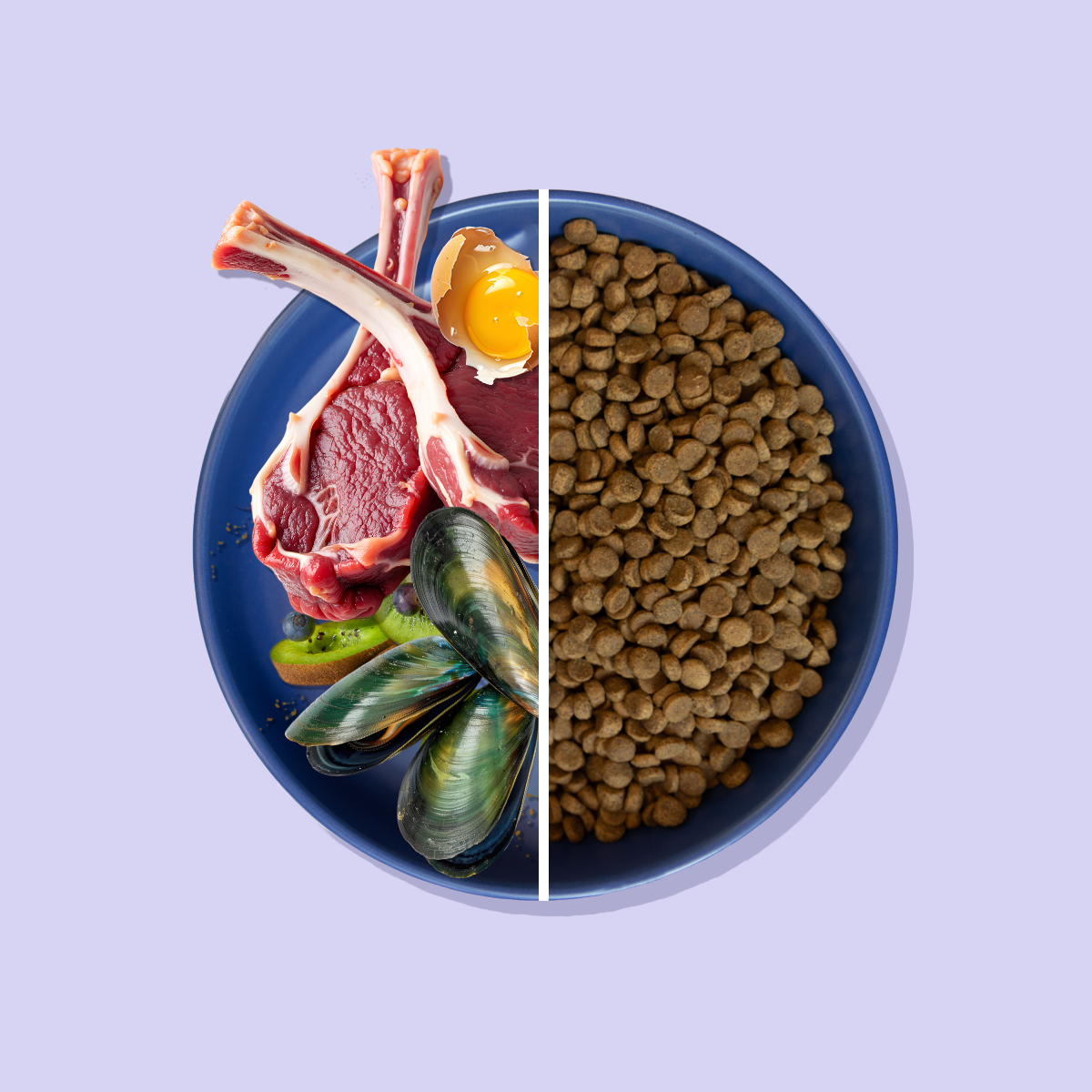
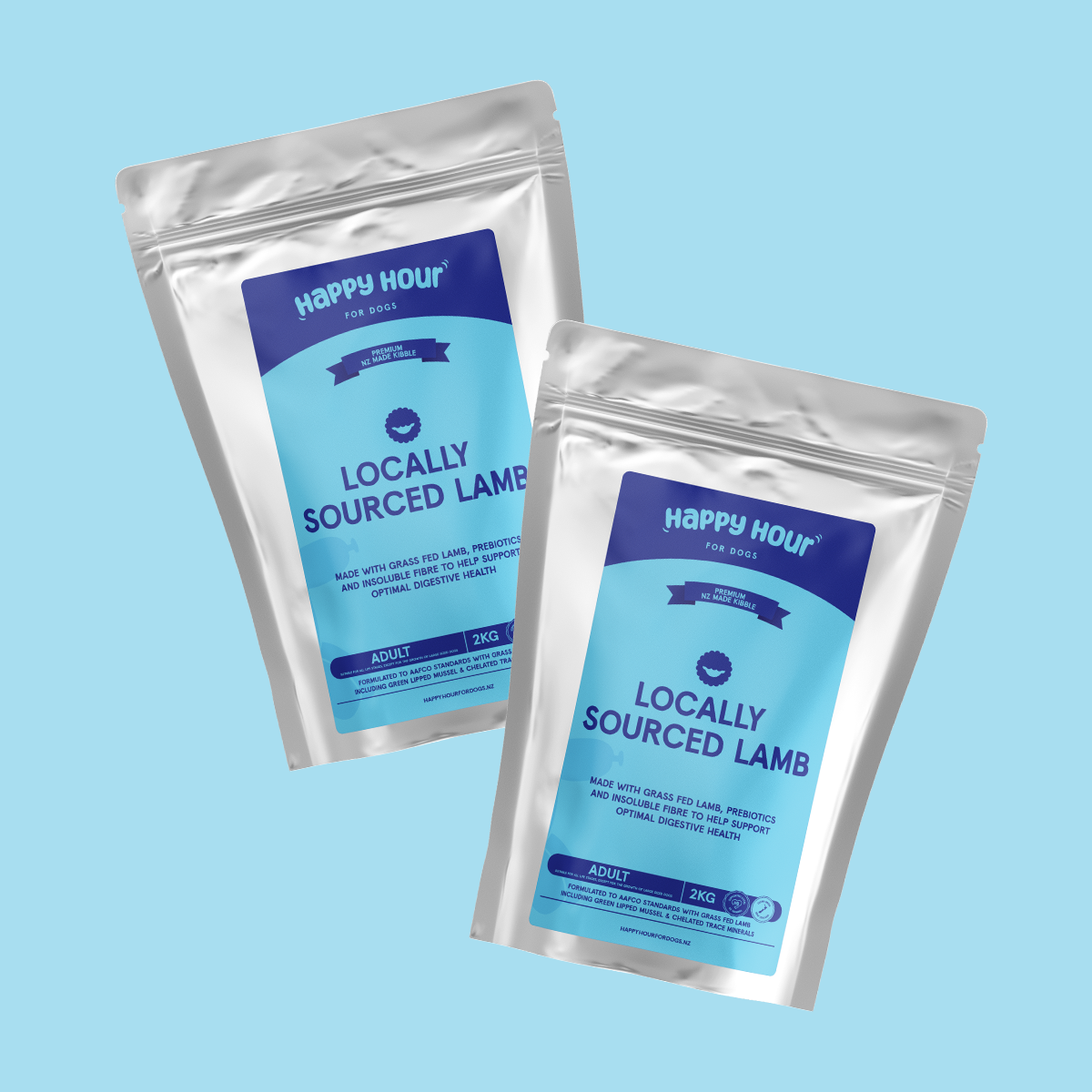
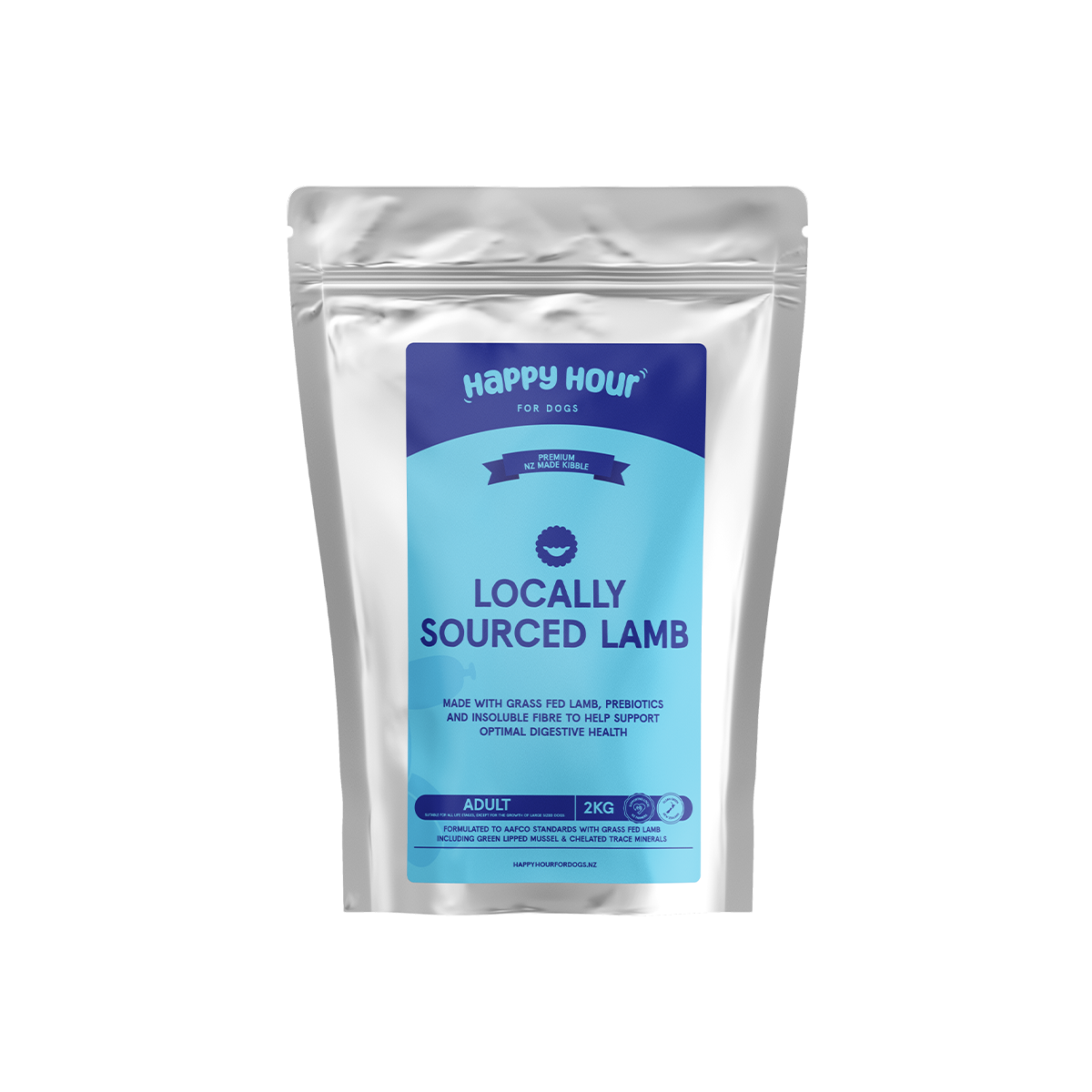
Happy Hour For Dogs is a grain-free kibble built on NZ grass-fed lamb, at 31% protein, 14% fat and 5% fibre, with green-lipped mussel, added prebiotics, insoluble fibre and chelated trace minerals in the mix. The mussel is a NZ shellfish that's a natural source of the omega-3s that may support joints and skin, and the prebiotic fibre is there to feed the good bacteria doing the digesting. No grains, no glycerines, no added hormones. It's made here, meets AAFCO standards, and had its palatability and digestibility tested at a leading NZ university. Lean protein, 5% fibre and no cheap filler is the combination that tends to produce the steady, well-formed stools glands need. It's what Tanya and Ollie moved Elsa onto when her back end kept giving her grief, and over the following couple of months her stools firmed up and the scooting across the lounge rug eased off with them.
Don't Forget Water and Gut Health
Fibre only works when there's water in the system. Soluble fibre needs it to bulk up and firm things, so a reluctant drinker can be on a great high-fibre food and still produce mixed results. As a rough rule of thumb, a dog gets through somewhere around 50 to 60ml per kilo a day, so a 6kg terrier is on about a cup and a half and a 25kg Lab is closer to a litre and a half. Kibble-fed dogs drink more than dogs on wet food, simply because they're not getting any of it in the bowl. Keep fresh water available, and splash a little warm water over meals if your dog won't drink much.
Two quick checks tell you roughly where your dog is sitting. Pinch the loose skin at the back of the neck and let go: it should drop straight back rather than staying up in a little tent for a second. Then have a look at the gums, which want to be slick and wet rather than tacky against your finger. Neither one is a diagnosis, and a dog who's gone off their water for more than a day, or who's suddenly drinking far more than usual, is a call to the clinic rather than a bigger bowl.
The bowl itself is worth a thought, and it's a bigger deal in some parts of the country than others. A dog on tank water up north or bore water out in the Waikato will sometimes drink less from a bowl that tastes different to whatever they had at their last place, and any bowl left sitting in the sun since breakfast is warm and flat by two in the afternoon. Rinse and refill rather than topping up, keep a second bowl in the shade outside over summer, and check it hasn't gone green by teatime. If your dog would rather drink from the stream at the end of the walk than from the bowl at home, that's usually a hint about the bowl. This bites hardest through a dry NZ summer, when a dog panting through a hot Hawke's Bay or Canterbury day in January loses fluid fast. And if you've just pushed the fibre up and the stools went hard and pebbly rather than firm, water is nearly always the missing half of the equation rather than a sign the fibre was a mistake.
Gut health is the other half. The good bacteria in your dog's gut are what turn decent ingredients into well-formed stools, and they feed on prebiotic fibre. A settled microbiome usually means settled digestion, which is exactly the predictable output the glands need. If your dog has recently been on antibiotics, give the gut a few weeks to rebalance and lean on prebiotic fibre while it does. A dog-specific probiotic may help some dogs, though food and routine do most of the work, and your vet can tell you whether one is worth bothering with for your dog.
Routine counts more than people expect. Feed at the same times, keep portions steady, and resist swapping foods every few weeks. Two settled meals a day tend to produce a more predictable morning stool than one big evening feed, which is handy when you're trying to time that firmness test. Grazing all day from a bowl left down makes the whole thing harder to read, and it's murder on portion control.
Making the Switch
Change food gradually over one to two weeks. The reason isn't fussiness, it's the bacteria. The population living in your dog's gut is set up for whatever they've been eating for the last year, and it takes a week or two to shift across to a new recipe. Swap the bag overnight and you buy yourself several days of loose stools, which is precisely the thing you're trying to fix, and it muddies the read on a food that might have suited your dog perfectly well. Here's the schedule that works for most dogs:
- Days 1 to 3: a quarter new food, three quarters old.
- Days 4 to 7: half and half.
- Days 8 to 11: three quarters new.
- Day 12 onwards: fully across.
Stretch each stage out to a week if your dog has a sensitive gut. There's no prize for rushing, and a sudden switch causes exactly the loose stools you're trying to get rid of. Keep everything else steady while you do it, so no new treats or table scraps clouding the picture. Expect a slightly wobbly patch in the first week as the gut adjusts. That's the transition talking, not a verdict on the food.
Buy the small bag first if there is one. A trial size gets you through the transition and a fortnight beyond it, which is long enough to see whether the stools are heading the right way, and it saves you staring at 15kg of something your dog has decided against. Mix the two foods properly rather than layering them, because a dog who can sort the old biscuits from the new ones will, and store the old bag sealed so it stays fresh through the fortnight.
If your dog stalls halfway and starts picking the old biscuits out and leaving the new ones behind, hold at that ratio for a few extra days rather than giving up or jumping back to the old bag. A splash of warm water over the top helps, and so does picking the bowl up after fifteen minutes instead of leaving it down to be grazed at. Most dogs come round once the new food stops being the new thing. Our guide to feeding fussy dogs has the rest if yours is genuinely difficult about it.
Give the new food six to eight weeks before you decide. Stool quality should improve inside a few weeks if it's a better fit, and the glands usually take longer to settle into a rhythm of emptying on their own. Here's roughly how it tends to play out, so you know whether you're on track or wasting your time:
| When | What owners often see |
|---|---|
| Week 1 to 2 | Transition wobble. Stools may loosen before they settle. Not a verdict. |
| Week 2 to 4 | Stools firm up and get smaller and more predictable. Scooting may carry on out of habit. |
| Week 4 to 6 | Scooting and licking usually start to ease if the food is doing its job. |
| Week 6 to 8 | The real test: does the next expressing appointment get pushed out, or skipped? |
It's possible to overshoot, and it's worth knowing what that looks like so you don't panic. If a fortnight in you're picking up small dry pellets, straining, or a dog who's clearly working harder than they should be, you've pushed the fibre past what suits them. Back the pumpkin or psyllium off, make sure the water bowl is getting used, and give it a few days to settle. A 2 or a 3 is the target, not the driest thing you can produce.
Keep noting firmness and how often the scooting turns up, even if it's just a line in your phone after the walk. After six weeks you'll have evidence instead of a hunch. One practical note on timing: if your dog is due for an expressing appointment mid-transition, mention the food change and ask them to note how full the glands actually were. That's a far better measure than scooting alone, because a dog can scoot out of habit for weeks after the underlying problem has settled, and some scooting is a grass seed or an itchy bottom rather than the glands at all.
When It Isn't Just the Food
Diet is the most common cause, not the only one. If you've been through two well-chosen foods, transitioned properly, given each of them a fair run, and your dog is still uncomfortable, it's time for a proper look rather than a third bag.
Food allergies and sensitivities are high on that list, because a gut that's quietly inflamed produces soft stools no matter how much fibre you throw at it. Skin and ear trouble alongside the gland problem is a common pairing worth mentioning at the clinic. Chronic infection can leave a gland thickened and slow to empty. Some dogs simply have ducts that sit at an awkward angle or are narrower than usual, which no amount of fibre will change. Older dogs are their own case: arthritis and weaker hindquarters make it harder to posture properly and push, so a dog who's been fine for a decade can suddenly start having trouble.
If a sensitivity is on the cards, your vet may suggest a proper elimination trial, which is stricter than swapping bags at home. It usually means one novel protein and nothing else at all for a couple of months, no chews, no scraps, no flavoured tablets, then reintroducing things one at a time to see what stirs it up. It's a long, slightly boring stretch and it only works if the whole household is in on it, which is the bit that trips most families up. Worth knowing what you're signing up for before you start rather than half doing it and learning nothing.
A vet visit for this is usually straightforward. They'll check the glands internally rather than externally, which tells them how full and how thick the contents are, and they can rule out infection or a mass at the same time. Plenty of NZ clinics run nurse appointments for routine expressing, which often cost less than seeing the vet, though if there's any soreness or swelling you want a vet's eyes on it rather than another squeeze. Bring your diary either way. Six weeks of firmness scores and scooting notes is genuinely useful information and saves everyone guessing.
It helps to go in with a couple of questions rather than just the dog. Ask how full the glands actually were and how thick the contents felt. Ask whether the skin around them looked inflamed, and whether they'd expect a food change on its own to hold this particular dog. Ask whether a nurse appointment is enough next time or whether they want the vet to see them. If the answer comes back that the glands were barely filling and the scooting is something else entirely, you've just saved yourself another six weeks of pumpkin. Our background on how anal glands work is worth a read beforehand if you're trying to work out which camp your dog is in.
Book sooner rather than later if you spot swelling, bleeding, or a raw or weeping patch near the tail base, or if your dog is clearly sore when you touch the area. An abscessed gland is painful and gets worse quickly, and it isn't something to manage at home with pumpkin. Get the food right first, because for most NZ dogs that stubborn monthly cycle turns out to be a stool problem wearing a disguise, and then let your vet rule out the rest.
If you'd like to see how a leaner, higher-fibre bowl sits with your dog, our Grass-Fed Lamb comes with a 30-day money-back guarantee. Give it the full transition, watch what happens on the morning walk, and if it isn't the right fit for your dog, tell us and we'll sort it out.