If your dog has started turning their nose up at kibble, you're not alone. It's one of the most common feeding complaints from dog owners across New Zealand, and the good news is that most cases have a straightforward fix.
The key is figuring out whether the problem is the dog, the kibble, or a behaviour pattern that's crept in over time. Sometimes it's a quality issue. Sometimes you've accidentally trained your dog to hold out for something better. And occasionally it's a sign something medical needs attention.
This article walks you through the causes and the fixes, in plain language, so you can stop guessing and start making progress.
Key Takeaways
- Most kibble refusal comes down to three things: too many treats, low-quality food, or a conditioned behaviour where the dog has learned to wait for something tastier.
- Adding warm water to dry kibble can help with palatability during a transition period, but toppers and gravies usually make the problem worse long-term.
- If your dog eats treats happily but refuses kibble, this is almost always a behaviour issue, not a food one.
- Sudden, unexplained refusal in a dog that previously ate well should prompt a vet check.
Why Some Dogs Refuse Kibble
There are several reasons a dog might reject dry food. Here are the most common ones:
Too many treats. This is the number one cause. If your dog gets regular treats throughout the day, or high-value snacks between meals, they quickly learn that if they wait long enough, something better will show up. It's not stubbornness. It's rational behaviour. They're not broken; they've just figured out the system.
Low-quality kibble. Some dry foods are genuinely not very palatable. If the first few ingredients are grain fillers, the protein content is low, and the flavour is being driven by artificial additives, your dog may simply not find it appealing. Dogs have around 1,700 taste buds compared to our 9,000, but their sense of smell is extraordinary. If the kibble doesn't smell like real food, many dogs won't touch it.
Dental pain. Dry food requires chewing. If your dog has a cracked tooth, gum disease, or a sore mouth, eating kibble is uncomfortable. They may eat soft food or treats without issue while avoiding the hard stuff. This is easy to miss if you're not looking for it.
Conditioned aversion. If a dog once ate something that made them feel sick, they can develop a lasting aversion to that food's smell or texture. It doesn't have to be a serious illness. Even mild nausea or a bad experience can be enough.
Smell sensitivity. Some dogs, particularly smaller breeds, are more sensitive to strong or unfamiliar smells. Switching brands suddenly, or buying a bag that's been stored poorly and lost its freshness, can put them off entirely.
Previously fed wet or raw food. Dogs that have come from homes where they were fed wet food, raw, or home-cooked meals often struggle with the transition to dry food. It doesn't smell or feel the same, and they know it.
Is the Kibble the Problem or the Dog?
Before you swap the food, do a quick diagnosis.
Will they eat treats? If your dog happily accepts treats, chews, or table scraps but ignores their bowl, the kibble is almost certainly not the issue. A dog in genuine discomfort or one that truly dislikes the food will often refuse everything. A dog who eats treats but skips meals has learned that waiting pays off.
Do they eat other foods without hesitation? Try offering them something outside their usual diet, like a small piece of cooked chicken or a different brand of treat. If they eat it eagerly, the problem isn't their appetite. It's the kibble's position in their mental hierarchy of food.
Was there a specific incident? Think back to when the refusal started. Did you change bags or brands recently? Did they vomit after eating? Did something stressful happen around mealtimes? A clear trigger often points to a conditioned aversion, which can be resolved with a reset and a better product.
Have they had a recent health change? Weight loss, lethargy, drinking more water than usual, or bad breath alongside food refusal warrants a vet visit before you try anything else.
If you're not sure where to start, our complete fussy eaters guide walks through the full picture.
How to Make Kibble More Appealing
If you've ruled out a medical issue and you've identified that the kibble itself might be part of the problem (or you just need a bridge to get through a transition), warm water is your best tool.
Add a small amount of warm water to the kibble and let it sit for a couple of minutes before serving. The warmth activates the natural fats and proteins in the food, releasing the scent. For smell-driven animals like dogs, this alone can be enough to trigger interest.
What to avoid: toppers, gravy, and wet food mixing. Yes, these work in the short term. Yes, your dog will eat with enthusiasm. But you're solving the wrong problem. What you're actually doing is teaching your dog that holding out eventually produces a richer meal. The next time you serve plain kibble, they'll wait you out again. Longer.
Toppers become a crutch quickly. You go from a sprinkle of freeze-dried topping, to half a sachet of wet food, to essentially serving a mixed meal every time, just to get your dog to eat. The underlying refusal hasn't been fixed. It's been rewarded.
Use warm water as a temporary bridge during a transition to better food or a reset period. Don't use it as a permanent fix or your dog will come to expect it and still hold out when you don't provide it.
Switching to a Better Kibble
Sometimes the dog isn't the problem at all. Sometimes the kibble genuinely isn't good enough.
Signs your current kibble might be the issue:
- Grains, corn, or wheat are the first ingredients listed
- Meat is listed vaguely as "meat meal" or "poultry by-products" with no named source
- There's a long list of artificial colours, flavours, or preservatives
- Your dog eats it but slowly, without enthusiasm, and often leaves some behind
- The bag smells faintly of nothing, or like chemicals
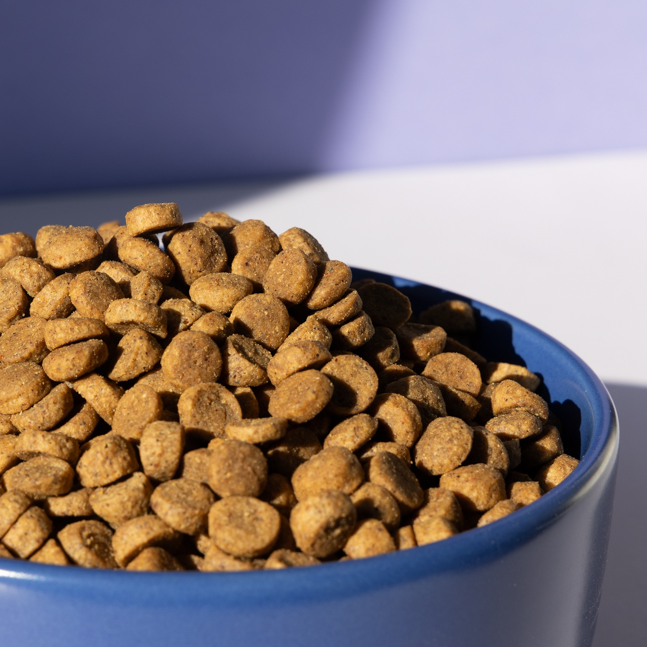
A better kibble has a named protein as the first ingredient (lamb, beef, chicken) and a short, clean ingredient list. The fat content should be appropriate for your dog's life stage, and the food should smell genuinely meaty when you open the bag.
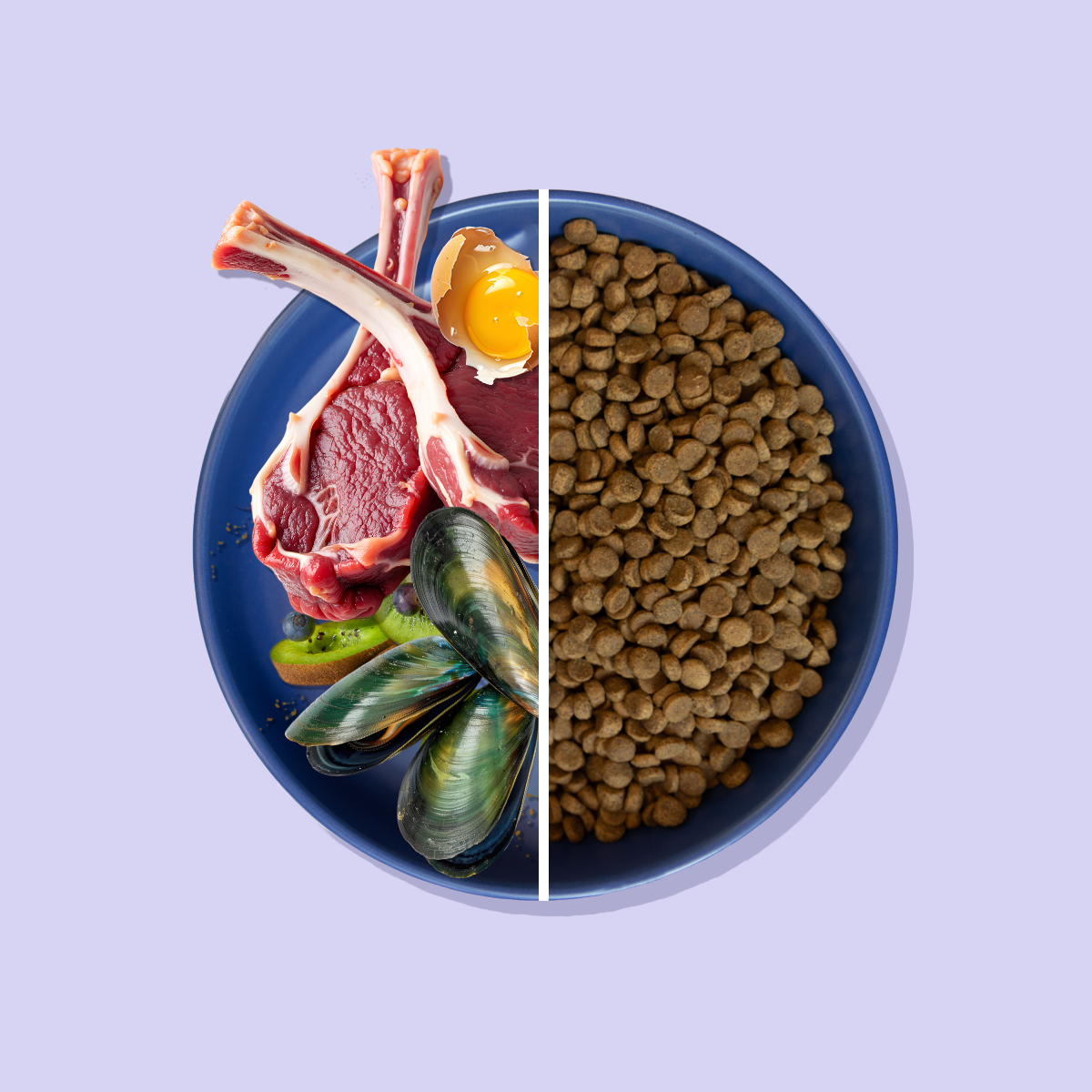
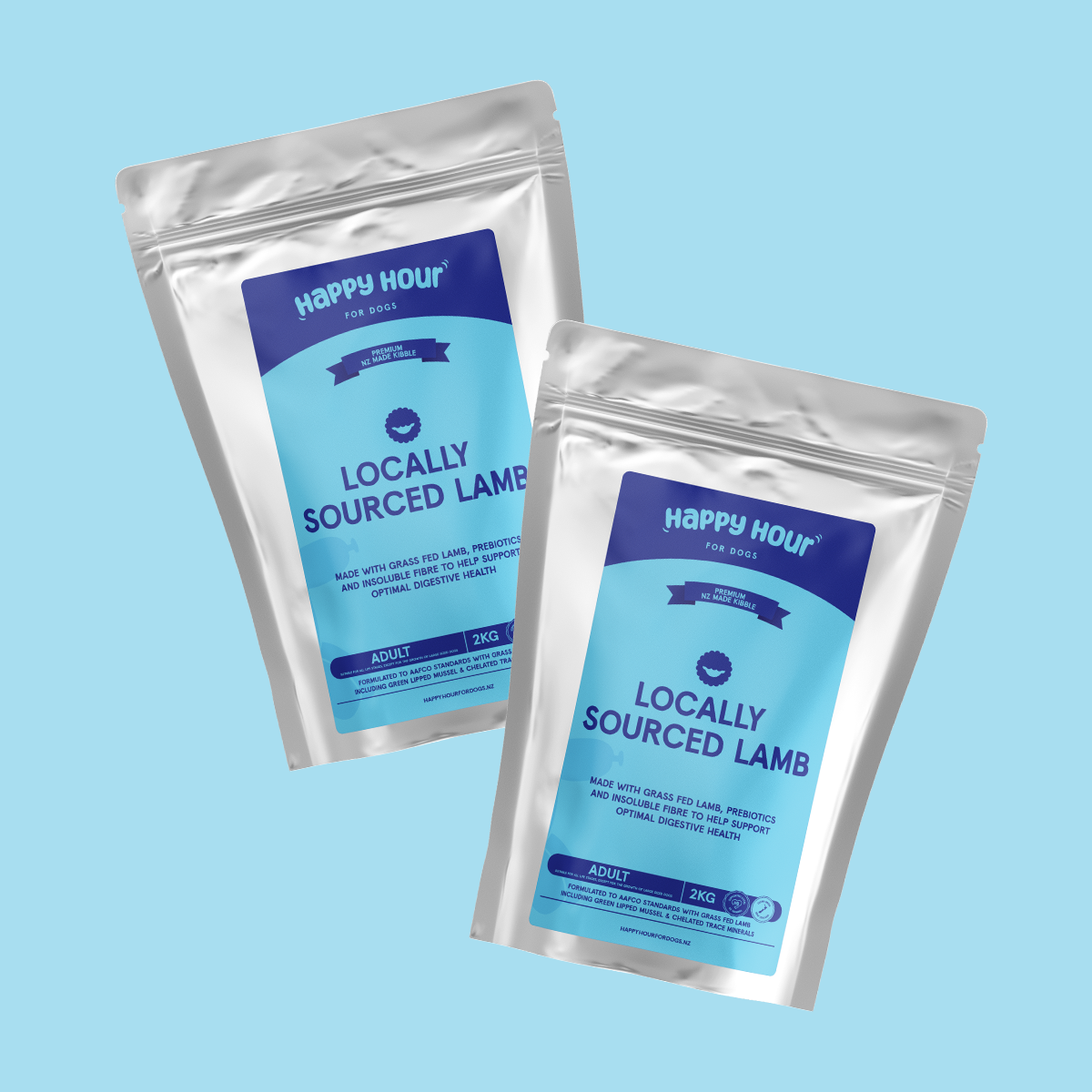
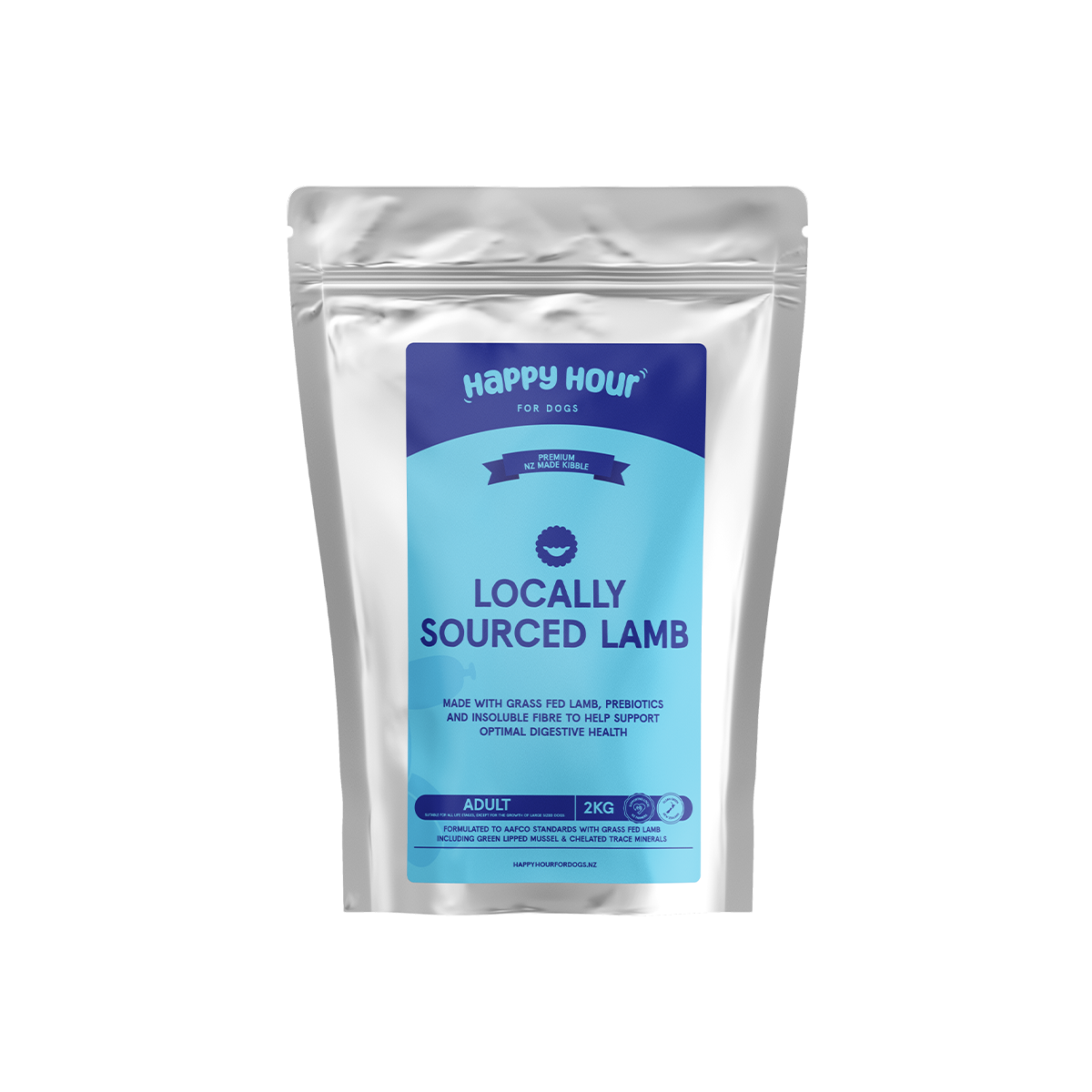
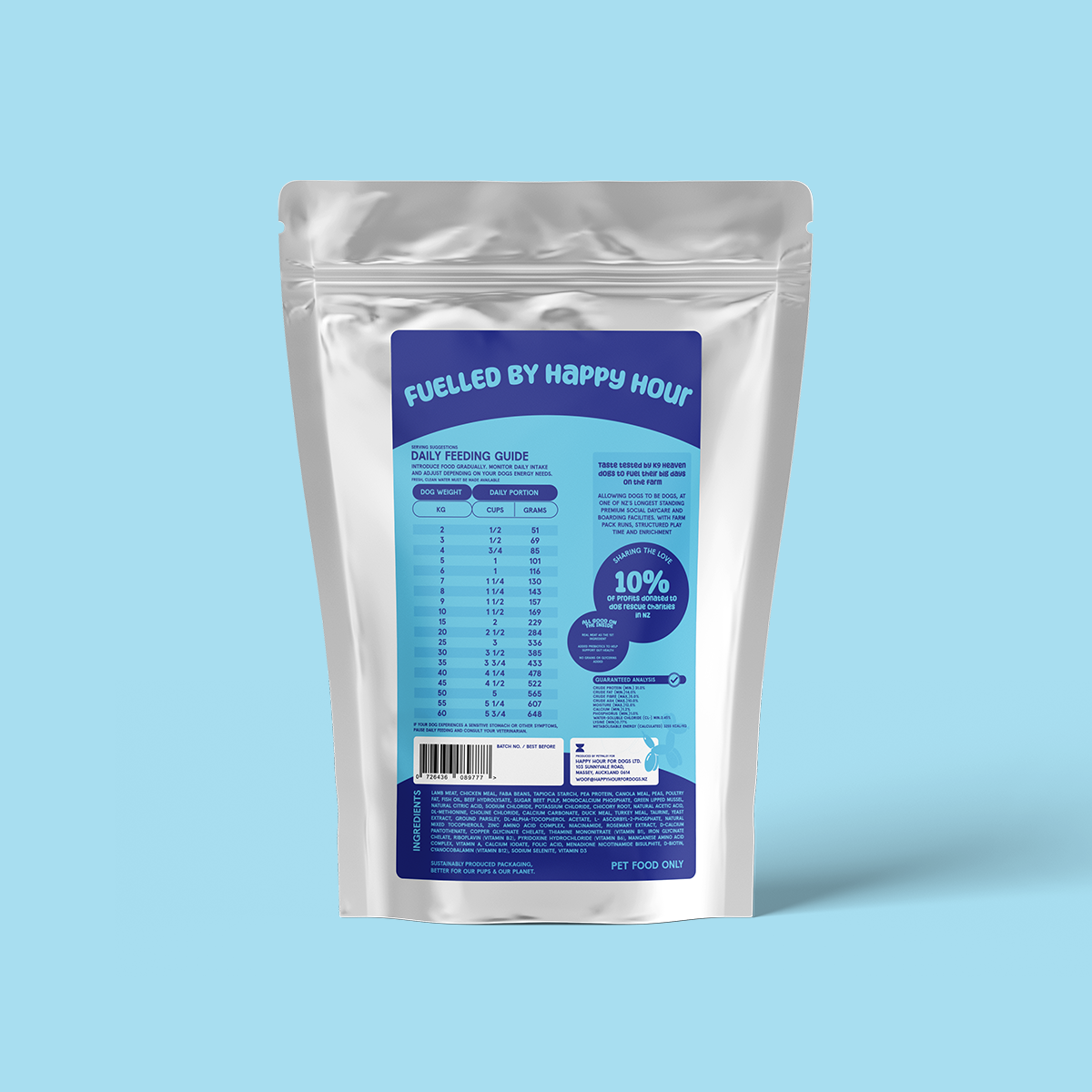
Happy Hour is a good example of this. It's made in New Zealand, with real NZ lamb as the first ingredient, and is formulated specifically for palatability. For dogs that have been refusing other brands, it's often the first kibble they eat without prompting. That's not marketing. It's what happens when you put real food first.
The Reset Method for Kibble Refusal
If the kibble is fine but your dog has learned to hold out, you need to reset the behaviour. This isn't complicated, but it does require consistency.
The core of the reset method is: meals go down at fixed times, stay down for 20 minutes, then come up. No alternatives. No treats between meals. No emotion around the bowl. If they don't eat, they wait until the next scheduled meal.
Most dogs will eat by day two. Some take three or four days. A healthy dog will not starve themselves when real food is available. The temporary discomfort of skipping meals is far better than months or years of mealtime battles.
For a full walkthrough of this process, including how to handle anxious dogs and multi-dog households, see our complete fussy eaters guide.
When Kibble Refusal Is a Medical Issue
Sudden food refusal in a dog that previously ate well is worth taking seriously.
Dental pain is the most commonly missed cause. Dogs are good at hiding discomfort, and many will continue eating soft foods even when their teeth are causing real pain. If your dog mouths food and drops it, eats slowly and on one side, or paws at their face, get their teeth checked.
Nausea from various sources, including kidney disease, liver issues, or medication side effects, will suppress appetite. If your dog is also drinking differently, vomiting, or has yellow-tinged gums or eyes, see a vet promptly.
Oral ulcers can develop from a range of causes including kidney disease or viral infections. They make eating painful and are often invisible to owners without a proper examination.
The rule of thumb: if your dog previously ate well and has now stopped for more than 48 hours with no obvious behavioural cause, book a vet visit. Unexplained appetite loss lasting more than two days in adult dogs should be assessed by a vet.
FAQ
Should I switch from kibble to wet food if my dog refuses kibble?
Not as a first response. Switching to wet food because your dog won't eat dry food teaches them that refusing gets results. If there's a genuine quality issue with your current kibble, switching to a better dry food is a smarter move. Wet food is fine as a component of a balanced diet, but using it as an escape route from mealtime battles usually creates more problems than it solves.
How do I get my dog to eat dry food?
Start with a high-quality kibble that uses real meat as the first ingredient. Add a small amount of warm water to release scent. Serve at fixed times, remove the bowl after 20 minutes, and don't offer anything in between. Most dogs adjust within a few days. If they don't, rule out a medical cause.
My dog used to eat kibble but now refuses. What changed?
A few possibilities: the bag or batch may have changed (manufacturers do adjust formulas), the food may have gone stale, or something has happened to create an aversion. Also check whether treat frequency has crept up. If nothing obvious has changed and the refusal is sudden, a vet check is a sensible next step.
Is kibble bad for dogs?
No, not inherently. Quality varies enormously, but a well-formulated dry food with real protein as the base, appropriate moisture through fresh water alongside it, and no excessive fillers or artificial additives is a perfectly solid diet for most dogs. The problem isn't kibble as a format. It's low-quality kibble that's poorly palatable and nutritionally thin.