

Dachshund Weight Management: Protecting Their Back (NZ)
For most dogs, being overweight means a shorter, less comfortable life. For Dachshunds, excess weight means all of that — plus a significantly higher risk of a spinal crisis that can leave their dog paralysed and facing surgery that can cost $8,000-$15,000 or more. Weight management for Dachshunds isn't just about health in the general sense. It's about protecting their back, and it's genuinely urgent.
Key Takeaways
- Excess weight dramatically increases a Dachshund's risk of IVDD (intervertebral disc disease)
- Dachshunds have a uniquely long spine relative to leg length — extra weight stresses every disc in it
- Even a small amount of excess weight is significant for a dog this size
- Diet is the primary weight management tool — food quality and strict portion control matter enormously
- Preventing IVDD through weight management is far better (and cheaper) than treating it
Why Dachshunds Are Prone to Weight Gain
Dachshunds were bred in Germany as hunting dogs, built to track and flush badgers from burrows. Their distinctive long body and short legs were functional — but that same body shape creates unique vulnerabilities when weight is added.
Like Beagles, Dachshunds have strong food drives and were historically bred for endurance work. In a domestic setting, that appetite persists but the work doesn't. They're also small dogs, meaning even modest overfeeding accumulates quickly relative to their ideal body size.
Dachshunds are intelligent and can be persuasive — giving their owners those eyes until a treat appears. They're also prone to a sedentary lifestyle if not actively encouraged to move, especially as they age or after injury.
But the most important weight factor for Dachshunds isn't just about being overweight in general. It's about what that weight does to their spine.
The IVDD Risk
Intervertebral disc disease (IVDD) is a condition where the discs between the vertebrae of the spine degenerate or rupture, pressing on the spinal cord. Dachshunds are predisposed to IVDD due to their body shape — and excess weight dramatically increases the pressure on every disc along that long back.
IVDD can cause pain, weakness in the back legs, loss of bladder and bowel control, and in severe cases, permanent paralysis. Treatment ranges from strict rest to spinal surgery, which is costly, stressful, and not always fully successful.
The single most controllable risk factor for IVDD in Dachshunds is weight. Keeping your Dachshund lean doesn't guarantee they'll never have a disc problem, but it significantly reduces the stress on their spine every single day.
How to Tell If Your Dachshund Is Overweight
Standard Dachshunds typically weigh between 7-15kg. Miniature Dachshunds should weigh under 5kg. Body condition tells you more than the scales.
Run your hands along your dog's ribcage — you should feel each rib clearly without significant pressure. From above, there should be a visible waist behind the ribs. From the side, the belly should tuck up.
For Dachshunds, it's particularly important to check whether their belly hangs low when they walk. A hanging belly in a long-backed breed is both a sign of excess weight and a source of additional spinal stress. See our overweight dogs NZ guide for body condition scoring details.
Feeding a Dachshund for a Healthy Weight
Measure every meal with a kitchen scale. Dachshunds have small calorie needs — even 20-30 extra calories per day adds up to meaningful weight gain over weeks and months. A slightly generous scoop is all it takes.
Feed twice a day, controlled portions. Never free-feed. Dachshunds will eat past fullness and don't have a reliable self-regulation mechanism.
Treats require particular discipline for Dachshund owners. These dogs have excellent "give me food" expressions and are very good at getting results. Set a daily treat budget and stick to it. Use small pieces, use kibble as training rewards, and make sure everyone in the household is on the same page. A Dachshund that gets a biscuit from every family member separately is getting far more than anyone realises.
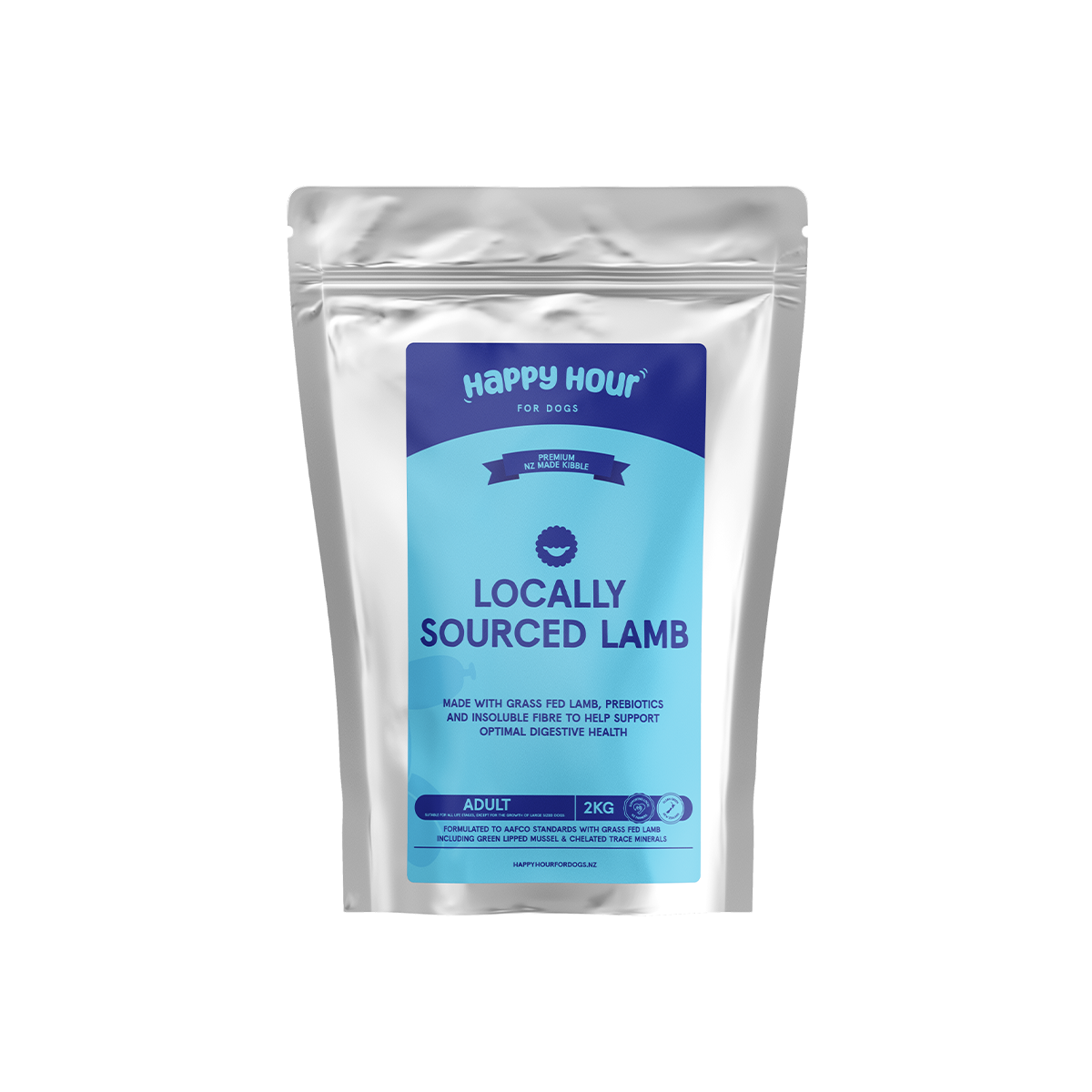
Choose a food that supports a healthy weight. High fibre, quality protein, and lower fat content all help Dachshunds feel satisfied on an appropriately small portion. Happy Hour's grain-free lamb kibble provides real fibre from quality ingredients with no grain fillers adding unnecessary calories. For small dogs with small calorie budgets, the quality of every mouthful matters. Find it at happyhourfordogs.nz.
Exercise Tips for Dachshunds
Dachshunds need regular exercise, but it needs to be appropriate for their body. Daily walks are important — two or three shorter walks per day is better than one long one, especially for dogs with any existing back issues.
Avoid activities that put sudden impact or twisting stress on the spine. High jumps, rough play, and running up and down stairs repeatedly are not ideal for Dachshunds. Jumping off furniture is a particular concern — a couch may seem harmless, but the repeated impact of a Dachshund jumping down adds up over thousands of repetitions. Dog ramps or steps for furniture access are worth considering.
Swimming is low-impact and excellent exercise if your Dachshund tolerates it. Gentle fetching on flat ground, leash walks, and nosework activities all work well.
If your Dachshund has already had back problems, consult your vet before increasing activity levels. Some dogs need very specific exercise restrictions after IVDD episodes.
Exercise is important for Dachshund fitness, but diet is the primary lever for weight management. A Dachshund can't exercise their way past overfeeding given the limitations on high-impact activity.
What to Look for in Dog Food for Dachshunds
For Dachshunds, choose a food that:
- Has genuine dietary fibre — helps small dogs feel fuller on smaller portions
- Uses quality animal protein as the primary ingredient — not grain or plant protein as the base
- Is appropriately lower in fat — fat is calorie-dense and there's little room in a Dachshund's calorie budget for excess
- Has no grain fillers — corn, wheat, and soy add bulk calories without nutritional value
- Is appropriately sized kibble — small breed kibble sizing is easier to chew and portion
Happy Hour is a grain-free lamb kibble with quality NZ protein, real fibre, and no artificial additives. For a weight-conscious small breed with a long back at risk, a food that supports lean body condition without compromising nutrition is the right approach.
For a full overview of weight-prone breeds in NZ, see our dog breeds prone to weight gain guide.
Frequently Asked Questions
How does excess weight affect a Dachshund's back?
Every kilogram of extra weight adds pressure to the discs along a Dachshund's unusually long spine. Over time, this accelerates disc degeneration and increases the likelihood of a disc rupture — which can cause pain, paralysis, and require expensive surgical intervention. Keeping a Dachshund lean is one of the most effective ways to reduce IVDD risk.
What is IVDD and how common is it in Dachshunds?
IVDD (intervertebral disc disease) is a condition where the cushioning discs between vertebrae degenerate or rupture, pressing on the spinal cord. Dachshunds are one of the most commonly affected breeds — estimates suggest that up to 25% of Dachshunds will experience some form of IVDD in their lifetime.
Can a Dachshund go up and down stairs?
In moderation, yes — but repeated stair climbing throughout the day puts stress on the spine over time. Many Dachshund owners use ramps instead of stairs and restrict access to furniture that involves jumping. This is especially important for dogs that have already had back problems.
How much should a standard Dachshund weigh?
Most standard Dachshunds should weigh between 7-15kg depending on their frame. Miniature Dachshunds should generally be under 5kg. The right weight for your individual dog is one where the ribs are easily felt, the waist is visible from above, and the belly doesn't hang.
What if my Dachshund has already been diagnosed with IVDD — can diet still help?
Yes. Keeping a Dachshund lean after an IVDD diagnosis is important for reducing stress on the remaining discs and preventing further episodes. Work with your vet on the appropriate weight target and exercise restrictions for your dog's specific situation.
