Border Collie Weight Management: NZ Owner's Guide
Border Collies aren't naturally prone to obesity. They're one of the leanest, most active breeds on the planet. But here's the thing: New Zealand has a lot of Border Collies living in cities and suburbs now, far from the farms they were bred for. When a dog wired for 8 hours of herding gets 45 minutes of park time instead, the mismatch shows up on the scales.
If your Border Collie has put on weight since moving from an active environment, or since you changed your routine, here's what you need to know.
Key Takeaways
- Border Collies are naturally lean but can gain weight when their activity level drops
- City and suburban Border Collies often don't get enough mental or physical exercise
- They can mask weight gain because their coat and lean build make extra kilos less obvious
- A high-protein, lower-calorie diet suits inactive Collies better than a working-dog formula
- Mental stimulation is just as important as physical exercise for this breed
Why Border Collies Are Prone to Weight Gain
It's not really about the breed's biology. Border Collies have fast metabolisms and lean muscle mass by nature. The problem is the gap between what they were bred to do and what most pet Collies actually do.
Working Border Collies on farms can cover 50 or more kilometres a day. A pet Border Collie in suburban Auckland might get two walks and a game of fetch in the backyard. That's a massive reduction in calorie burn, but owners often continue feeding as if their dog is still as active as they were — or feed to satisfy the begging rather than the need.
It's also worth noting that desexing reduces metabolic rate in most dogs, including Collies. A desexed Collie living a pet lifestyle needs measurably fewer calories than the feeding guide on most working-dog foods assumes.
How to Tell If Your Border Collie Is Overweight
Border Collies are lean dogs, so a little extra weight can change their silhouette noticeably. Run your hands along their sides. The ribs should be easy to feel with light pressure, with minimal fat covering. If you need to press firmly to find them, there's too much padding.
From above, a healthy Border Collie has a clear waist — a distinct narrowing between the ribcage and the hips. From the side, there should be a visible tummy tuck behind the ribcage.
A healthy adult Border Collie typically weighs between 14 and 20 kg, depending on sex and build. But range matters less than how they carry it.
Watch for behavioural signs too: a Border Collie that seems less interested in play, tires more easily, or is less alert than usual may be carrying excess weight. This breed is highly active by nature, so any drop in energy can be significant.
Feeding a Border Collie for a Healthy Weight
The key adjustment for a less-active Border Collie is reducing calories without reducing protein. Dropping the overall portion size while maintaining protein quality helps preserve their lean muscle mass during weight loss.
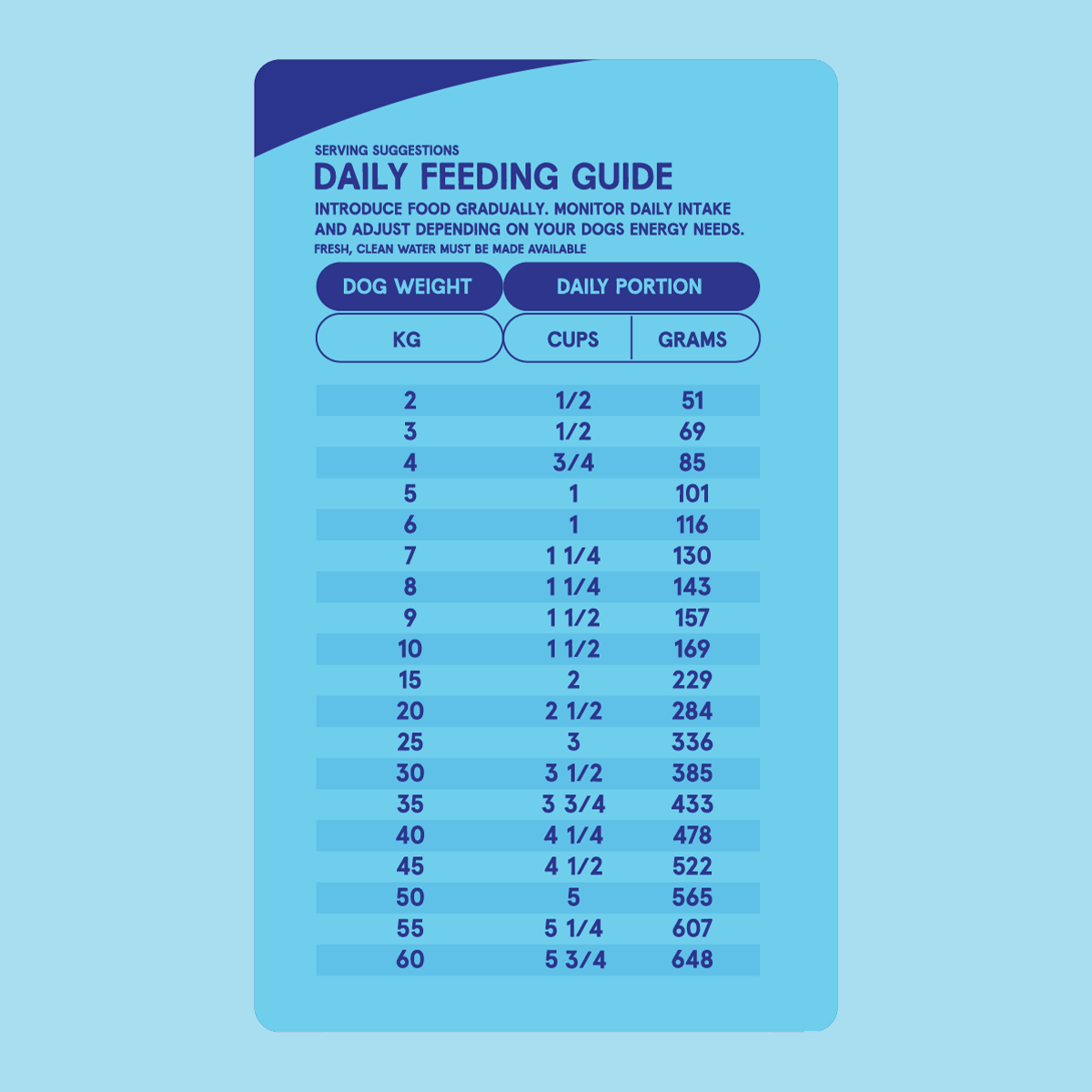
Use a kitchen scale and measure every meal. Border Collies are not as dramatically food-motivated as some breeds, but overfeeding still happens easily through habit or generous estimates.
If your Collie came from a working or sporting environment, they may have been on a higher-calorie food designed for very active dogs. A standard or light formula is more appropriate for a pet lifestyle.
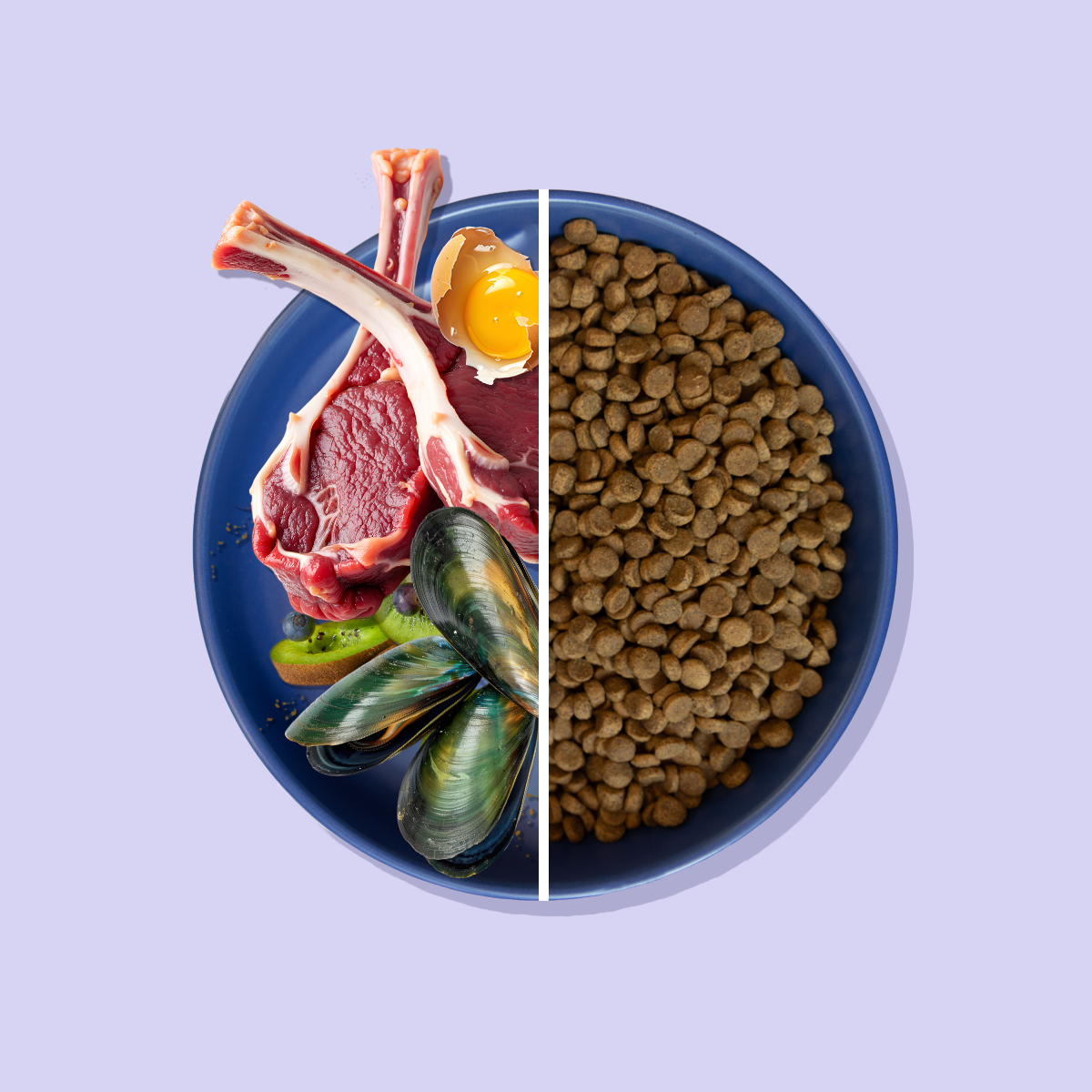
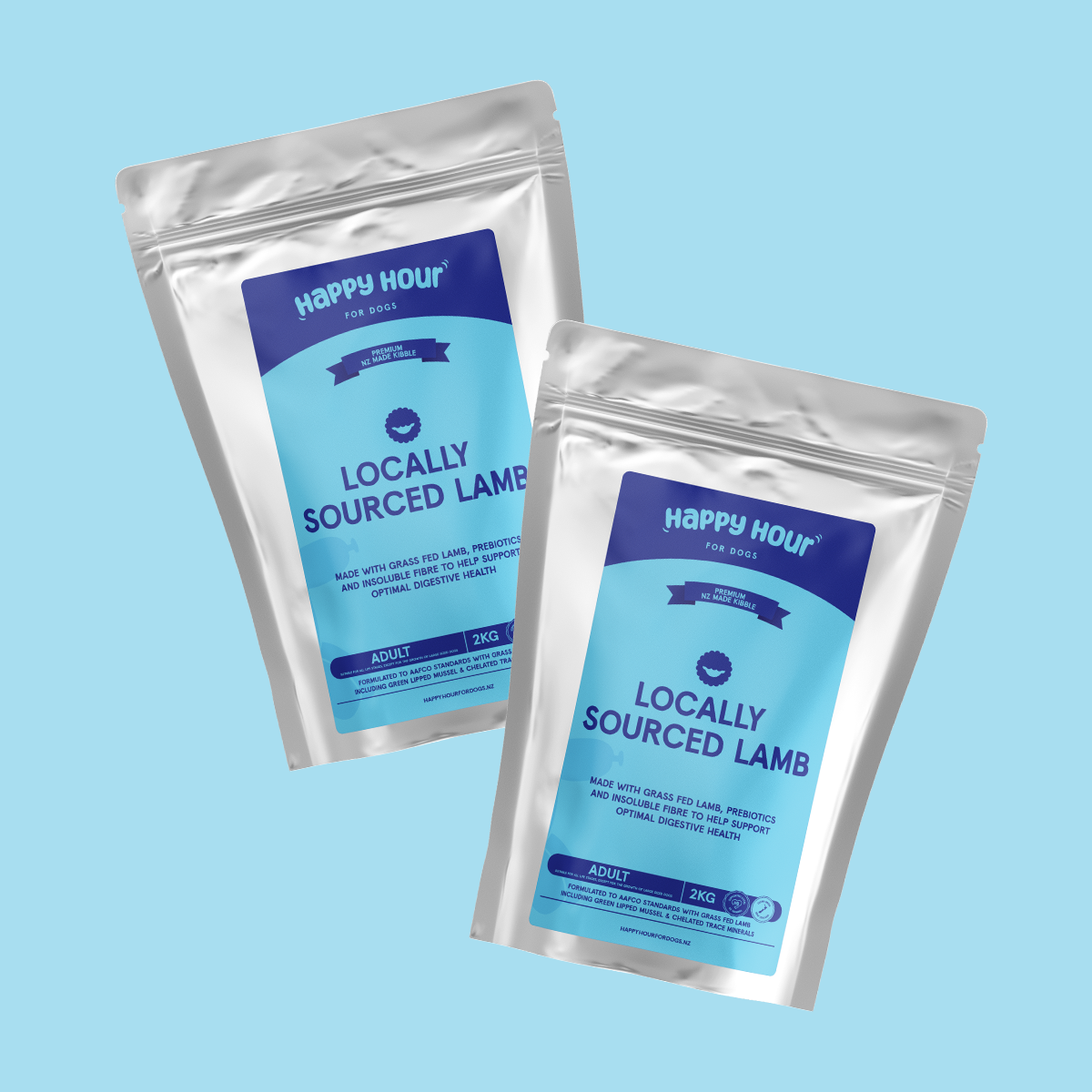
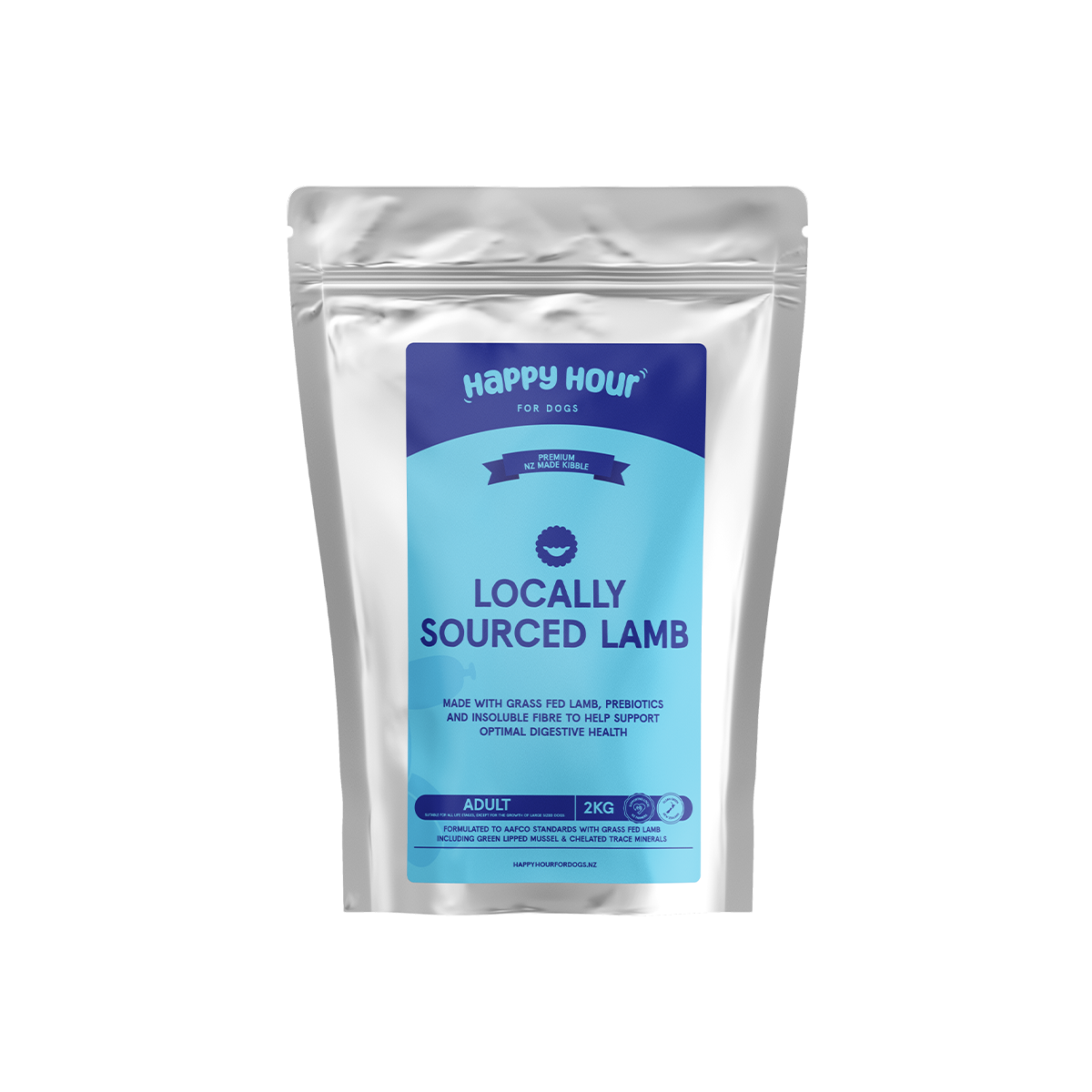
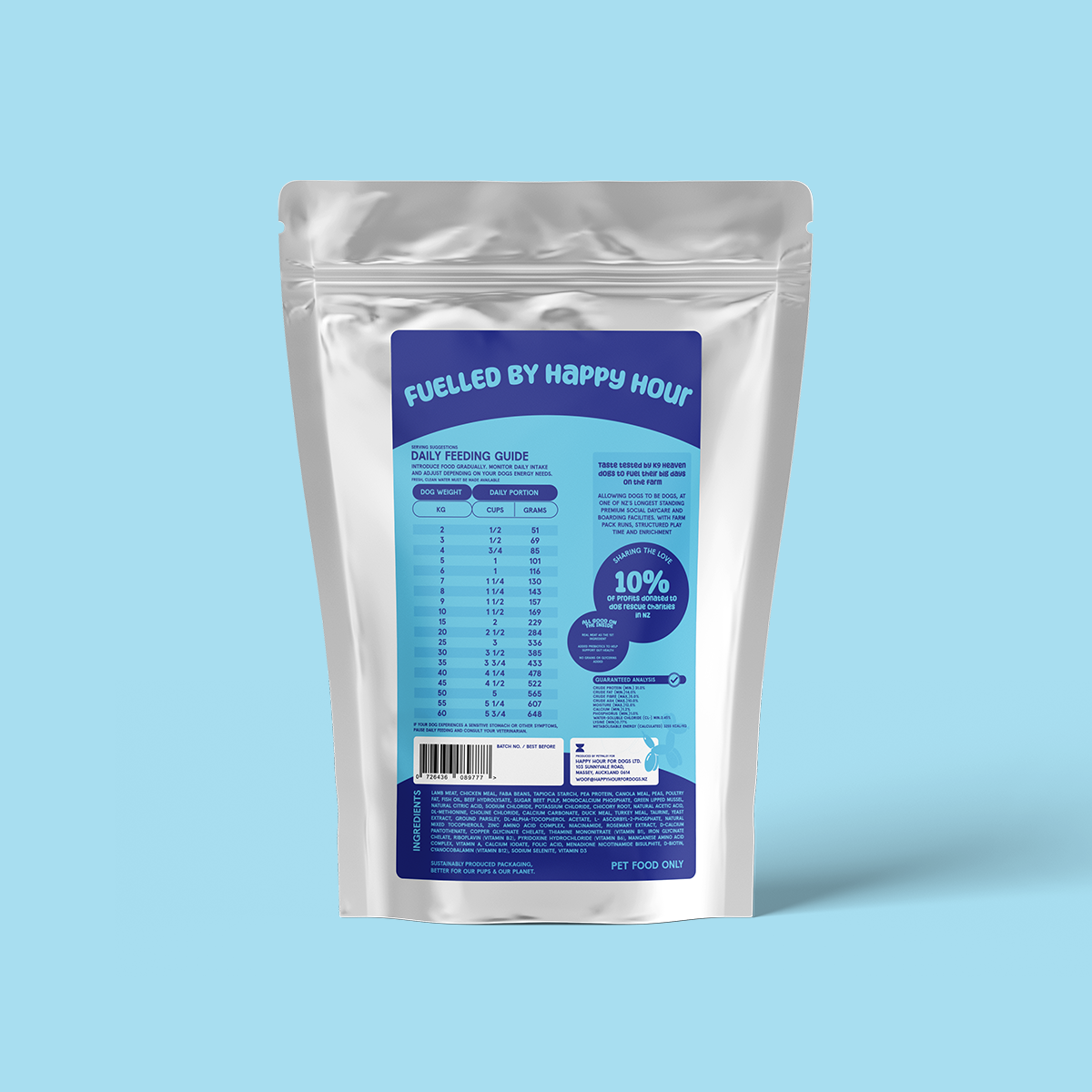
Happy Hour is made from NZ grass-fed lamb, is grain-free, and provides quality protein with good fibre content to help your Collie feel satisfied without being overfed. The lean meat base suits an active-turned-pet Collie well.
Feed twice daily, and hold the treats. Border Collies often respond well to using a small amount of kibble as training rewards, which keeps them mentally engaged and means treats aren't adding unnecessary calories.
Exercise Tips for Border Collies
This breed needs more exercise than almost any other companion dog. A standard two-walk-a-day routine is not enough for most Border Collies. Aim for at least 60 to 90 minutes of active exercise per day, and ideally more.
What counts: off-leash running, fetch, swimming, agility, frisbee, and sports like flyball or herding trials if you can access them. Long sniff walks count for mental stimulation but not high-calorie burn.
Mental exercise is non-negotiable for Border Collies. A physically tired Collie that's mentally bored will still be restless and anxious. Puzzle feeders, training sessions, hide-and-seek games, and learning new commands all help. A mentally exhausted Border Collie is a calm, happy Border Collie.
If your Collie has been inactive and overweight, start with lower-impact activities and build up gradually to avoid joint stress.
What to Look for in Dog Food for Border Collies
For a less-active pet Border Collie, the goal is quality protein, moderate calories, and enough fibre to satisfy. Look for:
- Named meat as the first ingredient — real protein, not derivatives
- Protein above 25% dry matter — supports lean muscle mass
- Moderate fat — active Collies need more, sedentary ones need less
- Good fibre — keeps them full and supports healthy gut function
- No cheap fillers that add calories without nutrition
If your Collie is working or highly active, they'll need more calories than the average pet. Adjust based on what they're actually burning, not what the label suggests for their weight.
See our full guide to dog breeds prone to weight gain in NZ and our overweight dogs guide for more.