Best Dog Food for Jack Russell Terriers NZ: Small Dog, Big Energy
Jack Russell Terriers are an act of defiance in small-dog packaging. They've got the confidence of a dog three times their size, the energy of a working dog, and the stubbornness of a breed that knows exactly what it wants. If you share your life with one, you know feeding them isn't as simple as just picking up the nearest small-breed bag from the supermarket.
Key Takeaways
- Best Dog Food for Jack Russell Terriers NZ: Small Dog, Big Energy
- What Jack Russells Are Prone To
- What to Look for in a Jack Russell's Food
- How to Feed a Jack Russell: Practical Notes
- Why Happy Hour Works for Many Jack Russells
Jack Russells have some specific health tendencies, a faster metabolism than their size suggests, and opinions about what they'll eat that can make mealtime more of a negotiation than you'd like. Here's what actually matters when choosing food for them.
What Jack Russells Are Prone To
Weight Gain
Despite their energy, Jack Russells can gain weight quickly if they're getting too many calories relative to their activity level. A small dog at the high end of a healthy weight range is under more proportional strain than a large dog in the same position. Even a 500-gram excess on a 5kg Jack Russell is the equivalent of a significant proportion of their body weight. See our Jack Russell Weight Management NZ article for specific guidance on weight monitoring.
Dental Issues
Small dogs are more prone to dental disease than large breeds, partly because their teeth are crowded into a smaller jaw. Dental disease is one of the most common health problems in NZ dogs overall, and Jack Russells are particularly susceptible. Diet can play a role, though it's not a substitute for regular teeth cleaning. Avoiding sugary additives in food helps, as does encouraging chewing behaviour.
Picky Eating
Jack Russells can be notoriously opinionated about food. Merc, one of the Happy Hour founder dogs, is famously fussy. The challenge with a picky Jack Russell is that owners sometimes compensate by adding palatability-boosting toppers or rotating foods constantly, which can create a dog that's even harder to feed. High-quality food with real meat flavour is more likely to hold their interest than artificially flavoured budget kibble.
Skin Sensitivities
Some Jack Russells have sensitive skin and can develop reactions to common allergens like chicken or beef after repeated exposure. If your Jack Russell is itchy or has recurring ear infections, food may be worth investigating. Our My Dog Is Itchy: Could It Be Their Food? article is a good starting point.
What to Look for in a Jack Russell's Food
Quality Protein as the First Ingredient
Jack Russells need good protein to support their lean muscle mass and active lifestyle. A named meat protein should be the first ingredient on the label. For a breed that can be reactive to common proteins, a less-common option like NZ grass-fed lamb may be useful.
Appropriate Calorie Density
A food that's not excessively calorie-dense gives you more flexibility to feed an appropriate volume without overloading a small dog on calories. Low-fat formulas can be useful for weight management without having to feed such tiny portions that your dog feels unsatisfied.
No Artificial Additives
Artificial preservatives, colours, and flavours are unnecessary and may aggravate sensitive skin in some small dogs. Clean ingredient lists are worth prioritising.
Appropriate Kibble Size
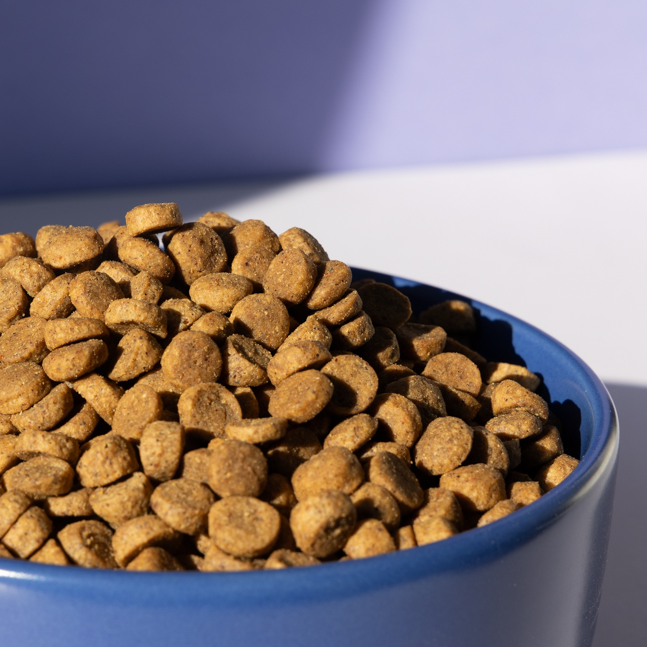
Jack Russells have small mouths and teeth. Very large kibble pieces can be harder for them to chew effectively and may discourage proper chewing behaviour. Most quality kibbles for medium or all-breed dogs are a suitable size for Jack Russells.
How to Feed a Jack Russell: Practical Notes
Small dogs need surprisingly small amounts of food relative to their enthusiasm for eating. This is where many Jack Russell owners go wrong: using too generous a measure, adding too many treats, and ending up with a chunky little dog who can't quite reach their tail to scratch it.
- Weigh food rather than using cup measures. Volume measures are imprecise and vary by kibble shape and size.
- Feed twice a day rather than once. Smaller, more frequent meals suit small dogs better and maintain more stable energy levels.
- Account for treats in the daily calorie budget. If you're training your Jack Russell (which, good luck to you), factor training treats into their daily food allowance.
- Use a puzzle feeder if your Jack Russell inhales food too fast. Fast eating in small dogs can cause digestive discomfort and belching.
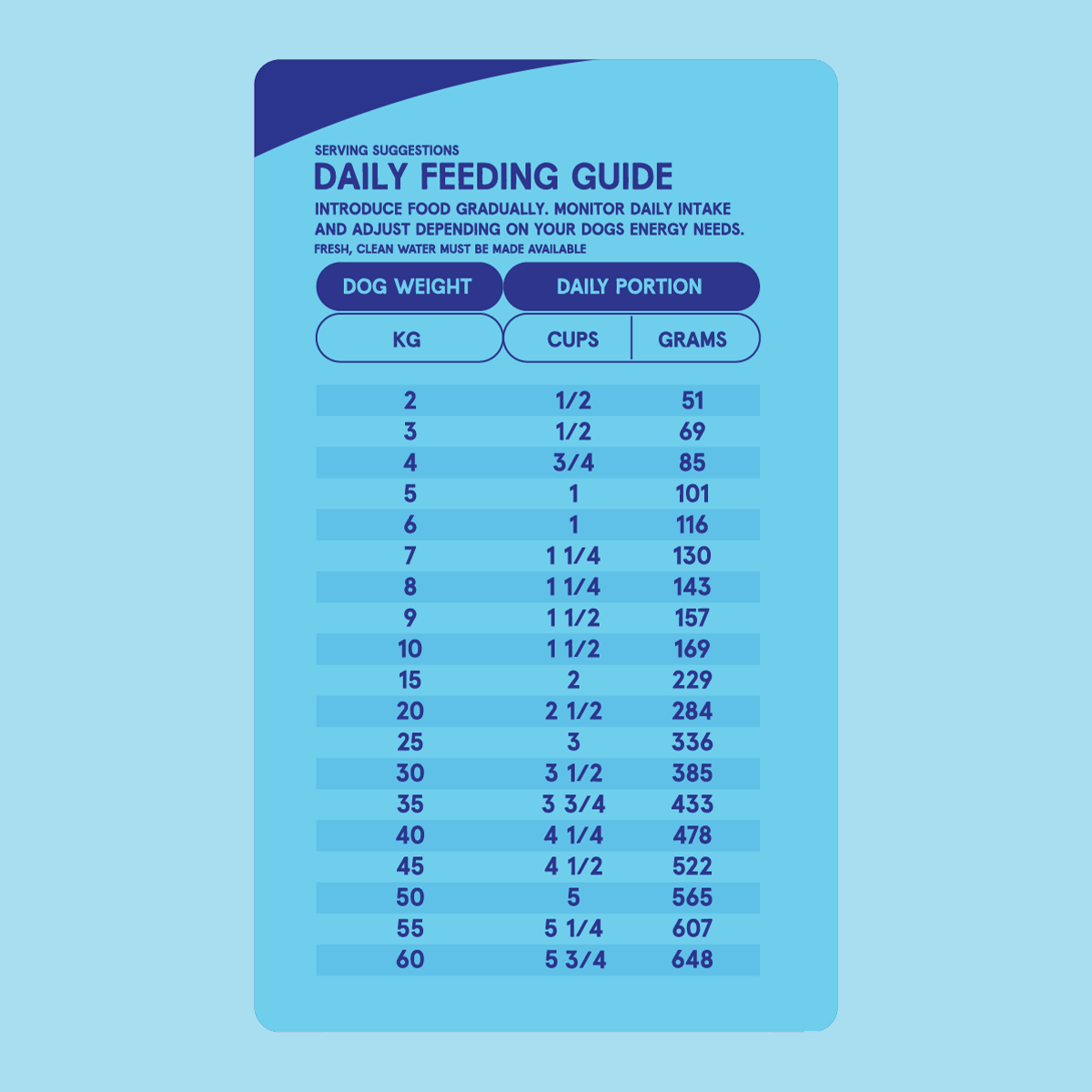
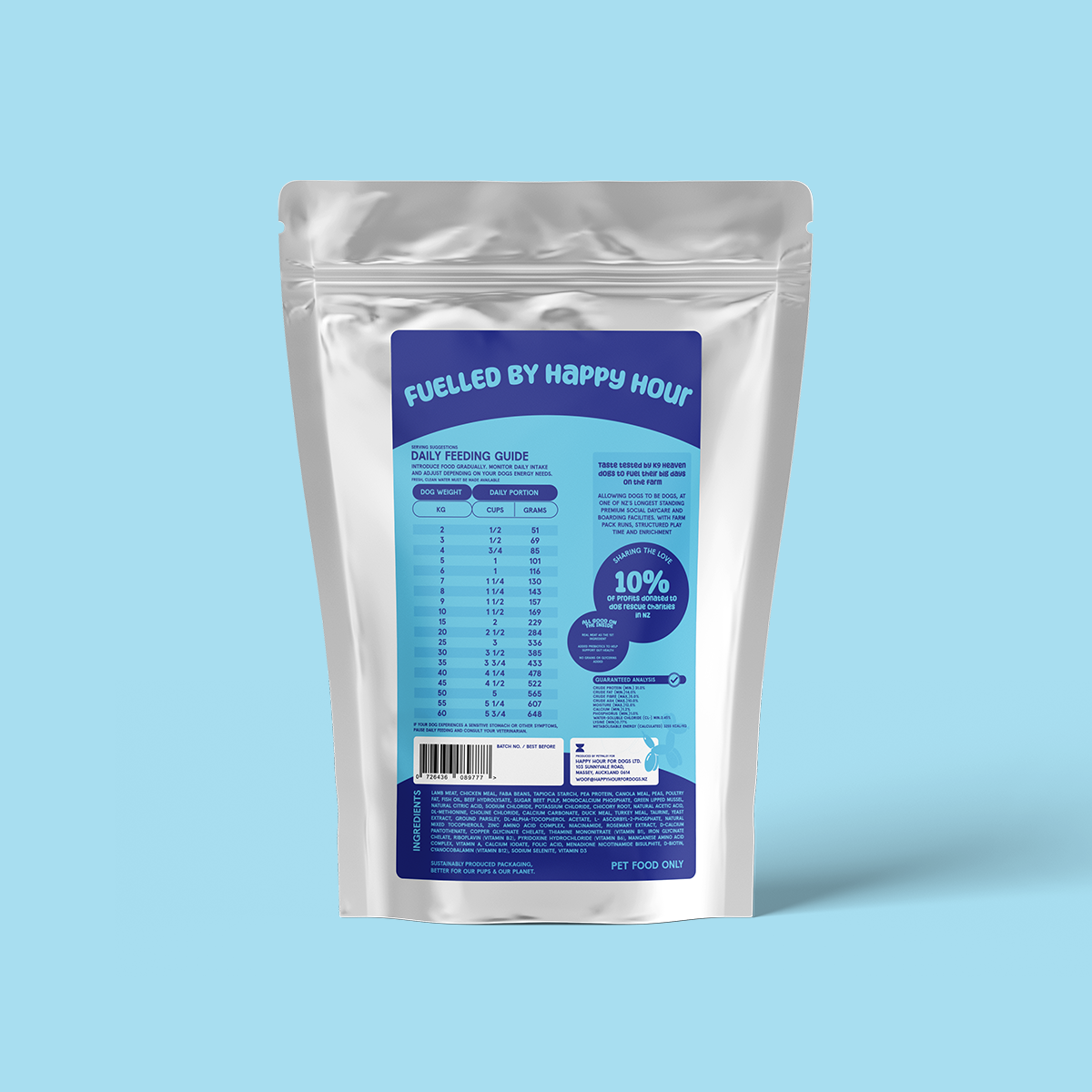
For detailed feeding amounts, see our How Much Should I Feed My Dog? (NZ Portion Guide).
Why Happy Hour Works for Many Jack Russells
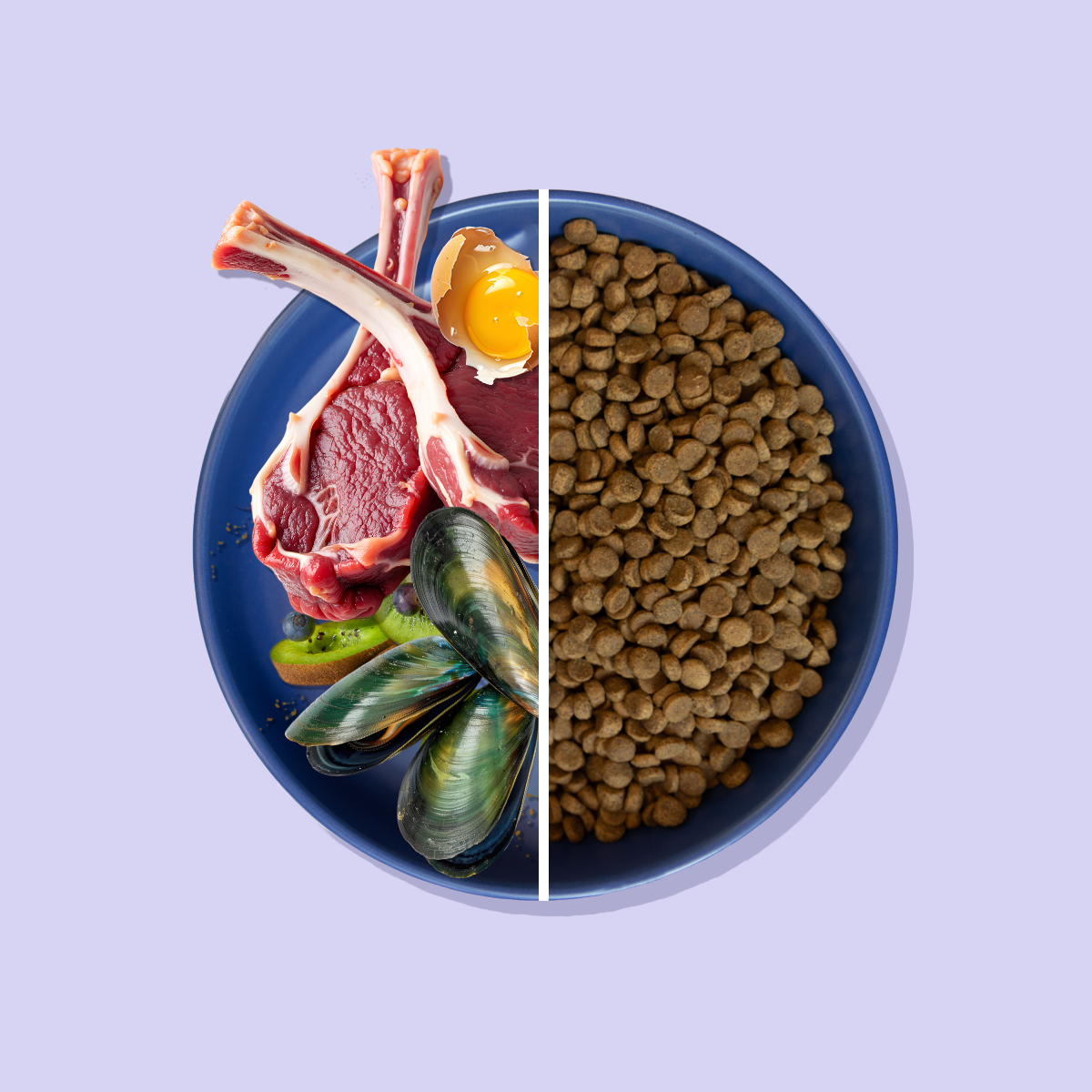
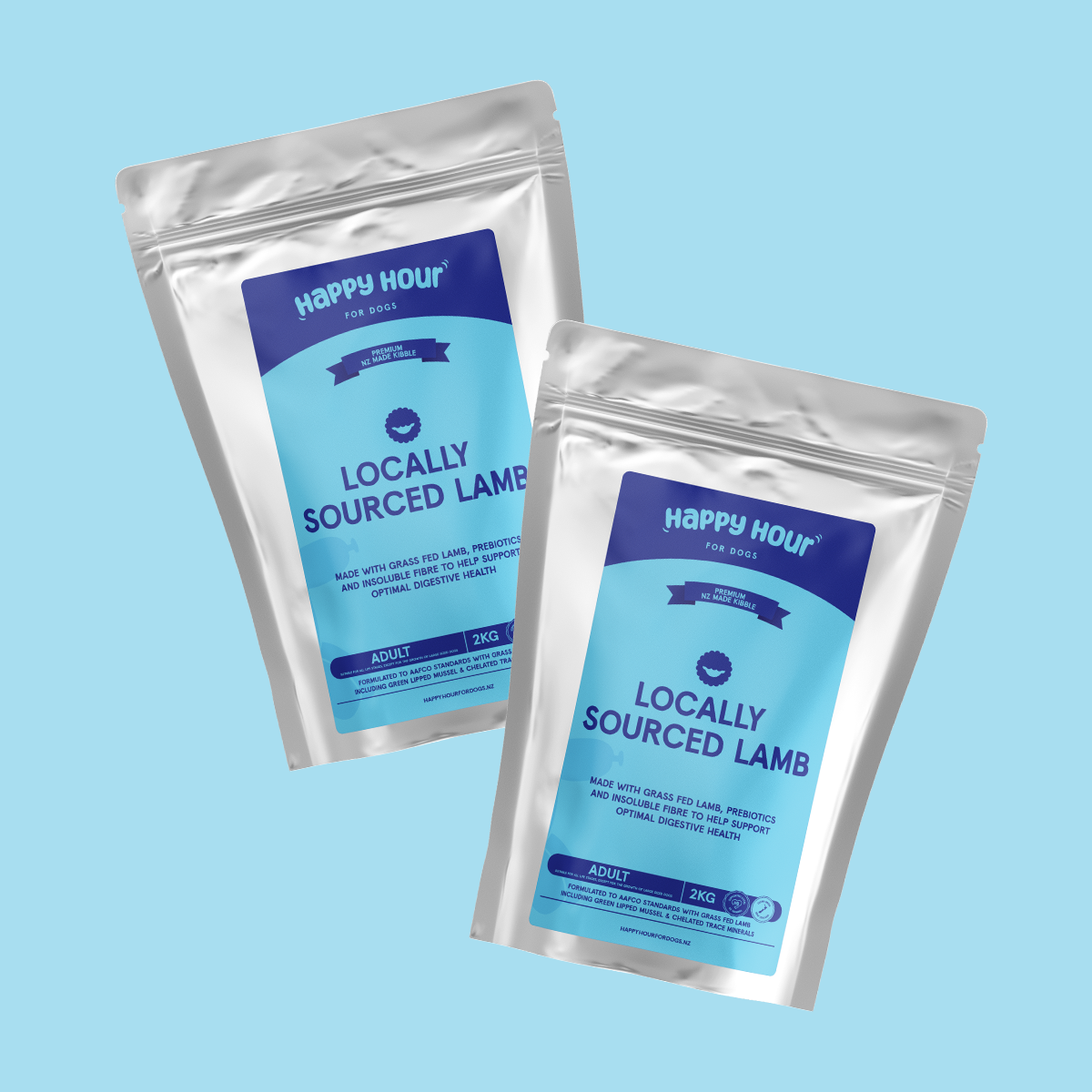
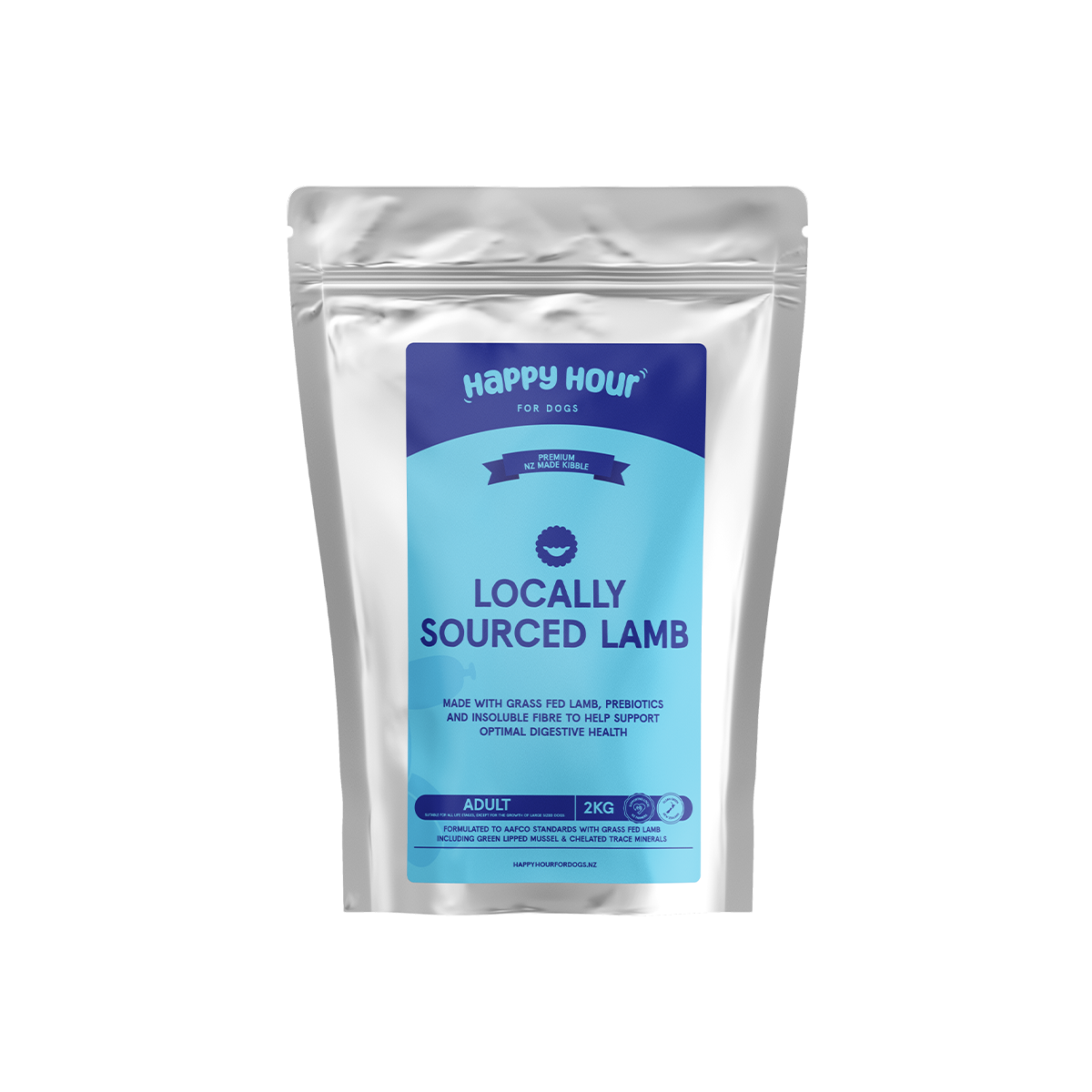
Happy Hour uses NZ grass-fed lamb as the lead protein. For a Jack Russell that's been on chicken or beef their whole life, lamb is a useful change that may help with skin sensitivities. It's a fussier-eater-friendly food because real meat flavour holds attention better than artificial palatability enhancers.
The low-fat formula is genuinely useful for a breed prone to weight gain. You can feed an appropriate portion size without the food itself being so calorie-dense that every gram has to be weighed to the milligram.
Chicory root as a prebiotic supports gut health. For small dogs who can be prone to digestive sensitivity, gut health matters. Fish oil and green-lipped mussel from the Marlborough Sounds support skin and joint health, and chelated minerals support absorption.
Happy Hour is AAFCO approved for all life stages, so you don't need to switch formulas as your Jack Russell moves from puppy to adult to senior.