Best Dog Food for Golden Retrievers NZ: What Golden Owners Need to Know
Golden Retrievers are wonderful dogs: loyal, gentle, endlessly enthusiastic, and absolutely prone to sneaking food off the bench when you turn your back. They're also a breed with some specific health tendencies that make food choice more important than it is for a lot of other dogs. If you've got a Golden, understanding what they need nutritionally can make a real difference to how they feel as they age.
Key Takeaways
- Best Dog Food for Golden Retrievers NZ: What Golden Owners Need to Know
- What Golden Retrievers Are Prone To
- What to Look for in a Golden Retriever's Food
- How Happy Hour Fits a Golden's Needs
- Feeding Your Golden: Practical Notes
NZ Golden owners tend to be dedicated. You're already thinking about this, which puts your dog ahead of a lot of their counterparts. Let's look at what actually matters.
What Golden Retrievers Are Prone To
Before you can choose the right food, it helps to know what you're working with. Golden Retrievers have some breed-specific tendencies that affect what they should eat:
Weight Gain
Goldens love food. Full stop. They're enthusiastic eaters who will cheerfully overeat if you let them. Carrying extra weight puts pressure on their joints and heart, so a food with a sensible fat level and clear feeding guidelines matters. Our Golden Retriever Weight Management article covers this in detail if you want to go deeper on portion control and weight monitoring.
Joint Health
Golden Retrievers are a large breed with a genetic predisposition to hip dysplasia and other joint issues. Omega-3 fatty acids (especially from sources like fish oil) can help support healthy inflammation responses in joints. Keeping weight in the healthy range is also one of the most effective ways to reduce joint stress. See our Dog Joint Health and Diet NZ article for more on this.
Skin and Coat Issues
Goldens are known for that beautiful flowing coat, but they're also prone to skin allergies and hot spots. Food quality can have a significant impact here: omega-3s support skin barrier function, and high-quality protein supports coat health. Low-quality fillers and artificial additives can aggravate sensitive skin in some dogs.
Sensitivity to Rich Foods
Some Goldens have sensitive stomachs and don't do well on very high-fat diets. If your Golden has a history of digestive upset after meals, it's worth looking at the fat content of their current food.
What to Look for in a Golden Retriever's Food
With those tendencies in mind, here's what to prioritise when choosing food for your Golden:
High-Quality Protein as the First Ingredient
Real meat should be at the top of the ingredients list, not a meat meal or by-product as the only protein source. Goldens need good protein to support muscle maintenance, which helps protect joints and keeps them moving well. If you're reading ingredient labels and not sure what you're looking at, our How to Read a Dog Food Label article is a good starting point.
Omega-3 Fatty Acids
Look for a food that lists fish oil or another omega-3 source in the ingredients. These fatty acids support skin health, coat quality, and may help with joint inflammation. Our Omega-3 for Dogs article explains the role they play in more detail.
Moderate Fat Content
Very high-fat foods can be hard for some Goldens to process, particularly as they get older. A food that isn't excessively fatty gives you more control over their weight without having to feed tiny portions.
No Artificial Additives
Artificial preservatives, colours, and flavours add nothing nutritionally and may aggravate sensitive skin. Look for natural preservation and clean ingredients.
AAFCO Approval
Check that the food meets AAFCO nutritional standards. This isn't a guarantee of quality on its own, but it does confirm that the food has been assessed as complete and balanced rather than just a marketing claim.
How Happy Hour Fits a Golden's Needs
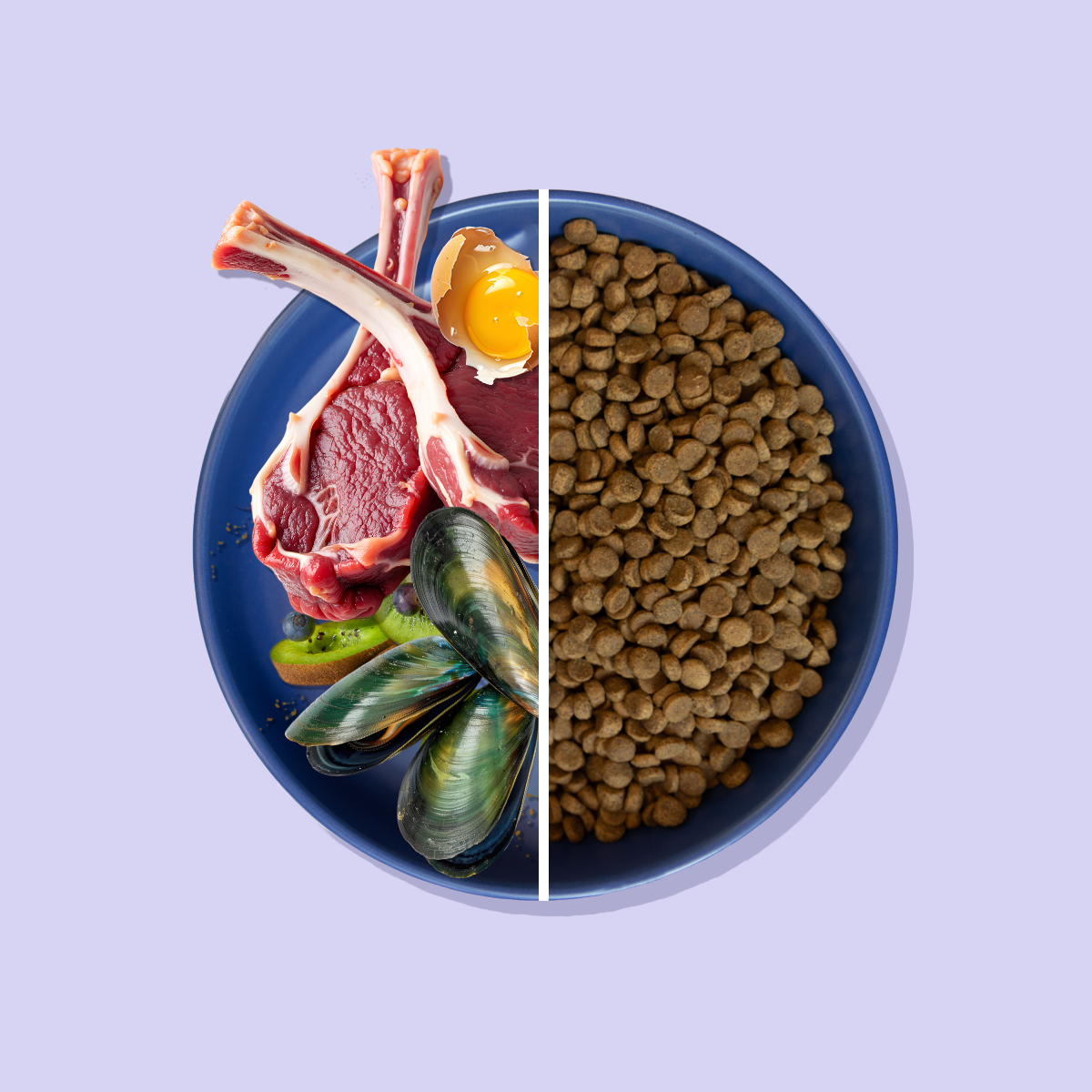
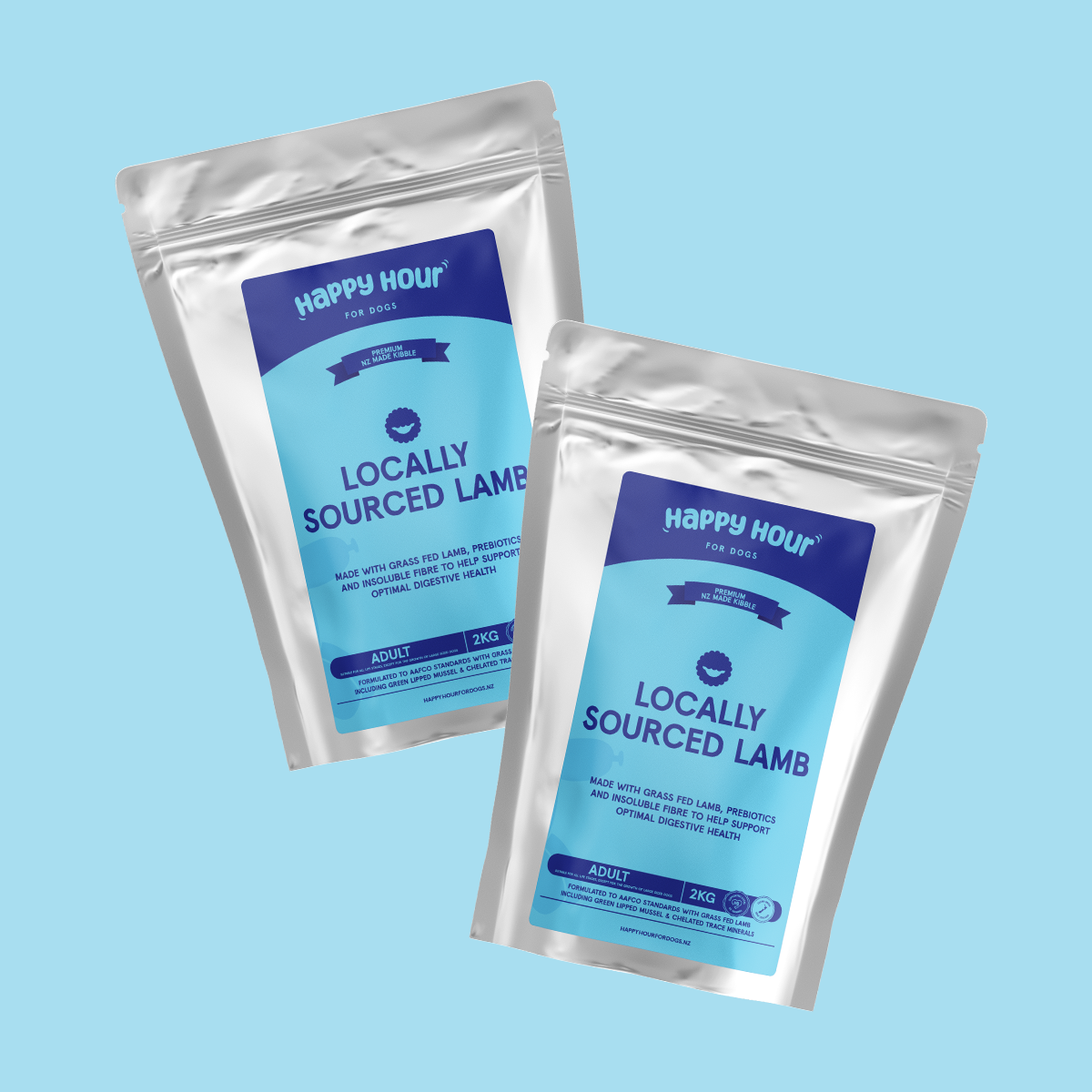
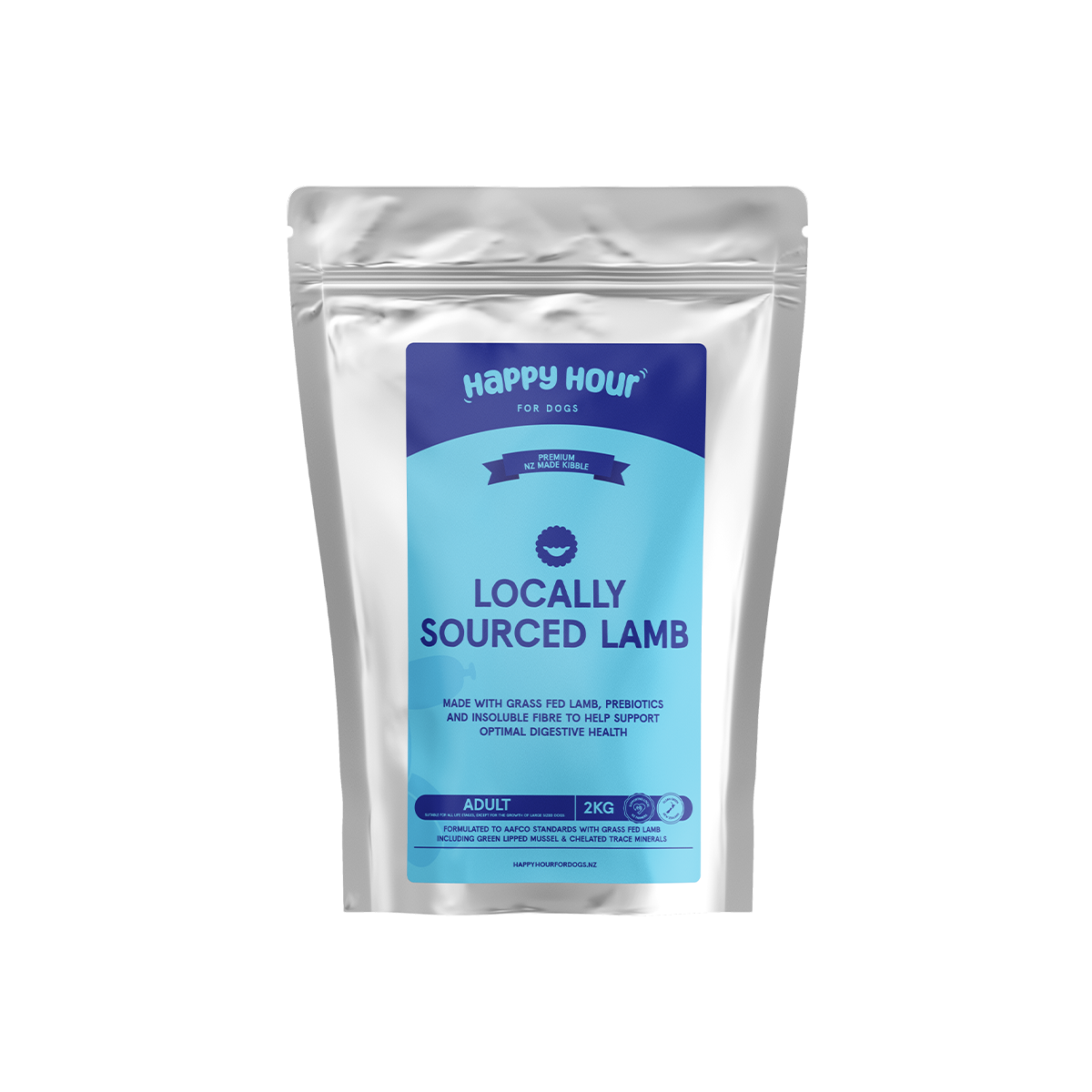
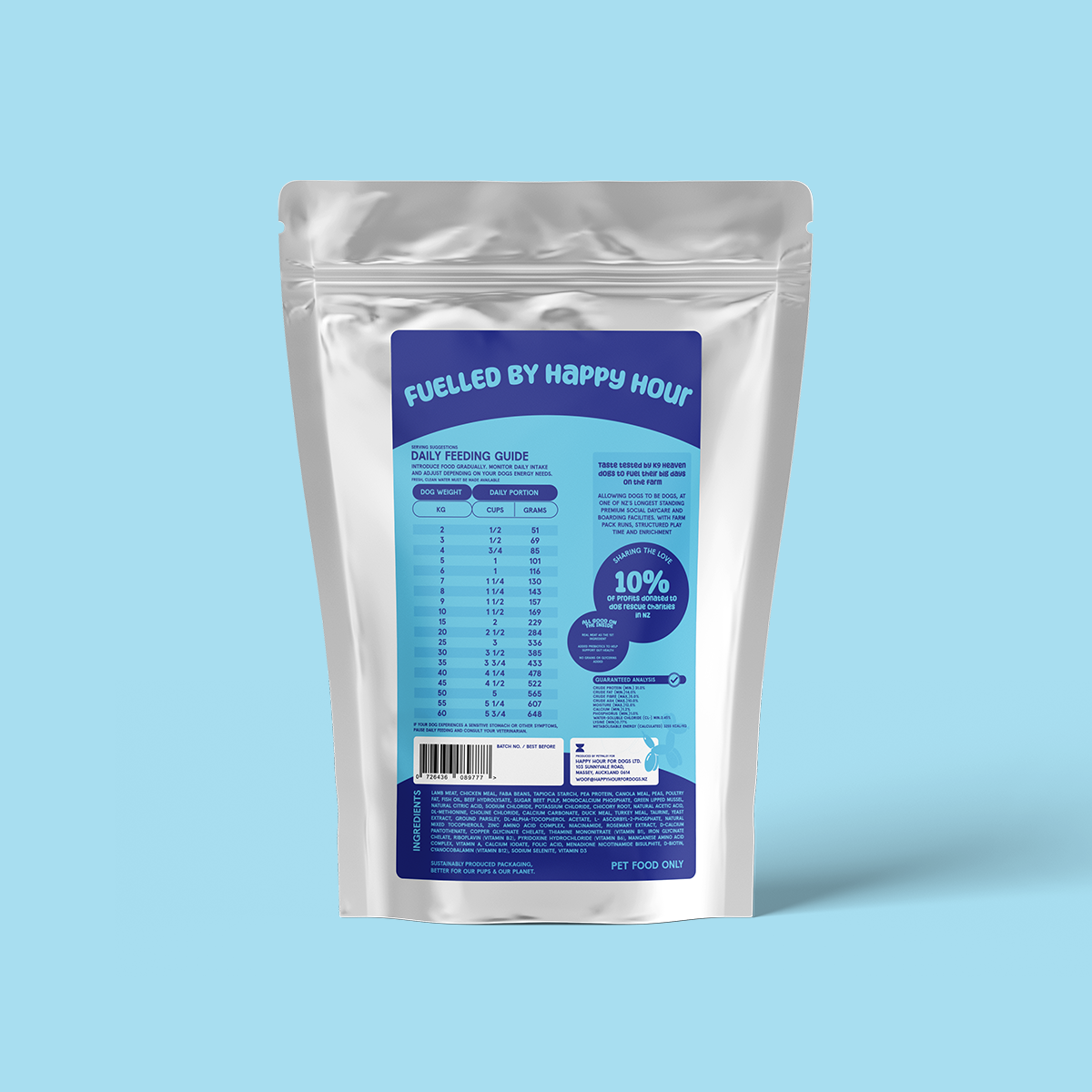
Happy Hour is built around NZ grass-fed lamb as the lead protein, with cage-free chicken as a secondary protein. It includes fish oil for omega-3 support, green-lipped mussel from the Marlborough Sounds (which naturally contains omega-3s and is associated with joint support), and chicory root as a prebiotic for gut health. It's grain-free with no artificial additives.
Importantly, it's a low-fat formula, which makes it a sensible option for Goldens who need careful weight management. You can feed an appropriate amount without feeling like you're starving your dog just to keep them in a healthy range.
Happy Hour is AAFCO approved for all life stages, which means it's suitable from puppy through to senior. That's useful if you'd rather not switch foods multiple times as your Golden ages.
It's made in NZ, which matters for supply chain transparency, and the team behind it runs K9 Heaven, NZ's oldest doggy daycare, so they know dogs. They're not a faceless overseas brand reformulating for price.
Feeding Your Golden: Practical Notes
A few things specific to Golden Retrievers that are worth keeping in mind:
- Goldens are deep-chested, which puts them at some risk of bloat (GDV). Feeding two smaller meals a day rather than one large meal can help reduce this risk.
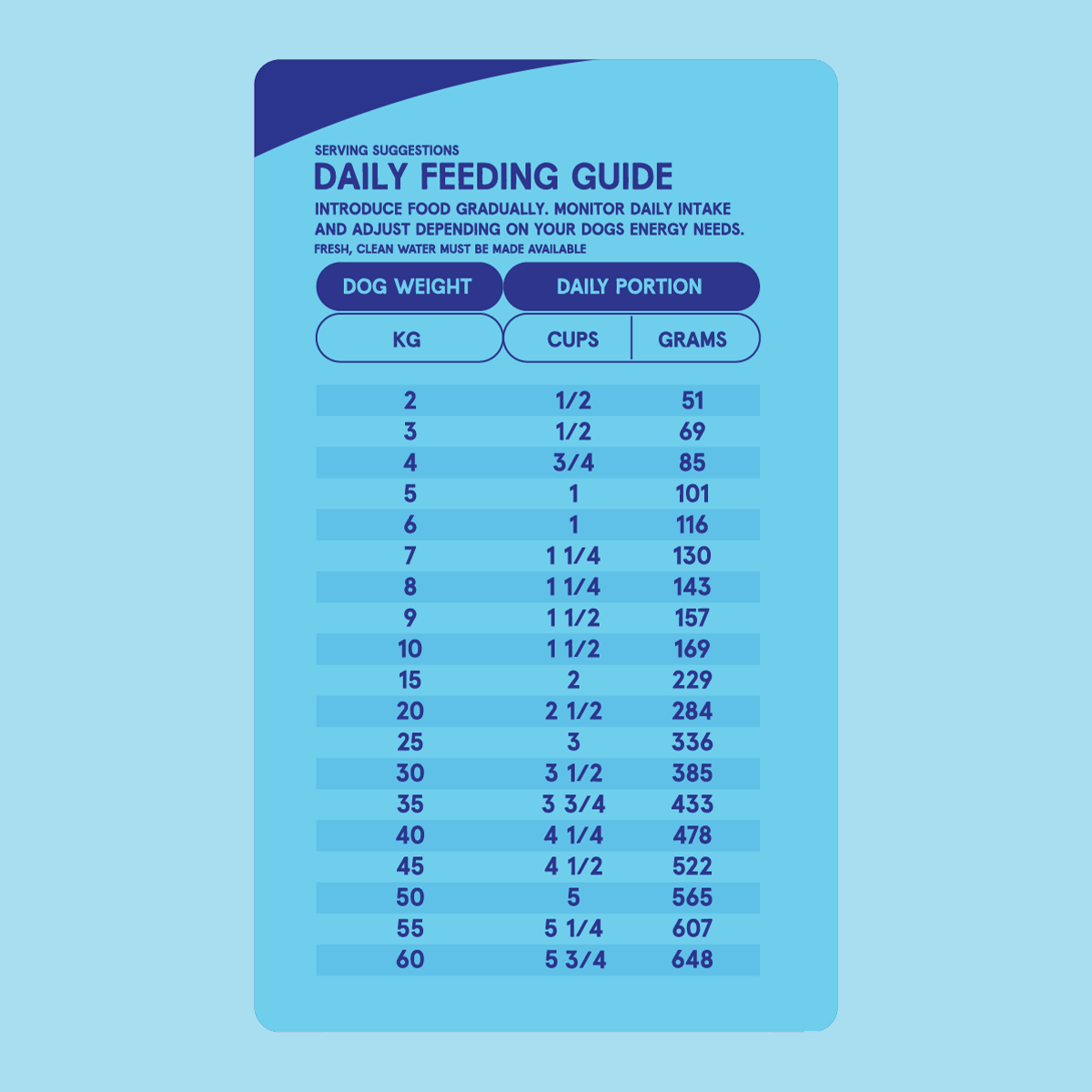
- Stick to the recommended feeding amounts and adjust based on your dog's actual weight and activity level. Most Goldens need less food than the bag suggests if they're not particularly active.
- Treats add up quickly with a breed that loves food. Factor them into daily calorie allowance.
- If your Golden is showing signs of joint stiffness, skin issues, or digestive problems, talk to your vet before changing their diet. There may be specific nutritional adjustments that would help.
For more on portion guidance, see How Much Should I Feed My Dog? (NZ Portion Guide).