Best Dog Food for Border Collies NZ: Fuelling the World's Smartest Working Dog
Border Collies don't just need exercise. They need a job. They're bred to work all day on NZ high country farms, tracking, anticipating, and herding with intensity that would leave most other breeds flat out. If you've got one, you already know they're not like other dogs. Their nutritional needs aren't either.
Key Takeaways
- Best Dog Food for Border Collies NZ: Fuelling the World's Smartest Working Dog
- What Makes Border Collies Different
- What to Look for in Border Collie Food
- How Happy Hour Suits Border Collies
- Feeding Your Border Collie: Practical Notes
The good news is that feeding a Border Collie well doesn't have to be complicated. You just need to understand what their body actually requires and why food quality matters more for this breed than for a dog who's happy napping most of the day.
What Makes Border Collies Different
Border Collies sit in the medium-large size range, typically 14-20kg, but they're not particularly heavy dogs relative to their energy output. They run hot. Even Border Collies kept purely as pets tend to be significantly more active than most other breeds, and many NZ owners use them for agility, flyball, herding trials, or farm work.
High Energy Expenditure
A working or highly active Border Collie burns considerably more calories than the same-sized dog of a lower-energy breed. This means they need food that delivers quality energy, not just bulk. A food packed with low-quality fillers might fill the bowl, but it won't sustain the output a Collie's day demands.
Joint Health Over Time
Years of high-intensity movement take a toll on joints. Border Collies can develop hip dysplasia and are prone to cruciate ligament injuries. Nutrition that supports joint health from an early age (omega-3 fatty acids, good-quality protein for muscle maintenance) matters over the long term. See our Dog Joint Health and Diet NZ article for more on this.
Sensitive Digestion in Some Dogs
Border Collies can be prone to digestive sensitivities. Many owners find their Collies do better on food with clean, identifiable ingredients and without a lot of artificial additives. Gut health also connects to energy levels: a dog with poor nutrient absorption won't perform as well even on an otherwise good diet.
Weight Fluctuation Risk
Active Border Collies can lose condition quickly if they're not eating enough, especially in winter when cold weather increases caloric needs. The opposite risk is for pet Collies who get less exercise than their breeding demands: they can gain weight if fed the same amount as a working dog. Our Border Collie Weight Management NZ article covers this in detail.
What to Look for in Border Collie Food
High-Quality Protein First
Protein is the building block of muscle, and Border Collies rely on strong, responsive musculature to do what they do. Look for a named meat protein at the top of the ingredients list: lamb, chicken, fish, or similar. Protein quality matters as much as quantity. See our Best High-Protein Dog Food in NZ article for what to look for.
Appropriate Fat Levels
Fat is a concentrated energy source and important for active dogs. But 'high fat' isn't automatically better. Very high fat diets can cause digestive issues in some dogs, and for a pet Collie who's not working as hard, excess fat can lead to weight gain. A food with moderate, clean fat sources is usually more manageable.
Omega-3 Fatty Acids
Fish oil in the ingredients list is a good sign. Omega-3s support joint health, coat quality (Collies have a double coat that benefits from good nutrition), and inflammatory responses throughout the body. Our Omega-3 for Dogs article explains the specifics.
Prebiotics for Gut Health
A healthy gut helps a dog absorb nutrients effectively and supports immune function. For Border Collies who can be digestively sensitive, a food that includes a prebiotic like chicory root can help maintain gut balance, particularly when activity levels or routines change.
No Unnecessary Fillers or Additives
Low-quality fillers bulk out the food without adding nutritional value. For a dog that needs real sustained energy, every calorie should be doing some work. Check the ingredients list using our How to Read a Dog Food Label guide to see what you're actually paying for.
How Happy Hour Suits Border Collies
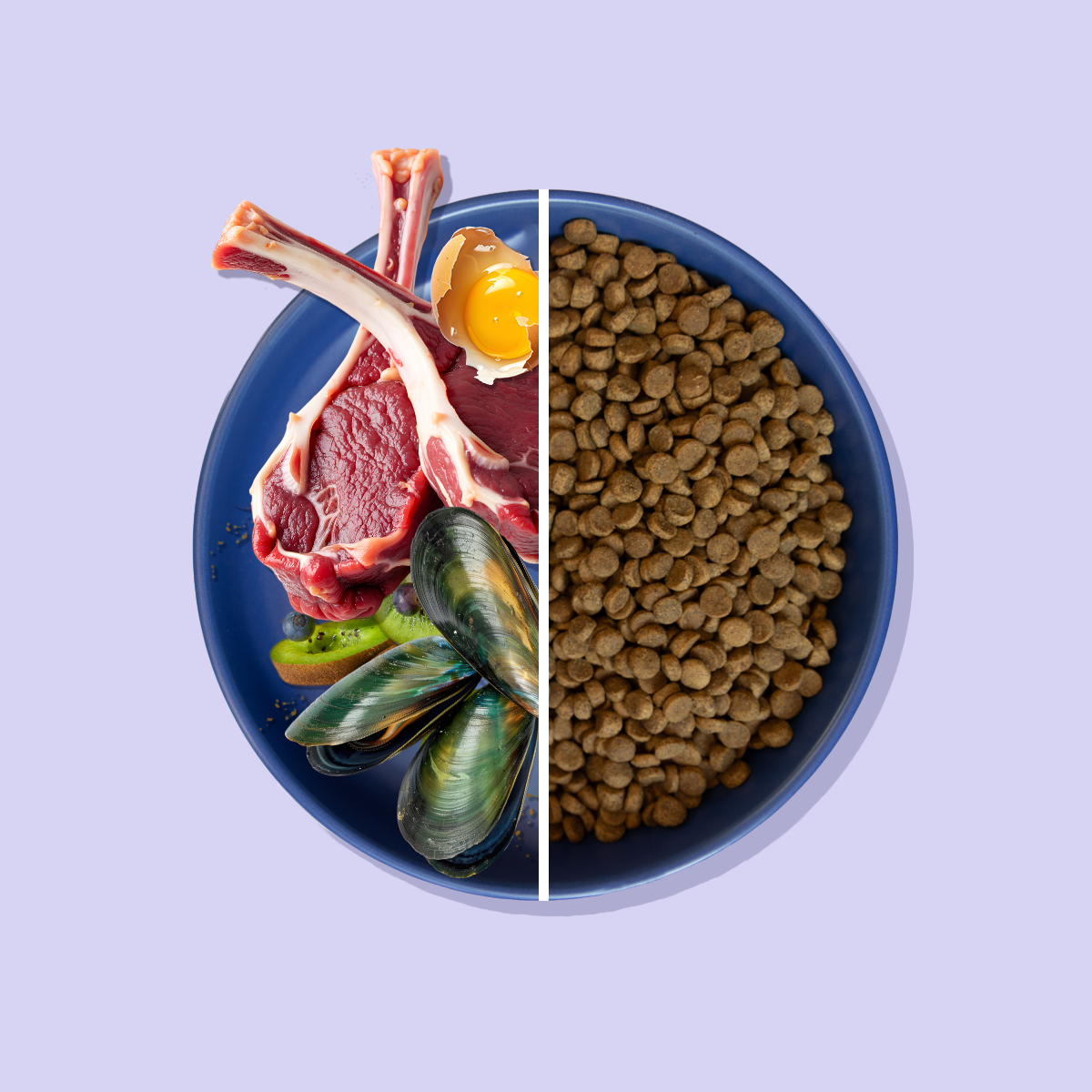
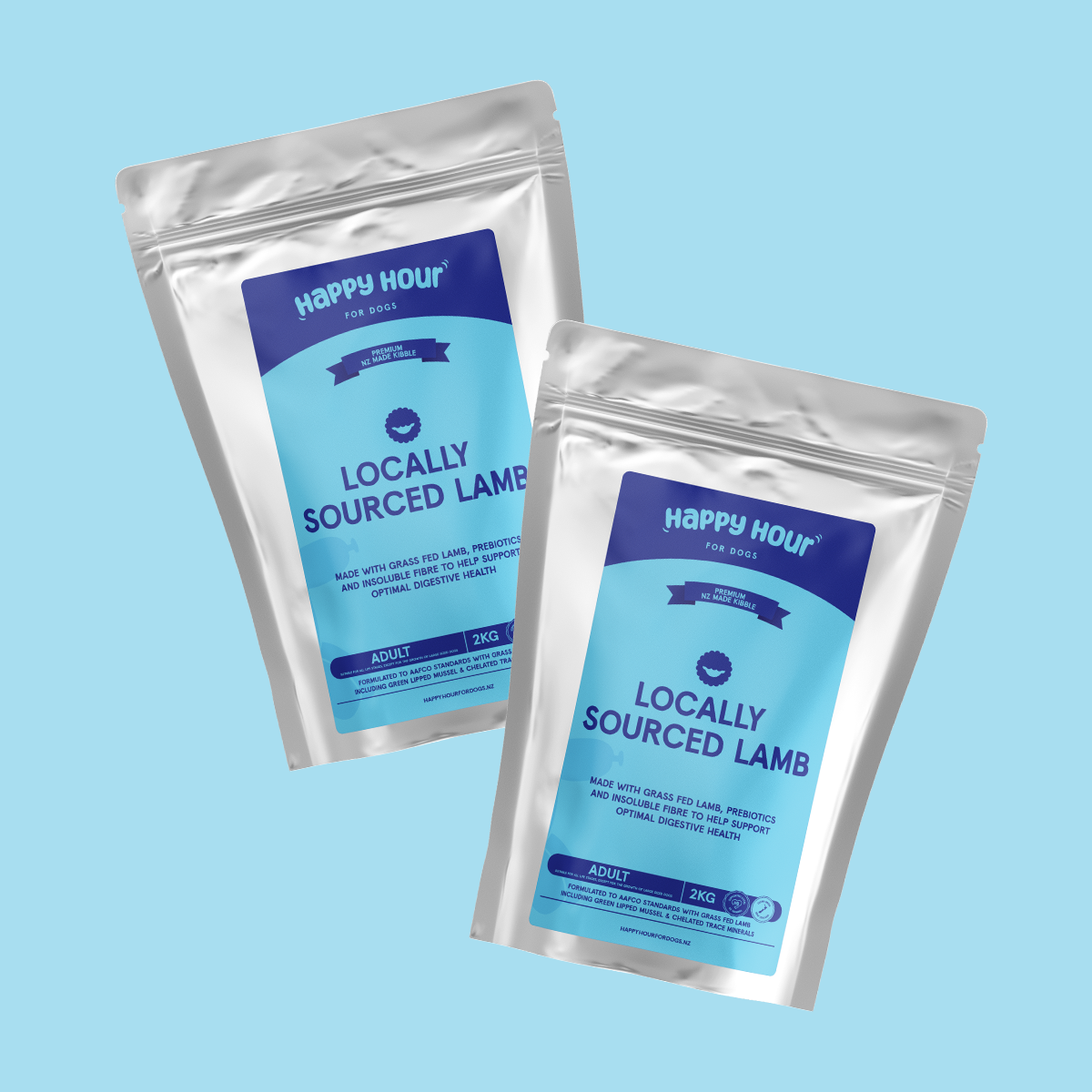
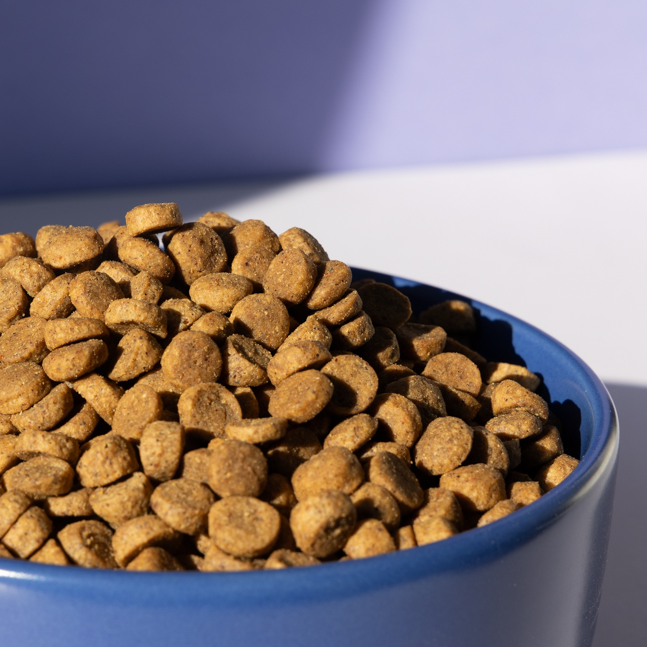
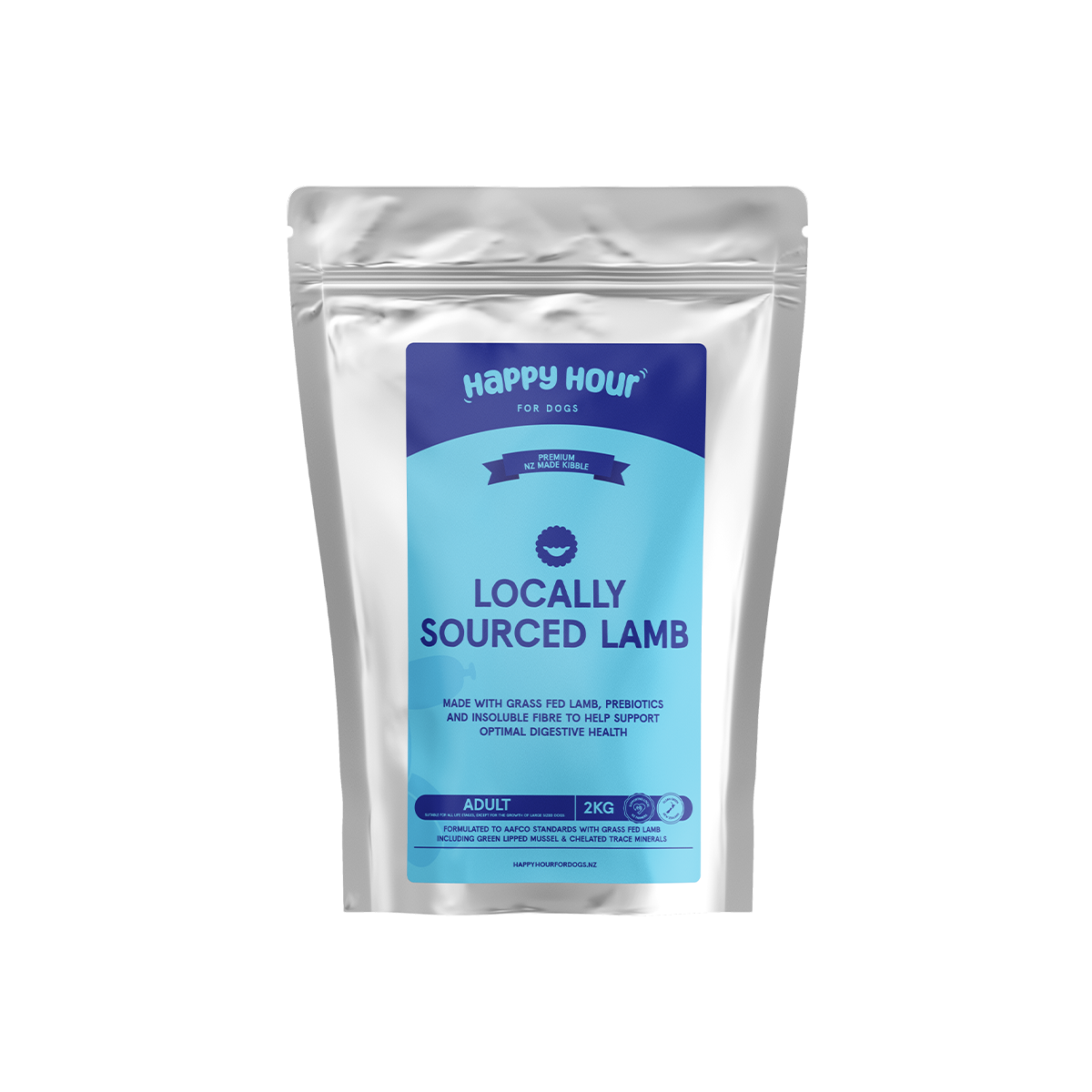
Happy Hour uses NZ grass-fed lamb as the lead protein, which is a high-quality, single-source protein that's different from the chicken or beef most dogs have eaten before. Grass-fed lamb tends to have a better omega fatty acid ratio than grain-fed alternatives, which matters for an active dog's muscle and joint health.
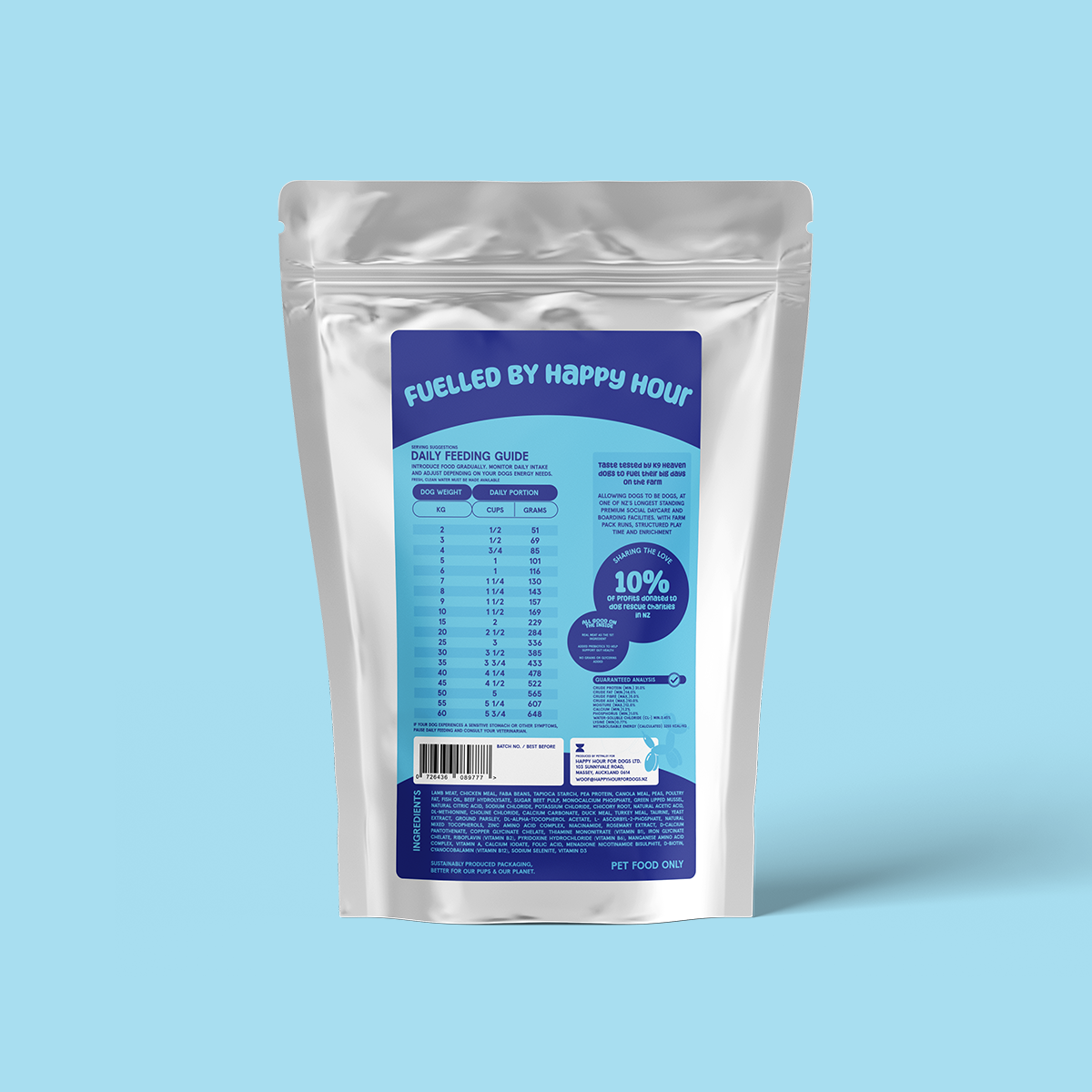
The formula includes fish oil for omega-3 support, green-lipped mussel from the Marlborough Sounds (naturally rich in omega-3s and compounds associated with joint health), chicory root as a prebiotic, and chelated minerals for efficient absorption. It's grain-free with no artificial preservatives or colours.
The low-fat formula is worth noting: Happy Hour is designed to be nutritionally complete without being overly rich. This is actually useful for Border Collies whose exercise levels vary. You can adjust portion sizes up on high-activity days and down on rest days, without the food itself being so fatty that you're constantly fighting weight gain or digestive issues.
It's AAFCO approved for all life stages, so it's suitable from the puppy stage right through to the senior years, which is useful if you'd rather not switch foods every few years.
Feeding Your Border Collie: Practical Notes
- Feed twice a day: morning and evening. Split meals reduce the risk of bloat and keep energy more consistent through the day.
- Adjust portions seasonally. NZ winters can mean higher energy output if your Collie is working outside in the cold. Summer may mean more heat, less intense exercise, and slightly lower caloric needs.
- Monitor body condition, not just weight. You should be able to feel your Collie's ribs but not see them. A slightly tucked waist and visible waist from above is the right shape.
- Don't feed immediately before intense work or exercise. Allow 30-60 minutes between meals and vigorous activity.
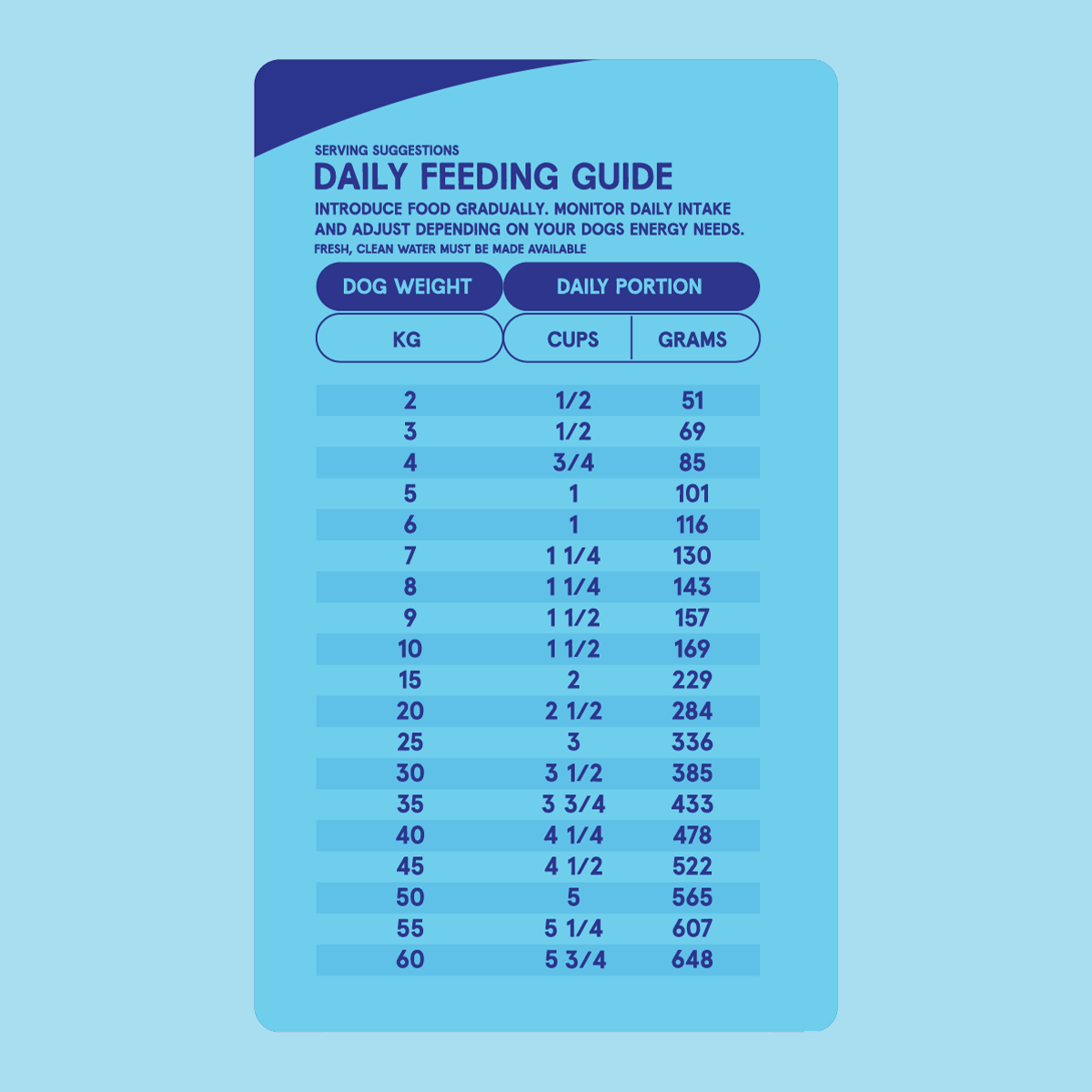
For detailed portion guidance, see How Much Should I Feed My Dog? (NZ Portion Guide).