

Shih Tzu Weight Management: NZ Owner's Guide
Shih Tzus are small, affectionate dogs that are very easy to overfeed. They love their owners, their owners love them back, and food becomes part of that relationship in ways that quietly add up to extra kilos. Combine that with their flat-faced features and the fact that excess weight makes breathing harder — and you have a good reason to take weight management seriously for this breed.
The good news is that managing a Shih Tzu's weight isn't complicated. It mostly comes down to portion control and consistent, moderate exercise.
Key Takeaways
- Shih Tzus are brachycephalic (flat-faced), so excess weight makes breathing noticeably harder
- Their flowing coat can completely hide weight gain — always assess by feel
- Small dogs need surprisingly little food; measuring every meal matters
- They can handle moderate exercise but avoid heat and overexertion
- Quality over quantity in their food; they don't need much but they need it to be good
Why Shih Tzus Are Prone to Weight Gain
Shih Tzus were bred as companion dogs. Their entire purpose was to sit with people and be adored. They're not high-energy working dogs, and their calorie needs reflect that.
The problem is that owners often feed them like they're a larger, more active dog. A Shih Tzu weighing 6 kg needs a very small daily food volume — often under 130g of dry kibble. It doesn't take much to tip them into a surplus.
They're also irresistible to overfeed. The soulful eyes, the little domed head, the way they hover near your plate — Shih Tzus are expert at unlocking generosity from their humans. But those extras add up fast on a small body.
The breed is also prone to hypothyroidism, a condition where the thyroid doesn't produce enough hormone, slowing metabolism. If your Shih Tzu is gaining weight despite controlled feeding and regular exercise, it's worth asking your vet to check thyroid function.
How to Tell If Your Shih Tzu Is Overweight
The Shih Tzu's long, flowing coat is beautiful and deeply unhelpful for visual weight checks. You genuinely cannot tell by looking whether they're at a healthy weight under all that fur.
Do the hands-on test: part the coat and press gently along their sides. You should be able to feel each rib with light pressure. If there's a thick layer of fat under the skin, that's a problem.
From above (with the coat parted or tied up), look for a waist — a slight narrowing between the ribcage and the hips. A Shih Tzu that looks like a uniform sausage shape from above is probably overweight.
Healthy adult Shih Tzus typically weigh between 4 and 7 kg. If yours is at the top of that range or beyond, a body condition assessment with your vet is worthwhile.
Signs that excess weight is causing problems: breathing more noisily than usual, getting tired quickly on short walks, reluctance to engage in play, or difficulty getting comfortable when sleeping.
Feeding a Shih Tzu for a Healthy Weight
Measure every meal. This is the single most effective thing you can do for a Shih Tzu's weight. Because they're small, the difference between a correct portion and an overly generous one might be just a tablespoon — but over time, that tablespoon matters.
Feed twice daily: morning and evening. This keeps energy more stable and reduces the begging intensity between feeds.
Treats should be tiny and infrequent. If you use treats for training or bonding, count them against the daily calorie allowance rather than adding them on top. Break treats into very small pieces — a single treat can become 10 training rewards for a small dog.
Avoid table scraps. It's tempting to share, but even small amounts of human food can represent a significant proportion of a Shih Tzu's daily calorie budget.
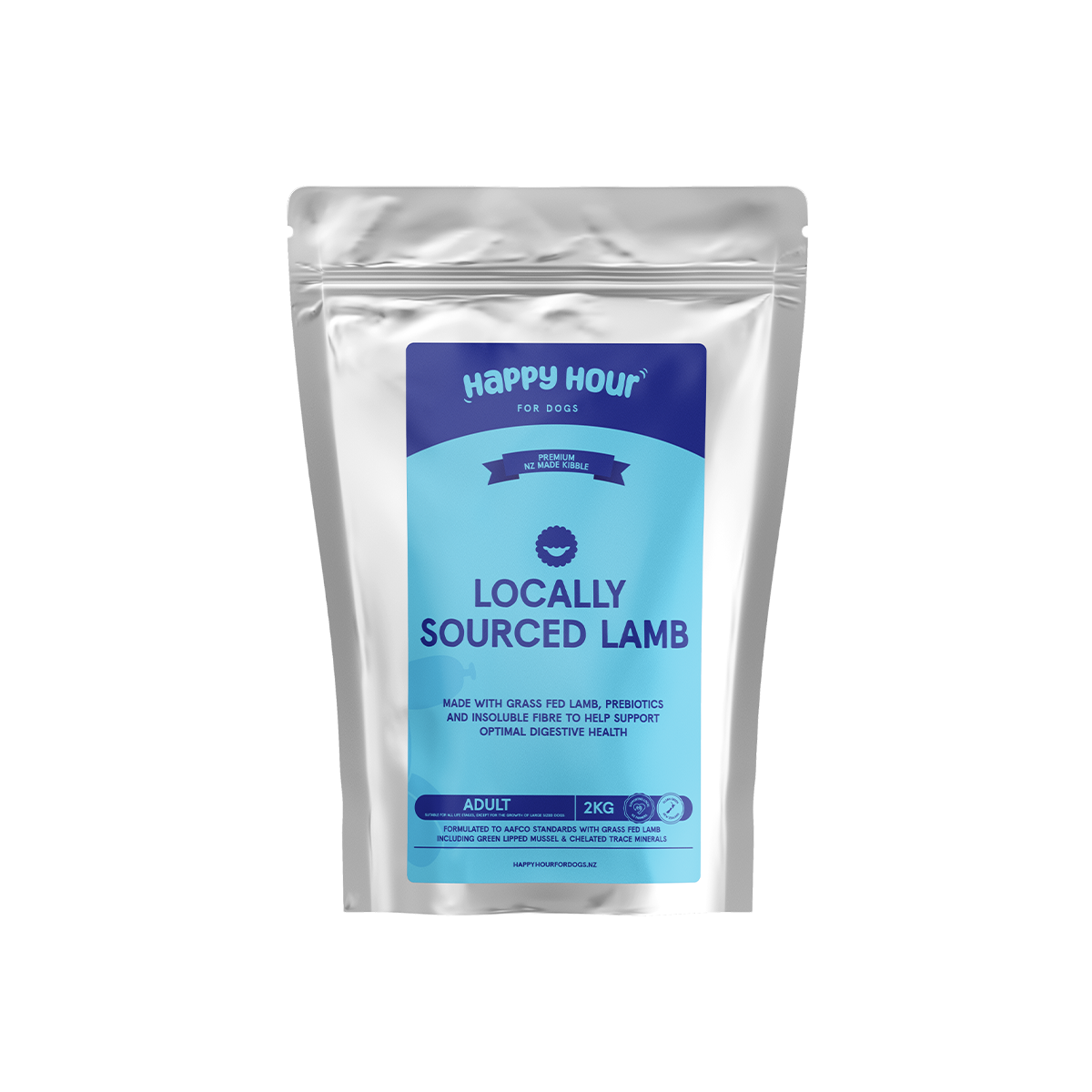
Happy Hour is made from NZ grass-fed lamb, is grain-free, and includes added insoluble fibre that helps small dogs feel fuller on an appropriate portion. It's a good option for Shih Tzus whose owners want quality nutrition without having to feed large volumes.
If your Shih Tzu needs to lose weight, reduce portions gradually rather than cutting food sharply. Small dogs should not be put on aggressive calorie restriction.
Exercise Tips for Shih Tzus
Shih Tzus are brachycephalic, which means their flattened facial structure can restrict airflow — but they're not as severely affected as Pugs or French Bulldogs. A healthy Shih Tzu can handle moderate regular exercise without issue.
Two 20-minute walks per day is a reasonable target. Keep the pace comfortable and watch for signs of laboured breathing: heavy panting, open-mouth breathing at rest, or slowing down well before you'd expect them to tire.
Avoid exercising in hot weather. Heat is more dangerous for flat-faced breeds than for long-snouted dogs. NZ summers can be warm enough to cause heat stress in brachycephalic dogs. Walk in the cooler parts of the day — early morning or late evening — and keep walks shorter when it's humid.
Playtime at home also counts. Indoor games, gentle tug, and puzzle feeders are all appropriate for this breed and help burn energy without pushing breathing limits.
What to Look for in Dog Food for Shih Tzus
Shih Tzus don't need a lot of food, but what they do eat should be high quality. Look for:
- Named meat as the first ingredient — real protein, not meal derivatives
- Appropriate calorie density — check the feeding guide for small dogs and measure accordingly
- Good fibre content — keeps them full on a small portion
- No artificial colours, flavours, or preservatives — small dogs consume everything in proportion to their body weight, so ingredient quality matters
- Skin and coat support — omega fatty acids (from ingredients like salmon or green-lipped mussel) are a bonus for a breed with a high-maintenance coat
Avoid foods with excessive fat, which adds unnecessary calories and can contribute to pancreatitis risk.
Read more about dog breeds prone to weight gain in NZ and our complete guide to managing overweight dogs for more practical advice.
Frequently Asked Questions
How much should a Shih Tzu eat per day?
Most adult Shih Tzus need between 80 and 130g of dry kibble per day, depending on their size and activity level. This is less than most owners assume. Always weigh or measure the portion carefully rather than estimating, and split it across two meals.
Can Shih Tzus go for walks in NZ summer heat?
With care, yes. Avoid the hottest part of the day (roughly 11am to 3pm in summer) and keep walks short. Shih Tzus are brachycephalic and don't handle heat as well as longer-snouted breeds. Watch for heavy panting, slowing down, or any sign of distress and head home if they appear uncomfortable.
How do I know if my Shih Tzu is overweight under all that fur?
Part the coat and feel along their sides with light pressure. You should be able to find each rib without needing to push through a thick fat layer. If you can't, they're likely overweight. A vet visit with a Body Condition Score assessment is a reliable way to confirm.
My Shih Tzu is gaining weight but I haven't changed anything. Why?
A few possible reasons: they may be getting older and their metabolism has slowed, someone in the household may be giving extra treats or scraps, or the breed's tendency toward hypothyroidism could be a factor. Ask your vet to check thyroid function if you've ruled out overfeeding.
Are there health problems linked to obesity in Shih Tzus?
Yes. Excess weight worsens their already-compromised breathing, increases joint stress, and raises the risk of diabetes and heart disease. Because they're already carrying the challenge of a flat face, keeping their weight healthy makes a meaningful quality-of-life difference.
