

Golden Retriever Weight: How to Keep Yours Healthy (NZ)
Golden Retrievers are one of New Zealand's most loved family dogs — gentle, loyal, endlessly enthusiastic about food. That last part is the catch. Goldens are genuinely food-motivated, quick to gain weight, and prone to pancreatitis, which means what they eat matters as much as how much. The good news is that with the right food and a consistent routine, keeping a Golden at a healthy weight is very manageable.
Key Takeaways
- Golden Retrievers are naturally food-motivated and prone to gradual weight gain
- Excess weight increases the risk of joint problems, heart disease, and pancreatitis
- A low-fat, high-fibre food makes portion management easier and protects the pancreas
- Goldens are active dogs — daily exercise is important, but diet is the bigger weight lever
- A low-fat, high-fibre food that your Golden actually enjoys eating makes the whole process much easier
Why Golden Retrievers Are Prone to Weight Gain
Golden Retrievers were bred as working gun dogs — retrieving waterfowl for hunters in the Scottish Highlands. That working history means they were built for sustained physical activity and have the appetite to match. In a typical NZ family home, that appetite continues but the long days of work don't.
Goldens are also highly treat-responsive, which makes them a joy to train but also means they're easy to accidentally overfeed through well-intentioned rewards. A treat here and there, a few scraps off the dinner plate, a generous pour into the bowl — it adds up fast in a breed that will happily eat whatever's in front of them.
As they move into middle age (around 6-8 years), Goldens often slow down significantly while their owners continue feeding at the same rate they did when the dog was younger and more active. That's when the weight creeps in.
Goldens are also prone to pancreatitis, which is an inflammation of the pancreas often triggered by high-fat foods or fatty meals. A Golden that's been fed a high-fat diet, or given rich treats and table scraps, is at real risk. Pancreatitis can be mild or life-threatening, and it significantly changes how you need to manage their diet going forward.
How to Tell If Your Golden Retriever Is Overweight
Adult Goldens generally range from 25-34kg depending on sex, but body condition is more meaningful than a number on the scales.
Run your hands along your dog's sides — you should feel the ribs without pressing hard. Looking from above, there should be an obvious waist behind the ribs. From the side, the belly should tuck up, not drop down. Goldens have a beautiful thick coat that can disguise extra weight; always feel through the fur rather than judging by how they look.
If the ribs feel padded, the waist has disappeared, or the belly has a rounded hang to it, your Golden is likely carrying too much weight. See our overweight dogs NZ guide for a full body condition scoring guide.
Feeding a Golden Retriever for a Healthy Weight
Portion control is the foundation. Measure every meal with a kitchen scale — don't rely on a scoop or your eye. Goldens are very good at convincing their owners the bowl looks small, but if the food is calorie-dense, a small bowl may be exactly right.
Feed twice daily. It's easier to manage portions, better for digestion, and means your Golden isn't waiting an entire day between meals (which tends to accelerate begging behaviour).
Treats need to be tracked. Every treat is part of the daily calorie budget. Use small pieces, low-fat options, or pieces of kibble as rewards — especially during training. Avoid cheese, fatty meats, or high-fat commercial treats for Goldens prone to pancreatitis.
Choose a food that's low in fat and high in quality protein and fibre. This is especially important for Goldens who've had pancreatitis, where a high-fat meal can trigger another episode.
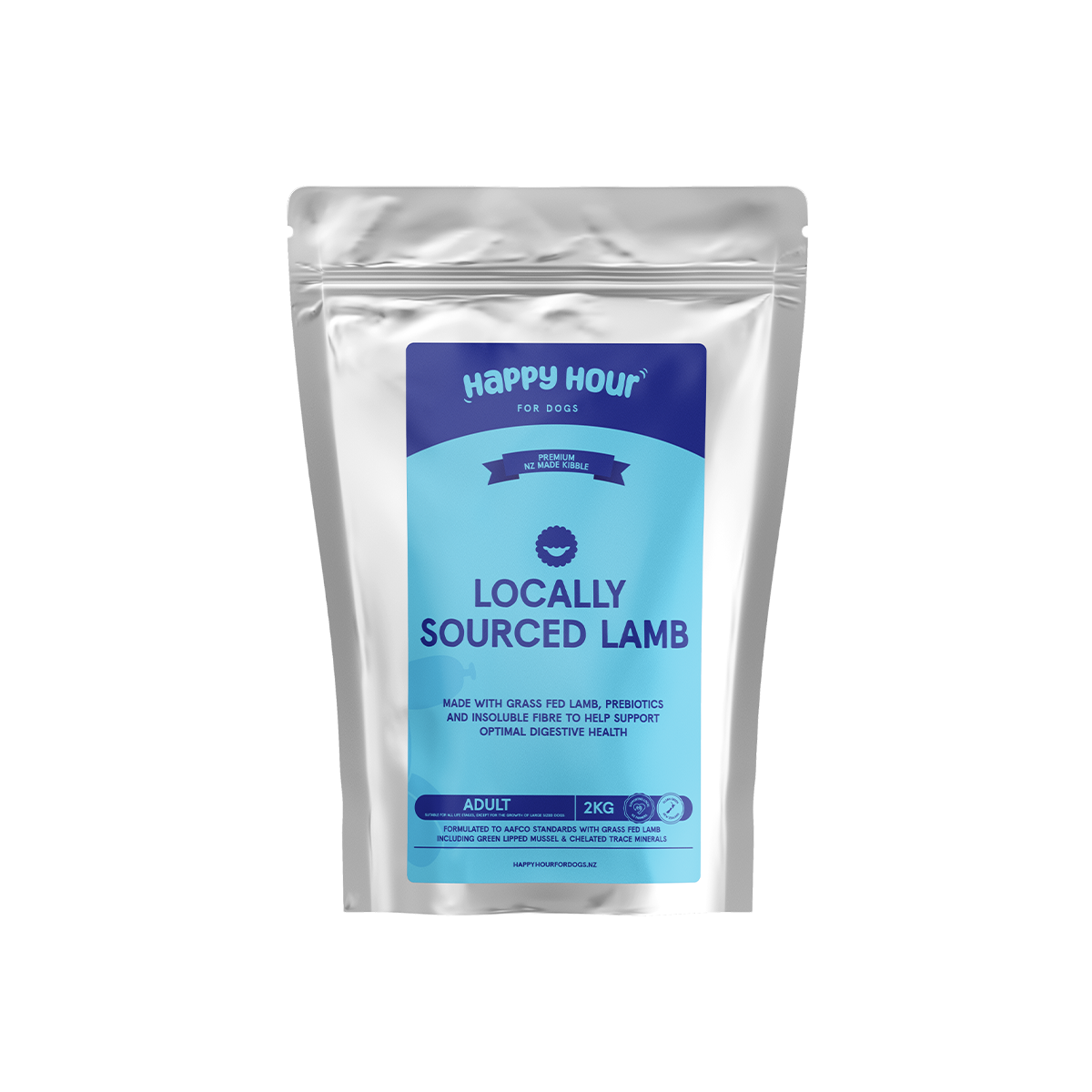
Happy Hour is grain-free, low in fat, and made from NZ-sourced lamb with real fibre and no grain fillers. For Goldens managing their weight, it's a sensible, quality choice.
Exercise Tips for Golden Retrievers
Goldens are active dogs and typically enjoy exercise. Adult Goldens do well with 60-90 minutes of exercise daily — walks, swimming, retrieving games, and off-leash runs when possible. Swimming is particularly good: it's low-impact, enjoyable for most Goldens, and works the whole body without stressing joints.
As Goldens age, adjust the intensity. An older Golden with sore joints needs shorter, more frequent gentle walks rather than long demanding sessions. Hydrotherapy can be a great option for seniors.
Mental stimulation matters too. Goldens are smart and get bored without it — and a bored Golden tends to focus more on food. Training sessions, scent games, and puzzle feeders keep their mind busy.
Remember that exercise alone rarely produces meaningful weight loss — food management is the primary tool. Exercise keeps your Golden fit and maintains muscle mass, but if the calories coming in are too high, exercise won't fully compensate.
What to Look for in Dog Food for Golden Retrievers
Given the risk of both weight gain and pancreatitis, food choice is particularly important for Goldens. Look for:
- Low fat content — critical for pancreatitis risk management
- High-quality protein — supports muscle maintenance during weight management
- Real dietary fibre — helps with fullness and digestive health
- No grain fillers — corn, wheat, and soy add empty calories
- No artificial additives or preservatives — keep the ingredient list clean
Avoid high-fat treats entirely for Goldens with a history of pancreatitis. Even a single rich meal can trigger a flare-up.
Happy Hour's grain-free lamb kibble fits the brief for Goldens: low fat, real fibre, quality NZ protein, no grains or artificial ingredients. Find it at happyhourfordogs.nz.
For more on weight management across breeds, see our dog breeds prone to weight gain guide.
Frequently Asked Questions
Are Golden Retrievers prone to pancreatitis?
Yes. Goldens are one of the breeds with higher-than-average pancreatitis risk. High-fat foods, fatty treats, and table scraps are the most common triggers. If your Golden has had pancreatitis, a low-fat diet is essential going forward, not just recommended.
How much should a Golden Retriever weigh?
Most adult female Goldens should weigh between 25-29kg, and males between 29-34kg. Body condition matters more than exact weight — a lean Golden with a visible waist and easily felt ribs is at the right weight regardless of the scale number.
My Golden always seems hungry — is that normal?
It's common for the breed, but "hungry" often means "very food-motivated" rather than genuinely calorie-deprived. If your Golden is at a healthy weight and you're feeding the correct amount for their size and activity level, they're likely just opportunistic rather than actually hungry. A high-fibre food helps with genuine satiety.
Can I use treats during training with an overweight Golden?
Yes, but account for them. Use the smallest possible pieces (thumbnail-sized), and if your dog gets a lot of treats during a training session, reduce their main meal slightly. Using pieces of their regular kibble as training rewards is the simplest approach.
How quickly can a Golden Retriever lose weight safely?
Aim for about 1-2% of body weight per week. For a 35kg Golden, that's roughly 350-700g per week — slow and steady. Faster weight loss can cause muscle loss and put strain on the liver. Your vet can help set targets and monitor progress.
