Best Dog Food for Huntaways: Feeding NZ's Iconic Sheepdog
The Huntaway is about as NZ as it gets. Developed right here over generations of selective breeding, they're built for the tough work of driving sheep across rough hill country, using their deep, booming bark to move mobs across distances that would leave other dogs confused and exhausted. If you own a Huntaway, you know they're a different breed to most.
Key Takeaways
- Best Dog Food for Huntaways: Feeding NZ's Iconic Sheepdog
- What Makes a Huntaway Different
- What Huntaways Need From Their Food
- Feeding a Huntaway: Practical Considerations
- Happy Hour for Working Huntaways
What most people don't realise is that feeding a Huntaway well is genuinely different from feeding a standard pet dog. These dogs have specific demands on their bodies, and their food needs to match.
What Makes a Huntaway Different
Huntaways are medium to large dogs, typically weighing 25-40kg. They're not sprint dogs: their job is sustained, endurance-based work across long distances and steep terrain. A Huntaway on a busy farm may be active for several hours a day in all weather. That's a serious caloric and nutritional demand.
Sustained Energy Demand
Unlike a sprinting dog, a Huntaway needs a food that delivers steady, sustained energy across a long working day. High-quality protein and appropriate fat content provide this. Simple carbohydrate-heavy foods give a quick energy burst but don't sustain the kind of prolonged effort a working Huntaway puts in.
Working in All Conditions
Huntaways work year-round on NZ farms. In winter, cold weather and sustained activity significantly increase caloric needs. In summer, heat can reduce appetite but the work doesn't necessarily slow. Feeding management needs to reflect these seasonal shifts, and a high-quality food gives you more flexibility.
Joint and Musculoskeletal Health
Years of hard work on rough terrain takes a toll. Huntaways can develop joint issues, and maintaining good muscle mass is important for protecting joints as these dogs age. Nutrition that actively supports joint health from early on pays dividends later. See our Dog Joint Health and Diet NZ article for specifics.
What Huntaways Need From Their Food
High-Quality Protein
Protein is the most important macronutrient for working dogs. It supports muscle maintenance, repair after exertion, and provides essential amino acids. Look for a named, identifiable protein source at the top of the ingredients list. Not 'meat meal' or 'animal protein', but something specific like lamb or chicken. Our Best High-Protein Dog Food in NZ article is a useful reference.
Omega-3 Fatty Acids
Fish oil provides EPA and DHA, omega-3 fatty acids that support joint health, skin and coat condition, and may support cardiovascular health in active dogs. For a dog working hard every day, the anti-inflammatory properties of omega-3s are particularly valuable.
Adequate Calories Without Junk
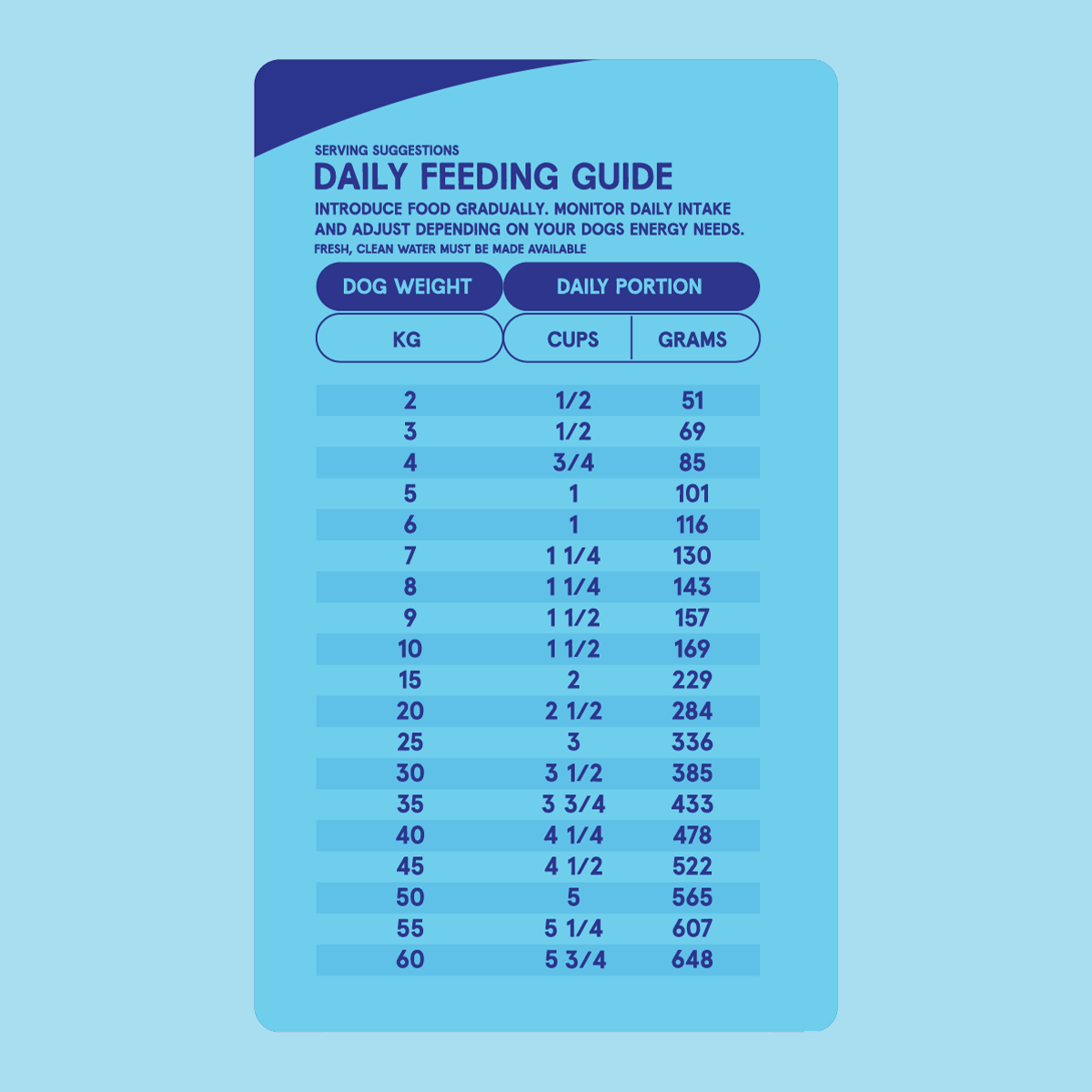
Working Huntaways need more calories than sedentary dogs of the same size. But more calories should come from quality nutrition, not from fillers and cheap fat. A food with good protein and appropriate fat levels lets you scale portions to meet your dog's energy output without loading them up with nutritionally empty content.
Digestive Support
Working dogs can have variable appetites and digestion depending on weather, workload, and stress. A prebiotic like chicory root helps maintain gut flora stability, which supports consistent digestion and nutrient absorption even when conditions change.
Feeding a Huntaway: Practical Considerations
Huntaways aren't like a pet Labrador who eats the same amount every day regardless of what they've been doing. Good working dog management involves adjusting feed based on workload, season, and condition.
- Feed after work, not just before. Heavy working dogs fed a large meal before intense work are at risk of digestive issues. A smaller feed in the morning and a larger meal after the day's work is the most common approach.
- Increase food in cold NZ winters when the dog is burning more calories just to stay warm while working.
- Monitor body condition regularly. Working dogs can lose condition fast. You should be able to feel the ribs easily but not see them prominently. A Huntaway working hard should be lean and muscular, not skinny.
- Fresh water is critical. Working dogs in warm weather can dehydrate quickly. Always ensure access to clean water during and after work.
Our Feeding High-Energy and Working Dogs: The Complete NZ Guide covers these principles in more depth for all working dog types.
Happy Hour for Working Huntaways
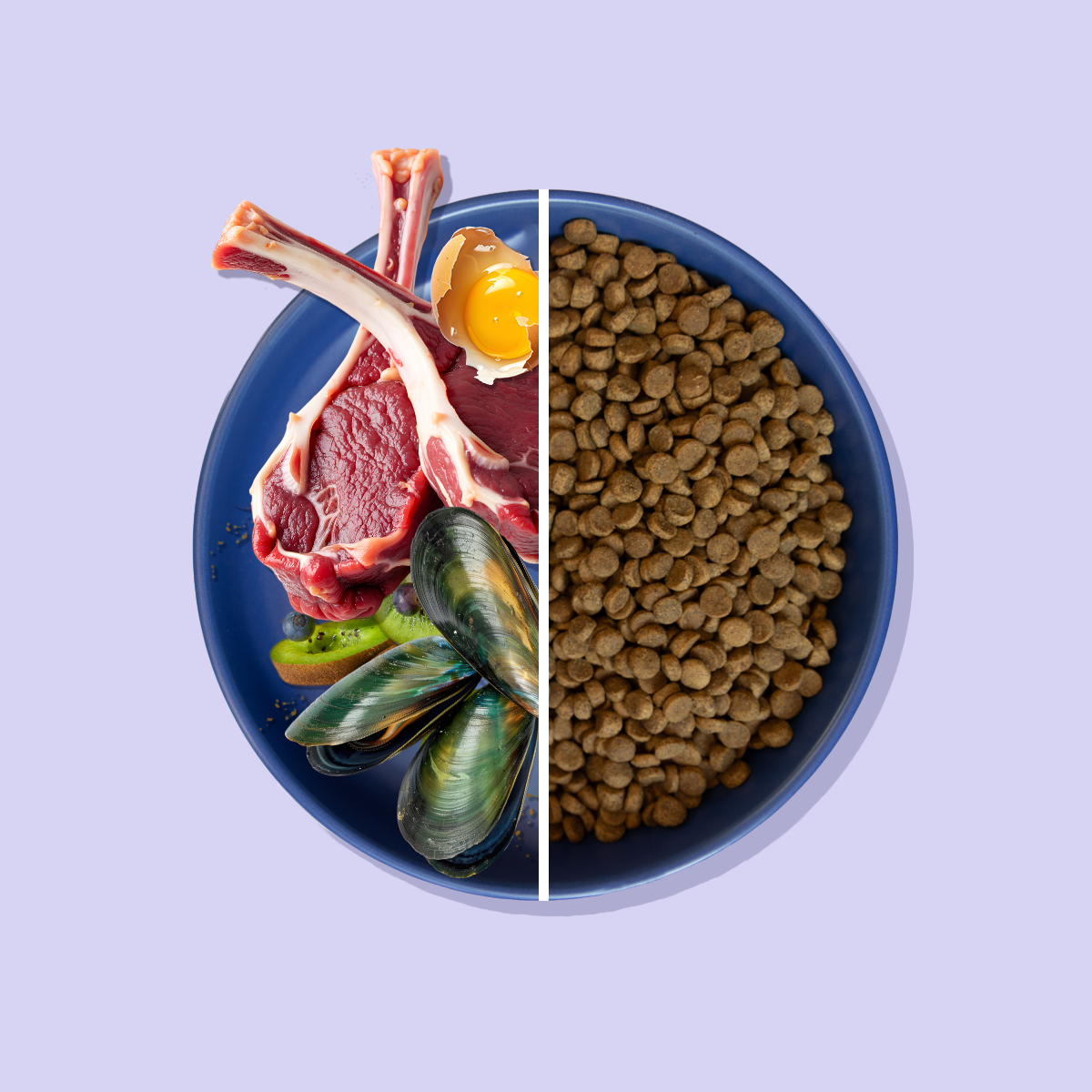
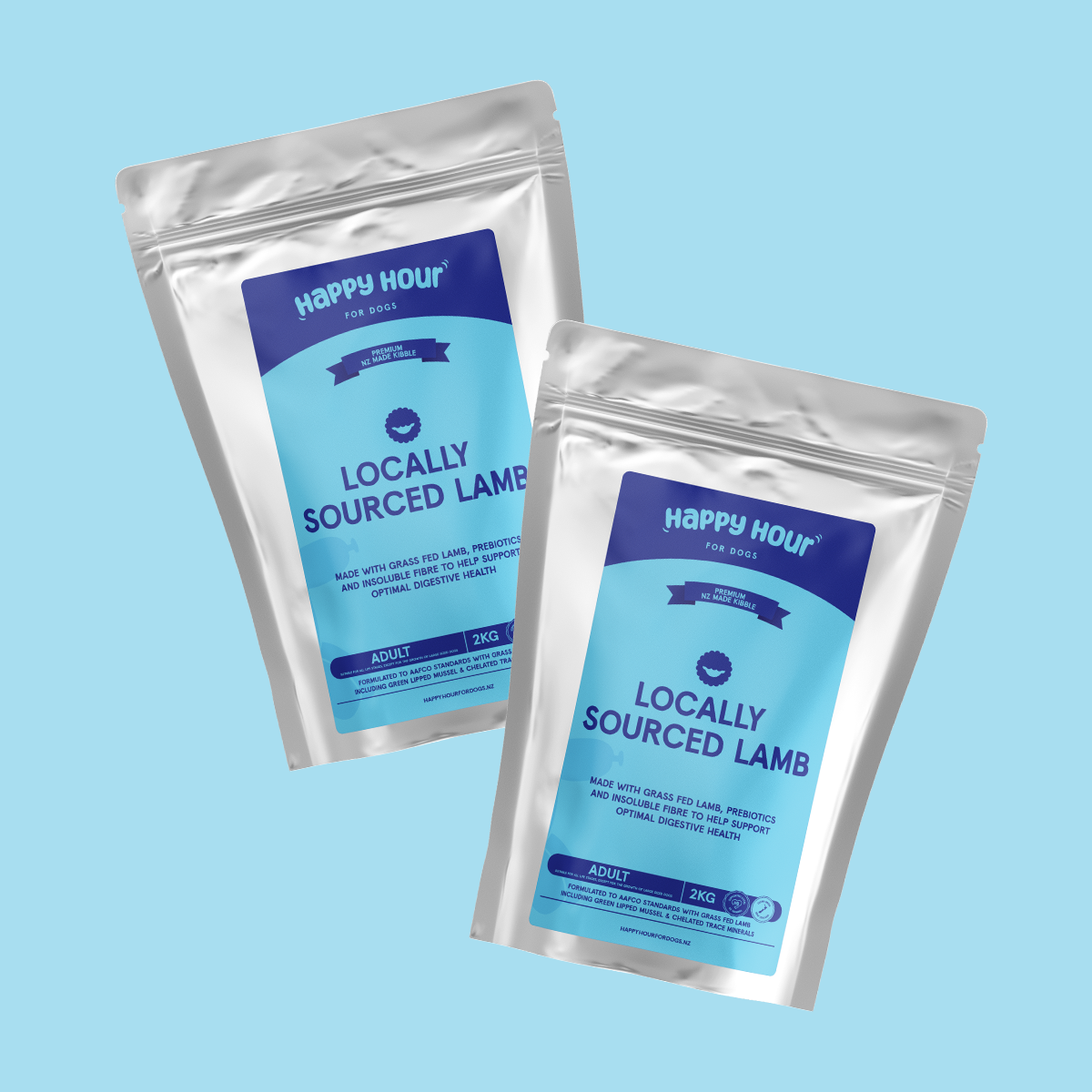
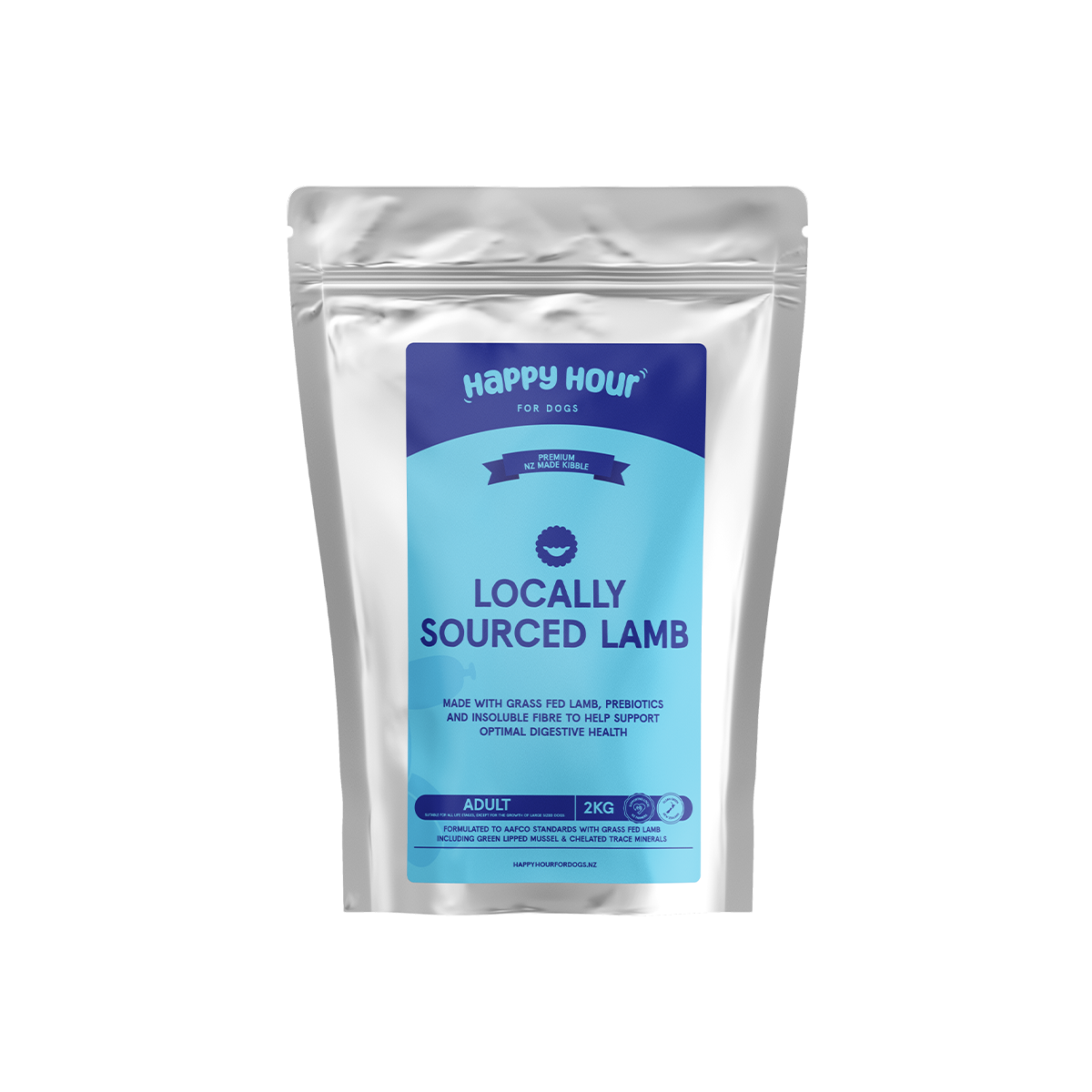
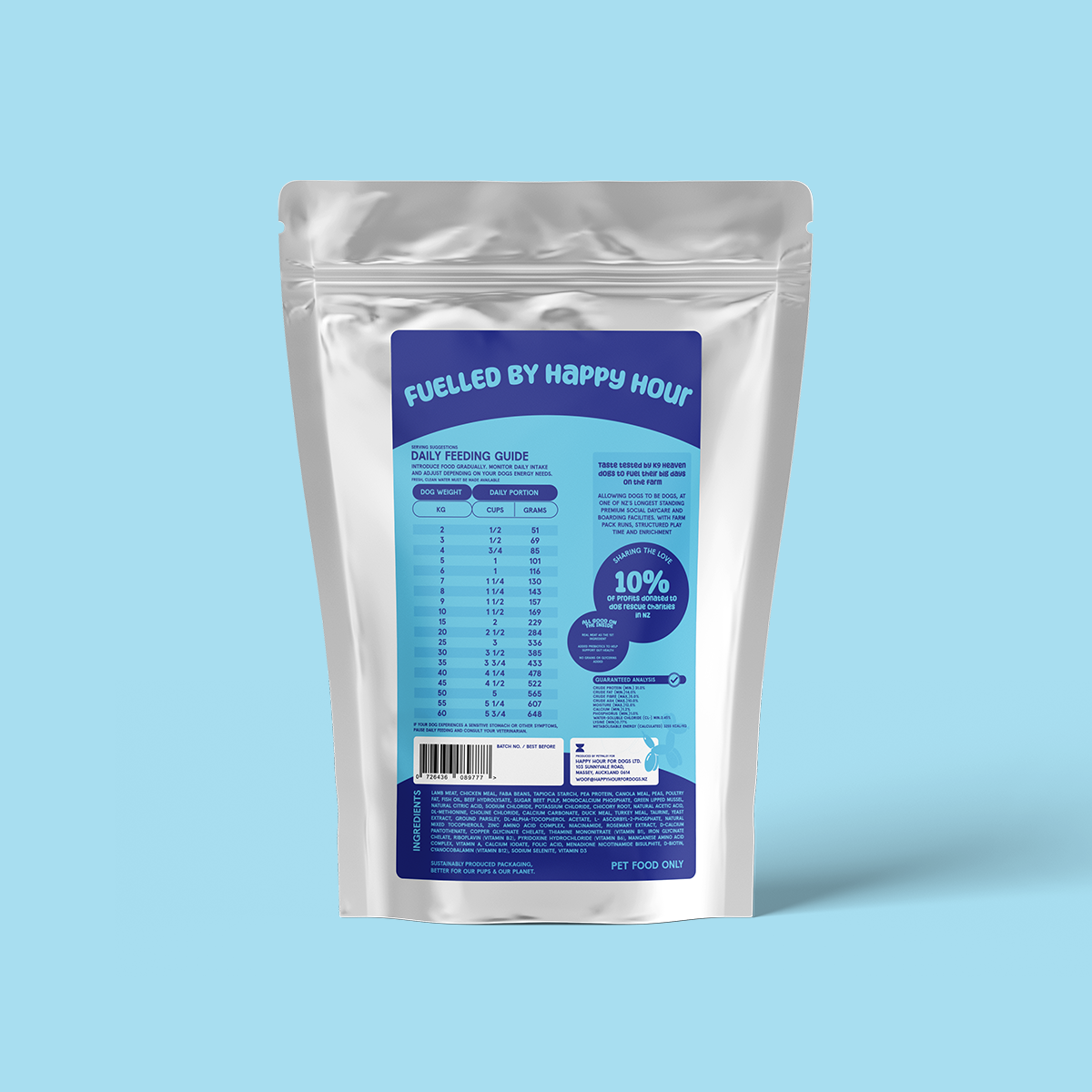
Happy Hour is built on NZ grass-fed lamb as the lead protein, a high-quality, traceable protein source. It includes fish oil for omega-3 support, green-lipped mussel from the Marlborough Sounds (naturally rich in omega-3s and joint-supportive compounds), chicory root as a prebiotic, and chelated minerals for efficient absorption. It's grain-free with no artificial additives.
It's AAFCO approved for all life stages, so it's appropriate from the puppy stage through to the senior years without switching formulas. The low-fat profile means you can adjust portions to meet varying workloads without the food itself becoming too rich.
It's also made in NZ, by people who genuinely know dogs. The K9 Heaven team has served over 48,000 meals to dogs in their care. They understand that a working Huntaway's nutrition isn't an afterthought.